
7 Fake Low-Carb Staples, and the Cheaper Swaps That Deliver

Key Takeaways
- A low-carb swap only counts if it clears a real carb gap. Save under about 10 grams and you're looking at a fake swap dressed up as diet food.
- Swapping a baked potato for cooked radishes is the biggest single win: roughly 60 grams of carbs gone per serving.
- Cauliflower rice cuts about 41 grams off a cup of white rice, dropping from 45 grams to 4.
- A large 64-gram bagel traded for a bagel thin saves about 41 grams, and it's one of the easiest changes you'll make.
- Spaghetti squash beats pasta at 10 grams versus 38 per cup, a saving of around 28 grams.
- A can of soda swapped for sparkling water wipes out all 39 grams, no effort required.
- Dark chocolate almonds save about 4 grams over a chocolate chip cookie. That one's not worth the trouble.
The Fast Test for a Real Swap
A low carb grocery list should run on actual carb savings, not the words on the front of a package. The test we use: a swap has to close a real nutritional gap, not just squeak past the original by a few grams. Replacing white rice with a vegetable (per the LoseIt swap guide) is a huge drop in starch. Swapping a cookie for chocolate-coated nuts barely moves the needle.
Below are seven staples that fake the low-carb label, plus the cheaper swaps that actually deliver. Most of the winners are sitting in ordinary grocery aisles right now, so your list doesn't need a single specialty-branded product.
The Swaps Worth Standing Behind
Here's the shortlist, with the numbers that matter. Each one clears a real carb gap, not a token one.
| High-Carb Staple | Cheaper Swap | Carbs Saved | Difficulty |
|---|---|---|---|
| White rice (45g/cup) | Cauliflower rice (4g) | ~41g | Easy |
| Pasta (38g/cup) | Spaghetti squash (10g) | ~28g | Easy |
| Large bagel (64g) | Bagel thin (22.5g) | ~41g | Very easy |
| Baked potato (64g) | Cooked radishes (4g/cup) | ~60g | Medium |
| Tortilla chips (19g/oz) | Air-popped popcorn (6g/cup) | ~13g | Easy |
| Soda (39g/can) | Sparkling water (0g) | ~39g | Very easy |
| Chocolate chip cookie (19g) | Dark chocolate almonds (15g/¼cup) | ~4g | Skip it |
All figures come from the LoseIt comparison. The pattern holds: the swaps that work yield double-digit reductions. The ones shaving off a few grams are usually clever marketing wearing a diet costume.
Time, Effort, and What It Costs
Most of these take under five minutes and cost less than the "diet" version they replace. Cauliflower rice comes pre-riced in the produce section, so prep is zero. Spaghetti squash roasts and scrapes into strands with a fork.
On difficulty: Bagel thins, sparkling water, and pre-riced cauliflower are drop-in swaps with no cooking. Spaghetti squash and popcorn need a few minutes of heat. Root vegetables standing in for a potato take a bit more kitchen work, which is why most dieters skip them, even though LoseIt flags the radish swap as one of the most effective on the list.
On cost: The biggest win is dodging the price premium on branded "low-carb" staples. Whole vegetables and generic sparkling water usually undercut boxed keto products per serving. For the fuller logic on avoiding overpriced diet-labeled items, this guide on fake keto foods covers the same trap.
The Line to Draw
Skip the low-yield swaps. Aim for the unconventional vegetable alternatives that ask for a little more prep and pay you back with real, undeniable reductions. Prioritize the changes that actually land, and your grocery bill drops right alongside your carb count.
Vegan Swaps That Actually Work
Vegan and low-carb sound like they cancel each other out. They don't. The most reliable additions to a plant-based list are whole vegetables and legumes with carb counts you can read at a glance, plus a few soy staples that punch above their carb weight.
The trap we watch for: packaged "vegan keto" products lean hard on net-carb math and sugar alcohols. Whole-food swaps sidestep that entirely. Fresh cruciferous vegetables instead of processed grains give you a clean, low-calorie base with no artificial additives, as the LoseIt breakdown notes. The nutrition is transparent. No fiber subtraction required.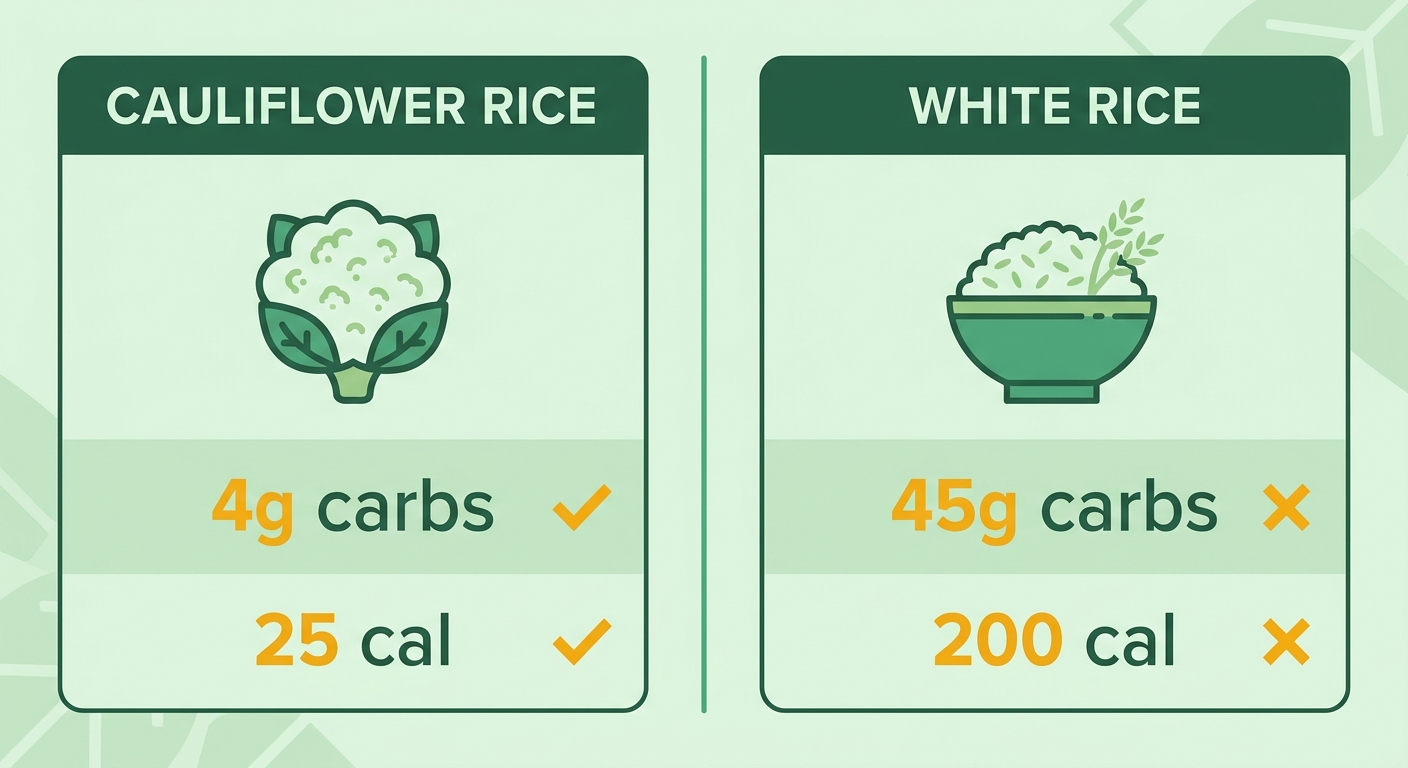
Which Plant Proteins Earn a Spot?
Tofu and tempeh are the anchors. They deliver protein without dragging carbs along, which is the exact gap most vegan low-carb eaters struggle to fill. Build meals around them and the rest of your plate can stay vegetable-heavy.
For flavor and structure, lean on the vegetable swaps nutritionists already back. Spaghetti squash is a nutrient-dense stand-in for pasta, according to Cynthia Sass and the Time roundup. Spiralized summer squash gives you a light base that mimics the texture of long noodles, as EatingWell's swap analysis lays out.
Chia pudding is our sleeper pick. Highly satiating, and it brings omega-3s and antioxidants along. A dessert or breakfast that works for a vegan low-carb plan without a single packaged product.
Do These Swaps Actually Save Money?
Yes, and that matters more than the branding aisle admits. Grocery costs are brutal right now. One r/SavingMoney poster described standing at checkout "like I accidentally grabbed wagyu beef" over a normal cart.
Whole cauliflower, zucchini, turnips, and dried legumes cost a fraction of specialty vegan-keto goods. Mashed turnips run just 35 calories and 8 grams of fiber per cup, per Leah Kaufman, RD, and a whole turnip costs less than most single-serve "keto" snacks.
Our take: the money you'd drop on one branded low-carb wrap buys a week of tofu, squash, and radishes that clear far bigger carb gaps.
Watch the Net-Carb Fakes
Skip any vegan product marketed on "net carbs" or sugar alcohols. Those labels are unregulated, and sugar alcohols can still raise blood sugar, as Beyond Type 1 warns. Net-carb math only holds up on whole foods where the fiber is real. Which is why we'd rather have our AI agent read the actual label than trust the marketing on a package.
The dividing line is simple: if a swap's benefits only show up after complicated subtraction on a package, proceed with caution. When you do need packaged goods, a tool like Popgot lets you specify exactly what a product must contain, and what it can't, filtering out these tricks before they reach your cart.
Protein-Packed Swaps
The best protein-heavy additions to a low-carb list aren't packaged "keto" bars. They're plain dairy and legumes with carb counts you can verify. Greek yogurt, cottage cheese, and fava-based flours give you real protein without the net-carb sleight of hand.
The goal is to maximize the protein-to-carb ratio, and whole foods with stable, reliable numbers do that better than anything in a wrapper.
Which Protein Swaps Clear the Real Gap?
Fava bean flour is the standout for baking. It carries 8 grams of fiber per quarter cup versus under 1 gram in all-purpose flour, plus 4 grams fewer carbs, according to Cynthia Sass in TIME. That fiber does double duty: slowing digestion and adding satiety while cutting the carb load.
Our take: fiber-dense swaps like this beat "low-carb" baking mixes because the savings are structural. You're not subtracting fiber on a label. You're eating a flour that genuinely holds more of it.
For a starchy side, mashed turnips are a remarkably light alternative to heavy potatoes, as Leah Kaufman's breakdown notes. And the radish swap the LoseIt guide flags earns its keep here too. Most dieters overlook root vegetables, but cooked, they're a strong texture match.
Why Whole Foods Beat Packaged "Keto"
Whole vegetables and legumes win because their carb counts are real, and net-carb math can't dilute them. Packaged low-carb products often subtract fiber and sugar alcohols to reach a flattering number, which is exactly where fake staples hide.
Same trap that sinks most nut-based dessert alternatives. When a swap offers only a marginal difference, the LoseIt guide suggests it may not be worth it. A minor reduction is a rounding error, not a lifestyle shift.
Cottage cheese shows what a real protein gap looks like. A single cup packs roughly 25 grams of protein at around 8 grams of carbs, denser than most bars hiding behind sugar alcohols. That protein-to-carb ratio is the threshold we hold every candidate to.
The Cost Angle
Whole-food swaps also spare your budget. With grocery bills climbing, specialty low-carb items inflate a receipt fast.
Cabbage, radishes, turnips, and dried legumes cost a fraction of specialty low-carb packaging. Skip the branded bar aisle entirely. The protein and fiber you want are cheaper in the produce and bean sections, and the carb math is honest.
Gluten-Free and Low-Carb at Once
The best gluten-free, low-carb swaps aren't specialty flours dressed up with keto marketing. They're nut and seed flours plus whole vegetables with carb counts you can read straight off the label. For anyone building a list with a gluten restriction, that distinction beats any "grain-free" badge on the front of a bag.
First thing to flag: gluten-free does not mean low-carb. Rice flour and tapioca starch are both gluten-free and both carb bombs. So a real swap has to clear two tests at once, not one.
Which Gluten-Free Flours Cut Carbs?
Fava bean flour is the standout for baking. Naturally gluten-free, with binding properties that make it a reliable all-purpose swap when you need structure without leaning on starch-heavy blends.
Almond and coconut flours belong on the list too. Both skip wheat entirely and lean on fat and fiber instead of starch. Our take: for a straight all-purpose swap, fava bean flour wins on fiber; for a lighter crumb, almond flour holds up better. Either beats a gluten-free blend built on rice starch.
The reason to scrutinize packaged gluten-free products is the same reason we distrust processed diet bars. Many rely on heavy processing and sugar alcohols, which can cause digestive discomfort and unexpected glycemic responses, as the Beyond Type 1 analysis notes. Whole-food flours sidestep that entirely.
Do Vegetable Swaps Beat Gluten-Free Pasta and Rice?
Yes, and by a wide margin. Whole vegetables are the most reliable gluten-free, low-carb staples because their carb counts are unambiguous. No fiber subtraction, no starch fillers.
Zucchini noodles replace wheat pasta beautifully, cooking in minutes with nothing fancier than a spiralizer. Light, fresh, and they hold up under a rich sauce.
Cauliflower rice stands in for both white rice and gluten-free rice blends. It absorbs seasoning well and works in stir-fries, bowls, and casseroles without the heavy starch.
Where's the Cost Savings?
Whole-vegetable swaps almost always undercut branded gluten-free products on price. A head of cauliflower or a spaghetti squash costs a fraction of a bag of gluten-free pasta. With grocery bills stretching everyone thin, that gap adds up. Shoppers on r/SavingMoney have noted how fast specialty dietary items inflate a bill.
Skip the specialty gluten-free aisle for these swaps. The produce section already carries the cheaper, lower-carb version, and its carb count is honest.
Cost Comparison: Staples vs Cheaper Swaps
The cheapest low-carb swaps are almost always whole vegetables, and the numbers make the case better than any marketing claim. Cabbage stands out: a full head costs about a dollar and stands in for noodles, wraps, and rice, at roughly 5g of carbs per cooked cup. That's the whole game: real carb reduction at grocery-aisle prices.
Building a list around produce instead of branded products isn't just cheaper, it dodges the label games entirely. Packaged low-carb staples lean on net-carb math to look better than they are. Whole vegetables don't need the accounting trick.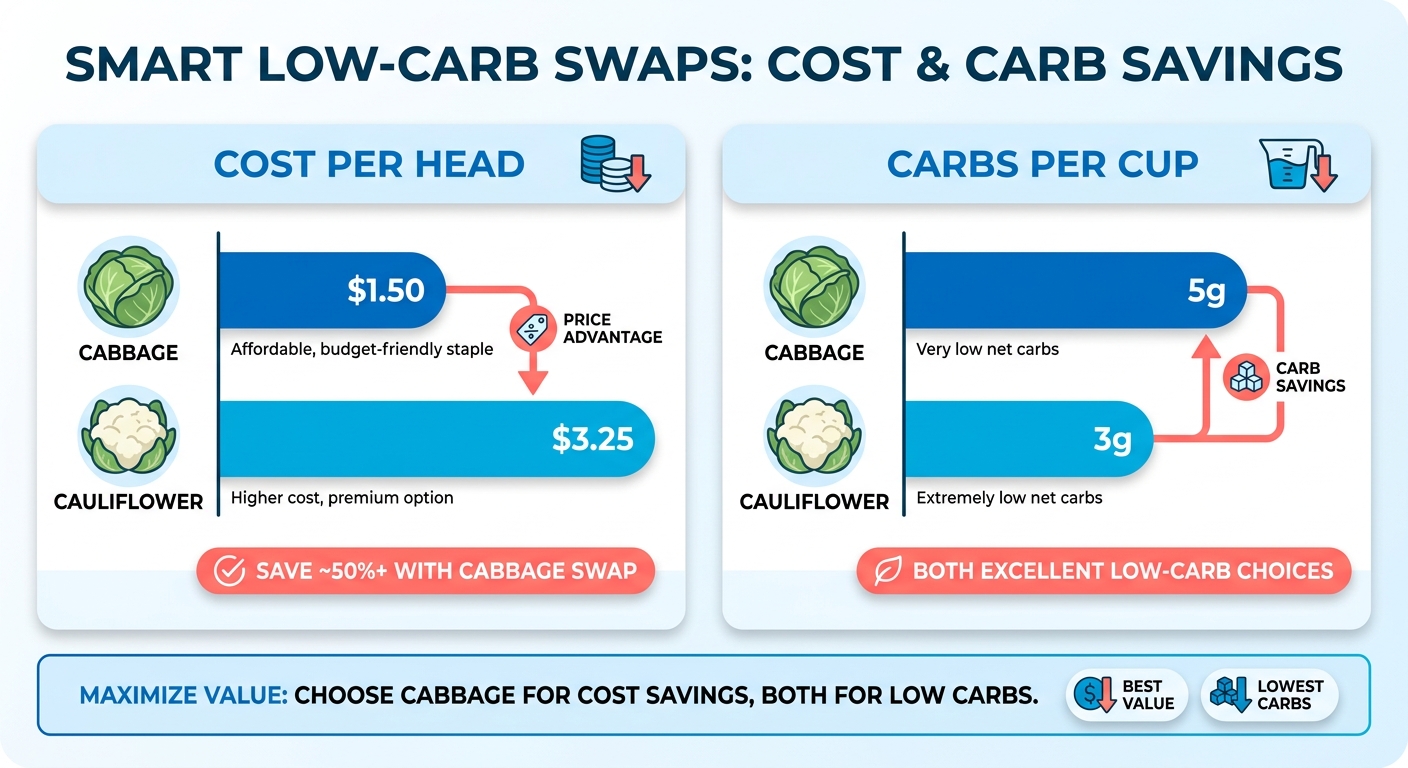
Where Do the Fakes Cost You Most?
The worst offenders are sugar-laden granola and high-carb protein bars marketed as low-carb. They charge premium prices while hiding carbs behind net-carb labeling. Many rely on sugar alcohols that can still spike your blood sugar, per the Beyond Type 1 analysis.
The trap works like this. A bar at $2 to $3 markets itself on net carbs after subtracting fiber and sugar alcohols. The headline number leans on subtraction that can obscure what you're actually eating. You pay more for a product whose top-line figure is basically made up.
Compare that to a cup of cooked radishes standing in for a baked potato, as the LoseIt guide details. Radishes cost pennies, and their nutritional profile stays completely transparent.
Best Value Per Dollar?
Mushrooms are an underrated value pick, subbing in for burger buns or serving as a meaty base for pennies per serving. A cup runs about 2g of carbs against a bun's 20g or more, and a carton stretches across multiple meals.
Bell peppers pull similar weight as a scoop or chip replacement, running roughly 6g while costing a fraction of a bag of "low-carb crackers." Both are produce-aisle cheap. Neither asks you to trust a net-carb footnote.
Our take: value in low-carb shopping comes down to two numbers agreeing. Carbs saved per serving and dollars spent per serving both have to favor the swap. Mushrooms, cabbage, and radishes clear both. Branded bars clear neither.
How to Spot a Fake at the Shelf
Read total carbohydrate, not net carbs. A genuine low-carb staple shows a low total-carb figure you can verify, not a small number reached by subtracting fiber and sugar alcohols. This one habit filters out most overpriced fakes.
Then apply the cost test. If a whole-food swap saves a significant amount of carbs per serving at a lower price, it's authentic. If a packaged product saves a negligible amount over the original while costing three times as much, skip it. For a deeper look at the economics of clean eating, this guide on budgeting for a low-carb lifestyle points out which specialty items to skip.
The Aldi crowd on r/SavingMoney already lives this logic, defending cheap staples that do the job. "There is nothing wrong with Aldi meat," one commenter shrugged. Same instinct applies to produce: the plain, cheap option usually wins.
Quick Meals From Cheaper Swaps
The fastest low-carb meals come from swapping one refined starch for a whole vegetable and cooking it exactly like you always did. An omelet loaded with spinach, or a stir-fry over cauliflower rice, gives you a full plate at a fraction of the carbs. No specialty products, no net-carb math, no premium price tag.
Build your list around three or four base vegetables and you can improvise dinner every night. Cauliflower, zucchini, spaghetti squash, and radishes cover rice, noodles, pasta, and potatoes. Whole foods with real numbers you can read off a label, which is exactly why we trust them over any packaged "keto" swap that runs on fiber subtraction, as the Beyond Type 1 analysis discusses.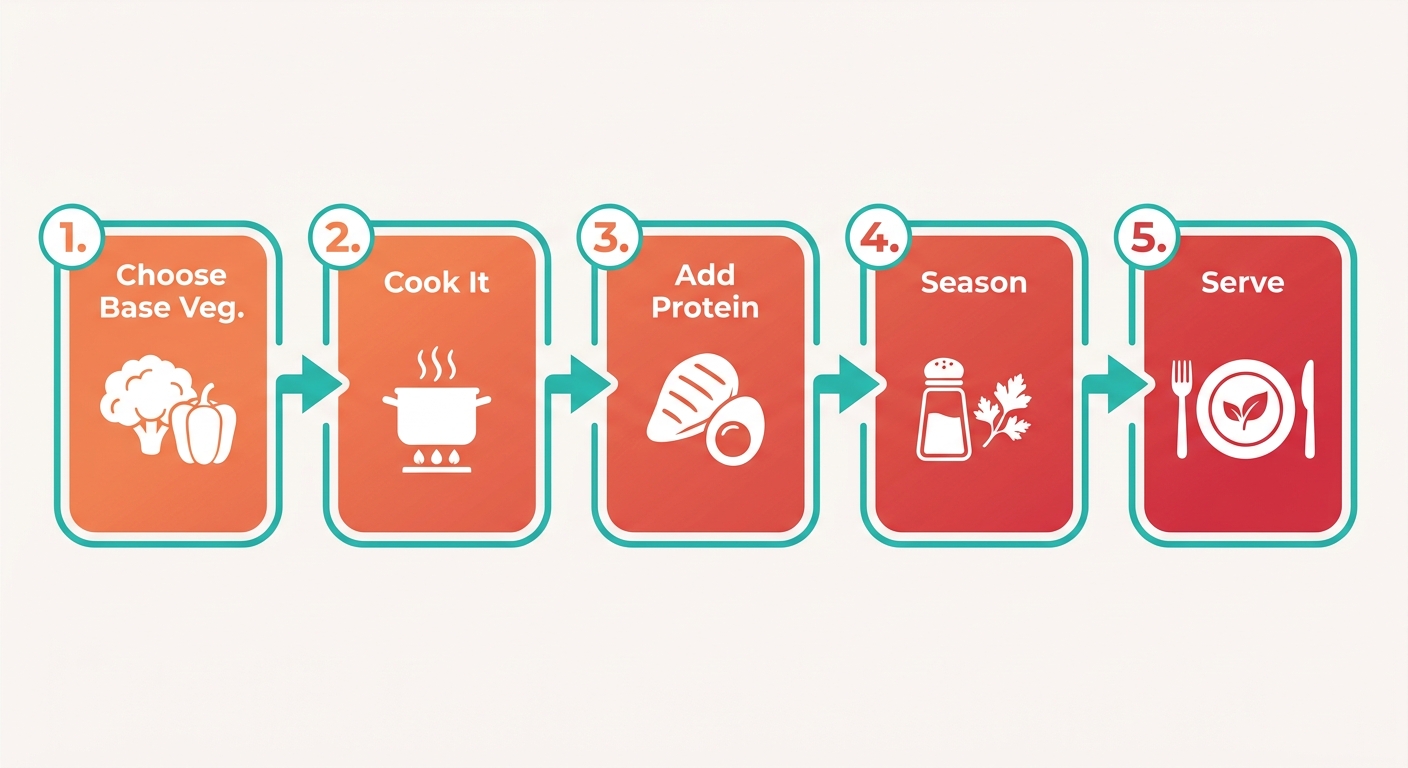
Fastest Weeknight Swaps
The stir-fry over cauliflower rice is the workhorse. Buy it pre-riced in the produce cooler and dinner takes ten minutes. Toss it in a hot pan with any protein and vegetables you already have, and you skip the rice cooker entirely.
Zucchini noodles are the other quick win. They cut a big chunk of carbs compared to linguine, according to EatingWell. Spiralize a zucchini, sauté for two minutes, top with sauce. No boiling water, no draining a colander, no waiting.
For breakfast, skip the toast. A scramble with mushrooms and peppers plates up in under five minutes and holds you through the morning without the crash a bagel guarantees. Prep a batch of hard-boiled eggs on Sunday and you've got grab-and-go protein all week for pennies apiece.
Which Swaps Cut the Carbs, and Which Fail?
A swap earns its place only when it clears a substantial gap. Fresh vegetables over processed grains passes easily. A swap that shaves a tiny fraction of carbs while doubling your grocery bill does not.
Our take: use a significant reduction as your threshold. Below that, the swap is theater. It's also the tell that separates whole-food swaps from packaged fakes.
Faking Mashed Potatoes on a Budget
Cooked radishes stand in for baked potato beautifully, per LoseIt. Boil them until soft and they lose their bite, taking on a potato-like texture most people won't clock. Sounds odd. It works.
Mashed turnips are another good option, with a light, velvety texture that pairs well with savory dishes, as Time notes. Both cost less than a bag of "keto mash" mix and skip the label games entirely. That's the whole point of a produce-first grocery run.
Using Popgot's AI to Find Cheaper Low-Carb Staples
Our AI reads every label so you don't have to squint at the back of a package deciding whether a "keto" claim is real. Tell your shopping agent exactly what you need, like a specific carb count per serving and no hidden sweeteners, and it checks each product against those specs. That's how a vague low-carb grocery list becomes a set of verified, cheaper swaps.
The point isn't fancy technology. It's cutting the time you waste on products that fake the label. When your list runs on whole vegetables and verifiable staples, the AI's job is mostly confirming you're not overpaying, and surfacing the real unit price so you see what you actually pay.
How to Verify a Low-Carb Staple
Set your specs, search, compare the unit price. Tell the AI what a product must have, and it reads every label across billions of listings to verify it, then pulls the real unit price so you can sort by value. Three steps, no guesswork on your end.
Here's how it works in practice:
-
Search with your specs. Tell your agent exactly what you're after: a maximum carb count, no artificial sweeteners. The AI reads the full label, not just the front-of-pack claim, so a "low-carb" bread with hidden starches never makes the cut.
-
See only what matches. Products that don't clear your requirements get filtered out. You only see items that actually meet your specs, so a packaged "keto rice" that misses your target simply won't show up.
-
Sort by true unit price. Popgot pulls the real unit price from every listing: per serving, per ounce, per count. The cheapest option that still meets your specs is easy to spot. Most of the time the best value is already in the produce aisle.
Grocery costs are hitting people hard. As budget-conscious shoppers on r/SavingMoney point out, tracking true costs matters when prices are rising. Verified specs keep you from paying premium prices for label tricks.
Skip the AI search for plain produce. You don't need it to confirm zucchini is low-carb. Save it for the packaged aisle, where the net-carb games actually happen. For more on how automated tools help you bypass these traps, see our guide on how to avoid fake keto foods.
References
[1] 7 Low-Carb Food Swaps Nutritionists Love - https://time.com/4578710/low-carb-food-swaps/
[2] 15 Low-Carb Swaps That Cut Almost 300 Grams of Carbs - https://www.eatingwell.com/article/2053465/15-low-carb-swaps-that-cut-almost-300-grams-of-carbs/
[3] 12 Low-Carb Food Swaps - https://kaynutrition.com/low-carb-food-swaps/
[4] The Best Low-Carb Swaps for 9 Popular High-Carb Foods - https://www.loseit.com/articles/the-best-low-carb-swaps-for-popular-high-carb-foods/
[5] Not All Net Carbs and Artificial Sweeteners are Alike - https://beyondtype1.org/net-carbs-sweeteners-alike/
Frequently Asked Questions
1. Are cooked radishes actually safe to eat in large amounts as a potato substitute?
Cooked radishes are safe for most people in normal serving sizes and lose their peppery bite when boiled soft. However, radishes contain compounds called goitrogens that may affect thyroid function in very large quantities. For anyone with thyroid conditions, moderate portions and cooking, which reduces goitrogen levels, are recommended.
2. Can sugar alcohols in "net carb" products actually break ketosis?
Sugar alcohols vary widely in blood-sugar impact. Erythritol has minimal effect, while maltitol can raise blood glucose significantly, potentially stalling ketosis. Because these labels are unregulated, individual responses differ. Reading total carbohydrate rather than net carbs, and testing your own glucose response, gives a more reliable picture than package claims.
3. How do I keep spaghetti squash and zucchini noodles from turning watery?
Salt spiralized zucchini and let it drain 10-15 minutes before cooking to draw out moisture, then pat dry. For spaghetti squash, roast rather than microwave and avoid overcooking. Sauté both briefly over high heat instead of simmering in sauce, which prevents them releasing excess water onto your plate.
4. Is fava bean flour safe for everyone switching to low-carb baking?
Fava bean flour suits most people as a high-fiber baking alternative. However, individuals with favism, a genetic G6PD deficiency, should avoid fava beans entirely, as they can trigger a serious blood reaction. Those with legume allergies should also choose almond or coconut flour instead.
5. Does eating whole-food low-carb swaps affect fiber intake compared to grains?
Whole-vegetable swaps often maintain or increase fiber versus refined grains. Natural alternatives like turnips and legume-based flours provide significant amounts of structural fiber compared to the negligible amounts found in refined all-purpose flour. This natural fiber aids digestion and satiety without relying on label subtraction tricks.
6. When is it worth using Popgot's AI verification versus just shopping produce?
Skip AI verification for plain produce like zucchini or cauliflower, where carb counts are obvious. Reserve it for the packaged aisle, where net-carb math and hidden sweeteners appear. The tool reads full labels against your specs and extracts true unit price, filtering overpriced fakes before you see them.
7. How much can these swaps realistically lower my weekly grocery bill?
Savings vary, but replacing branded keto products with whole vegetables consistently cuts costs. A single head of fresh cabbage can replace multiple servings of noodles, wraps, and rice for a fraction of the price. The money saved by skipping just one or two specialty packaged items can easily fund a week's worth of fresh produce and plant-based proteins.