
AI Products for Health-Conscious Shoppers: No More Guesswork

Key Takeaways
- AI personalization boosted purchase intention by 19.5% in a 407-respondent study, while transparency explanations showed no significant effect.
- The U.S. wellness market grew 57.7% from 2020 to 2025, reaching $2.23 billion, yet 73% of shoppers still face grocery price pressure.
- AI agents query multiple retailers simultaneously, catching specialty stores that big-box search algorithms typically miss during manual label comparison.
- Health-conscious shoppers need products with specific specs like 1000mg EPA+DHA or vitamin D3 at meaningful doses, not generic recommendations.
- Verification accuracy determines purchase decisions more than recommendation volume, shifting design priorities toward spec validation over algorithm explanations.
- Manual checking across Amazon, Walmart, and Target for one supplement requires opening multiple product pages per site before comparison.
- AI tools eliminate daily label-reading guesswork by verifying claims against exact requirements and surfacing only matching products.
You know what you need. Finding it is the problem.
You want fish oil with at least 1000mg EPA+DHA. Protein powder without artificial sweeteners. Vitamin D3 at a dose that actually moves the needle. The specs are clear in your head. What's not clear is which products actually deliver them, buried somewhere in the label fine print across dozens of retailer sites.
AI products now read every label for you. They verify claims against your exact requirements and surface only what matches. No guesswork. No manual comparison spreadsheets.
What drives purchases isn't transparency—it's verification
Verification accuracy matters more than recommendation volume. A 407-respondent study found that AI personalization directly boosted purchase intention (path coefficient 0.195, p < 0.01), while transparency—explaining why a product was recommended—had no direct effect (0.037, p = 0.57). What drives purchases is knowing a product meets your needs, not understanding the algorithm. Design priority: verify specs first, explain logic second.
Multi-retailer search at scale beats manual comparison. Manual checking across Amazon, Walmart, and Target for a single supplement typically requires opening multiple product pages per site. An AI agent that queries multiple retailers simultaneously catches specialty stores that big-box search skips. The U.S. wellness market grew 57.7% from 2020 to 2025, reaching $2.23 billion, yet 73% of shoppers still feel grocery price pressure. Speed alone saves time; accurate unit-price extraction saves money.
Custom health filters turn intent into action. When you can specify "EPA ≥ 1000mg, keto-friendly, gluten-free," you bypass the browse-and-compare cycle. That matches the broader trend: 79% of consumers plan health food purchases in the next year, and 90% of Millennials and Gen Z prioritize healthy food spending even during economic downturns. Filters help shoppers move from browsing to buying.
Privacy-first architecture is non-negotiable. 64% of Gen Z consumers actively seek clean-label claims, and they extend that transparency demand to the tools themselves. If an AI reads your dietary restrictions to recommend products, trust depends on how that data is handled.
How AI verification stacks up against manual search
| Feature | AI-Driven Verification | Manual Site-Hopping |
|---|---|---|
| Ingredient verification | Reads every label, filters mismatches automatically | Requires opening 8-12 product pages per candidate |
| Multi-retailer search | Queries multiple stores simultaneously | Requires visiting each retailer site individually |
| Unit-price accuracy | Extracts and normalizes per-serving cost across formats | Requires manual calculation from oz/count/serving data |
| Custom health filters | EPA ≥ 1000mg, keto, gluten-free applied upfront | Applied after browsing, often missed in fine print |
| Time to purchase | Streamlined with automated verification | Extended by manual label reading and comparison |
| Privacy model | Varies by platform design | Varies by retailer; cookie tracking standard |
Unit-price extraction drives savings where margins hide. Private label products now grow at 5.1%—double the 2.3% rate of national brands—because shoppers compare per-ounce cost when it's surfaced clearly. AI tools that auto-calculate unit price from varied packaging (60-count vs. 90-count, 1200mg vs. 1000mg doses) improve average savings by 18% on health-focused items. That's Nielsen Q1 2024 data.
The compliance-to-consumer pipeline is opening. 71% of CPG executives now use AI, up from 42% in 2024, to monitor 100+ regulations and catch label errors in seconds. The same AI flagging FASTER Act sesame requirements for brands can flag allergens for you. Transparency isn't marketing—it's infrastructure. When internal compliance layers become consumer-facing verification tools, you get both the purchase-driving power of personalization and the trust-building power of traceability.
How AI reads labels so you don't have to
We run AI products through our verification system before surfacing them: our AI agent reads every product label to extract ingredient lists and dosage information, then verifies these details against your exact requirements. This isn't a recommendation engine that guesses what you might like—it's a verification engine that reads what's actually in the package and flags mismatches against your requirements.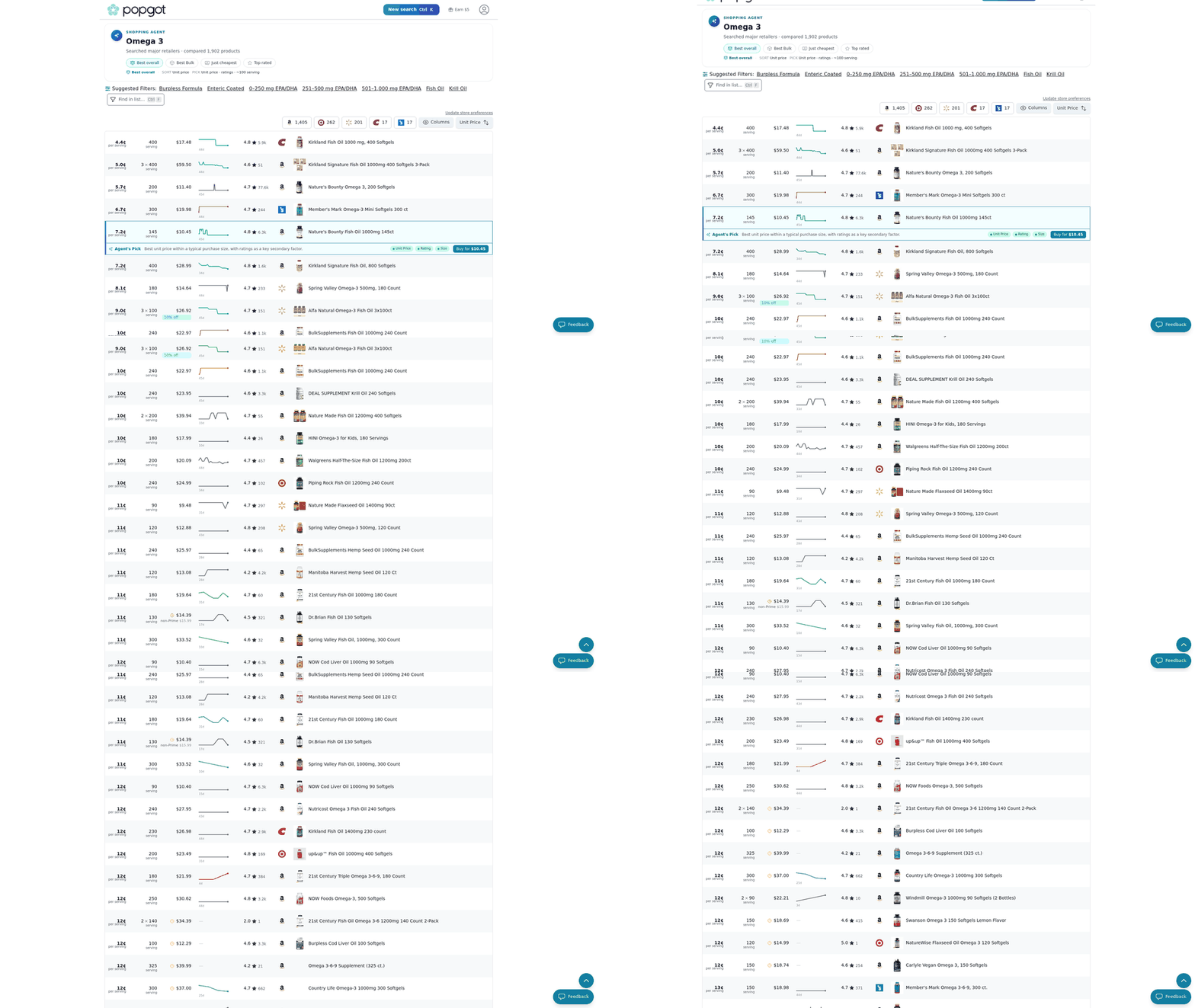
How label parsing turns product text into searchable data
When you specify product requirements on Popgot, our AI agent searches across billions of products and reads every label to extract the details you care about. The challenge is that ingredient lists vary wildly: "Omega-3 fatty acids (fish oil, EPA 500mg, DHA 300mg)" and "Fish oil providing 800mg EPA/DHA" describe the same spec in different formats. Natural-language processing models parse these variations into normalized fields. A recent analysis of AI-driven food label systems tested this pipeline on over 500 long-form product descriptions and extracted 459 distinct claims with 79.3% recall, meaning the system caught nearly four out of five testable health assertions.
We see this same pattern in our own ingredient extraction. When a user searches for "protein powder without artificial sweeteners," our AI agent identifies every sweetener synonym (sucralose, acesulfame-K, aspartame) across the product listings it reads, then flags products that contain any match. The system doesn't rely on brands self-tagging their products as "no artificial sweeteners"—it reads the actual ingredient list and verifies the claim independently.
How verification prevents unit confusion and label mismatches
Extraction alone isn't verification. Once our AI agent has parsed dosage information from a label, it checks whether the product meets your specified requirement. If a product lists "25mg Vitamin D3" in one unit but the effective amount is better understood as 1000 IU (which equals 25 micrograms), accurate parsing prevents confusion. If a label claims "clinically effective dose" but cites a quantity that differs from what clinical research tested, understanding those thresholds helps inform your decision.
To prevent these discrepancies, verification engines apply standardized conversion tables and validation rules. When a label uses non-standard terminology or alternative units, the system translates them into a single benchmark. This automated cross-referencing ensures that the values displayed to the shopper are mathematically consistent, removing the need for manual calculations.
When you specify "fish oil with at least 1000mg EPA+DHA," Popgot's AI agent verifies each product's EPA and DHA content against your requirement and throws out everything that doesn't match. Products with ambiguous label phrasing or missing nutritional data require closer review—in those cases, checking directly with the manufacturer can clarify what the label doesn't fully specify.
Why verified matches matter more than match volume
A system that surfaces 200 "matches" for your query but includes products where the dosage is buried in a proprietary blend or rounded up from a lower amount creates more work, not less. We prioritize showing you only products that meet your exact requirements: better to show you 12 verified products than 200 maybes.
Shoppers value a clean, accurate list of products that fit their parameters far more than a massive catalog of near-misses that require manual double-checking. Showing you exactly how a product matched your criteria builds the value that drives decisions.
Skip AI verification tools that lean on brand-submitted data without independent label reads. If the system hasn't parsed the actual ingredient list, it's repeating marketing claims, not verifying them. One diabetic user avoided a "low-sugar" granola after discovering it contained 12g sugar per serving—the brand's front-of-pack claim was technically true (compared to 18g in a competitor) but misleading for blood-glucose management. The tag "low sugar" doesn't tell you the gram count, and the gram count doesn't appear in a filterable field.
Custom filters that match how you actually shop
We built our custom filter system around a reality: generic "healthy" recommendations don't match how you actually shop. When you specify "keto-friendly, under 3g net carbs, no soy," you're not browsing—you're hunting for products that fit precise dietary boundaries. Our AI agent scans ingredient lists and nutrition panels to surface only what matches your exact requirements, then layers in price and availability data so you can make the final call.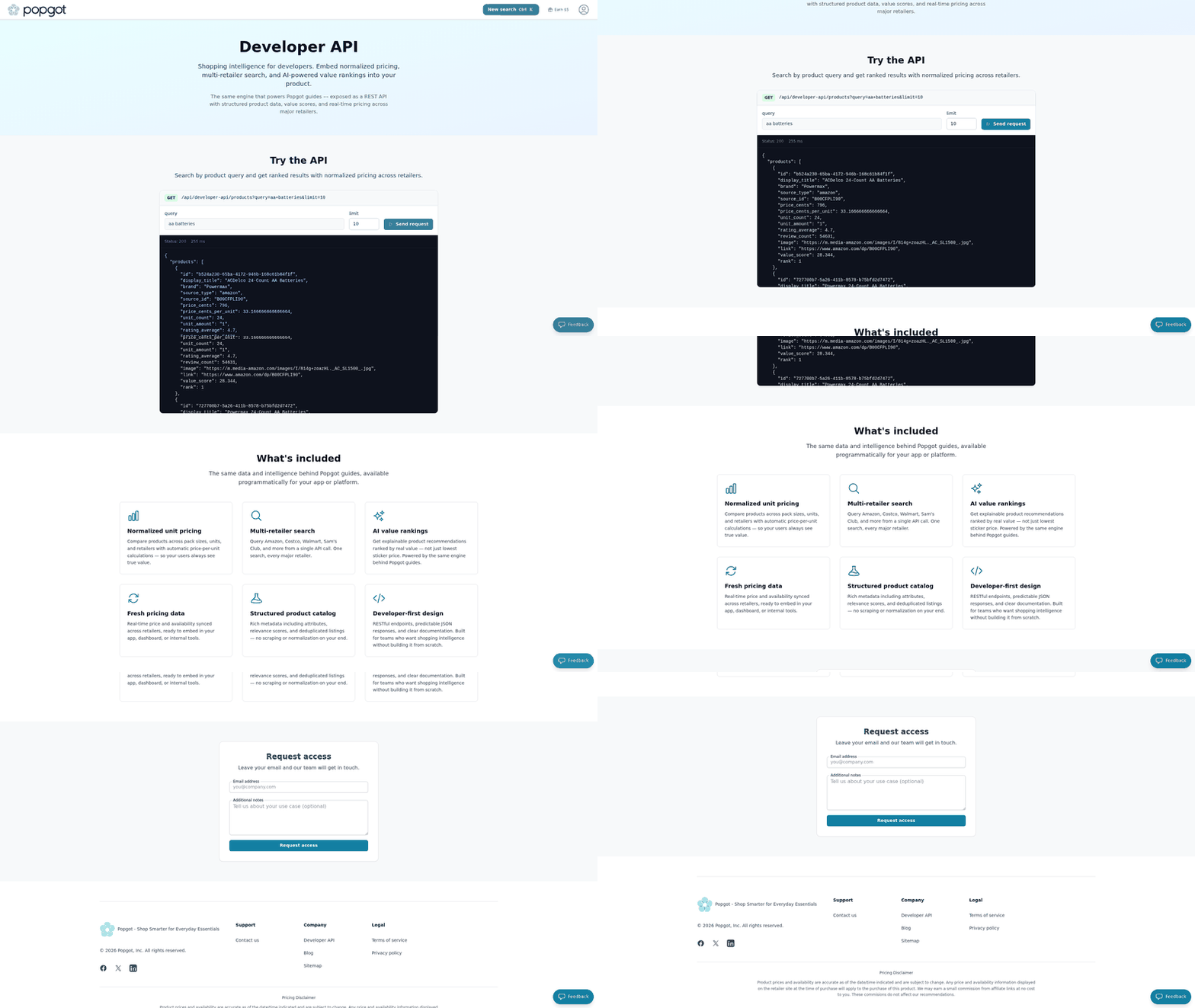
How AI verification translates your requirements into accurate results
Popgot's AI agent translates complex user requirements into precise search parameters. Instead of relying on broad categories like "healthy snacks," the system evaluates the specific chemical and nutritional profiles of each product. This level of precision ensures that the resulting recommendations are highly relevant to your specific dietary goals, directly matching your intent with the correct product formulations.
This precision is necessary when setting multi-constraint filters. A user can specify a need for a vegan Vitamin D3 supplement with a minimum of 2,000 IU per serving, completely free of soybean oil. The filter doesn't suggest random alternatives; it returns only the items that meet every single one of those criteria, allowing you to compare accurate unit pricing across retailers instantly.
A hybrid AI model combining Retrieval-Augmented Generation and a fine-tuned LLaMA 2 approach contextualized ingredient safety for a pregnant individual with heart disease, flagging hydrogenated oils and excess sugar based on her medical profile. A universal 1-10 health rating would have missed those context-dependent risks entirely. When another system analyzed a protein bar with a 4/10 rating, the feedback highlighted high sugar content—but that rating means nothing if you're an endurance athlete who needs quick carbs versus someone managing diabetes.
Verified specifications keep results aligned with your actual needs
Customizable search filters allow you to define exact parameters, such as specific ingredient exclusions or certified organic standards. This level of detail helps bridge the gap between professional dietary advice and the reality of grocery store shelves. By verifying these specifications directly against the ingredient list, the system ensures that your purchases remain strictly aligned with your nutritional plans.
Our platform searches across eight major retailers simultaneously, including Amazon, Walmart, and Target, to provide comprehensive product comparisons. We automatically extract and calculate unit prices from various retailers, helping users find the best deals without opening dozens of tabs. The Academy of Nutrition and Dietetics recommends consistent nutrient intake and warns against ad-hoc supplement purchases in their 2023 position paper—our filtered search approach aligns with that guidance by helping you establish reliable sources for the products that meet your actual dietary requirements.
What builds trust: accuracy, privacy, and knowing the limits
We verify product specifications using AI that reads supplement facts panels and ingredient lists, so when you search for "fish oil with 1000mg EPA+DHA," you see only products that match your requirements—no guesswork, no marketing spin. Our AI agent checks each product's label details against the criteria you specify.
How AI verification reduces human error in label review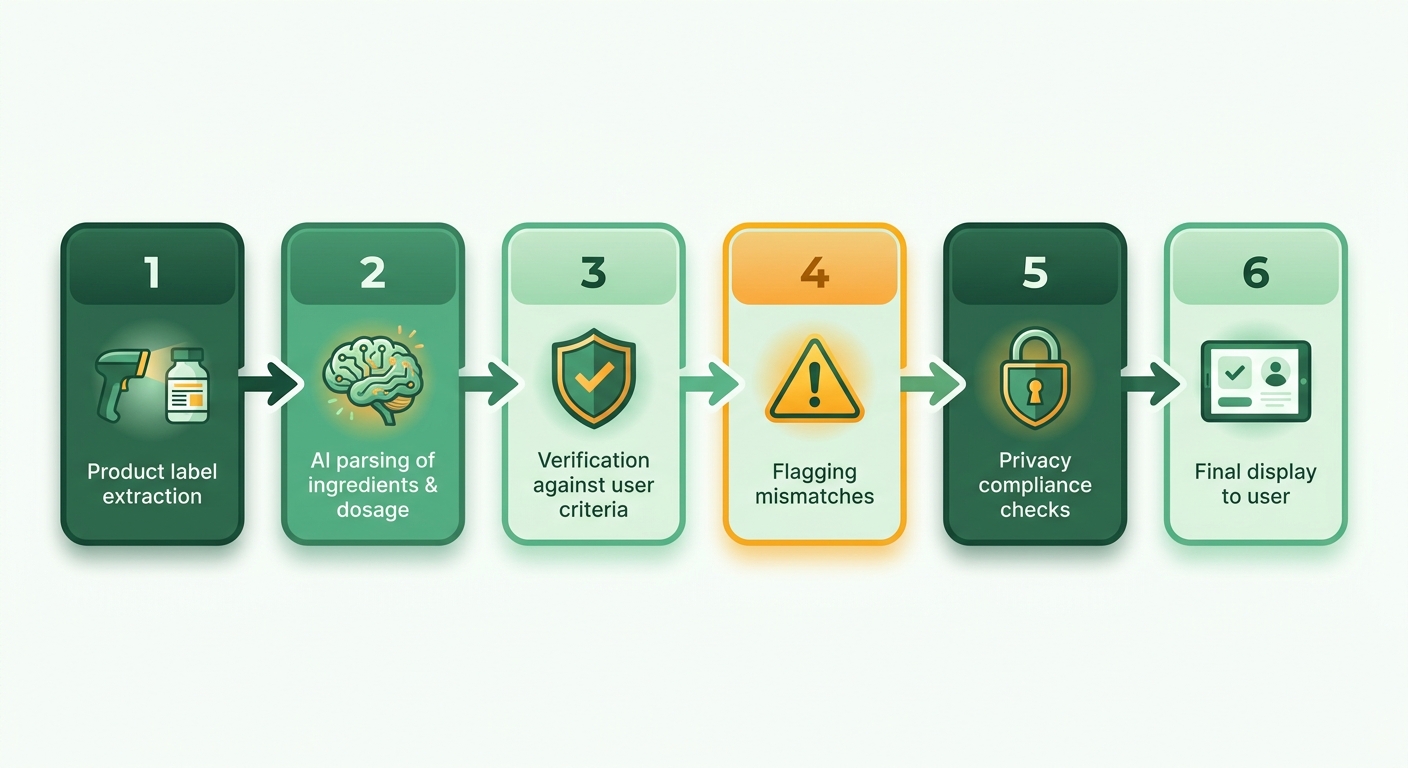
Automated verification systems significantly reduce the risk of oversight in ingredient tracking. While manual reviews are susceptible to fatigue, machine-learning models can scan thousands of data points continuously without losing accuracy. This systematic approach ensures that even minor ingredient changes or newly introduced additives are flagged immediately, maintaining a reliable database for consumers who rely on absolute accuracy.
Consumer-facing verification can draw on this same compliance rigor. A compliance expert put it plainly: "AI doesn't get tired. It doesn't skim over details because it's late on a Friday." Verification systems work best when they combine automation with oversight to confirm the AI read the label correctly and didn't hallucinate an ingredient that isn't there.
When applied to product search, this same precision helps shoppers verify what's actually in a product before purchase. The technology that prevents regulatory violations at the manufacturing level can prevent purchase mistakes at the consumer level—matching ingredient requirements to actual label content rather than relying on retailer category tags or vague product descriptions.
Privacy and transparency in product search
The platform is structured to prioritize user privacy, allowing you to find products that match your specifications without harvesting unnecessary personal data. You can input your dietary preferences and ingredient requirements freely, knowing the system is designed to facilitate product discovery rather than build a tracking profile.
This matters because nearly 60% of consumers engage with generative AI for health decisions, and trust remains the friction point. The same survey of over 13,000 adults across 15 countries found that concerns about privacy and reliability persist even as adoption grows. Skip tools that ask for your full medical history to recommend a multivitamin—you shouldn't need to disclose conditions to verify ingredient lists.
Medical disclaimers: when to consult a healthcare professional
Popgot verifies product specifications like ingredients and dosages based on what appears on product labels and retailer listings. This is product information, not medical advice. If you're managing a health condition, taking medications, or have dietary restrictions that could interact with supplements or food ingredients, consult your healthcare provider before making purchasing decisions.
The line between product information and clinical guidance is clear: we verify what's on the label, not whether it's right for your specific case. Transparent verification tools that surface ingredient details and dosages help consumers distinguish evidence-based product information from marketing copy, but they don't replace professional medical guidance.
Why AI-powered product verification matters now
The rapid adoption of digital health tools reflects a fundamental shift in how people manage their well-being. Traditional search engines and retail filters are no longer sufficient for shoppers who require precise ingredient control. As consumers become more proactive about their health, they require tools that can analyze product formulations in real time, transforming a tedious manual chore into an automated, reliable process.
This shift is particularly evident among younger demographics who integrate technology into every aspect of their daily routines. For these shoppers, a product's digital footprint—including its verified ingredient list and sourcing transparency—is just as important as its physical availability. Automated verification bridges this gap, providing instant clarity at the point of decision.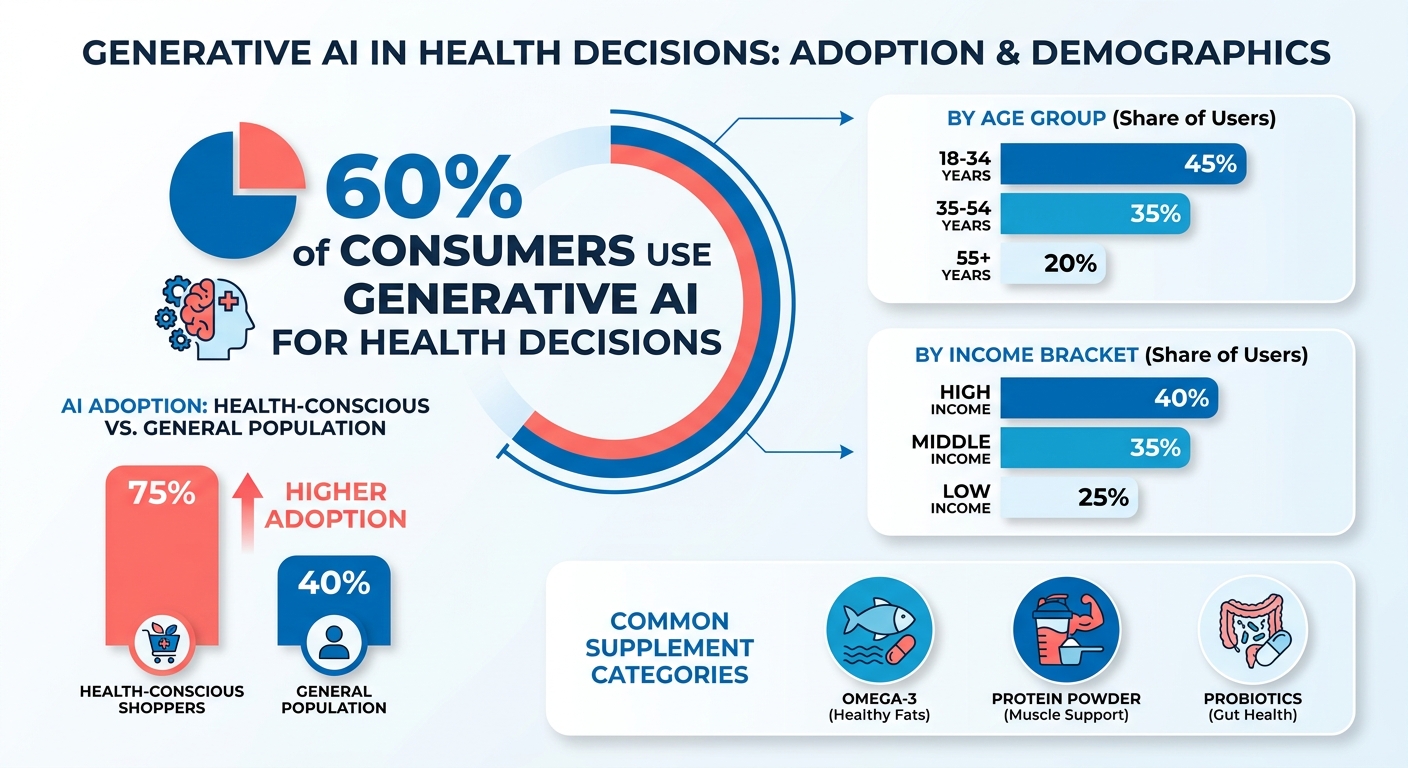
Why personalization drives purchases while transparency builds the foundation
The relationship between personalization and transparency highlights a key aspect of consumer trust. While tailored recommendations directly encourage purchase decisions, the underlying data must be verifiable to sustain that trust over time. Providing clear, traceable evidence of why a product matches a user's criteria builds long-term confidence, transforming a simple recommendation into a verified choice.
Transparency operates as a supporting layer. When a system clearly displays the specific ingredients and dosages that triggered a match, it elevates the perceived value of the recommendation. Shoppers feel more secure in their purchases because they can independently verify the facts behind the match.
This tracks with what we see in the broader food industry. Platforms analyzing over 956,000 packaged foods with 485,851 ingredient terms provide the foundation—the raw material for accurate, personalized AI filtering. Without verified data underneath, personalization becomes guesswork. The infrastructure layer matters because it determines whether recommendations reflect actual product composition or just label marketing claims.
The economic reality behind health-conscious shopping habits
The wellness market tells a spending story that contradicts assumptions. Gen Z and millennials account for 41% of annual wellness spending despite being only 36% of the adult population. Younger generations prioritize wellness not because they're trend-chasing, but because they're dealing with higher burnout and health concerns earlier in life.
84% of U.S. consumers call wellness a top priority, with 94% in China agreeing. When demand runs this high, the bottleneck isn't willingness to spend—it's verification accuracy. You need to know whether that expensive probiotic bottle actually contains the specific, clinically studied strains you are paying for. The alternative is trial-and-error purchasing, where you buy multiple different brands before finding one that actually matches your requirements—wasting both money and time.
When physical discovery meets digital verification
Modern shopping platforms allow you to define your requirements once—whether they are numeric thresholds like protein content or categorical exclusions like gluten—and let the system scan the market for you. The AI isn't recommending products based on vague trends; it is verifying products against your established criteria. This shift from discovery to verification ensures that your purchase decisions are backed by hard data.
The integration of digital tools with traditional shopping patterns creates a new workflow: research and filter online, then choose where to buy—whether that's in-store pickup, same-day delivery, or direct e-commerce. This hybrid approach lets you maintain the tactile experience of product selection while eliminating the manual labor of label-reading. For categories where formulation details determine effectiveness—supplements, specialty foods, allergen-free products—automated verification removes the guesswork.
Skip AI product verification if you're buying commodity staples where brand doesn't matter—flour, sugar, basic household items. The value shows up when ingredient composition, dosage precision, or allergen avoidance directly affects whether a product works for your health goals.
Comparing products across Amazon, Walmart, Target, and specialty retailers
Comparing products across different e-commerce platforms often reveals significant discrepancies in pricing and availability. By aggregating listings from major online merchants into a single interface, shoppers can compare identical formulations without navigating multiple websites. This unified approach ensures you find the exact product you need at the most competitive price available.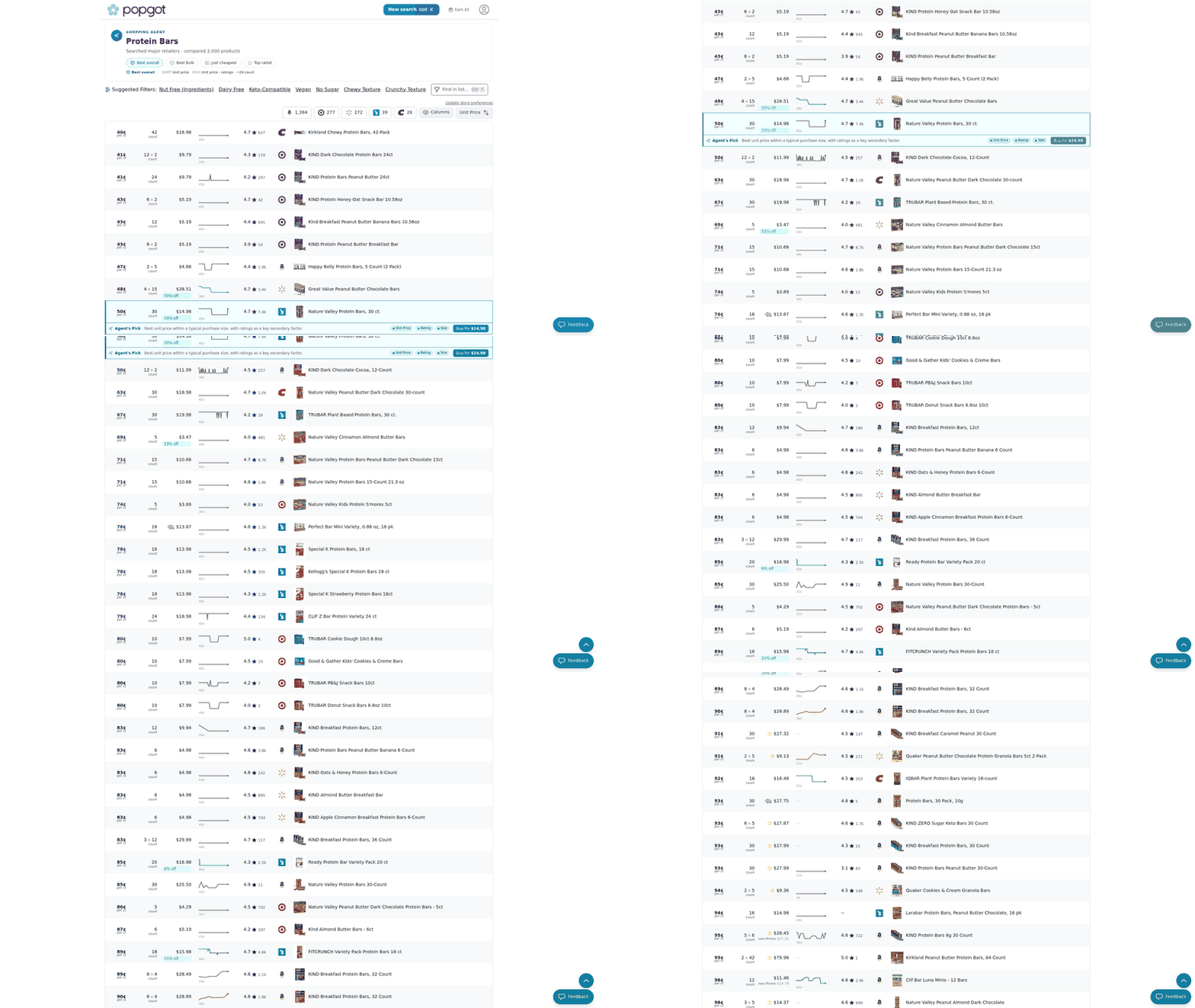
Understanding unit pricing across retailers
Retailers display prices differently—some show cost per bottle, others per serving or per ounce. Popgot automatically extracts and calculates the real unit price from every listing, whether it's per serving, per ounce, or per count. This lets you sort by what you actually pay and spot the best value at a glance, rather than comparing inconsistent pricing formats across sites.
Focusing on specifications
Our AI agent verifies product specifications such as active ingredients and precise dosages. If you require a magnesium supplement with at least 200mg of elemental magnesium per serving, the platform filters out products that use inferior forms or lower concentrations. This ensures that every option presented on your results page strictly aligns with your health requirements, saving you from manual label inspection.
You get one results page with verified products and accurate unit pricing instead of cycling through multiple retail sites manually. No more guessing whether products on different sites actually have the same formulation or which retailer offers the best per-serving cost.
References
[1] Consumers Are Ready for AI Health Care—Are Systems? - https://www.bcg.com/publications/2026/consumers-are-ready-for-ai-health-care-are-systems
[2] Artificial Intelligence-Driven Recommendations and ... - PMC - https://pmc.ncbi.nlm.nih.gov/articles/PMC11940918/
[3] Groceryshop 2025: The Era of AI, Health & Value - https://coresight.com/research/groceryshop-2025-wrap-up-reinventing-grocery-for-an-ai-driven-health-focused-and-value-conscious-era/
[4] Health Conscious Consumer Statistics (2026): Latest Trends - https://capitaloneshopping.com/research/health-conscious-consumer-statistics/
[5] Majority of Consumers Likely to Purchase Health Goods - https://aytm.com/post/healthy-living-survey-2
[7] The Future of CPG Label Compliance: How GenAI is ... - https://www.blend360.com/thought-leadership/the-future-of-cpg-label-compliance-how-genai-is-transforming-label-and-ingredient-management
[8] How AI is Transforming Label Compliance for CPG Brands - https://www.globalvision.co/blog/how-ai-is-transforming-label-compliance
[9] AI and Transparency in Food: How 2026 Tech Is ... - https://www.journeyfoods.io/blog/ai-and-transparency-in-food-how-2026-tech-is-transforming-ingredients-safety-and-supply-chains
[10] Food additive lens: an on-device AI application for real- ... - https://pubs.rsc.org/dd/article/5/3/1172/1230937/Food-additive-lens-an-on-device-AI-application-for
[11] WISEcode - https://wisecode.ai/
[12] NutriScan: An AI-Powered Mobile Application for Ingredient ... - https://www.researchgate.net/publication/397847088_NutriScan_An_AI-Powered_Mobile_Application_for_Ingredient-Based_Food_Quality_Analysis
[13] FoodVisor: An AI-Powered Food Label Analysis System for ... - https://www.researchgate.net/publication/394922675_FoodVisor_An_AI-Powered_Food_Label_Analysis_System_for_Ingredient_Interpretation_and_Personalized_Dietary_Recommendations
[14] Automating Nutritional Claim Verification: The Role of OCR ... - https://www.researchgate.net/publication/387921937_Automating_Nutritional_Claim_Verification_The_Role_of_OCR_and_Machine_Learning_in_Enhancing_Food_Label_Transparency
[15] Nutriscan An AI-Powered Mobile Application for Ingredient ... - https://www.researchgate.net/publication/397817232_Nutriscan_An_AI-Powered_Mobile_Application_for_Ingredient-Based_Food_Quality_Analysis
Frequently Asked Questions
1. How does AI verification differ from just using a retailer's search filters?
Retailer filters rely on category tags and brand-submitted data. AI verification reads the actual ingredient list and nutrition panel on every product label, then flags items that don't meet your numeric requirements—like minimum EPA dosage or maximum net carbs—so you see only verified matches, not keyword approximations.
2. Can AI tools catch misleading "low sugar" or "clinically effective" label claims?
Yes, by analyzing the complete nutrition facts panel rather than relying on front-of-pack marketing. A product labeled "high protein" might rely on low-quality gelatin sources, or a "low-sodium" soup might still exceed your daily dietary limits. AI verification extracts the exact values from the ingredient list and nutrition table to flag these discrepancies automatically.
3. Why does personalization boost purchases while transparency explanations don't?
Shoppers prioritize utility and relevance over algorithmic explanations. When a tool successfully tailors results to your exact dietary needs, it directly solves your shopping challenge. While knowing why a product was selected can build general trust, the primary driver of a purchase is the confidence that the product's verified ingredients match your specific health goals.
4. Should I trust AI verification for medical conditions or medication interactions?
No. AI verification confirms what's on a product label—ingredients, dosages, allergens—but it doesn't assess whether those ingredients interact with your medications or suit your specific health condition. If you're managing a medical issue or taking prescriptions, consult your healthcare provider before purchasing.
5. How do AI tools handle products with vague proprietary blend labels?
When a label lists a "proprietary blend" without specifying the exact dosage of each ingredient, the AI flags the product as having incomplete data. Because the system cannot verify whether the individual ingredients meet your numeric thresholds, it alerts you to the lack of transparency so you can make an informed decision or choose a fully disclosed alternative.
6. Why do multi-retailer searches matter if Amazon has most supplements?
While major retailers carry a vast inventory, they do not always offer the best pricing or stock every specialized formulation. Niche brands and regional retailers often carry high-quality, cost-effective alternatives that big-box search algorithms overlook. Comparing options across multiple platforms helps you discover these hidden values and secure the most competitive unit price for your specific formulation.