
Amazon Price Compare for Weekly Snacks: Track Price Drops Fast

Key Takeaways
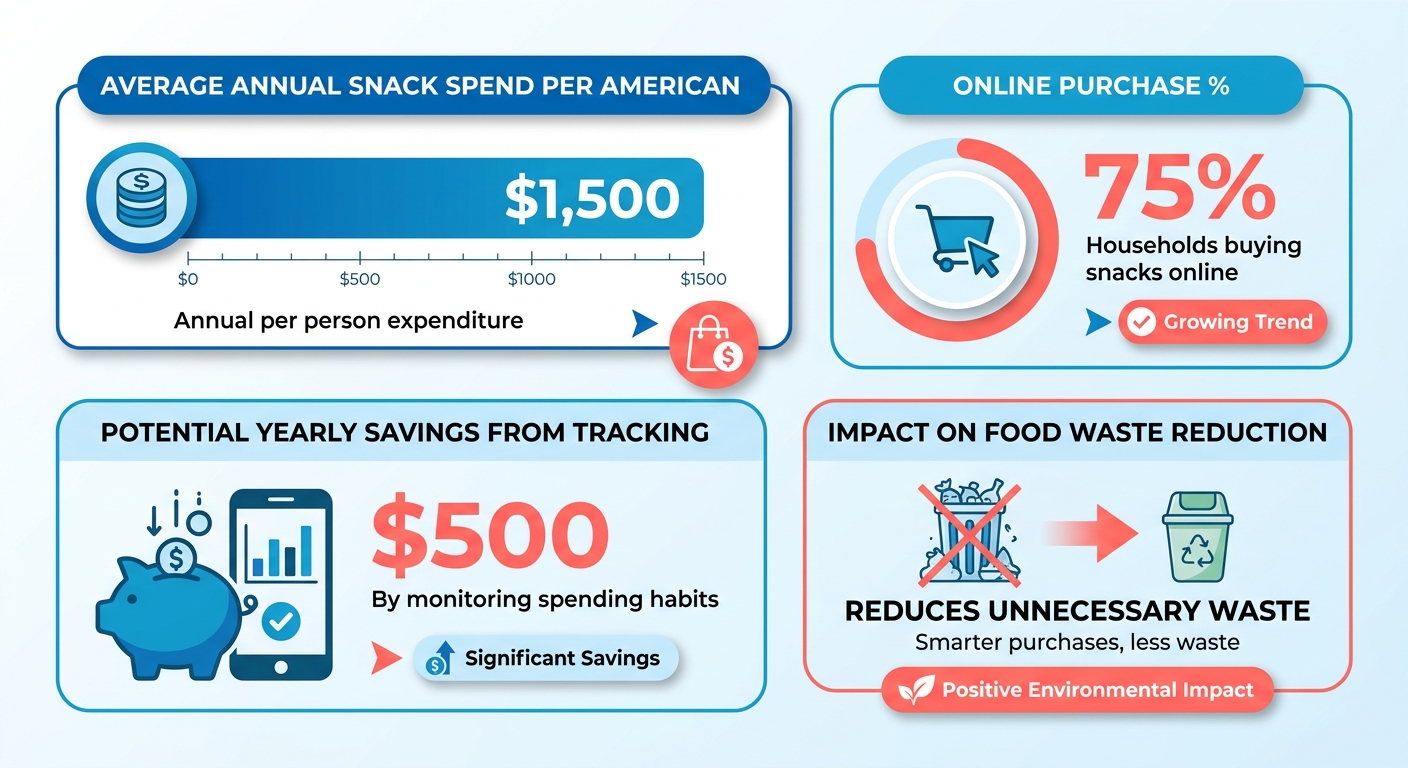
- The average American spends about $1,500 a year on snacks, and roughly 75% of households now buy at least some of them online.
- Watching snack prices week to week can save a household up to $500 a year and cut the waste that comes from over-buying.
- Snack prices move constantly. Without a tracking tool, you pay whatever the listing happens to say the day you shop.
- Comparing prices by hand across stores is slow and easy to get wrong. The deal is often gone before you finish checking.
- Keepa charts price history across more than 5 billion products, so you can tell whether today's price is actually good.
- Camelcamelcamel sends free alerts the moment a watched item drops below your target price.
- AI-driven tools filter listings by brand, size, and dietary needs, and verify ingredient details before products even show up.
Why bother tracking snack prices at all
Snacks eat a bigger chunk of the grocery budget than most people admit, especially now that so much of it happens online. Buy on autopilot and the costs creep up quietly, along with a pantry full of stuff you didn't really need.
And prices don't sit still. A bag of nuts or a box of protein bars might cost one thing this week and drop the next. With no way to watch those swings, you pay the sticker price on whatever day you happened to shop.
Why doing it by hand is miserable
Comparing prices across multiple retailers by hand is slow, repetitive, and easy to botch. You open tab after tab, scribble down prices, and try to remember which size was cheaper per ounce. By the time you're done, the deal may have already moved.
Tracking tools fix this by logging the history for you. Keepa compiles long-term pricing trends so you can tell whether a current discount is real or theater. Camelcamelcamel watches specific listings and pings you when an item hits the price you set.
Better tools add smart filters on top. Instead of sorting search results yourself, you isolate products by brand, package size, or dietary certification, so you only look at options that actually fit your household.
Who gets the most out of this
Health-conscious shoppers, parents, and anyone managing a specific diet. These are the people who care about both the price and what's actually in the bag, so a low number alone isn't enough.
Ingredient transparency matters more than it used to. A National Grocers Association study found 70% of consumers prioritize transparent ingredient info. Automated verification answers that by surfacing checked ingredient data right next to accurate unit pricing.
Parents buying snacks every week feel every price swing. Someone managing allergies needs to trust that a "low-sugar" or "gluten-free" label is accurate before it goes in the cart. Multi-retailer search lets both groups compare the same product across stores in seconds.
The features that actually matter
A good setup combines verification, search breadth, and honest per-unit math. Here's how the pieces compare:
| Feature | What It Does | Who It Helps | Time to Use | Saves Money | Cuts Waste |
|---|---|---|---|---|---|
| AI Product Verification | Confirms ingredient accuracy | Dietary-needs shoppers | Instant | Indirect | Yes |
| Multi-Retailer Search | Compares prices across stores | Bargain hunters | Seconds | High | No |
| Accurate Unit Pricing | Shows true cost per ounce | Bulk buyers | Instant | High | Yes |
| Price Drop Alerts | Notifies you of drops | All shoppers | Set once | High | No |
| Price History | Shows past pricing trends | Deal verifiers | Instant | Medium | No |
Setup runs about 10 to 15 minutes. After that, the updates and notifications do the watching for you. As this Reprice guide on tracking price drops lays out, the monitoring is what separates guessing from saving.
The payoff is concrete: compare Amazon prices on your weekly snacks, catch drops fast, and save up to 30% on everyday stuff without the manual grind.
Letting automated deal-finding do the watching
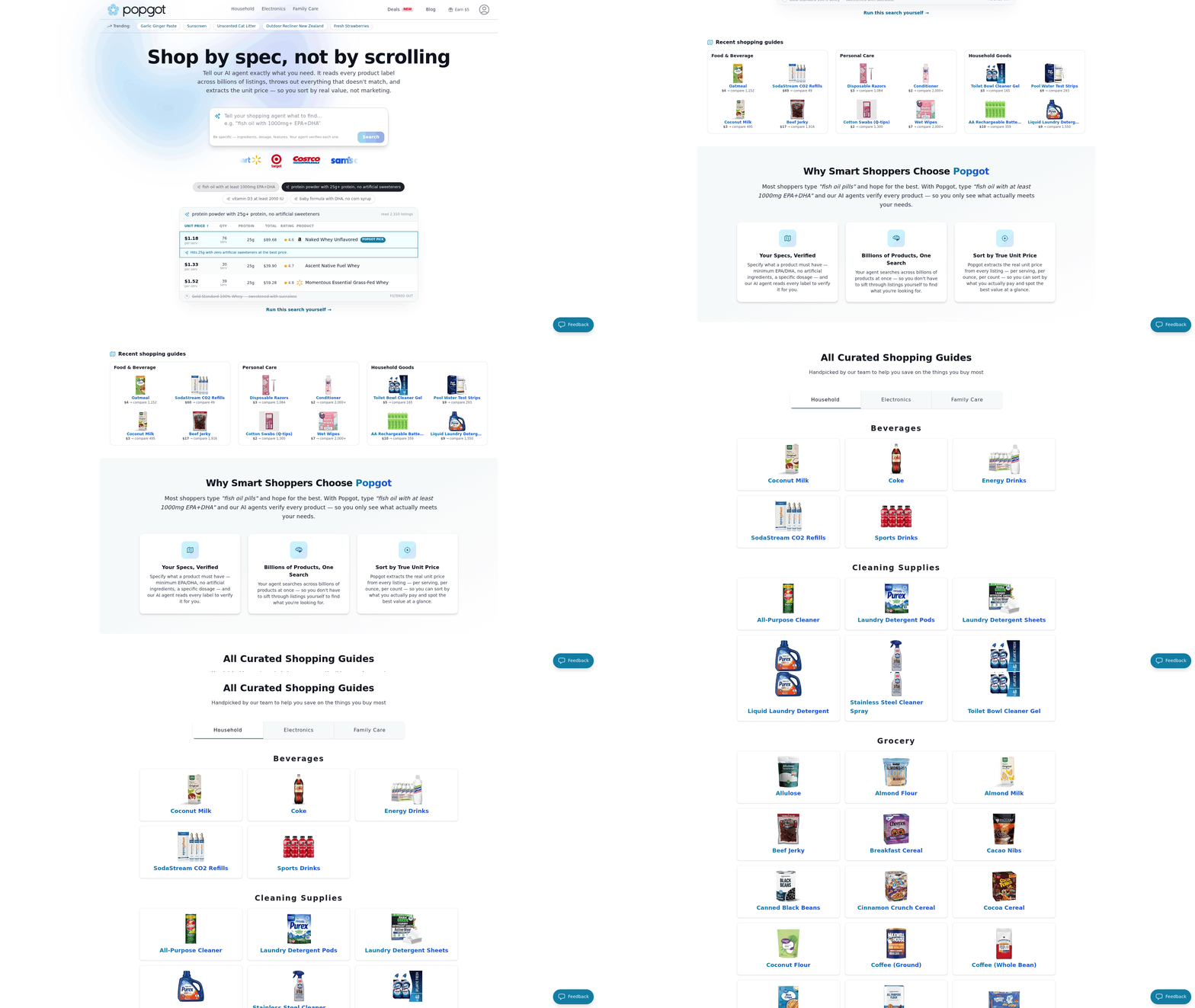
Automated deal-finding watches snack prices for you and pings you the moment they drop. You set your targets once and let the system monitor instead of checking listings every day. Timing is most of the game here. A lot of grocery items cycle through predictable promotional dips, and missing the low point can mean paying a premium for weeks until the next sale rolls around.
The platform tracks price history on the snacks you care about and flags big drops automatically. Tools in this space pull data from product pages and alert you when prices fall, as Bright Data's roundup of price trackers explains.
Setting up the alerts
Add the snacks you buy regularly, then set a threshold for when you want a heads-up. Most trackers let you write a rule like "alert me when the price drops below" a number you pick, as Visualping's price-tracking guide describes.
You can make these as narrow or wide as you want. Watch one brand of protein bars. Or watch a whole category like snacks or beverages and catch deals across the board. Track gluten-free snacks, for instance: add three cracker brands you rotate through, set an alert for each, and when one drops 20% over the weekend you get the ping and buy before it climbs back.
Customizable notifications: alerts you control by product, category, or price threshold, so you only hear about deals that matter to you.
What curated guides add
Curated guides hand you a vetted list of frequently bought items, so you skip the research and go straight to good buys. They pair well with automated tracking. The guide tells you what to buy; the alerts tell you when.
This works because people trust recommendations. A Nielsen study found 80% of consumers are more likely to buy something a trusted source recommends, like a shopping guide. The Academy of Nutrition and Dietetics also suggests using shopping guides to make better purchasing calls.
Build a snack cart from a high-protein guide and you can pull a vetted list of jerky, roasted chickpeas, and pumpkin seeds, drop them on your watch list, and turn on drop alerts for each. You catch those premium items at their lowest points instead of paying full sticker.
You can tailor the guides to how you eat. Gluten-free, keto, low-sugar, whatever. The guide stays useful because it reflects your actual diet.
A few best practices
- Set realistic thresholds. A 10-15% drop is common. Waiting for 50% usually means missing the buy window.
- Track by category for staples. This catches deals you didn't know to look for, a tactic backed by proven price-monitoring strategies.
- Check price history before buying. A "drop" isn't a deal if the item was cheaper last month. History charts show you the real baseline.
Pair automated alerts with a curated guide and you stop guessing. You buy the right snacks at the right price, week after week.
What I'd actually set up
Tracking weekly snack prices comes down to three habits: automate the watching, follow curated buying advice, and shop on a schedule. Stack those and your snack spending stays predictable instead of creeping up week to week. Once it's configured, it runs in the background while you do something else.
An AI-driven platform handles the comparison work across Amazon listings. It watches price history, flags real drops, and surfaces the best per-ounce value, so you stop guessing which size to grab.
The routine, step by step
Start with automation, layer in guidance, then lock in a buying rhythm. Three steps cover the whole workflow.
-
Turn on automated deal-finding. Add the snacks you reorder most and set your price targets. The platform monitors them and alerts you when prices fall, so you never miss a drop.
-
Use curated shopping guides. Instead of scrolling endless listings, lean on guides that group the best snack deals together. Less time hunting, more value spotted fast.
-
Schedule routine purchases. Pick a weekly window to review alerts and restock. A fixed rhythm prevents both panic-buying and over-buying, which keeps waste down.
Why personalization makes it stick
Personalized recommendations matter more than most shoppers realize. A study by market research firm IRI found 90% of consumers are more likely to keep using a platform that delivers personalized recommendations and savings. The better the system learns your habits, the more useful each alert becomes.
That feedback loop is what turns a one-time price check into a lasting habit. You see deals on the snacks you actually buy, not random listings.
A quick example
A household reorders trail mix, protein bars, and crackers every week. They set price targets once, get pinged when each item drops, and restock during one Sunday review. Tracking per-ounce value also steers them toward bulk sizes when those land cheaper than single packs, so each order goes further.
One last tip: share your favorite snacks and deals on social. A quick post helps friends save too, and it spreads the good finds around.
Letting AI verify the snack before you compare it
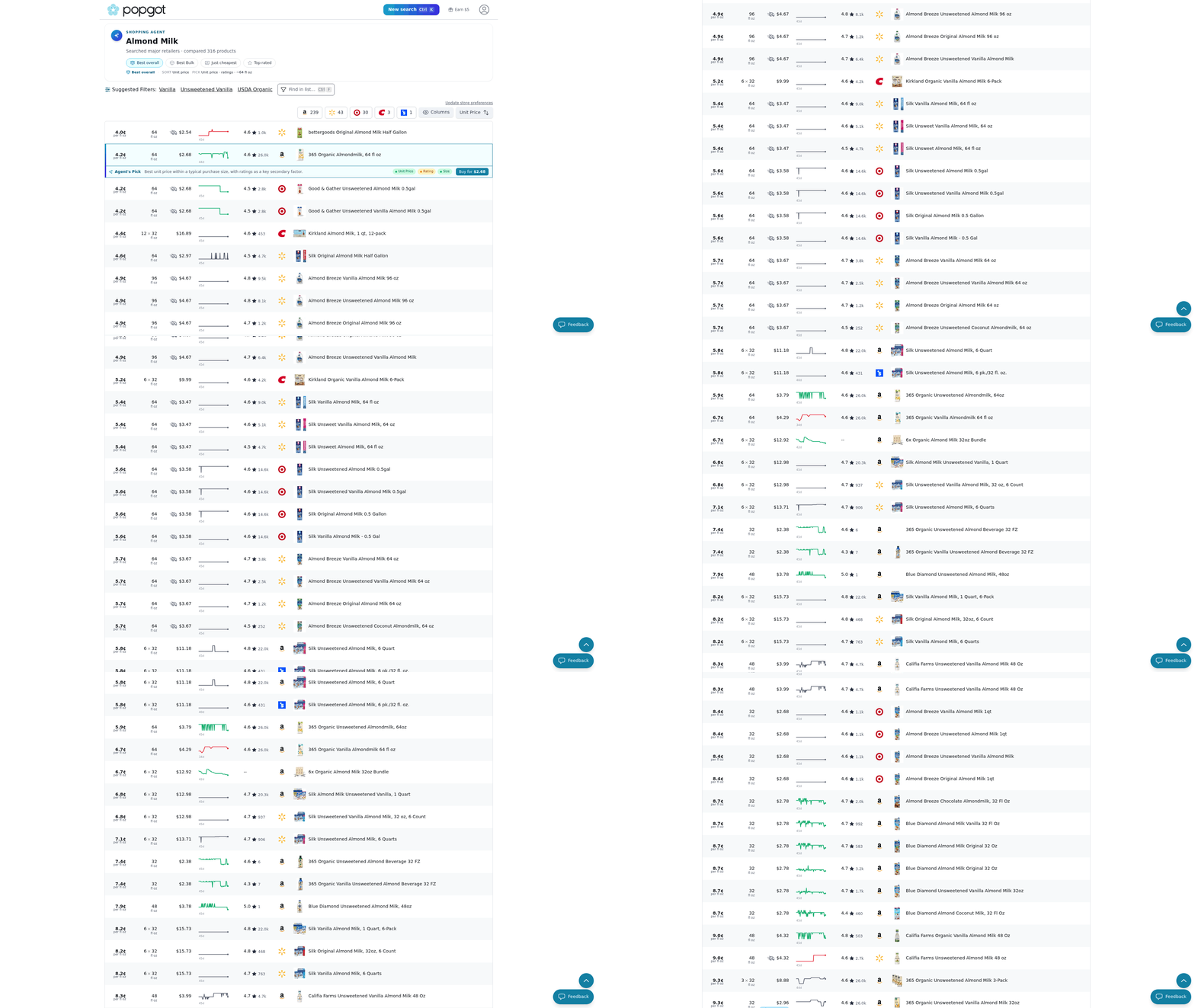
AI Product Verification checks a snack's details before you ever add it to a comparison. The agent reads each product's specs, ingredients and serving sizes, then filters out anything that doesn't match what you want. You see only the snacks that fit, not a wall of near-misses.
Online snack listings are notoriously messy. Two bags of "allergen-free cookies" that look identical can carry wildly different cross-contamination warnings. Verification reads the fine print so you don't have to squint at every label.
What the verification actually checks
AI Product Verification: an agent that confirms a product's specs, like ingredients and dosages, before showing it to you. The result is a shortlist where every option meets your needs. No clicking into ten listings to find the one that fits your diet.
Say you need nut-free snacks for a school-safe lunchbox. The agent reads each listing's manufacturing warnings and ingredient list and filters out anything processed in a facility with peanuts. That skips the manual label-reading that makes comparison shopping so slow.
This kind of spec-matching answers a real demand. A Nielsen study found 60% of consumers will pay more for products with transparent ingredients. Verification surfaces that transparency automatically instead of making you dig.
How multi-retailer search works
The platform searches eight major retailers at once, including Amazon, Walmart, and Target. One search gets you the full picture across stores instead of separate tabs for each.
Searching beyond Amazon matters because the cheapest snack isn't always on the same site twice. A protein bar might be cheapest at Walmart this week and Target the next. Cross-retailer monitoring catches those swings, which is the whole idea behind tracking drops on Amazon and beyond.
Weighing three brands of organic veggie chips? The AI verifies each one's certification status, then pulls live prices from multiple stores side by side. You get one verified, ranked list instead of nine open tabs.
Why unit pricing beats sticker price
Unit pricing tells you the real cost per ounce, not just the number on the tag. The platform extracts and calculates unit prices from each retailer automatically, so you can fairly compare a 6-ounce bag against a 12-ounce one. The bigger pack isn't always the better deal.
This solves the math problem that wrecks manual comparison. A larger bag with a higher sticker price can cost less per ounce. Or more. Without unit pricing you're guessing, and guessing costs money over a year of snack runs.
Honest per-unit data is what separates a real deal from a flashy discount. Price-history tools like Keepa's tracking charts show how often "sales" aren't real savings. Pair verified specs with true unit pricing and you buy the snack that fits both your diet and your budget.
Putting your snack reorders on autopilot
Scheduling routine snack purchases means setting your reorders once so your favorites show up on a regular cadence. You pick the snacks, set the timing, and the platform handles the repeat ordering. No more scrambling when the pantry runs dry mid-week.
A routine order removes the friction that derails healthy habits. The average household makes about 1.6 grocery trips a week, and snacks are among the items most often forgotten or bought on impulse. Automated scheduling fixes both: it locks in what you actually want and skips the trip.
Setting up a recurring order
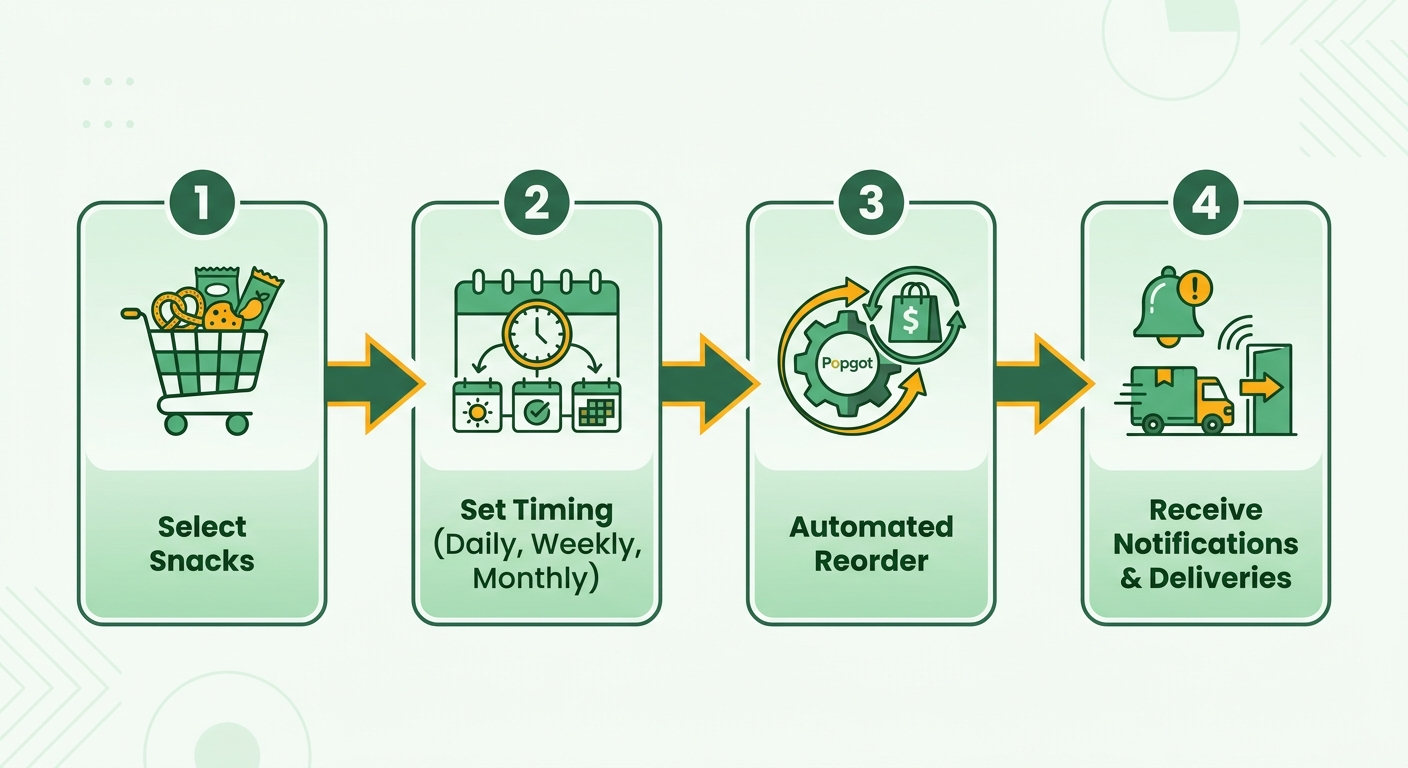
Choose the snacks you buy on repeat, then assign a delivery rhythm that matches how fast you go through them. The system reorders on that schedule without you lifting a finger. You stay stocked and stop placing the same order over and over.
The setup is straightforward:
- Pick your repeat items. Add the snacks you finish every week or two.
- Set the cadence. Weekly, biweekly, or monthly, based on real consumption.
- Confirm and forget. The platform places each order automatically from then on.
Pairing scheduling with price history keeps you from overpaying on autopilot. Tools that track price history across Amazon listings, like the ones cataloged in this Amazon price comparison guide, let you time reorders around real value instead of guessing.
Scheduling around dietary needs
It works just as well for specialized diets, where consistent restocking matters even more. Specialized items often sell out faster and cost more, so a missed reorder hurts. If you eat low-sodium pretzels and seed bars every week, scheduling both weekly means you never face an empty shelf or a last-minute substitution that breaks your diet.
This pairs naturally with watching price swings on those exact items. A tracker that flags large price drops since your last check means your scheduled low-sodium buys can shift to the lowest-cost window.
Notifications for one-off deals
Set up customizable notifications and you'll hear about price drops on your favorite snacks the moment they happen. You decide which items trigger alerts and what counts as a deal worth knowing about. Then your scheduled orders and your alerts work together.
The recurring order keeps the pantry full while the notifications catch one-off bargains worth stocking up on. One writer described how automating these calls changed their habits in a Yahoo deals piece on tracking Amazon price drops, where automation meant never missing a discount.
The Food Marketing Institute recommends automated features to streamline grocery shopping, and that advice tracks with how scheduling actually performs. Set your cadence, turn on your alerts, and the weekly snack run takes care of itself.
Running one search across eight stores
Searching one snack across eight retailers at once is the fastest way to spot the cheapest option. Multi-retailer search checks Amazon, Walmart, Target, Costco, Sam's Club, Aldi, Trader Joe's, and Kroger in a single query. You type what you want once, and it pulls comparable listings from all of them side by side.
Snack prices swing hard between stores. The same protein bar multipack can vary by several dollars depending on where you look, and those gaps shift week to week as promotions rotate. Instead of burning your evening checking each site, you see all the options on one screen.
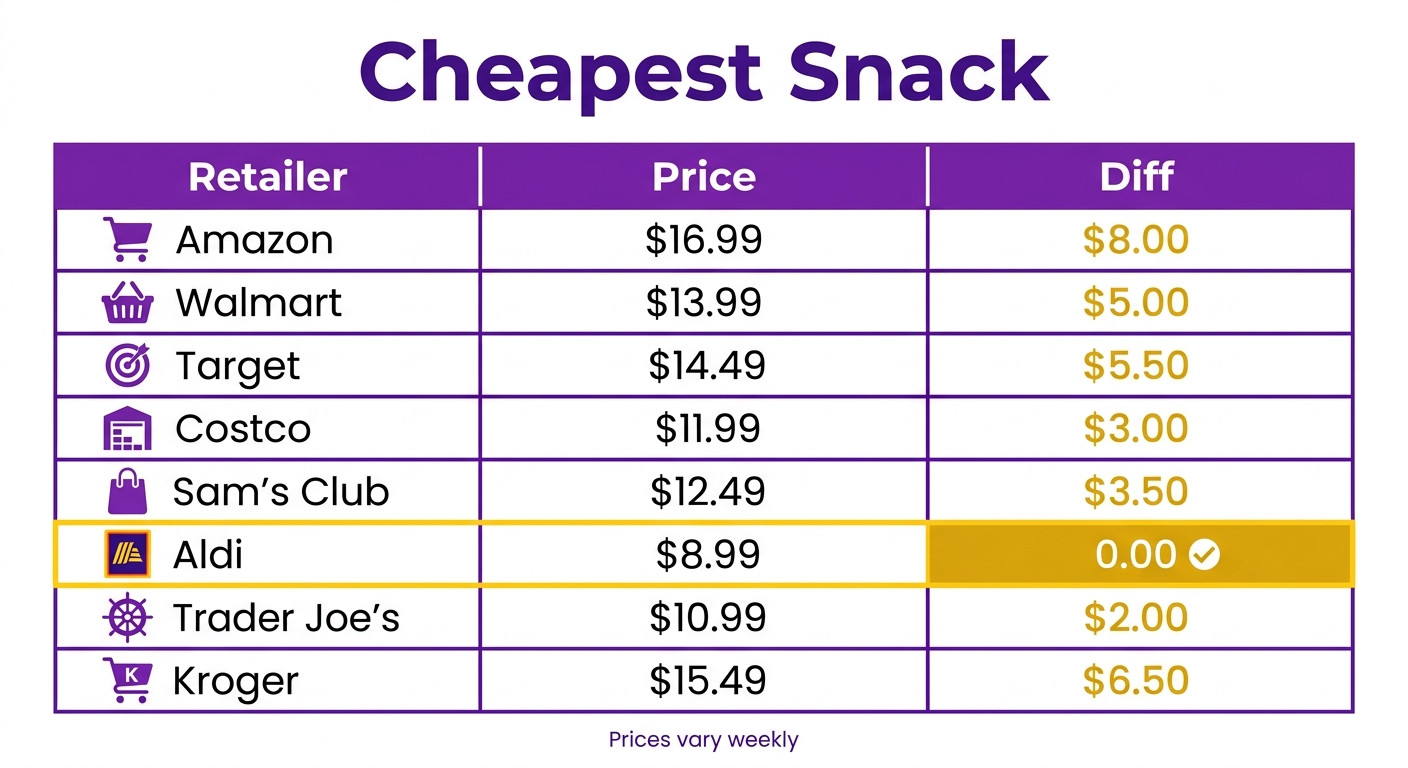
How searching eight stores at once works
Multi-retailer search: a single query that checks eight major retailers at once and returns matching snacks ranked by real value. You see every comparable listing in one place instead of opening eight tabs.
Say you want chia seed pouches. You enter it once. The AI agent reads the labels across all eight retailers, throws out anything that isn't actually organic, and lines up the survivors. A pack that costs $8.99 at one store might run $6.49 at another for the same ounces.
The per-ounce math is where most snack deals hide. The tool extracts the real unit price from every listing, so a "bigger" bag that's actually pricier per ounce gets exposed. You sort by what you pay per ounce, not the sticker total.
Filtering down to the real deals
Filter by retailer, price, and product features to cut a long list down to your real options. The filters stack, so you can demand organic, under a price cap, and from a store you actually buy from. The result is a short list you can act on in seconds.
That speed matters when prices change fast. Some retailers update snack pricing several times a day, so a deal you spotted at lunch may be gone by dinner. One search that respects your dietary rules and catches the current price delivers exactly that.
A practical filter sequence for snacks:
- Set your feature spec first. Organic, gluten-free, no artificial sweeteners. Each listing gets verified against it before you see anything.
- Add a price ceiling. Hide anything above what you'll pay so you stop scrolling past dead ends.
- Pick your retailers. Limit to the stores you already have accounts with, or open it wide to catch a lower price somewhere new.
The point is you reach the cheapest qualifying snack without comparing by hand. That hand-comparison slog is exactly the pain dedicated price trackers try to fix, as industry roundups of price-monitoring options note. This folds the monitoring into the search itself.
When to skip the wide search
Skip it when you're locked into one store. If you have a Costco membership and only buy snacks in bulk there, a cross-retailer scan just adds noise. Filter straight to that retailer instead.
It also adds little for a snack that's a flat commodity price everywhere, like a national-brand candy bar on promotion. The savings show up on per-ounce variable items: nuts, trail mix, protein bars, dried fruit. That's where one query across eight stores actually moves your bill, an angle this 2026 price-tracking comparison reinforces.
References
[1] Amazon US price tracker, price history, price watch, price drop alerts ... - https://camelcamelcamel.com/
[2] Best Amazon Price Trackers of 2026: Top 8 Picks - Bright Data - https://brightdata.com/blog/web-data/best-amazon-price-trackers
[3] The 6 Best Price Trackers in 2026: Tested & Reviewed - Karma - https://www.karmanow.com/the-blog/top/the-best-price-trackers
[4] How to Track Price Drops on Amazon (and Beyond) | Reprice Blog - https://www.repricetracker.app/blog/how-to-track-price-drops-amazon-beyond/
[5] Keepa - Amazon Price Tracker - https://keepa.com/#!language/1
[6] Amazon Price Tracker: How to Track Prices and Get Drop Alerts - https://visualping.io/blog/amazon-price-tracking
[7] I use ChatGPT to track Amazon price drops, and now I never miss a ... - https://shopping.yahoo.com/deals/articles/chatgpt-track-amazon-price-drops-120300616.html
Frequently Asked Questions
1. Are snack price trackers free to use, or do they cost money?
Most popular price-tracking tools operate on a freemium model. Basic features—such as setting up simple email alerts for price drops and viewing historical price charts—are typically free. Advanced features, such as real-time sales rank data, API access, or deep multi-retailer comparisons, may require a monthly subscription or a premium account.
2. How accurate are "gluten-free" or "keto" labels on snack listings?
Online product titles and descriptions are often written for search visibility rather than strict dietary accuracy. A product labeled "low-carb" might still contain ingredients that spike blood sugar, or a "gluten-free" claim might lack third-party certification. Automated verification systems help by cross-referencing the actual manufacturer-provided ingredient lists and allergen warnings, bypassing marketing claims to ensure compliance with your dietary needs.
3. Does buying snacks in bulk always save money?
Not necessarily. Packaging costs, retailer promotions, and wholesale markups can skew pricing. A box of 24 individually wrapped single-serve packs might actually cost more per ounce than a single large bag of the same snack, or vice versa during a sale. Calculating the cost per unit of weight (such as per ounce or per gram) is the only reliable way to confirm if a bulk purchase is truly economical.
4. How often do snack prices actually change?
E-commerce platforms use dynamic pricing algorithms that adjust costs based on inventory levels, competitor pricing, and consumer demand. These shifts can happen hourly. Additionally, weekly promotional cycles often launch mid-week or ahead of weekends, causing sudden drops that quickly rebound once promotional quotas are met.
5. Which retailers does multi-retailer search cover beyond Amazon?
Comprehensive search tools scan a mix of major big-box retailers, warehouse clubs, and national grocery chains. This includes major online marketplaces, membership-only wholesale clubs, and discount supermarket brands. Scanning these diverse retail models side-by-side helps you find the lowest price regardless of whether it is offered by a traditional grocer or a bulk distributor.
6. When is multi-retailer search not worth using?
Broad searches are less useful if you are trying to meet a specific free-shipping threshold at a single retailer, or if you are buying highly localized store brands that aren't sold elsewhere. It is also less effective for items with fixed, manufacturer-enforced pricing where discounts are rare across all platforms.
7. Can I avoid running out of specialized diet snacks?
Setting up automated replenishment is the most reliable way to secure hard-to-find dietary staples. Because specialized items often experience supply chain fluctuations and limited shelf space, scheduling your orders in advance allows retailers to allocate inventory for your deliveries, reducing the risk of stockouts and the need for unsafe substitutions.