
Best Value Disposable Diapers Ranked by Diaper Price Comparison Data

Key Takeaways
- Walmart's Parent's Choice is the best overall value at roughly 14 cents per diaper in size 4 for 2026.
- Disposable diaper prices span a 4x range, from about $0.14 to $0.59 per diaper.
- Store brands consistently beat national brands on cost-per-diaper, with no meaningful leak penalty for most daytime use.
- Parent's Choice is the rare pick that's both the cheapest and a genuinely solid performer.
- Premium brands earn their price on softness and overnight absorbency, not better leak-proofing.
- Per-diaper cost climbs as your baby grows, because bigger sizes pack fewer diapers per box.
- Rankings are built on true unit price pulled from listings across eight major retailers, not sticker price.
Quick Summary
The cheapest diaper on the shelf is rarely the best value, and the priciest one rarely wins on performance. Crunch the real price-per-diaper across retailers and store brands consistently punch above their cost. The catch: the right diaper is the one that fits your baby and stays in stock at a store you actually shop.
Here's the quick verdict before the full tables.
Which diapers actually deliver the best value?
Best overall value: store-brand diapers. Walmart's Parent's Choice runs about 14 cents per diaper in size 4, the cheapest Wirecutter found in 2026. For a family changing 6 to 8 diapers a day, that gap compounds fast over a year.
The full range tells the story. Disposable diapers run roughly $0.14 to $0.59 per diaper, according to BabyGearLab's lab testing. More than a 4x spread for a product every baby uses the same way.
The short version:
- The cheapest diaper can also be the best value. Parent's Choice is both the lowest unit price and a solid performer. That's rare.
- Premium brands win on softness and overnight absorbency, not leak-proofing math. You're paying for feel and dryness claims.
- Store brands beat national brands on cost-per-diaper with no big leak penalty for most daytime use.
- Size moves the price. Bigger sizes mean fewer diapers per box, so your per-diaper cost climbs as your baby grows.
How we built the rankings
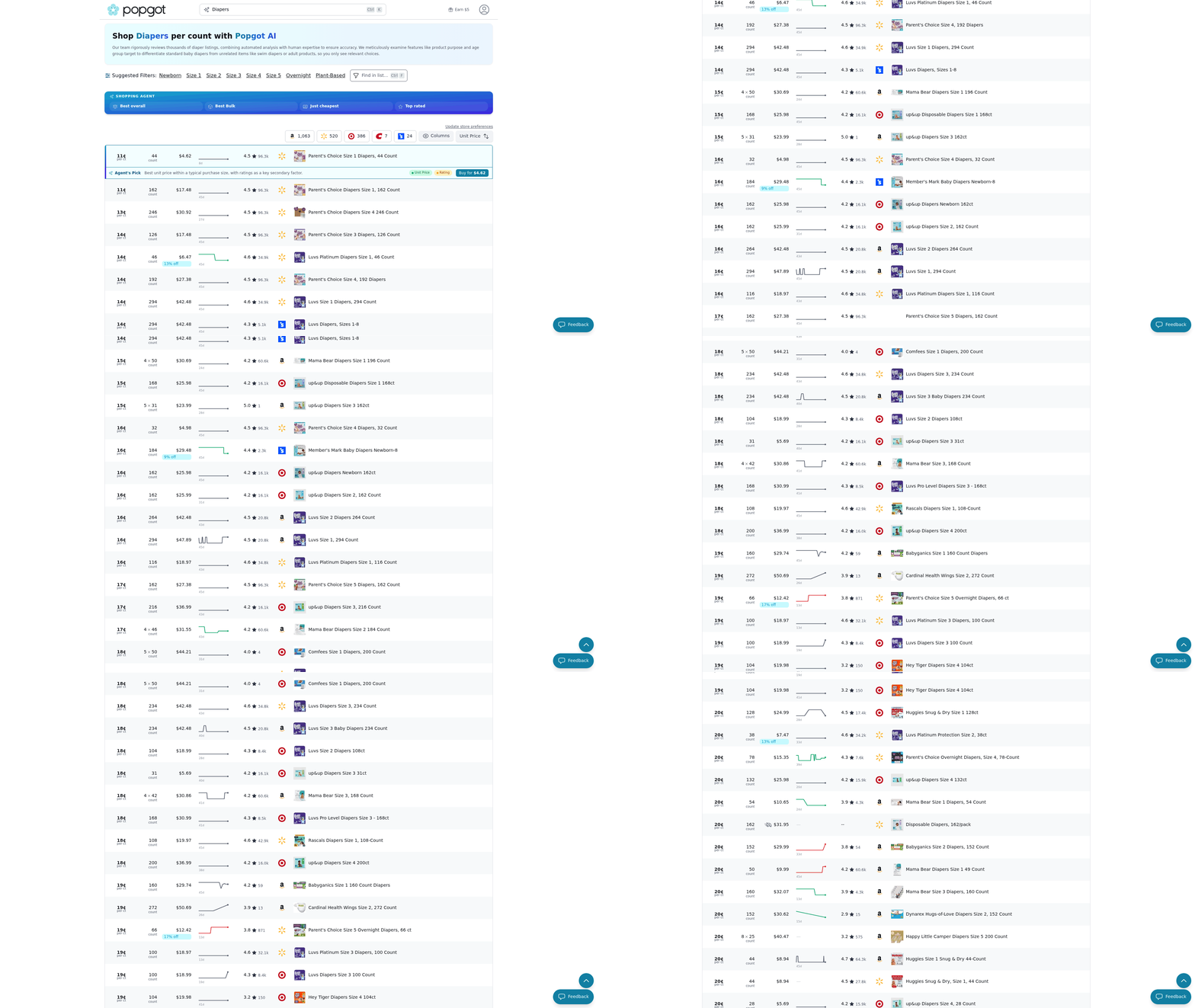
We ranked by true unit price, not sticker price. Popgot extracts the real per-diaper price from every listing, so you can sort by what you actually pay across eight major retailers. Specify what a product must have, and your shopping agent reads every label and verifies it. You only see diapers that meet your specs. A box that's $5 cheaper but only sold at one warehouse club isn't a win for most parents.
BabyGearLab recommends comparing size 3 as a standard benchmark, since nearly every baby wears it. We follow that so comparisons stay apples-to-apples across Amazon, Walmart, Target, and Costco.
One thing the spec sheets miss: fit beats stats. As one r/moderatelygranolamoms commenter put it, the numbers are "a great starting point," but "at the end of the day it's about what fits your baby best." That community's 2026 comparison thread tracks 20 brands and echoes what our pricing data shows.
When to ignore the rankings
Skip the cheapest pick if your baby leaks in it. A diaper that fails overnight costs you in laundry, lost sleep, and blowout cleanups. Buy a small pack of two or three contenders before committing to a bulk box.
Watch the size-up trap, too. One Reddit parent flagged that once you upsize, there are fewer diapers per box, which can quietly raise your per-diaper cost. Re-check unit pricing every time you move up a size, not just once at birth.
Budget diapers: what hits under $0.20 per diaper
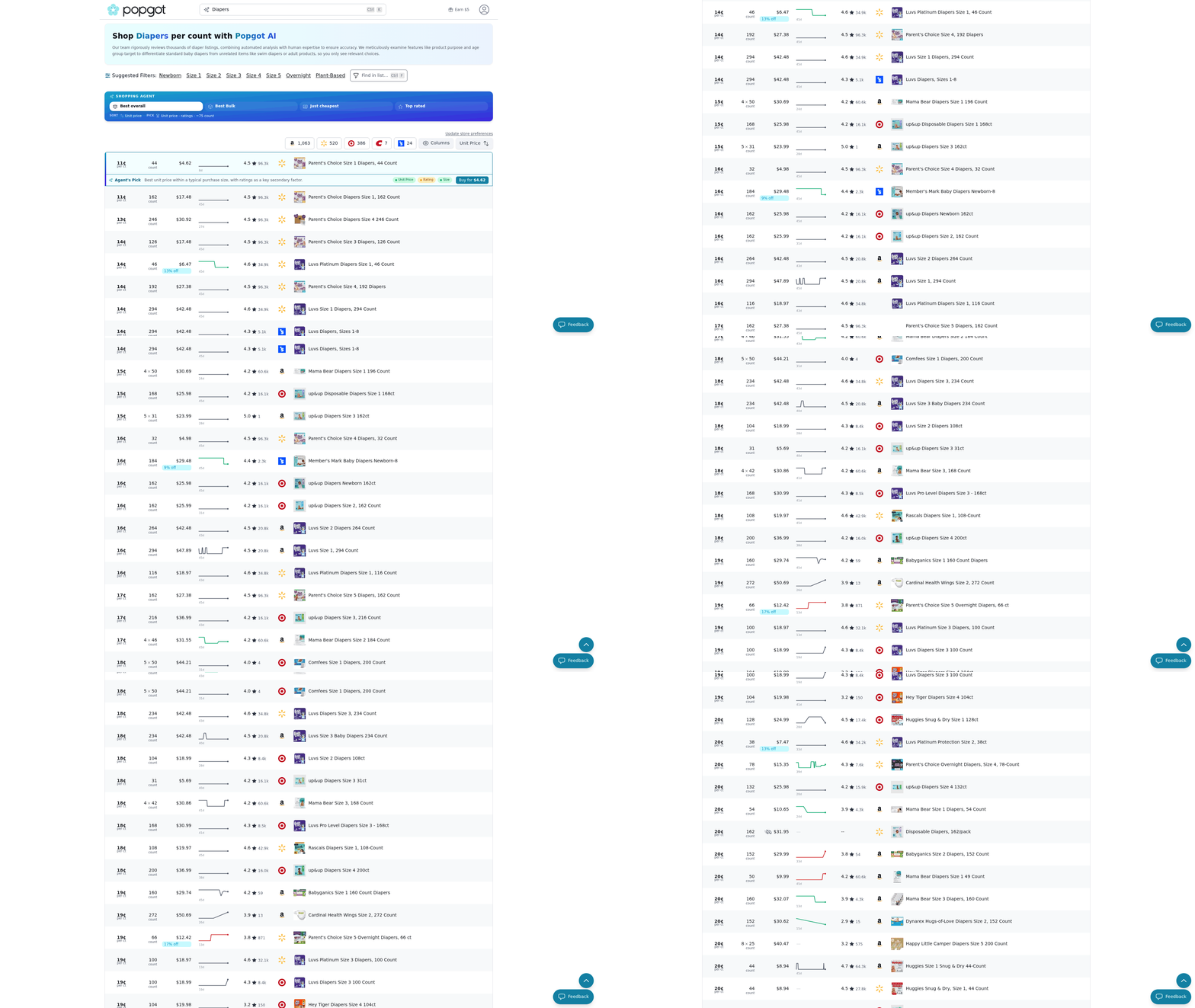
A budget diaper is anything under $0.20 per diaper. That's the line worth drawing. BabyGearLab's testing puts the bottom quarter of the market's pricing spectrum in true-bargain territory. Below that line, you're shopping value. Above $0.25, you're paying for brand or features.
Which budget diapers actually hit the under-$0.20 mark?
The cheapest reliable options come from store brands at big-box retailers. Most of these private labels share a similar formula and manufacturing source, which is why their performance tracks closely while the names and packaging differ.
Several retailers cluster right at the budget line. Target's Up & Up, Costco's Kirkland Signature, and Amazon's Mama Bear tend to land in the $0.15 to $0.20 zone depending on size and pack. The pattern holds across the big diaper comparisons: store labels undercut name brands without a steep drop in basic performance.
One move changes the math: buy the biggest pack you can store. Bulk boxes drop your unit cost. Convenience packs quietly raise it.
When the cheapest diaper isn't the best buy
A budget diaper stops being a bargain the moment it leaks. Blowouts and middle-of-the-night failures mean extra changes, ruined onesies, more diapers burned per day. That erases the savings on the sticker.
Fit drives this more than price. Specs help you narrow the options, but physical compatibility with your baby's shape decides success. A bargain diaper that gaps at the legs costs more in practice than a slightly pricier one that seals.
Skin matters too. If a cheaper diaper triggers recurring rash, the American Academy of Pediatrics points to frequent changes and dryness as the fix. A diaper that wicks poorly forces more changes anyway. Buy up if your baby's skin reacts.
How much does the price gap compound?
A few cents per diaper turns into real money over a year. A baby in size 4 going through 7 diapers a day runs about $409 a year at 16 cents. At 25 cents, it's roughly $639.
That $230 annual gap is the whole case for shopping unit price.
The problem is that prices shift constantly across Amazon, Walmart, and Target, and pack sizes differ at each. Comparing by hand is slow and error-prone. Tools like DiaperPricer normalize unit pricing so you're comparing cost per diaper, not cost per box. That's the number that decides the better buy.
Top overall value picks, ranked
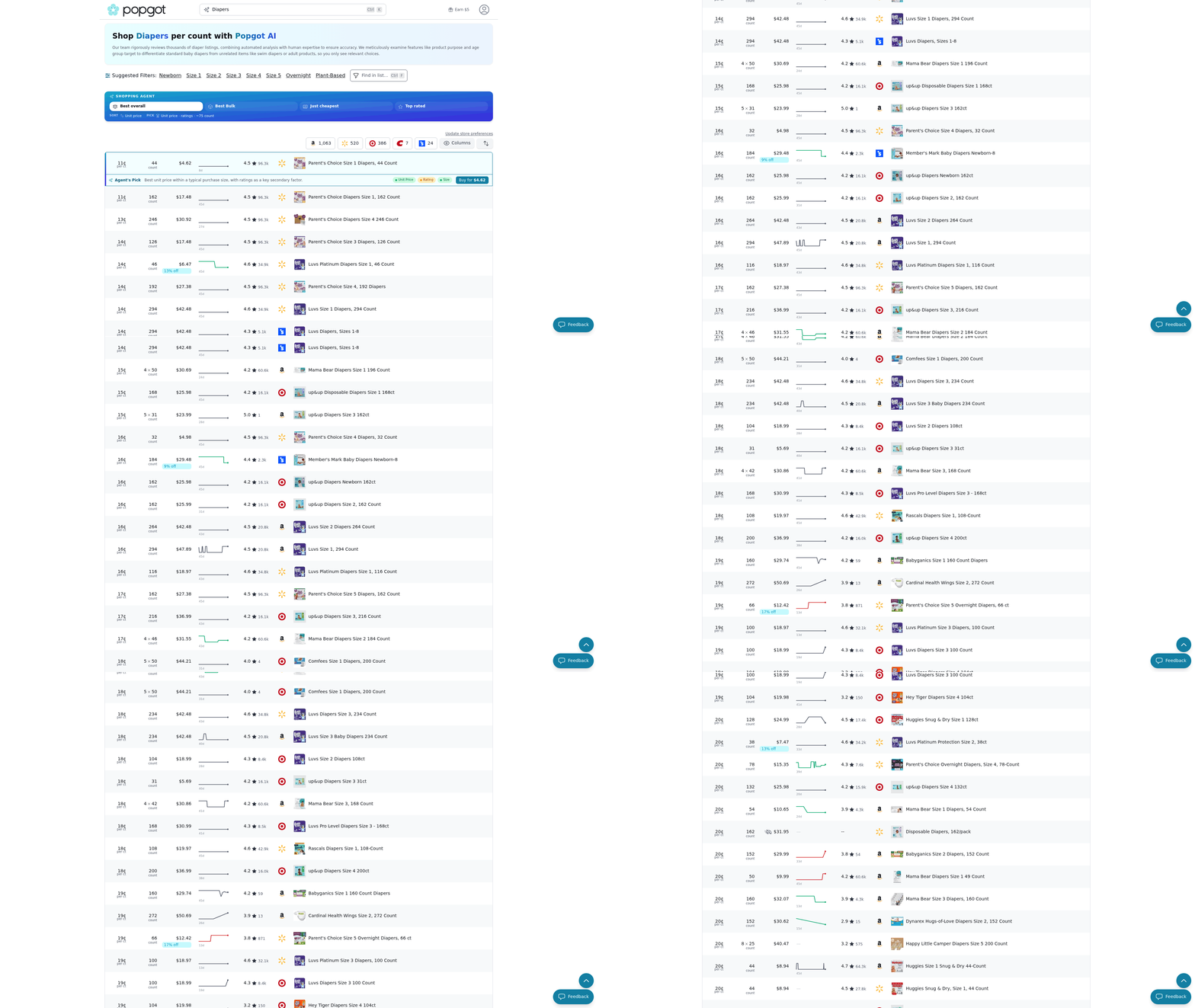
The best overall value balances three things: a low price per diaper, dependable leak protection, and stock you can actually find. Here's the roundup, with who each one suits and where it tends to cost the least.
Which diapers top the value rankings?
Lowest cost: Walmart's Parent's Choice. These private-label diapers anchor the bottom of the pricing scale and stay easy to grab for in-store pickup.
Best national-brand performer: Pampers. Pampers and Huggies sit at the premium tier in independent lab rankings, where prices reach the top of the market. You pay more, but you're buying tested absorbency and consistent fit across sizes.
Best store-brand step-up: Target's and Amazon's private labels. These land between rock-bottom Parent's Choice and the national brands. A side-by-side brand comparison shows construction differences, so you can judge material thickness and elastic stretch before committing to a bulk box.
How much does the same diaper vary by retailer?
The identical diaper can carry a different unit price at Amazon, Walmart, and Target. DiaperPricer's comparison engine tracks those daily swings across major online storefronts. Run the same brand and size across all three before buying a case.
A few practical rules from shoppers:
- Subscribe-and-save discounts on Amazon often beat the shelf price at big-box stores.
- Walmart tends to win on house-brand pricing.
- Target Circle deals and gift-card promos can flip the math in a given week.
Watch the packaging tiers, too. Retailers often stock the same brand in a small "jumbo" pack, a mid-size box, and a giant "club" case, and the unit price usually drops sharply at the largest tier. Grab the convenient jumbo pack on a busy day and you can pay 20 to 30 percent more per diaper than the case price for that exact product. Check the bottom-shelf big boxes before defaulting to the eye-level pack.
Why newborn packs cost more per diaper
As physical dimensions go up, the count per box goes down, so the unit cost climbs with each stage. Mid-development sizes give you a stable point of comparison across brands, since they avoid the pricing quirks of newborn and toddler packaging.
That's the size-specific catch. A newborn box looks cheap on the sticker because it's small, but the cost per change is steep. Bulk size 4 and 5 boxes deliver the real savings, which is exactly where store brands pull ahead.
Fit still beats price in the end. The ideal choice balances physical compatibility with local availability. A diaper that leaks overnight or triggers a rash costs you more in changes and laundry than you save at checkout.
The smart move: line up two or three contenders, test them on your baby, and let fit and availability narrow the field. For a deeper brand-by-brand breakdown, this 66-diaper comparison is a useful starting point.
Find the best diaper deals faster with Popgot
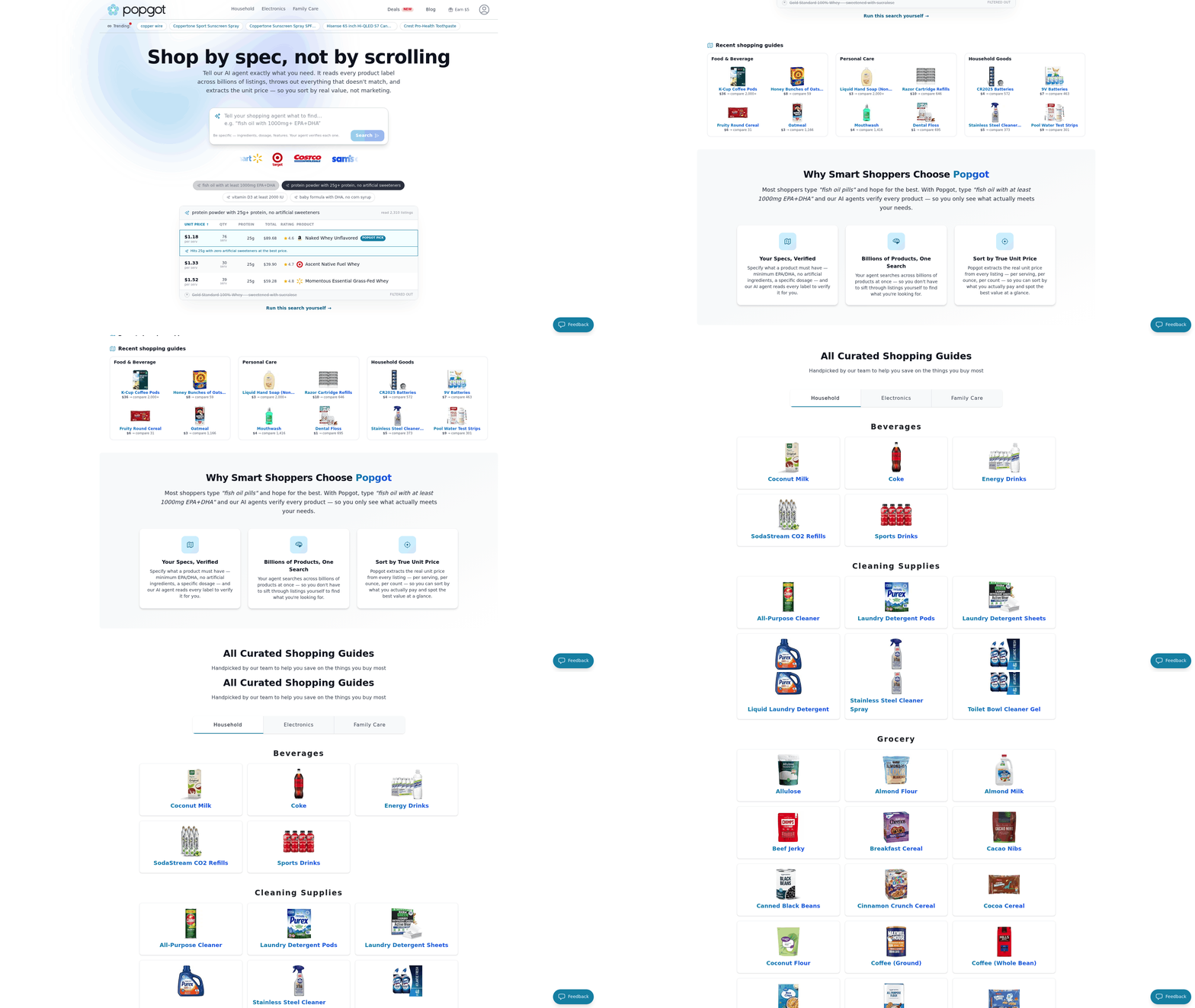
The fastest way to find the cheapest trusted diaper is to compare verified unit prices across every major retailer at once. That's the whole job: skip the tab-juggling, line up the exact size and count you want, and see which store actually sells it for less right now.
Diaper math gets messy because prices swing by the day. A store that's cheapest on Monday can post a higher number by Friday once a coupon expires or a third-party seller takes over the listing. Checking one retailer in isolation tells you almost nothing. Pulling every seller into one view at the moment you buy is the only way to catch which one is actually lowest today.
How spec verification keeps comparisons honest
Spec verification means you compare the same diaper, not three listings that look alike. Match the brand, size, and count before you ever look at price. A size 4 at 120 count and a size 4 at 84 count are not the same deal, even when the sticker price is close.
This matters because promo language muddies the water. "Mega pack," "value box," and subscription-only prices all push a number that isn't the real cost per diaper. Verified specs strip that away. You see count, variant, and the true per-diaper figure side by side.
What a real diaper search looks like
A workflow you can run in under a minute:
-
Enter the brand and size. Type the exact diaper you want, like a store brand in size 4. This anchors every result to one product, not a pile of mismatched listings.
-
Compare unit prices across retailers. Pull Amazon, Walmart, Target, and other major sellers into one view. Now you're comparing per-diaper cost, not pack-size theater.
-
Filter by the features you care about. Narrow by count, variant, or whatever spec fits your baby.
-
Pick the lowest verified deal. Buy from the store that wins on real price.
Diapers aren't a one-time buy. You repurchase them every week for years, same as wipes, formula, and snacks. Running this quick check on your repeat purchases turns a few cents per diaper into real savings over a full year of changes.
Absorbency and leak protection: when paying more pays off
The diaper that holds more for longer can be the better value, even at a higher price per change. A premium diaper that survives a 12-hour night beats a cheaper one that leaks at hour six and forces a 3 a.m. change plus a sheet wash. That's the math that matters for overnight, naps, and long car rides.
What makes a diaper hold more without leaking?
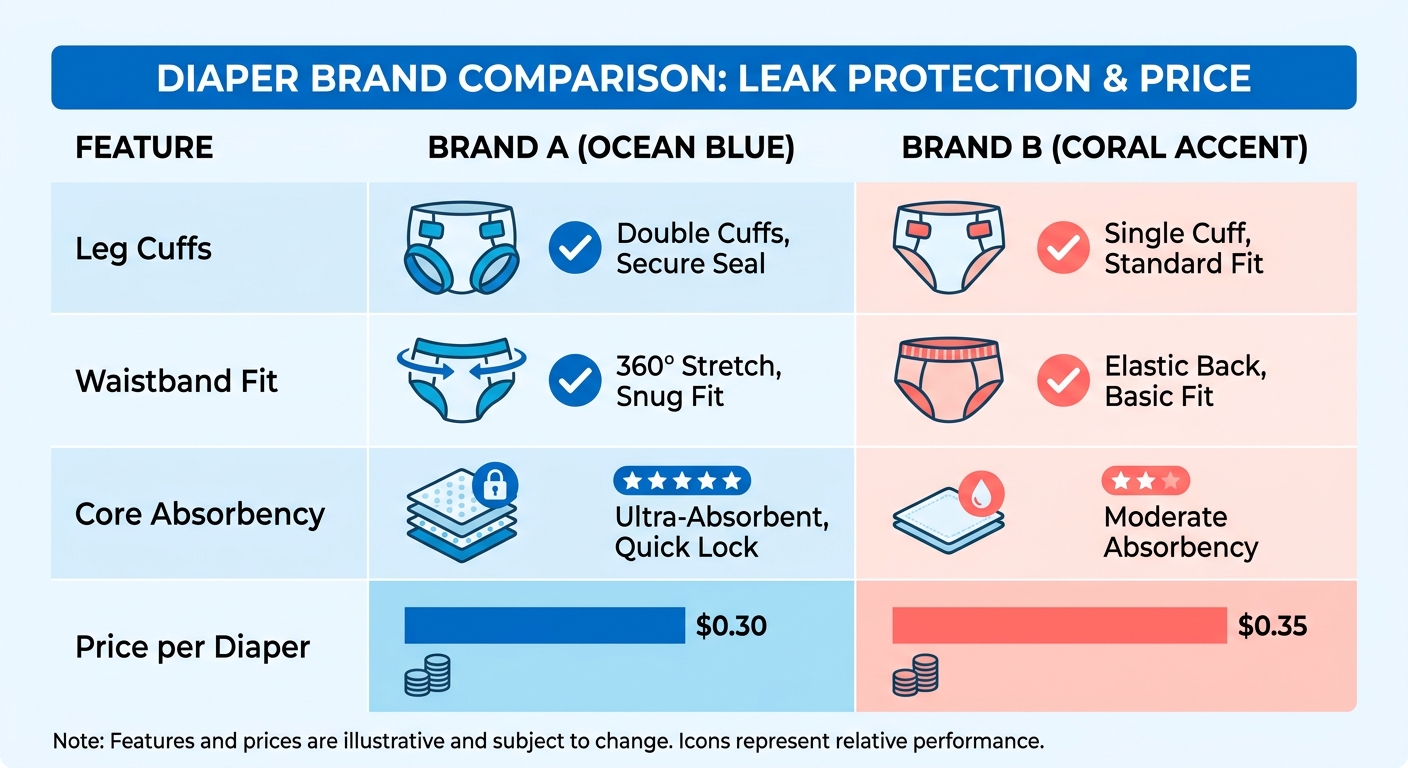
Three design features drive leak protection: leg cuffs, waistband fit, and core absorbency. Snug leg cuffs catch runny output that a flat barrier misses. A stretchy waistband stops blowouts up the back. The core, the padded center, locks liquid away from skin so it doesn't pool and escape.
Independent lab evaluations rank diapers on absorption speed and surface dryness. Higher-end picks tend to score better on retention capacity, which is the classic tradeoff: lower unit cost versus a core built for heavier volumes.
Structural design and absorbency are linked. A diaper with excellent materials still fails if the leg gathers don't seal against the skin.
When the premium diaper is worth it
Pay up for overnight and long stretches. Save on quick daytime changes. A baby who sleeps 11 or 12 hours needs a diaper built for that load. Daytime changes happen every few hours, so a budget diaper holds fine and the per-change cost wins.
The cost logic is simple. If a cheaper diaper leaks overnight, you're buying a second diaper, fresh pajamas, and lost sleep. One reliable overnight diaper at a higher unit price still beats two failures.
So stock more than one option. A lot of families run a dual-brand setup: a cheap diaper for frequent daytime changes, a heavy-duty absorbent one for sleep. That split gets you the best protection per dollar across the whole day.
Best diapers by size: newborn through toddler
The best value diaper changes as your baby grows. Newborn and size 1 packs reward soft, skin-friendly construction and frequent swaps. Size 3 and up reward bulk buying, where the price per diaper drops fastest. Buying the same brand from birth to potty training usually means overpaying at one stage or another.
Why smaller sizes cost more per diaper
Smaller diapers usually carry a higher price per diaper because packs hold fewer of them and babies burn through them faster. A newborn can need 10 to 12 changes a day. As sizes scale up, manufacturers package fewer units per box, so your cost per change rises even when the retail price of the box stays the same.
Parenting communities keep pointing out that physical design, the height of the back waistband, the elasticity of the leg cuffs, matters far more than marketing claims. For newborns, that means prioritizing a snug leg and gentle materials over squeezing out every penny.
When do you size up? Watch the weight ranges on the brand's pack, not the months. Red marks at the thighs, a waistband that rides low, or frequent blowouts all signal it's time. Sizing up early can actually cut leaks, which saves money on wasted diapers and laundry.
Which size is the smartest place to compare?
Size 3 is the size worth pricing carefully across brands. Babies typically stay in it for several months, which makes it the most representative period for long-term budgeting.
By size 4 and 5, the bulk boxes stretch further and store brands tend to hold their lead. The same value picks that win in the middle sizes usually stay cheapest as your baby grows, so locking in a brand around size 3 sets you up for the bigger stages.
Want the stage-by-stage breakdown across 60-plus options? This diaper comparison guide details physical dimensions and material differences.
Subscriptions, bulk packs, and hidden savings
Subscriptions and bulk packs both promise savings, but neither one wins automatically. A recurring delivery discount can beat the cheapest shelf price, or it can lock you into a price that quietly drifts above what a competitor charges. The only way to know is to check the unit price every time.
Do subscription discounts actually beat shelf pricing?
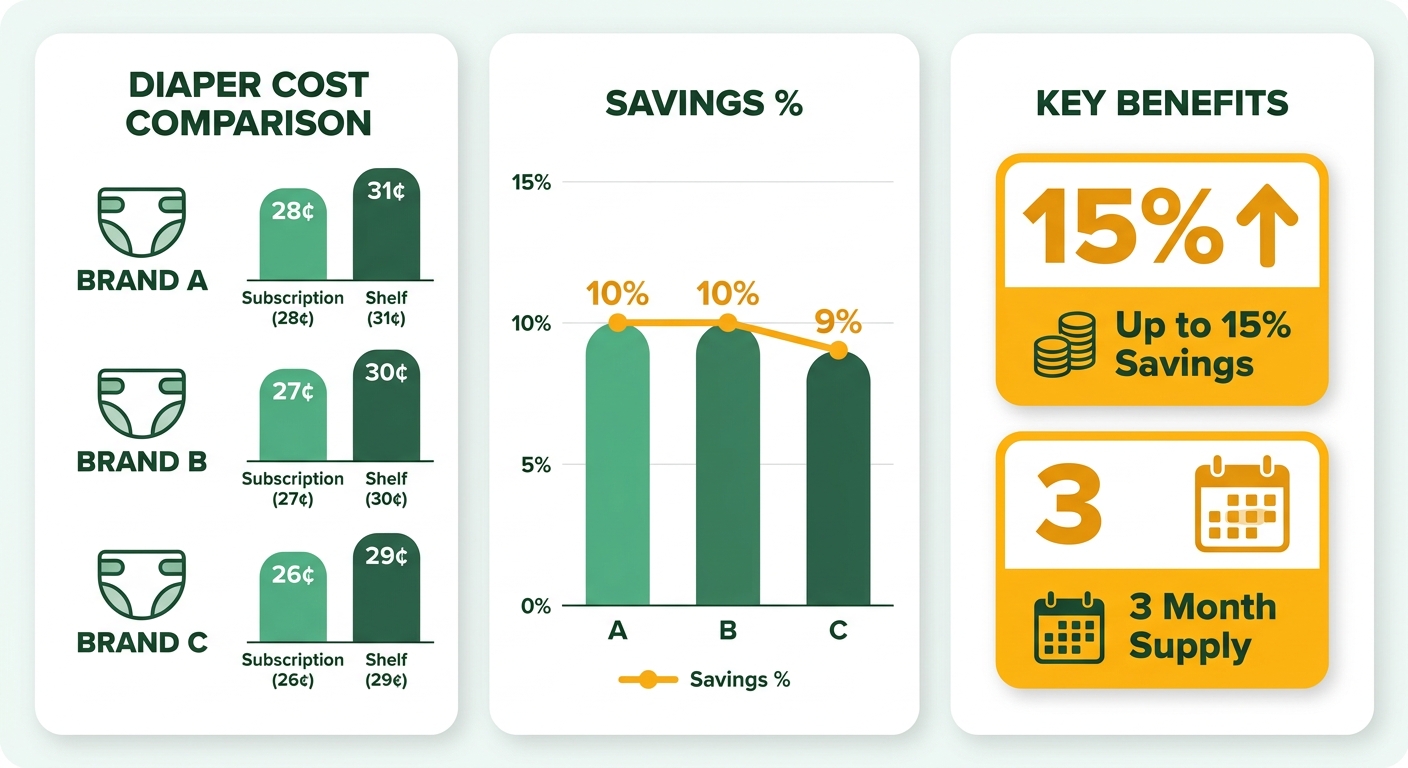
Sometimes. Recurring delivery from big-box and online retailers usually shaves a percentage off the listed price, plus you skip the trip. That discount matters most when it stacks on an already-low per-diaper rate. It matters far less when the base price is high to begin with.
Watch for the subscription that drops a premium box from 31 to 28 cents per diaper and calls it a deal. Three cents off a high starting point still leaves you paying a premium. The "discount" is real against that brand's own price, and meaningless against a cheaper competitor sitting on the same shelf.
Flip it around. A mid-tier brand priced at 22 cents on the shelf, with a subscribe-and-save offer that brings it to 16 cents and free delivery, undercuts most one-time picks and earns its place. So compare the discounted subscription price against the cheapest competitor, not against the same brand's full price.
When a bulk pack is a smart buy
Bulk packs win when the unit price drops and your baby stays in the same size long enough to use them. Big boxes almost always beat small convenience packs per diaper. The catch is overstock risk, and with diapers that risk is real.
Volume changes across size tiers can quietly alter your actual cost per change, even inside the same subscription program. Pair that with how fast growth spurts move babies up a size, and a stockpile can turn into wasted boxes overnight.
My rule: buy bulk only in sizes 3 and up, and only one extra box ahead. Newborn and size 1 burn out too quickly to stockpile safely. To see how bulk packaging scales across brands, check this real cost math across pack sizes.
Retailer face-off: Amazon vs Walmart vs Target vs Costco
The cheapest diaper isn't tied to a brand. It's tied to a store. The same box of the same brand and size can carry a different unit price at Amazon, Walmart, Target, and Costco in any given week. So the real question is where you buy, not just what.
Why the same diaper costs different amounts at each store
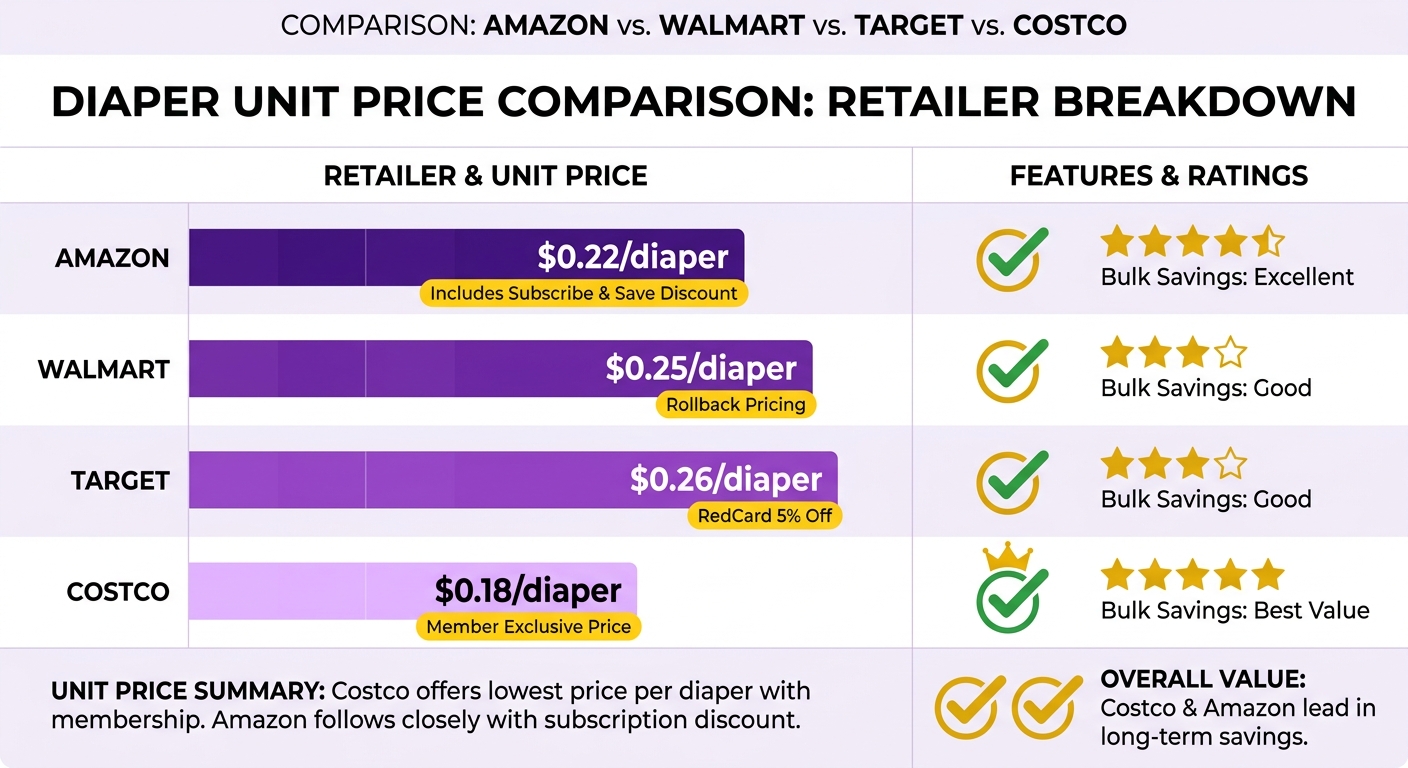
Pack size and the store's pricing model drive the gap. Each retailer bundles diapers differently and discounts them differently. A brand that wins at one store can lose at another for the exact same diaper.
How the four big retailers tend to shift the math:
- Amazon Subscribe & Save: A recurring order shaves a percentage off the listed price. The catch is the base price floats, so a good deal one month can quietly slip the next.
- Walmart multi-packs: Larger boxes often drop the per-diaper rate, and buying in-store saves shipping if Walmart is already your run.
- Target Circle: Membership perks and periodic diaper deals can stack on a sale, but only when they land on the size you actually need.
- Costco bulk: The mega-count boxes post some of the lowest per-diaper numbers, as long as you have the membership and the storage space.
How stock and order minimums change the real value
A low price means nothing if the box is out of stock or stuck behind a shipping threshold. True value includes whether you can get the diaper today. An online deal that needs a $35 minimum to ship free isn't a deal when you only need one box.
Inventory shifts wreck savings plans, too. If your preferred bulk size sells out, you may be forced into smaller, pricier packaging tiers. And chasing one store's sale across town burns the savings in gas and time.
This is exactly the manual checking Popgot removes. A single multi-retailer search lines up the same brand, size, and count across every major store with verified unit pricing, so you see which retailer wins right now without opening four tabs.
What I'd actually buy
The right diaper depends on your budget, your baby's skin, and where you already shop. Here's the framework to decide fast, plus the price math that makes one pick beat another.
Which diaper should you buy for your situation?
Match the pick to the need, not the brand name. Each use case has a clear winner from the data above.
- Best overall value: Store-brand diapers from big-box retailers. Lowest price per diaper while still passing leak tests.
- Best budget pick: A store brand from a warehouse club, where bulk counts push the unit price below standard grocery packs.
- Best overnight pick: A premium absorbent diaper that survives a full night. The higher core capacity earns its price by skipping the 3 a.m. change.
- Best sensitive-skin pick: A fragrance-free, lotion-free diaper. Fewer added ingredients, fewer triggers for irritation.
Market pricing runs wide between basic store brands and premium specialty options. Knowing where your preferred brand sits on that spectrum tells you whether you're paying for performance or marketing.
When the cheapest diaper is the wrong call
Skip the cheapest diaper if it leaks on your baby or irritates their skin. A bargain diaper that fails turns into a sheet wash plus a tube of rash cream, and that erases the savings fast.
Do the real math. If a budget diaper forces an extra change or two a day, you're burning through the pack faster and the per-diaper edge shrinks. Pediatric and dermatology guidance is consistent here: prolonged contact with wetness drives diaper rash. So frequent leaks cost more than money.
For sensitive skin, fragrance-free and dye-free options cut exposure to potential irritants, and minimal added lotions or chemical processing help protect the skin barrier. The Karing for Postpartum comparison evaluates ingredient transparency, so you can check material safety before buying.
The most economical diaper, in the end, is the one that prevents leaks on your child's frame while staying easy to buy on your regular shopping run.
The five-point buyer checklist
Run this before you add any diaper to your cart. It takes a minute and catches the traps.
- Size and fit: Confirm the size matches your baby's weight, and keep a backup brand ready in case the fit's off.
- Absorbency: Match it to the job. Overnight and naps need more core capacity than a quick daytime change.
- Skin sensitivity: Go fragrance-free and lotion-free if your baby reacts. Fewer ingredients, fewer flare-ups.
- Price per diaper: Compare unit price, not sticker. Remember that counts drop as sizes go up.
- Retailer: Check the same size and count across Amazon, Walmart, and Target before buying.
That last step matters most. Use a mid-range size as your baseline when you project long-term costs.
Pull up your chosen brand, size, and count, then line up the per-diaper price at all three stores plus any subscription rate. Buy the lowest verified unit price that fits your baby. That's the whole game.
References
[1] The Big Diaper Comparison | Karing for Postpartum - https://www.karingforpostpartum.com/blog/the-big-diaper-comparison
[3] DiaperPricer: Diaper Price Comparison | Home - https://www.diaperpricer.com/
[4] The 4 Best Diapers of 2026 | Reviews by Wirecutter - https://www.nytimes.com/wirecutter/reviews/best-diapers/
Frequently Asked Questions
1. How many diapers will my baby go through before potty training?
Most infants require thousands of diaper changes before transitioning to training pants. While newborns require very frequent changes due to their feeding schedules, the frequency gradually stabilizes as they grow. Tracking your unit cost across these high volumes highlights how minor price differences accumulate over time.
2. Are store-brand diapers made by the same manufacturers as name brands?
Many private-label diapers share manufacturing sources and similar formulas, which explains why their performance tracks closely across brands like Parent's Choice, Up & Up, and Kirkland. However, they aren't identical to Pampers or Huggies. Each store brand sources its own specs, so test fit before committing to bulk.
3. Can I mix and match different diaper brands for day and night?
Using separate brands for daytime and overnight is a smart cost strategy. Run an economical diaper for frequent daytime changes, then switch to a high-capacity option designed for extended sleep. This approach optimizes your budget while ensuring your baby stays dry and comfortable during the night.
4. How do I know when to size up my baby's diapers?
Watch weight ranges on the pack rather than baby's age in months. Red marks at the thighs, a waistband riding low, or frequent blowouts all signal it's time to transition. Making this change early can actually reduce leaks, saving money on wasted garments and laundry even if the larger size has a slightly higher unit cost.
5. Is Costco's Kirkland Signature worth the membership fee for diaper savings?
Costco's bulk boxes post some of the lowest per-diaper numbers, but only justify the membership if you have storage space and buy diapers consistently. For families spending $400-plus yearly on diapers, the membership often pays for itself. Compare Kirkland's verified unit price against subscription deals before assuming bulk always wins.
6. How can I avoid overpaying for convenient "jumbo" packs?
Always check the bottom shelves for larger bulk boxes rather than grabbing the eye-level convenience packs. Retailers typically apply a premium to smaller packaging tiers, meaning you pay significantly more per unit when buying smaller quantities of the exact same product. The largest tier almost always drops your unit cost sharply.
7. Do premium diapers actually leak less than budget options?
Premium brands often justify their higher price points through enhanced material softness and specialized moisture-wicking cores rather than basic daytime containment. For standard daytime intervals, store brands offer comparable containment. Premium options are best reserved for long stretches of sleep or travel where maximum fluid retention is necessary.