
Beyond Google Price Comparison: How Popgot Checks Every Store for You

Key Takeaways
- Popgot's Multi-Retailer Search hits eight major stores in one query, turning a 20-minute tab-juggling chore into a few seconds of scanning.
- One query returns live prices from all eight retailers side by side, so the cheapest option is obvious at a glance.
- Comparison shopping agents have been around for decades, built to cut search costs by letting buyers check more sellers in the same time window.
- What sets the modern version apart is better matching accuracy and the number of stores checked in parallel.
- Results sort by unit price, like cost per fluid ounce, so you can compare across pack sizes without doing the math yourself.
Searching eight stores at once, instead of eight tabs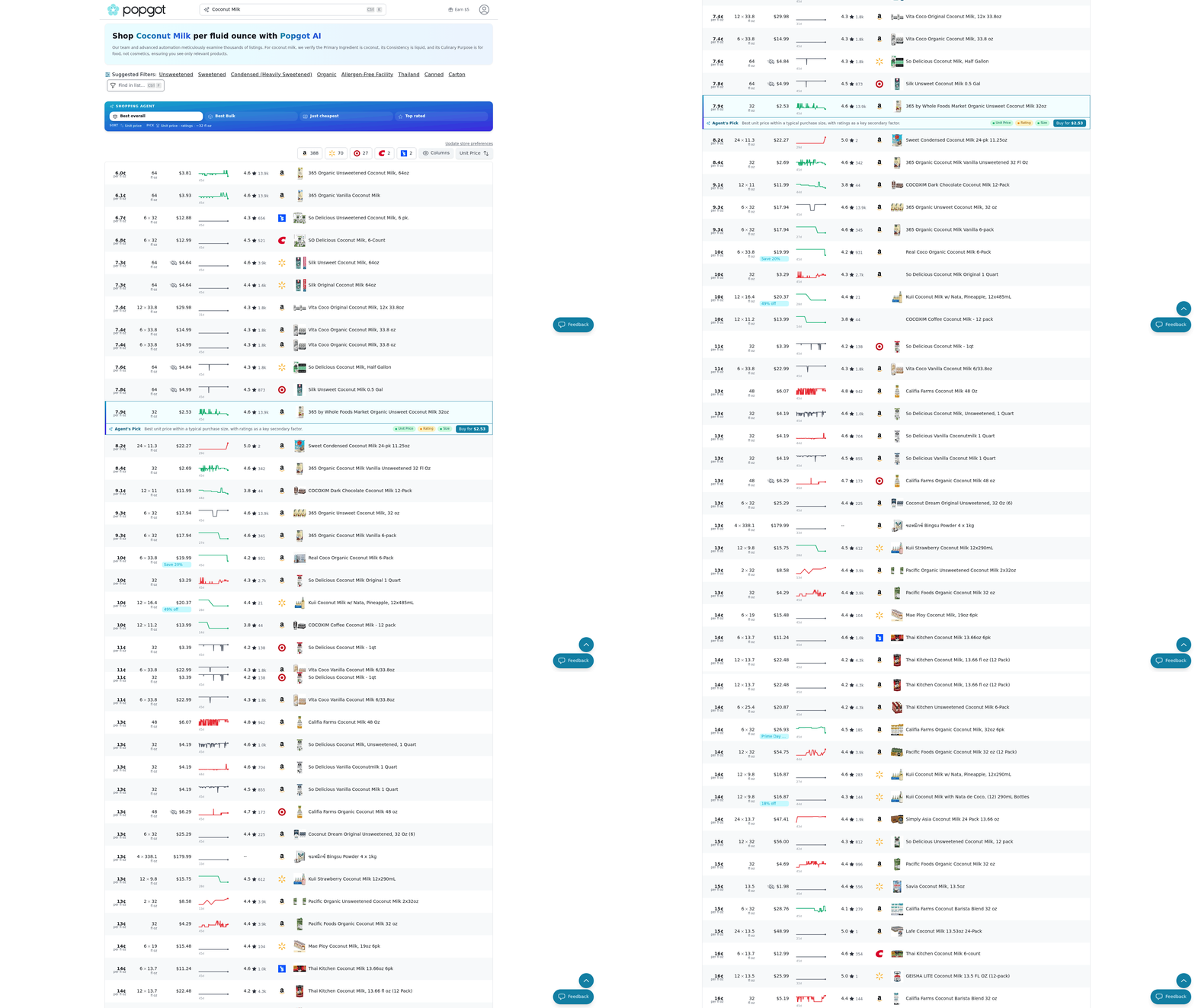
Multi-Retailer Search does one thing well: it queries eight major retailers at the same time. No opening eight browser tabs and typing the same product into each store. You run one query and get every price laid out together.
The idea isn't new. Comparison shopping agents were built to cut the cost of searching, so buyers could check more sellers in the same amount of time, as an academic survey of these systems explains. What's changed is accuracy and how many stores get checked in parallel.
How does searching eight retailers at once save time?
It collapses repetitive lookups into a single search. You enter one product. The tool pulls live prices from eight major retailers and lays them out together, ranked, so the cheapest option jumps out.
Take a 12-pack of paper towels. By hand, that's eight searches, eight prices to hold in your head, and mental math on pack sizes. One query returns all eight prices at once, already ranked. More stores checked per minute means more savings found per minute. That's the whole pitch.
What makes the comparisons accurate?
AI Product Verification matches listings across stores so you're comparing the same item, not a near-lookalike. This fixes the biggest flaw in basic price tools. A cheaper price means nothing if it's secretly a smaller size or a different model.
Coverage matters too. A lot of price tools only track a handful of stores. The broader approach pulls from the full set rather than a narrow slice, a point Lifehacker raised about wide-coverage price insights. Wider coverage plus verified matches gives you a price you can actually trust.
Then there's the unit-price math. A $6 box that holds twice as much beats a $4 box on real cost. Accurate Unit Pricing surfaces that instantly, so the lowest sticker price doesn't fool you.
How do filters and guides narrow your results?
Customizable Search Filters trim a long list down to what fits. Filter by brand, size, price range, or retailer, and the noise drops away. You see only the options worth a look.
Organizing listings from thousands of stores is exactly what comparison platforms do well, as Google Shopping describes. Filters take that organized pool and shape it around your actual shopping list.
Curated Shopping Guides help with the stuff you rebuy. For staples like coffee, detergent, or snacks, a guide points you to consistent deals without starting from scratch every time. One store rarely wins on every product, and checking all eight is the only honest way to know.
Unit pricing: the cheapest sticker isn't the cheapest deal
The lowest price on the shelf isn't always the best deal. Accurate Unit Pricing breaks every product down to its true cost per unit, so you compare apples to apples. Cost per ounce, per sheet, per tablet, or per load instead of the headline price on the box.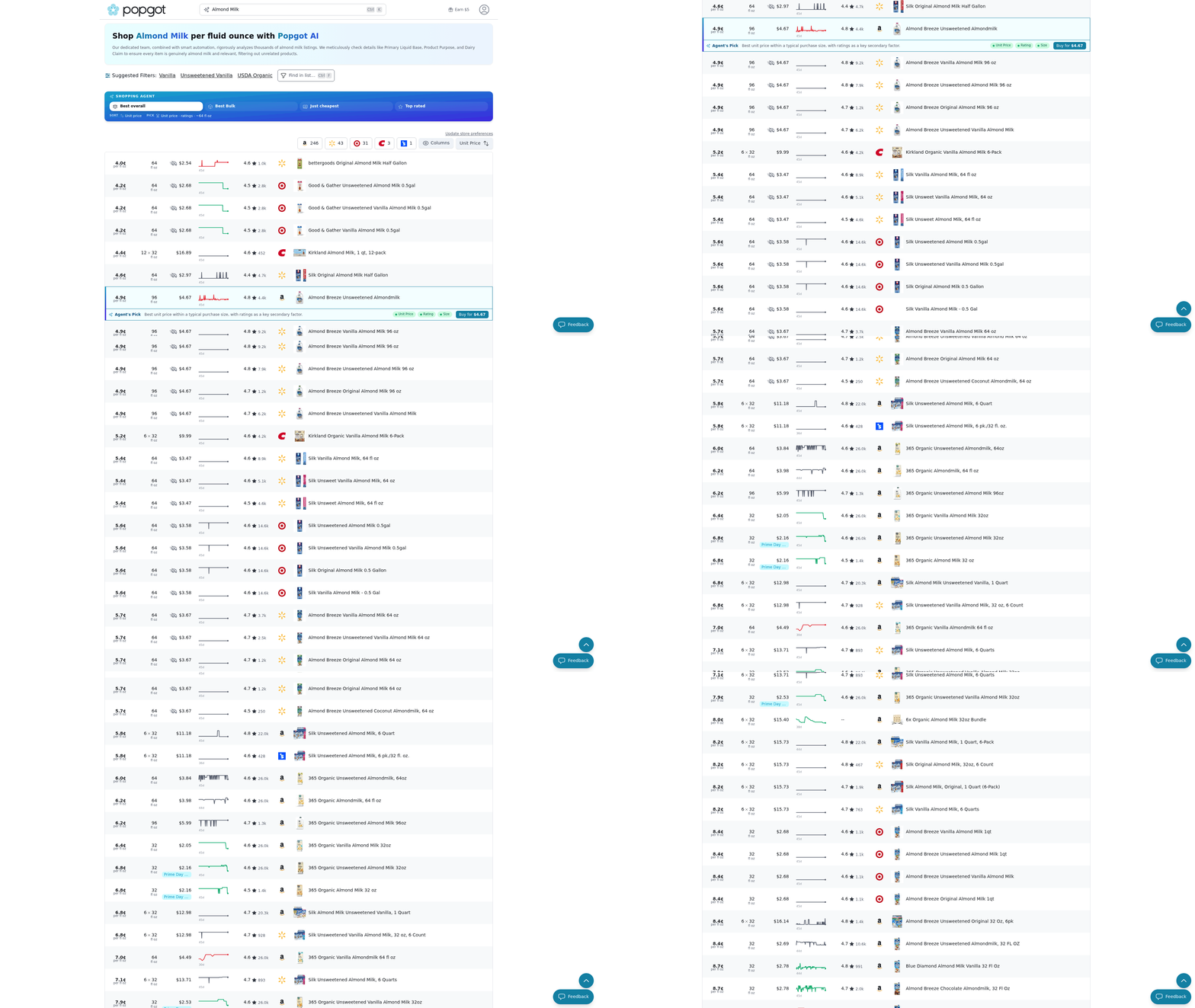
This matters most for everyday essentials. A bigger package often looks pricier but costs less per use, and a "sale" item can quietly cost more per unit than the full-price one next to it. Unit pricing strips away the packaging tricks and shows what you're really paying.
How does Accurate Unit Pricing work?
Each listing gets converted into a standardized cost-per-unit, so you can rank by real value instead of box size.
The practical flow: you search a product across stores, and every result gets normalized to the same unit of measure. A 32-ounce bottle at one retailer and a 50-ounce bottle at another stop being a math problem. You see both as a single per-ounce figure and pick the lower one in seconds.
Accuracy is the part that makes or breaks it. A unit price is only useful if the size and count parsing is right. Get the denominator wrong and you've turned a real saving into a misleading one.
Why unit-price accuracy beats a lower sticker
Lower sticker prices fool shoppers constantly, because package sizes vary store to store. Unit pricing gives you one consistent number to sort by.
Restocking laundry detergent, three stores show $11.99, $14.49, and $9.99. The $9.99 option looks best. But shown as cost per load, the $14.49 jug works out cheaper per wash, because it holds far more. Without unit pricing, you grab the wrong one.
Same logic for coffee pods, paper towels, vitamins, and pantry staples. Buy these often enough and the per-unit gap adds up to real money over a year. If you track household running costs the way some people track what it costs to run a blog, per-unit savings are the line item that quietly compounds.
Filters that cut the list down to what you'd actually buy
Filters turn a flood of results into a short list you'll actually buy from. Customizable Search Filters cut a wide search down to the listings that match your real constraints: your budget, your preferred store, the size you need, the brand you trust. Set the rules once, and the results reshape around them.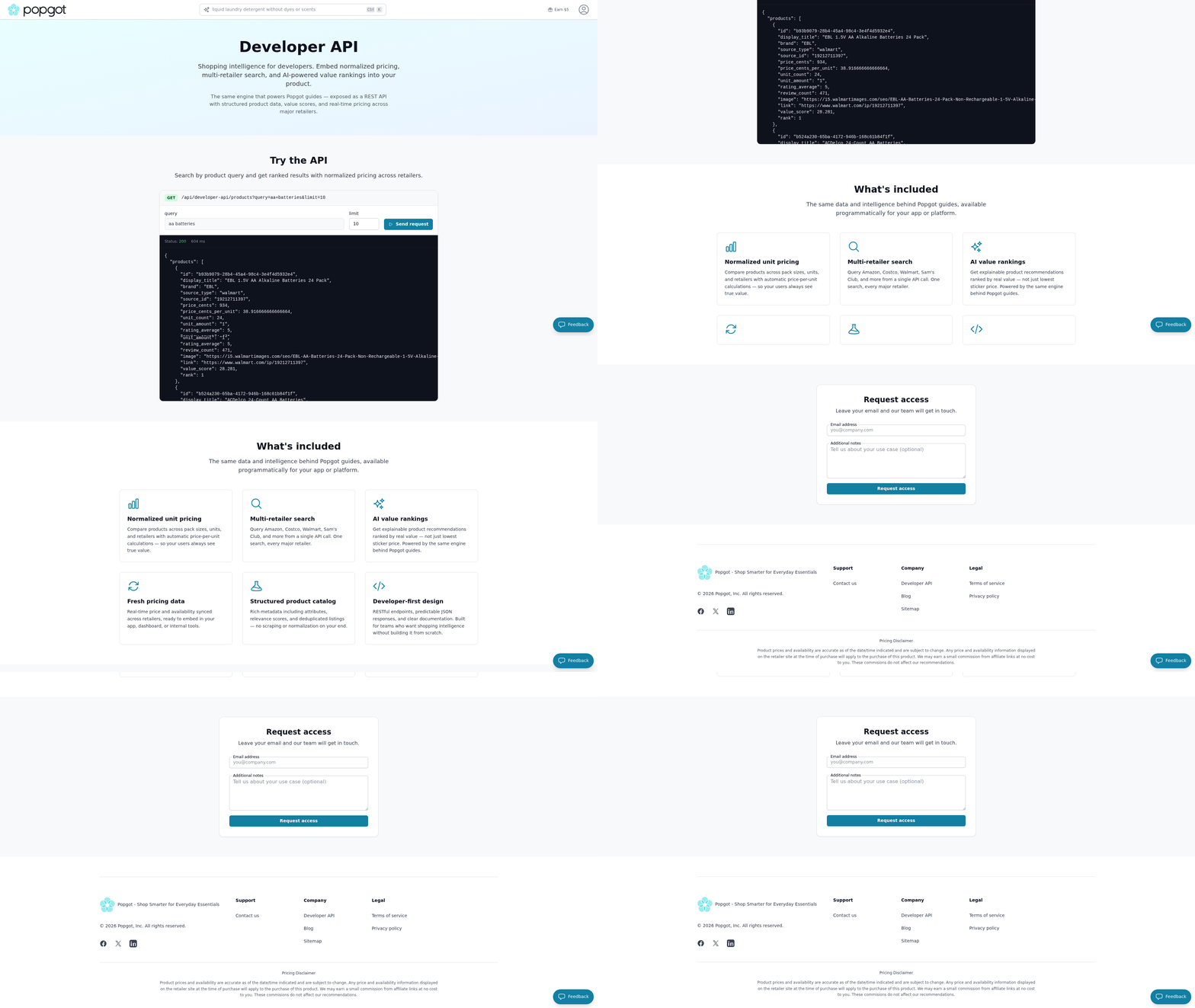
A single product search can return dozens of listings across stores. Without filters, you scroll. With them, you narrow to the handful worth comparing.
How the filters narrow your results
These are controls that restrict a search by price range, retailer, size, or brand so only relevant listings remain. You apply them after the initial search, and the list updates right away.
Say you're shopping detergent again. You search once, set a price ceiling, and pick the two stores where you already have memberships. The long list collapses to a tight set. Now you're comparing three real options instead of thirty.
The time savings come from skipping the irrelevant. You're not closing tabs or dismissing listings from stores you'd never order from. The filters do that work before your eyes ever reach the wrong result.
What makes filtered search better than a plain price list?
A plain price list ranks everything by cost and stops there. Filtered search lets you encode what actually matters, then ranks within those limits. That's the difference between a raw feed and a shortlist built for your situation.
Most comparison tools hand you a price grid and leave the sorting to you. You see every result whether you'd buy it or not. Customizable filters flip that. You set the boundaries first, so the tool spends its effort on listings you'd genuinely consider.
The practical win is fewer decisions. When the search already respects your budget and your stores, the final choice is quick. Less scrolling, fewer dead ends, a deal that fits the constraints you set going in.
How AI Product Verification beats Google price comparison
Google's price comparison casts a wide net but trusts the listing, not the product. Its price insights pull from every retailer in Google Shopping's listings, unlike apps that track only certain stores. That breadth is genuinely useful. The catch: it tells you whether a price is high or low without confirming you're comparing the same item.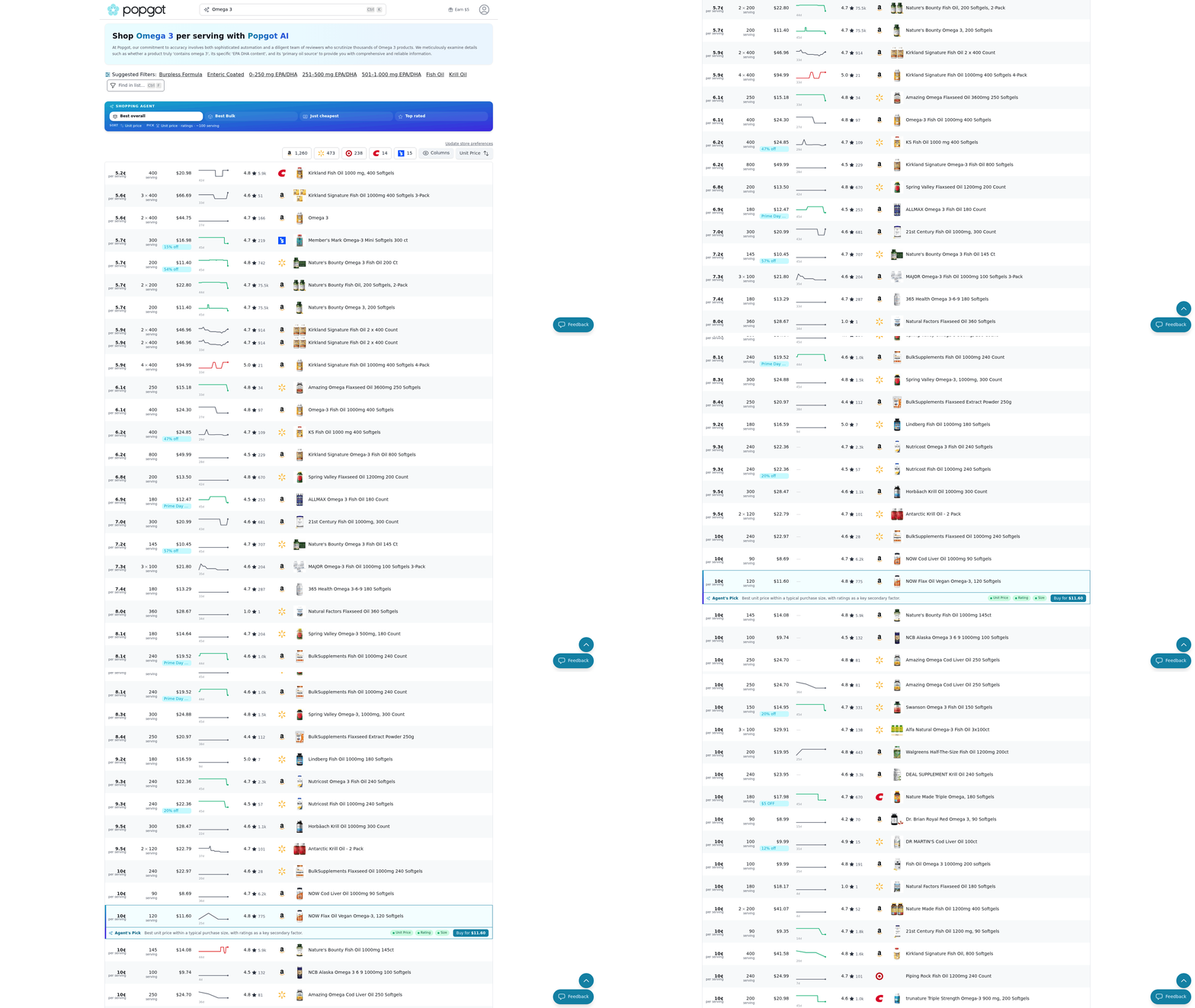
Where Google price comparison falls short
Google ranks prices well but doesn't verify that two listings are the same product. It lets you see whether a price is high, low, or typical against other sellers. That judgment only holds when the items truly match. Pack size, count, and variant differences slip right through.
A "low" price flag means little if one listing is a 12-count and the other is a 6-count. Google organizes information from thousands of online and local stores, but volume alone doesn't guarantee the products line up.
So you end up doing the verification yourself. Reading fine print, checking counts, comparing variants. That's the manual work a price tool was supposed to remove.
How verification confirms the right match
AI Product Verification checks that every listing in a comparison is the same product before ranking it by price. It reads the details that trip up listing-based matching: size, count, flavor, formulation, pack configuration. Only confirmed matches make the final cut.
Search for a specific brand of almond flour. One store lists a 16-ounce bag, another a 3-pound bag, a third a two-pack. A price-only tool might flag the 16-ounce bag as cheapest. Verification catches that these are three different products and keeps the comparison honest. Pair that with true cost-per-unit pricing and a rough estimate becomes a decision you can trust.
Why this matters for keto grocery shopping
Keto shopping is where verification earns its keep, because the wrong match costs money and breaks the diet. Specialty items like erythritol, MCT oil, and pork rinds come in dozens of sizes and formulations. A listing-based tool can easily confuse a sweetened product with an unsweetened one.
Compare keto bread across stores. One listing is a low-carb loaf, another is a standard whole-wheat loaf shelved under the same search term. Verification separates them, so the price you act on belongs to the keto product you actually want.
Google's tool tells you what a price ranks against. Verified matching tells you whether that price even applies to your product, which is the question that decides what lands in your cart.
What this looks like on a real shopping run
Real savings show up in small, repeated purchases, not one-time splurges. The everyday stuff you rebuy without thinking. Paper towels, coffee pods, dish soap, vitamins. A few cents per unit adds up fast when you buy the same items every week.
What stops you from buying the wrong item?
AI Product Verification confirms the listings you're comparing are the same product before it ranks them. This is the quiet safeguard. Two listings can share a name and a photo yet differ in count, concentration, or size.
A multivitamin sold as a 60-count bottle at one store and a 120-count at another is the classic trap. On price alone, the smaller bottle looks cheaper. Verification catches the count mismatch, so the comparison reflects what you'd actually receive. You stop "winning" a price war on a smaller package.
Why this beats a plain price lookup
A plain lookup tells you a number. A verified, unit-priced search tells you the best real value and confirms you're comparing the right thing. That gap matters most on the boring, high-frequency buys where small per-unit differences compound over a year.
The same pattern repeats across categories. Vitamins priced per tablet, trash bags per bag, coffee per ounce. Each one hides its real value behind a different package size. One search surfaces the winner in each, and you scan a single screen instead of opening eight tabs. Faster searches, fewer mistakes, lower cost per use. That's where the everyday savings live.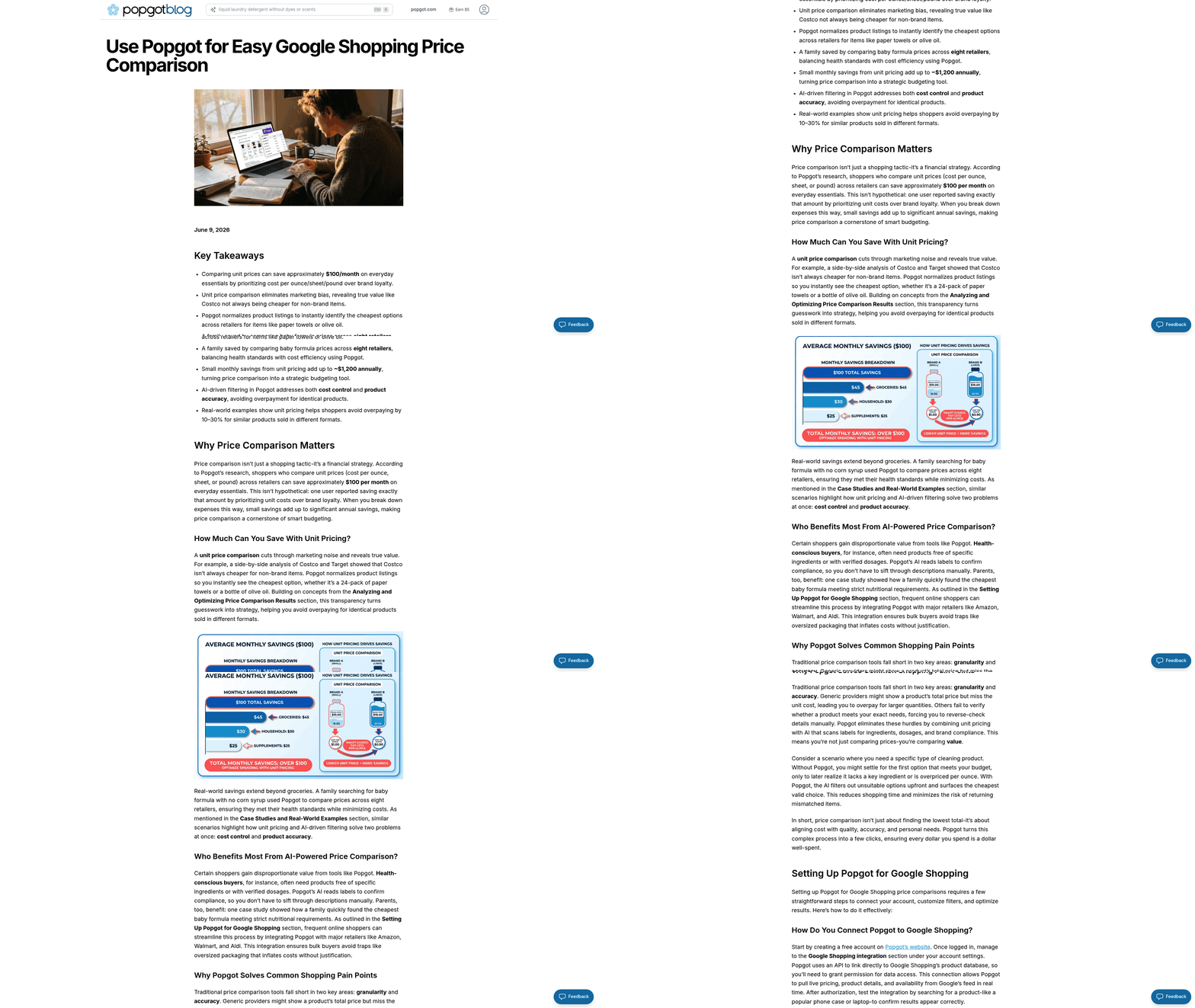
What I'd actually use this for
Smarter shopping comes down to one thing: only seeing products that meet your needs, ranked by what you truly pay. That's what we built our AI agent to do. You give it your specs, it reads every label across eight major retailers, and it hands you the real cost per unit instead of a marketing number.
What makes the approach different
Most price comparison checks the listing. We check the product. Google's price insights pull from thousands of stores and tell you whether a price is high, low, or typical, which is great for breadth.
But a ranking only holds when both listings are the same item. Our agent reads ingredients, dosage, and features first, then verifies each one before a product reaches your screen. Ask for fish oil with at least 1000mg EPA+DHA, and a 600mg bottle gets filtered out. You never waste a click on it.
That verification step is the gap. Google organizes thousands of online and local stores by price, but it trusts the seller's description. We confirm the spec, then sort by unit price so value rises to the top on its own.
Where it fits your routine
We're built for the things you rebuy: detergent, coffee, vitamins, hand soap, batteries. Small savings per item, but constant. That's where verified specs plus accurate unit pricing earn their place in your week.
Skip us for one-off impulse buys where specs and cost per use don't matter. If you just want the first listing that ships fast, a general search does the job fine. Our edge shows up when the details matter and you buy the same item again and again.
A quick rundown of what you get:
- Verified specs: the agent confirms ingredients and dosage before showing a product
- Eight retailers, one search: Amazon, Walmart, Target, Costco, Sam's Club, Aldi, Trader Joe's, and Kroger checked at once
- True unit price: per serving, per ounce, per count, sorted automatically
- Custom filters: set your budget, store, size, or brand and reshape results instantly
Why bother with better price comparison?
The early case for comparison shopping was simple: cut the cost of searching so buyers could check more sellers in less time. AI moved the bar from "more sellers, faster" to "only the right products, ranked by real value."
Run a search the way you'd describe the product to a friend, specs and all. Watch the mismatches drop away and the cheapest qualifying option float to the top. Try one everyday essential you rebuy often, and see what the per-unit math actually says.
References
[1] Google Shopping - Shop Online, Compare Prices & Where to Buy - https://www.google.com/shopping?udm=28
[2] Find Great Deals With Google's New Price-Comparison Tool - https://lifehacker.com/find-great-deals-with-googles-new-price-comparison-tool-1845468034
[3] Google Shopping makes price comparisons easier - Retail Wire - https://retailwire.com/discussion/google-shopping-makes-price-comparisons-easier/
[4] a survey of the comparison shopping agent-based decision support ... - https://www.researchgate.net/publication/228572193_A_SURVEY_OF_THE_COMPARISON_SHOPPING_AGENT-BASED_DECISION_SUPPORT_SYSTEMS
Frequently Asked Questions
1. Does Popgot work for products that aren't carried by all eight retailers?
When a product appears at only some of the eight retailers, Popgot still ranks the available listings by verified match and unit price. You see every store that actually stocks the item side by side, rather than empty results, so the cheapest qualifying option stays clear at a glance.
2. Can Popgot handle specialty diets beyond keto?
Popgot's AI Product Verification reads ingredients, dosage, and formulation, so it fits any diet with specific requirements: gluten-free, vegan, low-sodium, or sugar-free. You describe the spec, like fish oil with at least 1000mg EPA+DHA, and listings that miss it get filtered out before they reach your screen.
3. How does unit pricing compare products sold by weight versus by count?
Popgot normalizes each listing to a single standardized measure matched to the product type, whether that's per ounce, per sheet, per tablet, or per load. Items sold by weight and items sold by count each convert to their own consistent figure, so you rank by real value without mixing incompatible units.
4. How is Popgot different from cashback or coupon apps?
Cashback and coupon apps return money after purchase or apply discounts at checkout, but they don't confirm you're buying the same product or the best per-unit value. Popgot verifies product identity across eight retailers first, then ranks by true cost per unit so the listing you pick is genuinely cheapest.
5. How often should I run a search for everyday essentials?
Check Popgot each time you restock high-frequency items like detergent, coffee, vitamins, or paper towels, since the cheapest store rarely stays constant. One retailer seldom wins on every product, and small per-unit gaps compound over a year, making a fresh search worthwhile for things you rebuy regularly.
6. How can I trust that a "verified match" is truly the same product?
AI Product Verification reads the details that mislead listing-based tools: size, count, flavor, formulation, and pack configuration. Only confirmed matches enter the final ranking, so a 16-ounce bag never gets compared against a 3-pound bag as if identical. The price you act on belongs to the exact item you want.