
Black Friday Shampoo Prices: Popgot Ranks the Real Discounts

Key Takeaways
- Target ran the deepest average Black Friday markdown on health and beauty, 37.6%, against a rival chain's 7.2%.
- Amazon's Black Friday event ran nine days, November 20 through 28, so shoppers got repeated shots at rotating shampoo drops.
- A 30-plus point discount gap between retailers means where you shop decides how far your money goes.
- Amazon wins on sale length and brand selection. Best for chasing a specific shampoo across the week.
- Target suits shoppers who want one deep markdown. Amazon's longer window favors deal-trackers.
- Walmart stayed competitive the whole time, a middle ground between Target's depth and Amazon's breadth.
Best shampoo deals, retailer by retailer
Black Friday shampoo prices swing hard depending on where you shop, and that swing is real money. Target posted the most generous average discount on health and beauty during a recent Black Friday event at 37.6%, versus 7.2% at a competing chain, per DataWeave's Black Friday analysis. That gap alone can decide where your shampoo dollars land.
Who actually has the best Black Friday shampoo deals?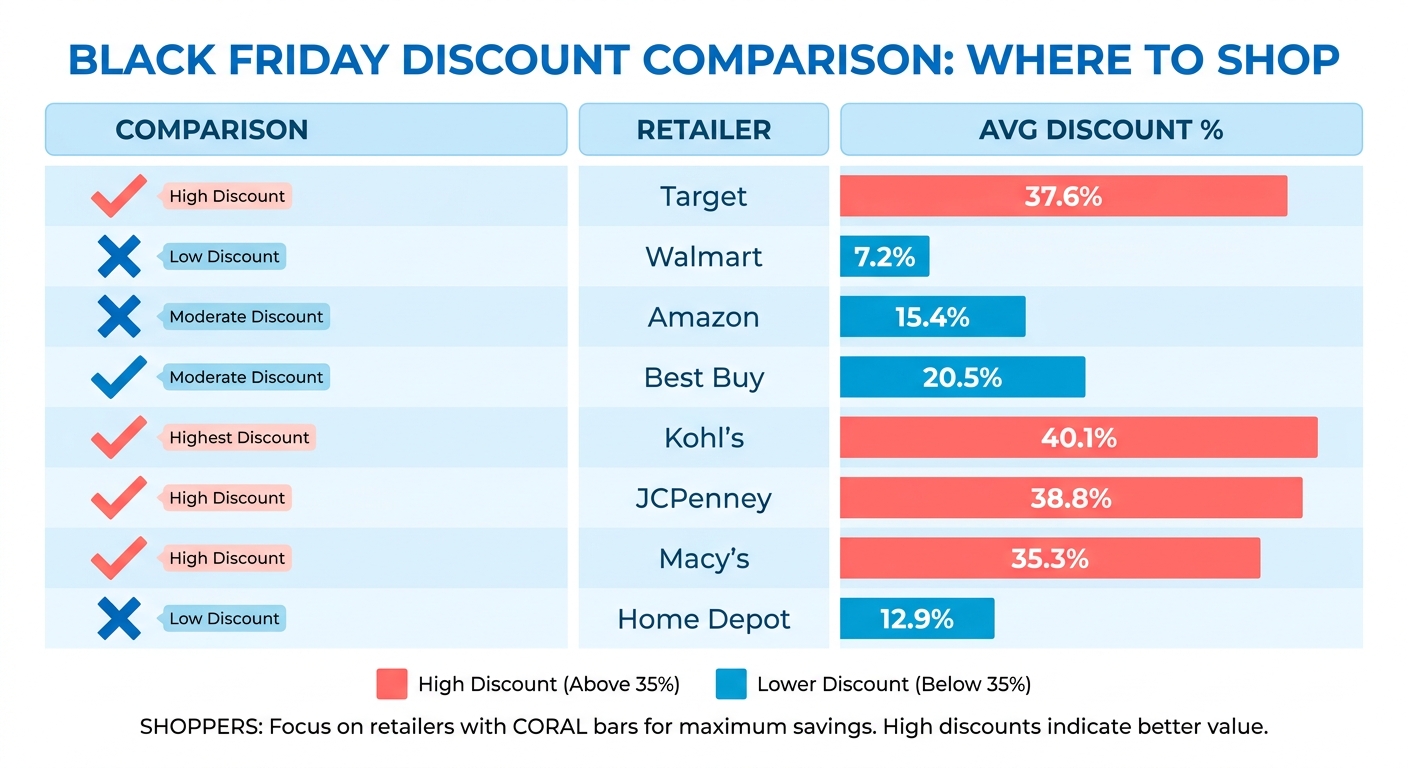
Target leads on raw discount depth for beauty. Amazon wins on event length and selection. A 30-point spread between two retailers tells you how differently they treat the personal care category. Some stores slash across the board to pull foot traffic; others protect their margins.
Amazon plays a different game entirely. It leans on dynamic pricing across its multi-day event, as the Today Show's Amazon deals roundup lays out. Instead of one flat discount, prices move with demand and inventory, which hands patient shoppers several chances at the same bottle.
The practical split:
- Target: deepest average beauty discount. Best for one big markdown.
- Amazon: longest window, widest brand selection. Best for hunting a specific brand.
- Walmart: competitive everyday pricing. Compare the sale price against its regular shelf price before you buy.
Comparing Walmart and Target shampoo prices
Compare price per ounce, not sticker price. A $12 bottle at 32 ounces beats an $8 bottle at 16 ounces. Retailers discount larger sizes less aggressively, so a smaller "deal" bottle can cost more per wash.
Do the math before you check out. Divide the sale price by the fluid ounces on the label. One step, and it exposes deals that look good but aren't. Works the same across Target, Walmart, and Amazon.
Watch for inflated "original" prices too. Some platforms bump a reference price right before a sale to make the discount look bigger, a tactic dissected in this study on fake discounts. Check the price history when you can, and trust the per-ounce number over the percent-off badge.
Which ingredients actually matter in a deal?
Buy the formula that fits your hair, not the cheapest bottle. A steep discount on the wrong shampoo is wasted money. Scan the label before the price tag.
A few practical markers:
- Sulfate-free if you color-treat or have a sensitive scalp.
- Hydrating agents like glycerin or argan oil for dry, brittle strands.
- Clarifying ingredients for oily roots and product buildup.
Why the timing is tight
High-demand salon brands rarely stay in stock through a whole event. The Today Show coverage shows how fast inventory shifts, which makes early action worth it. And the flash-sale pressure has pushed some brands to argue for slower buying, a point Davines makes in its Green Friday post.
Pick your brand and size ahead of time. When the deal hits your price-per-ounce threshold, buy. Hesitation costs you the discount.
The shampoo deal roundup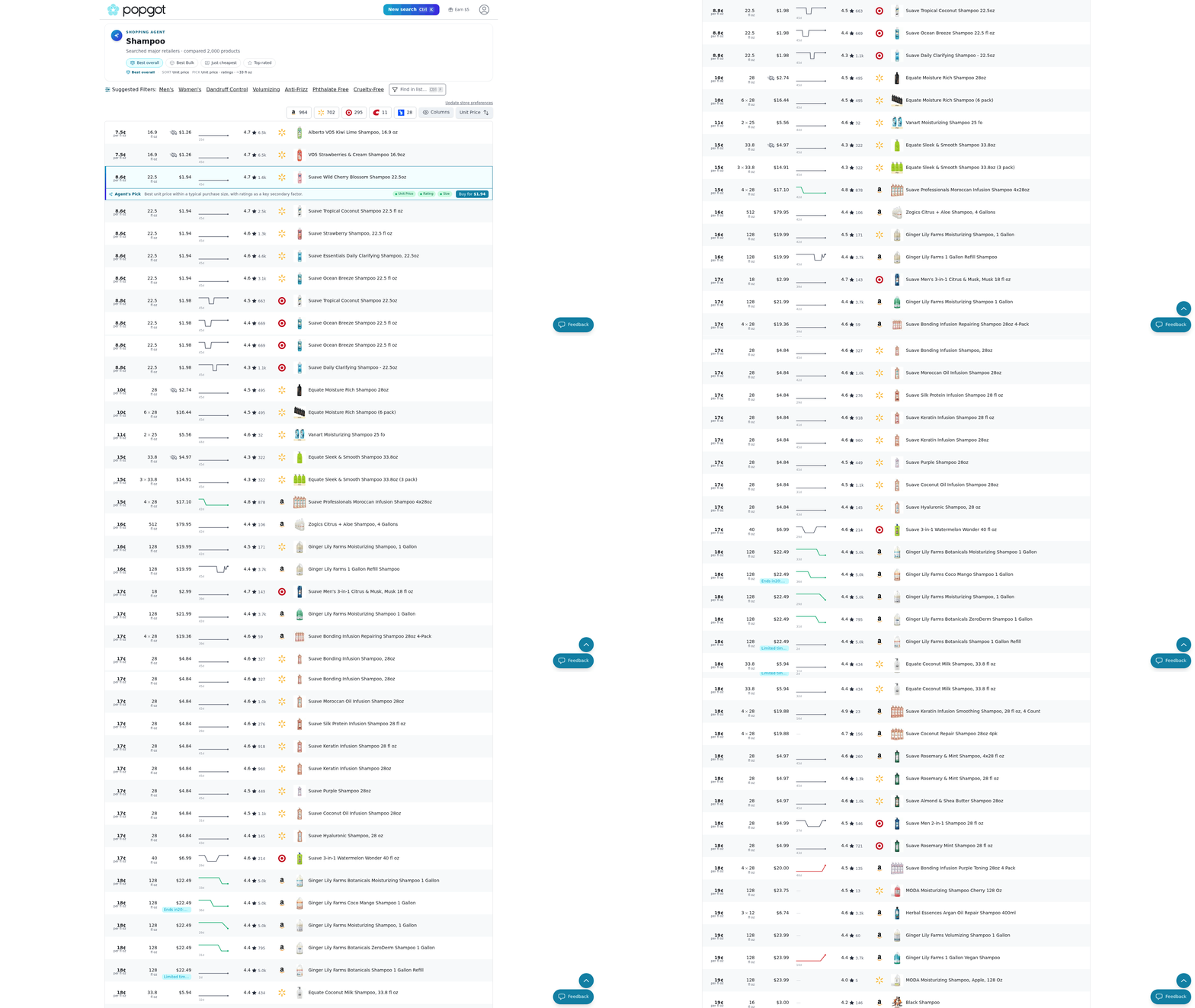
The best Black Friday shampoo deals share three traits: a real markdown, a sulfate-free formula, and a low price per ounce. Health and beauty sees steep cuts during the event, so the discounts are there. The trick is telling the genuine ones from the fakes.
Which sulfate-free deals are worth it?
Sulfate-free options are in demand because they preserve color and natural oils. During big sales, premium salon brands in this category often hit their steepest markdowns of the year, per the Today Show's beauty roundup.
Look for "sodium lauryl sulfate-free" or "SLS-free" near the top of the label. These formulas cost more year-round, so a Black Friday cut is where they finally get affordable.
Pair the discount with the ingredient check. A cheap shampoo loaded with harsh detergents isn't a deal. A moisturizing, sulfate-free bottle at 30% off is.
Reading price per ounce
Unit pricing is often buried or printed in tiny font on shelf tags, which forces you to calculate it yourself. A bigger bottle looks like the obvious win, but promotions can flip that math and make a mid-sized bottle the cheaper option per ounce.
A few habits to keep:
- Find the unit price on the digital or physical shelf tag.
- Check the unit is consistent across brands (fluid ounces vs. total weight).
- Add shipping if buying online. Delivery fees can wipe out per-ounce savings fast.
- Compare the rate against your usual non-sale price to confirm it's a real bargain.
Different merchants prioritize different categories during holiday promotions, per DataWeave's pricing analysis, so knowing the patterns tells you where to run your numbers first.
What to look for on the label
Look for formulas that support scalp health and hold a proper pH. Aloe vera, tea tree oil, or panthenol help soothe the scalp, while mild surfactants clean without stripping protective lipids.
Scan the first five ingredients. That's where the active formula lives. Water, then a mild cleanser, then a real moisturizer, and you've got a keeper.
Are these discounts even real?
Plenty of deals are legit. Some listings use artificial price anchoring to make a standard price look like a limited-time bargain. That practice is a focus of academic work, including a study on fake discount tactics that analyzes how storefronts display historical pricing.
A bottle wearing a dramatic discount badge can still carry a higher unit cost than a competitor's unbadged, everyday-low price. That gap is nudging shoppers toward more mindful buying, the idea behind the Green Friday piece.
Shopping tips that actually help
The smartest Black Friday shampoo strategy starts before the sale. Shop early, verify the specs, check the real price per ounce. Do those three and you dodge the traps that catch most people.
Why shop early
High-demand items sell out in the first hours of a holiday promotion, so you have to move before peak. The timeline in the Today Show's beauty coverage shows retailers now spreading deals across an extended window, which means specific brands can dry up well before the actual holiday.
Popular sulfate-free formulas and salon brands go first. If you have a specific shampoo in mind, add it to your cart or wishlist the moment the event opens.
Set a target price. Look up what the same bottle sold for during summer sales or last year's event, and use that as your floor. Below the number you jotted down, buy. Above it, wait.
How to spot a fake discount
Reading the advertised percent-off isn't enough. A study on deceptive pricing shows how often list prices get bumped up right before a promotion, which makes independent verification essential.
How to protect yourself:
- Check price history. If a bottle sat at one price for months and jumped right before Black Friday, the "sale" is fake.
- Compare across retailers. A genuine deal undercuts the same product elsewhere, not just its own inflated tag.
- Read the fine print on bundles. A "buy two, save more" offer can cost more per bottle than a single unit on a straight markdown.
The fake-discount paper suggests shoppers who actually compare historical data are far less likely to fall for a surface-level markdown.
Comparing prices accurately
Focus on the actual volume, not the size of the package. Some brands use thick-walled plastic or hollow bases to make a smaller volume look like a bigger bottle on the shelf.
Retailer sites make this hard on purpose. List prices, bundles, and mixed bottle sizes muddy the math. Pull the ounces off the label and divide the price yourself if the site won't show it.
A salon concentrate versus a drugstore formula makes the point. A concentrated 10-ounce bottle that needs a dime-sized dab per wash can outlast a diluted 20-ounce bottle, which is better long-term value despite a higher upfront cost per ounce.
When a retailer verifies the actual specs, size, formula, unit price, you decide faster and skip the fake-markdown traps. That accuracy is what separates a real bargain from a good-looking number.
Why these prices matter more than they seem
Black Friday shampoo prices matter because they let you stock quality hair care at a fraction of the yearly cost. Personal care sees some of the deepest markdowns of any category during the event, which turns a routine purchase into real savings. Get it right and you set your bathroom shelf for months.
How much can you actually save?
Savings hinge on where you shop, and the gap is wide. Premium and salon-grade brands see the steepest cuts, since retailers use them as anchor deals to pull shoppers in. That kind of discount stacks fast when you buy several bottles at once.
Shampoo is a repeat purchase. You buy it on sale or not, so a deep markdown during one event pays off across a full year of washes.
Think per bottle. A salon-grade formula that normally stings your wallet becomes an easy buy at a third off. Multiply that across a household and Black Friday shampoo prices start shaping your annual beauty budget.
Why ingredient awareness changes the math
A cheap price on the wrong formula is no bargain. Ingredient awareness turns a good discount into a smart purchase, because a sulfate-free or color-safe formula lasts longer and treats your hair better than a bargain-bin bottle.
Read the label before you check out. A shampoo built for your hair type stretches further, which means fewer washes wasted on product that dries you out or strips color. The value sits in matching the formula to your needs, not chasing the lowest sticker.
This is where formulation quality helps you spot real value. Some platforms inflate reference prices, as the study on deceptive pricing lays out, but evaluating the concentration of active ingredients means you're paying for performance, not marketing.
What about the environmental cost?
Discounted shampoo has a footprint that deep markdowns can hide. Cheap prices tempt overbuying, and overbuying means more plastic bottles and more product that expires before you finish it. The greenest bottle is the one you actually use up.
Some eco-minded brands push solid shampoo bars or concentrated refills during holiday sales for exactly this reason. Cutting packaging waste is the core of the Green Friday piece.
Buy what you'll use. A concentrated or sulfate-free formula that lasts longer cuts your cost per wash and the packaging you toss. That's the version of a Black Friday deal that works for your hair, your budget, and the planet at once.
Price per ounce: the only number that matters
Price per ounce is the one number that tells you if a Black Friday shampoo deal is actually good. A big percentage off a large bottle can still cost more per ounce than a smaller bottle at full price. Divide by the total ounces and the real winner shows itself.
How to calculate price per ounce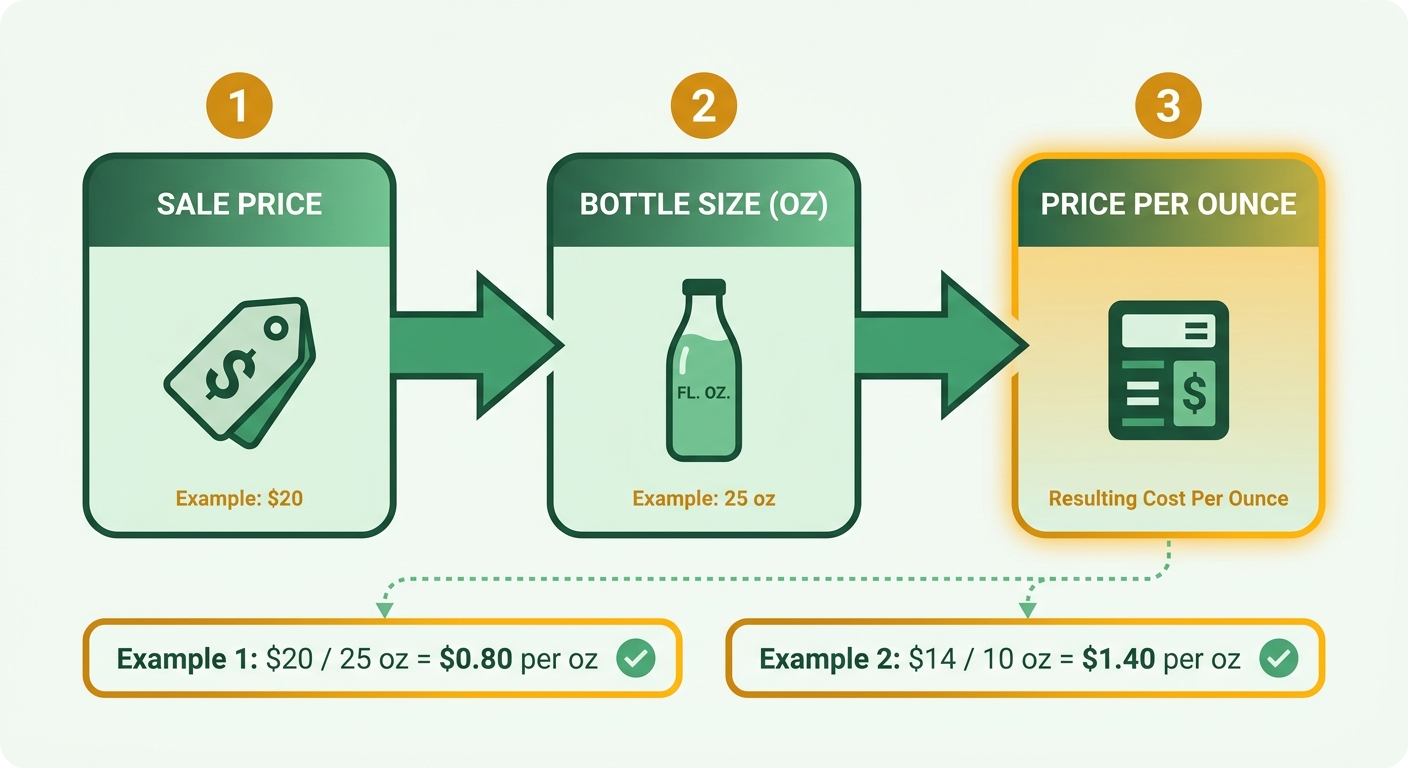
Take the final sale price and divide by the bottle size in fluid ounces. A professional bottle at $24 for 12 ounces costs $2.00 per ounce. A standard brand at $9 for 15 ounces costs $0.60 per ounce. Knowing those baselines tells you whether a premium markdown is really a bargain.
This is where fake discounts get exposed. A slashed price on a small bottle can hide a worse per-ounce rate than a larger competitor with no markdown at all. Run the math before you trust the red tag.
Why the same shampoo costs different amounts
The same bottle carries different per-ounce prices at different stores because each retailer sets its own baseline and its own discount depth. One chain drops a salon brand hard; another barely touches it. The product is identical. Only the math changes.
A specialty hair mask might retail for $30 at two outlets. During a promotion, one runs a straight 30% off to $21, while the other bundles it with a smaller accessory at full price. Compare actual product weight against final cost and the real winner surfaces.
Watch the jumbo "value" sizes too. Retailers bank on you assuming bigger equals cheaper per ounce. Not always true on Black Friday, when smaller bottles sometimes get the deeper cut.
The practical rule
Build a quick comparison before you buy. List each shampoo, its bottle size, and its sale price, then calculate the per-ounce cost side by side.
- Cheapest per ounce wins, not the biggest percent off.
- Verify the ounces on the label. Bottle shapes disguise volume.
- Ignore the original price once you have the per-ounce figure.
Do this across two or three retailers and the best deal picks itself. The lowest per-ounce bottle is the one worth stocking up on.
Deals worth skipping
Not every red tag deserves your money. Some Black Friday shampoo "deals" hide a marked-up starting price, a shrunk bottle, or a formula packed with cheap fillers. Knowing the traps keeps you from blowing the sale on shampoo you'd never buy at full price.
The pricing gimmicks to watch for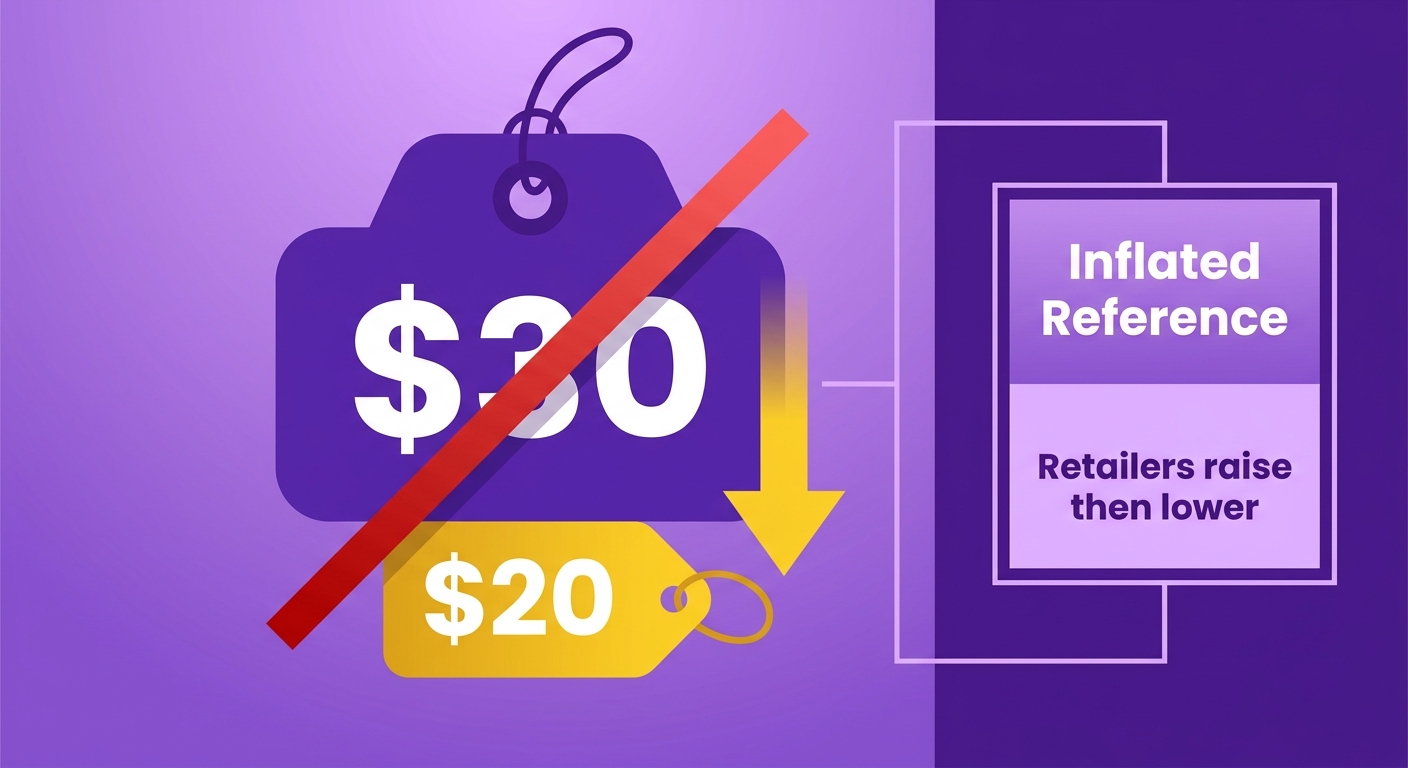
One common tactic: dynamic pricing that adjusts with real-time search volume. That can spike a price right before a promotion, creating the illusion of a massive discount when it simply returns to baseline.
You'll also see bundle padding. A "value set" tosses in a travel-size conditioner or a plastic scrunchie to justify a higher total. Do the per-ounce math and the bundle often costs more than the standalone bottle.
Another one: the doorbuster on a discontinued formula. Deep cuts sometimes mean a brand is clearing out an old version. The 60% off looks great until you notice the ingredient list changed.
Ingredients that should kill the deal
Skip any Black Friday shampoo loaded with cheap fillers, no matter how deep the cut. A big discount on a bad formula is still money down the drain.
Watch for these near the top of the label:
- Sodium lauryl sulfate: a harsh detergent that strips color and dries out curls.
- Formaldehyde-releasing preservatives (like DMDM hydantoin): flagged for scalp irritation.
- Heavy silicones (dimethicone high on the list): build up and weigh hair down over time.
- Added parabens: a preservative many shoppers now avoid.
A bottle parked at the front of a Black Friday endcap is often there because it moves slowly at full price. The ingredient list usually tells you why.
How to spot a genuine deal
Cross-check three things before you trust the tag: price history, price per ounce, and the ingredient list. If the "original" price only showed up a few weeks ago, treat the discount as fiction.
This is where reading the fine print pays. A tool that checks a label against your exact requirements, like Popgot, filters out the formulas that fail on ingredients before you compare prices at all. Match the specs first, then let the per-ounce math pick the winner.
FAQ
Which retailer had the best Black Friday shampoo deals? Target posted the deepest average markdown on health and beauty at 37.6%, well ahead of a competing chain's 7.2%, per DataWeave. Amazon won on event length and brand selection with its nine-day window. Target for one deep cut, Amazon for hunting a specific brand across the week.
How do I calculate price per ounce? Divide the final sale price by the bottle size in fluid ounces. A $24 bottle at 12 ounces is $2.00 per ounce; a $9 bottle at 15 ounces is $0.60. The lowest per-ounce cost wins, not the biggest percent off.
How do I know if a Black Friday shampoo discount is real? Check three things: price history, price per ounce, and the ingredient list. If the "original" price only appeared a few weeks before the sale, the markdown is likely inflated. A genuine deal undercuts the same product at other retailers, not just its own reference tag.
Is a bigger bottle always the better deal? No. Retailers often discount larger sizes less aggressively, and smaller bottles sometimes get the deeper cut on Black Friday. A concentrated formula that needs less per wash can also outlast a bigger diluted bottle. Run the per-ounce math every time.
Which shampoo ingredients should make me skip a deal? Sodium lauryl sulfate, formaldehyde-releasing preservatives like DMDM hydantoin, heavy silicones high on the list, and added parabens. A deep discount on a filler-heavy formula is still money down the drain.
References
[1] Black Friday Prices Tempt Health & Beauty Shoppers - https://dataweave.com/blog/black-friday-prices-tempt-health-beauty-shoppers
[2] Best Amazon Black Friday Beauty Deals - https://www.today.com/shop/best-amazon-black-friday-beauty-deals-rcna244636
[3] The Fake Discount Epidemic In E-Commerce - https://www.researchgate.net/publication/390920805_The_Fake_Discount_Epidemic_In_E-Commerce_Platform_An_Examination_Of_Tactics_Tools_And_Consumer_Awareness
[4] From Black Friday to Green Friday - https://world.davines.com/blogs/blog/from-black-friday-to-green-friday-ready-for-the-change
References
[1] Black Friday Prices Tempt Health & Beauty Shoppers - https://dataweave.com/blog/black-friday-prices-tempt-health-beauty-shoppers
[2] Best Amazon Black Friday Beauty Deals of 2025 - Today Show - https://www.today.com/shop/best-amazon-black-friday-beauty-deals-rcna244636
[3] The Fake Discount Epidemic In E-Commerce Platform - ResearchGate - https://www.researchgate.net/publication/390920805_The_Fake_Discount_Epidemic_In_E-Commerce_Platform_An_Examination_Of_Tactics_Tools_And_Consumer_Awareness
Frequently Asked Questions
1. Does shampoo actually expire, and how long does an unopened bottle last?
Unopened shampoo typically lasts two to three years, while opened bottles stay effective for about 12 to 18 months. This matters when stockpiling Black Friday deals, since buying six bottles you won't finish within that window wastes both money and product before it degrades.
2. Can I stack coupons or cashback apps on top of Black Friday shampoo markdowns?
Many retailers allow manufacturer coupons, store rewards, and cashback apps to combine with sale prices, though salon-brand exclusions are common. Check each retailer's coupon policy before checkout, and recalculate price per ounce after every stacked discount to confirm the final cost still beats competitors.
3. Is a subscription service like Amazon's Subscribe & Save better than a one-time Black Friday buy?
Subscribe & Save offers roughly 5 to 15% off recurring orders, which is far shallower than the deepest category-wide markdowns observed during major holiday events. A one-time deep discount usually wins for stockpiling, but subscriptions suit shoppers who prefer steady pricing without tracking rotating sales.
4. How much shampoo should I actually stock up on during Black Friday?
Buy a three to six month supply based on your usage, not the number of bottles that look like a bargain. Most people use one 16-ounce bottle every four to six weeks. Overbuying risks expiration and adds plastic waste that undercuts the value of any discount.
5. Are store-brand shampoos worth buying over discounted name brands on Black Friday?
Store-brand shampoos often match name brands on core ingredients at a lower everyday price, sometimes beating a discounted premium bottle on cost per ounce. Compare the first five ingredients and the per-ounce figure. If a store brand is sulfate-free and cheaper per ounce, the name-brand markdown loses.
6. What should I do if a shampoo I bought on Black Friday breaks me out or dries my hair?
Stop using it immediately and check the label for harsh surfactants, synthetic preservatives, or heavy coating agents that can trigger scalp sensitivity. Many retailers accept unopened returns during the holiday window, so keep receipts and verify the return policy before the deadline passes.
7. Does bottle size affect shampoo freshness once opened?
Larger bottles take longer to finish, so a jumbo "value" size bought on sale may degrade before you use it all, especially for infrequent washers. Match bottle size to your realistic usage rate rather than chasing the lowest per-ounce price on an oversized container you can't finish in time.