
Build Your Keto Grocery List Once, Let Popgot Price It

Key Takeaways
- Shopping keto without a plan bleeds money on hidden-carb products that quietly knock you out of ketosis.
- A prewritten list locks in your purchases before you walk in, which kills the impulse spending that inflates every trip.
- Keto prices swing hard between stores, and the real unit cost stays buried under flashy packaging.
- Meal-based lists cut food waste, because buying for specific dishes leaves fewer perishables rotting in the crisper drawer.
- The consensus advice from Perfect Keto, Virta Health, and Whole Foods: plan around your macros, shop with a routine and a full stomach, and work aisle by aisle.
Why the cart decides everything
Keto lives or dies by what ends up in your cart. Walk into any keto grocery store without a plan, and you'll waste money on hidden-carb products that quietly kick you out of ketosis. A structured list fixes that. As Perfect Keto's grocery guide puts it, planning meals around your macros keeps impulse buys from sabotaging your progress.
Demand for keto-friendly products keeps climbing, but the affordable options are still hard to spot on crowded shelves. Prices swing wildly between retailers, and unit costs get buried under packaging designed to distract you. That's where a little price comparison earns its keep.
Why a list saves you money
A keto list saves money by locking in your purchases before you shop. It keeps you on low-carb staples and blocks the impulse spending that inflates every trip. Virta Health's shopping guide recommends the same routine: a meal-based list, a set shopping rhythm, and a full stomach.
Structure also cuts waste. Buy for specific meals and fewer items rot in the fridge. The Whole Foods keto guide breaks it down aisle by aisle, from meat and dairy to snacks, salsas, and dips, so you know exactly what to grab.
The health payoff is just consistency
The diet only works when your daily food matches your macro targets. KetoConnect's beginner list points to 21 staple foods that make starting the diet manageable instead of overwhelming.
Consistency is the whole game. A kitchen stocked with keto staples removes the daily guesswork that pushes people back toward carbs. The Ketone-IQ shopping list offers a few compliant options that give you variety without breaking ketosis.
Who actually needs this
People who track every gram get the most out of it: health-conscious shoppers, busy families, and anyone with dietary restrictions. These are the folks who can't afford a mystery-carb mistake. A reliable list turns a stressful trip into a quick, repeatable routine.
Families juggling multiple diets need it even more. One well-built list covers everyone and compares prices across stores at once. For a starting point, this ultimate keto grocery list walks beginners through the essentials.
At a glance: staples and pricing
| Keto Staple | Common Retailers | Pricing Note |
|---|---|---|
| Grass-fed meat | Grocery, warehouse clubs | Compare per-pound unit cost |
| Eggs & dairy | Most retailers | Watch for bulk savings |
| Avocados & leafy greens | Produce section | Price varies by season |
| Nuts & seeds | Bulk aisle | Buy in bulk for lower unit price |
| Olive & avocado oil | Pantry aisle | Check per-ounce cost |
Building the list takes about 10 to 15 minutes once. After that, price comparison happens on its own, and the savings start on your next trip.
Building a keto list with Popgot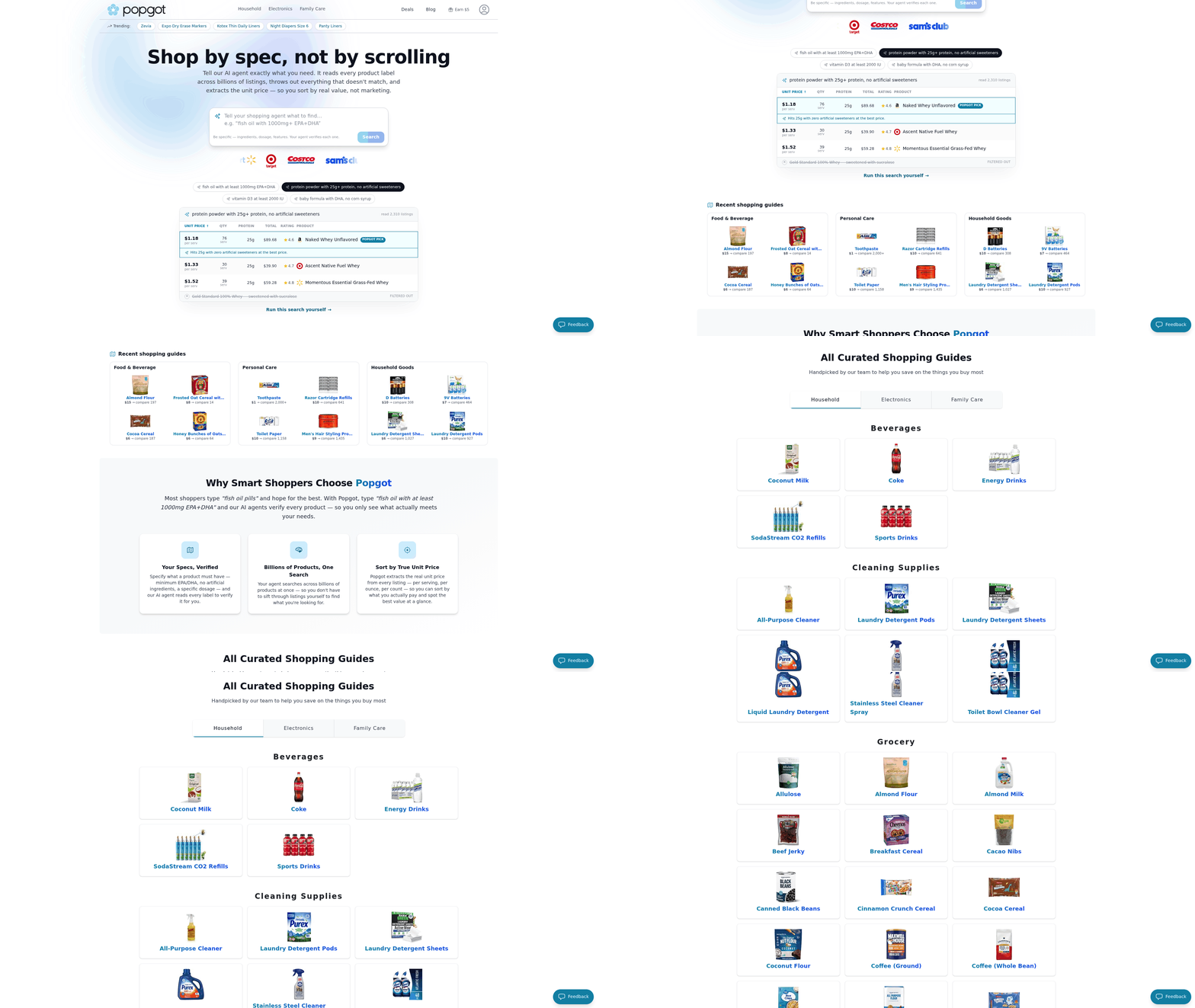
Popgot works on one idea: enter what you eat once, then let it hunt the lowest prices across every keto grocery store it tracks. You skip the manual price-checking and focus on food that fits your macros.
Setup takes minutes. Create an account, set your preferences to low-carb or keto, and add filters for the products you buy most. From there, the platform surfaces keto staples and compares what each retailer charges. That comparison matters, because prices for the same item swing hard between stores.
Setting it up
Build your preferences around a meal-based list, not a random one. Feed your planned meals into your account and the filters isolate compliant ingredients automatically.
Set your carb ceiling and flag the categories you shop often: fats, proteins, low-carb produce, dairy. You can mirror standard supermarket aisles in your settings so nothing slips through.
Once your filters are live, you only see items that fit your macros. No more squinting at labels for hidden sugars. The structure keeps you inside ketosis before you reach checkout.
Finding affordable staples
Search the exact staple and let the price comparison sort your options. Type "almond flour," "coconut oil," or "grass-fed beef," and you get side-by-side pricing across retailers. The cheapest verified option floats to the top.
Almond flour and coconut oil show up on nearly every starter guide, so they're the smartest items to price-check first.
Proteins deliver the biggest savings. Grass-fed beef and wild-caught salmon carry high unit costs, and small per-pound differences add up fast over a month. Comparing these across stores protects your budget where it hurts most.
Why not just wing it
Because keto rewards planning and punishes guesswork. Price comparison adds a second layer: the list protects your progress, the pricing protects your wallet.
Say a family of four eats wild-caught salmon three nights a week. Even a modest per-pound saving on that one item, multiplied across a month of dinners, frees up real cash for other staples. That's the payoff of pricing your list once and letting the platform re-check it every trip.
Build around meals you'll actually cook. Load the items, set your filters, and let the pricing work in the background.
Doing keto cheap
Keto gets a reputation for being expensive, but that price tag comes from branded specialty products, not the diet itself. Eggs, ground beef, and frozen vegetables cost far less than packaged "keto" snacks. The trick is knowing which cheap staples do the same job.
You don't need a specialty keto grocery store to eat well on a budget. Most affordable options sit in the regular aisles of any supermarket. Point your cart at unprocessed basics, then track prices so you buy them when they dip.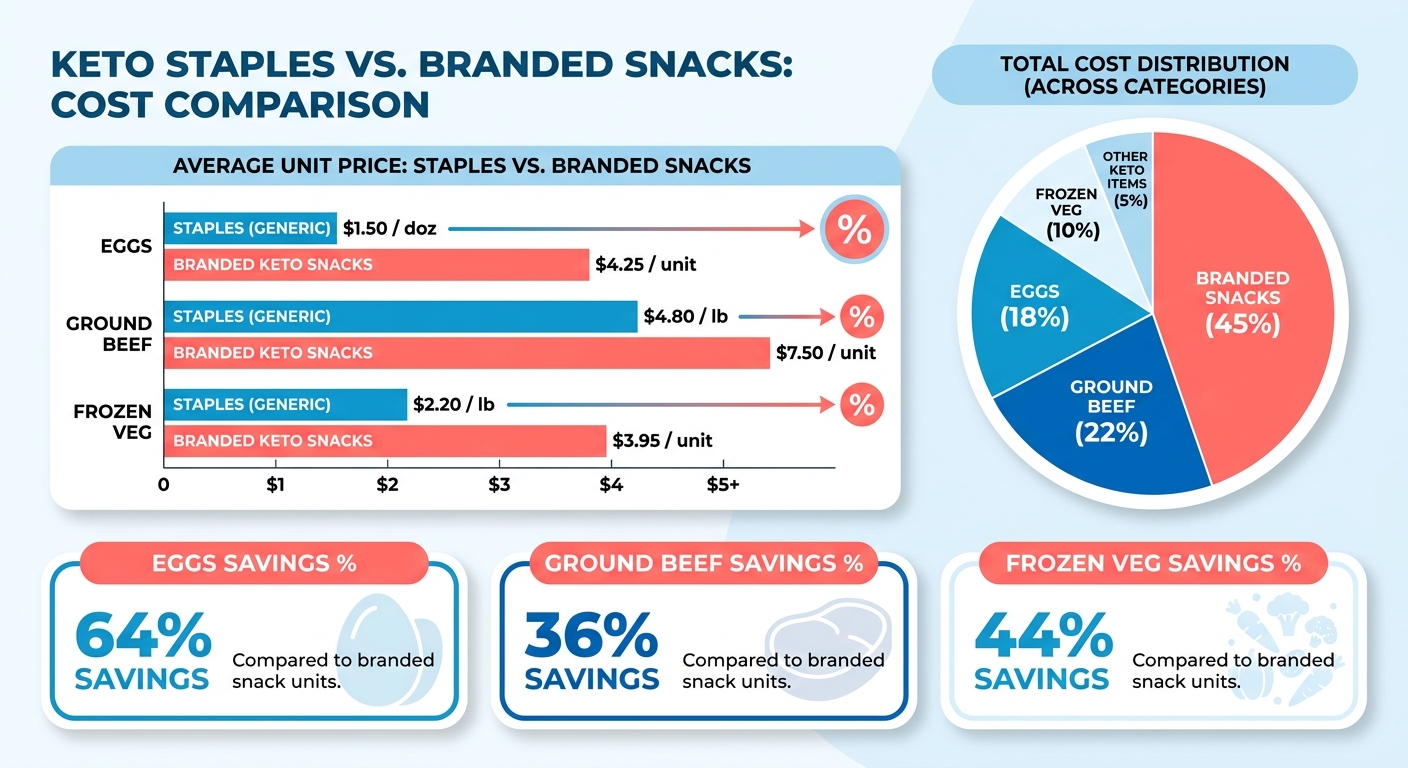
The cheapest staples
Whole eggs, ground meat, canned fish, cheese, and non-starchy vegetables. These cover your protein and fat without the markup of branded low-carb products. Build your list around them and the weekly total drops fast.
Eggs are the anchor. Cheap, high in fat and protein, endlessly flexible.
Swap pricey packaged snacks for whole-food versions. Instead of keto bars, grab a block of cheese or a bag of nuts. The plain versions do the same job and skip the premium.
Catching the sales
Track the items you buy repeatedly and let a price-comparison tool flag the drops. Enter your regular staples once, and the platform watches every retailer it covers and surfaces the lowest current price. You buy on the dip instead of paying whatever the shelf says.
This matters most for weekly restocks. Fatty cuts of meat, cheese, and butter swing in price between stores. Catch a sale on a bulk pack of ground beef, freeze portions, and you stretch that budget across multiple meals.
Sign up for store loyalty programs too. Stack a tracked-price alert with a coupon and the savings compound.
Planning meals to save
Plan around a handful of shared staples so one grocery run feeds several dinners. Buy a whole rotisserie chicken and use it across salads, omelets, and a quick stir-fry. Repurposing ingredients cuts waste and shrinks your list.
Shopping on a full stomach is underrated. Hungry shopping is how expensive extras end up in your cart. And planning around your macros keeps you from grabbing hidden-carb products that also happen to cost more.
A sample weekly budget
A dozen eggs, two pounds of ground beef, a block of cheese, a bag of spinach, avocados, and olive oil covers a week of meals for one person. Those items anchor breakfast, lunch, and dinner without a single branded keto product.
Stick to the list. Every off-list grab is where budgets break.
How the AI actually works
Popgot runs on an AI agent that does the tedious work you'd otherwise do by hand: checking product specs, comparing prices, and flagging the best deals. You tell it what fits your macros, and it scans every keto grocery store in its network for matches that actually meet your rules.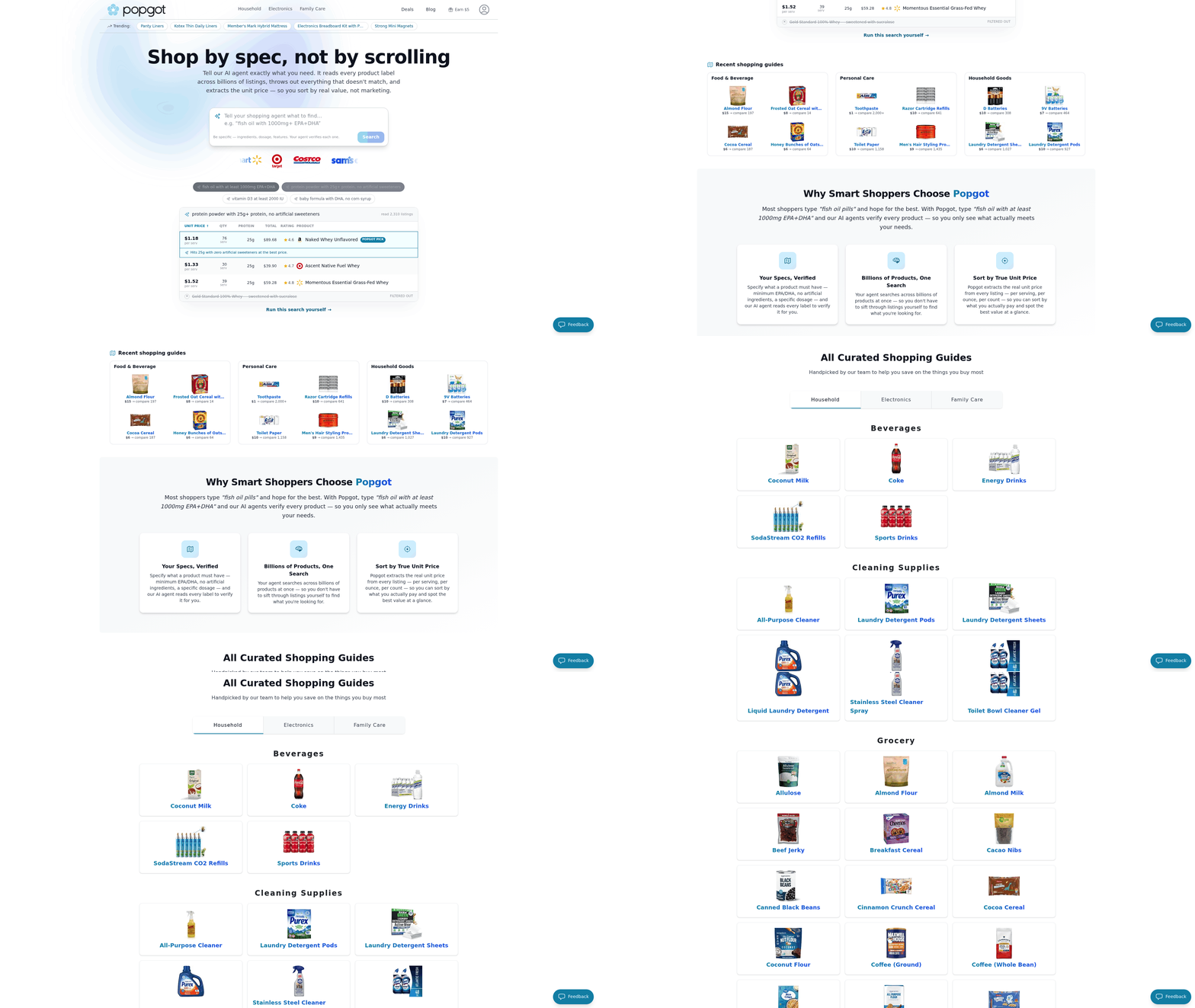
The point is accuracy. Shop the low-carb aisles yourself and you squint at labels and guess at unit costs. The agent reads those specs for you and only surfaces products that pass your filters, so what you see is already vetted.
How it verifies products
The agent checks each product's specs against the rules you set, then only shows items that qualify. Flag a net-carb ceiling per serving, and it compares that number to each product's label data and drops anything over the line.
This step matters because "keto-friendly" packaging lies constantly. A snack can shout low-carb on the front and still hide sugar alcohols or starchy fillers in the ingredients. The agent reads the underlying data, not the marketing, so borderline products don't slip into your results.
It also cross-references across retailers. The same item can carry different listings at different stores, and the agent reconciles those into one clean comparison.
How it finds the best price
Popgot searches multiple retailers at once and calculates true unit pricing so you compare apples to apples. A 12-ounce bag at one store and a 16-ounce bag at another look like different deals until you break them down to price per ounce.
That unit math is where most shoppers lose money. Flashy packaging and odd package sizes bury the real cost. Popgot strips that away and ranks options by what you actually pay per unit.
You control the search with custom filters. Set your product types, size ranges, and carb limits, and the platform narrows thousands of listings down to the handful worth buying. The result is a shortlist that fits your diet and your budget, without the label-reading grind.
What I'd actually do
Keto succeeds or fails at the shelf. Get the shopping right and hitting your macros gets easy. That's why we built a service that reads every label for you and prices your list across eight major retailers at once.
You don't need to wander a specialty keto grocery store to eat well. Tell the AI agent what you want, set your net-carb ceilings, and it verifies each product against your rules. You see only what qualifies, sorted by real unit price.
What you actually gain
You save time, cut overspending, and skip the label-squinting entirely. The agent reads listings across Amazon, Walmart, Target, Costco, Sam's Club, Aldi, Trader Joe's, and Kroger, then pulls the per-serving or per-ounce price so you sort by real value.
In practice:
- Verified specs: Set a carb limit or flag artificial sweeteners, and anything that fails gets filtered out before you see it.
- True unit pricing: Per-serving and per-ounce costs, so the flashiest package doesn't win by default.
- One search, eight stores: No more tabbing between retailer sites to compare the same jar of almond flour.
Skip it if you're only grabbing one or two items on a quick trip. The real payoff comes when you're pricing a full week of staples: eggs, ground meat, cheese, low-carb flours.
How to start
Create an account, set your preferences to low-carb, and add filters for the products you buy most. Onboarding takes minutes. No learning curve.
From there, build around whole foods first, then let the agent hunt the best price on each item. Set your list once. Let it price the list every time you shop. That's how you keep keto affordable without guessing on hidden carbs or overpaying for specialty snacks.
Run a search on the products you already buy and see what you've been overpaying.
Popgot vs. the coupon crowd
Most price comparison tools were built around coupons, not accurate pricing. They surface discount codes and cashback offers, which help sometimes but leave the real work to you. Shop a keto grocery store through a coupon-first tool and you still have to read every label and do the unit math yourself.
Popgot flips that. Instead of dangling codes, it reads product specs, verifies each item against your macros, and sorts by real unit price. That difference matters when you're pricing keto staples across a dozen retailers, where a "deal" on a high-carb product is no deal at all.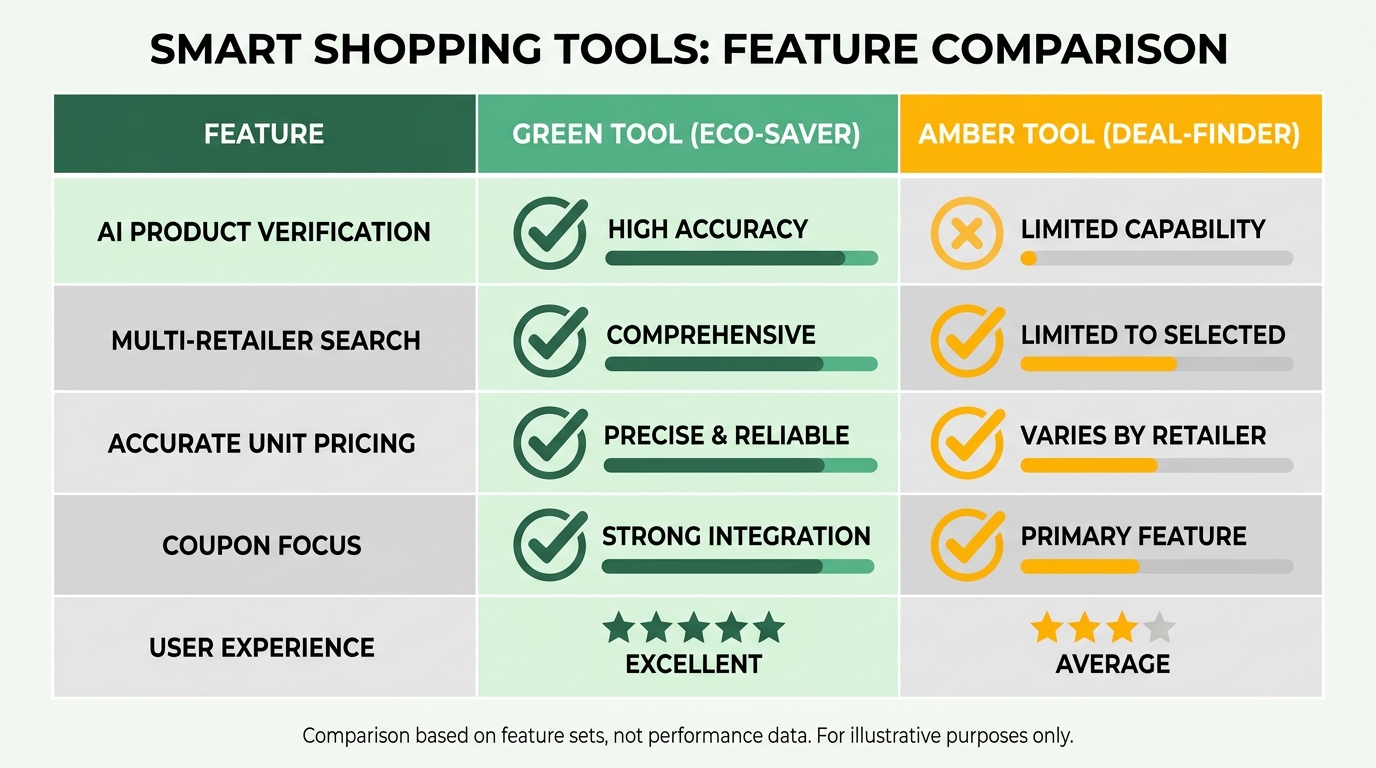
How it stacks up against coupon tools
Popgot leads with verified unit pricing and macro filtering; coupon tools lead with discount codes. They solve different problems. One helps you find a code for something you already chose. The other picks the right product and the cheapest source for it in one pass.
| Feature | Popgot | Coupon-First Tools |
|---|---|---|
| Core function | Verified unit-price comparison | Discount codes and cashback |
| Macro filtering | Yes, per net-carb rules | No |
| Reads nutrition specs | Yes, automatically | No, manual |
| Retailers priced at once | Eight major stores | Varies, site-by-site |
| Best for | Keto-specific shopping | General savings |
Coupon tools shine for one-off purchases. If you already know the exact product and just want a code, they deliver. They just don't know or care whether that item fits keto.
What the unit pricing gets you
Popgot's edge is per-serving and per-ounce pricing pulled from live listings, not sticker prices. A jar that looks cheaper on the shelf often costs more per serving once you do the math. Popgot does that math for you across every store it tracks.
Say you want avocado oil. A coupon tool might hand you 10% off one brand. Popgot compares five brands by price per ounce, filters out anything with hidden additives, and shows the true cheapest option.
That's the practical gap. One tool discounts a single item. The other prices your whole list correctly, then ranks it by value. For keto shoppers watching both macros and money, accurate unit pricing wins.
References
[1] A Beginner's Guide to Making a Keto-Friendly Grocery Shopping List - https://www.wholefoodsmarket.com/special-diets/keto/how-to-build-a-keto-friendly-grocery-list
[2] Ultimate Keto Shopping List For Beginners - KetoConnect - https://www.ketoconnect.net/keto-diet-shopping-list/
[3] The Ultimate Keto Shopping List | H.V.M.N. Blog - Ketone-IQ - https://ketone.com/blogs/blog/keto-diet-the-ultimate-keto-shopping-list?srsltid=AfmBOop1GwBq8Y7aAPEMwuMs3pWE0wmwP50lGQTflfaySh-5yxPHfBDV
[4] The Complete Keto Grocery List (With Free PDF) - https://perfectketo.com/ketogenic-diet-grocery-list/
[5] Low Carb Grocery Shopping Guide - Virta Health - https://www.virtahealth.com/blog/low-carb-keto-grocery-shopping
Frequently Asked Questions
1. Can I follow a keto diet if I'm vegetarian or have other dietary restrictions?
Vegetarian keto is possible by focusing on eggs, cheese, nuts, seeds, avocados, and low-carb dairy for fat and protein. People juggling multiple restrictions benefit most from a single filtered list that flags qualifying products, letting the whole household shop from one search while respecting individual carb and ingredient limits.
2. How many net carbs should I aim for daily on keto?
Most keto plans cap daily net carbs between 20 and 50 grams, though individual tolerance varies. Setting a specific net-carb ceiling per serving lets a filtering tool automatically drop any product exceeding your limit, so you avoid mentally calculating totals across every item in your cart.
3. Are sugar alcohols and artificial sweeteners keto-friendly?
Some sugar alcohols like erythritol have minimal blood sugar impact, but others such as maltitol can affect ketosis. "Keto" packaging often hides these fillers behind low-carb front-label claims. Reading the actual ingredient data, rather than marketing, prevents borderline products with hidden sugar alcohols from slipping into your purchases.
4. Is buying in bulk always cheaper for keto staples?
Bulk buying lowers unit price on shelf-stable items like nuts, seeds, and oils, but perishables can waste money if they spoil first. Compare per-ounce cost against how quickly you'll use an item. Freezing bulk meat portions extends value, while smaller produce buys reduce fridge rot.
5. Which retailers does Popgot compare prices across?
Popgot reads listings across eight major retailers: Amazon, Walmart, Target, Costco, Sam's Club, Aldi, Trader Joe's, and Kroger. It extracts per-serving and per-ounce pricing from each, so you compare the same jar of almond flour across every store in one search instead of tabbing between sites.
6. How is Popgot different from cashback and coupon apps?
Coupon apps deliver discount codes for products you've already chosen but don't verify whether items fit keto. Popgot leads with macro-based filtering and verified unit pricing, selecting the right product and cheapest source in one pass. A "deal" on a high-carb product is no deal for keto shoppers.
7. Is a keto diet actually more expensive than a regular diet?
Keto costs rise mainly from branded specialty products, not the diet itself. Whole eggs, ground beef, canned fish, cheese, and frozen non-starchy vegetables cost far less than packaged keto snacks and bars. Building meals around these unprocessed basics keeps weekly grocery totals comparable to standard shopping.