
Cheapest Paper Towels Online: Discover Hidden Deals with AI Label Scanning

Key Takeaways
- Price per square foot is the only number that matters. Hit $0.02 or less and you've beaten nearly every "sale" out there.
- "24 rolls" tells you nothing. A smaller pack can cost less per usable sheet.
- AI label scanning pulls the real unit price off every listing, so you compare like-for-like in seconds instead of doing math at checkout.
- Slickdeals is currently tracking 50 regular rolls for $28.69 or less, which lands right at the $0.02 mark.
- Amazon and Costco run the most frequent paper towel discounts among the retailers worth watching.
- The best deals almost always live in bulk multi-packs, per The Krazy Coupon Lady.
- Bounty Quick-Size Family Rolls pack eight family triple rolls equal to 27 regular rolls, right around the $0.02 benchmark.
The one number that beats every sale
Cheapest paper towels online comes down to a single figure: price per square foot. Target $0.02 or less, and you'll beat most sale prices no matter which brand you grab, according to The Krazy Coupon Lady.
That number matters more than roll count or brand. A pack advertised as "24 rolls" can cost more per usable sheet than a smaller one. AI label scanning fixes this by pulling the real unit price from every listing, so you're comparing apples to apples in seconds instead of squinting at the fine print at checkout.
What's actually cheap right now
The best deals cluster around bulk multi-packs from a handful of retailers. Right now Slickdeals is tracking bundles like 50 regular rolls for $28.69 or less, which puts you near that $0.02 target. Amazon and Costco run the most frequent discounts.
Here's how the top options stack up:
| Product | Brand | Retailer | Pack Size | Price | Est. $/sq ft |
|---|---|---|---|---|---|
| Quick-Size Family Rolls | Bounty | Amazon deals | 8 Family Triple = 27 Regular | Varies (deal price) | ~$0.02 target |
| Bulk Regular Rolls | Store/Value | Slickdeals tracker | 50 Regular Rolls | $28.69 or less | ~$0.02 |
| Warehouse Multi-Pack | Kirkland-type | Costco Wholesale | Bulk case | Discount-based | Under $0.02 |
| Discount Filtered Packs | Multiple | Amazon under $10 | Small to mid | Up to $10 | Varies |
Bounty Quick-Size: eight family triple rolls equal 27 regular rolls, per Amazon's listing. Big count. Still check the per-square-foot figure before you assume it's a deal.
How long does this take?
Fast. One AI scan covers Amazon, Walmart, Costco, and Target at once. Doing the same comparison by hand usually burns 15 to 20 minutes and still leaves room for error.
The savings come from skipping the busywork. No five open tabs, no recalculating sheet counts. The tool drops any pack that misses your price target and sorts the rest by true unit cost. Want a head start? Current sales roundups do some of the legwork too.
Is it hard to use?
No. You type what you want, the AI reads the labels. No onboarding, no spreadsheets, no coupon-stacking, no barcode hunting.
Skip the manual coupon route if your time is worth more than a few cents per roll. Coupon-stacking can beat AI pricing on the rare good week, but it costs you hours of clipping and store-hopping. For a routine restock, let the scan do the work and buy whatever clears $0.02 per square foot.
Where the good deals actually hide
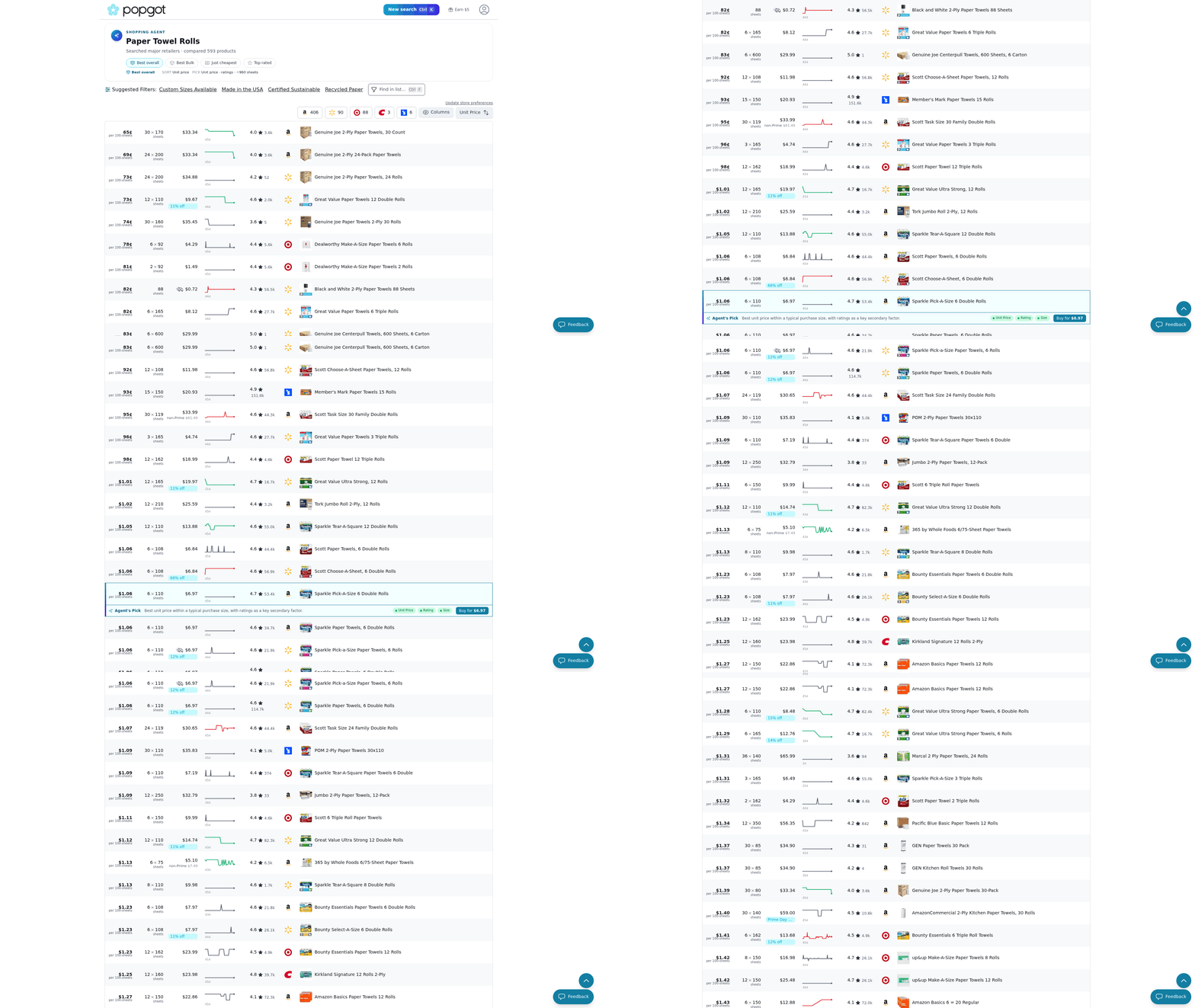
The cheapest paper towels rarely sit on the front page of any retailer. They're buried in bulk multi-pack listings, clearance tags, and subscription discounts most shoppers scroll right past. Your job is to surface those unit prices and compare them fast.
The shortcut: sort by price per square foot, not the sticker total. A pack that looks pricey up front often wins once you divide by usable sheets. AI label scanning does that math instantly by reading the fine print on each listing.
The three places to look
The best discounts cluster in three spots: bulk multi-packs, active coupon-clip offers, and daily deal trackers. Each one hides the true unit cost behind a big round number.
Take Amazon's dedicated paper towel discount page. Watch for "Subscribe & Save" tags, which stack an extra 5% to 15% off when you bundle five or more household items into one monthly delivery. Those discounts stay invisible until the item's in your cart.
Deal aggregators help too. Slickdeals tracks daily bundles from warehouse and online retailers, and community members vote up the strongest drops so real bargains rise past the noise. Sort by "Hottest" and you'll catch warehouse-club select rolls that never show up on a standard category page.
How the scan uncovers what you'd miss
AI label scanning pulls the real unit price from every listing, then ranks them so the true winner rises to the top. No napkin math, no guessing.
Point the scan at a product label or listing. It reads the roll count, sheet dimensions, and total price, then spits out cost per square foot. Line that number up across every option on the page and you instantly know whether a "sale" is real or just a bigger box with the same per-sheet cost.
Say a daycare owner is choosing between a 6-roll pack and a 24-roll box. The big box costs more up front, but a quick scan shows it delivers far more square footage per dollar. Smarter long-term buy.
Who saves the most
Households buying in volume. Small per-sheet savings compound across dozens of rolls, so families, shared apartments, and anyone shopping monthly instead of weekly feel it most.
Paper towels are a recurring cost you can't skip. Overpay a few cents per roll every trip and it adds up to real money over a year. Scanning labels closes that gap by catching the deals buried in multi-pack listings. Pairing your scans with a curated list of what's on sale this year helps you spot which brands are discounting bulk inventory right now.
Case study: best value paper towels in 2026
The standout value in 2026 is about efficiency, not brand prestige. You want packs that hit or beat the target rate while holding enough structural integrity to handle a real cleanup. Right now, consolidated designs like "triple rolls" lead by packing more paper into a smaller physical footprint.
Some premium options on Amazon's discount page use packaging terminology that obscures how much paper you're actually getting. That's exactly why smart buyers lean on area calculations instead of roll counts, which routinely push shoppers toward less efficient configurations.
Why this pack wins on price and quality
Consolidated packaging cuts manufacturing and shipping overhead, and retailers pass some of that down. Cross-reference against the Slickdeals warehouse bundle tracker and you'll regularly find two-ply options sitting below standard retail rates without giving up absorbency.
Quality matters here. A cheap sheet that shreds on the first pass means you use three to clean one spill, which wipes out the savings. Two-ply construction absorbs more per sheet, so your effective cost drops even lower than the sticker math suggests.
The four-check buying list
A smart paper towel checklist has four checks: unit price, ply strength, pack consolidation, and current deal status. Run all four before checkout and you'll rarely overpay. AI label scanning handles the tedious first one straight off the listing.
- Scan the unit price. Point the tool at any listing and it reads the fine print, converting inflated roll claims into real cost per square foot. No math at the register.
- Verify the target rate. The Krazy Coupon Lady's $0.02 rule tells you whether it's a genuine bargain, brand name aside.
- Check ply and sheet size. A larger, stronger sheet does more work per unit, so factor absorbency into value, not just price.
- Compare against a live deal tracker. Confirm the listing beats current bulk bundles before you commit.
Starting from a pre-filtered list of what's on sale this year lets you point your scanning at products that are already marked down.
Once you're pricing by area, store shelves look different. Ignore the buzzwords, focus on the physical volume of paper, and you'll consistently sidestep packaging that charges a premium for less material.
Understanding unit pricing for paper towels
To make sense of competing offers, look past the sticker price and focus on standardized measurements. For paper towels, that means cost relative to total surface area. This exposes real value, and shows you when a pricey-looking bulk box actually beats a cheaper single roll.
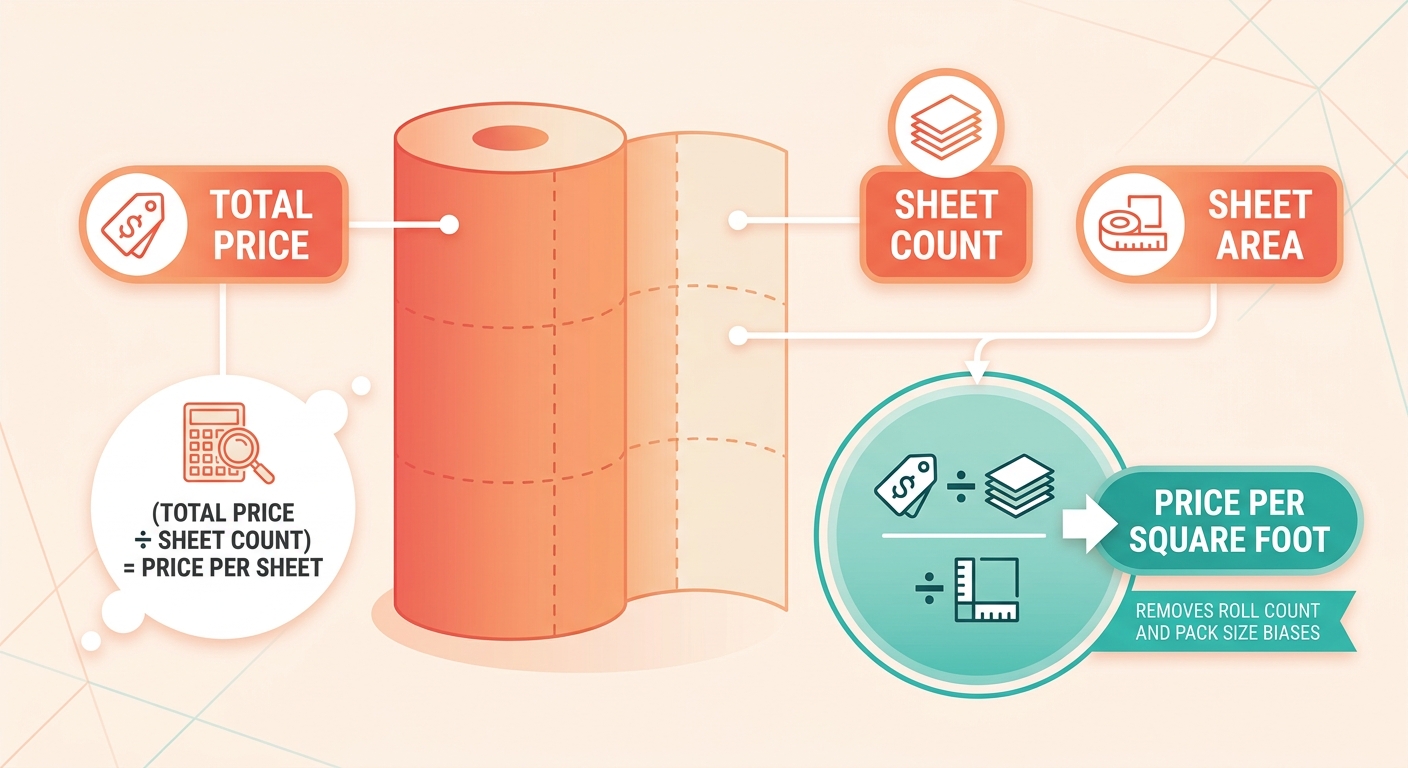
What unit pricing is, and why it matters
Divide total cost by total square footage and you've got a level playing field for every brand. Manufacturers constantly adjust sheet sizes and roll densities, which makes visual comparison useless. Cost per square foot bypasses all of it.
And the ranking flips once you do the math. A pricier-looking bulk box frequently beats a small "budget" pack per square foot. That's the whole point of shopping by unit instead of by total.
How it swings between retailers
Pricing structures differ a lot between online storefronts and warehouse clubs. Some retailers push low entry-level prices on small packs that carry a much higher unit rate. Larger warehouse configurations usually offer the best long-term value, even when the checkout total is higher.
A lot of stores lean on "select-a-size" and "double roll" labels that mean different things per brand. A warehouse two-ply bundle can read as expensive up front, yet its dense sheet packing pushes the per-foot cost below a thin single-ply pack sold as economical.
That's the trap of shopping by total price. Filtering by a low dollar band can steer you toward worse unit rates. You have to run the per-foot math inside each band, then compare across them.
Where per-foot math pays off
A coffee shop manager buying small convenient packs every week is overpaying. Switch to a single high-density bulk shipment once a month and the yearly paper bill drops noticeably, even though each transaction is bigger.
Automated scanning tools handle the calculation by pulling dimensions straight from online listings. To see how it plays out on current options, this year's paper towel deal roundup is a decent practical demo of unit pricing in action.
Reading quality off the label
A low unit rate is only half the story. How well the towel works decides its real cost. Weigh the physical attributes alongside the price so the product can actually do the job without tearing or eating three sheets per spill.
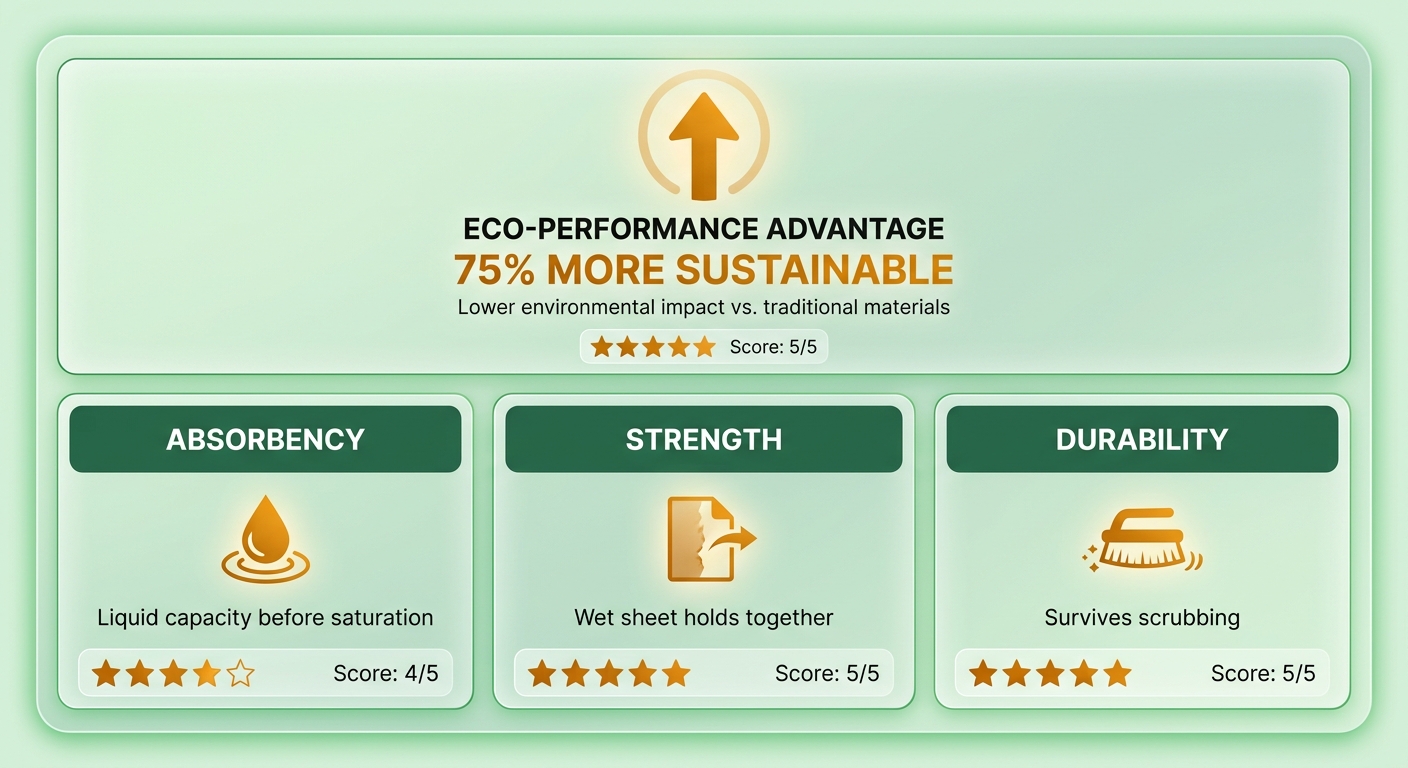
What absorbency, strength, and durability actually tell you
These three decide how much work a single sheet can do. High absorbency means fewer sheets per liquid spill. Wet strength keeps the paper from disintegrating mid-scrub. Ply count and manufacturing details on the label point to durability.
Labels signal this a few ways. Ply count (two-ply beats one-ply for strength) is right on the front. Sheet dimensions and "select-a-size" perforations hint at absorbency per use. "Cloth-like" or "scrubbing" claims point to tougher-job durability.
Here's the practical move: pair the quality label with the unit price. A two-ply select-a-size pack at $0.02 per square foot beats a one-ply bargain pack at the same rate every time, because you tear off fewer sheets to finish the same task.
Weighing quality against price
Balancing performance against cost comes down to intended use. A pet owner dealing with frequent heavy cleanups will find a slightly pricier two-ply sheet more economical than a cheap single-ply that tears on contact, because they'll go through far fewer sheets overall.
Using tech to parse product specs lets you filter out the low-quality options before you buy. For a curated set that balances durability with competitive pricing, these top picks are a reasonable starting point.
The most economical choice is the one that combines a low unit cost with enough strength to finish the job in a single wipe.
Where label scanning goes wrong
Digital scanning streamlines comparison, but its accuracy depends on the input data. Knowing how to read a listing prevents the common errors that quietly cost you money.
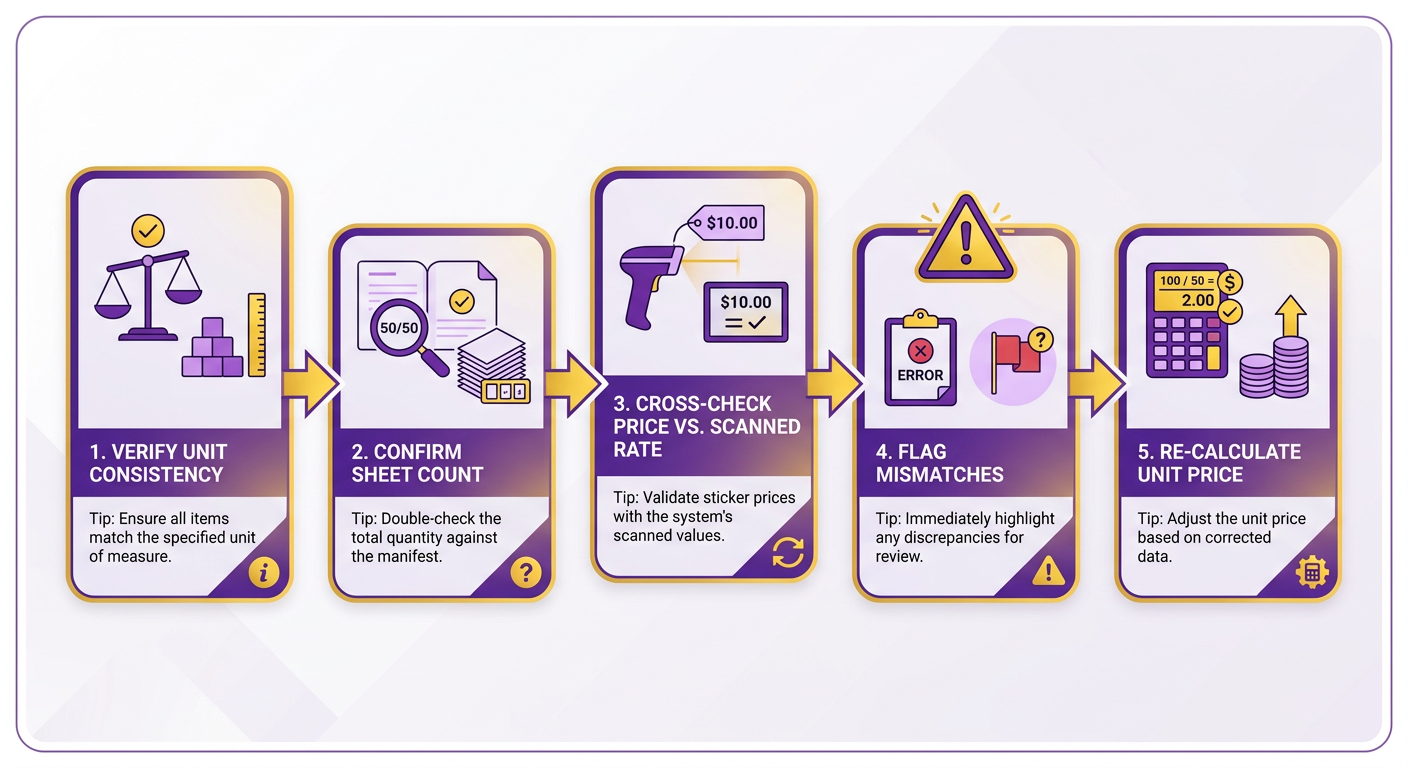
The mistakes that cost you money
Most shoppers lean on surface packaging metrics instead of standardized area measurements. Watch for these:
- Sheet dimensions. Make sure the scan accounts for actual sheet length and width. Some brands shrink sheet size to cut costs.
- Marketing descriptors. "Mega" and "super" have no standardized meaning. Ignore them in favor of raw square footage.
- Fulfillment fees. Factor in shipping or subscription savings to get the real delivered price.
- Stale price checks. Online prices move fast, so an older scan may not match current pricing.
Avoiding the traps in practice
A property manager stocking a vacation rental who shifts focus from package size to true surface area avoids buying bulky but low-density rolls. Guests get decent supplies, operating costs stay low.
To see which bulk options currently hold up under these criteria, check the top picks for this year.
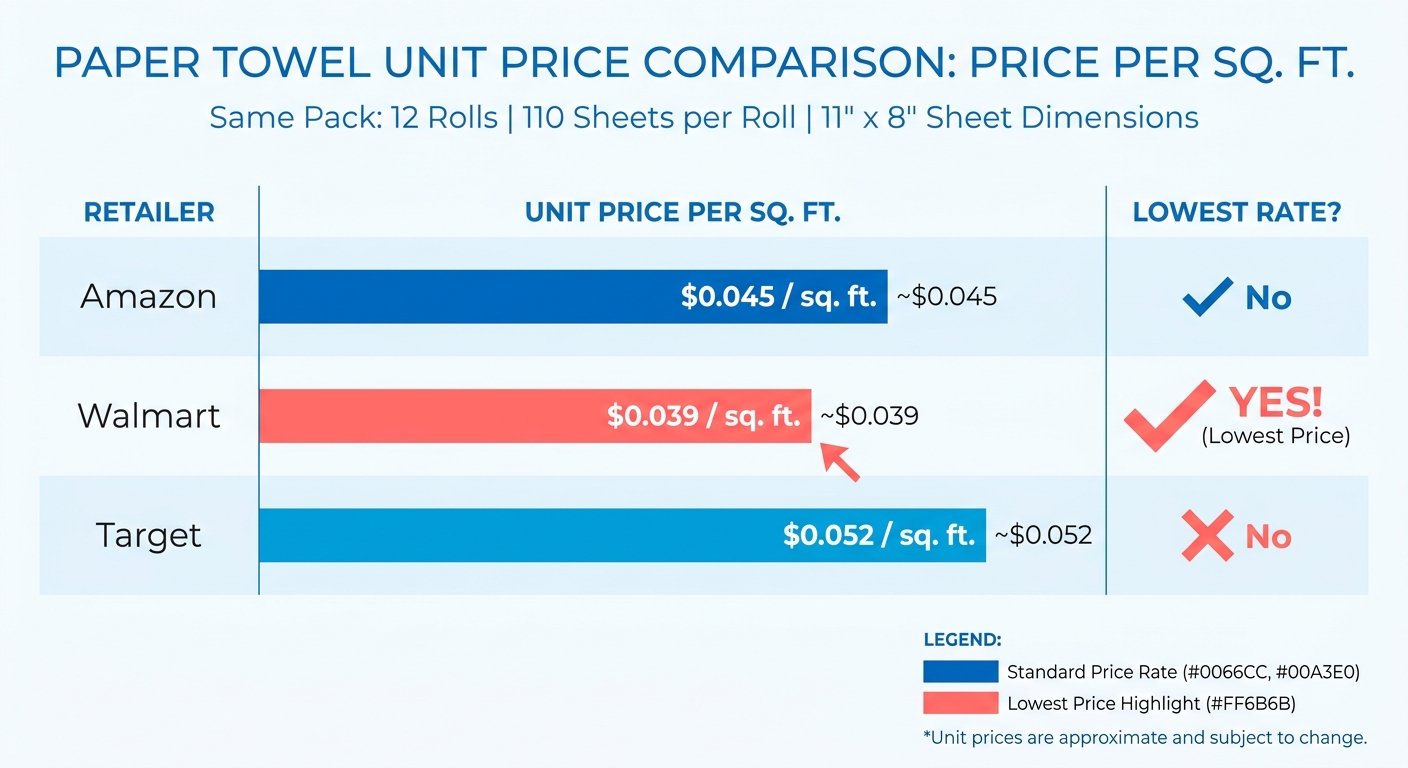
Comparing unit prices across Amazon, Walmart, Target
E-commerce platforms price identical items differently based on their promotions and inventory. To get the best deal, compare the exact same product across retailers using a standardized area metric, not the shelf price on the page.
How the numbers move between stores
Retailers structure discounts differently. Some cut prices steeply on bulk, others save you money through subscriptions or digital coupons. So the cheapest store shifts depending on package size and whatever promotion is live.
Watch the numbers move. A brand's 12-roll pack might list within a few cents per foot of its 6-roll version at one retailer, then swing wider at another once subscribe-and-save clips the larger bundle. Ply count muddies it further: a two-ply sheet and a thicker premium sheet cover the same square footage but rarely price the same.
Retailer pages sort listings into broad price bands that hide the real comparison. Two packs in the same bucket can differ by a full cent per square foot once you scan roll count and sheet size.
Nailing the cross-store comparison
A community center coordinator buying supplies for weekend events might spot a brand flagged as a special promotion at one retailer. Compare the actual square footage rate against a competitor's standard pricing, though, and the non-promotional bulk option can still come out cheaper.
To compare accurately across storefronts:
- Pin down the exact specs. Note total sheet count and dimensions to get overall square footage.
- Check multiple platforms. See how subscription discounts or store coupons hit the final unit rate.
- Trust the calculated rate. Skip the broad price categories and promotional badges, which hide the real per-unit cost.
Retail pricing moves constantly, so a curated set of top picks this year can flag which platforms are running the most competitive rates before you run your own math.
How AI label scanning works

Scanning tech pulls the key product details from online listings automatically. By parsing the fine print, it calculates a standardized cost per unit of area, so you skip the manual calculations.
The tool works by reading text off the label and product page, not by trusting the marketing headline. A listing might shout "24 Mega Rolls," but the scanner ignores that and grabs the sheet dimensions buried underneath. That's the difference between a guess and a real comparison.
What the scan can actually do
It automates data collection by identifying and analyzing the metrics that matter:
- Area calculation. It processes sheet dimensions and total counts to get the exact square footage of the package.
- Standardized comparison. It puts different packaging configs, standard rolls and bulk bundles alike, on a single scale.
- Value verification. It calculates final cost against total paper area, so you can see which options clear your target rate.
An eco-conscious buyer comparing recycled options might find two packages at identical retail prices. Scan both and you quickly see which brand delivers more physical paper per dollar. Best value, sustainable choice intact.
How accurate is it?
Accuracy depends on how complete the listing is. When manufacturers give clear dimensions and sheet counts, the tool delivers an exact unit rate, which makes it a reliable alternative to manual price tracking.
To see how it flags high-value options in the current market, review our analysis of the top picks this year.
References
[1] All Discounts / Paper Towels / Paper & Plastic Household ... - https://www.amazon.com/Paper-Towels-Discounts-Plastic-Household-Supplies/s?keywords=Paper+Towels&rh=n%3A15347401%2Cp_n_deal_type%3A23566065011&c=ts&ts_id=15347401
[2] Best Paper Towels Deals, Sales, & Discounts July 2026 - https://slickdeals.net/deals/paper-towels/
[3] Here's Exactly How to Get the Cheapest Paper Towels - https://thekrazycouponlady.com/tips/couponing/how-to-save-on-paper-towels
Frequently Asked Questions
1. How do I calculate price per square foot on a paper towel pack myself?
To find this rate, multiply the length of a single sheet by its width to determine the square footage per sheet, then multiply that by the total number of sheets in the entire package. Finally, divide the total price of the pack by this overall square footage. If a $9.00 package contains a total of 450 square feet of paper, the resulting rate is $0.02 per square foot.
2. Does buying paper towels in bulk always save money?
While bulk packages often offer a lower unit rate, this is not a universal rule. Manufacturers sometimes package smaller, consolidated rolls more efficiently, resulting in a lower cost per square foot than a larger box containing loosely wound rolls. Comparing the actual surface area rate is the only way to confirm which option is more economical.
3. Can coupon-stacking ever beat AI label scanning on price?
Manual couponing can occasionally yield lower prices during major promotional events, but it requires a significant investment of time to track down and combine offers. Utilizing automated scanning tools allows you to find highly competitive rates instantly during routine shopping trips, making it a more efficient option for most households.
4. Why does two-ply strength matter if a one-ply pack is cheaper per square foot?
The physical performance of the paper directly impacts how quickly you consume it. A single-ply sheet may have a lower initial unit cost, but if it tears easily, you will likely need to use multiple sheets for a single cleanup. A stronger, two-ply sheet often proves more cost-effective in practice because it reduces the total number of sheets required per task.
5. How often should I rescan prices before buying?
Because online retailers adjust their prices frequently based on inventory and demand, it is best to perform a quick check before each purchase. A rate that was highly competitive during your last shopping trip may have changed due to updated promotions or adjusted subscription terms.
6. Should I factor shipping and subscription costs into the unit price?
Yes, always evaluate the final delivered cost. Additional shipping fees can quickly erase the savings of a low-priced pack, while subscription programs can offer recurring discounts that make a slightly more expensive upfront option the most economical choice overall.
7. Does the same paper towel pack cost the same across Amazon, Walmart, and Target?
Identical products frequently carry different unit rates at different stores due to localized promotions, platform-specific coupons, and varying bulk discount structures. Comparing the calculated area rate across these major platforms before checking out ensures you do not miss out on store-specific savings.