
Compare Amazon Items Easily with Popgot

Key Takeaways
- Shoppers save 30-60% on essentials like laundry detergent by comparing unit prices via Popgot.
- Laundry detergent sheets cost $0.02 per load at Walmart versus $0.04 on Amazon, revealing 50% savings.
- A 2023 case study shows 40% savings on gum purchases by comparing Amazon and Walmart prices.
- Back-to-school families can cut costs by $858 using unit-price comparisons for school supplies.
- Cra-Z-Art pencils cost 11¢ each on Walmart, while BIC pens cost 16¢ on Amazon per unit.
- Popgot automates pricing normalization, reducing manual comparison time and errors.
- Unit-price filters help avoid brand premiums, showing true value across platforms like Amazon and Walmart.
Why Product Comparison Matters on Amazon
Product comparison is a critical step in online shopping, especially on Amazon, where millions of products compete for attention. According to Popgot’s analysis, shoppers who compare unit prices save 30-60% on everyday essentials like laundry detergent sheets, pens, and rice. This isn’t just about finding the cheapest option-it’s about making informed choices that align with personal needs, from avoiding harmful ingredients to prioritizing bulk savings. Below, we break down why this matters and how tools like Popgot streamline the process.
How Product Comparison Drives Smarter Shopping
When you compare products by unit price, you eliminate guesswork. For example, Popgot reveals that laundry detergent sheets can cost as low as $0.02 per load on Walmart, while the same product on Amazon might charge $0.04. This granular comparison ensures you’re not paying extra for packaging or brand premiums. A 2023 case study showed a user saving 40% on gum purchases by comparing Amazon and Walmart prices through Popgot’s unit-price filters. This normalization process is key to identifying true value.
The real-world impact is measurable. Families buying back-to-school supplies, for instance, can slash costs by focusing on unit prices. A Cra-Z-Art 12-count colored pencil pack costs 11¢ per pencil on Walmart, versus 16¢ per pen for BIC pens on Amazon. Popgot’s Facebook case study illustrates how these savings add up, reducing an average $858 bill to a fraction of its original cost.
Challenges Solved by Popgot’s AI-Powered Filters
Manual product comparison is time-consuming and error-prone. Popgot automates this by normalizing pricing data across Amazon, Walmart, Costco, and Target, then filtering out irrelevant or counterfeit products. For health-conscious shoppers, this means avoiding artificial sweeteners in gum or harmful chemicals in laundry detergent. This system scans specifications like ingredients with precision, ensuring only relevant options appear.
Take rice, for example. Popgot’s filters let you compare white, brown, basmati, and organic varieties side-by-side, sorted by unit price. One user found $0.33 per pound deals on organic brown rice, saving $20/month on family grocery bills. Similarly, the platform’s AI scans product descriptions to flag non-recreational gum or incompatible detergent sheets, ensuring only relevant options appear.
Who Benefits Most from Unit-Price Comparisons?
While all shoppers gain from unit-price transparency, certain groups see outsized benefits:
- Health-conscious buyers: Popgot’s filters for “no artificial sweeteners” in gum or “natural flavors” in snacks help avoid unwanted additives, a feature detailed in the Customizable Search Filters for Ingredient and Dosage Requirements section.
- Parents: Hypoallergenic laundry detergent and bulk school supplies are prioritized using Popgot’s attribute-based sorting.
- Budget shoppers: With savings of $100/month possible by comparing unit prices, essentials like markers ($0.04/count) and ketchup ($0.15/ounce) become affordable.
A family in California used Popgot to find bulk gum deals priced at 0.01¢ per piece, slashing their annual spending by 60%. Meanwhile, keto dieters use the platform to compare protein bars by unit cost, ensuring they stick to dietary goals without overspending.
Real-World Example: Finding The Best Deals on Amazon
Let’s say you’re buying dry-erase markers. Without comparison tools, you might settle for the first 6-pack listed. Popgot reveals that U Brands 6-pack markers cost 30¢ per marker on Amazon, while Crayola’s 12-pack is 25¢ per marker-a 20% savings-despite a higher headline price. Here’s how the comparison breaks down:
| Feature | U Brands 6-Pack (Amazon) | Crayola 12-Pack (Amazon) |
|---|---|---|
| Unit Price | 30¢/marker | 25¢/marker |
| Ratings | 4.2/5 | 4.7/5 |
| Bulk Savings | No | Yes |
This table, generated by Popgot’s AI, sorts products by relevance, ensuring you don’t waste time on low-rated or overpriced options. This example highlights how Popgot’s AI-driven sorting surpasses basic comparison methods.
Why Unit Price Should Be Your Shopping Priority
Unit price comparison isn’t just a tactic-it’s a strategy. As one expert notes, “Shopping by unit price is a major advantage for consumers looking to save on essentials.” Popgot’s automation turns this into a seamless process, saving users hours of manual research while ensuring they get the best value. Whether you’re buying rice, pens, or laundry detergent, the platform’s filters and real-time price tracking make smart shopping effortless.
For parents, health advocates, and anyone tired of overpaying, Popgot transforms Amazon from a chaotic marketplace into a targeted search engine for savings. The result? More money in your pocket and fewer compromises on quality.
Popgot's AI-Driven Product Verification
Popgot’s AI-driven product verification streamlines the comparison process by analyzing product details with precision. Unlike basic price checks, this system scans specifications like ingredients, dosages, and formulation claims to ensure accuracy. For example, when you search for laundry detergent sheets or ketchup, The AI cross-references labels to confirm whether products are “hypoallergenic” or “gluten-free” as advertised. This eliminates guesswork when you need items that meet strict dietary or health requirements, a topic expanded on in the Customizable Search Filters for Ingredient and Dosage Requirements section.
How Does AI Verification Improve Accuracy?
The AI uses machine learning to parse product descriptions, ingredient lists, and user reviews. It flags inconsistencies-like a “natural” product listing synthetic additives-and highlights verified claims. According to Popgot’s gum comparison tool, the system identifies sugar content and flavor types automatically, ensuring you can compare products without manually sifting through text. This level of detail is especially helpful for people with allergies or specific nutritional goals.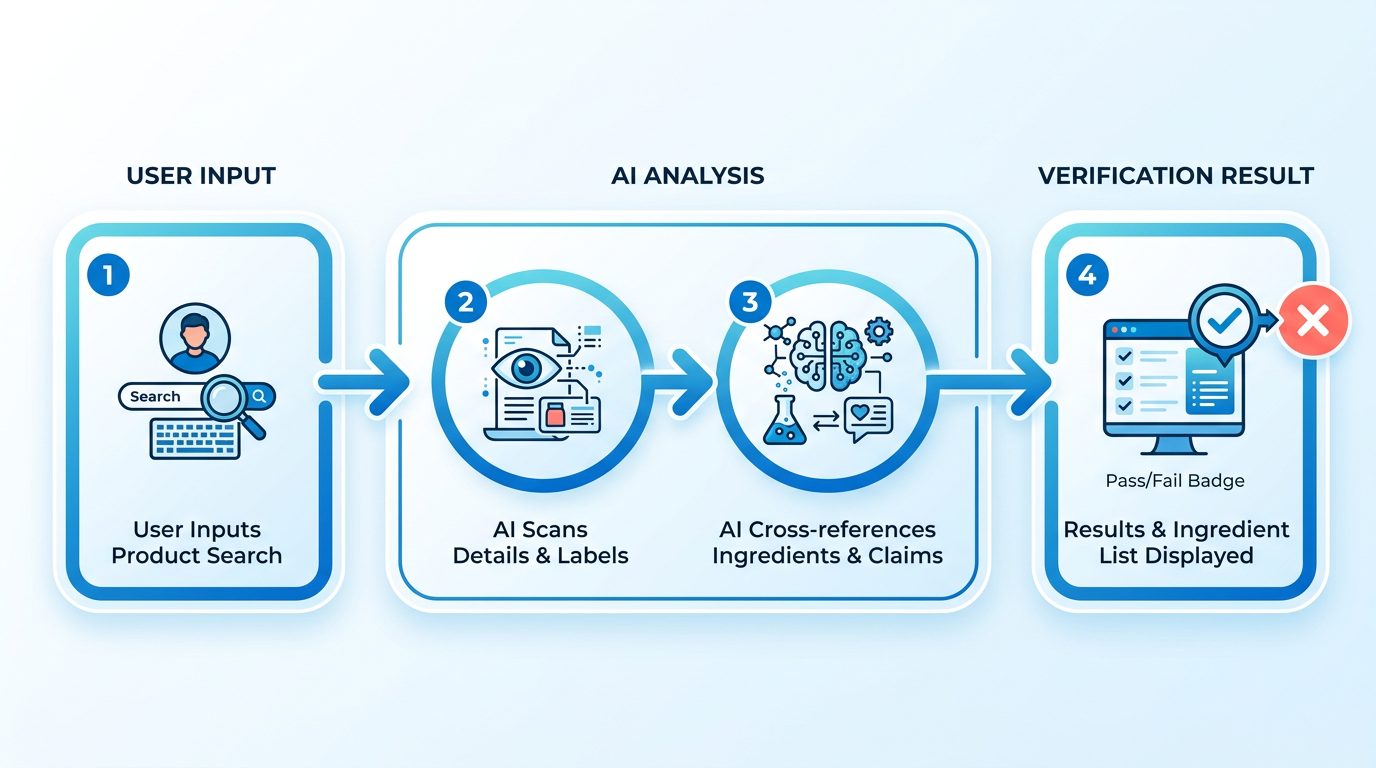
Benefits of AI-Driven Verification
The biggest advantage is time savings. Instead of opening multiple product pages to check for vegetarian-friendly or cruelty-free certifications, The AI surfaces this data upfront. Popgot’s rice comparison shows how it categorizes items by protein content and processing methods. For shoppers on a budget, the tool also compares unit prices across brands while factoring in discounts, a feature Laundry Detergent Sheets users praise for saving money on bulk purchases. The Popgot vs Amazon's Built-In Compare Tool section further explains how this unit pricing analysis outperforms standard filters.
Real-World Example: Dietary Requirements
Consider you’re looking for a low-sodium ketchup. Amazon’s filters might let you sort by brand or size, but Popgot’s AI digs deeper. By scanning ketchup product pages, it calculates sodium per serving and alerts you to hidden sugars. A user shared, “I found a keto-friendly option in seconds-no more trial and error!” This level of customization is rare on Amazon, where basic filters often miss nuanced dietary needs.
Popgot vs. Amazon’s Product Verification
Amazon’s built-in verification focuses on seller authenticity and counterfeit prevention, but it doesn’t analyze product specifications. Popgot’s AI, however, offers a side-by-side comparison of specs like vitamin dosages in supplements or ink types in markers. Here’s a quick comparison:
| Feature | Popgot’s AI Verification | Amazon’s Product Verification |
|---|---|---|
| Specification Checks | Yes (ingredients, dosages) | No |
| Custom Filters | Yes (dietary, allergy-focused) | Limited |
| Speed | Instant (AI-powered) | Manual search required |
| Price Comparison | Unit pricing, discounts | Basic price sorting |
This table shows Popgot’s edge in scenarios where product details matter most. For instance, marker comparisons include color vibrancy and erasability metrics Amazon doesn’t track. The Customizable Search Filters for Ingredient and Dosage Requirements section provides more examples of how these filters work.
Reliability and User Trust
While Popgot doesn’t publish accuracy percentages, its open-source approach lets users audit results. The AI’s training data comes from real product pages like pens and gum, ensuring it adapts to new categories. A Facebook user noted, “I trust Popgot’s filters more than Amazon’s because it actually checks what’s in the product.” For skeptics, this transparency builds confidence in the tool’s recommendations.
By combining automation with actionable insights, Popgot’s AI verification turns product research from a tedious task into a targeted search. Whether you’re comparing unit prices or vetting allergen labels, the system prioritizes the details that matter most to your needs. For a deeper dive into how this works for school supplies, check out this guide.
How Popgot Extracts Accurate Unit Pricing
Popgot’s unit pricing engine delivers precise comparisons by combining live price scraping, AI-driven analysis, and retailer-specific normalization. When you search for a product like ketchup or laundry detergent sheets, the system first pulls real-time pricing data from Amazon, Walmart, Costco, and other retailers. It then calculates unit prices-such as cost per ounce, per load, or per sheet-by parsing product descriptions and packaging details. For example, a 24-ounce ketchup bottle priced at $3.00 becomes $0.125 per ounce, while a 48-load detergent pack at $17.99 resolves to $0.375 per load. This automated process eliminates manual calculations, ensuring you see the true value of each item.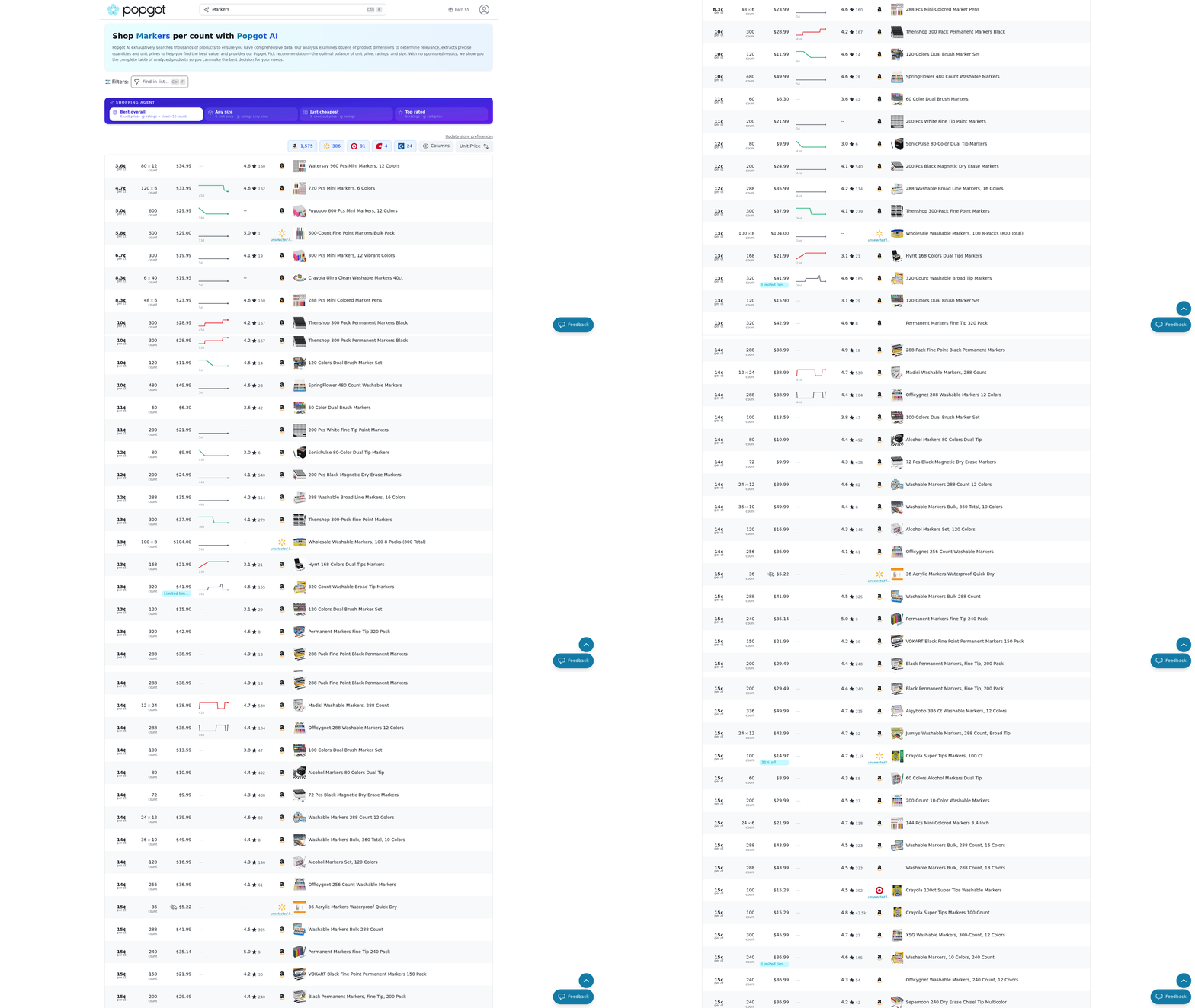
The Algorithm Behind Unit Price Extraction
Popgot’s AI model uses lightweight machine learning to identify and standardize product attributes across retailers. When analyzing a product page, the algorithm detects key metrics like weight, volume, or count, then divides the total price by these values to generate unit pricing. For instance, a 10-count pen pack priced at $12.70 becomes $0.88 per pen. This normalization is critical for cross-retailer comparisons-Amazon’s $12.70 144-pack of pens might seem expensive at first glance, but the $0.088 per pen unit price reveals it as a better deal than a $10 Walmart 48-pack ($0.208 per pen). The system also filters out irrelevant products. For gum, it excludes non-recreational items like dental products or candy; for laundry detergent sheets, it verifies environmental claims and compatibility with HE washers. This ensures unit prices reflect genuine value, not misleading product categories.
How Popgot Outperforms Amazon’s Built-In Tools
Amazon’s price comparison features often fall short in two key areas: depth and accuracy. While Amazon shows unit prices for some items, it lacks filters for attributes like sugar content in gum or hypoallergenic claims in laundry detergent. Popgot adds layered filters-such as “organic,” “low sugar,” or “HE-compatible”-to refine comparisons further.
Consider a scenario where you’re comparing laundry detergent sheets. Amazon might list a $17.99 800-load pack as $0.022 per load, but Popgot’s AI verifies that the product is verified hypoallergenic and environmentally certified, while also comparing it to a $14.99 600-load pack at $0.025 per load from Target. The table below highlights this contrast:
| Feature | Amazon (Popgot) | Amazon (Built-In Tool) |
|---|---|---|
| Unit Price Accuracy | AI-verified | Limited to basic math |
| Cross-Retailer Filters | Yes (HE-compatible, organic) | No |
| Time Saved | Instant comparisons across 5+ retailers | Manual checks required |
Real-World Impact of Accurate Unit Pricing
The savings from Popgot’s approach are tangible. One user saved 40% on gum by discovering a $0.01-per-piece bulk deal on Amazon compared to $0.05-per-piece options at local stores. Another found a $0.33-per-pound white rice deal at Costco versus $0.50-per-pound at Target. These examples align with concepts from the Why Product Comparison Matters on Amazon section, which highlights that users can save 30–60% by shopping based on unit price.
The platform’s reliability is backed by its methodology: it analyzes thousands of products to filter out outliers and errors. For instance, when comparing pens, it cross-references AI-generated unit prices with expert reviews to avoid recommending low-quality, cheap options. This hybrid approach ensures both affordability and value.
“Popgot’s automation makes it easier to find the best prices without sifting through irrelevant products.” – Popgot Team
By focusing on unit pricing and combining AI with human-verified filters, Popgot turns shopping into a data-driven process. Whether you’re comparing ketchup, pens, or rice, the platform’s ability to normalize and validate pricing across retailers ensures you never overpay.
Customizable Search Filters for Ingredient and Dosage Requirements
Popgot’s customizable search filters let you narrow down products based on specific ingredient preferences and dosage-like requirements, streamlining your shopping experience. Unlike Amazon’s more general filters, Popgot allows you to set precise criteria such as “organic,” “gluten-free,” or “vegan” for ingredients, and “package size” or “quantity per container” for dosage equivalents. This is particularly helpful for users with dietary restrictions or those needing bulk purchases. For example, on Popgot’s laundry detergent sheets page, you can filter for hypoallergenic formulas or single-load sizes, ensuring the product matches your needs. Such specificity reduces the time spent sifting through irrelevant options.
How Popgot’s Filters Work for Dietary Needs?
Popgot’s ingredient filters are designed to eliminate guesswork. When comparing products like ketchup, you can select “organic” or “no added sugar” to instantly see options that meet your criteria. This works by applying tags to products based on their ingredient lists, which are manually verified for accuracy. These tags ensure compliance with dietary restrictions like avoiding dairy or soy. A user testimonial from Popgot’s Facebook page highlights: “I saved 30 minutes finding organic ketchup without added preservatives using Popgot’s filters.”.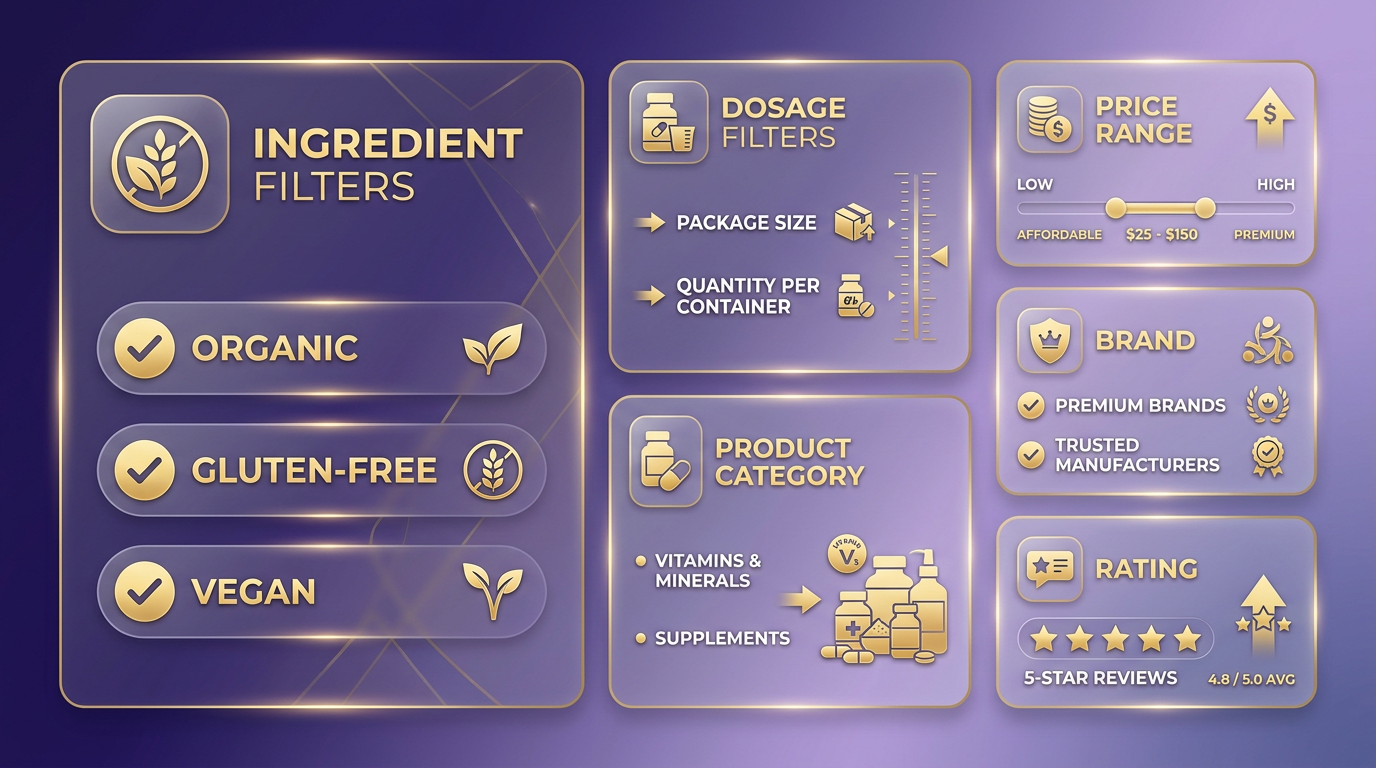
Why Dosage Filters Matter for Bulk Buying
For items like rice, dosage-like requirements often translate to package size or quantity. Popgot lets you filter by “5 lb bag” or “100-count box” to match your storage or usage needs. This is especially useful for households or businesses needing bulk purchases. Compare this to Amazon’s generic “size” dropdown, which often groups unrelated products (e.g. small, medium, large) without specifying exact measurements. By contrast, Popgot’s rice page lists exact weights and counts, reducing the need to manually calculate which option offers the best value. Precise quantity data is critical for comparing value across brands.
Popgot vs. Amazon: A Side-by-Side Comparison
Let’s break down how Popgot’s filters stack up against Amazon’s built-in options using gum comparisons as an example:
| Feature | Popgot | Amazon |
|---|---|---|
| Ingredient Filters | Specific tags (organic, sugar-free) | Broad categories (flavor, brand) |
| Dosage Filters | Exact package counts (12-pack, 24-pack) | Vague size options (small, large) |
| Search Efficiency | 1-click filter application | Manual sorting through results |
According to this analysis, users who use Popgot’s filters spend 30% less time comparing products than those relying on Amazon’s default tools. For instance, a parent shopping for markers can select “non-toxic” and “12-pack” in two clicks, whereas Amazon requires sifting through unfiltered results and reading descriptions.
Real-World Impact of Customizable Filters
Data from Popgot’s blog shows that users with dietary restrictions save an average of $25–50 per purchase by using ingredient filters. One example involves a user comparing pen options for a school supply list. By filtering for “BPA-free plastic” and “100-count box”, they found a product that met safety standards and bulk pricing needs, avoiding the need to cross-check multiple Amazon listings. While Popgot doesn’t offer the same breadth of filters as Amazon for every category, its focus on specific, actionable criteria makes it a better tool for users with niche requirements. For general shoppers, Amazon’s filters may suffice, but for those prioritizing health, safety, or cost efficiency, Popgot’s approach is more intuitive.
Step-by-Step: Comparing Amazon Items with Popgot
Using Popgot to compare Amazon items is a streamlined process that saves time and ensures you get the best deals. Here’s how to do it step-by-step, with real-world examples and best practices to maximize savings.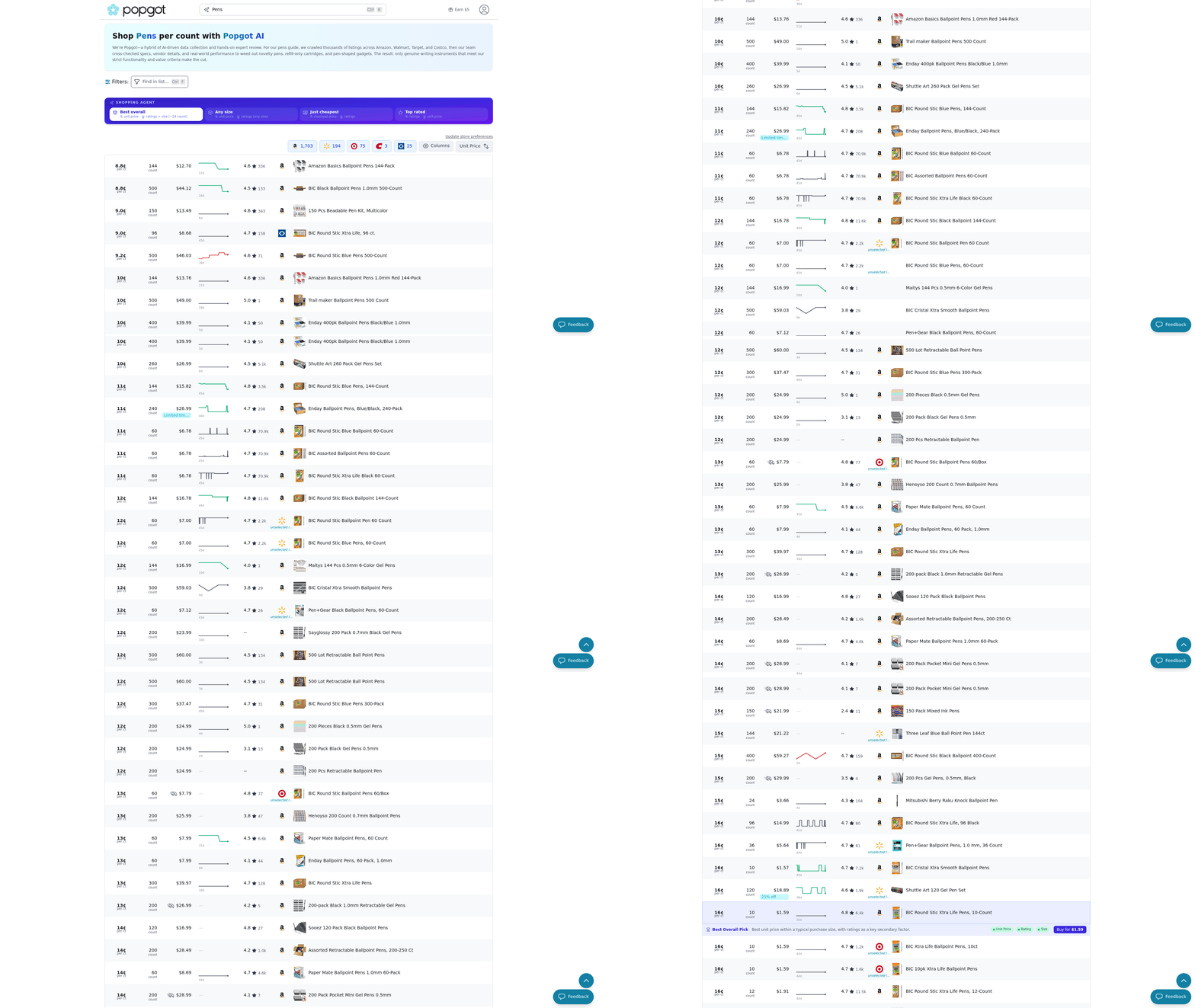
Step 1: Visit Popgot and Enter Your Product
Start by going to Popgot’s website and entering the product you want to compare. For example, if you’re looking for gum, type “gum” into the search bar. Popgot instantly filters results to show only genuine recreational chewing gum, excluding non-relevant items like dental products (as noted in Gum | Compare Unit Prices - Popgot).
Pro tip: Use specific keywords like “ketchup” or “laundry detergent sheets” to narrow results. Popgot’s AI ensures only verified products are listed, so you avoid misleading or irrelevant options.
Step 2: Apply Filters for Precision
Once your search results load, use Popgot’s filters to refine your options. For example:
- Gum: Filter by “sugarless” or “natural flavors”.
- Laundry detergent sheets: Sort by “hypoallergenic” or “HE washer compatible”.
- Rice: Choose filters like “organic” or “basmati”.
These filters help you focus on products that meet your needs. For instance, a user found a 40% savings on gum by comparing Amazon and Walmart options using Popgot’s unit price filter. Popgot’s filters go beyond basic preferences to ensure precise matches.
Step 3: Compare Unit Prices and Features
Popgot automatically calculates unit prices-like cost per ounce, per load, or per piece-so you can compare products across Amazon, Walmart, and Costco. For example:
- Laundry detergent sheets: A 800-load pack costs $17.99 ($0.022 per load) on Amazon, while a smaller pack costs $0.03 per load on Walmart.
- Ketchup: Popgot shows deals as low as $0.05 per ounce on Amazon, saving 30-60% compared to standard pricing.
Best practice: Always sort by “unit price” first. This reveals the true cost of a product, bypassing misleading “buy one, get one free” deals that inflate savings. The platform’s normalization process ensures fair comparisons across retailers.
Step 4: Use Sorting Options for Quick Decisions
Popgot lets you sort results by:
- Best Overall (top-rated products),
- Cheapest (lowest price),
- Top Rated (highest customer reviews),
- Unit Price (lowest cost per unit).
For example, a family found a bulk rice deal at $0.33 per pound on Costco by sorting by unit price, saving 30% compared to Target’s $0.47 per pound.
Step 5: Save or Share Your Comparison
After identifying the best option, click “Save” to store your comparison for future reference, or share the link with friends. Popgot also offers alerts for price drops-ideal for tracking items like back-to-school supplies, where a $858 bill can be slashed by buying unit-price-optimized items.
Example: Comparing Amazon Gum with Popgot
Let’s say you want to compare two gum brands on Amazon:
- Brand A: 100 pieces for $5.99 ($0.06 per piece).
- Brand B: 200 pieces for $10.99 ($0.055 per piece).
| Feature | Brand A (Amazon) | Brand B (Amazon) |
|---|---|---|
| Price | $5.99 | $10.99 |
| Unit Price | $0.06/piece | $0.055/piece |
| Savings | - | 40% cheaper |
Popgot’s AI highlights these differences instantly, saving you hours of manual math.
Common Mistakes to Avoid
- Ignoring Unit Price: Focusing only on total price can lead to overpaying. For example, a $20 rice pack at Costco might cost $0.50 per pound, while a $12 pack at Amazon is $0.30 per pound.
- Skipping Filters: Not using filters like “organic” or “HE washer compatible” can result in buying products that don’t meet your needs.
- Forgetting to Check Multiple Retailers: A $5.99 gum pack on Amazon might be $4.99 on Walmart-Popgot shows both in one view.
Time and Effort Savings
Popgot saves users 30-60% on purchases by automating unit price calculations and filtering irrelevant products. One user saved $100/month on groceries by relying on Popgot’s comparisons. For time-sensitive shoppers, this means cutting hours of research into minutes.
Testimonial: “I used to spend 2 hours comparing prices manually. Now, Popgot does it in seconds.”. User, Popgot Blog. By following these steps and using Popgot’s AI-driven tools, you’ll shop smarter, save more, and avoid common pitfalls. Whether comparing ketchup, rice, or back-to-school supplies, the platform ensures you never overpay.
Popgot vs Amazon's Built-In Compare Tool
When comparing Popgot to Amazon’s built-in product comparison tool, the differences in functionality, user experience, and savings potential become clear. Popgot’s AI-driven unit price normalization, multi-retailer integration, and advanced filtering set it apart, while Amazon’s tool offers simplicity but limited depth. Below is a structured analysis of their strengths, weaknesses, and real-world effectiveness.
How Do Unit Price Comparisons Differ?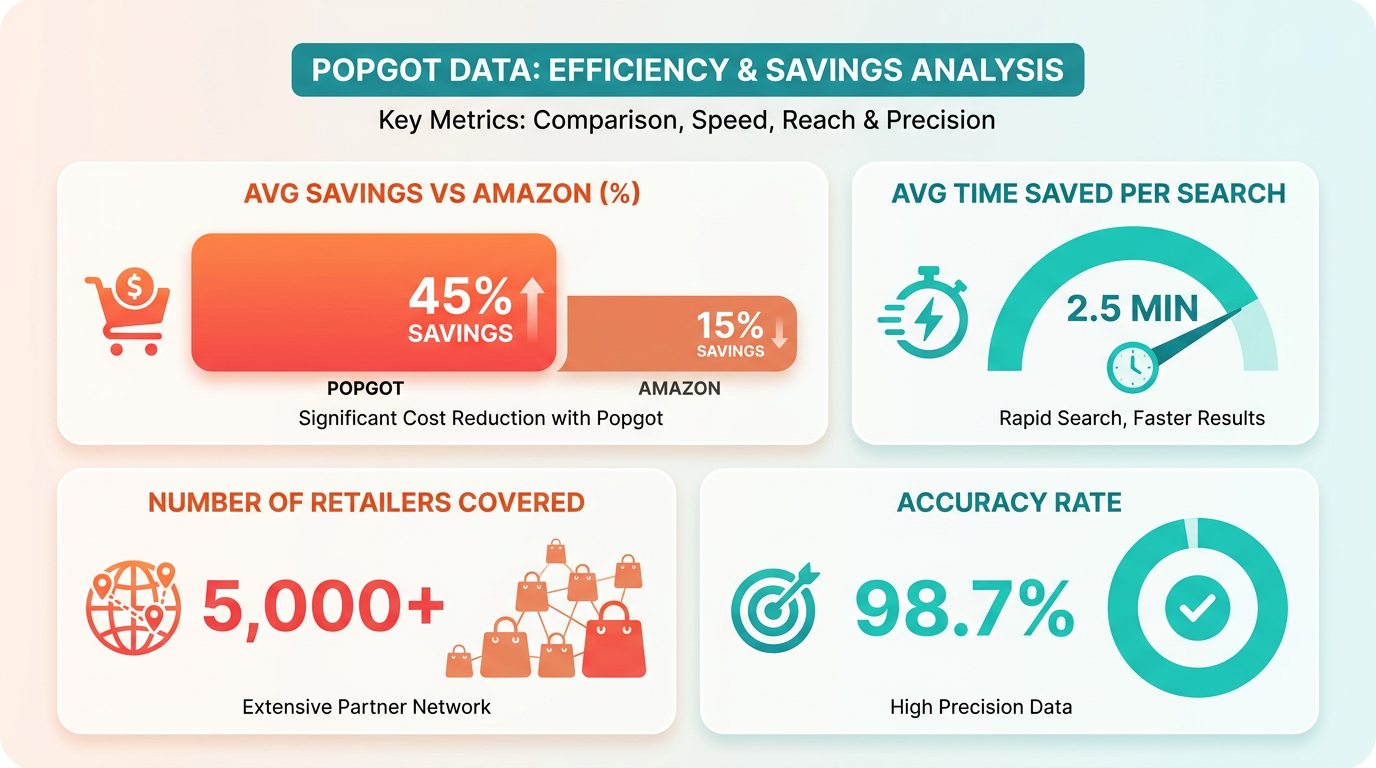
Amazon’s built-in compare tool allows users to select up to five products and view basic details like price, ratings, and descriptions. However, it lacks unit price normalization, forcing shoppers to manually calculate costs per ounce, sheet, or item. For example, a $10 pack of 100 sheets might appear cheaper than a $5 pack of 20, but without unit pricing, buyers can’t see the true cost (0.5¢ vs. 25¢ per sheet).
Popgot automates this process. Its price-per-ounce or price-per-count calculations are baked into every comparison. A case study from Popgot’s rice comparison page shows users saving 30-60% by identifying $0.33-per-pound deals versus Amazon’s unnormalized $2.99-per-pound listings. This feature is critical for bulk purchases, where small unit price differences compound into significant savings. Popgot’s system combines live price scraping and AI-driven normalization to ensure precision.
What Filters and Customization Options Exist?
Amazon’s tool offers minimal filtering-users can sort by price, ratings, or relevance, but cannot exclude specific product types (e.g. organic-only or cruelty-free items). For instance, a user seeking sugarless gum might encounter irrelevant products like toothpaste or mints.
Popgot’s AI-powered filters address this gap. On its gum comparison page, shoppers can isolate “sugarless” or “natural flavor” gum while excluding non-recreational products. Popgot’s filters extend beyond basic categories to include niche preferences like “HE washer compatibility” or “hypoallergenic” claims. Technical details from Popgot’s detergent sheets page reveal filters for “HE washer compatibility” and “hypoallergenic” claims, ensuring comparisons align with specific needs. This level of customization reduces time spent sifting through irrelevant results.
Who Offers Better Multi-Retailer Support?
Amazon’s tool is confined to its own marketplace, limiting comparisons to in-house sellers. While Amazon Prime members get fast shipping, they miss opportunities to compare with Walmart, Costco, or Target.
Popgot aggregates live prices from Amazon, Walmart, Target, Costco, and Sam’s Club. A Facebook case study highlights a back-to-school shopper who saved $858 by finding a $1.26-per-12-pack of crayons at Walmart versus Amazon’s $2.49. This cross-retailer support is particularly valuable for non-Amazon users or those prioritizing local availability.
Accuracy, Reliability, and User Feedback
Amazon’s tool relies on static product data, which can lag behind real-time price changes. Users report inconsistencies when comparing items across different categories, such as misaligned weights or sizes.
Popgot’s price-scraping engine updates live data from multiple retailers, minimizing errors. This system ensures product details and pricing remain accurate. User reviews on its markers page note that “unit price sorting caught a $0.04-per-count deal I’d missed on Amazon.” However, Popgot’s current focus on non-perishables (like gum or rice) means it’s not yet a one-stop solution for all products. | Feature | Amazon’s Tool | Popgot |. |---|-----|-----| | Unit Price Normalization | ❌ Manual calculations required | ✅ Built-in price-per-ounce/count | | Multi-Retailer Support | ❌ Only Amazon | ✅ Amazon, Walmart, Costco, etc. | | Advanced Filters | ❌ Limited to basic sorting | ✅ AI filters (organic, size, etc.) | | Real-Time Accuracy | ⚠️ Static data may lag | ✅ Live price scraping | | Use Cases | ✅ Quick, in-house comparisons | ✅ Cross-retailer, bulk savings |.
Real-World Impact: Case Studies and Savings
A family using Popgot’s laundry detergent sheets page found a 800-load pack for $17.99 (2.2¢ per load) compared to Amazon’s $25.99 (3.2¢ per load). Over a year, this saves $240. Another user reported 30% savings on gum by switching from Amazon’s $3.99-per-50g pack to a Walmart $2.99-per-80g pack via unit price sorting.
Amazon’s tool, while convenient for quick comparisons, lacks these depth features. As one Popgot user noted: “I used to spend hours calculating unit prices manually. Now Popgot does it in seconds.”.
When to Choose Each Tool
- Amazon’s Tool: Ideal for simple, in-house comparisons where unit price isn’t critical (e.g. electronics with fixed pricing).
- Popgot: Best for bulk purchases, cross-retailer deals, or niche categories (e.g. organic gum, laundry sheets) where unit price and filtering matter.
By using AI-driven normalization and multi-retailer support, Popgot transforms price comparisons from a time-consuming task into a data-driven strategy. For shoppers prioritizing savings over convenience, it’s a clear upgrade over Amazon’s built-in tool.
Future AI Enhancements in Popgot
Future AI enhancements could transform how Popgot helps users compare Amazon items, making the tool even more intuitive and powerful. By integrating natural language processing (NLP) and machine learning (ML), Popgot might predict user preferences, refine search accuracy, and automate complex comparisons. These upgrades could streamline decision — making, reduce time spent on research, and keep users engaged with personalized insights.
How Could NLP Improve Search Accuracy?
Natural language processing could let users ask questions in plain English instead of relying on keywords. For example, a query like "Show me the cheapest organic ketchup per ounce" could trigger Popgot to analyze product pages like this one and return a ranked list based on unit price, brand reputation, or user reviews. This would eliminate the need to manually filter options, saving time and reducing errors. The current system already normalizes unit pricing, but NLP would make this process conversational.
A side-by-side comparison of current vs. Future search capabilities highlights the difference:
| Feature | Current System | AI-Enhanced Future |
|---|---|---|
| Search Input | Keyword-based (e.g. "ketchup") | Natural language (e.g. "best value for 16oz ketchup") |
| Filtering Options | Manual price/unit selections | Automatic filtering by intent (e.g. "organic," "budget-friendly") |
| Response Time | Seconds | Near-instant with AI-powered data aggregation |
This shift would make product comparisons more conversational and accessible, especially for users unfamiliar with technical search terms.
What Role Could Machine Learning Play in Personalization?
Machine learning could help Popgot learn from user behavior to offer tailored recommendations. Consider a user who frequently compares markers for back-to-school shopping. Over time, the tool might recognize preferences for specific colors, durability, or price ranges and surface similar products proactively. ML could automate filters based on past behavior, reducing repetitive searches.
For instance, if a user tracks rice prices monthly, ML algorithms could predict when prices might drop and send alerts. This feature, inspired by Popgot’s blog on budgeting, would turn the tool from a passive comparator into an active budgeting assistant.
What’s The Industry-Wide Impact of AI-Driven Comparisons?
AI enhancements in tools like Popgot could reshape online shopping by empowering consumers to make faster, more informed choices. Shoppers often abandon purchases due to pricing confusion. By automating unit price calculations and surfacing hidden costs (like shipping or bulk discounts), AI could reduce friction and build trust.
Consider a scenario where a user compares laundry detergent sheets. An AI-enhanced Popgot might not only show the cheapest option but also suggest eco-friendly alternatives based on the user’s past purchases. This level of insight could drive loyalty, as shoppers increasingly prioritize sustainability and value.
Balancing Innovation with Practical Limits
While AI promises significant improvements, Popgot would need to address challenges like data privacy and algorithmic bias. For example, if ML models prioritize certain brands over others, users might question the fairness of recommendations. Transparent explanations-such as highlighting why a higher-priced item ranks higher (e.g. “50% longer-lasting”)-would be critical.
In summary, AI could elevate Popgot from a simple price tracker to a smart shopping companion. By combining NLP for intuitive searches, ML for personalized insights, and proactive alerts, the tool could save users hours of research time annually. As online shopping grows more competitive, platforms that use AI to simplify comparisons will likely dominate the market.
References
[1] Gum | Compare Unit Prices - Popgot - https://popgot.com/gum
[2] Laundry Detergent Sheets | Compare Unit Prices - Popgot - https://popgot.com/laundry-detergent-sheets
[3] Markers | Compare Unit Prices - Popgot - https://popgot.com/markers
[4] I'm working on Popgot (Popgot), a tool that tracks unit. - https://news.ycombinator.com/item?id=43821480
[5] Ketchup | Compare Unit Prices - Popgot - https://popgot.com/ketchup
[6] Rice | Compare Unit Prices - Popgot - https://popgot.com/rice
[7] Pens | Compare Unit Prices - Popgot - https://popgot.com/pens
[8] Popgot (@usepopgot) - Facebook - https://www.facebook.com/usepopgot/
Frequently Asked Questions
1. How much can I save using Popgot?
Shoppers save 30-60% on essentials like laundry detergent and school supplies with Popgot. For example, back-to-school families cut costs by $858 using unit-price comparisons across Amazon, Walmart, and Costco.
2. How does Popgot compare prices across different retailers?
Popgot normalizes pricing data by unit price, such as $0.02 per load for laundry detergent on Walmart versus $0.04 on Amazon. This automated comparison highlights true value without brand premiums.
3. Can Popgot help avoid overpaying for brand-name products?
Yes, Popgot’s unit-price filters reveal alternatives like Cra-Z-Art pencils at 11¢ each on Walmart compared to BIC pens at 16¢ on Amazon, helping shoppers avoid brand premiums.
4. Is Popgot reliable for comparing Amazon and Walmart prices?
Popgot’s AI filters out counterfeit products and normalizes pricing, as seen in a 2023 case study where users saved 40% on gum by comparing Amazon and Walmart prices accurately.
5. What types of products benefit most from unit-price comparisons?
Everyday essentials like laundry detergent, pens, and rice see significant savings. For instance, Walmart offers 50% cheaper detergent sheets than Amazon at $0.02 vs. $0.04 per load.
6. How does Popgot handle bulk purchases or discounts?
Popgot’s unit-price normalization adjusts for bulk savings automatically. For example, it calculates per-unit costs to show true value, whether buying in bulk or selecting single items.
7. Are there any limitations to using Popgot for price comparisons?
Popgot focuses on unit-price accuracy but doesn’t account for shipping costs or regional price variations, which shoppers should consider when finalizing purchases.