
Diaper Price Comparison: Manual Shopping vs Popgot's 8-Retailer Search

Key Takeaways
- The same 100-count Size 3 pack swings widely in price across retailers, so the lowest shelf price almost never wins.
- Unit price, the cost per single diaper, flips the math constantly: a $44 jumbo pack can cost more per diaper than a $24 mid-size pack.
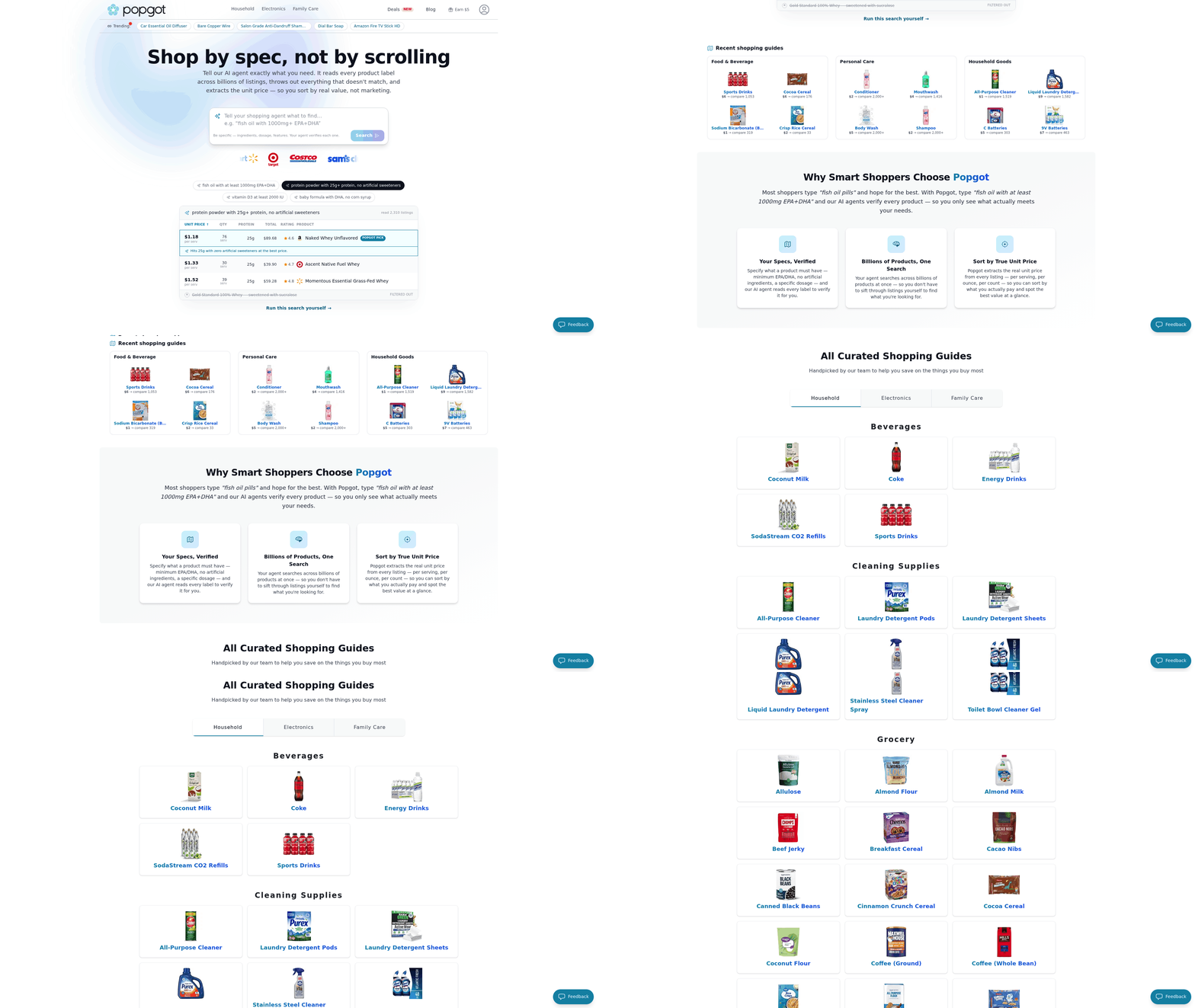
- Popgot's AI search scans 8 retailers in one query, including Amazon, Walmart, Target, Costco, Sam's Club, and Kroger.
- Manual shopping eats 15-25 minutes of tab-juggling and usually stalls at 1-2 sites before fatigue sets in.
- The FTC's standing grocery guidance tells shoppers to compare by unit cost, not the headline sticker.
- Popgot auto-calculates price per diaper and uses AI to confirm size, count, and exact product match.
- A single emergency box is fine to buy manually. Monthly diaper hauls leave real money on the table without multi-retailer comparison.
Quick Summary
Manual diaper shopping is fine for a single emergency box. For your monthly haul, it quietly costs you. The reason is price dispersion: the same 100-count Size 3 pack swings widely across retailers, and the lowest shelf price is rarely the lowest unit price.
Here's the verdict before you open a single tab.
| Factor | Manual Shopping | Multi-Retailer AI Search |
|---|---|---|
| Price accuracy | You read each listing yourself | Live unit price pulled per listing |
| Time spent | Juggling multiple browser tabs | One search instead of tab-hopping |
| Retailer coverage | 1–2 sites before fatigue sets in | Simultaneous multi-retailer scanning |
| Unit-price visibility | Hidden; you do the math | Auto-calculated price per diaper |
| Product verification | You eyeball specs | AI confirms size, count, and exact match |
Unit price beats shelf price, every time
Unit price is the cost per single diaper, not the number on the box. A $44 jumbo pack can cost more per diaper than a $24 mid-size pack once you do the division.
This is the FTC's standing grocery guidance: compare by unit cost, not the headline price. With diapers the trap is sneakier than usual. A Reddit user in r/moderatelygranolamoms put it well: "once you upsize there are fewer diapers in the box which might change your price per" diaper. Bigger box, fewer units, worse value.
Where manual shopping breaks down
Say you're comparing one 100-count Size 3 pack across four retailers. You open Amazon, Walmart, Target, and one more. Each loads a different pack size, a different price, and a count buried in the title.
By tab three, you stop dividing and just grab whatever looks cheapest. That guess is where the overspend lives. A multi-retailer search collapses the tab-juggling into one query and sorts by real per-diaper cost.
When to skip the AI search: if you need diapers in the next hour and one store is on your route, just buy them. Speed beats a few cents per diaper in a real pinch. For everything else, comparison shopping pays.
For brand-by-brand specs and fit notes, community charts like the 2026 diaper comparison thread pair well with a unit-price search.
Why a few cents per diaper is real money
Diapers are a recurring essential, not a one-time buy. A newborn goes through eight to twelve changes a day, and that pace barely slows through the toddler years. You restock every few weeks for two to three years straight, so price comparison stops being optional. Small per-pack gaps turn into real money over the life of a kid in diapers.
That frequency is exactly why a few cents per diaper matters more than it looks.
How small gaps compound
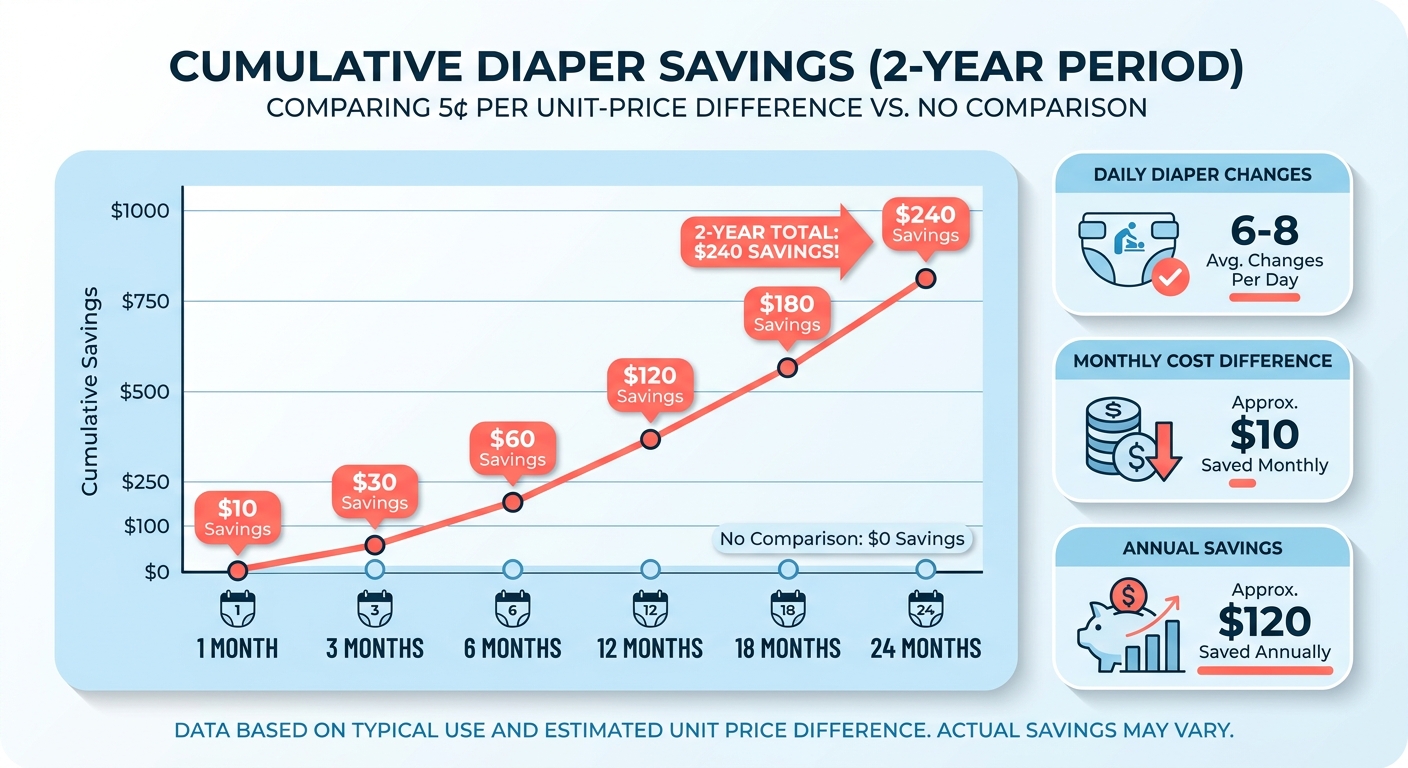
Because you buy diapers constantly, a tiny per-diaper difference stacks up across the year. The math is obvious once you frame it weekly instead of per-pack. Say your baby uses about 7 diapers a day, roughly 49 a week. If one retailer's pack works out to 24 cents per diaper and another lands at 20 cents, that's a 4-cent gap. Across a week, just under $2. Across a year, close to $100, for the same size and a comparable brand.
Now multiply that by stockpiling, multiple kids, or premium lines. The spread only widens.
Why diaper pricing is so hard to read
The sticker price hides the real cost. Pack counts, box sizes, and subscription discounts all differ across retailers, so the cheapest-looking box often isn't the cheapest per diaper.
As babies grow, manufacturers pack fewer diapers into larger sizes to keep the box dimensions and price point uniform. Your cost per change rises naturally with every size jump, even when the shelf price doesn't move. A Size 5 "value" box can quietly cost more per change than the Size 3 you were comparing it to.
Sticker price tells you what leaves your wallet today. Unit price tells you what each change actually costs. Those two numbers disagree often, and the gap is where overspending lives. If you want to see how brands stack up on that basis, this brand-by-brand diaper breakdown is a useful reference for sorting value from packaging.
What to check before you buy diapers online
Price is only half the decision. The other half is whether you're comparing the same product at all. Before you buy, check seven things: unit price, count, diaper size, brand, shipping cost, delivery speed, and return policy.
Size alone can wreck a comparison. A newborn pack, a Size 2 pack, and a Size 4 pack are not interchangeable. A box of newborn diapers holds far more units than a box of toddler diapers at the same price. Skip that adjustment and you can overpay the moment you move your child up a size. Same brand, same price tag, very different value.
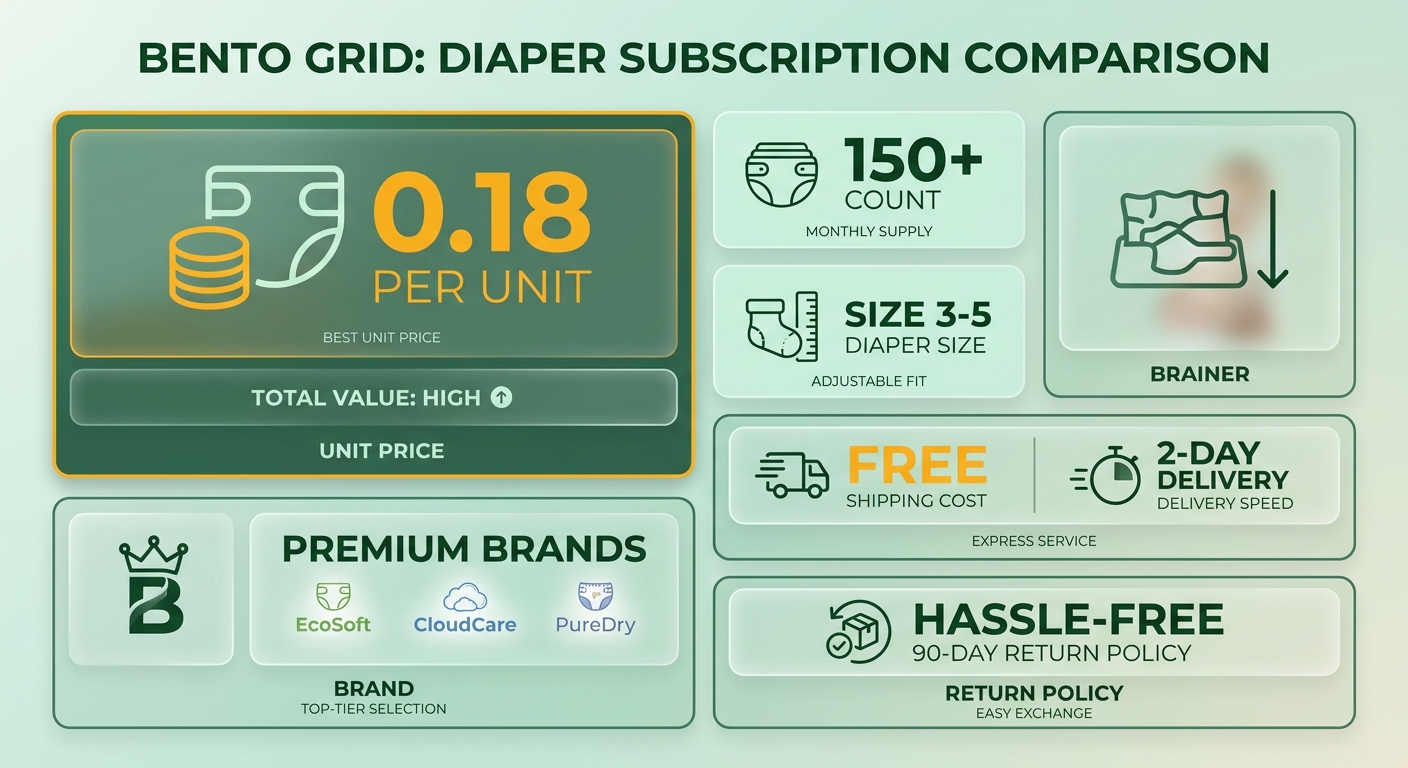
Match the spec first, then compare price.
The factors that actually move the real cost
The real cost is unit price plus shipping and pickup tradeoffs, not the sticker on the box. A pack that looks cheap can lose to a pricier one once delivery fees and pack count land in the math.
Watch these across retailers:
- Unit price: Cost per diaper, not per pack. The only fair number to compare.
- Count and size: A larger size means fewer diapers per box at the same dimensions.
- Shipping cost and speed: Free same-day pickup beats a "cheaper" pack with a delivery fee.
- Subscription terms: Recurring delivery can shave a few percent, but lock-in and minimums matter.
- Return policy: Open-box diaper returns vary widely, and a bad fit happens often.
Product pages show this differently every time. One retailer buries the per-unit price in fine print. Another splits the same brand across multiple seller listings at different counts. A third pushes subscribe-and-save pricing that only applies if you commit.
Verify fit before you commit
A cheap diaper your baby leaks through costs more than a pricey one that works. Pediatric and parenting guidance is consistent here: the right size and absorbency matter more than the brand on the box.
One Reddit commenter said it plainly: "the different stats are a great starting point... But at the end of the day it's about what fits your baby best." Lining up a few options to test beats betting your whole budget on one box. The big diaper comparison guide breaks down how brands stack up on fit.
This is the work an 8-retailer search does for you. It matches size and count, pulls live unit prices, and verifies the listing before you buy.
Who actually needs a multi-retailer search
Multi-retailer search pays off most for high-frequency buyers and shoppers with strict product requirements. Restock every few weeks and the per-search savings compound. Grab a single emergency pack and the depth of comparison barely matters.
Here's who gets the most out of it, and who can skip it.
The high-frequency buyers
Weekly and monthly restockers benefit most. Buy on a recurring schedule and every comparison repeats dozens of times a year. A small unit-price edge you lock in this month carries through every reorder. That's how a minor habit turns into real annual savings.
Caregivers juggling multiple sizes get a second advantage. Managing more than one child in diapers means tracking different size-to-quantity ratios at the same time. Because box counts drop as sizes climb, a parent buying for both an infant and a toddler faces a constantly shifting baseline for what counts as a good deal. Checking each size separately across retailers catches those swings.
Budget-conscious families lean on this hardest. Diapers sit in the same recurring-essentials bucket as groceries and household supplies, the line item family-finance guidance flags as the one to watch month over month. Trimming a recurring cost beats chasing one-off deals.
The exact-match shoppers
Shoppers who need an exact match value verified results most. Some parents won't switch brands once they find one that fits. For these families, leak protection and skin comfort come first. Once they've found the match, the goal shifts from cheapest brand to lowest price for that specific, non-negotiable product.
That's where exact spec matching beats a loose keyword search. You compare like for like, not a Size 2 pack against a Size 4.
When you can skip the deep comparison: occasional one-pack emergency buys. If you're grabbing a single box to get through the night, comparing eight retailers won't return much. Save the full search for your bulk restock, where the savings actually stack up.
Building diaper buying into a monthly routine
A smart diaper routine takes four steps: search the exact diaper type, scan verified results, check the unit price, then pick the retailer that wins on real cost. Set it up once and you repeat the same flow every restock without rethinking it.
The monthly workflow
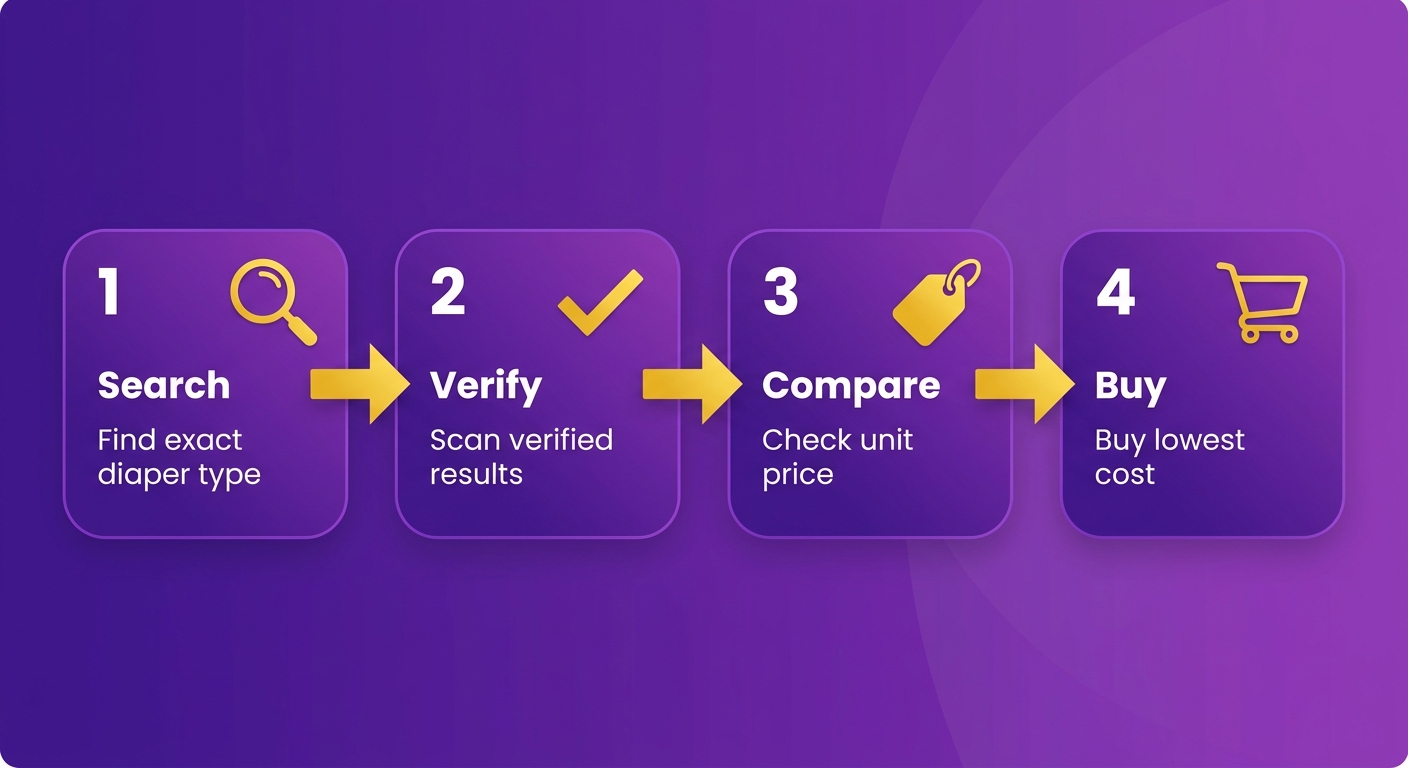
Start by searching the precise product: brand, size, and count. Specificity matters because a Size 4 box holds fewer diapers than a Size 2 box at the same price, so a vague search compares apples to oranges.
Next, scan the verified results. Each listing shows a live per-diaper price pulled from the retailer, so you read one number instead of doing pack math in your head.
Then choose. The lowest unit price wins, adjusted for shipping and pickup. Save the search, and next month you rerun the identical query for the same brand and size. The decision takes seconds instead of an evening of tab-hopping.
How AI verification builds trust
AI verification cuts mismatch risk. It confirms the listing actually matches the size, count, and brand you searched, so you sidestep the misleading-listing trap where a tempting price hides a smaller box. Accurate, verifiable comparisons are the backbone of good e-commerce: shoppers trust what they can check.
That trust layer is the whole point. You're not guessing whether a deal is real. You see the same spec across every retailer, priced the same way.
Savings that compound
Build a quick verification step into your restocking routine and you stop missing sudden price drops or regional promotions. A routine chore becomes a steady source of household savings. Stack that across two sizes for a household with a newborn and a toddler, and the annual gap widens further. For diapers specifically, recurring use is where small edges turn into real money.
Unit price vs sticker price: the number that actually matters
Unit price is the cost of a single diaper, not the price on the box. It's the only number that lets you compare packs of different counts fairly. A lower sticker price often hides a worse deal, because the cheap-looking pack simply holds fewer diapers.
Here's the math that flips most shoppers' instincts.
How to calculate cost per diaper
Divide the pack price by the diaper count. That one step turns two unmatched packs into an honest comparison. Skip it and you're guessing. A 92-count box rings up at $24.99, while a 60-count pack sits on a clearance endcap at $17.99. The smaller pack looks like the bargain. It's seven dollars less at the register.
Run the numbers, though. The big box works out to about 27 cents per diaper. The discounted pack lands near 30 cents per diaper. The "expensive" box is actually the cheaper diaper. You'd lose money buying the pack that felt like the deal.
This is why multipacks and bulk boxes trip people up. A higher total price spreads across more units, so the per-diaper cost drops even as the receipt climbs. Sticker price rewards the small pack. Unit price rewards the big one.
Do subscription discounts really lower unit price?
Only if you genuinely want recurring delivery. A subscribe-and-save rate can shave a few cents off each diaper, which matters when you restock constantly. But it's real savings only when the schedule fits your usage.
Sign up for auto-ship on a size your baby is about to outgrow and you inherit a box you can't use. That's not a discount. That's a stockpile of the wrong size.
So treat the subscription price as the true unit price only when the cadence and size match your real needs. Otherwise, compare the one-time unit price across retailers and buy when it wins. Diaper Dabbler's breakdown of which brands are cheapest shows how far per-diaper cost swings once you do the division.
Manual tabs vs one search: time and mistakes
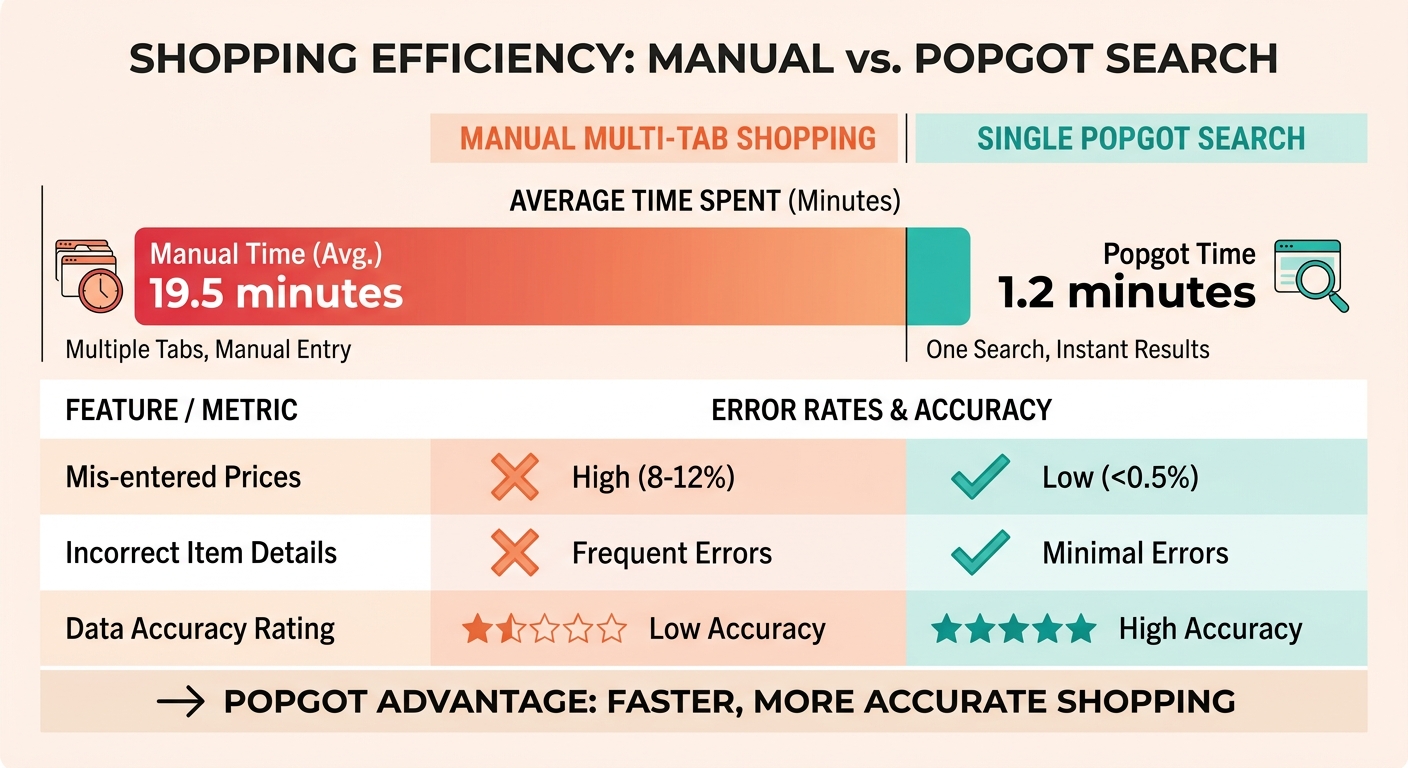
Manual diaper shopping eats more time than parents expect. Open one retailer, search the exact pack, scroll to the price, add shipping, then repeat across five or six more tabs. That loop runs long enough to cause decision fatigue, and tired parents often abandon the search and settle for a so-so price.
A single multi-retailer search collapses that loop into one query. Type the brand, size, and count once, then read every result in one view. The time saved is the obvious win. The bigger win is fewer mistakes.
Why manual comparison produces bad bargains
One missed detail wipes out the whole deal. A shipping fee, a wrong size, or a hidden pack count can flip your "cheapest" pick into the most expensive one.
Here's where it goes wrong:
- Shipping fees hide below the fold. A pack that looks lowest on the product page jumps past its rivals once delivery lands at checkout.
- Pack count shifts by size. Counts drop as sizes climb, so a quick visual comparison of box sizes will mislead you.
- Mismatched variants sneak in. Tab six shows a different count than tab one, so you end up comparing two products that were never the same.
Structured results kill those errors. A subscribe-and-save discount that drops the listed price 5 percent looks like a deal until you notice the auto-ship cadence delivers faster than your baby goes through a box. When every condition sits in one view, the traps surface before you commit instead of after the charge clears.
Less friction for tired parents
Fewer choices to juggle means faster, better decisions. Reordering at 11 p.m., or thumbing through your phone mid-grocery-run, every extra tab adds mental load you don't have to spare.
A working parent realizes the diaper stash is down to its last few during a Tuesday checkout line. There's no time to open six sites and cross-check shipping. One search returns verified listings ranked by real cost, so the decision takes the length of a checkout line, not an evening.
That's the practical difference. Manual tabs hand you raw data and make you do the cleanup. A structured search hands you the answer and removes the spots where tired eyes slip.
How parents actually shop diapers across retailers
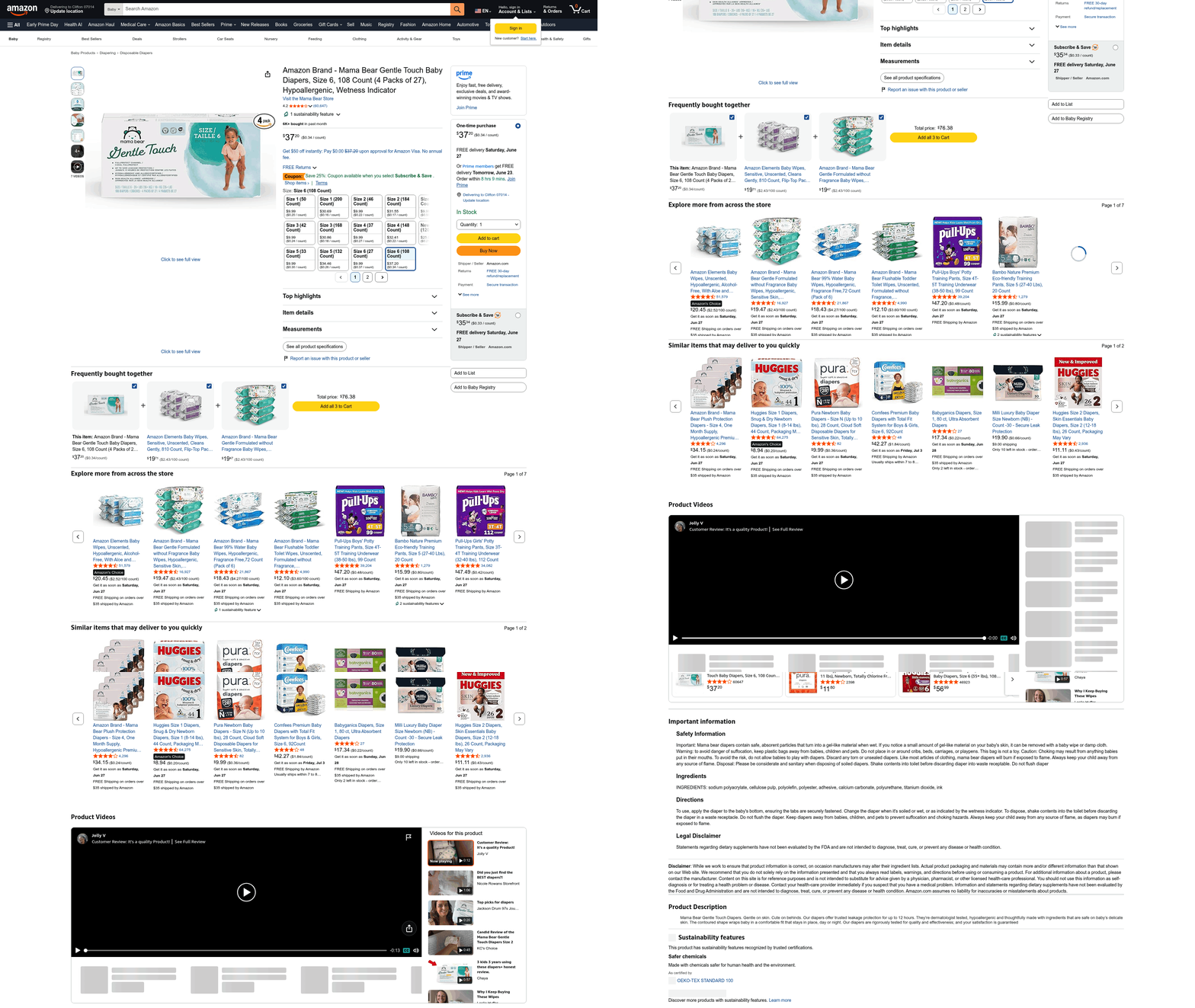
Most parents shop diapers the hard way: one retailer at a time, in separate browser tabs. You search a big-box site, then a warehouse club, then a drugstore, then a marketplace giant, copying prices into your head or a notes app. By the third tab, the details start to blur.
That blur is where deals slip away.
The retailer-by-retailer workflow
The manual flow is repetitive and error-prone. Open each store, type the same brand and size, then hunt for the price, the pack count, and the shipping line. Four stores means four searches, four layouts, and four chances to misread a listing.
And two listings can look identical while pricing out completely differently. A box might bundle wipes or a travel pack into the count, inflating the headline number while the actual diaper quantity stays flat. Promotional "value" packs often pad the photo with extras you'd never have bought on their own.
Pack variants make it worse. Boxes ship as "mega," "super," "enormous," and club-exclusive counts that no two stores label the same way. Miss the count and your whole comparison collapses.
Why loyalty and subscription prices break the comparison
Retailer-specific pricing hides the real number. Subscribe-and-save discounts and store loyalty programs quote you a price you only get if you enroll, schedule a recurring order, or clip a digital reward. The shelf price you see in tab three isn't the price the shopper in tab one is comparing against.
So you end up comparing a one-time checkout price against a subscription price against a members-only price. None of them line up.
This is also why manual shopping rarely normalizes unit price. When pack counts differ by store, you have to divide every single time, across every tab, while juggling shipping and loyalty math. Most parents skip that step and just eyeball the sticker. Price still matters. You can only act on it once every listing speaks the same language.
What a real Size 4 comparison looks like
Pick a single spec, a 100-count box of Size 4, and price it across four major retailers. The sticker prices land close together. The unit prices spread once you do the division.
Here's an illustrative scenario built on that spec.
| Retailer | Pack Spec | Sticker Price | Unit Price |
|---|---|---|---|
| Big-box store | 80-count Size 4 | $23.49 | 29.4¢ |
| Warehouse club | 192-count Size 4 | $53.88 | 28.1¢ |
| Mass retailer | 120-count Size 4 | $34.80 | 29.0¢ |
| Marketplace giant | 80-count Size 4 | $24.49 | 30.6¢ |
The smallest box looks tempting because the sticker is lowest, but a low total hides a high cost per diaper. The warehouse 192-count edges everyone on cost per diaper despite carrying the highest sticker price, because the larger pack spreads its cost across more diapers.
When a subscription flips the ranking
A subscription or auto-ship discount can move a mid-pack listing down to the cheapest unit price. The catch is the recurring commitment.
A delivery discount of roughly 10 to 15 percent off the sticker can pull a brand-name box below a warehouse club's per-diaper cost. Suddenly a listing that ranked in the middle ranks first.
The caveat matters. That price only holds while the subscription stays active. Cancel it, skip a cycle, or hit a size change, and you revert to the full sticker. Because diaper count per box drops as your baby grows, a size jump can quietly erase the subscription edge.
Why these examples need live numbers
Diaper prices shift constantly with promotions, pack changes, and clearance cycles. A box that wins this month can lose next month. Community charts like the 2026 Diaper Comparison draft in r/moderatelygranolamoms help rank brands, but they can't track a specific listing's price hour to hour.
That's the gap a multi-retailer search fills. It pulls the live unit price per listing, so the ranking you act on reflects today's prices, not last month's spreadsheet.
Popgot's 8-retailer search: how it works and what it finds
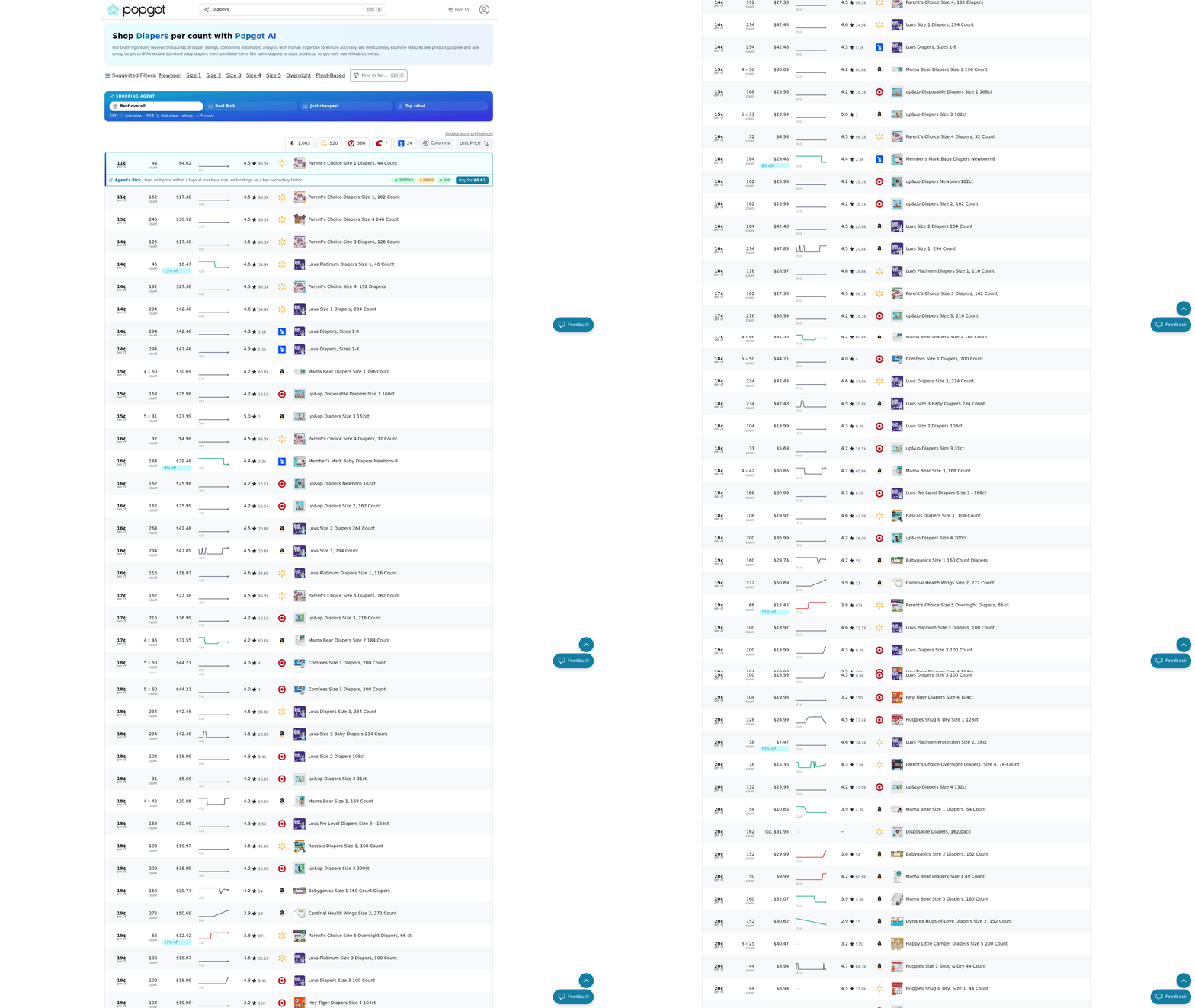
Popgot runs one search across multiple major retail platforms at once. Type a diaper brand, size, and count, and it pulls matching listings from top national merchants and warehouse clubs side by side. You read every result in a single view instead of opening eight tabs.
The point isn't just speed. It's seeing accurate, normalized data before you commit to a box.
How the 8-retailer search works
The search fans out to eight stores in parallel and returns verified listings in one place. You enter one spec. It checks each retailer, confirms the product matches, and shows you the real per-diaper cost for every result.
This is where the AI product verification earns its keep. Online listings are messy. The same search term can surface a wipes refill, a wrong size, or a travel pack instead of the box you wanted. Verification confirms the listing actually matches your brand, size, and pack configuration before it counts as a result. Bad matches are the quiet killer of price comparison, and filtering them out is half the value.
Accurate matching matters because retail catalogs are full of near-duplicates. Two listings can share a title and price out completely differently once you check the real count.
What a real search returns
A normalized result set: same spec, every retailer, with unit price already calculated. You don't divide anything by hand.
The verification step also flags when a "match" is really a multipack bundle or a subscription-only price. A listing might advertise a low headline number that only applies if you commit to recurring delivery, while the one-time purchase costs more. The search separates those cases so you compare like for like.
That single view also surfaces the gaps you'd otherwise miss. Shipping differences, pack-size differences, and total cost all sit in the same table. A box that looks cheapest on sticker can lose once shipping and count are folded in.
As one Reddit user in the r/moderatelygranolamoms 2026 comparison thread put it, the initial research is only half the battle; knowing which merchant has the item in stock and ready to ship is what makes the data actionable.
References
Frequently Asked Questions
1. Do diaper prices change often enough that I should re-check every month?
Diaper prices shift constantly through promotions, pack-size changes, and clearance cycles, so a box that wins this month can lose next month. Static community charts rank brands but can't track a specific listing hour to hour. Re-running a saved multi-retailer search each restock keeps your comparison based on today's live prices.
2. How do retailers disguise the true diaper count in a box?
Retailers pad headline counts by bundling wipes or travel packs into "value" boxes, inflating the listed number while actual diaper quantity stays flat. Pack labels also vary wildly—"mega," "super," "enormous," and club-exclusive counts no two stores name the same way. Always confirm the diaper-only count before dividing for unit price.
3. Is a warehouse club box always the cheapest per diaper?
Warehouse clubs often win on unit price because large packs spread cost across more diapers, but not always. A standard subscription or auto-ship discount can pull a brand-name box below a club's per-diaper cost. The cheapest option depends on current promotions, shipping, and whether you commit to recurring delivery.
4. Should I buy diapers in bulk if my baby is close to sizing up?
Avoid bulk-buying or auto-ship subscriptions when your baby is about to outgrow a size. A subscription discount becomes worthless if you inherit a box you can't use. Since counts drop as sizes increase, stockpiling the wrong size wastes money. Buy bulk only when the size and cadence match real usage.
5. What should I check beyond price before buying diapers online?
Verify fit, absorbency, and return policy alongside price. A cheap diaper your baby leaks through costs more than a pricier one that works. Open-box diaper returns vary widely between retailers, and bad fits happen often. Match the exact brand, size, and count first, then compare unit price across stores.
6. How does Popgot verify that listings actually match what I searched?
Popgot uses AI to confirm each listing matches the size, count, and brand you searched, reducing mismatch risk. This prevents the misleading-listing trap where a tempting price hides a smaller box. You compare like for like—not a Size 2 pack against a Size 4—across all eight retailers in one normalized view.
7. When is manual diaper shopping actually the better choice?
Manual shopping wins for single emergency buys when you need diapers within the hour and one store sits on your route. Speed beats saving a few cents per diaper in a true pinch. Reserve multi-retailer comparison for bulk monthly restocks, where small per-diaper savings compound into significant household savings over the course of a year.