
Find This Product at the Lowest Price in Minutes

Key Takeaways
- A low price only counts as a deal when the product matches what you need. A cheaper bottle with half the active dose isn't a bargain, it's a downgrade.
- Check the ingredients and dosage before you compare prices, so your savings apply to the same formulation at every store.
- Comparison sites like PriceRunner list roughly 8.5 million products across 4,900 shops, but volume means nothing if the specs don't match.
- Web-scraping comparison systems pull prices from dozens of e-commerce sites into one view, which cuts search time.
- Price dispersion sticks around online even when searching costs almost nothing, so identical products still sell at different prices.
- Confirming the same formulation shows up at all three retailers matters more than celebrating a discount too early.
Why the Cheapest Bottle Isn't Always the Deal
The trick to finding a real low price is lining up cost with what the product actually delivers. When you're weighing a deal, read the label before you read the checkout total.
Comparing listings across stores only helps when you're sure the items are the same. Comparison platforms aggregate millions of offers, sure. That volume is useless if the specs don't match what you're after.
Where price comparison actually saves money
Comparison tools pull prices from a stack of retailers into one screen, which cuts your search time and your shopping effort. Instead of opening twelve tabs, you check one place. For busy shoppers, that's the whole point.
The savings are real, but there's a catch. Even when searching costs almost nothing, price dispersion persists because retailers and consumers differ. As researcher Bhavik Pathak puts it:
"Even with negligible search costs, price dispersion continues in online markets due to consumer and retailer heterogeneity."
That's exactly why label-first shopping matters. Two listings at different prices often aren't the same product. One has more servings, a different active ingredient, or a filler you've been avoiding.
Who this matters for most
Health-conscious shoppers with strict dietary needs feel a mismatch harder than anyone, because for them the wrong product costs more than money. A parent buying allergen-free snacks, someone tracking a specific supplement dose, anyone who reads labels closely — none of them can treat products as interchangeable. Raw price ranking fails these buyers.
So the work shifts from finding to checking. You confirm the dose, the shipping cost, and whether the retailer is worth trusting. That's why a systematic, read-the-label approach beats scrolling a list sorted by price.
How the prices you see rewire what you buy next
Every price you scan while comparing becomes a mental anchor. Comparison-site prices act as reference points that shape how you judge prices later, even standing in a physical store. As H. Onur Bodur notes, those prices "influence the attractiveness of prices encountered later."
The same research found low prices matter most when retailer ratings look similar, though strong ratings also amplify a price's pull. Both effects run at once. When every seller seems equally reliable, price decides. When one has better ratings, its price carries more weight. Verify the specs first, and those anchoring effects work for you instead of nudging you toward a weaker product.
Using AI to Compare Prices Across Retailers
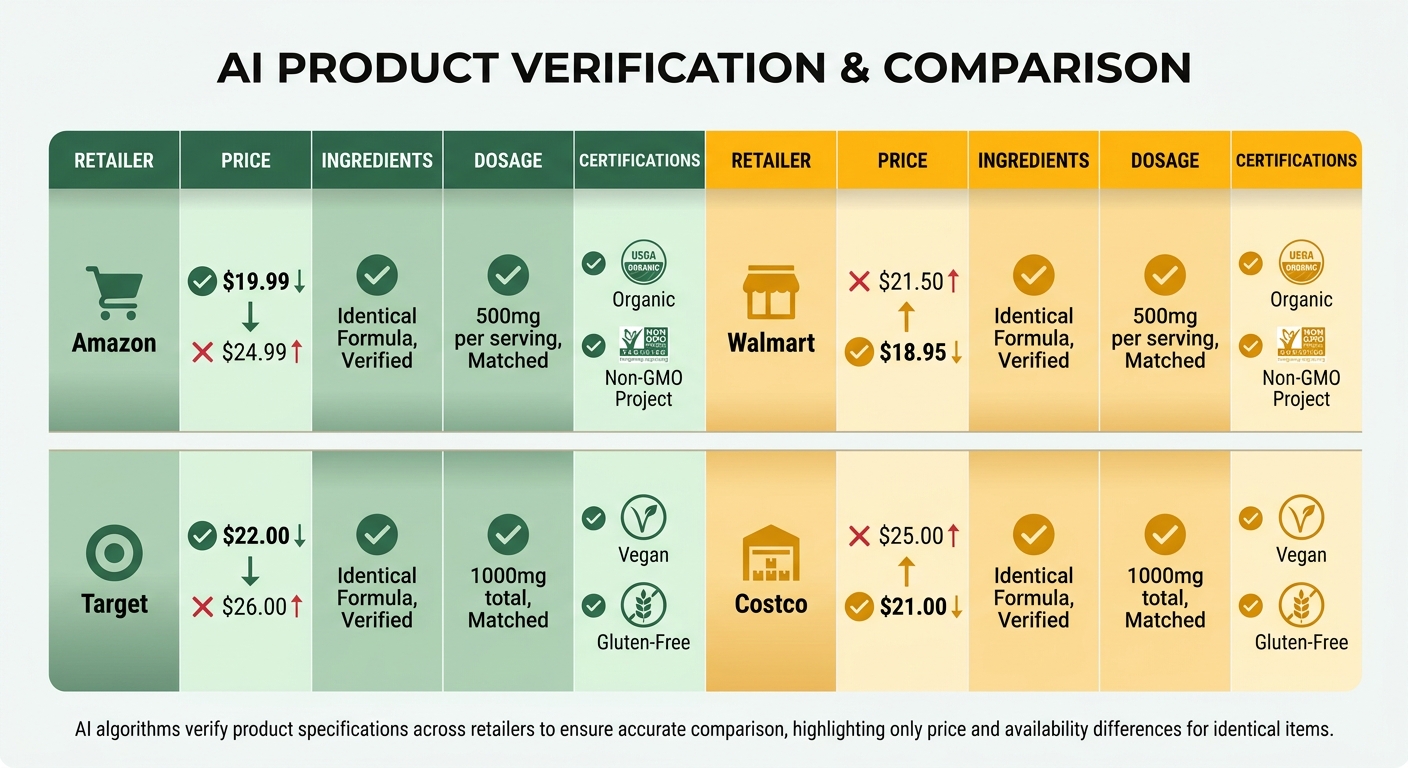
AI tools can gather prices from a range of retailers fast, but they only earn their keep when they're comparing identical items. Automating the search cuts the time you'd spend bouncing between tabs, which frees you to actually verify the product details. Over 65% of shoppers recently spent more time hunting for deals, according to Shopify's analysis.
Setting up a price comparison tool
Most apps need no setup beyond downloading and opening. Type the product name, scan a barcode, or upload a photo, and the tool pulls prices from its network of retailers. The catch: around half of all price variation comes down to which shop you buy from, as Moonsift's research shows, so pick a tool that covers the stores you actually use.
Start by checking which retailers a tool tracks. Some focus on groceries and pull from local flyers. Others specialize in electronics or general merchandise. PCMag's editors tested six apps and found each one wins in a different category. Flipp handles grocery checks well because it digitizes physical store flyers and lets you filter by your favorite locations. BuyVia covers broader categories and adds a barcode scanner for in-store comparisons.
Next, turn on price drop alerts. These tell you when a tracked product hits your target. CamelCamelCamel tracks Amazon price histories and pings you when a price falls below its historical average. The Little Giant PWM5200, for instance, averages $389.07 but recently dropped to $359.99. Without the alert, you'd miss that window.
Entering specs so the results mean something
Generic searches return generic noise. Type "magnesium supplement" into a price tool and you'll get dozens of options at different dosages, forms, and tablet counts. Spell out the exact formulation up front instead. Enter the milligram dose, the compound type (magnesium glycinate vs. oxide), and the quantity per bottle.
Most tools let you refine by brand, size, or model number. Use those filters. A survey of 1,135 American online shoppers found nearly 30% used price comparison sites in the past year, but accuracy still hangs on matching the exact product across retailers. Plenty of "best deals" turn out to be a different product entirely because someone skipped the spec check.
Barcode scanning fixes this in-store. You scan the label, and the app tells you whether that exact item sells for less somewhere else. ShopSavvy and BuyVia both pull real-time pricing from a scan. The limit: scanned results only work if the product lives in the tool's database. Niche supplements and regional brands sometimes don't show up.
The costs the sticker price hides
The displayed price isn't the final price. PCMag's guide stresses that shipping and in-store pickup options have to be counted separately. A $30 product with $8 shipping beats a $35 product with free shipping only on paper. This trips up shoppers who sort by lowest price and never check the total.
Some tools do the total-cost math for you. Others leave it on you. Look for apps that surface shipping fees and membership discounts right in the results. Comparison sites pull data from retailers' feeds or scrape their stores, match identical products, then fold in shipping, sales tax, and coupon codes to show the true cost, as Shopify's breakdown explains.
Retailer ratings matter for transaction security too. Research on comparison sites shows how seller reputation shapes buyer trust. Buying from a poorly rated seller to save a few dollars can mean shipping delays, counterfeit items, or support that never answers.
One Reddit user put it plainly: "Just try the Flipp app. Type in an item you need to buy and it will show you the cheapest place to get it." That works once you've verified the product specs. Skip that step and you're comparing apples to oranges at different price points.
Filtering for What You Actually Need
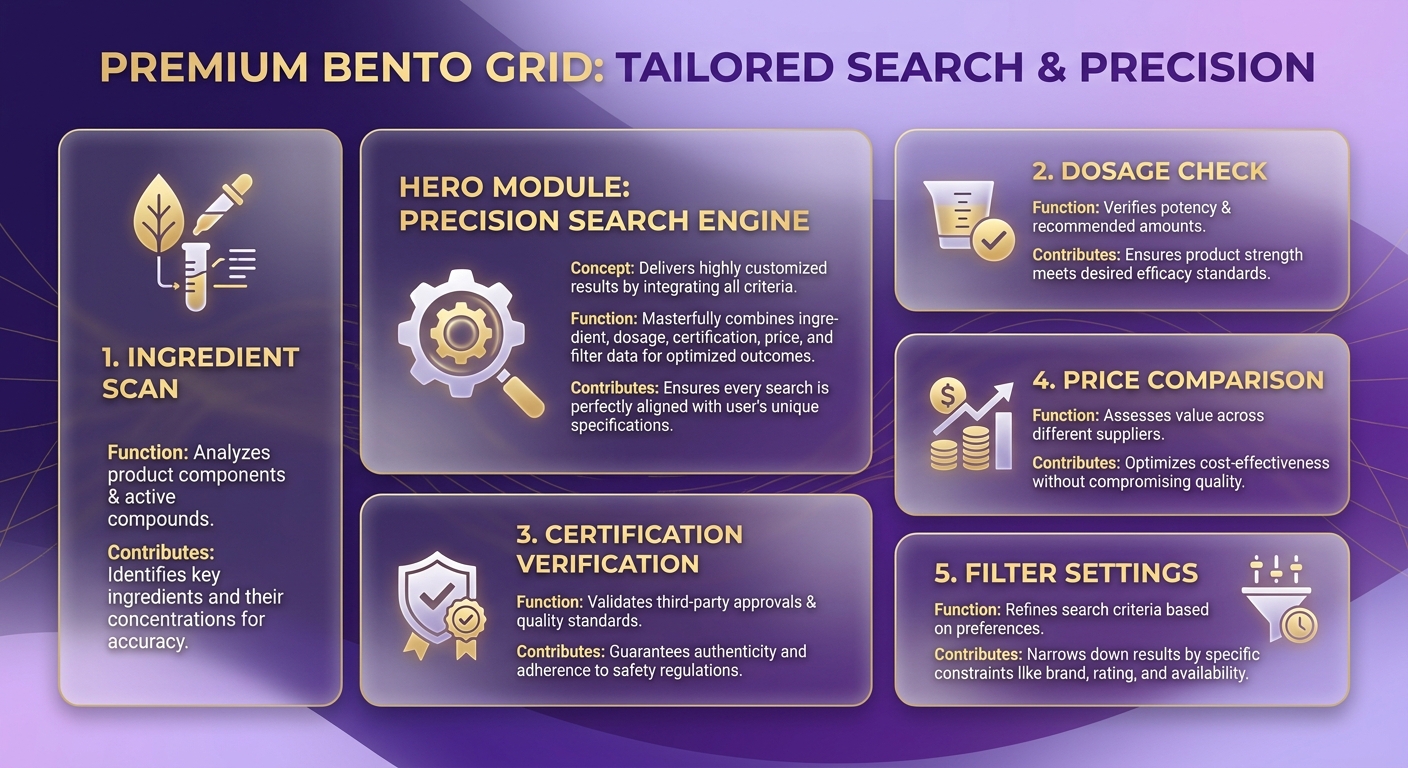
When you're checking a product at several retailers, the lowest price means nothing if you can't filter for what you actually need. Shoppers burn time comparing deals on formulations that don't fit — wrong dosage, missing ingredient, a spec they can't use. Price comes second. Filter setup comes first. Lock down your requirements before you start comparing.
If you need gluten-free, organic, or a specific active-ingredient concentration, set those filters up front. Most platforms let you narrow by category, brand, or generic product attributes, but they won't read the label for you. We do that part automatically, scanning ingredient lists and dosage info so you're comparing identical specs, not just similar-sounding names.
The filters that carry the weight
Dietary restrictions are the most common place to start. Search for protein powder and need it dairy-free? A filter that only knows "protein powder" buries you in whey. Same logic for allergen flags, vegan labels, or kosher requirements. Set those before price enters the picture, or you'll evaluate deals on products you can't use.
Ingredient concentration is tougher, because most platforms don't parse label data at that level. A vitamin D listing might show ten options at ten prices, but if you need 5,000 IU per serving and half the results deliver 1,000 IU, you're not comparing deals. You're comparing different products. We read the label text and flag exact dosage matches, so the price comparison happens between equivalent formulations.
Health benefit claims run the same way. Looking for probiotics with a specific strain count, or omega-3 with a particular EPA/DHA ratio? Generic category filters won't cut it. Verify the label details first, then compare prices across the retailers that stock the exact match. Skip that verification and the "best deal" can be the worst purchase: a lower price on a weaker formulation that doesn't do what you needed.
Making Price Checks Part of Your Routine
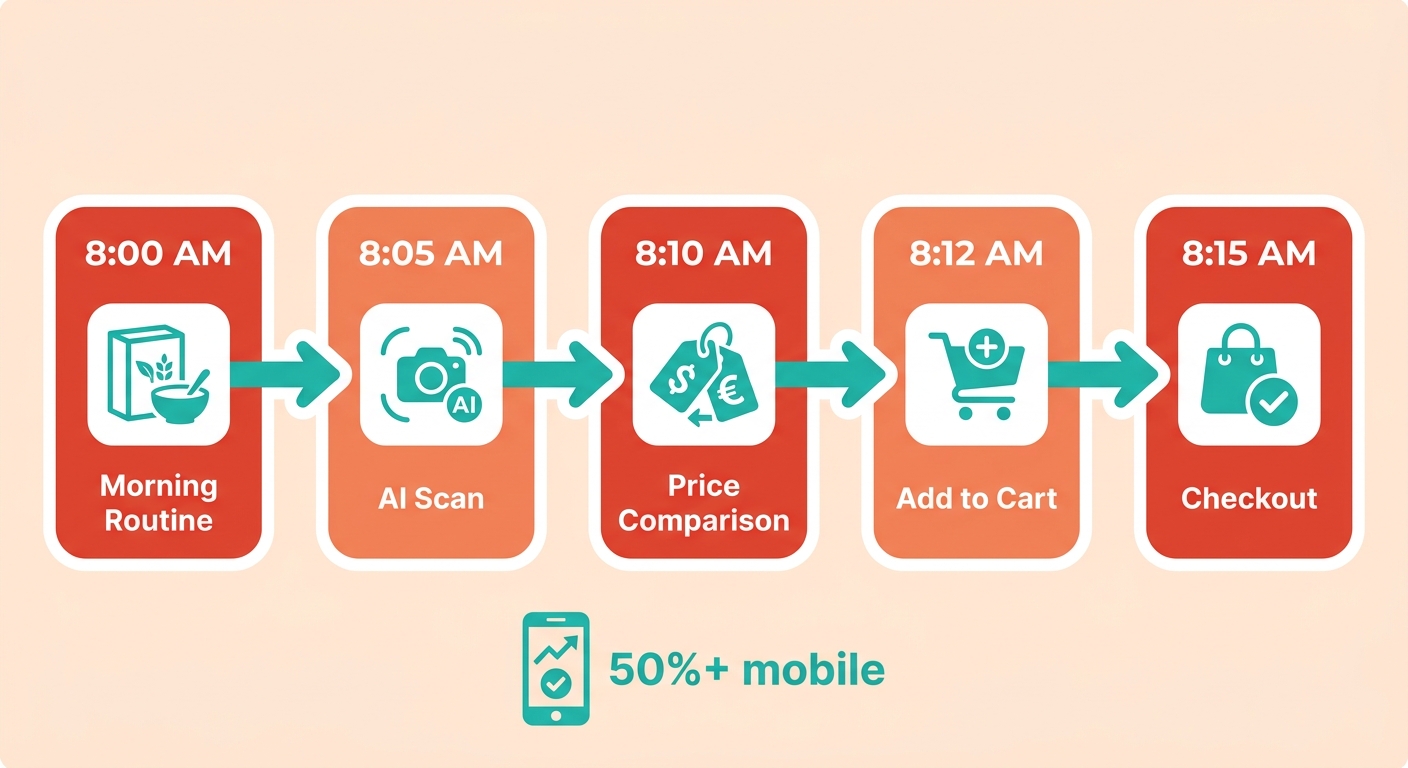
Standing in a store aisle scrolling through five tabs to compare prices isn't realistic. Shoppers who win at this fold price-checking into the moments they're already shopping, not into a separate research session later.
Mobile matters more than people expect. Over 50% of visitors to price comparison sites are mobile customers, according to Shopify's analysis, and mobile commerce hit $2.5 trillion in 2025. That's not browsing. That's buying. When you're looking up a product on your phone, you want the verification and the price comparison happening in real time, before the cart fills up.
What mobile does that desktop can't
The barcode scanner changes the math. Scan a physical item and the app pulls up the online listings instantly. That confirms whether the thing in your hand matches the online description, which heads off errors when you're comparing items with complex ingredient lists or dense specs.
Push notifications close the gap between spotting a deal and acting on it. Instead of checking a listing every morning to see if it moved, set a target and let the tracker watch the trend line. The payoff is timing: you buy when a price dips to its historical low, not the moment you decide you want it, which is often exactly when prices sit at their seasonal peak.
On-the-go tools also reach local deals. Some platforms let you drop in your location to aggregate nearby store flyers, surfacing discounts in your immediate area. You get pinged when items you buy regularly drop below their usual price at a brick-and-mortar spot down the road.
How this actually looks day to day
The morning coffee check is where adoption sticks. Shoppers tend to check prices for the weekly grocery list in short bursts rather than long research sessions, as a 2025 app comparison documented. Some platforms search over 100,000 stores across categories, which makes that breadth workable for a quick daily glance.
In-store verification stops impulse buys dressed up as deals. When a store slaps a "sale" tag on something, a barcode scan reveals whether it actually beats the online options. Because pricing swings so much by retailer, the exact same brand, size, and formulation can cost wildly different amounts depending on where you're standing. Mobile tools let you find the real low price without ditching your cart.
The subscription list works for repeat buys. Average monthly grocery costs for one adult run $257 to $464.80 according to USDA food plans for March 2025, and a big chunk of that goes to the same 20-30 products every month. Build a watch list for those recurring items and get alerts when they hit your target, which turns active searching into passive monitoring.
When mobile tools fall down, and the fix
The promise of instant access breaks when product names don't line up across retailers. Research on shopping tools found solar walkway lights showing price gaps of 4.06:1, driven by naming inconsistencies. Retailers list identical products under different names, and mobile apps can't match what they can't recognize.
Manual verification still earns its keep. An app that surfaces the lowest sticker price can still bury handling fees, minimum-order thresholds, or delivery surcharges that flip which option is truly cheaper once the total lands. You're still doing math. Just faster math than browsing five sites by hand.
Skip mobile tools altogether for specialty supplements where dosage verification beats speed. Need fish oil with at least 1,000mg EPA+DHA? A barcode scan helps, but you still read the label to confirm the app pulled the right nutritional data. Speed is the whole appeal of mobile price checking, yet two extra minutes double-checking specs beats grabbing the first cheap bottle and finding out later it carries half the dose you were after.
References
[1] Google Shopping - Shop Online, Compare Prices & Where to Buy - https://www.google.com/shopping?udm=28
[2] Price.com: Save with Cash Back, Coupons & Price Comparison - https://price.com/
[3] Amazon US price tracker, price history, price watch, price drop alerts, and ... - https://camelcamelcamel.com/
[4] Check online store ratings and save money with deals at PriceGrabber ... - https://www.pricegrabber.com/
[5] Price Comparison Websites and Apps (2026) - Shopify - https://www.shopify.com/blog/7068398-10-best-comparison-shopping-engines-to-increase-ecommerce-sales
[6] PriceRunner UK - Save by comparing prices from 4,900 stores - https://www.pricerunner.com/
[7] 13 Best Price Comparison Websites for Smart Shoppers - https://www.moneycrashers.com/best-price-comparison-shopping-engine-sites/
[8] 12 best price comparison apps in 2025: Compare prices & find the ... - https://www.moonsift.com/guides/best-price-comparison-app
[9] 6 Price Comparison Apps to Help You Get the Best Deals - PCMag - https://www.pcmag.com/picks/best-price-comparison-apps-for-shopping
[10] Impact of Price Comparison Sites on Offline Price Evaluations - https://www.researchgate.net/publication/269729170_Online_Price_Search_Impact_of_Price_Comparison_Sites_on_Offline_Price_Evaluations
[11] Price Comparison, Price Competition, And The Effects Of ShopBots - https://www.researchgate.net/publication/281430530_Price_Comparison_Price_Competition_And_The_Effects_Of_ShopBots
[12] (PDF) E-commerce Price Comparison Website Using Web Scraping - https://www.researchgate.net/publication/374386196_E-commerce_Price_Comparison_Website_Using_Web_Scraping
[13] [PDF] Improving comparison shopping agentsв€™ competence through ... - https://www.researchgate.net/profile/Chen-Hajaj/publication/282397252_Improving_Comparison_Shopping_Agents'_Competence_through_Selective_Price_Disclosure/links/5c321ed3458515a4c711c881/Improving-Comparison-Shopping-Agents-Competence-through-Selective-Price-Disclosure.pdf
[14] (PDF) Comparison Shopping Agents and Online Price Dispersion - https://www.researchgate.net/publication/262619425_Comparison_Shopping_Agents_and_Online_Price_Dispersion_A_Search_Cost_based_Explanation
Frequently Asked Questions
1. What should I do if a barcode scan returns no results for a niche supplement?
If a scan fails, search manually using the exact product name, brand, and dosage. You can also look up the manufacturer's website to find the UPC or specific formulation details, then paste those into a search engine to locate alternative retailers.
2. Why do identical products still show different prices even on comparison sites?
Retailers use dynamic pricing algorithms that adjust based on inventory levels, customer loyalty programs, and regional demand. Additionally, some sellers bundle shipping costs into the base price while others charge for it separately, creating artificial price differences.
3. Is the lowest sticker price always the cheapest option once I check out?
No, because the final checkout total often includes added fees such as regional sales tax, shipping costs, or handling charges. Some retailers also require a minimum order value to qualify for discounts, meaning the lowest initial price might end up costing more overall.
4. Should I trust a big discount from a seller with poor ratings?
It is generally safer to avoid sellers with low ratings. Poorly rated merchants may sell expired stock, take weeks to ship, or make returns difficult. The risk of receiving the wrong item or dealing with customer service issues often outweighs a minor discount.
5. Which app works better for groceries versus general merchandise?
For groceries, look for tools that aggregate local weekly circulars and support shopping list integration. For general merchandise like electronics or apparel, choose platforms that offer historical price tracking, barcode scanning, and web-wide coupon code integration.
6. When is it better to skip mobile price tools entirely?
Skip mobile tools when purchasing highly customized items, prescription medications, or products where safety certifications are critical. In these cases, verifying the exact specifications on a larger screen is safer than relying on a quick mobile scan.
7. How do price alerts actually save money compared to checking manually?
Price alerts automate the monitoring process, removing the need to check a product page daily. By notifying you the moment a price drops, they allow you to capitalize on short-term sales or clearance events that you might otherwise miss.