
Find This Product Fast: No More Wasted Time on Price Checks

Key Takeaways
- Price is the top purchasing factor for 75% of consumers, per a National Retail Federation study.
- Manual price checking wastes time and money, because prices shift constantly and no single retailer stays cheapest for long.
- A Nielsen survey found 60% of consumers are more likely to shop where price comparisons are easy.
- Price comparison tools pull multiple retailers into one view, so you stop guessing at the best deal.
- Amazon price trackers alert shoppers to price drops, which tells you how much people hate watching prices themselves.
- Accessible price information changes how buyers judge what counts as a fair deal.
- Easy comparisons build loyalty. Shoppers come back to the store that made it painless.
Why efficient price checks matter
Price is the number one thing shoppers care about. A National Retail Federation study found that 75% of consumers rank price as the most important factor in a purchase. So when you're hunting for the best deal, how you check prices decides how much you keep.
The problem is that manual price checks eat your time and still get the numbers wrong. You bounce between tabs, jot down prices, and miss a better offer two clicks away. Comparison tools fix this by pulling every store into one view. Research on online shopping behavior shows that easy access to price information reshapes how buyers judge a fair deal. See every retailer at once and the guesswork disappears.
Why manual price checking costs you
Prices shift constantly, and no single store stays cheapest for long. So you overpay, not because you're careless, but because comparing every option by hand is exhausting. Automation flips that math in your favor.
A Nielsen survey found 60% of consumers are more likely to shop where price comparisons are easy. Convenience wins loyalty. Free Amazon price trackers already ping shoppers about price drops, which tells you how much people value not having to babysit prices.
The academic work agrees. A model of price search behavior points to the same time-saving benefit: the less friction in checking prices, the more you save.
What you actually gain
Real savings and hours back in your week. Accurate unit pricing can trim up to 30% off everyday essentials, because the cheapest sticker price isn't always the cheapest per ounce. That math matters more than most shoppers realize.
Speed is the other win. Multi-retailer search paired with AI product verification cuts shopping time by 50%, so you stop clicking through eight sites one at a time. You compare prices across 8 major retailers, including Amazon, Walmart, and Target, in a single search.
Filters let you match products to specific dietary needs. Shopping keto? Stocking household basics? Curated guides handle the legwork so you buy smart without the research grind. Tools like this compare stores to find the real best deal, turning a chore into a few seconds of work.
How smarter searching protects your budget
Smarter searching catches price differences you'd otherwise miss. Small gaps add up across a full cart of groceries or a year of repeat purchases. AI verification makes sure you're comparing the right item, not a near-match that skews the price.
The payoff is a shopping habit that respects both your money and your time. You spend less, decide faster, and stop second-guessing whether a better deal was hiding one store over.
What unit pricing actually saves you
Accurate unit pricing can save you up to 20% on everyday essentials. It shows the cost per ounce, per sheet, or per count, so you compare products of different sizes on equal footing. When you're chasing the lowest true cost, the sticker price alone can mislead you.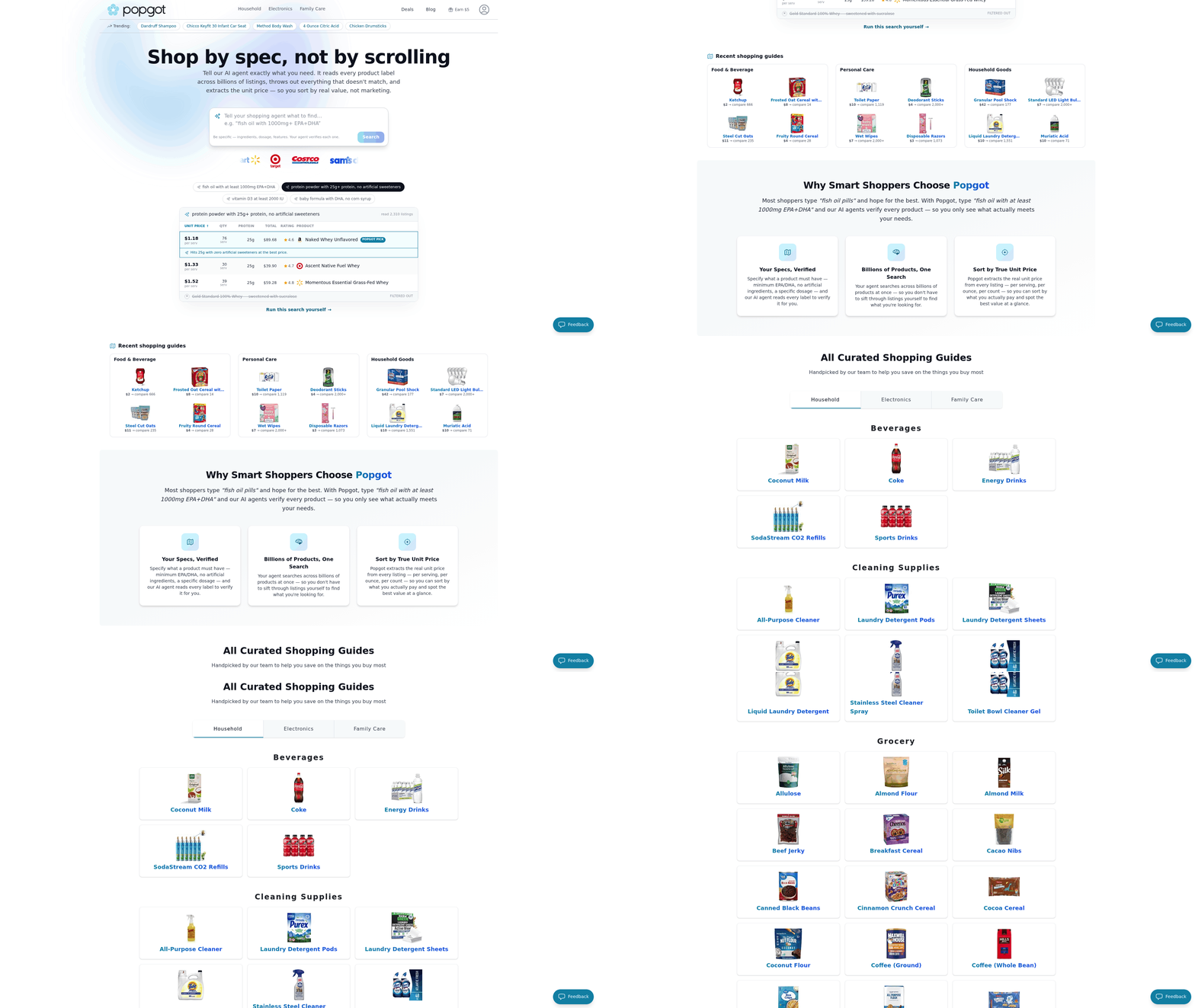
The bigger package isn't always the better deal. A "value" box often costs more per unit than the standard size right next to it. A study in the Journal of Consumer Research found that clear unit prices shift how shoppers judge value, and change what ends up in the cart.
Why unit pricing beats sticker price
Unit pricing: the cost of a product broken down per standard measure, like per ounce or per 100 sheets. It strips away the packaging tricks and shows the real number.
Take Dove soap. One retailer sells a 4-bar pack for $6.49; another lists a 6-bar pack for $8.99. The bigger pack looks pricier on the shelf. But the 4-bar works out to about $1.62 per bar, and the 6-bar drops to roughly $1.50 per bar. That gap adds up over a year of restocking.
Now flip it. Sometimes the larger size costs more per unit, because stores bank on shoppers assuming bulk always wins. Unit pricing is how you catch that. A free Amazon price tracker and multi-store comparison surface these numbers so you never guess.
How to avoid hidden costs
Check the per-unit figure across every store before you buy, not just the front-facing price. Transparent per-unit data exposes shrinkflation, where the package stays the same but the contents quietly shrink.
Consumer advocates have pushed for years to make this data standard on shelf tags and listings. The reason is simple: honest comparison keeps retailers competitive.
Where per-unit clarity pays off most:
- Household basics: soap, paper towels, and detergent, where sizes vary wildly between brands.
- Pantry staples: rice, pasta, and canned goods sold in dozens of package weights.
- Personal care: shampoo and toothpaste, where "travel," "standard," and "family" sizes hide big per-ounce swings.
Unit pricing turns a confusing shelf into a clear ranking. You see the true cost, pick the real winner, and skip the games retailers count on. That single habit protects your budget on the items you rebuy every month.
How to use Popgot for fast price checks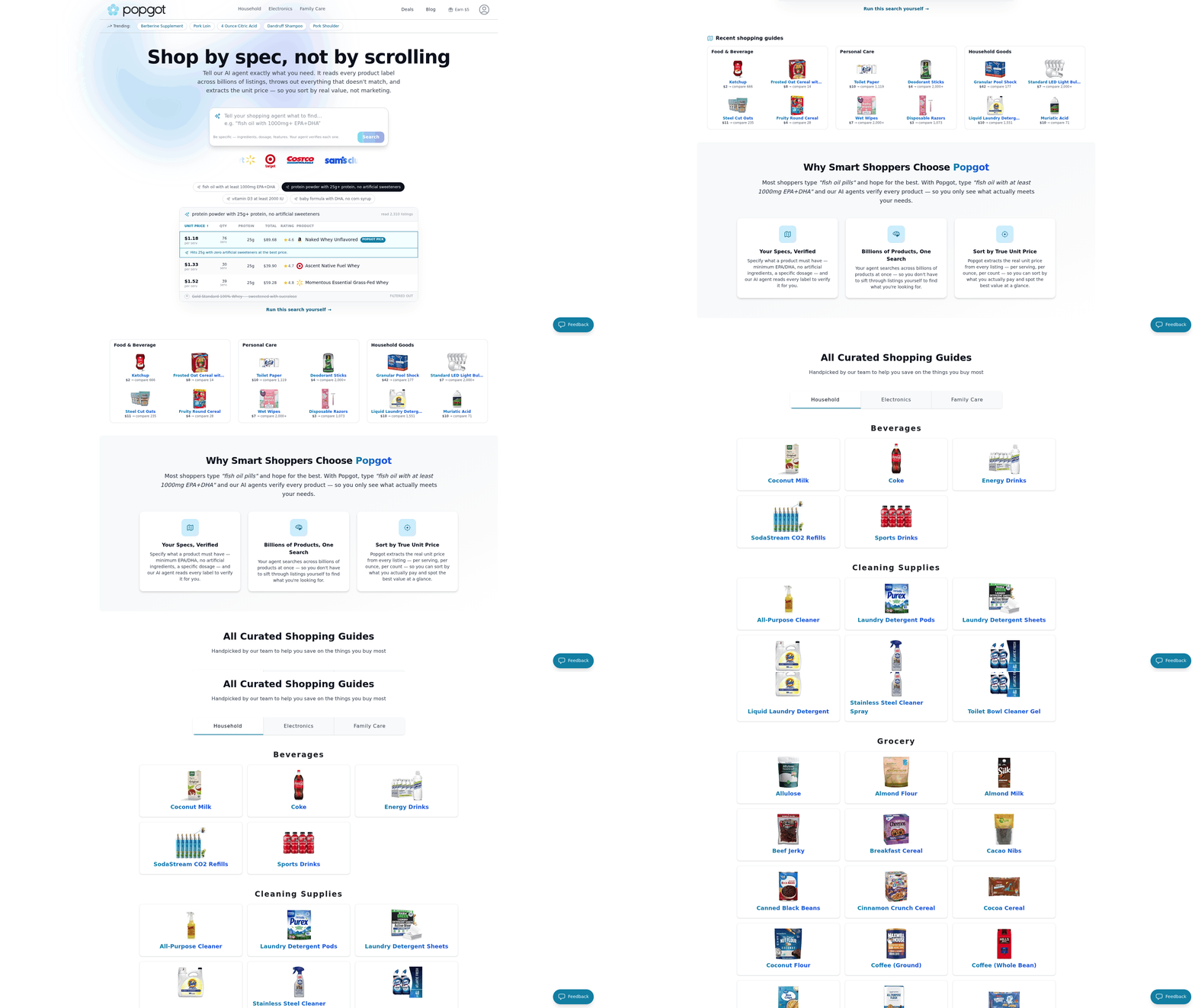
Popgot turns price checks into a few clicks. Set up your profile once, run a single search, and it pulls prices from multiple retailers into one view. No bouncing between browser tabs. Here's how to set it up and use it well.
Set up your account and preferences
Create an account and enter your preferences first. This tells the AI what to prioritize, so every search reflects your dietary needs and product specs from the start.
Add your dietary restrictions, allergies, and any specs that matter. Eat keto? Flag it. Avoid gluten? Note it. The platform filters out products that don't fit before you ever see them.
This upfront work saves time on every future search. You won't scroll past items you can't use.
Compare prices across retailers
Use the multi-retailer search to check prices across 8 major retailers in one query. Type in a product name and Popgot returns matching listings side by side, so the lowest price jumps out.
You skip the manual tab-hopping entirely. One search, all the prices, ranked in front of you.
How AI product verification helps
Popgot's AI confirms a listing actually meets your specs before you buy. It cross-checks product details against your saved preferences, so you don't accidentally order the wrong version.
This matters because listings vary. Two products with near-identical names can differ in size, ingredients, or count. The AI flags the mismatch so you catch it early.
Barcode and name search have long powered fast price lookups, as ShopSavvy shows with instant scans across thousands of stores. Popgot pairs that speed with verification tuned to your needs.
Example: finding affordable keto groceries
Say you need keto staples on a budget: almond flour, avocado oil, and pork rinds. You open Popgot, and your keto preference is already active from setup.
Run one search per item. The platform ranks prices across all eight retailers and hides anything that breaks keto rules. Apply filters for size and price to narrow further.
Popgot's curated guides pull these picks together, so you build a full keto cart in minutes. Confirm each item passed AI verification, then check out knowing you got the best deal. One search across every retailer, with the AI verifying the details. That's efficient price checking without the wasted time.
Customizing your search with filters
Popgot's filters narrow a search to the exact products that fit your life. Pick your criteria once, and every result matches your dietary needs, ingredient preferences, and quality standards. No scrolling past dozens of options that don't work.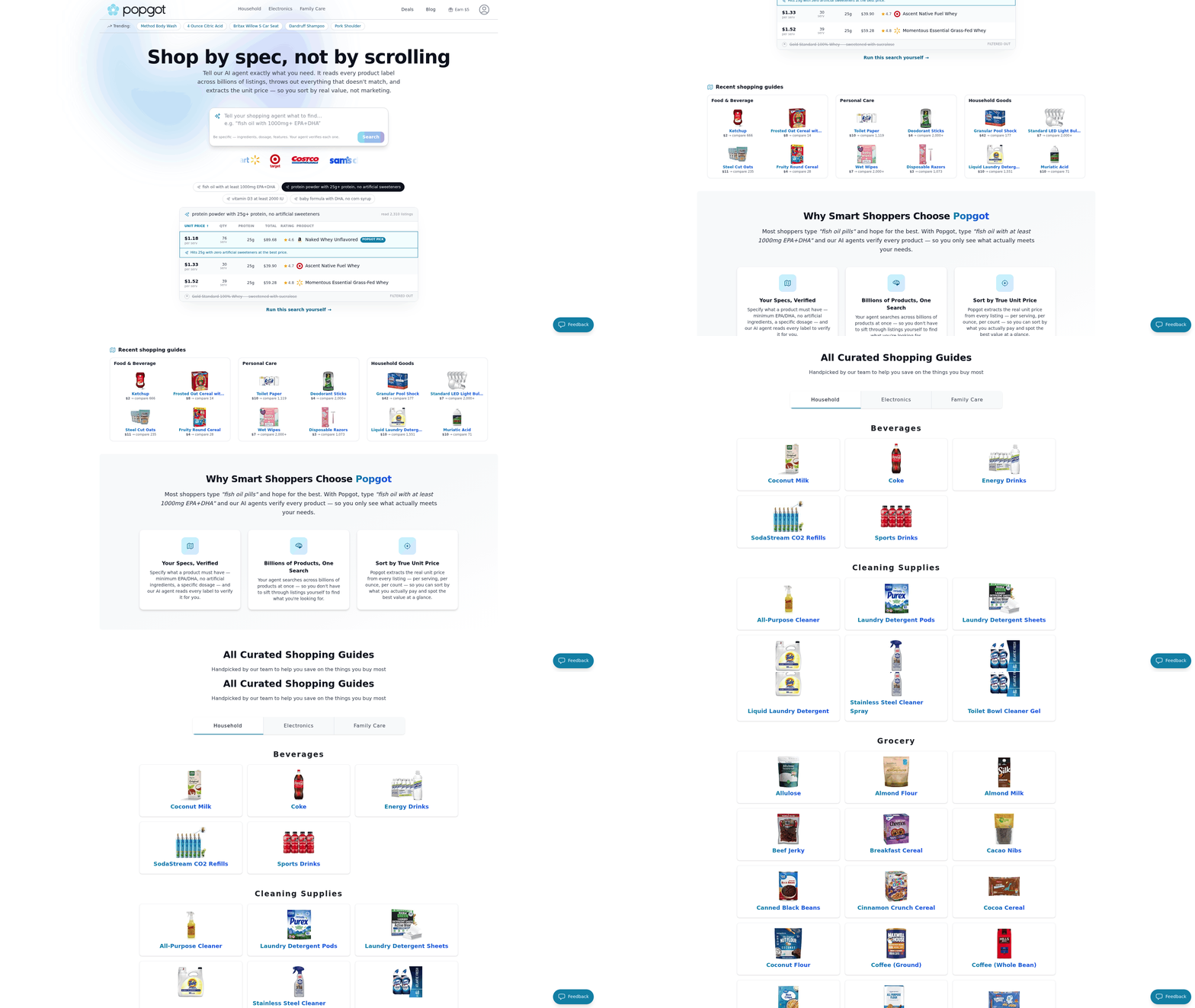
Filters do the sorting so you don't have to read every label. Set them for gluten-free, vegan, organic, or non-GMO, and Popgot only shows items that pass.
Filter by dietary needs and certifications
Open the filter panel and select your requirements before you search. Common options include dietary tags like gluten-free and vegan, plus certification filters like organic and non-GMO, and specific ingredient inclusions or exclusions. Popgot returns only the products that meet those standards.
Stack filters to tighten results. Want a vegan snack that's also organic and nut-free? Apply all three, and the list shrinks to real matches. This works well for allergy management, where a single missed ingredient is a problem.
Finding baby products that meet safety standards
Say you're buying baby food and want it organic, free of added sugars, and from brands with clear certifications. Set those filters, and Popgot surfaces only products that check every box. You compare prices across the matches instead of vetting each item by hand.
The same approach works for household basics. Popgot's curated guides group common purchases so you can restock cleaning supplies, paper goods, or pantry staples in one pass. Pick the guide, apply your filters, and you've got a ready-made list that fits your standards.
Expert tip: A registered dietitian will tell you to filter by ingredient first, not brand. Brand loyalty hides better options. Sort by what's actually in the product and you'll find healthier choices you'd otherwise overlook.
Filters turn a broad search into a short, relevant list. Less time reading labels, more time comparing products that genuinely fit.
Maximizing savings with multi-retailer search
Multi-retailer search runs one query and lines up every store's price side by side. You skip opening eight tabs, and you find the lowest price in seconds instead of minutes.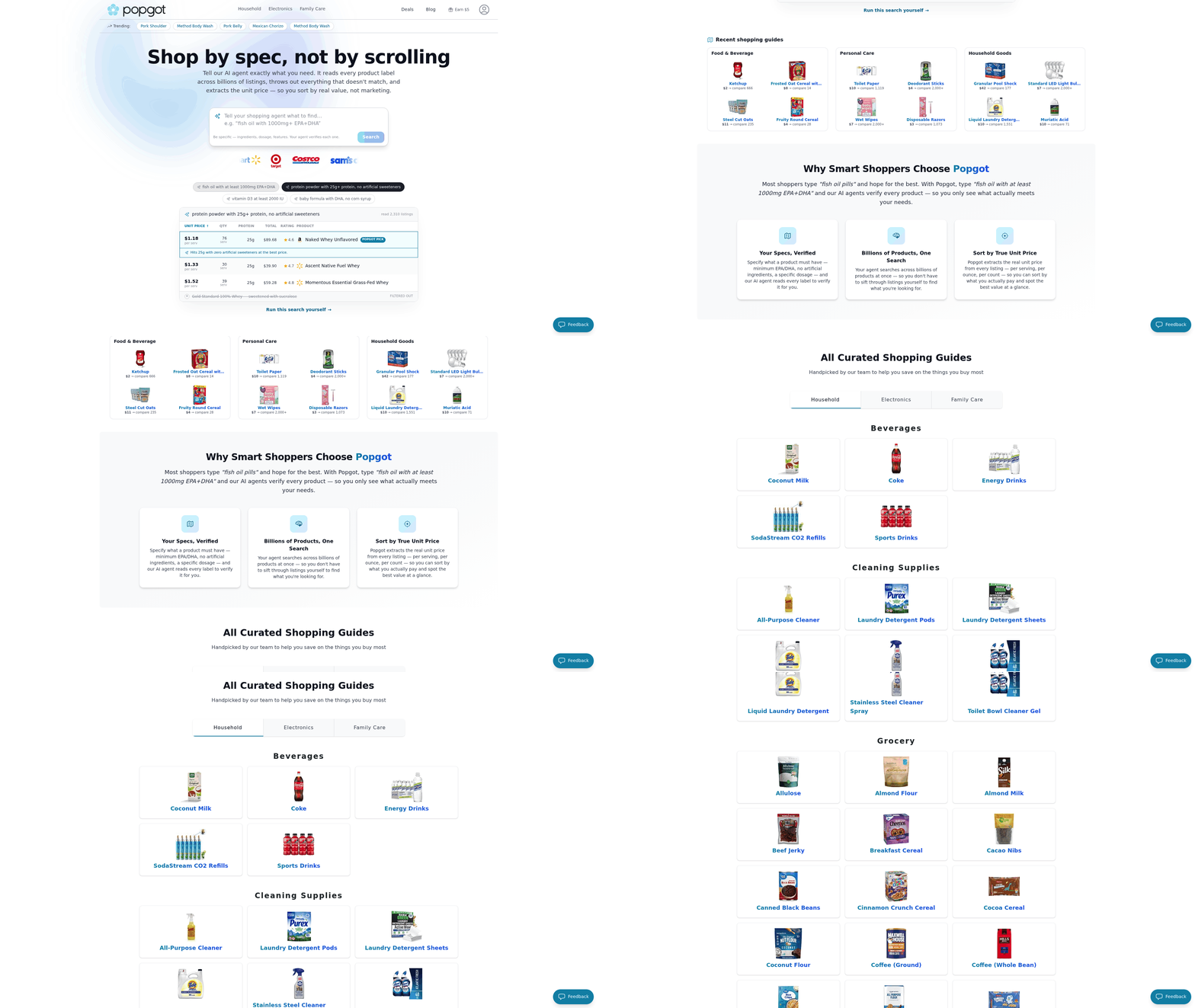
The savings add up fast. Research from the National Bureau of Economic Research shows that price comparisons lead to real, measurable savings on the same goods. See every retailer's number in one view and you buy where it actually costs less.
How comparing 8 retailers saves you money
Multi-retailer search: a single query that pulls live prices from eight stores so you buy at the cheapest one every time. The gap between the highest and lowest price on a common item is often wide, and one search exposes it instantly.
Take pantry staples. A bag of rice, a jar of pasta sauce, and a box of cereal rarely cost the same at three different stores. One retailer runs a sale on rice while another beats it on sauce. Popgot flags the lowest price for each item, so you split your cart across stores or pick the one that wins overall.
What a real savings example looks like
Say you shop a monthly pantry restock: rice, canned beans, olive oil, coffee, and snacks. At one store, coffee alone runs $12 a bag. Run the same list through a multi-retailer search, and the tool spreads your buys across the cheapest sources for each item, dropping that same coffee to $8.50.
Multiply that gap across every line in your cart and the difference on a full restock can top $20. One search instead of hours of tab-hopping. Dedicated comparison tools exist because that spread is real and worth capturing.
Seeing eight prices at once resets your sense of what you should actually pay.
Why Popgot ties it all together
Popgot combines accurate unit pricing with multi-retailer search in one place. You get the true cost per ounce alongside the lowest price across stores. Together, those two features stop you from overpaying on both fronts.
Sign up, set your preferences once, and run your first search. You save time, you save money, and you make smarter calls on the essentials you restock every week.
As more stores compete online, the shopper who compares prices across all of them wins. Popgot puts that in a single search, so every cart reflects the best deal available.
Streamlining shopping with curated guides
Curated guides do the pre-work for you. Instead of building a search from scratch, you start from a handpicked list of a common purchase and skip straight to comparing real options. A guide gets you to a shortlist in seconds.
Our team builds these around the things you buy on repeat. Keto staples like almond flour and allulose. Household basics like laundry detergent pods and AA batteries. Snacks like beef jerky and microwave popcorn. Each one already pulls live listings across major retailers, with the unit price attached, not just a sticker number.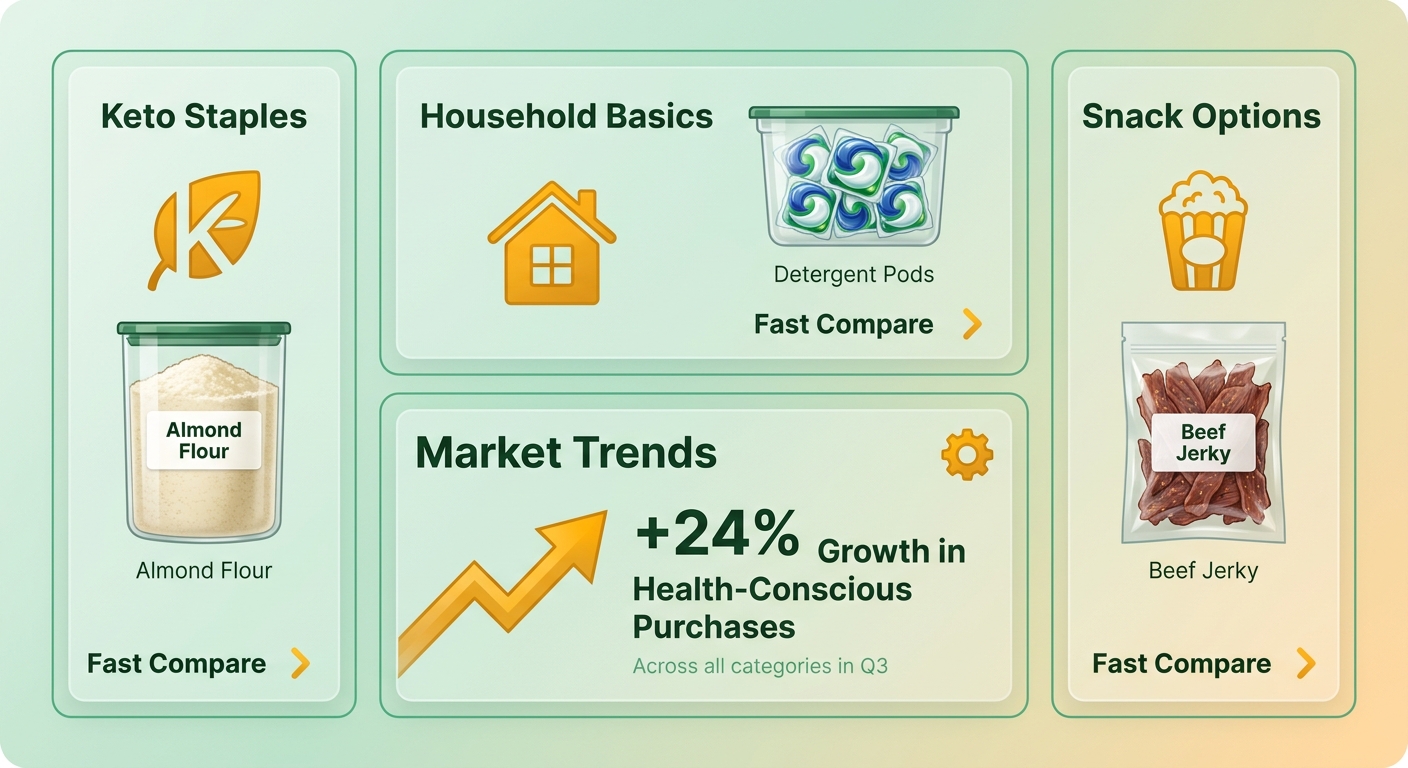
How curated guides speed up grocery runs
Curated guides group frequent purchases into one clickable list, each pre-loaded with verified listings and real unit pricing. Pick a category, open the guide, and compare products that already match the spec. No typing a query, no wading through junk results.
Take a busy parent restocking snacks for the week. Instead of searching "healthy snacks" and scrolling past a hundred mismatched hits, they open the snack guide, sort by cost per serving, and grab the cheapest jerky that clears their ingredient bar. Fewer decisions, faster carts.
The guides also surface brands you might not search for on your own. If you always buy the same cereal, the breakfast guide shows you cheaper comparable options sitting one shelf over. You see the alternatives without hunting for them.
When to skip the guides
Skip curated guides for one-off, oddly specific buys. If you need a niche item with a tight requirement nobody stocks by default, a custom spec search beats a pre-built list every time. The guides shine on repeat purchases, not rare ones.
They also assume you buy a category regularly. If you're pricing something once and never again, the setup savings don't add up. Use the guides for your weekly staples. Use a fresh search for the strange stuff.
For everything on your recurring list, though, guides turn a long shopping session into a short one.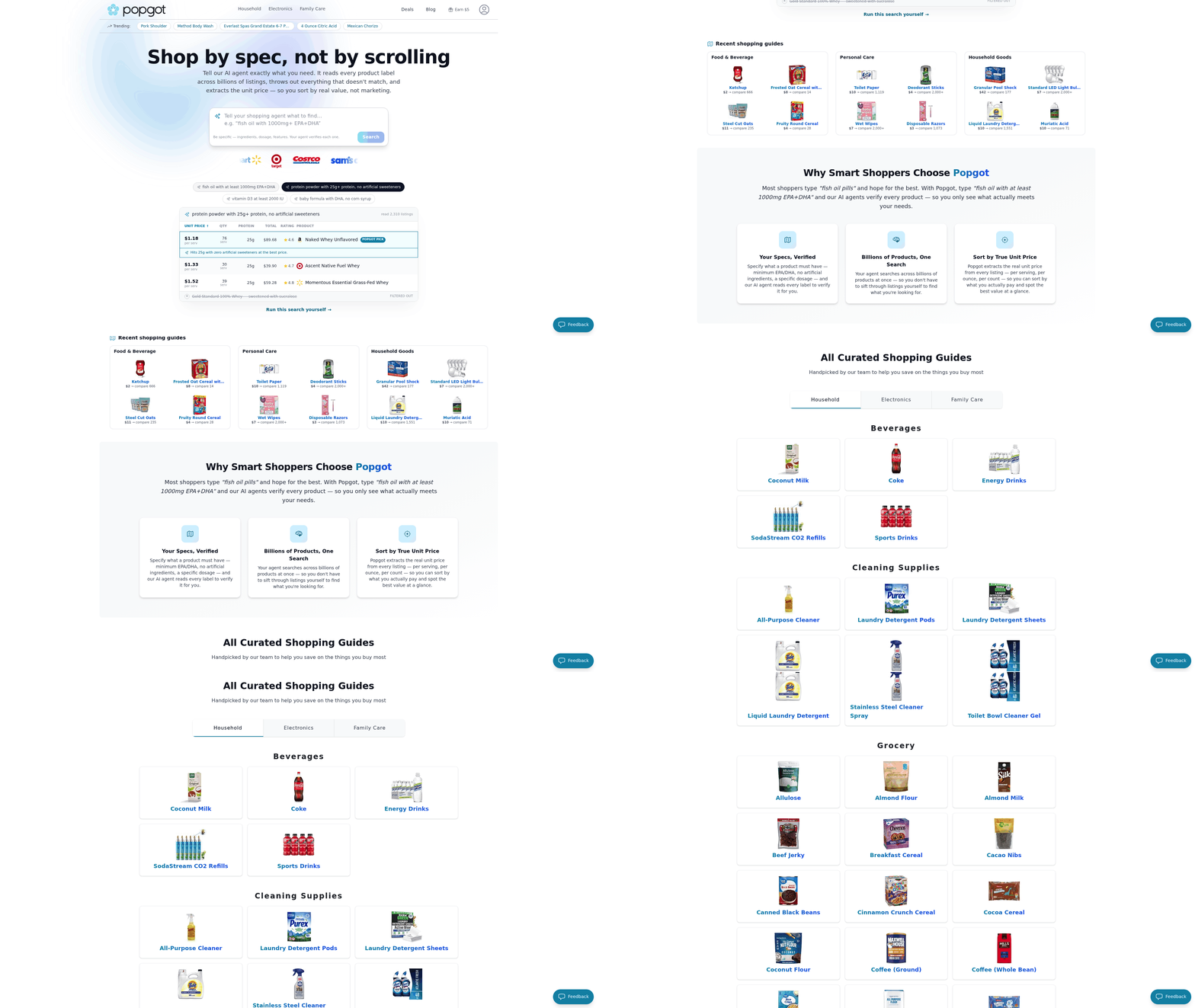
References
[1] Amazon US price tracker, price history, price watch, price drop... - https://camelcamelcamel.com/
[2] Price.com: Save with Cash Back, Coupons & Price Comparison - https://price.com/
[3] 12 best price comparison apps in 2025: Compare prices & find the... - https://www.moonsift.com/guides/best-price-comparison-app
[4] ShopSavvy - https://shopsavvy.com/
[5] A model of price search behavior in electronic marketplace - https://www.researchgate.net/publication/220146592_A_model_of_price_search_behavior_in_electronic_marketplace
[6] Online shoppers' response to price comparison sites | Request PDF - https://www.researchgate.net/publication/263858128_Online_shoppers'_response_to_price_comparison_sites
Frequently Asked Questions
1. Are price comparison tools free to use, or do they charge a subscription?
Most price comparison tools operate on a free model, including popular options like CamelCamelCamel and ShopSavvy. They generate revenue through affiliate partnerships with retailers rather than user fees. Popgot offers free account setup where you enter preferences once and run multi-retailer searches without paying for access to price data.
2. Can I trust that a cheaper listing is the same exact product?
Two listings with near-identical names often differ in size, count, or ingredients, which skews the price comparison. AI product verification cross-checks details against your saved specifications and flags mismatches before purchase. This prevents accidentally ordering a travel-size version or a different formulation just because it appears cheaper upfront.
3. Does buying from multiple stores to save money increase shipping costs?
Splitting a cart across retailers can add shipping fees that erode savings on smaller orders. Weigh per-item discounts against delivery minimums before checkout. Many stores offer free shipping thresholds, so consolidating your biggest savings at one retailer often beats spreading a $20 order across three separate deliveries.
4. How do price comparison tools help with shrinkflation?
Shrinkflation happens when packaging stays the same size but contents quietly shrink, hiding a real price increase. Transparent per-unit pricing exposes this by showing cost per ounce or count rather than sticker price. Checking the per-unit figure across stores reveals when a familiar product now delivers less for the same money.
5. Can I set price comparison filters for allergies and medical diets?
Filters handle allergy management by excluding specific ingredients before results display, which matters when a single missed ingredient causes harm. Stack multiple requirements like nut-free, vegan, and organic simultaneously to narrow results to genuine matches. Popgot applies these filters at the search level, hiding non-compliant products entirely rather than requiring manual label checks.
6. Is it worth comparing unit prices on small, inexpensive items?
Small price gaps matter most on items you rebuy monthly, where a 12-cent difference per bar of soap compounds across a full year of restocking. Individual savings look minor, but multiplied across recurring pantry staples, household basics, and personal care, unit pricing protects hundreds of dollars annually on essentials.
7. When should I use a fresh search instead of a curated shopping guide?
Use a custom search for one-off, oddly specific purchases with tight requirements no retailer stocks by default. Curated guides only pay off for repeat purchases you buy on a recurring basis, since the setup savings depend on regular use. For rare or niche items, a targeted spec search wins every time.