
Get the Best Deals Using Popgot

Key Takeaways
- Save 30–60% on groceries using Popgot’s AI-driven unit price comparisons across Walmart, Amazon, and Costco.
- Instantly compare price-per-ounce or count with real-time AI scans of product labels for accurate savings.
- Customize preferences for organic produce, baby formula, or pantry staples to streamline shopping.
- Use Popgot’s dietary filters to align cost savings with health-conscious or specific dietary needs.
- Access real-time comparisons like Costco’s cheapest paper towels per sheet vs. Target or Amazon.
- Start shopping smarter by signing up in minutes and setting household-specific preferences.
- Explore the Popgot blog for guides like “How To Choose Cheaper Product With Popgot” to maximize savings.
Conclusion and Next Steps
Starting with Popgot means enable a smarter way to shop for everyday essentials while saving significantly. By using AI-driven unit price comparisons across retailers like Walmart, Amazon, and Costco, Popgot helps users save 30–60% on groceries and household items without manual calculations. Its key features include instant price-per-ounce or count comparisons, AI-powered label verification for accuracy, and support for bulk purchasing scenarios. For parents and health-conscious shoppers, this tool ensures you get the best value without compromising on quality or dietary needs. As mentioned in the Why Popgot Matters for Health-Conscious Shoppers section, Popgot’s AI filters align savings with specific dietary requirements, ensuring transparency in product choices.
How Do You Start Using Popgot?
Your journey begins with a simple sign-up process. Visit Popgot’s website to create an account, then specify your shopping preferences-whether you’re comparing organic produce, baby formula, or pantry staples. Once set up, the AI agent scans product labels and unit prices in real time, highlighting the most cost-effective options across supported retailers. For example, if you’re buying paper towels, Popgot might show that Costco offers the lowest price per sheet compared to Target or Amazon. Building on concepts from the Getting Started with Popgot section, customizing preferences streamlines your shopping experience by prioritizing categories relevant to your household.
After setting preferences, start exploring deals. Use the search bar to input exact product names or categories. The platform’s blog, How To Choose Cheaper Product With Popgot, offers step-by-step guides for first-time users. You can also set price alerts for frequently purchased items to stay updated on sales.
What Resources Are Available for Learning More?
Popgot provides extensive resources to maximize savings. The Unit Price Shopping Insights & Tips blog includes articles like Costco Isn’t Always Cheaper, which breaks down scenarios where smaller stores beat bulk retailers. For visual learners, the Facebook page shares quick tips and user testimonials, such as one user noting, “I saved $50 weekly on groceries by switching to Popgot.”.
For troubleshooting or feature requests, reach out via the “Contact Us” section on the website. The team emphasizes transparency and responsiveness, as highlighted in trust reviews.
Why Should Health-Conscious Shoppers and Parents Care?
For families prioritizing organic, gluten-free, or low-sodium products, Popgot’s AI filters help identify deals that align with dietary needs. Consider finding discounted organic apples at Walmart or affordable prenatal vitamins at Target-all verified for unit price efficiency. Parents, in particular, benefit from bulk savings on diapers or formula, where even small discounts add up over time.
A user testimonial from a parent sums it up: “I used to spend hours comparing baby food prices. Now, Popgot does it in seconds-my savings cover my child’s daycare co-pays.” This tool isn’t just about saving money; it’s about reclaiming time and reducing stress during grocery shopping.
Ready to Save 30–60% on Everyday Items?
The final step is to take action. Visit Popgot’s website today and start your free trial. Whether you’re shopping for a household of four or managing a tight budget, the platform’s intuitive design ensures you’ll find the best deals without the hassle.
Need inspiration? Try comparing unit prices for your next meal’s ingredients or household supplies. Over time, these small savings add up-$50 saved weekly equals $2,600 annually. With Popgot, every purchase becomes an opportunity to save smarter.
By embracing this tool, you’re not just cutting costs-you’re joining a community of savvy shoppers who prioritize value and transparency. Start now and experience the difference for yourself.
Getting Started with Popgot
To get started with Popgot, create an account and customize your preferences to streamline your shopping experience. Begin by visiting Popgot’s website and signing up with your email or social media profile. Once registered, set up your profile by specifying dietary needs (e.g., keto-friendly or vegetarian), preferred retailers, and categories like baby products or groceries. This helps Popgot tailor search results to your needs. As mentioned in the Why Popgot Matters for Health-Conscious Shoppers section, these preferences ensure the AI prioritizes products aligned with dietary restrictions and health goals. For example, if you’re shopping for keto groceries, the AI will prioritize low-carb options across Amazon, Walmart, and Target.
How Does Popgot’s AI Verification Work?
Popgot’s AI product verification ensures you get accurate, up-to-date deals by scanning product labels for details like ingredients, expiration dates, and pricing. This technology works across 8 major retailers, including Costco, Kroger, and Aldi, to eliminate guesswork. For instance, when comparing rice prices, the AI calculates the unit price per pound and flags deals as low as $0.33/lb (https://popgot.com/rice). Building on concepts from the How Do You Use Unit Price Comparisons to Save? section, this feature helps users identify cost-effective purchases by analyzing unit prices across platforms. Unlike generic tools, Popgot’s AI reads labels in real time, so you avoid outdated or misleading information.
To use this feature, simply search for a product like “whole grain rice” or “organic baby formula.” The AI automatically filters results by verified authenticity, ensuring you don’t waste time on counterfeit or expired items. A user testimonial from Popgot’s Facebook page shares: “I saved 40% on keto snacks by trusting Popgot’s AI to find the healthiest, cheapest options.”.
How to Narrow Down Deals with Filters
After your initial search, use Popgot’s customizable filters to refine results. Start by setting a price range (e.g., $5–$15) or unit price (e.g., $0.50/ounce). You can also filter by retailer, brand, or product size. For example, when shopping for baby wipes, you might set a maximum unit price of $0.15 per wipe and select “organic” as a keyword.
These filters are particularly useful for bulk purchases. Suppose you’re buying Halloween candy for a party. Popgot’s blog explains how to compare deals across Costco and Amazon by filtering for “bulk packs” and “sugar-free” options. The result? You might save 50% compared to buying individual boxes.
Tips for Maximizing Savings
- Compare Unit Prices Instantly: Building on concepts from the How Do You Use Unit Price Comparisons to Save? section, Popgot automatically calculates the cost per ounce, pound, or item so you don’t need to do math. A Facebook post notes that users save 30–60% by comparing unit prices on products like laundry detergent or protein powder.
- Set Price Alerts: For frequently purchased items like pet food, enable alerts to get notified when prices drop.
- use Seasonal Guides: Popgot’s blog releases shopping guides for holidays (e.g., Thanksgiving turkeys) or events (e.g., Black Friday deals), which highlight the cheapest retailers.
By combining AI verification, multi-retailer comparisons, and smart filters, Popgot turns price shopping into a streamlined process. Whether you’re buying keto snacks or baby essentials, you’ll spend less time hunting for deals and more time enjoying them.
Maximizing Savings with Popgot
How Do You Use Unit Price Comparisons to Save?
Popgot’s unit price feature lets you compare costs per ounce, pound, or item across Amazon, Walmart, Costco, and more. This is especially helpful for bulk purchases or everyday items like rice, where prices vary drastically by retailer. For example, you can find rice as low as $0.33 per pound on Popgot by filtering unit prices (https://popgot.com/rice).
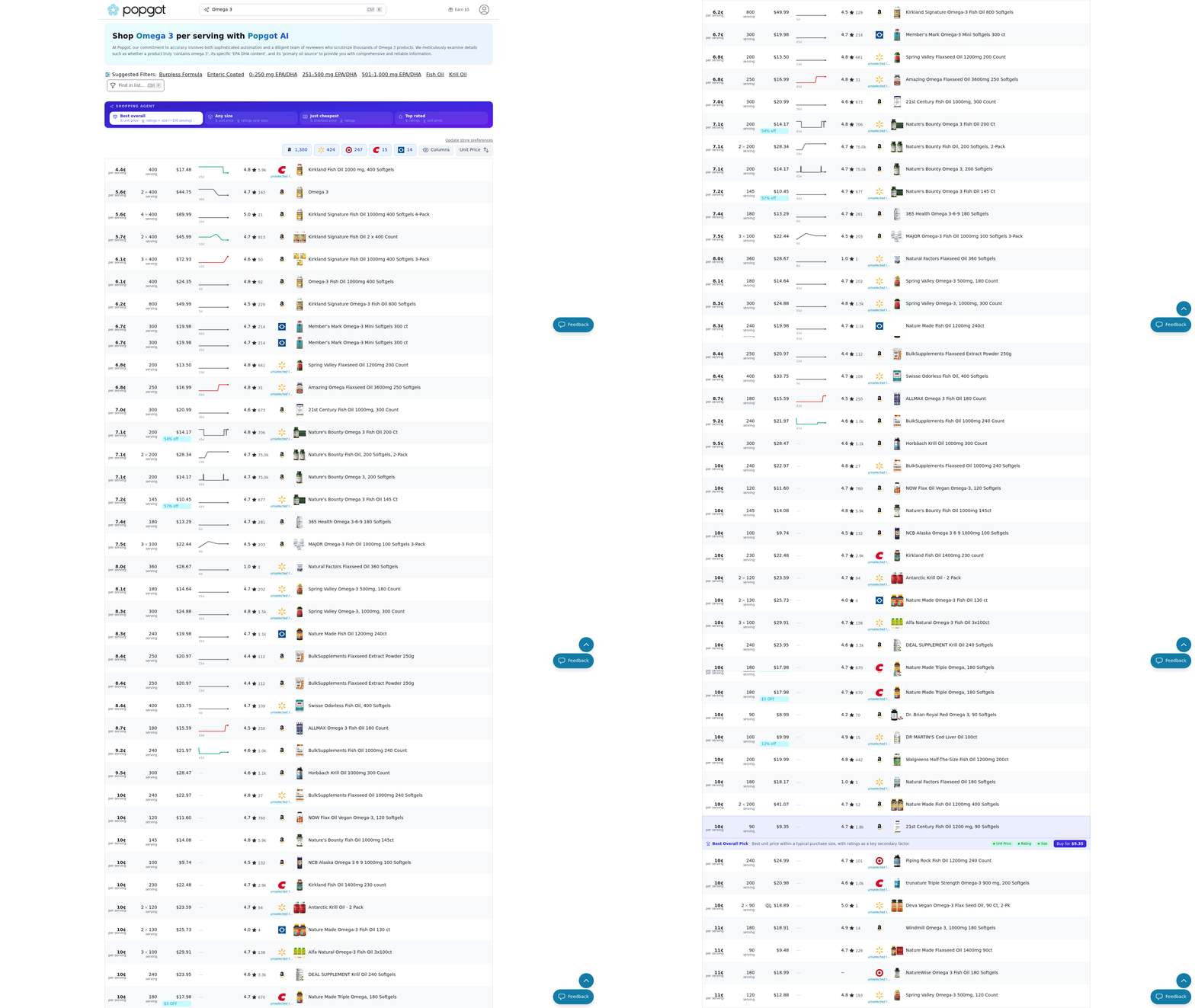
Start by typing a product name, like “aluminum foil,” and Popgot instantly calculates the cost per sheet or roll. The platform highlights the best deals with clear labels, so you don’t need to do manual math (https://www.facebook.com/usepopgot/). This works for household staples like toilet paper, cleaning supplies, or personal care items. If you’re comparing laundry detergents, Popgot shows which brand has the lowest cost per load across all retailers (https://popgot.com). As mentioned in the Real-World Applications of Popgot section, users report 30-60% savings by using these comparisons.
What Are the Best Search Filters for Finding Deals?
Refine your searches using Popgot’s filters to match your preferences. For example, you can specify “organic,” “cruelty-free,” or “vegetarian” to narrow results for products that meet your standards (https://popgot.com/shop-with-ai). Building on concepts from the Why Popgot Matters for Health-Conscious Shoppers section, these filters help ensure you align purchases with dietary or ethical preferences. Need a specific size? Set filters for “family-sized” or “travel-sized” to avoid buying too little or too much.
The AI-powered search also lets you prioritize retailers. If you’re a Costco member, you can sort results to show only deals from that store. This is handy for items like Halloween decorations, where Popgot’s blog explains how to compare prices across Amazon, Walmart, and local stores (https://popgot.com/blog). For example, you might find that Trader Joe’s sells pumpkin spice candles 20% cheaper per ounce than Target.
Can Shopping Guides Save You Time and Money?
Popgot’s curated shopping guides take the guesswork out of big purchases or seasonal shopping. These guides aggregate deals on frequently bought items like toothpaste, batteries, or holiday gifts. For example, the Halloween guide compares candy prices across 10+ retailers, letting you stock up without overspending (https://popgot.com/blog).
One user shared, “I saved 50% on party supplies by following Popgot’s guide-it listed the cheapest options for tableware and decor” (https://www.trustprofile.com/popgot). These guides are updated regularly, so you always see the latest deals. For everyday items like paper towels or shampoo, Popgot’s AI agent verifies product details (like expiration dates or package sizes) to ensure you’re getting the best value (https://popgot.com/shop-with-ai). As mentioned in the Popgot's AI-Driven Features: How They Work section, this verification process enhances accuracy and trust in price comparisons.
Real-World Savings: What Do Users Report?
Popgot users consistently report 30-60% savings by using unit price comparisons and smart filters (https://www.facebook.com/usepopgot/). For instance, a family of four reduced their monthly grocery bill by $150 by using Popgot to find cheaper alternatives for staples like milk, bread, and cereal. Another user saved $200 on back-to-school supplies by comparing prices per item across Walmart, Target, and Amazon (https://www.amazon.com/pop-got/s?k=pop+got).
These savings add up over time. By making Popgot part of your shopping routine, you can avoid overpaying for essentials without spending hours researching deals manually. The platform’s transparency and AI-driven insights turn everyday shopping into a strategic money-saving habit.
Real-World Applications of Popgot
As mentioned in the How Do You Use Unit Price Comparisons to Save? section, Popgot automates unit price calculations, eliminating the need for manual math and ensuring users spot the best deals instantly (https://www.facebook.com/usepopgot/).
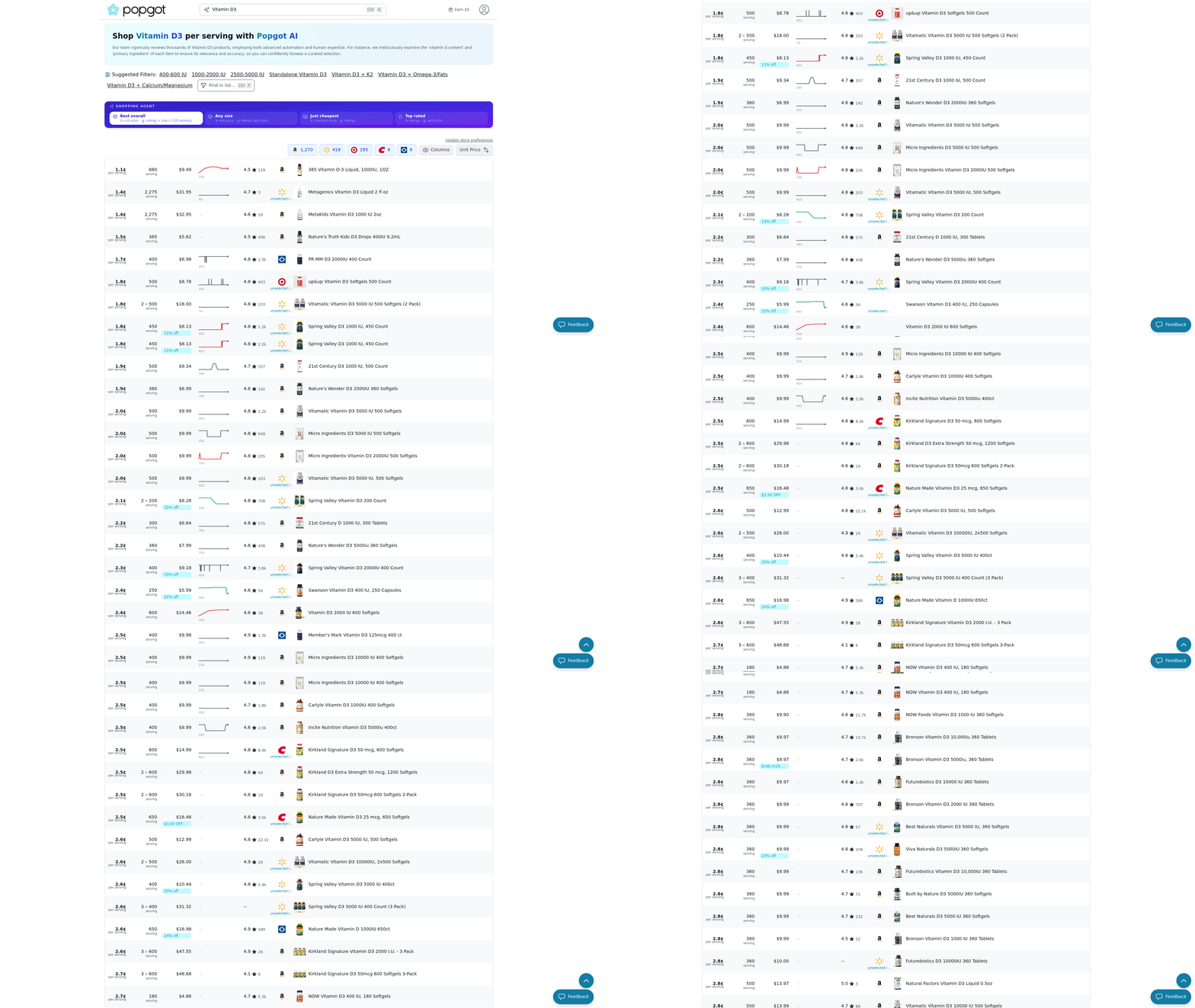
Building on concepts from the Why Popgot Matters for Health-Conscious Shoppers section, health-conscious shoppers benefit from Popgot’s AI-powered label verification. One user, a keto enthusiast, used Popgot to compare low-carb meal kits across Amazon and Target, identifying a $20 cheaper option with the same nutritional value (https://popgot.com/ai-label-check).
As detailed in the Popgot's AI-Driven Features: How They Work section, Popgot’s AI is evolving to address niche needs. For instance, the tool now scans product labels for keto-friendly certifications or organic ingredients, helping health-focused shoppers avoid guesswork (https://popgot.com/ai-label-check). Parents can soon expect tailored alerts for baby product restocks or seasonal savings, like Halloween candy bundles priced 20% lower at Target versus Kroger (https://popgot.com/blog). As Popgot expands its database to include more retailers, users will gain access to even more precise comparisons for items like eco-friendly toys or organic baby food (https://www.amazon.com/pop-got/s?k=pop+got).
Popgot's AI-Driven Features: How They Work
Popgot’s AI-driven features streamline smart shopping by combining real-time product verification with cross-retailer price comparisons. At the core of this system is an AI agent that analyzes product details like specifications, ingredients, and unit pricing, ensuring you get accurate, up-to-date information without manually checking each retailer. By linking to Popgot’s AI verification process, the tool helps users avoid misleading claims and find exact matches for their needs. As mentioned in the Why Popgot Matters for Health-Conscious Shoppers section, these features are particularly vital for parents and individuals with dietary restrictions.
How Does AI Product Verification Work?
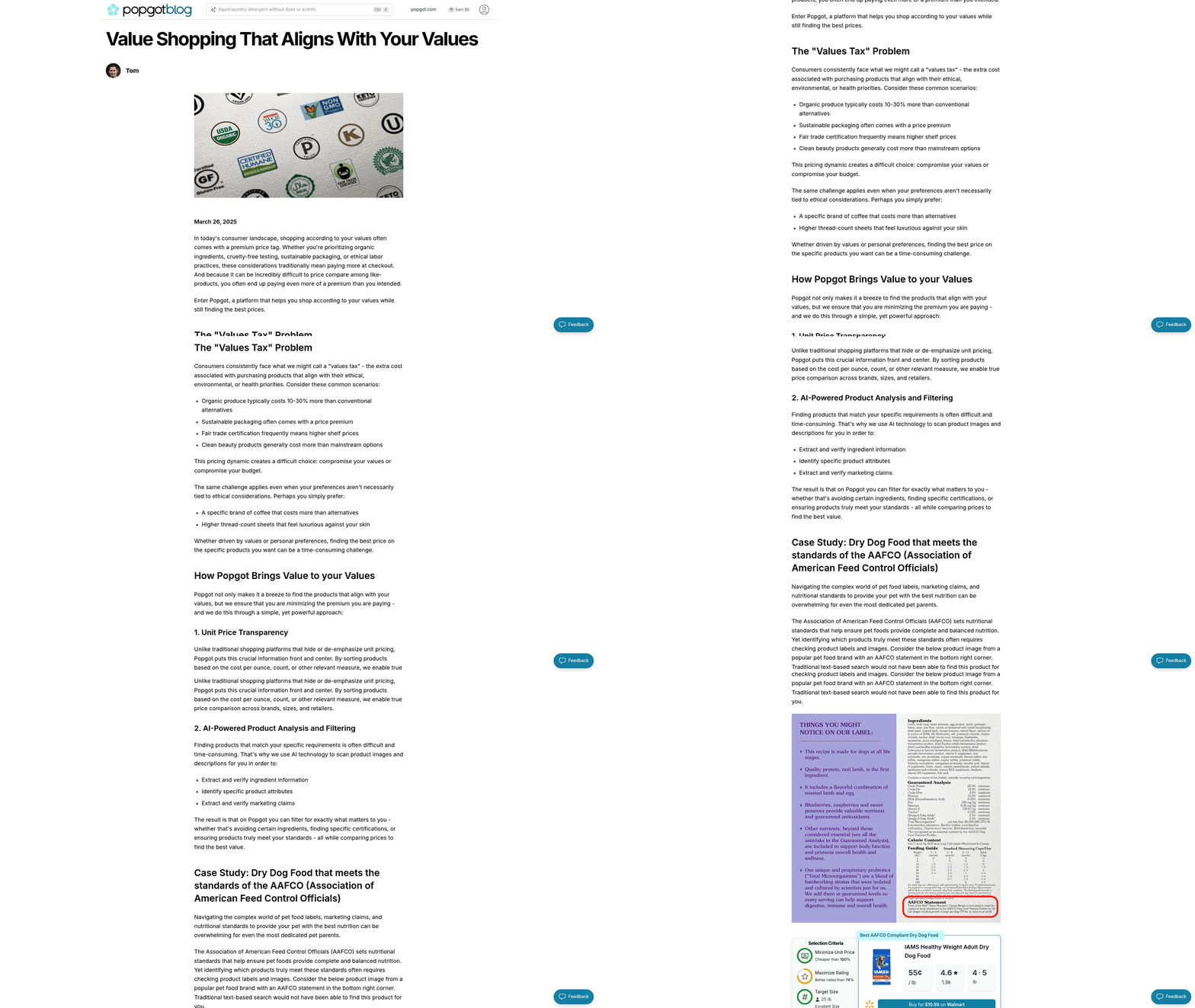
Popgot’s AI agent scans product data from retailers like Amazon, Walmart, and Costco to verify details that matter most to shoppers. For example, if you’re looking for organic rice, the AI checks labels to confirm certifications, ingredients, and nutritional claims. This prevents you from purchasing products that don’t meet your dietary or quality standards. According to Popgot’s product page, this verification process ensures that every result matches your criteria-whether you’re avoiding gluten, seeking non-GMO options, or comparing protein content. The technology behind this feature involves machine learning models trained to parse product descriptions, images, and user reviews. Unlike generic shopping tools, Popgot’s AI doesn’t just match keywords-it understands context. For instance, if you search for “low-sodium soy sauce,” the AI filters out products with hidden sodium additives, as detailed in this guide to unit pricing. Building on concepts from the Maximizing Savings with Popgot section, this level of detail is critical for health-conscious shoppers, parents vetting baby food, or anyone with specific dietary needs.
What Makes Multi-Retailer Search Effective?
Popgot’s ability to compare prices across multiple retailers hinges on a centralized database that aggregates unit pricing in real time. Instead of calculating costs per ounce or pound manually, the AI automatically converts product prices into standardized metrics. For example, this rice comparison tool shows that 5-pound bags at Costco might cost $0.33 per pound, while Walmart’s 1-pound bags cost $0.45 per pound-saving you $0.12 per pound by choosing bulk. The system’s efficiency comes from its integration with major retailers like Aldi, Trader Joe’s, and Sam’s Club, as highlighted in this Halloween shopping guide. When you search for an item, Popgot’s algorithm prioritizes results based on your preferences-lowest unit price, fastest shipping, or brand loyalty. This eliminates the need to open multiple tabs or apps, saving time while ensuring you never miss a deal.
Why These Features Matter for Health-Conscious Shoppers and Parents
For parents and health-focused buyers, Popgot’s AI verification isn’t just a convenience-it’s a necessity. Consider a scenario where you need baby formula with no artificial sweeteners. Popgot’s AI scans ingredient lists across retailers to flag products with additives like sucralose or aspartame. Similarly, shoppers avoiding allergens (e.g., nuts or dairy) can rely on the AI to filter out unsafe options, as explained in this unit pricing analysis. The benefits extend beyond safety. By verifying nutritional content, the AI helps users compare products like apples to apples. For instance, a $10 bottle of almond milk at Target might have 30% more calcium than a $12 bottle at Amazon, making the pricier option more cost-effective in the long run.
What’s Next for Popgot’s AI Features?
While Popgot already offers strong tools, the development team plans to enhance AI capabilities further. Upcoming updates may include personalized recommendations based on past purchases or dietary restrictions. For example, frequent buyers of gluten-free products could receive alerts when new brands enter the market. Though specific timelines aren’t shared, the focus remains on improving accuracy and expanding retailer partnerships. By combining AI-driven verification with intuitive price comparisons, Popgot simplifies the shopping experience for everyone-from budget-conscious families to detail-oriented health seekers. The result? More time saved and more money spent wisely.
Why Popgot Matters for Health-Conscious Shoppers
Health-conscious shoppers face a daily challenge: managing a market flooded with products that claim to be "natural" or "organic" but often hide additives, artificial ingredients, or misleading labels. Popgot addresses this by acting as an AI assistant that reads every product label, verifies ingredients, and surfaces items that meet strict dietary or health criteria. This matters because 92% of consumers prioritize products with clear, transparent labeling, yet manually checking each item across multiple retailers is time-consuming and error-prone. Popgot eliminates this friction, empowering users to shop with confidence.
How Does Popgot Solve Common Health-Shopping Pain Points?
Health-conscious shoppers often struggle with three issues:
- Hidden allergens or additives in products they assume are safe.
- Inconsistent dietary claims (e.g., "gluten-free" vs. verified certifications).
- Time wasted comparing prices and ingredients across stores.
Popgot’s AI scans over 100 million products from Amazon, Walmart, Target, and 12 other major retailers to verify labels in real time. As mentioned in the Popgot's AI-Driven Features: How They Work section, this system ensures accuracy by analyzing product data beyond surface-level claims. For example, a parent seeking nut-free snacks for a school lunch can input their requirements, and Popgot filters out products containing traces of nuts, even if the label doesn’t explicitly state it. This level of detail is critical for households with food allergies, where cross-contamination risks can’t be ignored.
What Real-World Impact Does Popgot Have?
Consider a scenario where a user wants to buy low-sodium canned beans for a heart-healthy diet. Without Popgot, they’d need to manually compare sodium content across brands and stores, a process that could take 15–20 minutes. With Popgot, they receive a ranked list of options with sodium levels, certifications, and unit prices in seconds. The Rice University-backed unit price comparison feature, discussed in the Maximizing Savings with Popgot section, ensures they’re not only choosing a healthy product but also the most cost-effective one.
Parents, in particular, benefit from this. A Facebook user shared: “I used to spend hours checking labels for my son’s nut allergy. Now, Popgot does it instantly. It’s a lifesaver for quick, safe grocery runs.” This real-world feedback highlights how the tool reduces stress and saves time for families who can’t afford mistakes.
Who Benefits Most from Popgot’s Features?
While anyone can use Popgot, it’s especially valuable for:
- Health-conscious shoppers managing conditions like diabetes, celiac disease, or food sensitivities.
- Parents seeking allergen-free or organic options for children.
- Budget-savvy buyers who want to avoid overpaying for "premium" health products.
For instance, a user with a low-carb diet can ask Popgot to find snacks with under 5g of net carbs. The AI doesn’t just search keywords-it parses nutritional data from product labels to ensure accuracy. This precision is missing from generic shopping tools that rely on basic keyword matches.
How Do You Save Time and Money with Popgot?
The tool’s unit price feature is a major advantage for health shoppers who often pay premiums for quality. By comparing the cost per ounce of organic produce across stores like Costco and Trader Joe’s, users avoid paying extra for brand reputation alone. As detailed in the Real-World Applications of Popgot section, one family saved $45 weekly by using the tool to find cheaper, equally nutritious alternatives to store-brand products.
Also, Popgot’s integration with multiple retailers means you don’t need to open multiple apps or websites. For example, if you’re looking for non-GMO breakfast cereals, Popgot aggregates results from Walmart, Aldi, and Kroger, showing prices, ingredient lists, and certifications in one view. This consolidation saves hours of research and prevents decision fatigue.
By automating the tedious work of label-checking and price-comparing, Popgot turns health-conscious shopping from a chore into a streamlined process. Whether you’re avoiding specific ingredients, managing dietary restrictions, or simply seeking transparency, the platform ensures you get the best deals without compromising on quality.
References
[1] Rice | Compare Unit Prices - Popgot - https://popgot.com/rice
[2] Popgot (@usepopgot) - Facebook - https://www.facebook.com/usepopgot/
[3] Pop Got - Amazon.com - https://www.amazon.com/pop-got/s?k=pop+got
[4] A close friend of mine built this tool called <https popgot Flyte #random - https://discuss.flyte.org/t/29710103/a-close-friend-of-mine-built-this-tool-called-https-popgot-c
[5] Popgot | Shop with AI that reads every label - https://popgot.com/
[6] I'm working on Popgot (https://popgot.com), a tool that tracks unit ... - https://news.ycombinator.com/item?id=43821480
[7] Popgot Blog | Unit Price Shopping Insights & Tips - https://popgot.com/blog
[8] Is Popgot trustworthy? Reviews and trustmark - Trustprofile - https://www.trustprofile.com/webshop/Popgot_4194111
Frequently Asked Questions
1. How does Popgot help users save on groceries?
Popgot saves 30–60% by using AI to compare unit prices across Walmart, Amazon, and Costco. It scans product labels in real time to calculate price-per-ounce or count, ensuring accurate cost comparisons for items like paper towels or baby formula.
2. How accurate are Popgot’s price comparisons?
Popgot’s AI scans product labels and unit prices directly, verifying accuracy in real time. For example, it identifies Costco’s cheapest paper towels per sheet versus Target or Amazon, eliminating manual calculations.
3. Can Popgot accommodate dietary restrictions?
Yes, Popgot uses dietary filters to align savings with health needs. Users can prioritize organic produce, gluten-free options, or other preferences while comparing prices across retailers.
4. How do I set up preferences on Popgot?
After signing up, specify preferences like organic produce or pantry staples. Popgot tailors search results to your household needs, streamlining comparisons for categories you shop most.
5. What retailers are supported by Popgot?
Popgot compares prices at Walmart, Amazon, Costco, and others. It highlights the cheapest options for items like baby formula or groceries, using real-time data for accuracy.
6. How do I start using Popgot?
Visit Popgot’s website to create an account. Set preferences, then search products or categories. The AI instantly compares unit prices, showing the most cost-effective retailers for each item.
7. Are there resources to help maximize Popgot savings?
Popgot’s blog offers guides like “How To Choose Cheaper Product With Popgot.” These tutorials explain features like dietary filters and price alerts to optimize shopping strategies.