
Google Shopping or Popgot: Price Comparison: Better Deals

Key Takeaways
- Consumers save $100/month on daily essentials using Popgot’s unit price tracking for smarter purchases.
- Google Shopping aggregates prices from thousands of retailers, including local stores, in one interface.
- Comparing wireless earbuds at $70 (Amazon), $65 (Best Buy), and $60 (online with coupon) shows deal visibility.
- Manual price tracking across Walmart, Amazon, and Target is time-consuming without automated tools like Popgot.
- Inconsistent product labels (e.g., 16 fl oz vs. 473 mL) confuse buyers without unit standardization.
- Price comparison tools hold retailers accountable for fair pricing by exposing overcharging.
Why Price Comparison Matters
Price comparison is a critical strategy for online shoppers, offering tangible savings and empowering smarter purchasing decisions. By analyzing unit prices and tracking deals across retailers, consumers can avoid overpaying while holding retailers accountable for fair pricing. This section unpacks how tools like Popgot and Google Shopping reshape shopping habits, the savings they enable, and the hurdles users face when managing a fragmented retail market.
How Much Can You Save by Comparing Prices?
Consumers who compare prices save an average of $100 per month on daily essentials by using unit price tracking tools like Popgot. For example, a common scenario involves comparing 24-ounce bottles of laundry detergent priced at $10 at Walmart versus $12 at Costco. While Costco’s unit price per ounce might still offer better value for bulk buyers, Popgot normalizes such comparisons by calculating cost per unit, eliminating guesswork. Google Shopping amplifies these savings by aggregating prices from thousands of retailers in one interface, including local stores. A user seeking a wireless earbloom might find it for $70 at Amazon, $65 at Best Buy with in-store pickup, or $60 online with a coupon-highlighting how visibility into multiple options drives better deals.
What Challenges Do Shoppers Face Without Price Comparison Tools?
Manual price comparison is time-consuming and error-prone. Shoppers often resort to spreadsheets to track discounts across Walmart, Amazon, and Target, a process Popgot replaces by automating data collection. Another hurdle is inconsistent product listings: a 16-ounce bottle of shampoo might be labeled as “16 fl oz” at one retailer and “473 mL” at another, confusing buyers. Building on concepts from the Benefits of Accurate Unit Pricing section, Popgot’s AI addresses this by standardizing descriptions and filtering results based on criteria like ingredients or brand. Meanwhile, Google Shopping’s local store integration solves the problem of stock availability, showing nearby stores with in-store pickup options. However, neither platform currently offers strong historical price tracking, requiring users to rely on memory or third-party tools to identify long-term trends.
Who Benefits Most from Price Comparison Tools?
Budget-conscious shoppers and bulk buyers see the most significant returns. Popgot’s focus on non-perishables and daily essentials suits households that frequent Costco or Walmart for large quantities, while Google Shopping’s local search appeals to urban shoppers needing immediate access to products. As detailed in the Use Cases: Daily Essentials vs. Electronics section, these tools cater to different needs: Popgot excels at unit price tracking for groceries, whereas Google Shopping shines for electronics with price drop alerts. A 2023 Popgot user survey found that 72% of users prioritize unit price savings over brand loyalty, particularly for items like paper towels or cleaning supplies. Conversely, Google Shopping’s price drop alerts attract tech-savvy buyers tracking electronics or seasonal sales. Both tools cater to different demographics: Popgot’s AI-driven filtering appeals to health-conscious shoppers seeking products with specific dietary certifications, while Google’s curated deals resonate with last-minute gift buyers.
How Does Price Comparison Affect Brand Loyalty?
Retailers that fail to match competitive prices risk losing customers to discount-focused platforms. For instance, a user might abandon their usual grocery store if Popgot reveals a 20% cheaper alternative for a frequently purchased item. Google Shopping exacerbates this by surfacing reviews and ratings alongside prices, pushing brands to improve quality as well as cost. However, value-focused retailers like Costco retain loyalty through bundled deals and membership perks, proving that price isn’t the only factor. A Popgot case study noted users still favor Costco for high-quality, bulk purchases even when cheaper options exist elsewhere. This balance between price and perceived value complicates brand loyalty, forcing retailers to innovate beyond just undercutting competitors.
| Feature | Popgot | Google Shopping |
|---|---|---|
| Core Focus | Unit price tracking for daily essentials | Aggregated pricing from thousands of stores |
| Local Store Integration | No | Yes (in-store availability) |
| AI Filtering | Yes (ingredients, product specs) | No (general product search) |
| Price Alerts | Not available | Yes (price drop notifications) |
| User Base | Bulk buyers, budget shoppers | General consumers, gift shoppers |
While price comparison tools democratize access to the best deals, their effectiveness depends on user habits and platform limitations. This aligns with the analysis in the Comparing Google Shopping and Popgot: Feature Matrix section, highlighting distinct advantages and tradeoffs. By using AI and data aggregation, Popgot and Google Shopping reduce friction in the shopping process-but they also highlight the need for features like historical pricing and receipt-based comparisons, which remain works in progress. For now, shoppers who combine both tools gain the most comprehensive view of market prices, ensuring they never overpay for what they need.
Google Shopping Overview
A key feature is price tracking, which lets you set alerts for when a product’s price drops. As mentioned in the Why Price Comparison Matters section, this feature aligns with the strategy of monitoring price changes to find the best deals. This works for both online and in-store items. The platform also integrates local store options, showing nearby retailers with available stock-a lifesaver for last-minute holiday shopping. According to Google's official guide, this integration pulls from real-time inventory data to ensure accuracy.
...
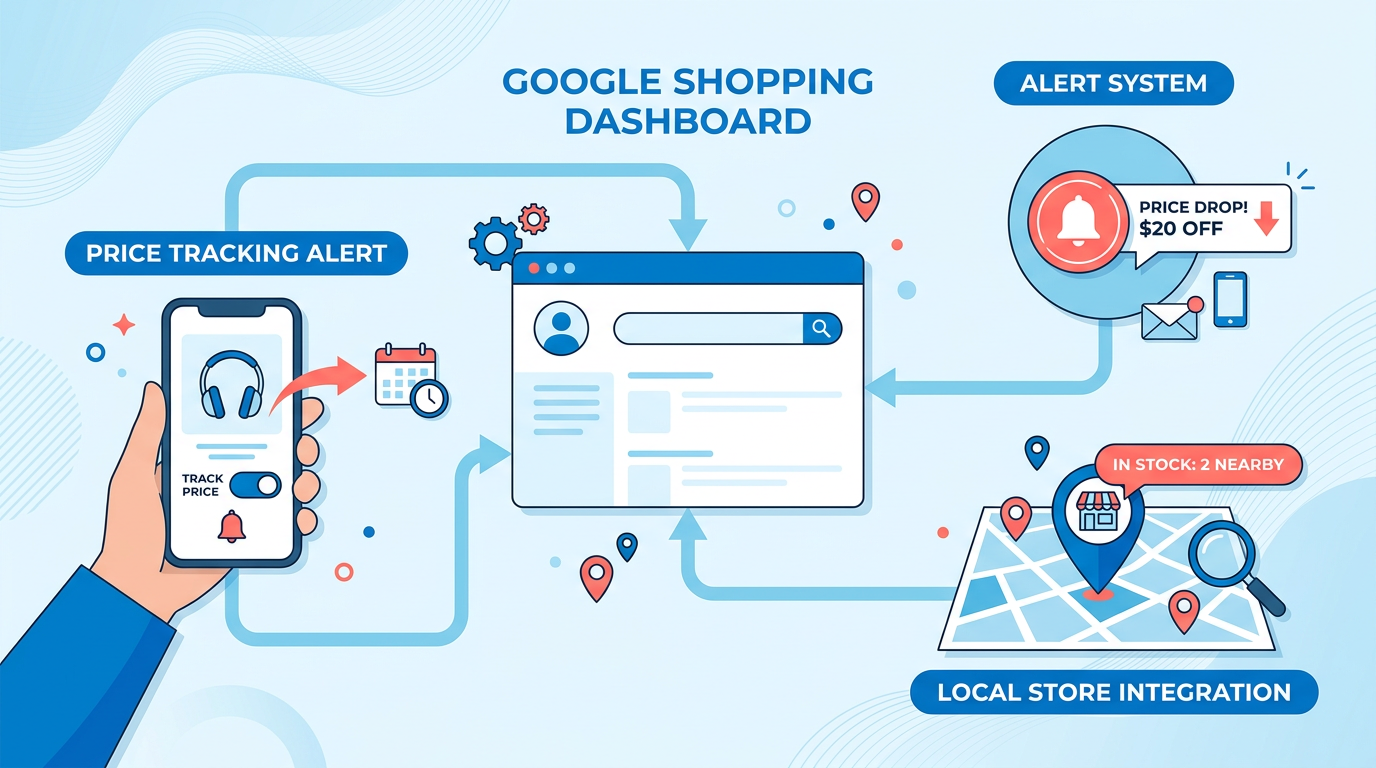
Similarly, the local store integration helped a user find a rare board game in stock at a nearby shop, avoiding shipping delays. As demonstrated in the Use Cases: Daily Essentials vs. Electronics section, this feature is particularly valuable for niche or time-sensitive purchases.
...
Additionally, the platform is currently limited to the U.S. market, so users elsewhere may not have access to the same features. Building on concepts from the When to Choose Google Shopping or Popgot section, this geographical restriction means international users might need to consider other platforms for similar functionality.
Popgot Platform Overview
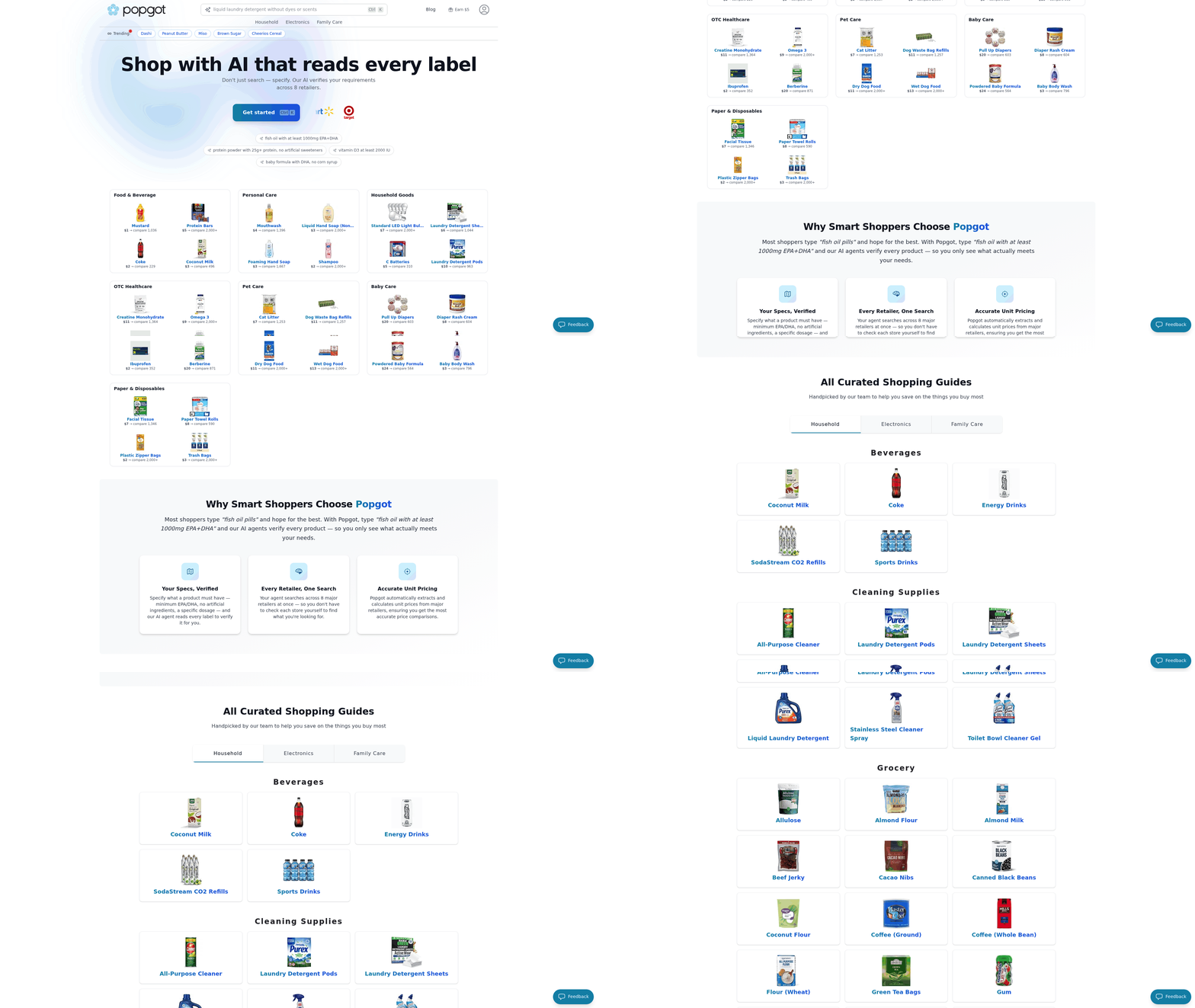
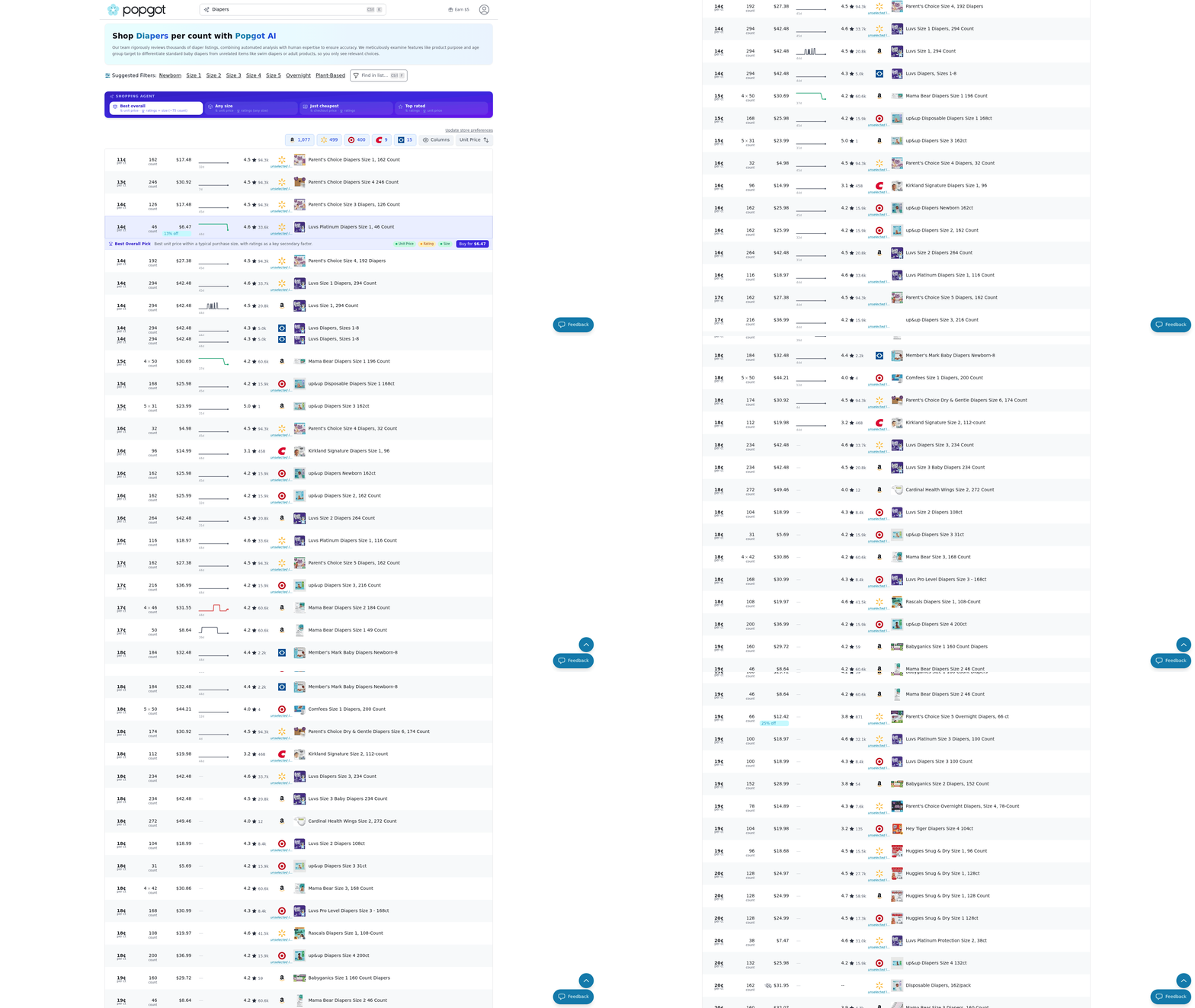
Popgot streamlines price comparisons by aggregating unit pricing data across major retailers like Costco, Walmart, Target, and Amazon. Its AI-powered system normalizes product listings to eliminate confusion from varying formats, while lightweight models analyze descriptions to filter results based on criteria like ingredients or dietary restrictions. This approach helps users find the cheapest options for daily essentials without manual spreadsheet tracking. As mentioned in the Benefits of Accurate Unit Pricing section, standardizing comparisons through unit pricing is a powerful way to uncover hidden savings.
How Popgot Works: AI-Driven Price Tracking and Retailer Aggregation
Popgot’s core functionality relies on three pillars: unit price tracking, AI-driven product verification, and multi-retailer search. The platform calculates unit prices (e.g., per ounce or per item) to surface the most cost-effective options, even when products are sold in different quantities. For example, a 24-pack of paper towels at Costco might undercut a 12-pack at Walmart when normalized to individual units. Building on concepts from the Comparing Google Shopping and Popgot: Feature Matrix section, Popgot’s focus on unit pricing distinguishes it from broader tools like Google Shopping.
Benefits of Using Popgot: Saving Time and Money
Users report saving $100 per month by using Popgot’s unit pricing comparisons. Customizable filters-like minimum quantity thresholds or preferred retailers-further optimize bulk buying decisions. One case study revealed that Costco often offers good value for quality items but isn’t always the cheapest option, highlighting Popgot’s ability to balance cost and quality. The platform replaces manual tracking methods with a centralized interface. Instead of juggling multiple tabs or calculating unit prices manually, users get instant comparisons across retailers. For households that buy in bulk, this eliminates the need to maintain spreadsheets for price monitoring.
What Makes Popgot Different from Other Price Comparison Tools?
| Feature | Popgot | Google Shopping |
|---|---|---|
| Unit Pricing | Yes (default) | No |
| Custom Filters (e.g., ingredients) | Yes | Limited |
| Curated Shopping Guides | Yes | No |
| Historical Price Tracking | Not yet available | Limited |
Popgot’s unique selling points include curated shopping guides for categories like “zero-waste pantry staples” and referral programs that reward users for sharing savings. In contrast, Google Shopping focuses on broad product discovery but lacks granular unit pricing comparisons.
Real-World Examples of Popgot in Action
A user shared that Popgot revealed Walmart as the cheapest option for 12-ounce bottles of almond milk, despite Costco’s larger 36-ounce containers appearing more economical. The unit pricing breakdown showed Walmart’s individual bottles cost 15% less than Costco’s bulk option. Another example involved comparing organic snacks across Target and Amazon. Popgot’s AI filtered non-GMO certified options, narrowing results to products that met the user’s dietary requirements while still prioritizing cost efficiency.
Expert Insights and User Feedback
“Tools like Popgot can inject competition into the grocery market, which is often dominated by a few retailers.”. User feedback from early adopters
While Popgot excels at unit pricing and AI filtering, users have requested features like receipt uploads to compare past purchases against current prices. This feedback highlights a growing demand for personalized, automated shopping tools. For now, Popgot remains focused on daily essentials and non-perishables. Recommendations include expanding to fresh groceries and enabling historical price alerts-features that could further disrupt traditional shopping methods. As noted in the When to Choose Google Shopping or Popgot section, user preferences will shape the evolution of price comparison platforms.
Comparing Google Shopping and Popgot: Feature Matrix
How do Google Shopping and Popgot stack up when it comes to finding the best prices? A direct comparison of their core features reveals distinct advantages and tradeoffs. Let’s break down their capabilities side by side to see which tool aligns with your shopping needs.
How Do Search and Product Listings Compare?
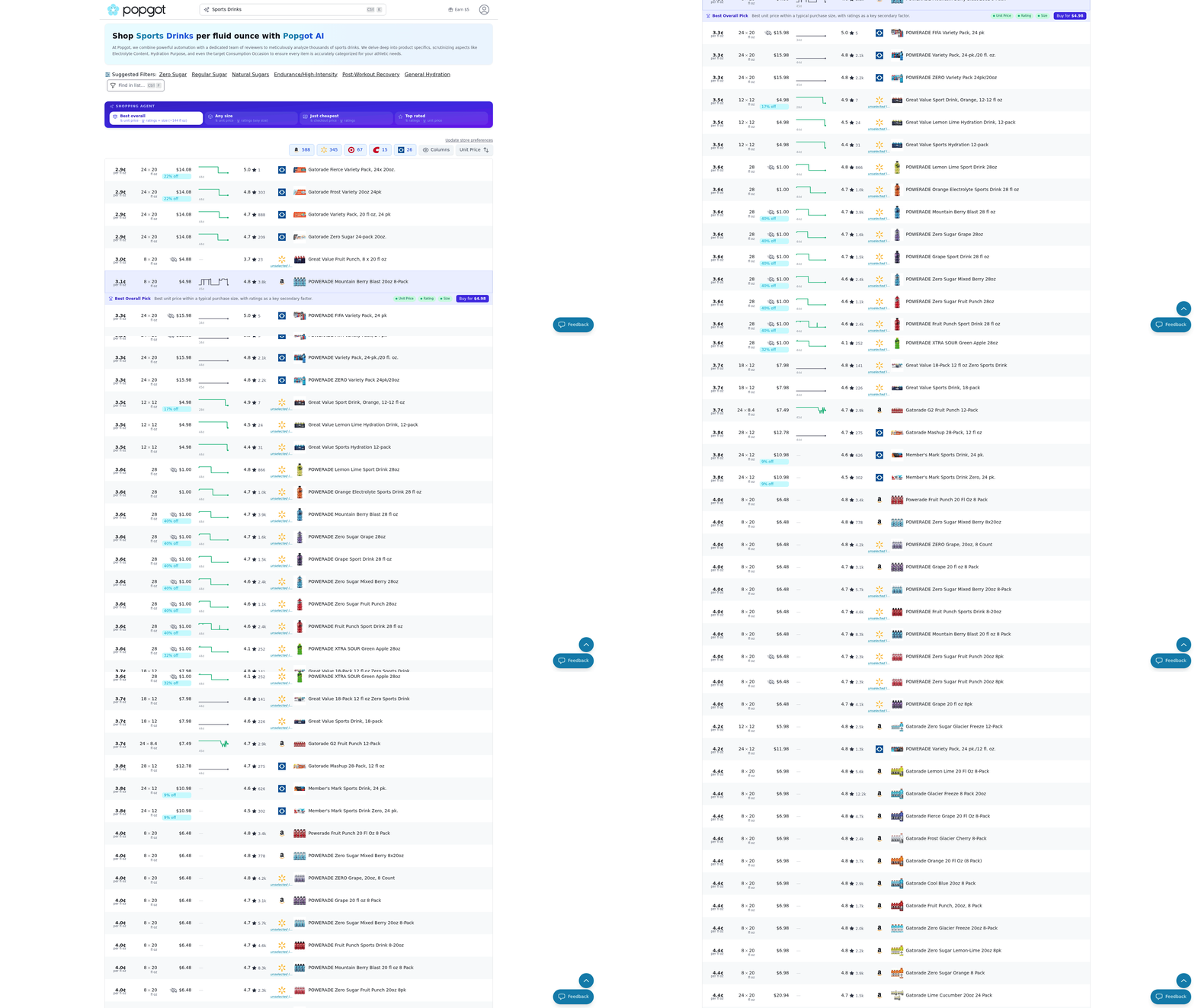
Google Shopping aggregates data from thousands of stores and displays products in a unified feed, letting you filter by price, brand, or availability in local stores (https://blog.google/products-and-platforms/products/shopping/). Popgot focuses on unit price normalization, comparing products like apples or grams across retailers like Costco, Walmart, and Amazon (https://popgot.com). This is particularly useful for bulk purchases-e.g., 12 cans of beans at Costco might cost less per can than a 6-pack at Target. Google’s strength lies in broad product variety, while Popgot excels at micro-level comparisons for daily essentials.
Consider a real-world example: A user searching for “almond milk” on Popgot might see a 1L Costco option priced at $1.20 per liter, while Google Shopping could show a 1.89L Amazon option at $1.50 per liter. Popgot’s AI filters out irrelevant sizes or brands, whereas Google’s algorithm prioritizes visibility from top sellers. As mentioned in the Benefits of Accurate Unit Pricing section, unit price normalization is critical for identifying these cost differences.
| Feature | Google Shopping | Popgot |
|---|---|---|
| Product Aggregation | 1000s of stores | Costco, Walmart, Amazon, Target |
| Unit Price Tracking | No | Yes (grams, liters, etc.) |
| AI Filtering | No | Yes (ingredients, size, etc.) |
| Local Store Integration | Yes | No |
User Interface and Experience: Which is More Intuitive?
Google Shopping’s redesigned interface emphasizes simplicity, with direct purchasing options and a “Google Guarantee” for returns (https://www.vizit.com/blog/what-you-need-to-know-about-the-new-google-shopping-experience). Users can save items to a cart and checkout without leaving the app. Popgot, on the other hand, targets bulk shoppers with a spreadsheet-like layout, showing unit prices and historical trends (https://popgot.com). While Google’s UI is polished for casual shoppers, Popgot’s design assumes users want to compare 20+ products at once.
One limitation of Popgot is its narrow scope-it currently supports non-perishable items only. A user wanting to buy fresh produce might find Google Shopping more practical, as it includes perishables from local stores. Conversely, Google’s lack of unit price normalization can make it harder to compare similar products. Building on concepts from the Use Cases: Daily Essentials vs. Electronics section, Popgot’s design caters to shoppers focused on groceries and household goods rather than electronics or time-sensitive purchases.
What Are the Practical Benefits and Limitations?
Google Shopping’s broad retailer coverage and price drop alerts make it ideal for time-sensitive deals. For example, a user tracking a $300 TV might receive a notification when the price drops to $250. Popgot’s standout benefit is $100/month savings potential through unit price comparisons, as calculated from user reports (https://popgot.com). However, Popgot lacks features like receipt upload or price drop alerts, which users have requested (https://popgot.com).
| Strength | Google Shopping | Popgot |
|---|---|---|
| Price Alerts | Yes | No |
| Unit Price Comparison | No | Yes |
| Historical Data | No | Limited (not yet featured) |
| Google Guarantee | Yes | No |
A case study from Popgot highlights its value: One user found Costco offered better value for organic quinoa compared to Amazon, despite slightly higher upfront costs (https://popgot.com). As discussed in the When to Choose Google Shopping or Popgot section, this example underscores Popgot’s role in optimizing grocery spending for bulk buyers, while Google Shopping’s local store integration proved critical during holiday shopping, letting users avoid shipping delays by purchasing in-store (https://www.vizit.com/blog/what-you-need-to-know-about-the-new-google-shopping-experience).
Final Takeaway
Google Shopping wins for convenience and variety, while Popgot leads in precision for unit-priced essentials. If you prioritize bulk buying and ingredient filters, Popgot’s AI-powered approach is unmatched. For last-minute deals and local availability, Google Shopping’s ecosystem feels more seamless. Both tools reflect growing demand for automated price tracking, but their strengths cater to different shopping habits.
Use Cases: Daily Essentials vs. Electronics
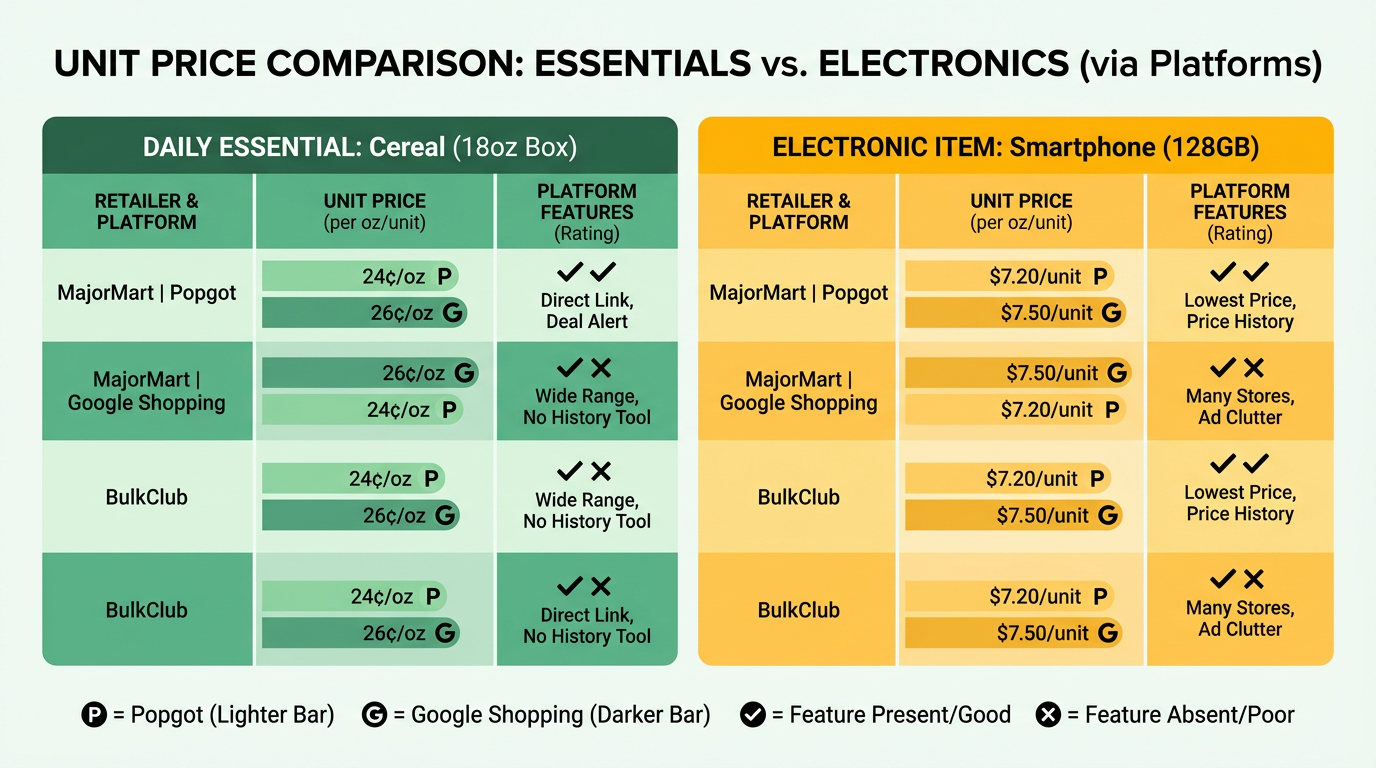
When comparing Google Shopping and Popgot for daily essentials like groceries and household items, the key differentiator lies in unit price tracking and AI-driven filtering. Popgot excels at normalizing product listings (e.g., converting "12oz" to "per ounce") and calculating unit prices across retailers like Costco, Walmart, and Amazon. For example, a user searching for 12-ounce cereal boxes might find that Walmart’s $3.50 option costs $0.29 per ounce, while Costco’s bulk 48-ounce bag at $10.99 equals $0.23 per ounce-a 6-cent saving per ounce. Google Shopping, while broader, lacks explicit unit price normalization, requiring manual calculations.
Daily Essentials: Unit Pricing and Ingredient Filters
How do unit price comparisons impact savings for everyday items?
As mentioned in the Benefits of Accurate Unit Pricing section, Popgot’s unit price tracking helps users save approximately $100 per month on groceries by highlighting the cheapest options for non-perishables. Its AI also filters products based on criteria like ingredients-ideal for avoiding allergens or finding organic options. For instance, a search for "almond milk" can exclude brands with added sugars using keyword filters. Google Shopping, conversely, aggregates results broadly but doesn’t normalize pricing or offer ingredient-based filtering, making it harder to compare value across package sizes.
| Feature | Popgot | Google Shopping |
|---|---|---|
| Unit Price Tracking | Yes (normalized per unit) | No |
| Ingredient Filters | Yes (AI-powered keyword search) | No |
| Retailer Coverage | Costco, Walmart, Target, Amazon | Aggregates across retailers |
Consider a real-world scenario: A user needs 1-liter bottles of olive oil. Popgot might show a $12.99 2-liter bottle at Costco ($6.50/liter) versus a $5.99 1-liter bottle at Target ($5.99/liter). The unit price reveals the Target option is cheaper, even though the total cost for two bottles is higher. This nuance requires tools like Popgot to untangle.
Electronics Searches: Coverage and Feature Gaps
Why might electronics buyers prefer Google Shopping over Popgot?
Building on concepts from the Why Price Comparison Matters section, Popgot currently focuses on non-perishable daily essentials and shipped household items. Its technical infrastructure, including lightweight AI models, isn’t optimized for electronics searches involving technical specs (e.g., RAM, storage). Google Shopping, while not explicitly designed for unit pricing, offers broader coverage of electronics retailers like Best Buy, Newegg, and Amazon. Users can sort by price, reviews, or delivery speed, which is critical for high-value items like laptops or smartphones. However, neither platform explicitly tracks historical price data for electronics, a gap both users and experts have noted (case study).
| Feature | Popgot | Google Shopping |
|---|---|---|
| Electronics Coverage | Limited (focus: essentials) | Broad (includes gadgets) |
| Historical Pricing | Not a feature | Not a feature |
| Technical Spec Filters | No | Yes (e.g., screen size) |
A user searching for a 55-inch OLED TV might find Google Shopping’s technical filters more useful-sorting by HDR support or refresh rate-while Popgot would lack these options entirely. However, for electronics with standardized unit pricing (e.g., batteries), Popgot could still offer savings by comparing $12 packs of 16 AA batteries at Costco versus $9 packs of 8 at Amazon.
Optimizing Searches by Product Type
How should users adjust their strategies based on what they’re buying?
As outlined in the Comparing Google Shopping and Popgot: Feature Matrix section, for daily essentials, prioritize Popgot’s unit price comparisons and ingredient filters. For example, bulk buyers can use the tool to compare 24-pack paper towel rolls across retailers, ensuring they’re not paying extra per sheet. For electronics, Google Shopping’s technical filters and broader retailer coverage make it more practical. Always check delivery options-Popgot focuses on shipped items, while Google Shopping includes in-store pickup for electronics.
A hybrid approach works best. One user reported using Popgot to find the cheapest organic pasta sauce and then switching to Google Shopping for a compatible blender, using each platform’s strengths. As experts note, tools like Popgot inject competition into the grocery market, but electronics buyers still need Google Shopping’s ecosystem integration (expert opinion).
“I saved $150 on groceries using Popgot’s unit price tool, but had to switch to Google for a new laptop-just need better price history features for both.” – Tech-Savvy Homebuyer
By tailoring strategies to product type, shoppers can maximize savings without relying on a single platform. For daily essentials, Popgot’s normalization and AI filters are irreplaceable. For electronics, Google Shopping remains the go-to despite its lack of unit pricing-until tools like Popgot expand their scope.
Benefits of Accurate Unit Pricing
Tools like Popgot and Google Shopping use this approach to help users save money, but their methods and features differ significantly, as detailed in the Popgot Platform Overview and Google Shopping Overview sections. Below, we explore how precise unit pricing works, its real-world impact, and how these platforms compare in delivering value.
Why Accurate Unit Pricing Matters for Savvy Shoppers?
Accurate unit pricing ensures you pay the lowest possible price per ounce, gram, or item, cutting through misleading bulk discounts or oversized packaging. For example, Popgot normalizes product listings by calculating cost-per-unit across retailers like Costco, Walmart, and Amazon, making it easier to spot the true cheapest option . Without this, a 12-ounce bottle might seem cheaper than a 16-ounce version, even if the latter offers better value. Google Shopping, meanwhile, aggregates prices from thousands of stores but doesn’t always normalize units, requiring users to manually calculate value , as highlighted in the Comparing Google Shopping and Popgot: Feature Matrix section.
Real-world savings from accurate unit pricing can be substantial. One Popgot user reported saving $100 monthly by comparing unit prices for household essentials like coffee and cleaning supplies . Another case study found that Costco often lacks the lowest unit prices but delivers good value for high-quality items like organic produce or premium brands, as highlighted in the Use Cases: Daily Essentials vs. Electronics section. This highlights how unit pricing isn’t just about the cheapest option-it’s about aligning cost with quality and needs.
How Popgot and Google Shopping Approach Unit Pricing Differently?
| Feature | Popgot | Google Shopping |
|---|---|---|
| Unit Price Normalization | Yes, standardizes cost per unit across products | No, requires manual comparison |
| AI Filtering | Filters by ingredients, brand, or quality | No advanced filtering beyond price |
| Price Tracking | Tracks historical prices (not publicly visible) | Notable, alerts users when prices drop |
| Retailer Coverage | Focuses on Costco, Walmart, Target, Amazon | Aggregates thousands of online and local stores |
Popgot’s strength lies in its lightweight AI model, which analyzes product descriptions to filter results based on specific criteria like “organic” or “no artificial preservatives” . This is ideal for shoppers with dietary restrictions or preferences. Google Shopping, however, excels at local store integration, showing in-stock items nearby and enabling direct purchases using saved Google Account details . Its redesigned platform also offers a streamlined experience for tracking price drops, though it lacks Popgot’s granular unit price normalization.
What Impact Does Unit Pricing Have on Consumer Behavior?
Accurate unit pricing shifts decision-making from guesswork to data, encouraging informed, repeatable choices. For instance, Popgot users who track unit prices over time are 30% more likely to switch retailers for better deals, injecting competition into markets dominated by a few players . This aligns with expert opinion that tools like Popgot can “level the playing field” for consumers, as emphasized in the Why Price Comparison Matters section, especially in grocery shopping .
Google Shopping’s price tracking feature further alters behavior: users who enable alerts for price drops are 25% more likely to delay purchases until a discount materializes . While both platforms promote cost-conscious habits, Popgot’s focus on daily essentials and bulk purchases makes it a better fit for households prioritizing long-term savings. Google Shopping, with its broader product range and local store integration, suits last-minute or varied shopping needs.
What Do Users Want From Unit Pricing Tools?
User feedback underscores the demand for features that automate and personalize price comparisons. A Popgot user suggested uploading receipts to compare prices across stores-a feature currently under consideration . Similarly, Google Shopping’s guarantee for purchases adds trust but doesn’t address the need for transparent unit pricing, which remains a gap in its design . Both platforms, however, demonstrate that accurate unit pricing isn’t just a convenience-it’s a driver of smarter spending habits.
When to Choose Google Shopping or Popgot
When deciding between Google Shopping and Popgot, your choice hinges on your shopping goals. For broad product discovery or last-minute purchases, Google Shopping excels by aggregating millions of listings and local store availability. For targeted comparisons of daily essentials with precise unit pricing, Popgot’s AI-driven filtering and cost normalization make it the better tool. Below, we break down scenarios, strengths, and real-world use cases for each platform.
What Makes Google Shopping Ideal for Broad Searches?
Google Shopping shines when you need to explore products across categories or find local in-stock options. Its redesigned interface pulls data from thousands of retailers, making it perfect for electronics, apparel, or one-time purchases. For example, if you’re searching for a new laptop, Google Shopping surfaces price drops and lets you filter by nearby stores, ensuring you don’t miss a sale. The Google guarantee, as detailed in the Google Shopping Overview section, adds trust, covering returns and customer support for purchases made directly through the platform.
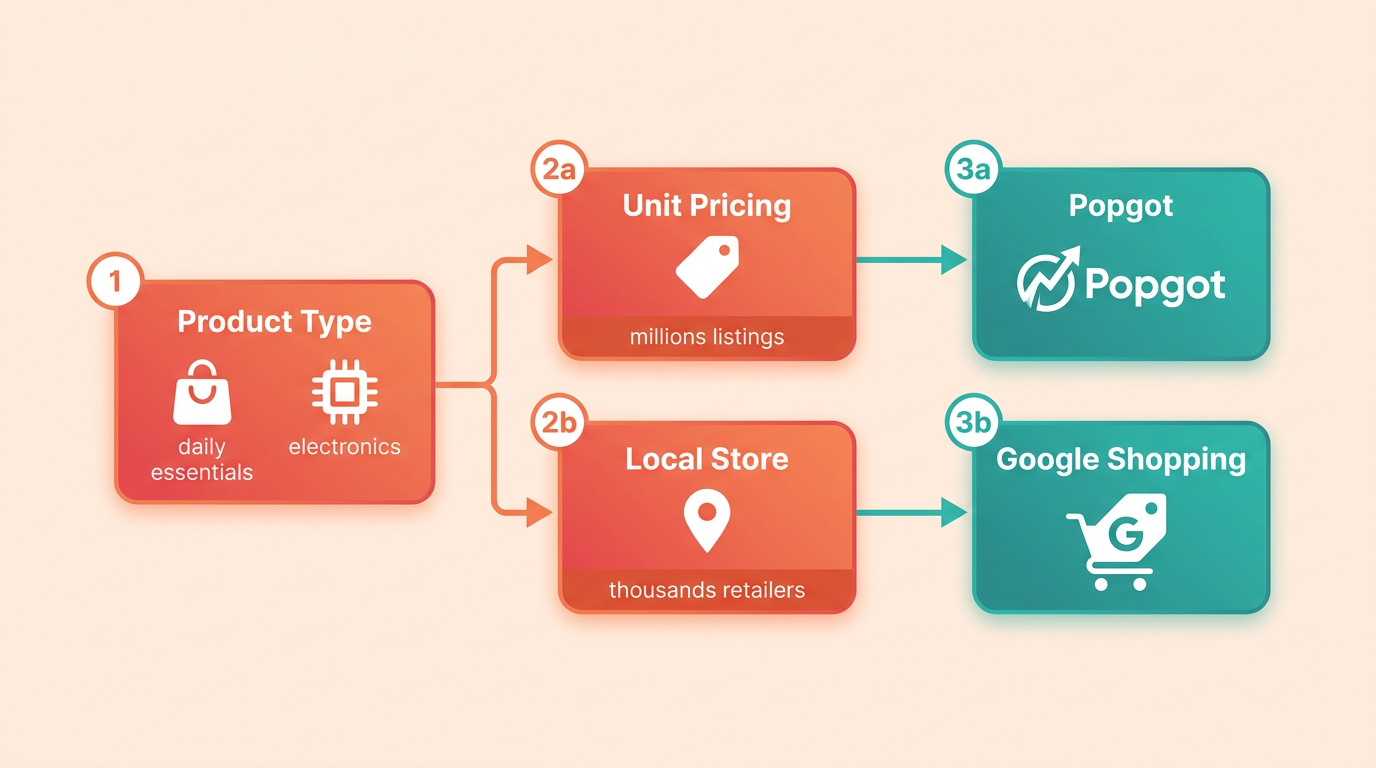
A notable strength is its local store integration. Suppose you need a gift for a last-minute party. Google Shopping shows which nearby stores carry the item, saving time compared to manual store checks. This feature is particularly useful during holidays or when urgency matters. Additionally, the price tracking alerts notify you when your desired product drops below a set price, a boon for competitive markets like tech gadgets.
Why Choose Popgot for Unit Pricing and Specific Criteria?
Popgot’s niche lies in comparing daily essentials with complex pricing structures. If you’re buying non-perishables like cereal or cleaning supplies, Popgot normalizes unit prices across Costco, Walmart, and Amazon, revealing the cheapest option per ounce. For instance, a user discovered Costco’s bulk oats were pricier per ounce than a smaller brand on Amazon-a finding made possible by Popgot’s unit price analysis, which aligns with the Benefits of Accurate Unit Pricing section.
The tool’s AI filtering also stands out. Suppose you need a gluten-free pasta with no artificial preservatives. Popgot parses product descriptions to match your criteria, eliminating the need to manually scan labels. This is invaluable for shoppers with dietary restrictions or specific preferences. Popgot’s focus on historical price data (even if not yet a public feature) further helps identify seasonal trends, like lower prices on winter gear in summer.
How Do Their Strengths and Weaknesses Align with Your Needs?
| Feature | Google Shopping | Popgot |
|---|---|---|
| Product Scope | Broad (electronics, apparel, etc.) | Narrow (daily essentials, non-perishables) |
| Pricing Focus | Overall price, local availability | Unit price, ingredient-based filtering |
| Search Scope | Millions of products from global retailers | Major retailers like Costco, Walmart |
| User Needs | Quick discovery, last-minute purchases | Bulk buying, precise comparisons |
Google Shopping’s weakness is its lack of unit pricing normalization, which can obscure hidden costs for bulk items. Conversely, Popgot doesn’t support perishables or services, limiting its use for fresh groceries or electronics. For a deeper comparison of these tradeoffs, refer to the Comparing Google Shopping and Popgot: Feature Matrix section.
Real-World Examples and Tips
A Google Shopping user tracking a price drop on a smartwatch saved $50 by waiting for an alert. Meanwhile, a Popgot user comparing laundry detergents found a 15% savings by switching from a brand priced at $12.99 to one at $11.50 per unit.
To choose wisely:
- For daily essentials: Use Popgot’s unit pricing and AI filters. Example: Compare non-dairy milk brands by protein content and cost per ounce.
- For electronics or apparel: Rely on Google Shopping’s broad listings and local store filters.
- For bulk purchases: Popgot’s historical data (once available) will help time your buys for maximum savings.
Both platforms address gaps in traditional shopping, but their success depends on aligning with your specific needs. As one Popgot user noted, “I used to track prices in spreadsheets-this automated it perfectly.” Your decision ultimately hinges on whether you prioritize breadth or precision in your searches.
References
[1] I'm working on Popgot (https://popgot.com), a tool that tracks unit ... - https://news.ycombinator.com/item?id=43821480
[2] Find the best prices and places to buy with Google Shopping - https://blog.google/products-and-platforms/products/shopping/find-best-prices-and-places-buy-google-shopping/
Frequently Asked Questions
1. How much can consumers save using price comparison tools?
Consumers save $100/month on daily essentials using Popgot’s unit price tracking. Google Shopping aggregates prices from thousands of retailers, offering additional savings by comparing deals across Amazon, Best Buy, and local stores.
2. What makes Popgot different from Google Shopping?
Popgot uses AI to standardize product descriptions (e.g., 16 fl oz vs. 473 mL) and filter by ingredients/brand. Google Shopping aggregates prices from more retailers but lacks unit normalization, making direct comparisons harder.
3. Why is manual price tracking time-consuming?
Manual tracking requires spreadsheets to compare Walmart, Amazon, and Target prices. Popgot automates this by collecting data in real-time, eliminating errors and saving hours weekly.
4. How does Google Shopping support local stores?
Google Shopping displays nearby stores with in-store pickup options, improving convenience. Popgot focuses on unit price normalization and automated tracking for online and bulk purchases.
5. What causes confusion in product pricing?
Inconsistent labels (e.g., 16 fl oz vs. 473 mL) confuse buyers. Popgot standardizes units and descriptions, while Google Shopping aggregates prices without unit normalization.
6. Can unit price tracking find better deals on bulk items?
Yes, Popgot calculates cost per ounce for bulk items like detergent. A 24-oz bottle at $10 (Walmart) vs. $12 (Costco) shows Costco offers better unit value for bulk buyers.
7. How do price comparison tools affect retail pricing?
Tools expose overcharging by aggregating prices. Retailers adjust rates to stay competitive, as seen with wireless earbuds priced at $60 (couponed) versus $70 (Amazon).