
Google Shopping Price Comparison Declines: Popgot's Advantage

What Google Shopping Hides About Your Grocery Bill
Key Takeaways
- Google Shopping product results can run as much as 67 percent higher than prices found on competing comparison sites, per a Consumer Watchdog study.
- Health-conscious shoppers suffer most because they buy on unit price, where the real cost hides in price per ounce or per serving.
- Some price comparison sites advertising in Google Shopping never display shipping costs, producing misleading ads where the listed price isn't the checkout total.
- Tools that surface the highest results first or conceal part of the cost actively push shoppers toward worse purchasing decisions.
- Hidden fees force shoppers to click through and add items to cart before the true total ever becomes visible.
- Across a weekly health-focused grocery list, the wasted minutes from misleading price displays accumulate quickly into real time lost.
Why Google Shopping Price Comparison Matters
Effective price comparison saves money and time, and right now it matters more for health-conscious shoppers than anyone else. A consumer group study found that product results returned through Google Shopping can run as much as 67 percent higher than results from other comparison sites, according to a Consumer Watchdog study. That gap turns a simple grocery or supplement search into a costly guessing game.
Why Does Price Comparison Hurt Health-Conscious Shoppers?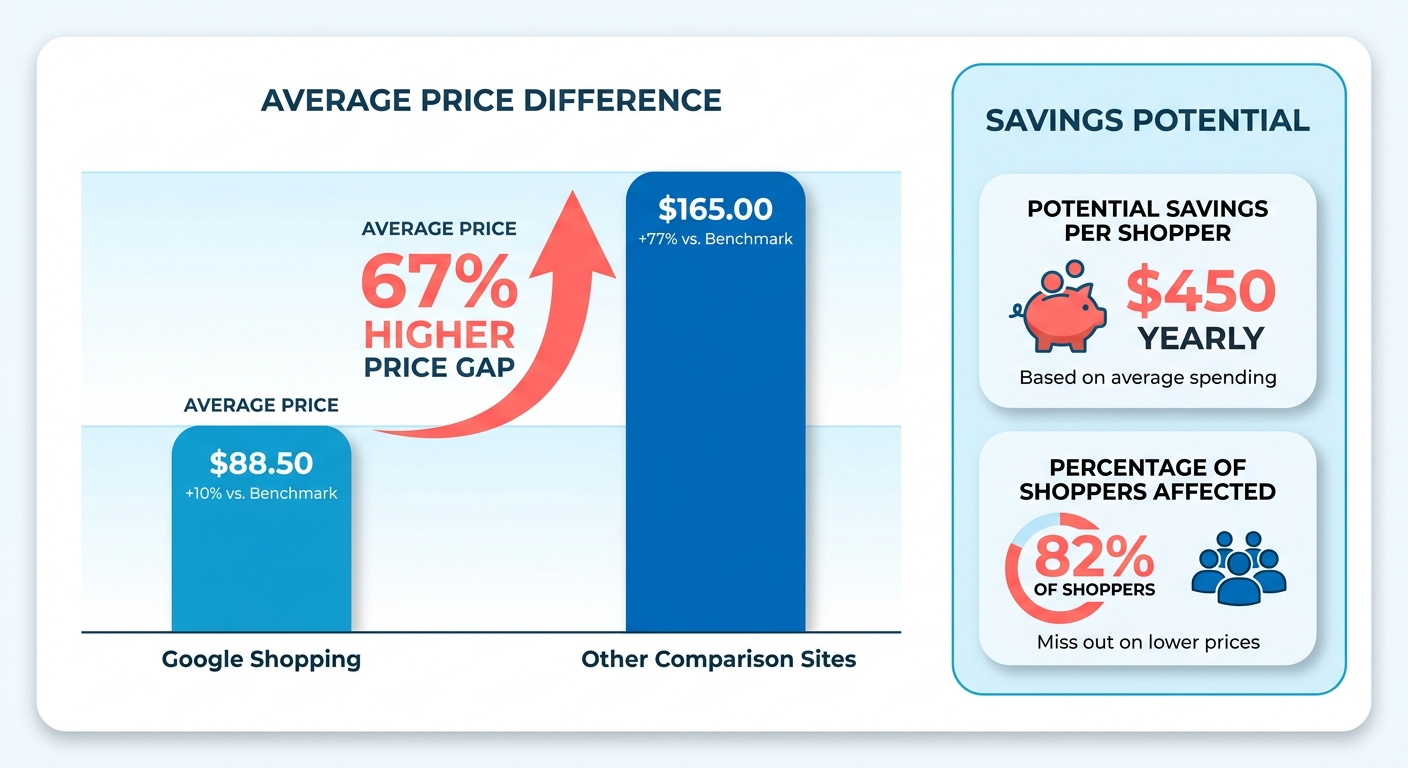
Health-conscious shoppers feel bad price comparison the hardest because they buy on unit price, not sticker price. When you compare protein powders, vitamins, or organic pantry staples, the real cost lives in the price per ounce or per serving. A tool that surfaces the highest results first, or hides part of the cost, pushes you toward worse decisions.
Hidden fees make this worse. Reddit advertisers have flagged that some price comparison websites running in Google Shopping never display shipping costs. As one r/googleads thread put it, this "creates a misleading ad," since the listed price isn't the price you actually pay at checkout.
So you end up clicking through, adding to cart, and only then seeing the true total. Multiply that across a weekly health-focused grocery list and the wasted minutes add up fast.
What Challenges Does Better Comparison Solve?
Strong price comparison fixes two problems at once: decision fatigue and lack of transparency. When every listing shows a clean, comparable unit price with shipping included, you stop second-guessing and start buying with confidence.
Decision fatigue is real. The more tabs you open to verify a price, the more mental energy you burn before you've bought a single item. Clear, accurate comparison cuts that loop short.
- Transparency: You see the full landed cost, not a teaser price that balloons at checkout.
- Speed: One accurate view replaces a dozen open tabs and manual math.
- Trust: Consistent unit pricing means you can rely on the first result instead of auditing every store.
Google Shopping itself pulls listings from thousands of online and local stores, which is useful breadth. The problem isn't selection. It's that the cheapest, fully-loaded option doesn't reliably rise to the top.
Who Benefits Most From Accurate Comparison?
Health-conscious shoppers benefit most, followed closely by the honest retailers who price fairly. When comparison rewards the true lowest unit price, careful buyers save money and good sellers win the click they earned.
Retailers gain too. A merchant offering genuine value loses out when an inflated or shipping-hidden listing outranks them. Fair comparison levels that field.
The direction of e-commerce backs this up. Google itself has signaled major changes to how shopping works, described in a recent Google Shopping update that leans on AI to rethink the experience. That shift confirms a simple point: shoppers want accurate, transparent pricing, and the tools that deliver it are the ones worth your time.
Limitations of Google Shopping Price Comparison
Google Shopping has real gaps that hurt anyone shopping on price, and the biggest one is transparency. The platform pulls listings from thousands of online and local stores, as Google describes its service, but it does not force every advertiser to show the full cost you actually pay. That gap is exactly where health-conscious shoppers lose money.
Why Are Shipping Costs Often Hidden?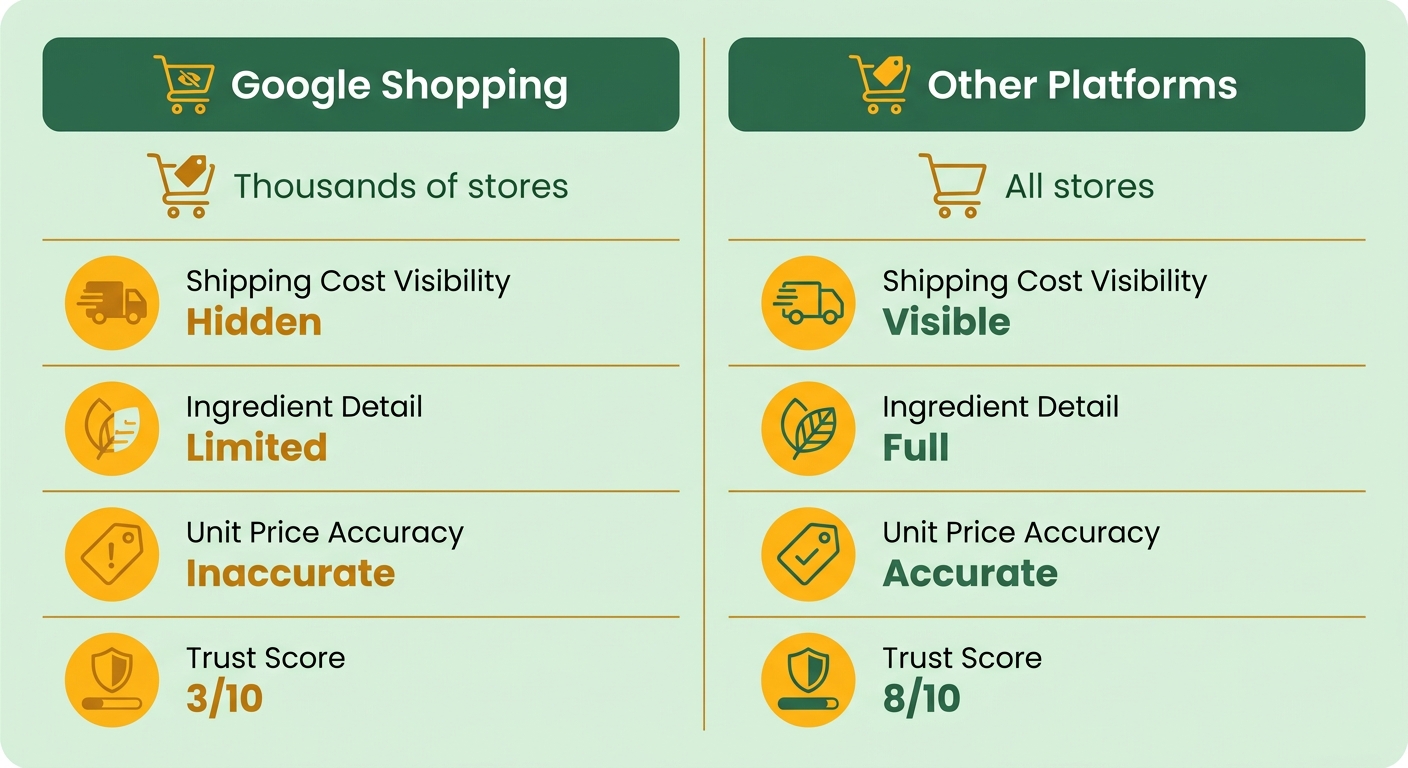
Google Shopping does not require every price comparison advertiser to display shipping. So the sticker price you see can be far below the real total at checkout. You compare two protein powders, pick the cheaper one, and then watch shipping erase the savings.
This frustrates merchants too. One shopper raised the issue directly in a r/googleads shipping cost thread, pointing out that price comparison websites advertising on Shopping "never show the shipping costs" while regular merchants do.
The same thread explains why. Many of these listings come from comparison sites that pull feeds from different merchants and earn through affiliate links, a commenter clarified. Their incentive is the click, not your accurate total.
What About Unit Pricing and Filters?
Google Shopping shows sticker prices well. It does not give you reliable unit pricing or deep filters for the things health shoppers actually compare. You can't easily sort by price per gram of protein, price per serving, or cost per capsule.
That matters because vitamins, supplements, and pantry staples sell in wildly different sizes. A 90-count bottle and a 120-count bottle look similar in a results grid. The platform won't do the per-unit math for you, so the "cheaper" listing is often the worse deal.
Google has been reshaping the experience with AI features, outlined in its Shopping update. Even so, the core comparison still leans on retailer-supplied feeds, and those feeds decide what data you get to see.
How Reliable Is the Pricing Day to Day?
Results shift more than most shoppers expect, especially in the supplement category. The same search can surface different prices and different sellers depending on competition, time of day, and bidding.
A marketer in a r/PPC shopping ads discussion noted that "shopping campaigns in the supplement space can fluctuate heavily because of competition, time of day," and user intent. That volatility on the seller side becomes inconsistency on your side.
Here is the honest read. Google Shopping is a fast way to scan what exists. It is a weak tool for confirming the true lowest cost per unit on health products. The data is shaped by advertisers, shipping can stay hidden, and per-serving math is left to you.
So treat it as a starting point, not a verdict. For supplements and groceries where size and serving count drive the real price, you need a tool that surfaces shipping, normalizes unit cost, and lets you filter on the numbers that matter. That is the gap a purpose-built comparison tool has to close.
Popgot's AI-Driven Label Verification Advantage
Popgot's AI-driven label verification reads the actual product label and checks it against the listing claims, so the details you compare are the details you get. For health-conscious shoppers, that closes the gap between a marketing description and what's really in the bottle. You buy on facts, not on a seller's best spin.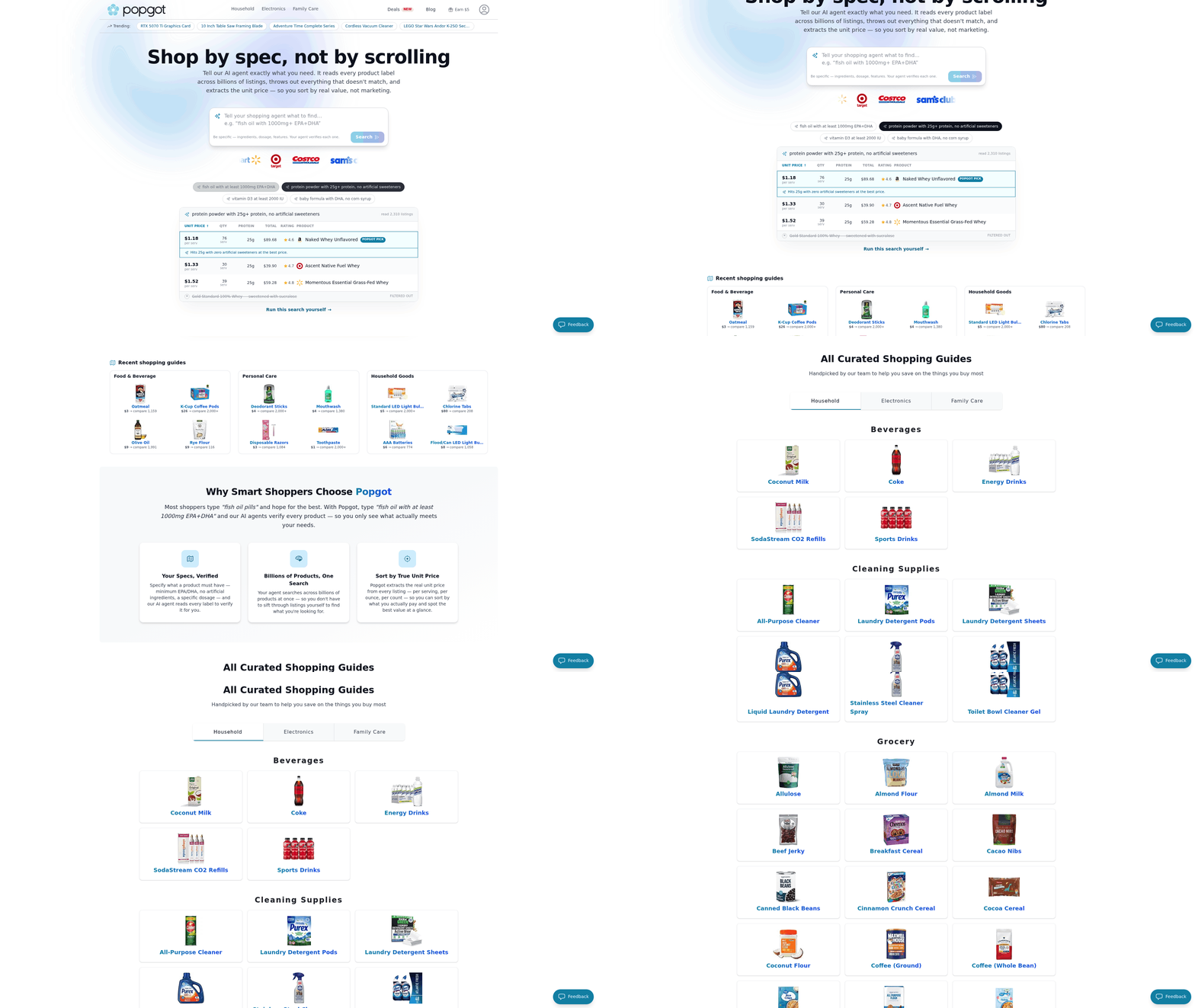
This matters because price comparison falls apart when the products aren't truly the same. Two protein powders can carry near-identical prices and wildly different protein per serving. Verified label data lets you line them up on what counts.
How Does Popgot's Label Verification Work?
Label verification: an automated check that confirms a product's stated ingredients, serving size, and nutrition facts match the physical label before you compare prices.
The system pulls the label data tied to each listing and validates it against the seller's claims. Mismatches get flagged. So when a listing says "30g protein," you're comparing against a number that's been checked, not assumed. That turns a vague price contest into a real unit-for-unit comparison.
You're choosing between two omega-3 supplements at the same price. One lists 1,000mg of fish oil but only 300mg of actual EPA and DHA. The other lists 800mg total with 500mg of EPA and DHA. Verified labels surface that difference. Without it, you'd pick the wrong one and think you saved money.
What Makes Verified Labels Better for Comparison?
Verified labels give you accuracy at the ingredient level, which is exactly where most price tools stop short. They show the price, not the contents behind it.
Standard comparison listings rely on whatever text a merchant submits. Nobody checks whether the description matches the jar. That works fine for a phone charger. It fails for vitamins, where two products with the same name can differ in dose, fillers, and active form.
Health-conscious shoppers care about cost per gram of protein, per milligram of active ingredient, per actual serving. Label verification feeds those calculations clean inputs. You compare what you're actually paying for, and the cheaper sticker only wins when the product behind it holds up.
Future Outlook: AI and Nutritional Data in E-Commerce
AI is moving from price matching to product understanding, and that shift changes what online shopping rewards. The next wave of tools won't just scan sticker prices. They'll read what's actually inside a product and match it to what you're trying to buy. For health-conscious shoppers, that means nutrition data becomes a search input, not an afterthought you check later.
You can already see this direction in how shopping platforms are adding AI to the buying flow. Google has been rolling AI deeper into its shopping experience, as it laid out in this Shopping update. The trend points one way: more automated reading of product details, less manual digging by you.
What Will AI Change About Nutrition Shopping?
AI nutrition shopping: search and comparison that uses machine-read label data to rank products by what they contain, not just what they cost. Expect this to become standard for supplements, protein, and pantry staples over the next few years. The winners will be tools that verify data instead of trusting seller copy.
Think about what this fixes. Right now you compare two products on price and hope the listings are accurate. AI that reads the actual label removes the hope. You compare protein per dollar, sugar per serving, or active ingredient per capsule with real numbers behind them.
Where Is This Heading for Shoppers?
The clear prediction: nutrition becomes a filter, not a footnote. You'll sort by verified protein content the same way you sort by price today. Listings that hide or fudge their numbers will lose visibility as verification tools flag the gaps.
This also pressures merchants to clean up their feeds. A seller who pads claims gets exposed when AI checks the label against the listing. Honest sellers benefit. Vague ones don't.
Here's my read. Price-only comparison is fading because it answers the wrong question for anyone buying on nutrition. The shoppers who care about what they eat want accuracy first, then price. Tools that pair verified label data with cost comparison are built for exactly that buyer, and that's where the next few years of e-commerce growth will land.
Reducing Decision Fatigue for Health-Conscious Shoppers
Decision fatigue hits health-conscious shoppers hardest because every purchase carries a stack of variables. Price, shipping, protein per serving, sugar content, fillers. The more you weigh, the worse your choices get. Popgot cuts that load by handling the comparison work for you, so you decide on a short list of facts instead of a wall of unknowns.
The fix is structural. When listings hide shipping or blur nutrition details, you carry the mental cost of reverse-engineering the real value. A Reddit user in r/googleads flagged exactly this gap, noting that price comparison sites advertising on Google Shopping "never show the shipping costs". Every hidden number is one more decision you have to make at checkout.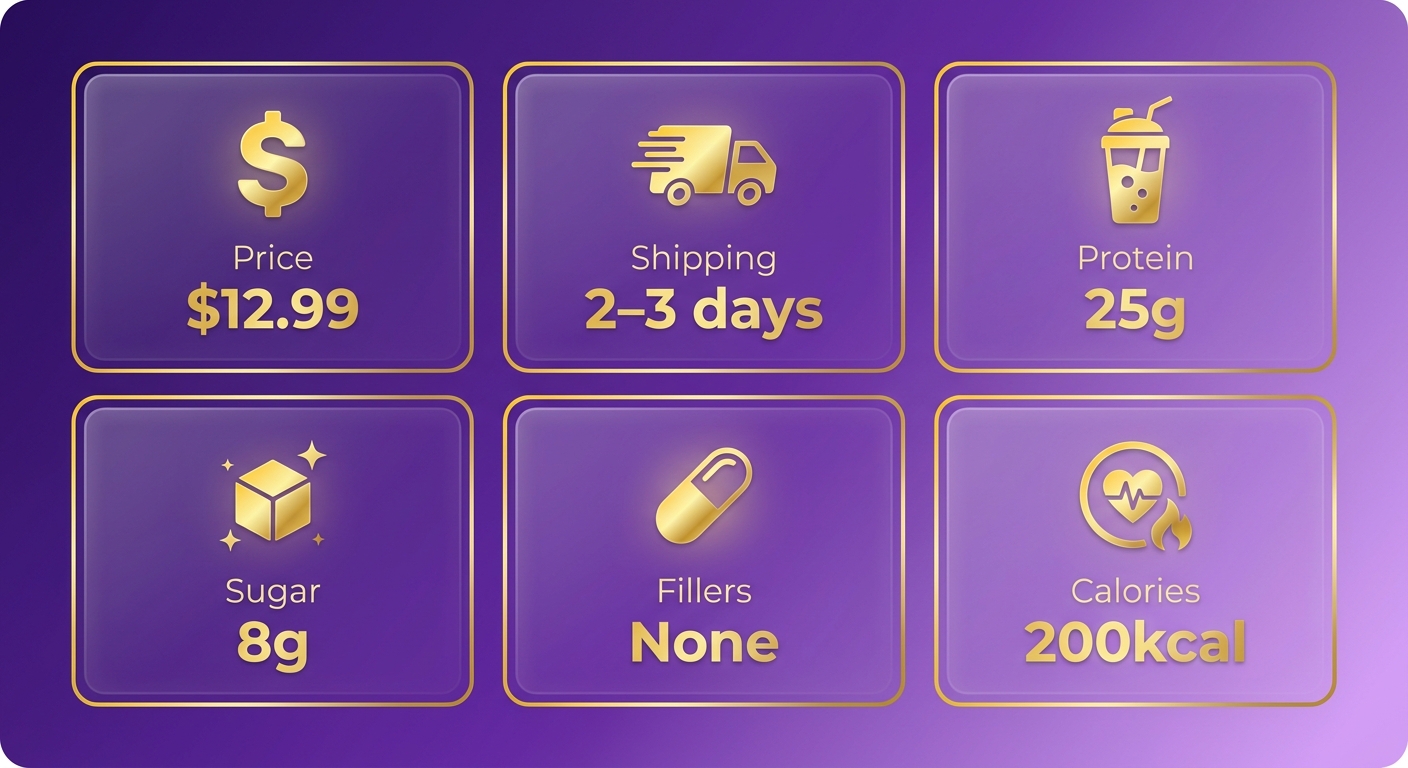
How Does Popgot Lower the Mental Load?
Popgot lowers mental load by surfacing the details that actually drive your buying choice and filtering out the noise. You set what matters, then compare on that. Fewer tabs, fewer guesses, fewer regretted carts.
Customizable filters do the heavy lifting. Instead of eyeballing twelve protein powders, you narrow by the spec you care about and let verified product data line them up.
- Filter on what counts: sort by serving size, ingredient quality, or total delivered cost, not just sticker price.
- Trust the data you see: verified label details mean you aren't second-guessing a marketing description.
- Stop the checkout surprise: full-cost visibility kills the shipping shock that derails comparisons late.
Why Do Other Tools Leave You Tired?
Other comparison tools leave you tired because they optimize for the merchant, not the shopper. Affiliate-driven listings push you toward whoever pays, and many skip the shipping line entirely. That same r/googleads thread points out these sites "use affiliate links to get paid," which explains the missing costs.
When the tool's incentives don't match yours, you do the verification it skipped. Popgot flips that. It reads the label, shows the real total, and hands you a decision you can make in seconds.
Combining Popgot and Google Shopping for Comprehensive Coverage
The best price comparison setup uses Google Shopping for breadth and our AI verification for precision. Google Shopping casts the widest net, pulling listings from thousands of online and local stores. We read the actual labels and calculate real unit prices. Run them together and you cover both reach and accuracy.
How Do You Combine Both for Full Coverage?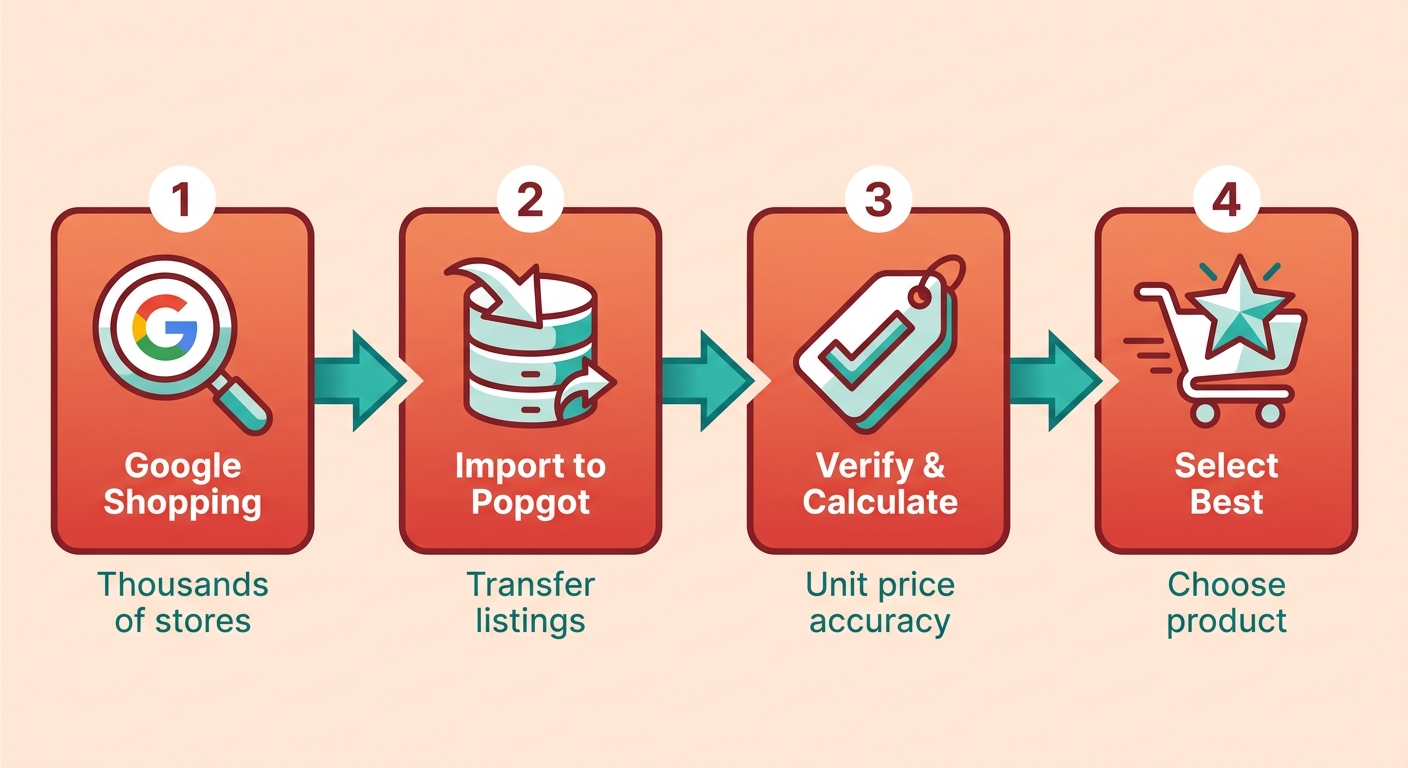
Start broad on Google Shopping, then verify on the specifics. Use Google Shopping to scan the market and surface what exists. Then run the same product category through our AI agent to confirm ingredients, dosage, and the true per-serving cost. You get a complete map of the market plus a verified shortlist.
Here's a practical workflow:
- Scan first: Search Google Shopping for the general category to see what brands and retailers carry it.
- Set your spec: Tell our AI agent exactly what the product must have. For fish oil, that might be a minimum of 1000mg EPA+DHA.
- Verify and sort: We read 1,847 listings, throw out anything that misses your spec, and sort by real unit price across eight retailers including Amazon, Walmart, and Target.
- Cross-check the total: Confirm shipping and any fees that Google Shopping listings leave out before you buy.
This catches the products that look fine on a sticker but fail on the facts. In a recent fish oil search, our agent filtered out a 1200mg fish oil because it carried only 600mg of actual EPA+DHA. Google Shopping would have shown it as a match.
What Are the Benefits of Using Both?
You get market breadth and verified value at the same time. Google Shopping tells you who sells what. We tell you which of those products actually meet your spec and what they truly cost per serving.
The combination fixes the biggest flaw in price-only comparison: two products at the same price are rarely the same product. One protein powder may clear your protein-per-serving minimum while another fails it. Sorting by real unit price instead of sticker price changes which one wins.
It also cuts the work. Instead of opening twenty tabs, you scan once and verify once. For parents managing a kid's formula or anyone tracking a dietary restriction, that's hours back each month.
Where Do the Two Tools Overlap?
The main limitation is duplication. Both will surface popular listings from the same big retailers, so you'll see the same Amazon or Walmart products twice. That overlap is mostly harmless, but it can feel redundant.
There's a real gap, too. Google Shopping does not require every advertiser to show shipping, a complaint one shopper raised in an r/googleads thread about hidden costs. We handle the label and unit-price math; you still confirm shipping at checkout.
When to skip the combo: For a one-off purchase where the spec doesn't matter, like grabbing any pack of facial tissue, Google Shopping alone is fine. The verification step earns its keep when ingredients, dosage, or per-serving cost actually drive your decision.
FAQ
Q: How does Google Shopping compare to other price comparison sites?
A: Poorly, for health products. A Consumer Watchdog study found Google Shopping results can be up to 67% higher than competing sites. The platform also lets advertisers hide shipping costs, making sticker prices misleading.
Q: What are the main limitations of Google Shopping for health products?
A: Three big ones. Shipping costs stay hidden for many listings. Unit pricing is absent—you can't sort by price per gram of protein or per capsule. And prices fluctuate heavily based on ad bidding, especially in supplements.
Q: How does Popgot's AI verify product labels?
A: It reads the actual product label data and cross-checks it against what the seller claims in the listing. Mismatches get flagged. This means when a listing says "30g protein," that number has been verified against the physical label.
Q: Can I combine Google Shopping with Popgot for better results?
A: Yes. Use Google Shopping to scan what's available, then use Popgot to verify ingredients, dosage, and real per-serving cost. The combination gives you market breadth plus verified accuracy.
Q: How does AI improve nutrition shopping?
A: AI that reads actual labels lets you search and compare by what's in the product, not just what it costs. You'll eventually sort by verified protein content or sugar per serving the same way you sort by price today.
Q: What types of shoppers benefit most from Popgot?
A: Anyone buying on unit price and ingredient quality. That means health-conscious shoppers comparing supplements, protein powders, organic groceries, and any product where serving size and active ingredients determine real value.
Q: How does Popgot reduce decision fatigue?
A: By handling the comparison work. You set your spec (minimum EPA+DHA, for example), and the tool filters out products that don't match, then sorts by real unit price. Fewer tabs, fewer guesses, fewer regretted carts.
Q: Are there any downsides to using Popgot?
A: The main one is overlap with Google Shopping—you'll see the same top retailers twice. And you still need to confirm shipping costs at checkout, since not every advertiser shows them upfront.
References
[1] Consumer Watchdog study on Google Shopping pricing - https://www.cbsnews.com/losangeles/news/consumer-group-google-shopping-results-up-to-67-percent-higher-than-other-price-comparison-sites/
[2] Google Shopping AI update - https://blog.google/products-and-platforms/products/shopping/google-shopping-ai-update-october-2024/
[3] Google Shopping main page - https://www.google.com/shopping?udm=28
[4] Reddit r/googleads thread on hidden shipping costs - https://www.reddit.com/r/googleads/comments/1uej2kc/price_comparison_websites_advertising_in_google/
[5] Reddit comment on affiliate link incentives - https://www.reddit.com/r/googleads/comments/1uej2kc/comment/otli4aj/
[6] Reddit r/PPC discussion on supplement pricing volatility - https://www.reddit.com/r/PPC/comments/1tcmtxt/comment/olp9uwy/
References
[1] Google Shopping - Shop Online, Compare Prices & Where to Buy - https://www.google.com/shopping?udm=28
[2] Consumer Group Says Comparison Shopping On Google Can Cost ... - https://www.cbsnews.com/losangeles/news/consumer-group-google-shopping-results-up-to-67-percent-higher-than-other-price-comparison-sites/
Frequently Asked Questions
1. How can I calculate price per serving myself when a tool doesn't do it for me?
Divide the total product price by the number of servings or units listed on the label. For supplements, factor in the active ingredient amount per dose, not the total compound weight. A 1200mg fish oil with 600mg EPA+DHA costs double per active milligram versus its label suggests.
2. Does the 67 percent price gap apply equally across every product category?
The gap varies by category and competition level. Supplements show the widest swings because bidding, time of day, and user intent shift results constantly. Standardized items like electronics tend toward tighter pricing, while health products with variable sizes and serving counts create the largest hidden-cost differences for shoppers.
3. Can a product label itself be wrong even after verification against the listing?
Label verification confirms the listing matches the printed label, not that the manufacturer's claims are independently lab-tested. For absolute certainty on potency, look for third-party certifications like USP or NSF. Verification eliminates listing-versus-label mismatches, which removes the most common comparison error before you reach lab-grade testing concerns.
4. When is using Google Shopping alone perfectly fine?
Google Shopping alone works well for one-off purchases where specifications don't drive value, like facial tissue, phone chargers, or standardized household goods. Verification earns its place only when ingredients, dosage, or per-serving cost shape your decision. For commodity items with uniform packaging, breadth matters more than label-level precision.
5. Why do affiliate-based comparison sites tend to hide shipping costs?
Affiliate sites earn revenue per click, not per accurate total, so their incentive favors a low sticker price that drives traffic. Showing full shipping would raise displayed prices and reduce clicks. This structural conflict means the displayed number serves the site's payout model rather than your actual checkout cost.
6. How often should I recheck supplement prices given how much they fluctuate?
Recheck supplement prices each time you reorder rather than trusting a saved result. Shopping campaigns in this category shift with competition, time of day, and bidding, so the same search can return different sellers and prices within hours. Treat any single result as a snapshot, not a fixed rate.
7. What should I compare for protein powders beyond the listed price?
Compare cost per gram of actual protein, not cost per container. Two powders at identical prices can differ sharply in protein per serving, fillers, and serving count. A 90-count and 120-count bottle look similar in a results grid, so normalize to per-unit math before deciding which is genuinely cheaper.