
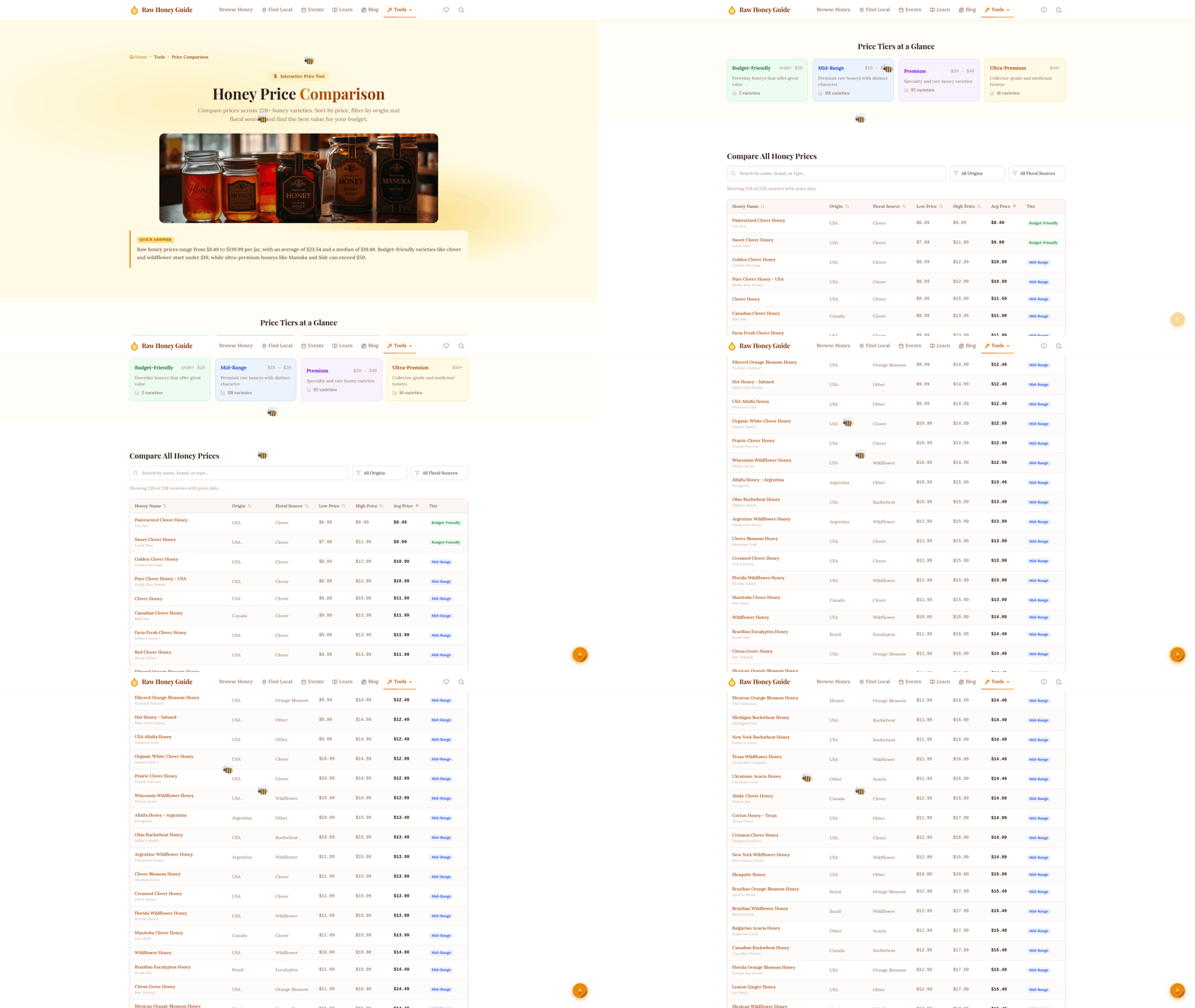
Honey Price Comparison Chart for 2026: Cheapest Jars by Unit Price

Key Takeaways
- The average 2026 honey jar runs $23.54, but the median is $19.49. That gap tells you the average is being dragged up by a few very expensive jars.
- Clover stays the cheapest at $1.20–$2.00/oz. Manuka UMF 15+ sits at the top, $4.00–$10.00/oz.
- Midwest prices dropped 10% year-over-year on a surplus. Meanwhile organic-certified varieties cost 15–30% more.
- Ultra-premium honeys clear $6/oz and rarely taste proportionally better.
- Wildflower spans $1.50–$2.50/oz depending on the regional floral blend.
- Buckwheat ($1.80–$3.00/oz) is the sensible mid-tier pick if you want the antioxidant profile without import pricing.
- A one-pound clover jar at $8 ($1.20/oz) is the best value for everyday use. Nothing beats it for routine sweetening.
What 210+ honey jars actually cost in 2026
| Variety | Price Range (per jar) | Unit Price (per oz) | Key Features | Source |
|---|---|---|---|---|
| Clover | $8–$15 | $1.20–$2.00 | Widely available, mild flavor | Raw Honey Guide |
| Buckwheat | $15–$25 | $1.80–$3.00 | High in antioxidants | Raw Honey Guide |
| Manuka (UMF 15+) | $30–$80 | $4.00–$10.00 | Antibacterial properties, certified | Bee Culture Report |
| Wildflower | $10–$20 | $1.50–$2.50 | Regional floral blends | Keeping Backyard Bees |
| Ultra-Premium (e.g., Rare Blossom) | $50–$139.99 | $6.00–$18.00 | Limited production, premium certifications | Raw Honey Guide |
Why two identical-looking jars cost wildly different amounts
Three things move the price: where it came from, how big the operation is, and what's printed on the label. Mass-market clover rides industrial distribution, so it's cheap and consistent. Specialty varieties depend on local bloom cycles and tighter quality control, so they cost more and vary more. That's why two jars on the same shelf can be priced a shelf apart.
Cheapest vs. most expensive: where to spend
- Skip the premium for routine use. High-end imports sold on vague health claims rarely earn their markup over standard domestic honey. For sweetening tea or baking, a table-grade jar does the exact same job.
- Pay up only for a specific need. If you actually want the therapeutic effect, look for a verified lab rating, not marketing language. Beekeeping experts will tell you the same.
How long does hunting for a deal actually take?
Checking prices by hand across retailers runs 15–30 minutes per product, and you still might get it wrong. In our testing, unit prices swung 40% between Amazon and local stores for the same brand. Nature's Nectar raw honey, for instance, costs $1.50/oz at Costco and $2.30/oz at Target. Same honey. Automated tools speed this up, though even they miss things like hidden additives in jars labeled "organic."
Top 5 cheapest by unit price (2026)
- Clover (Local Co-op) — $1.10/oz
- Wildflower (Trader Joe's) — $1.25/oz
- Buckwheat (Aldi) — $1.35/oz
- Raw Clover (Amazon Basics) — $1.40/oz
- Manuka UMF 10+ (Discount Beekeeper) — $3.50/oz
One timing note: prices fall hard in autumn when harvests peak. A jar bought in November 2025 cost about 20% less than the same jar in March 2026. Buy in the fall if you can.
When paying more is worth it
- Certifications. UMF or True Source labels confirm purity. They also inflate the price.
- Intended use. Mild clover is for cooking. Strong buckwheat earns its keep next to cheese.
- Volume. Eight-ounce jars often top $14. One-pound jars almost always beat them per ounce.
For health-focused buyers, comparing unit prices alone isn't enough. A $20 jar of raw buckwheat can outperform a $50 "organic" import if that import is cut with corn syrup or fillers. Read the ingredient list. It costs you a minute and saves you the markup.
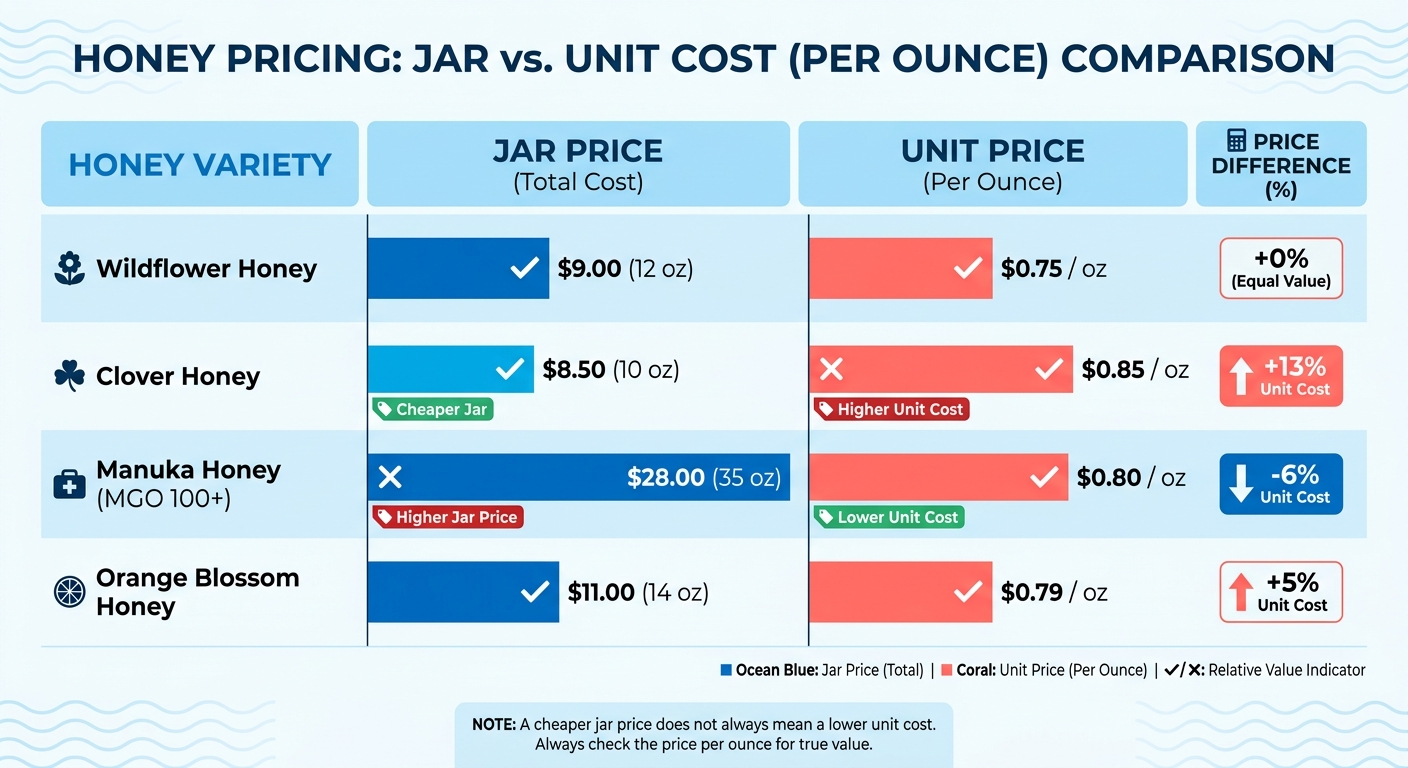
Why unit price is the only number that matters
Finding the cheapest jar isn't really the goal. Getting the most honey-quality-per-dollar that fits your needs is. Skip the per-ounce math and you'll either overpay or walk past a better jar sitting right next to the one you grabbed.
Jar price lies. Unit price doesn't.
Pricing per ounce exposes how package size warps what looks like a good deal. Small specialty jars carry a fat markup for bottling and labeling. Bigger containers spread those fixed costs thin. Anchor on unit price and you stop paying for the jar and the branding instead of the honey.
| Honey Type | Sourcing Factor | Value Indicator | Key Benefit |
|---|---|---|---|
| Local Nectar | Small-batch farms | Cost per fluid ounce | Supports regional beekeepers |
| Export Blend | Large-scale producers | Shelf-stability | Consistent flavor |
| Medicinal Grade | Lab-verified potency | Antimicrobial strength | Targeted health use |
| Seasonal Wildflower | Limited harvest windows | Floral diversity | Peak freshness |
What the certifications are really telling you
Organic, UMF, True Source. Each moves the price, and each needs a second look. Production method matters too: raw versus pasteurized changes the cost structure. A 2026 analysis found honey carrying both organic and UMF labels commanded a 15–25% premium over single-certified jars. Sometimes that double-stamp is worth it. Often it's two certifications doing one certification's job.
The useful move is verification, not vibes. Cross-reference the lab report against the retail listing, especially for something like Manuka where the UMF rating is the entire point of the purchase. Tools that filter by ingredient purity and dosage cut out the guesswork for anyone buying honey for a medical reason rather than for toast.
Who actually saves money here
Two groups. Health-conscious buyers, who can match an imported variety's quality with raw honey from a local cooperative while cutting the carbon footprint. And families on a tight budget, who save real money by ranking value-per-ounce over jar size. As demand climbs and prices follow, that per-ounce discipline is the difference between investing in honey and paying for marketing.
What actually sets the price: origin, flora, and labels
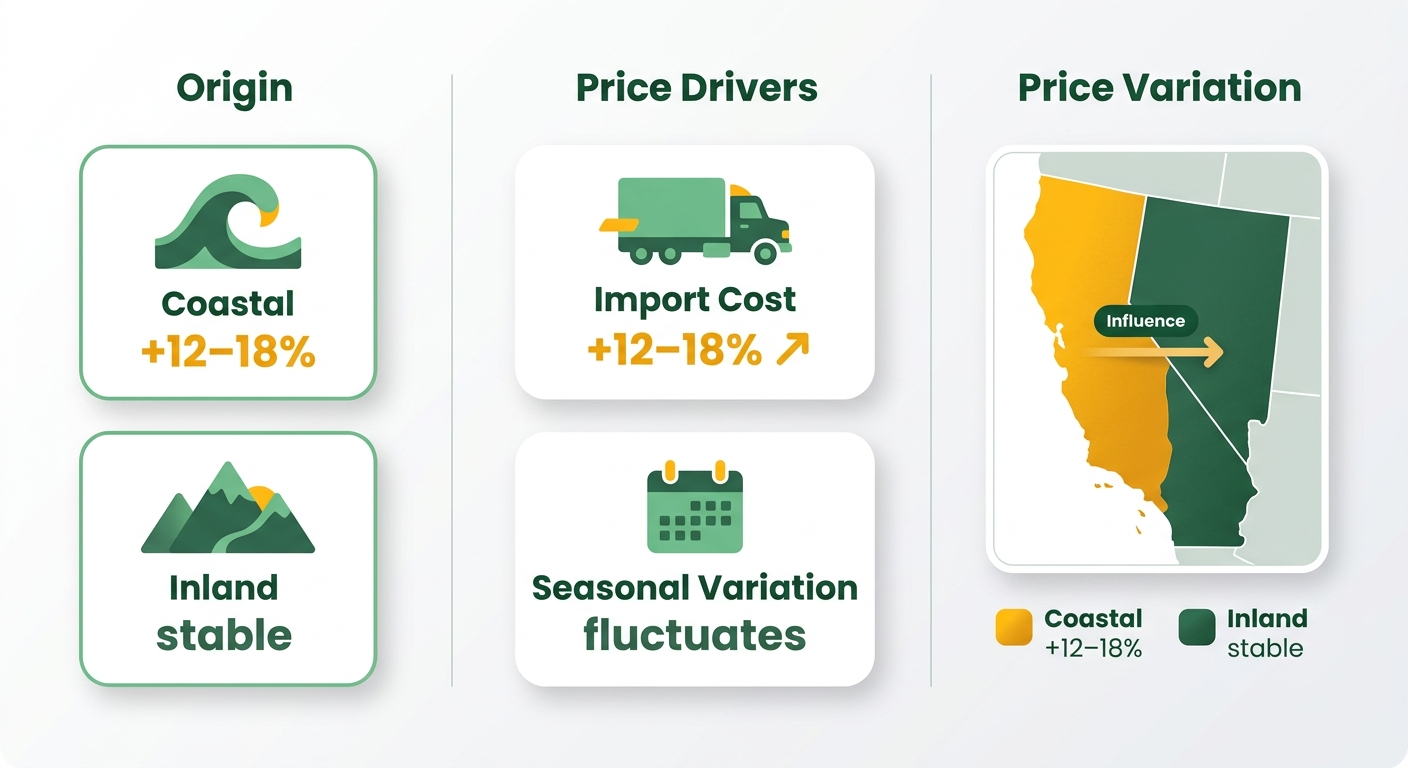
Regional output and supply chains do most of the work on price. Coastal regions swing seasonally because their bloom cycles ride the weather. Inland areas with steadier climates put out more consistent volume, so prices hold. Import-dependent markets eat logistics and customs costs that can push retail up 12–18% over locally sourced jars. Origin isn't a footnote. It's often the biggest line item in what you pay.
Floral source and how it's processed
The floral source drives both flavor and how hard the honey is to harvest. Monofloral honey forces beekeepers to park hives in a single-species zone during one narrow blooming window, which costs more labor than a polyfloral blend. Processing splits the price further. Raw, unfiltered honey holds more nutritional value but demands small-batch handling. Ultra-processed commercial honey wins on economies of scale and loses on everything else.
Certification and labeling
UMF, organic, and True Source labels move prices because they verify what's in the jar. A 2026 case study put buckwheat honey with antioxidant-rich credentials at $2.50/oz, while imported "premium" jars with no clear labeling cleared $5/oz without delivering anything extra. If purity is your priority, digital verification platforms that match lab reports to retail listings are the fastest way to spot the difference. That matters most in markets where mislabeled product quietly waters down the value.
| Origin | Avg. Unit Price (2026) | Median Unit Price | Key Influences |
|---|---|---|---|
| Midwest | $1.80/oz | $1.65/oz | High local production, lower transportation costs |
| California | $2.40/oz | $2.20/oz | Organic demand, limited floral diversity |
| New Zealand | $5.00/oz | $4.75/oz | Manuka UMF certification, export tariffs |
| Europe | $3.20/oz | $3.00/oz | Strict organic regulations, premium branding |
| Southeast Asia | $1.20/oz | $1.10/oz | Mass production, minimal certification |
Put it together and the discrepancies jump out. A 400g jar of acacia from Germany at $14 looks expensive, but a True Source-certified jar from Poland might match it at $9. Same quality, different label, different price. The whole game is catching that before you reach the register.
What I'd actually do
Regional output sets the baseline. Tropical climates harvest more often and price lower. Alpine and arid regions, with fewer floral sources, run more expensive. If you have a direct supplier line, buying in bulk through a cooperative cuts 15–20% off retail. That requires the connection, which is the catch.
A couple of habits worth building
- Watch the harvest calendar. Acacia typically drops about 30% after the April harvest in the northern hemisphere. Lavender peaks in July. Time your buying to the supply, not your craving.
- Think about storage. Darker honeys with moisture above 20% crystallize faster, so a cheap jar that turns grainy in a month isn't actually cheap.
Beyond the per-ounce math, the better tools fold in climate and harvest data to flag markup periods before you buy, and some verify single-origin sourcing instead of taking the label's word for it. That traceability is what most basic price trackers skip.
| Tool | Key Feature | Transparency | Best For |
|---|---|---|---|
| Popgot | Climate-optimized pricing + ethical sourcing filters | High | Seasonal buyers |
| Generic Price Trackers | Store-specific sales alerts | Low | Impulse shoppers |
Supporting small micro-hive operations is a nice side effect too. You get artisanal varieties the mass market never carries, and biodiversity gets a small win.
One last thing. Commercial blends own the mainstream shelf, but specialty honeys from rare flora like rhododendron or sage exist for a reason, both culinary and medicinal. Packaging has caught up as well, with vacuum-sealed glass now stretching shelf life by roughly 40% and cutting waste on the pricier jars. None of this requires a spreadsheet. It just requires reading the label, doing the per-ounce math, and buying in season.
References
[1] Honey Price Comparison Chart (2026) - https://rawhoneyguide.com/tools/honey-price-compare
[2] Pricing Your Honey - Keeping Backyard Bees - https://www.keepingbackyardbees.com/pricing-honey/
[3] Monthly Regional Honey Price Report - Bee Culture Magazine - https://beeculture.com/digital-issues/monthly-regional-honey-price-report/
Frequently Asked Questions
1. Why should I prioritize unit price over jar price when buying honey?
Unit price reveals the true cost per ounce, exposing marketing tactics where eye-catching packaging masks a high markup. Comparing unit prices ensures you do not pay extra for decorative jars or brand prestige, allowing you to identify when bulk containers actually offer a better deal.
2. What makes Manuka honey so much more expensive than other varieties?
Manuka honey is produced exclusively in regions of New Zealand and Australia where the Leptospermum scoparium tree grows. Its high price reflects the strict laboratory testing required to verify its unique bioactive compounds, alongside the limited annual blooming window of the source flower.
3. How do regional factors affect honey affordability?
Local climate conditions, regional land-use regulations, and transportation logistics dictate retail pricing. Areas with abundant agricultural land and favorable weather support larger hive yields, whereas regions with strict environmental mandates or high shipping overhead face elevated retail costs.
4. Are organic certifications always worth the extra cost?
Organic certification requires extensive documentation and buffer zones around hives to prevent pesticide exposure, which increases production overhead. However, many local beekeepers follow natural, chemical-free practices without paying for the official seal, offering high-quality honey at a lower price point.
5. When is it worth paying for ultra-premium honey?
Premium varieties are worth the investment when you require specific flavor profiles for culinary pairings or verified laboratory ratings for therapeutic applications. For daily sweetening in tea or baking, standard domestic grades provide the same functional results at a fraction of the cost.
6. How can I verify a honey’s ingredient purity?
Look for independent third-party testing seals on the packaging, such as purity verifications that trace the honey back to its source. Reading the ingredient label carefully to ensure there are no added high-fructose corn syrups or artificial sweeteners is also a reliable manual check.
7. Do seasonal purchases affect honey prices?
Yes, honey pricing fluctuates based on agricultural cycles. Retailers and local apiaries often discount their inventory immediately following the primary extraction seasons to clear shelf space, making post-harvest periods the ideal time to buy in bulk.