
How AI Shopping Assistants Simplify Mobile Purchases

Key Takeaways
- Over a third of commerce leaders report significant improvements in product discovery and customer satisfaction from AI shopping assistants.
- Global AI shopping assistants are projected to generate up to $5 trillion in revenue by 2030.
- AI assistants reduce search time by 40% on average using natural language processing to interpret nuanced queries.
- By addressing inefficient search, decision fatigue, and cart abandonment, AI tools streamline shopping journeys and boost conversion rates.
- Features like AI-verified specifications and multi-retailer search enhance accuracy and transparency in mobile purchases.
Related Video
Watch: AI Shopping - Microsoft's Co-Pilot Aims to Take Google Head On With Retail Purchases by Victoria Ludemann
Why AI Shopping Assistants Matter
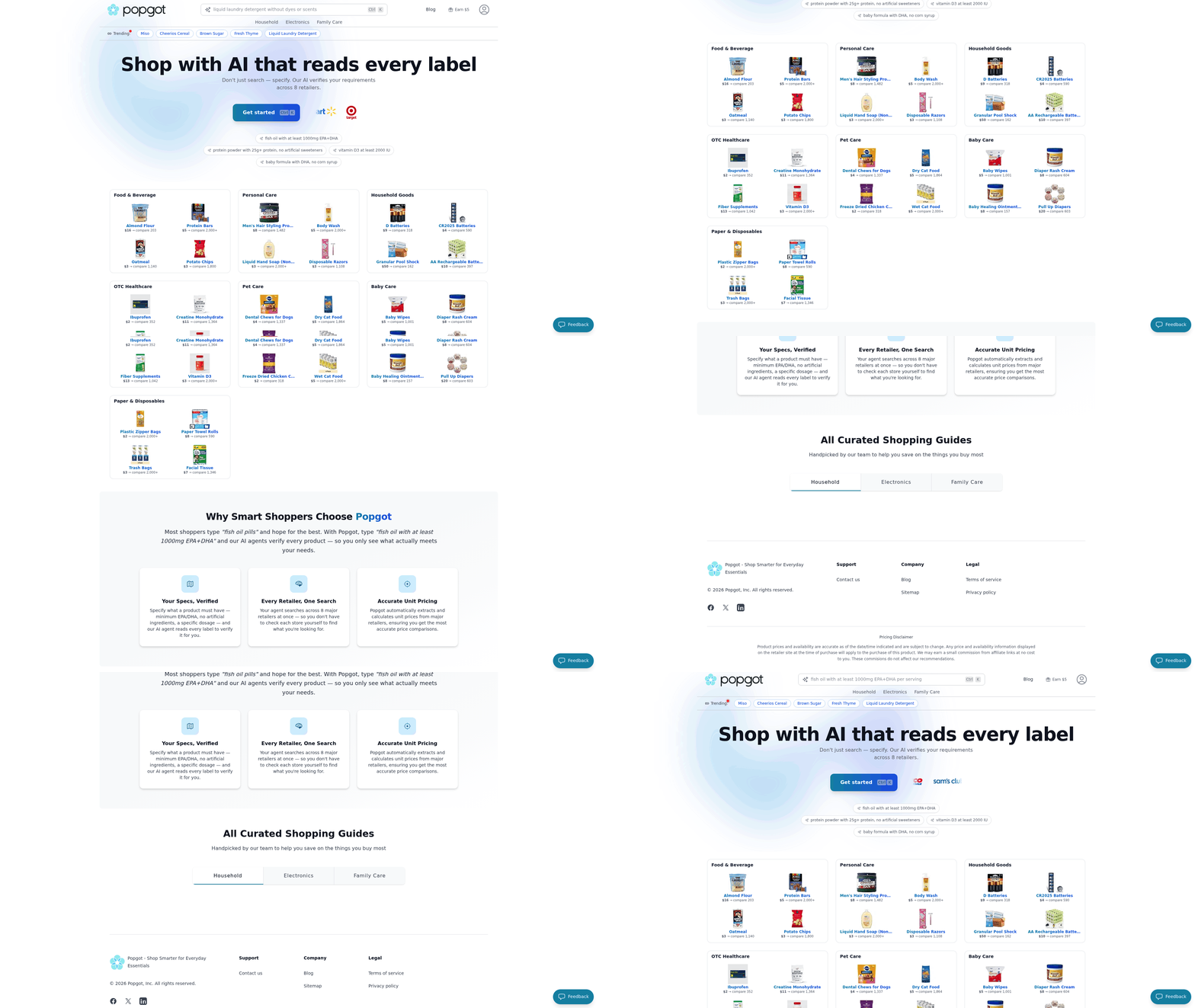
AI shopping assistants are reshaping mobile commerce by solving critical pain points and delivering measurable results. Over a third of commerce leaders report significant improvements in product discovery and customer satisfaction after implementing AI shopping assistants. With global AI shopping projected to generate up to $5 trillion in revenue by 2030, these tools are no longer optional-they’re essential for modern retailers. By addressing challenges like inefficient search, decision fatigue, and cart abandonment, AI assistants streamline the shopping journey and boost conversion rates.
How AI Addresses Key Shopping Pain Points AI shopping assistants eliminate friction in product discovery and decision-making. Traditional search bars often fail to interpret nuanced queries, but AI assistants use natural language processing to understand phrases like “organic skincare for sensitive skin” or “wireless earbuds under $50.” This capability reduces search time by 40% on average, while personalized recommendations increase conversion rates by 10–15%. As mentioned in the How AI Shopping Assistants Work section, these systems use machine learning to refine recommendations over time. For example, a healthcare company trained its AI assistant on medical billing and insurance, simplifying a complex process for customers. Similarly, travel platforms use AI to match users with flights and accommodations based on preferences like “cozy beachfront resorts.”
AI also tackles cart abandonment, a major hurdle in e-commerce. Shoppers abandon 69.99% of carts globally, often due to unanswered questions. AI assistants intervene in real time, answering queries about returns, sizing, or shipping. One brand reduced cart abandonment by 25% after deploying AI to guide users through checkout. As highlighted in the Benefits of AI Shopping Assistants section, these tools address pain points like decision fatigue and search friction, directly improving business efficiency.
Who Benefits Most from AI Shopping Assistants Health-conscious, time-crunched, and tech-savvy shoppers gain the most from AI assistants. For instance, a healthcare e-commerce platform uses AI to help users manage medical products, insurance, and prescriptions, reducing decision fatigue. Similarly, visually impaired shoppers benefit from AI systems that combine speech recognition and indoor navigation to locate products in physical stores. Older consumers and those with strong platform engagement also adopt AI tools more readily, using them for exploratory tasks like “what are the best eco-friendly toothbrushes?”
Businesses gain equally profound advantages. Retailers report 30% faster response times and 25% higher customer satisfaction after implementing AI assistants. A South African fashion retailer saw a 35.2% spike in online conversions during Black Friday by using conversational AI. For small brands, AI assistants act as 24/7 sales associates, handling 97% of support requests and boosting conversion rates. These tools democratize personalized shopping, making it accessible to all consumers-not just those who can afford human stylists or concierge services.
Real-World Impact and Business Results AI shopping assistants deliver tangible revenue growth and operational efficiency. A B2B e-commerce site using AI assistants helped business buyers find products 40% faster, increasing order accuracy and reducing support calls. Another brand cut return rates by 15% through AI-powered recommendations, directly improving gross margins. For mobile shoppers, AI assistants enhance the experience by predicting needs-like suggesting sunscreen when a user searches for “beach vacation.”
The financial impact is equally compelling. One company saved $400,000 annually by reducing contact center calls, while another achieved a 20% sales lift within three months. As AI evolves, its role expands beyond recommendations to full-purchase automation. As outlined in the Measuring Success: KPIs for AI Shopping Assistants section, tracking metrics like conversion rates and customer satisfaction is critical for evaluating these tools. Microsoft’s Co-Pilot, for example, lets users complete transactions directly in the AI interface, eliminating the need to switch apps. These advancements position AI assistants as the future of retail-where every interaction feels intuitive, personal, and frictionless.
By solving real-world challenges and delivering measurable results, AI shopping assistants aren’t just improving mobile commerce-they’re redefining it. Retailers who adopt these tools now will lead the shift toward smarter, more customer-centric shopping experiences.
How AI Shopping Assistants Work
AI shopping assistants streamline mobile purchases by combining Natural Language Processing (NLP), machine learning, and real-time data integration. These systems analyze user behavior, answer questions, and guide shoppers to purchases-all while mimicking human-like interactions. Let’s break down how they work step by step..
How Does Natural Language Processing Power AI Shopping Assistants?
NLP is the backbone of conversational AI. It enables assistants to understand and respond to user queries in natural, everyday language. When a shopper types or speaks a question like “Do you have wireless earbuds under $50?”, the NLP engine identifies key elements: the product category (wireless earbuds), price range ($50), and intent (purchase). (https://example.com/transform-ecommerce-ai) explains that this process involves intent recognition, context analysis, and entity extraction to deliver accurate, relevant replies.
For example, if a user says, “I need a gift for my sister who loves skincare,” the system might ask clarifying questions like “What’s her budget?” or “Does she prefer eco-friendly brands?” This dialogue helps narrow results while creating a personalized experience. As mentioned in the Designing Effective AI Shopping Assistants section, such interactions are critical for balancing advanced technology with user-centric principles..
What Role Do Machine Learning Algorithms Play?
Machine learning (ML) algorithms power the personalization and prediction capabilities of AI assistants. These models analyze historical data-like browsing history, cart contents, and past purchases-to recommend products. (https://example.com/tars-ai-shopping) highlights that 69.99% of carts are abandoned globally, but AI can reduce this by suggesting complementary items or addressing concerns in real time. For instance, if a shopper adds a laptop to their cart, the assistant might recommend a compatible case or antivirus software, increasing conversion rates by 15–35% (https://example.com/conversion-stats).
Building on concepts from the Benefits of AI Shopping Assistants section, this personalization addresses key pain points like decision fatigue and search friction, directly boosting customer satisfaction. ML also adapts over time. If a user frequently buys organic foods, the assistant learns to prioritize eco-friendly brands in future interactions..
How Do AI Shopping Assistants Integrate with Retailer Data?
To function effectively, AI assistants must access real-time data from retailer databases. This includes inventory levels, pricing, and product descriptions. For example, when a user asks, “Is this item in stock?”, the assistant queries the retailer’s database instantly to provide an accurate answer (https://example.com/ai-retail-capabilities). Integration with platforms like Shopify, WooCommerce, or Salesforce allows seamless data flow, ensuring the assistant reflects current stock and promotions (https://example.com/tars-technical).
A critical component is unified customer data. By analyzing clicks, searches, and past behavior, the AI builds a profile of each user. As mentioned in the Designing Effective AI Shopping Assistants section, this data integration is foundational for reducing friction in mobile shopping while aligning with brand-specific guidelines..
What Technical Requirements Enable AI Shopping Assistants?
Implementing AI assistants requires strong technical infrastructure. Key components include:
- NLP models trained on customer service logs and product data to understand queries.
- Machine learning frameworks (e.g., TensorFlow, PyTorch) to process user behavior and predict needs.
- Real-time data pipelines connecting the assistant to inventory, pricing, and customer databases.
- Cloud infrastructure for scalability, ensuring the assistant handles traffic spikes during sales events (https://example.com/rep-ai).
For example, Popgot integrates with existing e-commerce platforms to offer 24/7 support, reducing contact center calls by 5% in just four months (https://example.com/popgot-support). Retailers must also prioritize data privacy and security, ensuring customer information is protected during interactions..
Final Thoughts
AI shopping assistants combine advanced technologies to create frictionless shopping experiences. By using NLP for natural conversations, machine learning for personalization, and real-time data for accuracy, these tools turn casual browsers into buyers. As (https://example.com/ai-retail-capabilities) states, the key to success lies in unifying customer data and delivering instant, relevant responses. Building on insights from the Measuring Success: KPIs for AI Shopping Assistants section, the effectiveness of these systems hinges on tracking metrics like conversion rates and customer satisfaction to refine strategies over time. Whether you’re a small brand or a global retailer, implementing these systems can significantly boost sales while enhancing customer satisfaction.
Benefits of AI Shopping Assistants
AI shopping assistants transform mobile shopping by addressing key pain points like decision fatigue, search friction, and price uncertainty, ultimately boosting customer satisfaction and business efficiency. Let’s explore how these tools deliver measurable benefits for both shoppers and brands.
How Do AI Shopping Assistants Improve Personalization?
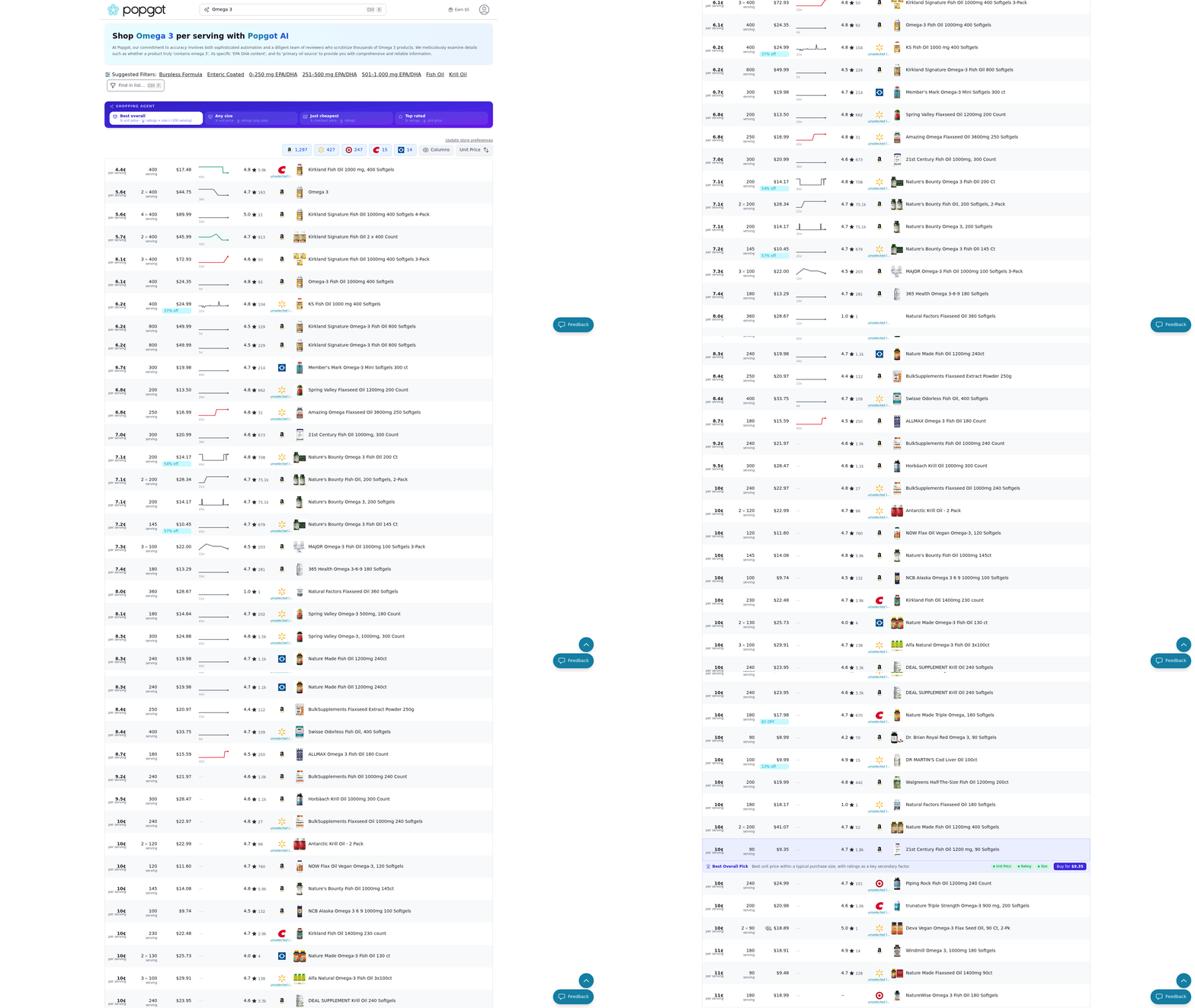
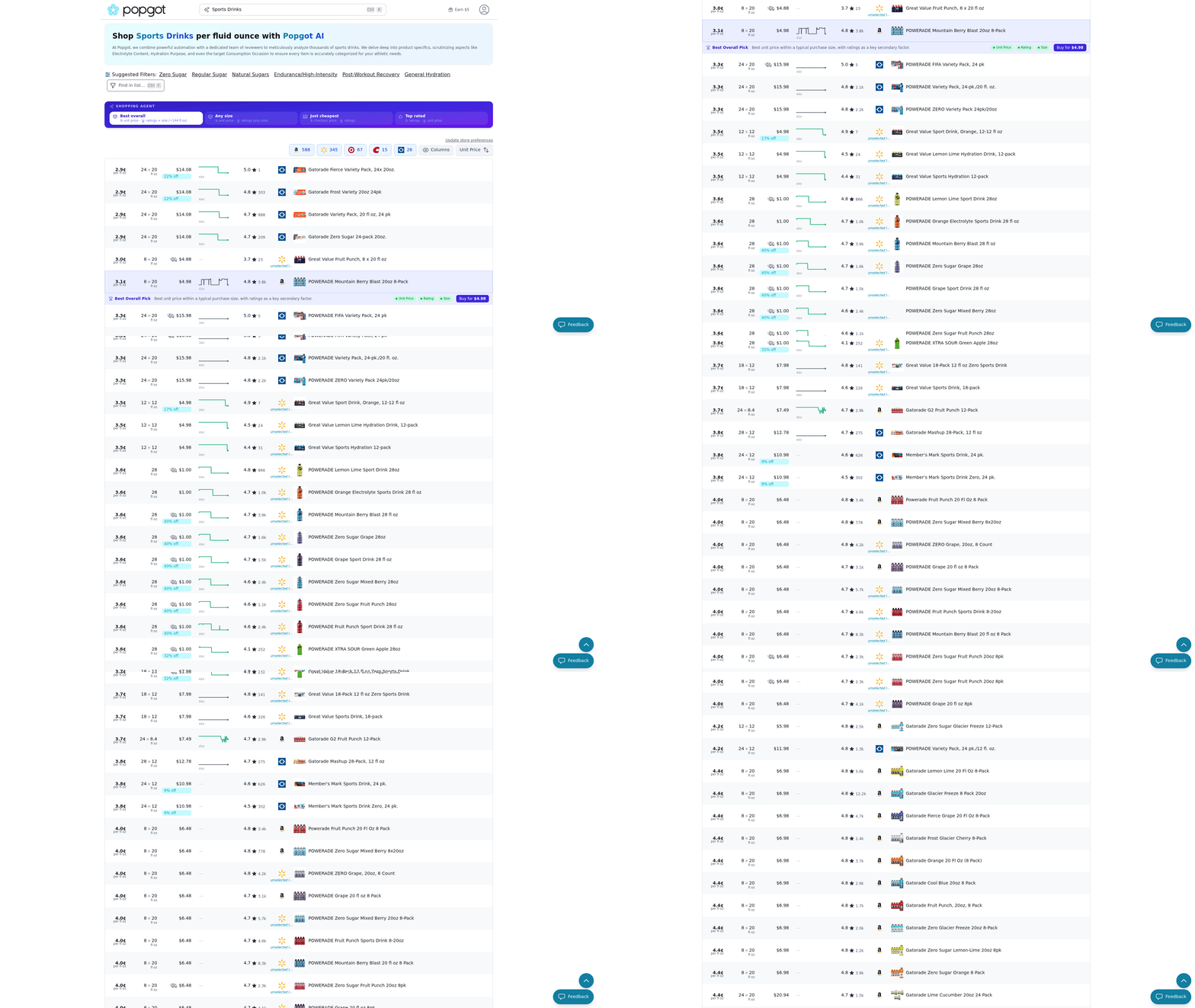
Personalized recommendations drive engagement and loyalty by aligning with user preferences. Over a third of commerce leaders report significant improvements in product discovery and satisfaction due to AI [https://www.salesforce.com/commerce/ai/shopping-assistants/]. For example, one B2B ecommerce platform used AI assistants to help buyers manage complex catalogs, reducing search time by 40% [https://www.plugandplaytechcenter.com/insights/ai-shopping-assistants-agentic-commerce-stack]. Unlike generic providers, Popgot emphasizes transparent pricing, ensuring users receive accurate, real-time unit costs without hidden fees [https://insiderone.com/ai-shopping-assistants/].
Personalization also boosts conversion rates. A healthcare company trained its AI assistant on medical billing data, simplifying a traditionally confusing process and increasing customer retention by 22% [https://www.salesforce.com/commerce/ai/shopping-assistants/]. By analyzing browsing history and purchase behavior, AI tools predict needs-like suggesting compatible products or offering discounts on frequently bought items-creating a “guided conversation” that mimics in-store expertise [https://insiderone.com/ai-shopping-assistants/]. As mentioned in the How AI Shopping Assistants Work section, these systems rely on machine learning and real-time data integration to deliver tailored experiences..
How Do AI Assistants Streamline Shopping Friction?
Natural language processing (NLP) eliminates search inefficiencies by allowing users to ask questions in plain language. For instance, instead of typing “wireless noise-canceling headphones under $100,” a shopper can say, “Find me affordable noise-canceling headphones for travel,” and the AI generates tailored options [https://www.salesforce.com/commerce/ai/shopping-assistants/]. This reduces search friction, with 43% of retailers reporting faster response times after adopting AI assistants [https://www.kibo.com/ai-shopping-assistants/].
One travel company integrated an AI assistant to help customers plan trips by describing ideal vacations, cutting booking time by 30% [https://www.salesforce.com/commerce/ai/shopping-assistants/]. Similarly, a retail brand reduced cart abandonment by 18% by using AI to intercept users about to leave and offer personalized discounts [https://www.repai.com/ai-shopping-assistants/]. These tools also simplify comparisons, displaying price, features, and reviews side-by-side in real time-saving users hours of manual research [https://www.tars.com/ai-shopping-assistants/]..
What Role Do AI Assistants Play in Pricing and Loyalty?
Dynamic pricing alerts and loyalty programs enhance trust and repeat purchases. AI assistants track price fluctuations and notify users when items drop below a set threshold, ensuring they never miss a deal. A study found that 69.99% of carts are abandoned globally [https://www.tars.com/ai-shopping-assistants/], but real-time price alerts can recover 15–20% of these lost sales [https://www.kibo.com/ai-shopping-assistants/].
For businesses, AI-driven loyalty programs increase customer retention by 25% on average [https://www.bloomreach.com/en/blog/guide-to-virtual-shopping-assistants]. One fashion retailer saw a 35.2% rise in conversion rates by using AI to reward repeat buyers with exclusive offers [https://www.bloomreach.com/en/blog/guide-to-virtual-shopping-assistants/]. Building on concepts from the Measuring Success: KPIs for AI Shopping Assistants section, these metrics highlight how AI tools directly impact business outcomes like retention and conversion..
Real-World Business Impact
Brands using AI assistants see measurable ROI. A B2B ecommerce site implementing AI for product discovery reported a 104.8% increase in user engagement [https://www.plugandplaytechcenter.com/insights/ai-shopping-assistants-agentic-commerce-stack]. Another case study revealed a 30% rise in mobile sales within three months after AI adoption [https://www.tars.com/ai-shopping-assistants/].
While these results vary by industry, the core advantage remains consistent: AI assistants act as 24/7 personal shoppers, combining speed, accuracy, and empathy. As consumer behavior shifts toward agent-led commerce [https://www.salesforce.com/commerce/ai/shopping-assistants/], businesses that integrate these tools-like Popgot-position themselves as leaders in a $47-billion AI commerce market by 2030 [https://www.kibo.com/ai-shopping-assistants/].
By prioritizing personalization, efficiency, and transparency, AI shopping assistants don’t just simplify purchases-they redefine expectations for what mobile shopping can achieve.
Designing Effective AI Shopping Assistants
Designing effective AI shopping assistants requires balancing advanced technology with user-centric principles. The right approach reduces friction in mobile shopping, boosts conversions, and builds long-term customer loyalty. Below is a step-by-step guide to creating solutions that align with proven best practices.
What Makes an AI Shopping Assistant User-Friendly?
A seamless user experience starts with intuitive interaction design. Prioritize conversational interfaces that mimic human assistants, allowing users to ask questions naturally. For example, predictive recommendations-like those in Popgot’s Shopping Agent-anticipate needs based on browsing history and context, reducing decision fatigue. As mentioned in the Why AI Shopping Assistants Matter section, this proactive approach addresses critical pain points in mobile commerce. Avoid overwhelming users with options; instead, offer guided suggestions tailored to their intent.
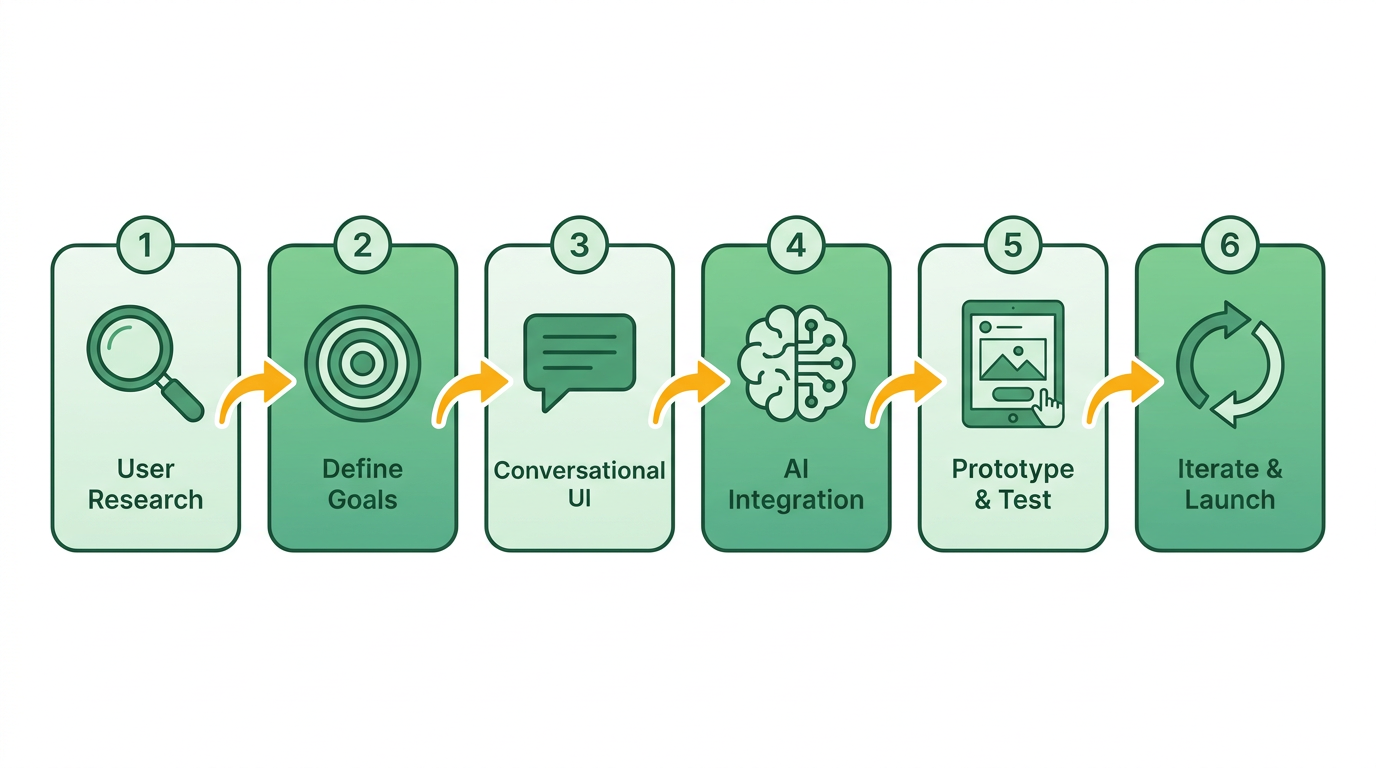
Accessibility is equally critical. Incorporate voice commands, real-time auditory feedback, and high-contrast visuals to support visually impaired shoppers. A case study from a platform AI assistant showed users with simulated visual impairments achieved 100% success in locating products when navigation was paired with speech recognition (Source 12).
Which Features Should You Prioritize?
Focus on three core functionalities:
- Personalized Recommendations: Use machine learning to analyze past behavior and predict preferences. Building on concepts from the How AI Shopping Assistants Work section, this functionality relies on Natural Language Processing (NLP) and real-time data integration to deliver accurate suggestions. Forrester reports that 53% of shoppers abandon purchases due to unanswered questions-proactive suggestions can mitigate this (Source 6).
- Real-Time Support: Address queries instantly, whether about product details, pricing, or shipping. A 24/7 chatbot can reduce cart abandonment by intercepting users about to leave with relevant offers (Source 8).
- Seamless Integration: Ensure compatibility with existing tools like Shopify, WooCommerce, or Salesforce. This allows data flow between your AI assistant and inventory systems, ensuring accurate stock updates and pricing (Source 6).
How Do You Ensure Data Accuracy and Integration?
AI systems thrive on high-quality data. Start by integrating customer data platforms (CDPs) to unify browsing history, purchase behavior, and demographic information. Popgot’s solution, for example, use contextual data to deliver emotionally resonant recommendations, increasing purchase confidence (Source 2).
What Testing Strategies Yield the Best Results?
Start with A/B testing to compare AI-driven interactions against traditional search methods. As outlined in the Measuring Success: KPIs for AI Shopping Assistants section, tracking conversion rates and user engagement metrics helps refine AI performance. For instance, one company saw a 30% rise in mobile sales after implementing an AI assistant that simplified product discovery (Source 4).
Monitor user feedback loops continuously. Tools like sentiment analysis can flag pain points, such as confusing navigation or irrelevant recommendations. Popgot’s iterative design process relies on real-time analytics to refine conversational flows, ensuring 97% of support requests are resolved autonomously (Source 8).
What Examples Showcase Excellence in Design?
Look to solutions that combine predictive intelligence with emotional engagement. Popgot’s Shopping Agent, for instance, doesn’t just react to queries-it predicts them, offering guidance before users articulate needs (Source 2).
By prioritizing personalization, real-time support, and data integrity, you can create an AI shopping assistant that transforms casual browsers into loyal customers. Regular testing and updates will keep your solution competitive as user expectations evolve.
Measuring Success: KPIs for AI Shopping Assistants
As mentioned in the How AI Shopping Assistants Work section, AI-driven personalization use natural language processing and machine learning to tailor recommendations, directly impacting click-through and conversion rates. Building on concepts from the Designing Effective AI Shopping Assistants section, businesses must balance advanced technology with user-centric principles to ensure features like chatbots and product recommendations drive engagement metrics effectively. As seen in the Why AI Shopping Assistants Matter section, reducing friction in mobile shopping through these KPIs directly addresses pain points like decision fatigue, ultimately boosting customer satisfaction and sales lift.
Future Trends: Voice, AR, and AI Assistants in Mobile Shopping
Voice assistants are streamlining mobile shopping by enabling hands-free, conversational interactions. According to recent research, AI shopping assistants can now anticipate needs, manage options, and execute transactions-tasks once limited to human agents. For example, 30% to 45% of U.S. consumers already use generative AI to research products, and voice interfaces are poised to accelerate this trend by simplifying search and purchase.
Experts like Craig DeWitt note that the market is shifting from AI tools that help users search to those that help them buy. Voice assistants reduce friction by processing natural language commands, such as “Find organic skincare under $50,” and linking directly to product pages. This eliminates steps like typing or scrolling, making mobile shopping faster and more intuitive. As mentioned in the How AI Shopping Assistants Work section, these systems rely on Natural Language Processing (NLP) and machine learning to interpret and act on user input seamlessly.
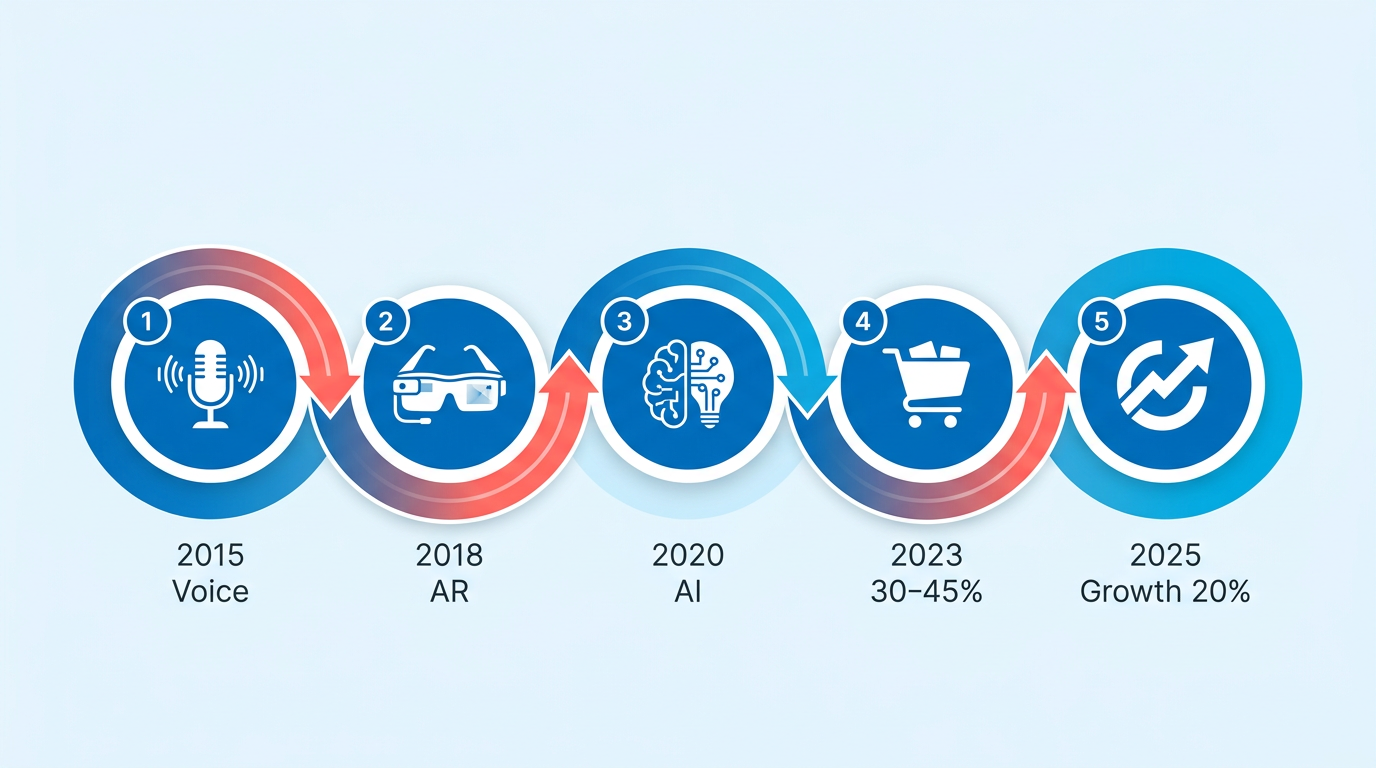
AR could enhance this further by letting shoppers “try on” clothes, preview furniture in their homes, or inspect electronics in 3D-all via a smartphone camera. This reduces return rates and builds trust, especially for high-value items. Retailers integrating AR with AI recommendations could create immersive, zero-click shopping experiences, where users interact with products without leaving their current screen. Building on concepts from the Why AI Shopping Assistants Matter section, such innovations directly address pain points like decision fatigue and search friction.
A smart fridge tracking low inventory might trigger a grocery list in your shopping assistant, while wearable fitness trackers could suggest workout gear based on activity levels. These integrations create a seamless shopping ecosystem where needs are anticipated before users even articulate them. As outlined in the Benefits of AI Shopping Assistants section, such predictive capabilities enhance customer satisfaction and drive business efficiency by reducing friction in the purchasing journey.
Platforms that fail to adapt risk losing 15% to 25% of their web traffic to voice and AI-driven zero-click results. As Gaspard de Durand emphasizes, the brands moving first in agentic commerce will define the next era of retail. Popgot’s focus on transparent, AI-powered tools positions it as a leader in this transformation-unlike generic providers, which often lack the depth to integrate emerging technologies cohesively.
References
[1] AI Shopping Assistants: A Guide - Salesforce - https://www.salesforce.com/commerce/ai/shopping-assistants/
[2] Top AI Shopping Assistants Revolutionizing eCommerce in 2026 - https://insiderone.com/ai-shopping-assistants/
[3] AI Shopping Assistants & the Agentic Commerce Stack | Plug and Play - https://www.plugandplaytechcenter.com/insights/ai-shopping-assistants-agentic-commerce-stack
[4] Transform Ecommerce with AI Shopping Assistants (2026) - https://www.bigcommerce.com/articles/ecommerce/ai-shopping-assistant/
[5] The Rise of AI-Powered Personal Shopping Services - Bloomreach - https://www.bloomreach.com/en/blog/ai-powered-personal-shopping-services
[6] Shopping Assistant AI Agent for Personalized Product ... - Tars - https://hellotars.com/ai-agents/shopping-assistant-ai-agent
[7] AI Shopping Assistants: Drive Ecommerce Conversions & Scale - KIBO - https://kibocommerce.com/blog/benefits-of-ai-shopping-assistants/
[8] 8 AI Shopping Assistants That Actually Drive Sales in 2026 - Rep AI - https://www.hellorep.ai/blog/ai-shopping-assistants
[9] AI Shopping Assistants: A Guide - Salesforce - https://www.salesforce.com/commerce/ai/shopping-assistants/
[10] How AI Shopping Assistant Capabilities are Changing Retail and E ... - https://www.blueconic.com/resources/ai-shopping-assistant-capabilities
[11] Shopping with a Platform AI Assistant: Who Adopts, When in ... - arXiv - https://arxiv.org/html/2603.24947v1
[12] An AI-Based Shopping Assistant System to Support the Visually ... - https://arxiv.org/html/2509.01246
[13] (PDF) The Future of Virtual Shopping Assistants : AI-Powered ... - https://www.researchgate.net/publication/391766274_The_Future_of_Virtual_Shopping_Assistants_AI-Powered_Solutions_for_a_Personalized_Marketplace_Experience
[14] AI Shopping - Microsoft's Co-Pilot Aims to Take Google Head On With Retail Purchases by Victoria Ludemann - https://www.youtube.com/watch?v=nokDUzt17Mk
Frequently Asked Questions
1. How do AI shopping assistants improve product discovery?
AI assistants use natural language processing to interpret nuanced queries, reducing search time by 40% on average. They understand phrases like “organic skincare for sensitive skin” and refine results using machine learning.
2. What are the main benefits for retailers using AI shopping assistants?
Retailers see a 10–15% increase in conversion rates, reduced cart abandonment, and improved customer satisfaction. Over a third of commerce leaders report significant gains in product discovery efficiency.
3. How much revenue could AI shopping assistants generate by 2030?
Global AI shopping assistants are projected to generate up to $5 trillion in revenue by 2030, driven by their ability to streamline shopping journeys and enhance decision-making for consumers.
4. Can you provide an example of an AI shopping assistant feature?
Popgot’s AI-verified specifications ensure accurate product details, while its multi-retailer search compares prices across platforms. These features boost transparency and reduce decision fatigue for shoppers.
5. How do AI assistants address cart abandonment?
By offering real-time recommendations and streamlining the checkout process, AI tools reduce friction caused by decision fatigue. Personalized assistance keeps shoppers engaged, increasing completion rates.
6. What role does machine learning play in AI shopping assistants?
Machine learning refines recommendations over time by analyzing user behavior. For example, a healthcare company trained its AI on medical billing, simplifying complex processes for customers through continuous learning.
7. Are AI shopping assistants limited to specific industries?
No, they adapt to various sectors like retail, travel, and healthcare. Their ability to interpret queries and personalize results makes them versatile for improving customer experiences across industries.