
How to Normalize Unit Prices So the Cheapest Tag Stops Lying

Key Takeaways
- Normalizing unit prices converts every option to the same measure, per ounce, per gram, per count, so you see the real value instead of the sticker.
- Kellogg's Corn Flakes at 850g for $5 costs more per gram than a competitor's 980g box at $5.20. The pricier box is the better deal.
- Two products at the same shelf price can differ by 20% or more per unit once you divide by quantity.
- Shrinkflation makes it worse: the quantity shrinks while the sticker price holds steady.
- A $2.99 box holding 12 ounces works out to $0.249 per ounce.
- A 12-ounce box of pasta at $1.20 comes to $0.10 per ounce — cheaper per unit by a wide margin.
- Bigger packages aren't automatically cheaper. Unit-price rankings flip constantly across brands and sizes.
Why the cheapest tag on the shelf usually lies
The lowest price tag tricks you more often than you'd think. Normalizing unit prices means converting every option to the same measure, per ounce, per gram, per count, so you compare actual value, not the sticker. Skip that step and package-size games and shrinkflation turn the "deal" into the worst buy on the shelf.
Here's the part most advice skips: a price per unit calculator runs the exact math retailers already use to win at pricing. When DataWeave normalizes cereal SKUs, it stacks Kellogg's Corn Flakes at 850g for $5 against a competitor's 980g box at $5.20. The bigger box is cheaper per gram, even though it costs more at the register. That's the whole game.
Why does the cheapest tag lie?
Package size hides the true cost. Two products at the same shelf price can differ by 20% or more per unit once you do the division. Shrinkflation compounds it, trimming the quantity while the price holds steady, as DataWeave's pricing analysis points out.
The math is trivial. $2.99 for 12 oz works out to $0.249 per ounce, per this NDSU extension guide. A 12-ounce box of pasta at $1.20 is $0.10 per ounce. Run that division across brands and the ranking flips constantly.
But bigger isn't automatically cheaper. NDSU is blunt: a larger package only wins if the unit price is lower AND you finish it before quality drops. So separate the shelf price from the effective cost, waste included. Buy the giant tub of anything perishable, toss half, and your real per-unit cost doubles.
Does the store brand always win?
Usually. Not always. Generic Alfredo sauce runs 9.4 cents per ounce versus 10.5 cents for the name brand, and generics win on most staple pantry items. Treat "generic is cheaper" as a heuristic, not a law.
The rule breaks across forms. In one broccoli comparison, store-brand frozen came out cheapest per unit, beating fresh and every other frozen brand. Fresh versus frozen, count versus weight — these flips only show up when you normalize. Verify every SKU rather than trusting the brand tier.
Who actually needs this?
Health-conscious and budget-conscious shoppers benefit most. They're already reading labels and juggling more variables per item. But the "just check the shelf tag" advice assumes an infrastructure most shoppers don't have.
The catch: unit pricing is mandatory in only nine states plus the District of Columbia, and categories like prescription drugs and alcohol are exempt. So the tag you're told to trust often doesn't exist.
That's the real case for automation. The average shopper spends about 45 minutes per grocery trip doing enterprise-grade normalization by hand, and losing. When a tag is missing, Consumer Reports recommends dividing total cost by units yourself. Handing that repetitive division to software is the obvious move, especially where no tag exists at all.
How AI does the per-unit math for you
Doing the per-unit math by hand works for two products. It falls apart the moment you're comparing twelve SKUs across four retailers, each in a different pack size. A price per unit calculator built into AI does the heavy lifting: it reads every label, pulls the size and price, and converts everything to one measure before you've even squinted at the shelf tag.
We built our reader to run that comparison automatically. The hard part isn't the division. It's getting clean data out of messy listings, where one seller says "6-pack, 355ml each" and another says "2.13L total" for the same drink.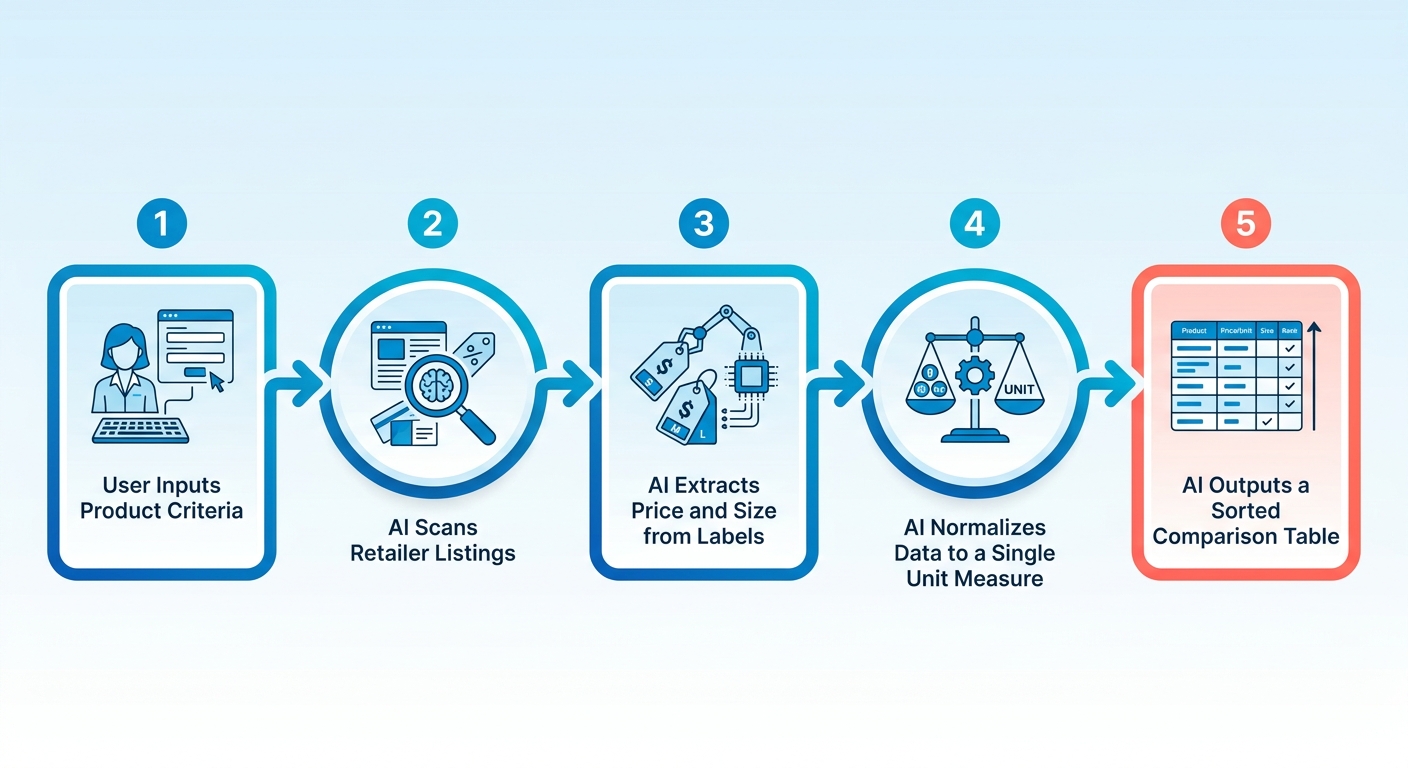
How the AI extracts and normalizes prices
Data extraction: the system reads the listing, isolates the quantity and the price, then standardizes the unit before comparing. A can measured in milliliters and a bottle listed in liters both get pulled to the same scale.
This is the same normalization work pricing-intelligence teams run behind the scenes. As DataWeave's engineering write-up explains, products show up in wildly different formats, and matching them SKU-to-SKU only works once units are standardized. Without unit normalization, the insights aren't actionable.
We handle the same headaches. Grams, kilograms, liters, and counts like "each" or "dozen" all get converted, so a per-gram figure means the same thing across every option.
Why this matters across retailers
Cross-retailer comparison: a cheaper sticker at one store often loses once you normalize. Retailers lean on custom packaging sizes, a 14.5-ounce can at one supermarket versus a 16-ounce can at another, to block direct price matching. Automating the conversion walks right past that barrier and catches the deals your eyes skip. Comparing snack bags or spices across shops, the winner is rarely the lowest tag.
Skip the AI step for a single-item, single-store buy. You don't need it to price one carton of eggs. It earns its keep when the comparison gets wide and the pack sizes stop matching up.
Where this heads next: better label reading on ingredients, not just price. We already surface what's inside a product, so normalized cost and normalized nutrition land in the same view.
The formula, and what actually moves the number
The formula is simple: item price ÷ item size = unit price. That single normalized number lets you rank two differently sized boxes against each other without doing mental gymnastics in the aisle.
The catch is that the number only helps if you actually have it. Shelf-label laws are fragmented across jurisdictions, so plenty of regional chains and independent markets skip unit prices entirely, leaving you to work out the pricing on your own. Popgot fills that gap by calculating the true cost of every listing programmatically. Run the math behind the scenes, and you can sort items by what you actually pay per standard measure.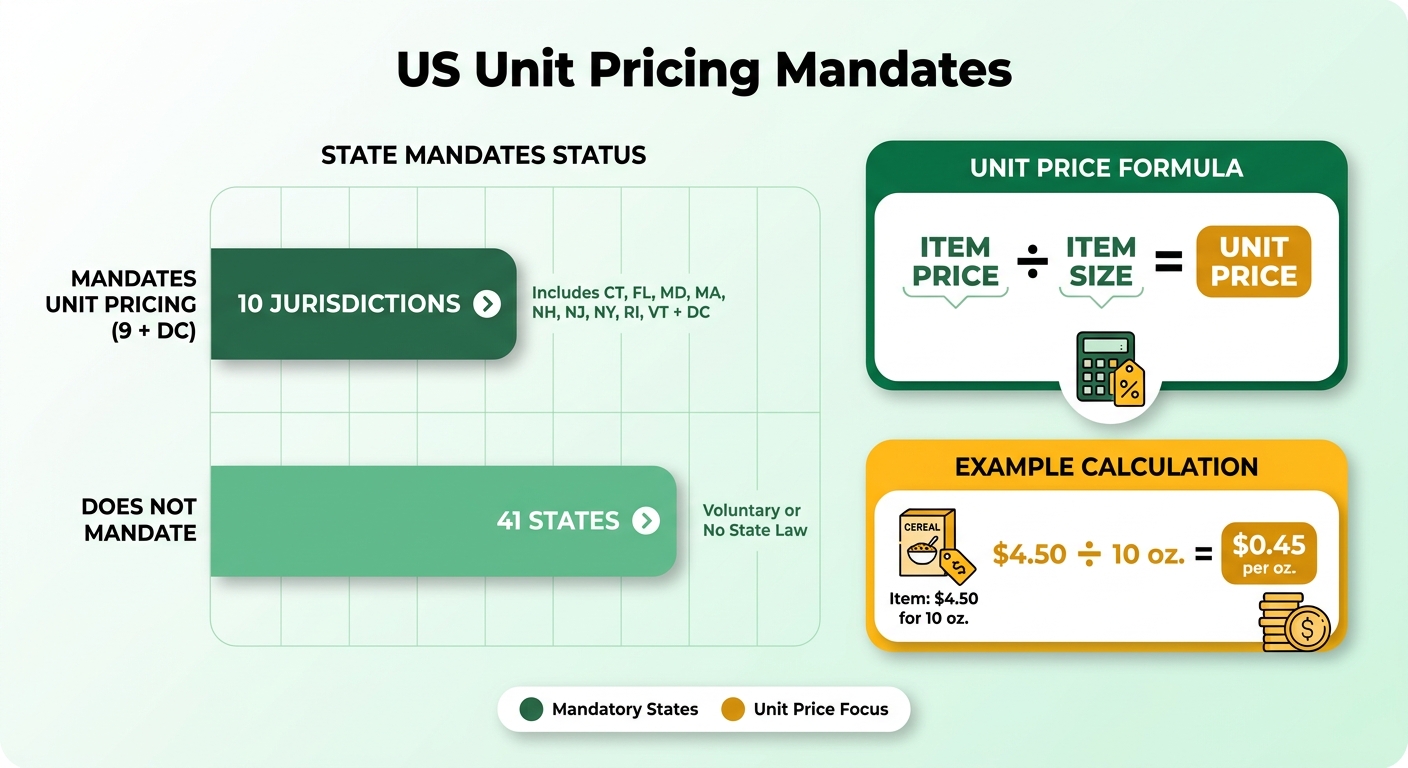
What actually moves the unit price?
Package size, weight, and form are the three levers that make two products with the same sticker cost wildly different per ounce. The total price tells you what leaves your wallet. The size tells you what you get. Divide one by the other and the real ranking appears.
Beverages show the biggest swings: comparing a 6-pack of cans to a 2-liter bottle surfaced a $0.98 per liter gap, and bulk peanuts beat packaged by $0.55 per pound, per Omni's unit price examples. Form is the hidden lever. The same food shredded, sliced, or pre-washed carries a convenience premium that only shows up once you normalize to a common unit.
Bigger or store brand — is either always cheaper?
No. Both "buy big" and "buy generic" are heuristics, not laws, and the sources actually disagree here. That disagreement is useful. Some guides argue larger and store-brand items usually win on unit price. But buying bulk means a bigger upfront outlay and more storage. Buy a massive container of cooking oil with no cool, dark spot to keep it, and the oil oxidizes and spoils early. That shifts the focus from nominal unit price to effective cost, where storage and how fast your household burns through it decide the real value.
The store-brand rule breaks the same way. Generic wins on average for staples, but flip to fresh-versus-frozen and the ranking scrambles. Frozen store-brand green peas often cost far less per ounce than fresh organic pods, and they drop the weight of inedible shells too. You pay only for usable food instead of paying for waste. Verify the unit price of the edible portion every time rather than trusting the brand tier.
Retailers run dynamic pricing algorithms that tweak margins on different package sizes daily, betting that manual comparison is too tedious for most shoppers. Instead of doing enterprise-level data analysis on a phone calculator, you hand it to software. Popgot searches across eight major retailers at once and surfaces the real unit price for you.
Getting the number right: clean data in, honest math out
Accurate unit pricing comes down to three things: clean data, consistent formats, and a check on who's doing the math. Get one wrong and the number you're comparing against is fiction. A price-per-unit calculator only earns your trust if the inputs are correct.
Here's the problem we keep running into. The same product might be listed in fluid ounces on one site and milliliters on another, or priced per "count" instead of total weight. If nobody standardizes those, you're comparing an apple to a different-sized apple. So we normalize everything to one base measure before showing you a single number.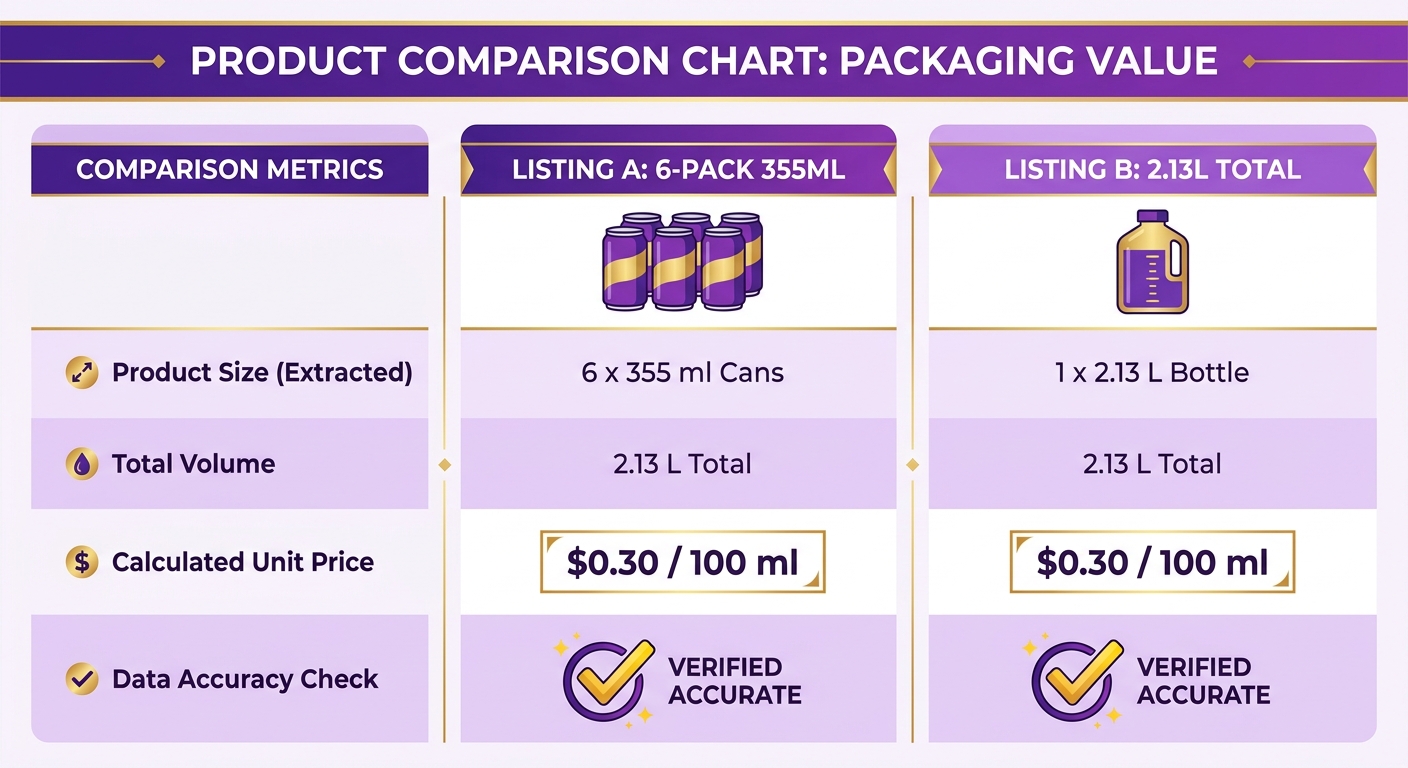
Why data standardization matters so much
Data standardization means every product gets converted to the same unit and format before comparison. Without it, a listing in grams sits next to one in ounces, and the "cheaper" tag wins by accident. When retail databases carry typos or inconsistent abbreviations, like "oz" versus "fl. oz," automated systems have to parse the difference to keep results from skewing. Clean data ingestion is step one. We convert first, compare second. No exceptions.
Who keeps the numbers honest?
Two forces: regulators and the platforms themselves. Regulatory oversight sets the floor for what stores must disclose, but that floor is uneven. Since unit pricing isn't federally mandated, most of the accuracy burden lands on retailers and the tools shoppers bring with them.
Good practice is simple. Show the unit price plainly, use consistent measures within a category, and update tags when pack sizes change. When retailers skip that, an independent reader that reads the label for you fills the gap.
Skip manual math when you're comparing more than a couple of items. The error rate climbs fast, and a bad conversion costs you the exact savings you were chasing. Let the standardization run automatically, then trust the normalized number.
Using Popgot to find the real unit price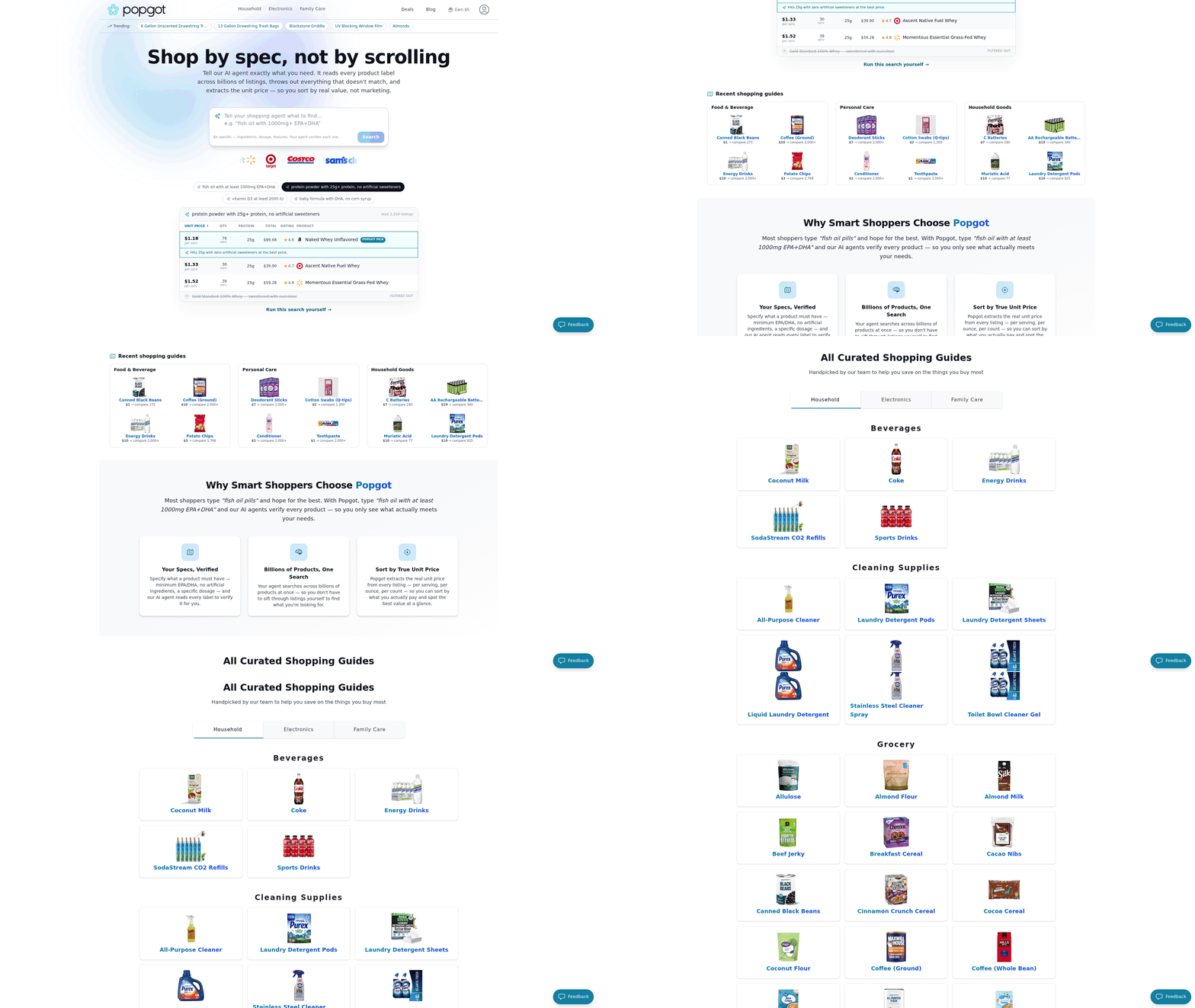
Here's how we turn per-unit math into actual savings: tell our AI agent what you're shopping for, and it reads every product label across major retailers to extract the unit price the store never put front and center. A digital assistant only works with raw product specs, which we scrape directly from e-commerce catalogs. That skips physical shelf tags entirely and puts unit pricing in front of online shoppers nationwide. Hand the division to software and you spend your attention on the choices that actually move your budget.
How to run a unit price comparison
The workflow is simple: describe what you need, let our AI agent search across billions of listings and normalize everything to one measure, then sort by cost per unit. You get the same standardized number the shelf tag should carry, without opening the calculator app.
Start by saying what you're weighing. The AI extracts the size and price from each listing and converts everything to a shared base, so a 16-ounce box and a 20-ounce box line up on the same axis. That division runs instantly across dozens of competing brands at once. Then read the sorted list, top result wins, buy that one. Julie Garden-Robinson, R.D., at NDSU calls unit pricing "a valuable tool for consumers to make informed purchasing decisions," cutting through marketing noise to find genuine discounts.
Is the bigger package always cheaper?
No. Package size is only part of the equation. Larger containers often carry a lower nominal unit price, but they can hand you a hidden loss if the product degrades first. Buy a gallon of milk instead of a half-gallon and you save per fluid ounce — but if your household drinks a quart a week, the rest sours and goes down the drain. That waste wipes out the per-unit savings.
Store brands work the same way. Generics are generally cheaper for pantry staples, but a brand-name promotion or clearance sale can occasionally undercut the generic. Rather than lean on broad assumptions, verify the live unit price of each specific item. That's the only way to guarantee the savings.
Where this pays off beyond groceries
Unit pricing shows up on far more than food shelves, as WRAL points out. The same normalization applies to earbuds sold in singles versus multipacks, or headphones bundled during a sale where the "deal" pricing hides the per-item cost.
Skip the manual math for a single product with no alternatives. There's nothing to normalize against. But the moment you're stacking sizes, brands, or forms, run the comparison and let the sorted number decide.
Where unit price normalization breaks in the real world
Three things break unit price normalization: mismatched package formats, the "bigger is always cheaper" myth, and the assumption that generics automatically win. Get any of them wrong and your per-unit comparison tells you the opposite of the truth.
We hit these constantly while building our label reader. The math is trivial. The trap is trusting a clean-looking number that came from dirty or misread inputs.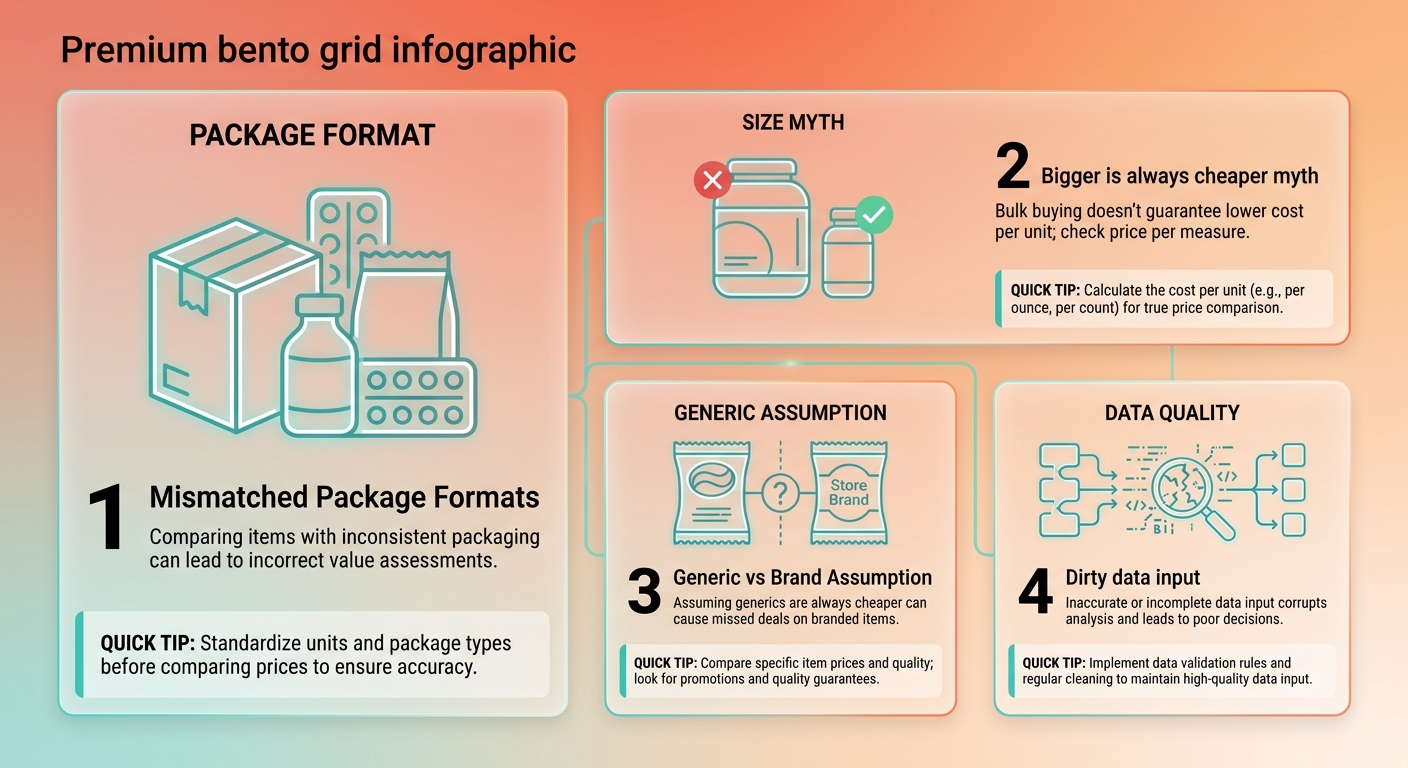
Why package-size discrepancies wreck comparisons
Package-size discrepancy means the same product shows up in incompatible formats, so the raw numbers can't be compared until you convert to one base measure. It's the single biggest source of bad per-unit math. Manufacturers love to adjust package dimensions in increments that are hard to calculate in your head, like dropping a jar from 16 ounces to 14.2. The price-to-weight ratio moves while the container on the shelf looks the same. The fix is systematic standardization: convert every competing package to a uniform metric, price per ounce or price per 100 grams, and the visual illusions collapse. Software handles those conversions instantly, so silent volume reductions don't quietly drain your budget.
Is the bigger package always the better deal?
No. Bulk buying only works when your consumption rate matches the package volume. Larger sizes frequently offer a lower price per unit, but they can lead to wasted spending if the product degrades before you use it. A large tub of fresh berries looks economical on paper, but if a chunk of the fruit spoils before you eat it, the real cost of what you consumed climbs sharply. For highly perishable items, buying smaller quantities you'll actually finish is often the more economical call, even at a slightly higher shelf tag.
Does the store brand always have the lowest unit price?
Not reliably. Generics win on average for pantry staples, but the rule breaks across product forms and specific SKUs. Treat "generic usually wins" as a heuristic, then verify. Comparing canned versus dried beans, the dried name-brand option can sometimes beat the store-brand canned on cost per cooked ounce, because dried beans expand so much when prepared. The physical state changes the yield. So the practical rule is simple: never assume the brand tier or package size predicts value. Run the actual per-unit calculation for the final prepared state to find the true winner.
References
[1] 6 Tips to Save Money With Unit Pricing - https://www.ndsu.edu/agriculture/extension/publications/pinchin-pennie-kitchen-6-tips-save-money-unit-pricing
[2] Check unit price to make sure you are not paying too much - https://www.wral.com/video/break-it-down-check-unit-price-to-make-sure-you-are-not-paying-too-much/21640872/
[3] The #1 Trick to Help You Save Money on Groceries - https://www.eatingwell.com/price-tag-hack-to-save-money-on-groceries-11691715
[4] how to get the best product for your money at the store - https://extension.usu.edu/fscreate/files/store_brand_unit_pricing.pdf
[5] Unit Pricing | How to use unit pricing to find the best deals - https://morefood.org/unit-pricing/
[6] How unit pricing can save you money while shopping - https://www.wral.com/archive/21640468/
[7] Unit of Measure Normalization For Actionable Pricing Intelligence - https://dataweave.com/blog/why-unit-of-measure-normalization-is-critical-for-accurate-and-actionable-competitive-pricing-intelligence
[8] Unit Price Calculator - https://www.omnicalculator.com/everyday-life/unit-price
Frequently Asked Questions
1. How do I convert unit prices when products use different measurement systems, like ounces versus grams?
Convert both to one shared base measure before comparing. One ounce equals about 28.35 grams, so a $3 item at 12 ounces (340g) costs roughly $0.0088 per gram. Automated tools like Popgot handle these conversions instantly, eliminating arithmetic errors that manual calculations introduce when currencies or measurement systems differ.
2. Does buying in bulk make sense for household items like paper towels or cleaning supplies?
Bulk buying works well for non-perishable household goods since spoilage isn't a factor. Unlike perishables, paper towels, cleaning supplies, and toiletries won't degrade before use, so the lower nominal unit price becomes your true effective cost. Always run the per-unit comparison first, since multipack pricing occasionally beats larger single containers.
3. How can I tell if a product has been affected by shrinkflation?
Monitor the net weight printed on the bottom of the packaging rather than relying on the physical size of the box or bottle. Manufacturers often redesign containers with recessed bottoms or narrower necks to hide volume reductions while keeping the outer dimensions identical. Keeping a record of the exact weight or count of your regular purchases allows you to spot when a brand quietly reduces the product volume without adjusting the shelf price.
4. What product categories are exempt from unit pricing laws?
In jurisdictions with mandatory labeling laws, exemptions typically apply to cosmetics, tobacco, infant formula, and single-serving snack items, in addition to prescription medications and spirits. Because these categories are highly regulated or sold in highly specialized dosages, lawmakers often exclude them from standard per-ounce or per-pound requirements. This leaves consumers to calculate value independently for these specific goods.
5. Should I factor in loyalty discounts or coupons when comparing unit prices?
Calculate the unit price using the final price you'll actually pay, including coupons, loyalty discounts, or sale reductions. A discount that lowers total cost changes the per-unit figure and can flip the ranking. Apply the discount first, then divide by quantity to find your true effective cost per unit.
6. Does unit pricing apply to non-food purchases like electronics or personal care items?
Yes. It is highly effective for personal care items like liquid hand soap versus bar soap, or laundry detergent sheets compared to liquid jugs. It also applies to office supplies, such as printer paper sold by the ream versus bulk cartons, and hardware items like screws sold individually versus boxed sets. Normalizing these products to a cost-per-use or cost-per-count basis ensures you do not overpay for convenience packaging.
7. How much time can automating unit price calculations actually save me?
Automating these calculations streamlines your shopping routine by eliminating the need to manually compute ratios for every item on your list. Instead of standing in the aisle comparing multiple tabs on a smartphone calculator, an automated tool presents pre-sorted value rankings instantly. This allows you to complete your shopping faster and reduces the cognitive fatigue associated with making dozens of mathematical comparisons under time pressure.