
Low‑price prebiotic soda for a healthy refresh

Key Takeaways
- Poppi Juicy Refresh runs 5g sugar and 35 calories per can, at $1.20–$1.80 for a 12oz.
- Simply Pop Black Cherry has 0g added sugar and leans on real fruit juice, $1.00–$1.50 per can.
- FedUp Foods Prebiotic Soda comes in at 3g sugar, with chicory root fiber doing the prebiotic work.
- Yuzu Sparkling uses tapioca starch for its prebiotic and lands at 4g sugar, $1.00–$1.40 per can.
- Most of these brands feed gut bacteria with inulin, cassava, or a fiber blend.
- Read the label for the actual named fiber. "Natural flavors" tells you nothing.
- Drink them regularly and you may get a small digestion and immune assist from fiber-fed microbes. Small being the operative word.
Related Video
Watch: MD's thoughts on Prebiotic Sodas! #olipop #poppi #prebioticsodas #healthysoda #healthtips #soda by Dr. DeDeck
The short version
Prebiotic sodas are a low-effort way to nudge your gut health while pulling back on sugar. They use fibers like inulin or cassava root to feed the good bacteria in your gut, and most carry far less sugar than regular soda. Poppi sits at 5g of sugar and 35 calories a can. Simply Pop skips added sugar entirely and sweetens with real fruit juice. The pitch is a daily fiber boost that may help digestion and immune function. The evidence is real but modest, so keep your expectations honest.
What actually matters when you're buying on a budget
Prebiotic content: Look for a named fiber. Chicory root, inulin, or cassava.
Sugar balance: A lot of options cut added sugar and still taste like something.
Brand transparency: The label should name the prebiotic. Vague terms like "natural flavors" are a dodge.
Here's how a few affordable options stack up on fiber source and price:
| Brand/Flavor | Prebiotic Source | Sugar per 12 oz | Price Range* |
|---|---|---|---|
| Poppi Juicy Refresh | Agave inulin, cassava | 5 g | $1.20–$1.80 |
| Simply Pop Black Cherry | Prebiotic fiber blend | 0 g | $1.00–$1.50 |
| FedUp Foods Prebiotic Soda | Chicory root fiber | 3 g | $1.10–$1.70 |
| Yuzu Sparkling (variety) | Tapioca starch | 4 g | $1.00–$1.40 |
| LaCroix Prebiotic Edition | Inulin | 0 g | $1.20–$1.90 |
*Prices vary by retailer and location. Popgot compares prices across Walmart, Amazon, and Target and reads the label for you.
When to skip the whole category
If you need truly zero added sugar, skip most of these. They run 3–5g per serving. They also won't stand in for high-fiber foods like whole grains or legumes. And if you're after immune support, find a brand with 2g+ prebiotic fiber per serving. Some budget cans fall short of that.
The easiest way in: swap one sugary soda a day for a prebiotic one. Most are shelf-stable, so you don't need to refrigerate until you crack one open. Availability shifts by region, but several budget options show up reliably at the big chains.
For families, these can sneak some fiber past picky eaters. Just check the can for artificial colors or sweeteners first.
Why prebiotic soda is having a moment
Prebiotic soda landed in a real gap: people want something that tastes like soda but doesn't drink like a sugar bomb. Demand for gut-friendly drinks has climbed fast, and prebiotic options stand out because they promise function without making you choke down something medicinal. Here's what's actually going on under the hype.
What it does for your gut
These drinks deliver fiber like inulin or chicory root, which works as food for the beneficial bacteria already living in your gut. That supports digestion and immune function, a point gastroenterologists keep making about the role of gut microbiota. A single can usually carries 1–3g of fiber. Not huge, but it helps close a daily gap most people never hit through food. Whole foods are still the better fiber source. These drinks are a convenient top-up, especially if your intake is low to begin with.
Why the category is growing
The functional beverage market has expanded fast, and prebiotic sodas carved out their own corner. Brands like Simply Pop lean on real fruit juice and no added sugar to win over people who want lower sugar without losing flavor. In some retail segments these drinks now outsell plain sparkling water. That tells you something: people want the function and the taste, not one at the cost of the other.
Who they actually help
These sodas earn their spot for anyone cutting sugar or working around dietary limits. If you're avoiding artificial sweeteners, the natural-fiber sweetness here is a reasonable middle ground. They can also take some edge off bloating or irregularity by supporting a more balanced gut. Busy households, professionals, and athletes chasing an easy upgrade over regular soda are the core crowd.
They sit in the space between treat and tool, which is most of the appeal. A refreshment that does a little work on the side.
How to read the sugar line without getting fooled
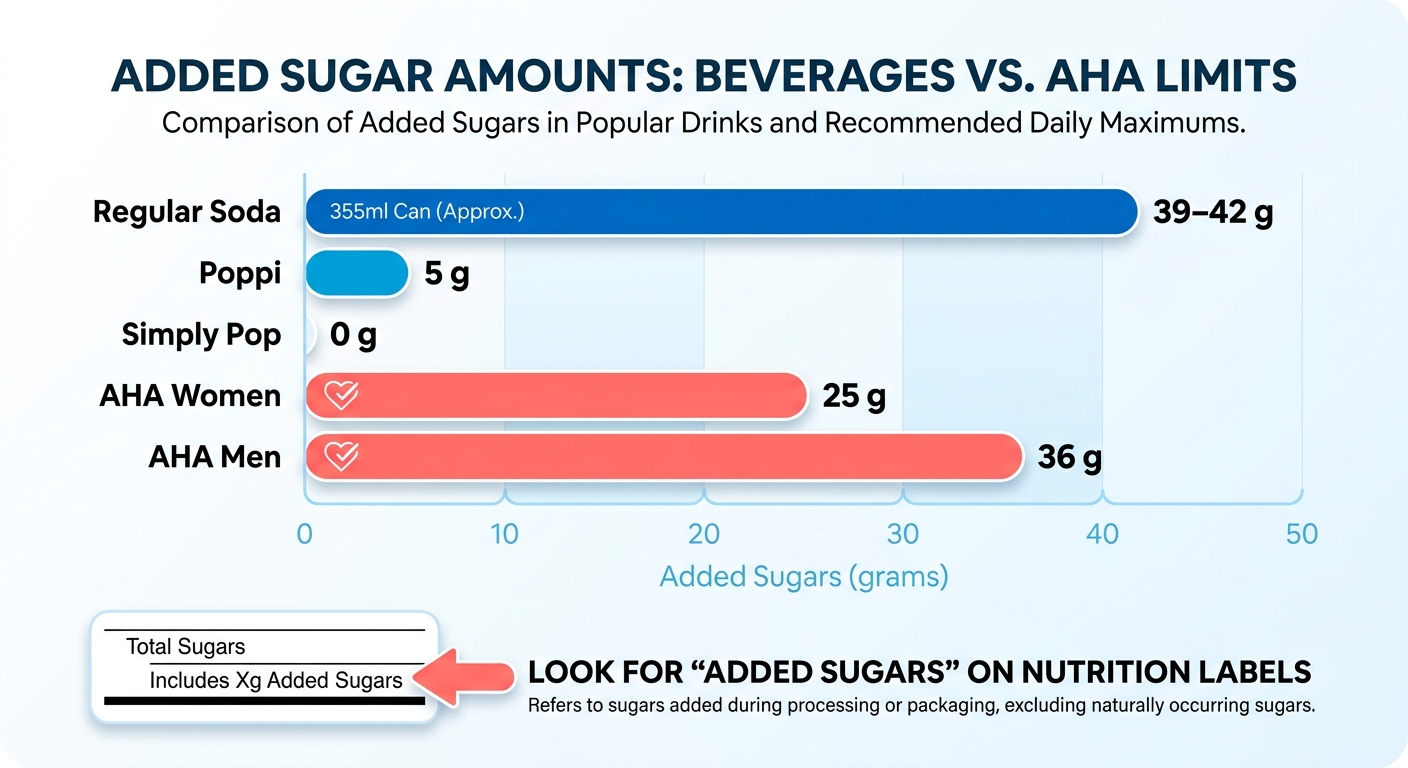
Start with the "added sugars" line on the label, not the headline on the can. The American Heart Association caps daily added sugar at 25g for women and 36g for men. A regular soda blows through that fast, often 39–42g per 12 fl oz. Prebiotic options cut hard against that. Poppi runs 5g per can, and Simply Pop uses no added sugar, leaning on real fruit juice for sweetness (Simply Pop's own page, and a retail listing). Check serving size too, or you'll underestimate what you're actually drinking.
What to scan for in the ingredients
Natural sweeteners like stevia, monk fruit, and allulose often stand in for refined sugar in low-sugar sodas. Zevia and LaCroix use these to hit zero sugar without the chemical aftertaste. For the prebiotic effect, look for fibers like inulin or chicory root. Steer clear of products hiding behind "natural flavors" or "caramel color." Those can quietly carry sugar, as a registered dietitian flagged in a recent analysis.
Sugar vs. prebiotic payoff
For context: a 12-ounce regular soda averages about 40g of sugar. Prebiotic sodas cap at 5g or less. Poppi's Juicy Refresh variety pack lists 5g of sugar and 35 calories per can, plus added prebiotic fiber (listing). One catch worth remembering: "no added sugar" isn't the same as zero total sugar. Juice brings natural sugar along with it, so read both lines.
And don't confuse prebiotic with probiotic. Prebiotics are the fibers that feed the bacteria you already have. Probiotics add live cultures. If you want more microbial diversity, a fermented probiotic drink like kombucha is the play. Pair the two and you get the best of both.
What these drinks actually do for you
Digestion: the strongest case
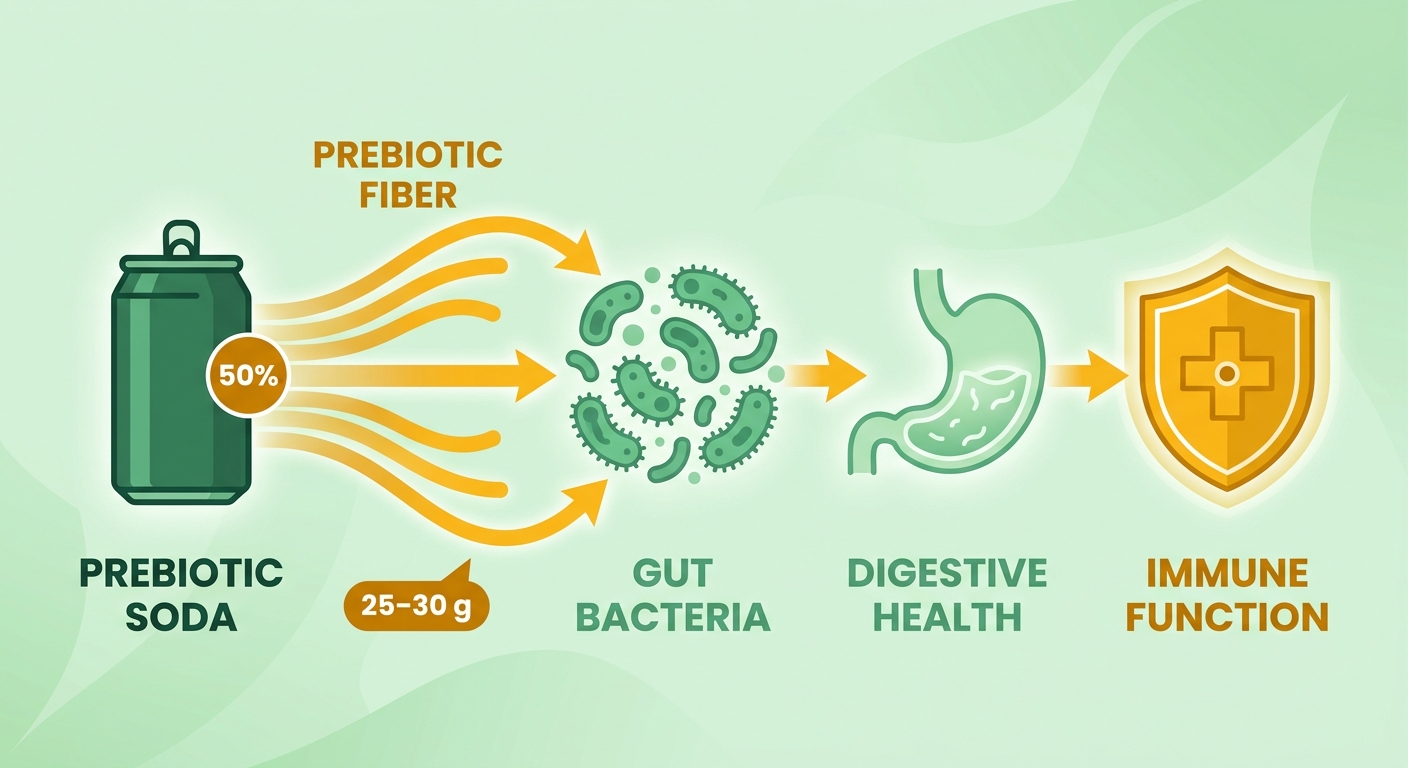
Prebiotic sodas help digestion by feeding gut bacteria with fibers like inulin or chicory root. The Cleveland Clinic describes these fibers as fuel for gut microbes, which can improve regularity and ease bloating. Research on direct symptom relief for something like IBS is still thin, but plenty of people report smoother digestion once they work these drinks in.
Adults need roughly 25–30 grams of fiber a day, and most people manage less than half. A prebiotic soda chips in a modest amount, which helps when the rest of your diet is balanced. That said, gastroenterologists keep pointing back to whole foods like bananas and oats as the reliable sources. A can won't out-fiber a bowl of oatmeal.
Immune support: indirect, at best
Your gut microbiome plays a real role in immune health, and that's where the indirect case lives. A more balanced gut may help your body manage infection and inflammation. FedUp Foods notes that prebiotic fibers help keep microbial diversity up, which links to stronger immune responses.
No study shows a prebiotic soda cures inflammation. But the low-sugar formulas, around 5g a can, skip the blood-sugar spikes that drag immunity down. That alone makes them a better pick than regular soda if you're trying to keep inflammation in check.
Mood: a maybe, not a promise
The gut-brain axis is genuinely interesting, and emerging research connects gut health to mood. The honest read: nobody's tied prebiotic sodas directly to lower stress. A healthier microbiome might support mental well-being, but that's a chain of "mights."
People do report better energy and focus. Those are anecdotes, not data. Treat these drinks as one small piece of a bigger picture, not a fix.
Where they fit in real life
Prebiotic sodas work best alongside a fiber-rich diet, not in place of one. Many blend prebiotics with fruit juice for flavor, which is fine, but it doesn't make them a substitute for whole foods. The research still needs to catch up on long-term benefits.
If you already like carbonated drinks, swapping regular soda for a prebiotic one lowers your sugar and adds a little gut-friendly fiber. If your digestion is sensitive, start with small servings. Inulin can bring gas and discomfort when you ramp up too fast.
What's actually in the can
Prebiotic soda is a functional drink built around prebiotic fibers, the plant compounds that feed beneficial gut bacteria. The International Scientific Association for Probiotics and Prebiotics (ISAPP) defines prebiotics as "selectively fermented ingredients that result in specific changes in the composition and/or activity of the gastrointestinal microbiota, conferring health benefits" (ISAPP). Unlike probiotics, which add live bacteria, prebiotics feed the microbes you already have.
The mechanism, briefly
It comes down to fermentation. Fibers like inulin or fructooligosaccharides (FOS) resist digestion in the upper GI tract and reach the colon intact. There, bacteria such as Bifidobacteria and Lactobacilli ferment them, producing short-chain fatty acids like butyrate. Those acids feed colon cells, reinforce the gut barrier, and may reduce inflammation. A single serving usually carries 1–3g of fiber, which lines up with daily targets while keeping sugar low.
The fibers worth knowing
The good ones use non-digestible carbohydrates as the active ingredient:
- Inulin: From chicory root or cassava. A common prebiotic fiber that may help calcium absorption and blood sugar regulation.
- Fructooligosaccharides (FOS): Shorter-chain fibers with a mild sweetness, often used to cut added sugar.
- Galactooligosaccharides (GOS): Structurally close to the oligosaccharides in human milk, and very good at feeding Bifidobacteria.
Skip anything that says "natural flavors" without naming a prebiotic source. The Journal of Clinical Gastroenterology points to 2–5g of prebiotic fiber a day for noticeable benefits, which one to two cans can cover (JCG).
The limits
These aren't a standalone fix. How well they work depends on your own gut microbiota and your overall diet. The National Institutes of Health notes that people with IBS may get bloating or gas from the fermentation (NIH). If you're on medications like immunosuppressants or have a history of digestive disorders, talk to a provider first.
Prebiotic soda earns its place as part of a broader gut-health approach: varied fiber sources, hydration, and not overdoing it. The appeal is that it does this in a format that already feels familiar. Results still vary by person.
Affordable brands worth trying
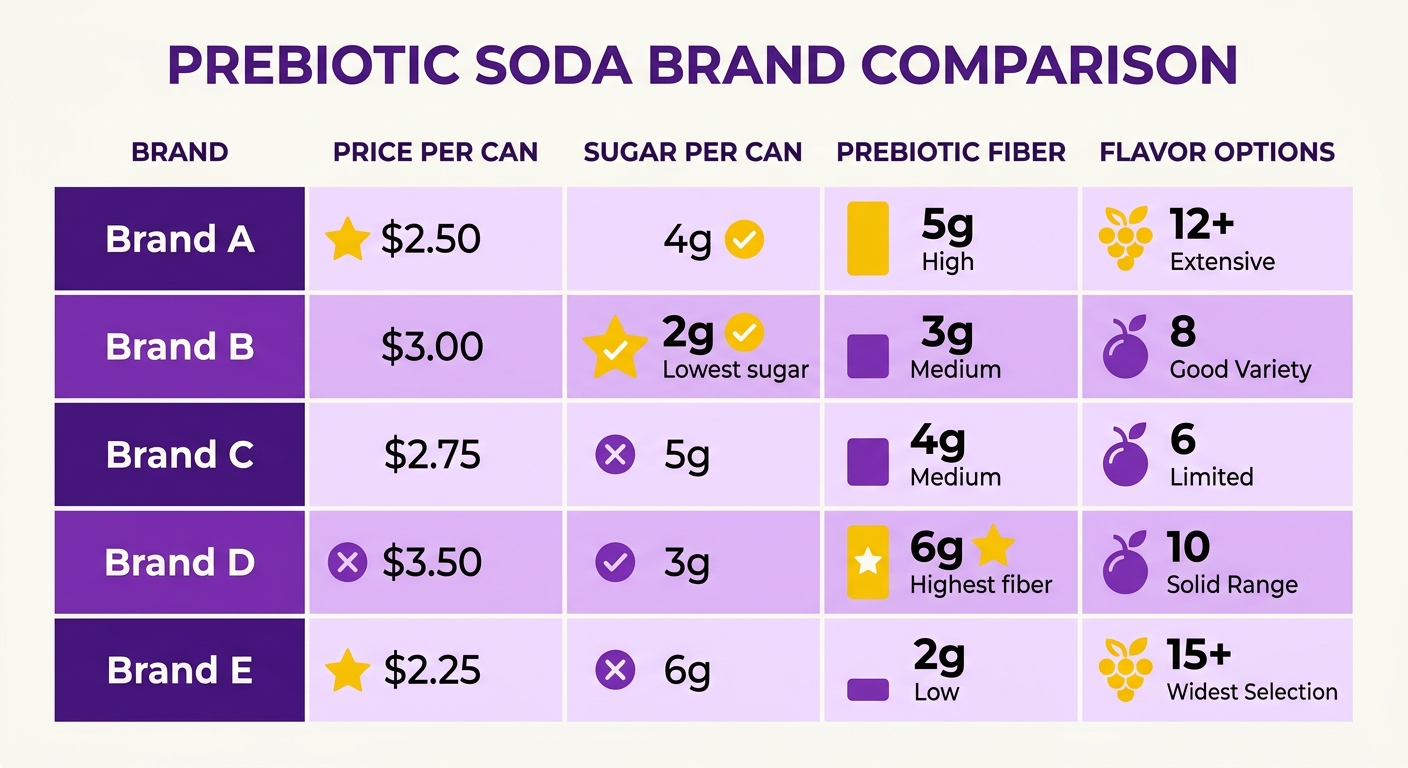
A handful of brands stand out on prebiotic content, flavor range, and price. Here are five that balance benefit with a reasonable cost, with notes from actual users.
1. Simply® Pop Prebiotic Soda
Coca-Cola's Simply Pop runs bold flavors like Black Cherry and Citrus for people who want a vibrant drink. The 12-pack goes for around $8 at major grocery chains, which makes it an easy daily option.
Key Features
- Fiber Source: Chicory root (non-GMO)
- Sweetness: Naturally sweetened with real fruit juice
- Where to Buy: Coca-Cola's site, or in-store at Walmart and Target
Customer take: One Reddit user found that comparing prices across Amazon, Walmart, and Costco often lands Simply Pop as the cheapest bulk prebiotic soda with no artificial sweeteners.
2. Poppi Prebiotic Soda
Poppi mixes sparkling water with organic cane sugar and prebiotics from agave inulin and cassava root. The Juicy Refresh Variety Pack (8 cans) runs about $10 on Amazon, with flavors like Strawberry Kiwi and Pineapple.
Key Features
- Fiber Content: 1g of prebiotic fiber per serving
- Flavors: Strawberry Kiwi, Pineapple, and others
- Where to Buy: Amazon, or grocery stores like King Soopers
Doctor's take: A physician's YouTube breakdown calls Poppi's fiber a "nuanced choice" for bumping up daily intake, with the usual caveat that it's no replacement for whole foods.
3. Yacon syrup-based brands
Less mainstream, but climbing. Yacon-based sodas use the Andean plant's natural fructooligosaccharides (FOS), and they're favored for a low glycemic index and subtle sweetness. Brands like FedUp Foods sell 6-packs for $12–$15 online.
Key Features
- Fiber Source: Yacon root (rich in FOS)
- Sweetness: Naturally sweet, 1–2g of sugar per can
- Where to Buy: Niche health stores or Amazon
User tip: One Reddit commenter noted yacon sodas cost more upfront but often hit discounts during online sales, which evens things out over time.
4. Zevia Organic Prebiotic Soda
Zevia runs zero sugar with prebiotic fiber from inulin and a clean ingredient list. The 12-pack is $9–$12 on Amazon depending on promotions.
Key Features
- Fiber Source: Inulin (certified organic)
- Sweeteners: Allulose and stevia
- Where to Buy: Amazon or Whole Foods
Consumer review: One shopper praised the "clean ingredient list," but flagged that it's harder to find in stores.
5. LaCroix with prebiotic additions
LaCroix itself isn't prebiotic, but third-party brands have added chicory root fiber to make hybrid versions. These usually run $15–$20 per 12-pack online.
Key Features
- Fiber Source: Added chicory root
- Sweetness: Zero calories, zero sugar
- Where to Buy: Online retailers like Thrive Market
Caveat: A TIME piece notes that bolting fiber onto existing sparkling water may not deliver what a purpose-built prebiotic soda does. Worth keeping in mind before you pay the premium.
How to choose
- Check the fiber source: Favor inulin, chicory root, or yacon for proven prebiotic effect.
- Track prices: Tools like CamelCamelCamel catch Amazon discounts.
- Read labels: Skip "natural flavors" with no named prebiotic.
For everyday access, Simply Pop and Poppi have the widest reach. Yacon-based sodas fit specialty diets. Either way, verify the prebiotic content per serving so it actually matches your goal.
How prebiotic soda fits into a high-fiber diet
Prebiotic soda can support a high-fiber diet by delivering concentrated prebiotic fiber that feeds gut bacteria. The Academy of Nutrition and Dietetics ties a high-fiber diet to lower inflammation and better gut motility, and these drinks add a convenient boost without leaning on whole foods alone. Simply Pop carries 0.5g of prebiotic fiber per can from chicory root; Poppi runs 1–3g from inulin or cassava. Both help close the daily gap. Neither replaces vegetables and whole grains.
Pairing with other fiber
Prebiotic sodas play well with fiber-rich foods like legumes, oats, and berries. A dietitian's logic here is straightforward: drink one with a meal that already has resistant starch or soluble fiber, and you can amplify the fermentation that builds microbial diversity. A prebiotic soda next to a lentil salad or a bowl of oatmeal feeds colon bacteria more, which bumps short-chain fatty acid production. Research on the sodas specifically is limited, but the combo lines up with broader gut-health guidance.
How to work it in daily
- Pair with meals: Use it alongside fiber-heavy dishes like quinoa bowls or bean stews.
- Replace sugary drinks: Swap regular soda or juice for Simply Pop (no added sugar) or Poppi (5g sugar per can).
- Watch portions: One can a day is plenty. Too much fiber too fast means bloating for sensitive stomachs.
Brands are positioning these as functional snacks for fiber on the go. A can of Zevia delivers 1g of soluble fiber from chicory root, which is a fine portable option when you're slammed.
Where it falls short
Prebiotic sodas don't carry the micronutrients or the staying power of whole foods. Over-rely on them and you skew toward soluble prebiotic fiber like inulin, missing the insoluble fiber in whole grains. Some formulas also sneak in added sugar, so check the label. A 2024 study on yacon-based beverages suggests natural options like yacon syrup may offer broader benefits, though those stay niche for now.
Treat the soda as one tool among many. Fruits, vegetables, whole grains, and a can when it's convenient. That's the balanced version.
Ingredients worth scanning the label for
When you're sizing up a better-for-you soda, focus on what delivers a benefit without dragging in added sugar.
The prebiotic fibers
Inulin (from chicory root) and fructooligosaccharides (FOS) are the ones that do the gut-health work. These are what you want to see named outright.
Natural sweeteners
Stevia and monk fruit cut added sugar without killing flavor. Not every brand lists exactly which sweetener it uses, but many prebiotic sodas reach for these to keep calories down and taste up.
Vitamins and minerals
Some better-for-you sodas add vitamin D and calcium for bone support. It's not standard in prebiotic sodas, but it shows up in functional drinks. Check the nutrition label if added micronutrients matter to you.
Antioxidants
Ingredients like green tea extract or berry concentrates help with oxidative stress and immune support. Yacon-based drinks bring polyphenols with anti-inflammatory properties. Real fruit juice or herbal infusions are the natural route to a little antioxidant content.
A couple of real examples
- Bai Hydrated: Stevia and monk fruit sweeteners with electrolytes for hydration (site).
- Yacon-based drinks: Antioxidant properties plus prebiotic fiber.
These show how a soda can sit between flavor and function. Prioritize named fiber, natural sweeteners, and nutrient-dense add-ins, and compare labels so you're not paying for artificial filler.
Using Popgot to find affordable prebiotic soda options
Popgot speeds up the hunt by scanning multiple retailers and verifying product details with AI. If you want a chicory root soda like Simply Pop (0.5g prebiotic fiber per can) or one of Poppi's inulin options (1–3g per can), it cross-references prices from grocery chains and online stores. No more manually checking Amazon, Walmart, and Target one tab at a time to find the best unit price.
Filters that do the work
Use Popgot's customizable filters for fiber content, sugar level, and retailer availability. Set "no added sugar" to surface options like Simply Pop. Sort by fiber source, cassava or inulin, depending on your preference. The AI favors products with clear labeling and skips vague claims like "contains fiber" in favor of named prebiotics.
Price tracking, from people who do it
Shoppers who care about price tend to pair Popgot with a tracking habit. One Reddit user pointed out that checking multiple retailers regularly turns up discounts, especially on bulk buys. GT's Organic Prebiotic Sparkling Water (1g fiber per 12-oz bottle) might be cheaper by the 24-bottle case at Sam's Club than buying singles locally. Popgot flags those deals, but the advice from another shopper holds: always double-check the unit price, because a bigger pack isn't automatically the better deal.
A few health notes
Prebiotic sodas supplement whole foods like fruits and vegetables. They don't replace them. If your digestion is sensitive, the NIH recommends starting small to test tolerance. When you're filtering, favor brands with transparent ingredient lists and skip the artificial sweeteners. If you're on medication or managing something like diabetes, check with a provider first.
Used well, Popgot's search and price comparison helps you pick a soda that fits both your goals and your budget. Glance at current ratings and promotions before you commit.
Prebiotic soda or just eat the apple?
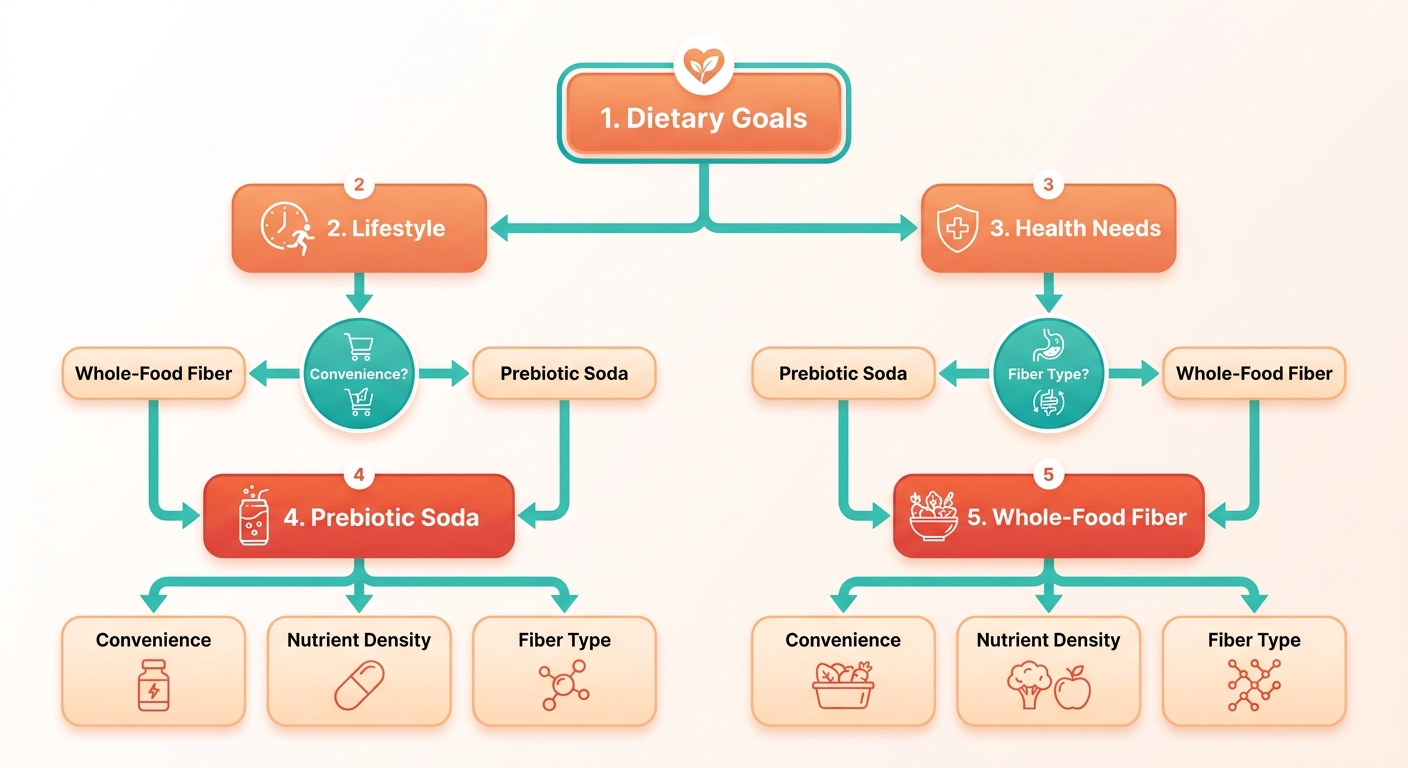
The choice between prebiotic soda and whole-food fiber comes down to your needs, your schedule, and your goals. Whole foods, fruits, vegetables, whole grains, are still the gold standard. They bring nutrients well beyond prebiotic fiber. The American Heart Association credits them with lowering inflammation and supporting heart health through complex carbs, vitamins, and antioxidants. Prebiotic sodas earn their keep as a practical supplement when you can't hit your fiber target, or when you want a lower-sugar swap for regular soda. Here's where each one wins.
When whole food wins
Whole foods deliver a wider range of benefits. One apple has 4g of fiber plus vitamin C and polyphenols. A cup of cooked quinoa brings 5g of fiber plus protein. They also keep you full and your blood sugar steady, which a beverage can't really match. The Cleveland Clinic notes prebiotic sodas usually carry just 0.5–3g of fiber per serving, well under a real meal. If your diet already has plenty of vegetables, legumes, and whole grains, adding a soda gives you very little extra.
When the soda makes sense
Convenience is the whole pitch. Busy schedule, no fresh produce nearby, a can of Simply Pop (0.5g fiber from chicory root) or Poppi (1–3g from inulin or cassava) fills a gap with zero prep. They also help people walking away from sugary drinks, since the added sugar is far lower. Poppi's 5g a can against regular soda's 39g isn't close. A TIME Health analysis points out these drinks can lift fiber intake for anyone who struggles to hit 30g a day through food.
What to weigh either way
- Digestive sensitivity: Inulin and similar fibers can cause bloating or gas. The NIH suggests starting with small portions and watching how you react. Whole foods are usually well tolerated, but overdo any fiber and you'll feel it.
- Sugar and calories: Even low-sugar sodas may use stevia or organic cane sugar. Compare labels.
- Cost and access: A 12-pack of Simply Pop runs around $8, often cheaper than organic produce, which makes it a budget-friendly choice.
Neither one wins outright. The best results usually come from using both in moderation. One Reddit user uses Poppi as a post-workout drink while leaning on oats and berries for morning fiber. Match your choices to your routine and you get the upside of both.
References
[1] Simply® Pop Prebiotic Soda - Bold Flavors & Gut Health - Coca-Cola - https://www.coca-cola.com/us/en/brands/simply/simply-pop
[2] Poppi Prebiotic Soda, Sparkling Water & Fruit Juice, Fun Favorites... - https://www.amazon.com/Sparkling-Prebiotic-Immunity-Benefits-Beverages/dp/B094LFK6DF
[3] Are Prebiotic Sodas Actually Good for You? - TIME - https://time.com/7271554/are-prebiotic-sodas-healthy/
[5] Are Prebiotic Sodas Good for You? - https://health.clevelandclinic.org/are-prebiotic-sodas-good-for-you
[6] The Rise of Prebiotic Sodas - FedUp Foods - https://www.fedupfoods.com/insights/the-rise-of-prebiotic-sodas
[7] (PDF) Yacon Prebiotic Functional Beverages, the Sensory... - https://www.researchgate.net/publication/384259580_Yacon_Prebiotic_Functional_Beverages_the_Sensory_Antioxidant_Profiles_and_Shelf_Stability
[8] MD's thoughts on Prebiotic Sodas! #olipop #poppi #prebioticsodas #healthysoda #healthtips #soda by Dr. DeDeck - https://www.youtube.com/watch?v=g_lSNhoi9ig
Frequently Asked Questions
1. How do prebiotic sodas differ from probiotic drinks like kombucha?
Prebiotic sodas feed existing gut bacteria with fibers like inulin, while probiotics add live cultures. For gut health, prebiotics support digestion, whereas probiotics introduce new bacteria. Both can be beneficial, but prebiotics are often easier to incorporate into daily routines.
2. Which prebiotic soda is best for people avoiding added sugars?
Simply Pop Black Cherry is ideal, with 0g added sugar and real fruit juice. Poppi Juicy Refresh has 5g sugar per can, while FedUp offers 3g. Always check labels for “no added sugar” claims to avoid hidden sweeteners.
3. Can prebiotic soda help with IBS symptoms?
Some users report reduced bloating from prebiotic fibers, but results vary. Brands like Yuzu Sparkling (4g sugar) or LaCroix Prebiotic Edition (0g sugar) may suit sensitive digestion. Consult a doctor if symptoms persist, as high-fiber drinks can cause gas in some individuals.
4. How do I know if a soda actually contains prebiotics?
Look for named fiber sources like chicory root, inulin, or cassava on the label. Avoid products listing vague terms like “natural flavors.” For example, Poppi uses agave inulin, while FedUp Foods lists chicory root fiber explicitly.
5. Are prebiotic sodas a good source of daily fiber?
They contribute 1–3g of fiber per serving, helping meet daily goals but not replacing whole foods. Pair one can with meals rich in legumes or vegetables for balanced intake. Simply Pop adds 0.5g per can, while Poppi offers up to 3g.
6. Do prebiotic sodas have long-term health benefits?
Research is ongoing, but regular use may improve digestion and immune function over time. Brands like Yuzu Sparkling (tapioca starch) or LaCroix (inulin) provide consistent prebiotic support. Pair with a fiber-rich diet for optimal results.
7. How can I find the most affordable prebiotic soda?
Compare prices at Walmart, Amazon, or Target using tools like Popgot’s AI label scanner. Simply Pop costs $1.00–$1.50 per can, while Poppi ranges from $1.20–$1.80. Check for discounts on bulk purchases or seasonal sales to maximize value.