
Popgot vs Traditional Price Comparison Tools

Key Takeaways
- Price comparison tools help U.S. families save 30–60% on household staples through unit price analysis.
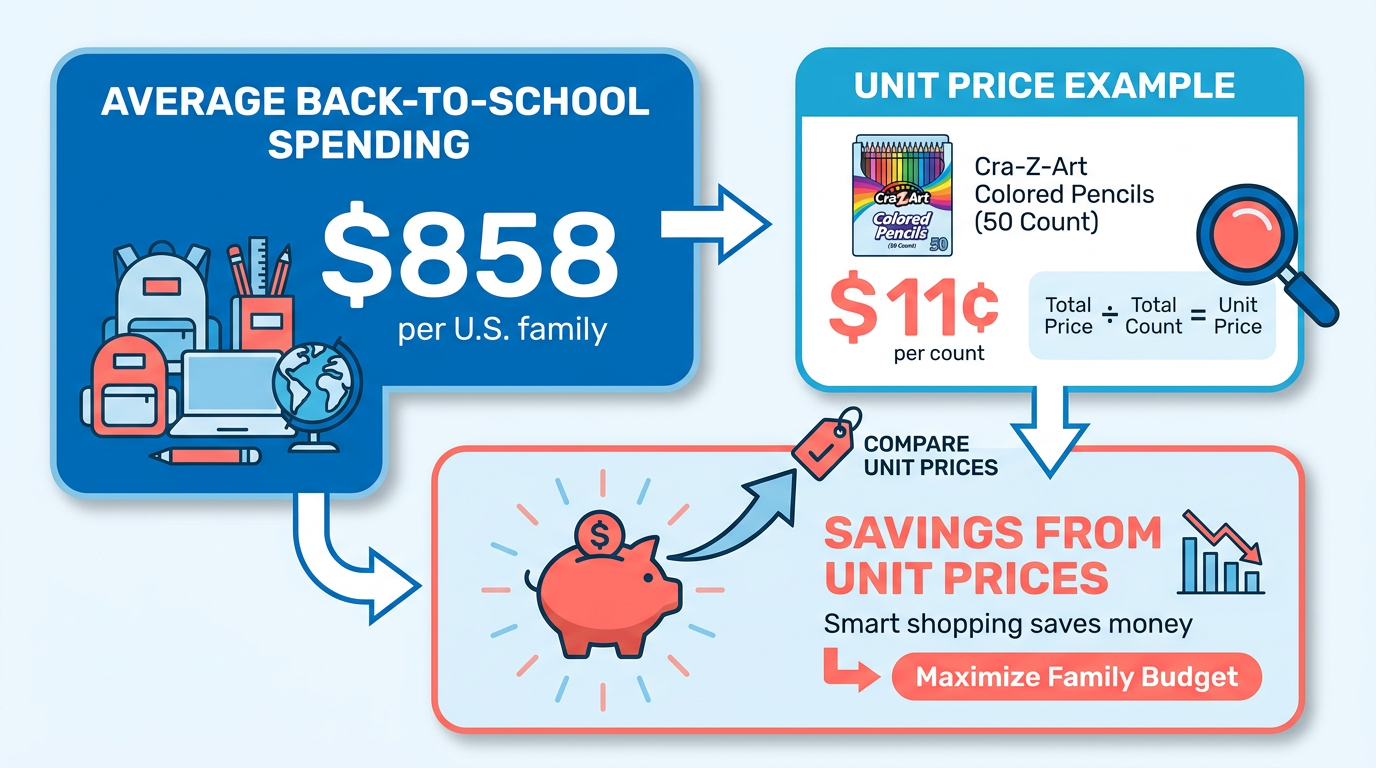
- Unit pricing exposes hidden deals, like 11¢ per count for Cra-Z-Art pencils vs. 16¢ per count for BIC pens.
- The average family spends $858 on back-to-school supplies, amplifying the value of precise price comparisons.
- Popgot streamlines shopping by aggregating real-time unit prices across Amazon, Walmart, and Target.
- Traditional methods often overlook hidden costs in varying pack sizes and temporary discounts.
- Manual unit price calculations waste hours annually for budget-conscious shoppers.
- Reddit users report consistent savings on groceries using Popgot’s centralized price comparisons.
Why Price Comparison Matters
Price comparison is a critical tool for modern shoppers, helping them manage a complex market where prices vary widely across retailers. According to the average U.S. family spends $858 on back-to-school supplies alone, making even small savings feel significant. By comparing unit prices-the cost per ounce, count, or size-shoppers can identify deals that might otherwise go unnoticed. For example, a 12-count pack of Cra-Z-Art colored pencils costs just 11¢ per count on Walmart, while a similar 24-count pack of BIC pens is 16¢ per count on Amazon. These granular comparisons help consumers avoid overpaying for bulk packages that seem cheaper at first glance.
How Price Comparison Influences Consumer Behavior
Consumers who actively compare prices save an average of 30–60% on household staples, according to Popgot’s analysis of live retail data. This is especially impactful for budget-conscious shoppers, who might otherwise waste hours manually calculating unit costs [1†L38-L40]. A Reddit user shared how Popgot transformed their grocery spending by comparing unit prices across Amazon, Walmart, and Target, leading to consistent savings on produce and meat. Building on concepts from the Popgot's Unique Approach section, these tools don’t just cut costs-they also reduce decision fatigue by presenting the best deals in one place.
Key Challenges Addressed by Modern Tools
Traditional shopping methods often fail to account for hidden costs, such as varying pack sizes or fluctuating discounts. For instance, a 175-sheet pack of notebook paper might cost 0.6¢ per sheet on Target, while a smaller 100-sheet pack from another retailer could be 1.2¢ per sheet-doubling the cost without obvious price tags. As mentioned in the Traditional Price Comparison Tools section, price comparison tools like Popgot solve this by automating unit price calculations and filtering results by size, rating, or retailer. This eliminates guesswork for shoppers who might otherwise buy overpriced items due to misleading packaging.
Who Benefits Most from Advanced Price Comparison
Health-conscious shoppers, families, and students often rely on these tools to balance quality and cost. For example, Popgot’s unit-price filtering helps users find organic produce at the lowest cost per ounce, while budget-savvy consumers can stock up on essentials like school supplies for under $1 per item during sales. The tool’s alerts for price drops also benefit those buying in bulk, such as a 36-count pack of highlighters priced at 22¢ per count on Amazon. These features make it easier for users to align spending with priorities, whether saving for emergencies or sticking to a strict monthly budget.
| Feature | Traditional Tools | Popgot |
|---|---|---|
| Unit Price Calculation | Manual math required | Automatic per-ounce/count cost |
| Retailer Coverage | Limited to 1–2 stores | Amazon, Walmart, Costco, Target, Sam’s Club |
| Savings Potential | 5–15% average | 30–60% average |
Real-World Impact of Unit Price Comparison
Consider a family buying back-to-school supplies: without price comparison, they might spend $858 on a standard kit. Popgot’s unit-price analysis could reduce this to a few under-$1 items by identifying jumbo packs with lower costs. For example, a 3-pack of memo books costs 34¢ per count on Walmart, while a single unit elsewhere might be 99¢. Over time, these savings add up-$100 saved on school supplies could cover a month of groceries for a low-income household.
By focusing on unit prices instead of headline costs, tools like Popgot provide a “cheat code” for smarter shopping. As detailed in the Benefits of Popgot's AI Approach section, this method empowers users to make data-driven decisions without sacrificing quality, ensuring every dollar spent delivers maximum value. For shoppers managing rising prices, this level of precision isn’t just helpful-it’s essential.
Popgot's Unique Approach
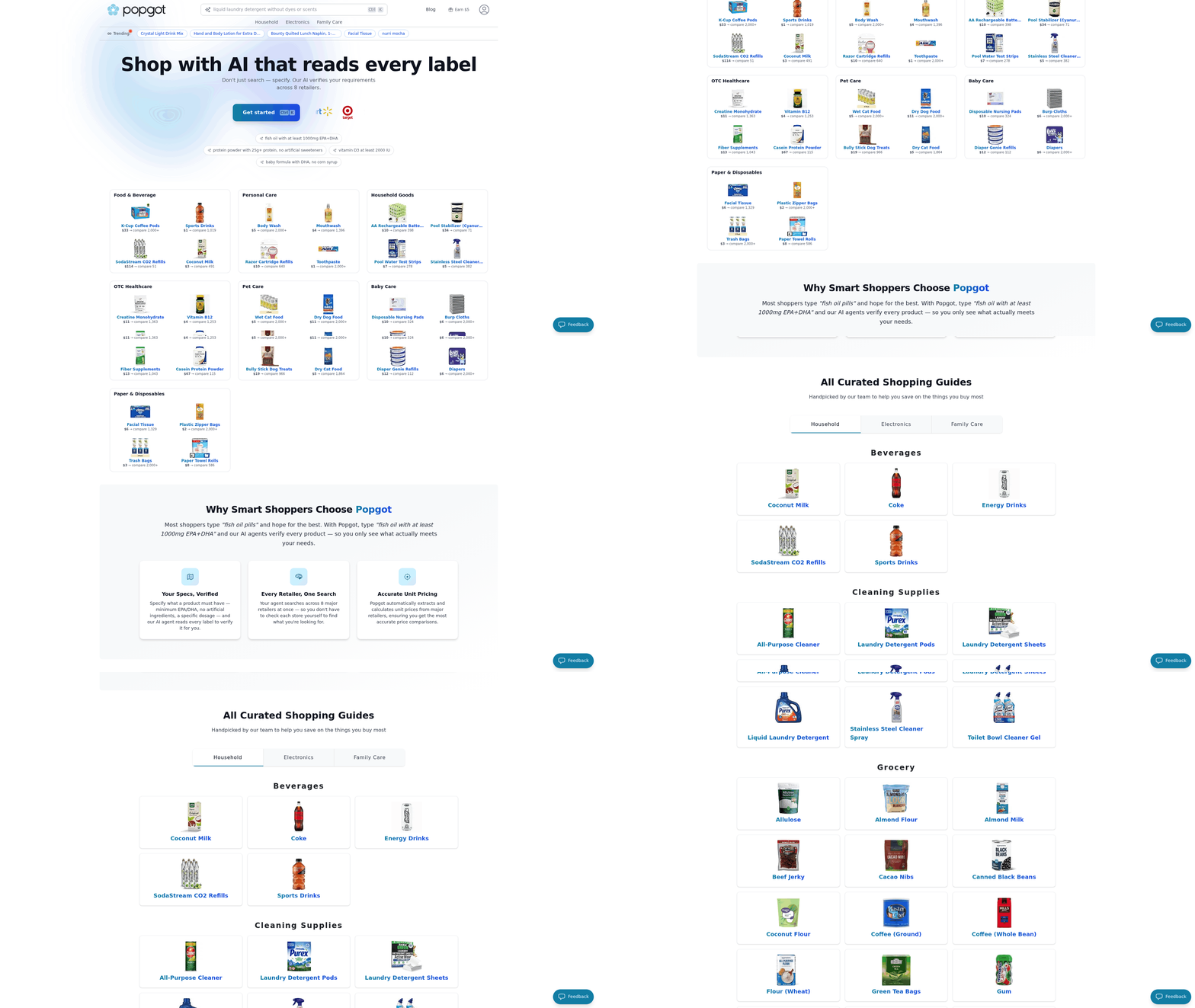
Popgot’s AI-driven approach to price comparison centers on unit pricing normalization, a feature that sets it apart from traditional tools. By calculating the cost per ounce or count across retailers like Amazon, Walmart, and Costco, Popgot eliminates the need for manual math. This method is particularly effective for products with varying package sizes, such as bulk items or multi-use containers, where standard price comparisons can be misleading. As mentioned in the Workflow Comparison: Popgot vs Traditional Tools section, this granular analysis ensures shoppers spot the cheapest options without guesswork.
How Does Popgot’s AI Normalize Unit Pricing?
Traditional tools compare headline prices, but Popgot’s AI agent verifies product specifications to calculate unit pricing. Building on concepts from the Feature Comparison: Popgot vs Traditional Tools section, it parses descriptions to extract quantities, weights, and package sizes, then divides the total price by the unit metric. This process normalizes listings like “175-sheet paper for $0.98” into 0.6¢ per sheet, making comparisons straightforward. The tool focuses on non-perishables and daily essentials, ensuring consistency in categories like school supplies or household goods.
What Role Does Machine Learning Play in Enhancing Search?
Popgot’s machine learning models refine search results by analyzing user behavior and product trends. For instance, if shoppers frequently filter by “organic ingredients” or “durable construction,” the algorithm prioritizes those criteria in future searches. This adaptive learning improves over time, offering personalized recommendations. A Reddit user noted that Popgot helped them reduce staple costs significantly, particularly for produce and meat, though its core strength remains in unit-priced non-perishables.
How Do Customizable Filters Improve Efficiency?
Popgot’s search interface includes filters for size, rating, and price, allowing users to narrow results instantly. For example, a parent shopping for back-to-school supplies can set a maximum unit price of $0.50 per item and filter by “5-star ratings” to find durable, high-quality essentials. The tool also offers curated guides, such as a “Shopping Strategy Tips” section advising users to prioritize jumbo packs with lower unit costs. These features reduce decision fatigue, a common pain point with traditional tools that lack such granular controls.
| Feature | Popgot | Traditional Tools |
|---|---|---|
| Unit Pricing | Automatically calculated per item | Requires manual math |
| Real-Time Data | Scrapes live prices from 5+ retailers | Often relies on outdated listings |
| AI Filtering | Filters by ingredients, brand compliance | Limited to basic price sorting |
| User Customization | Size, rating, and price filters | Generic comparison views |
What Benefits Does This Offer Retailers and Shoppers?
For shoppers, Popgot saves an estimated $100/month by optimizing unit-based purchases. As highlighted in the Why Price Comparison Matters section, this aligns with the average U.S. family’s $858 annual spending on back-to-school supplies. Retailers benefit from increased visibility when their products align with AI-driven criteria, such as competitive unit pricing or customer reviews. A user shared that while Costco offers good value, Popgot often identifies cheaper alternatives, promoting competition in an industry plagued by oligopolies. This transparency empowers consumers while pushing retailers to refine pricing strategies.
Case Study: Back-to-School Shopping
A family aiming to spend $858 on school supplies used Popgot to identify essentials under $1. By comparing unit prices for items like Crayola crayons (6¢ per count) and Up&up glue (20¢ per fl oz), they reduced costs by 30–60%. Traditional tools would require manually calculating each item’s value, making Popgot’s automated approach more efficient. As one user noted, “It’s like having a cheat code for finding the best deals without the hassle” .
“Popgot changed how we shop for staples. The unit pricing feature alone saves us hours each month.” – Reddit user
While still in development, Popgot plans to add historical price tracking and receipt scanning, further bridging the gap between manual and automated shopping. For now, its focus on unit pricing, AI-driven filtering, and real-time data positions it as a modern alternative to conventional price comparison tools, offering both efficiency and savings.
Traditional Price Comparison Tools
Traditional price comparison tools rely on dashboard-centric interfaces and manual data entry to help users track product prices. These platforms typically require you to input product links or search terms manually, which are then aggregated into a centralized dashboard. While this approach offers visibility into pricing trends, it often demands active user participation to maintain accuracy. For example, if you want to compare the price of a smartphone across multiple retailers, you might spend 10–15 minutes entering each product into the tool. The Reddit discussion highlights how users appreciate the transparency but note the time investment required for setup.
What Features Do Traditional Tools Offer?
Traditional tools focus on structured data collection and visualization. Key features include:
- Dashboard interfaces for centralized price tracking
- Manual product entry via links or search terms
- Historical pricing graphs to show trends over time
- Alert systems for price drops or stock availability
These tools often integrate with major retailers and marketplaces to pull pricing data. However, updates may lag-some platforms refresh data every 24 hours or more. The YouTube guide on selecting AI tools explains that traditional dashboards lack the agility of real-time updates, which can be critical for fast-moving markets like electronics or groceries. As mentioned in the Benefits of Popgot's AI Approach section, this limitation underscores the need for more dynamic solutions.
What Are the Limitations of Traditional Tools?
The biggest drawbacks stem from static data and limited interactivity. For instance:
- No real-time price updates: If a retailer changes a price at 3 PM, traditional tools might not reflect this until the next scheduled refresh.
- No conversational AI: Users can’t ask natural language questions like, “What’s the cheapest laptop under $500 right now?” They must manage filters or menus instead.
- Manual maintenance: Adding new products or adjusting search parameters requires ongoing effort.
This creates friction for users who want instant answers. Consider a scenario where you’re shopping for a last-minute gift. A traditional tool might not alert you to a sudden price drop unless you actively check the dashboard. The Reddit thread notes that users often abandon these tools during time-sensitive purchases due to slow responses. Building on concepts from the Why Price Comparison Matters section, these inefficiencies highlight why shoppers seek faster alternatives.
When Are Traditional Tools Most Useful?
Traditional tools shine in scenarios where long-term tracking and structured analysis matter most. For example:
- Price monitoring: Tracking a product’s price over weeks or months to identify patterns.
- Product research: Comparing specs and costs for bulk purchases, like office supplies.
- Budget planning: Using historical data to predict future price trends.
A user planning to buy a new TV might use a traditional tool to log the price across six retailers over two months, then analyze the data to time their purchase. However, this process assumes patience and technical comfort-onboarding can take 30 minutes or more as you learn to manage dashboards and set up alerts.
| Feature | Traditional Tools | Popgot’s AI-Driven Approach |
|---|---|---|
| Real-time data | No | Yes |
| Conversational AI | No | Yes |
| Manual data entry | Required | Optional |
| Onboarding time | 20–30 minutes | Under 2 minutes |
| Price alerts | Scheduled updates | Instant notifications |
The Popgot blog contrasts this with its own AI-first model, which eliminates manual entry and offers chat-based queries. As discussed in the Popgot’s Unique Approach section, this model focuses on unit pricing normalization and automated data collection, addressing many of the limitations outlined here.
Workflow Comparison: Popgot vs Traditional Tools
When comparing the workflow of Popgot and traditional price comparison tools, the most striking difference lies in how each handles unit price normalization and task automation. Popgot streamlines shopping by automatically calculating unit prices (e.g., cost per ounce or count) across retailers like Walmart and Amazon, while traditional tools often require manual comparisons of total package prices. This distinction reshapes every step of the user journey, from onboarding to final purchase. As mentioned in the Why Price Comparison Matters section, the complexity of modern retail pricing makes tools that simplify comparisons essential for saving money..
How Onboarding Differs: Simplicity vs. Setup
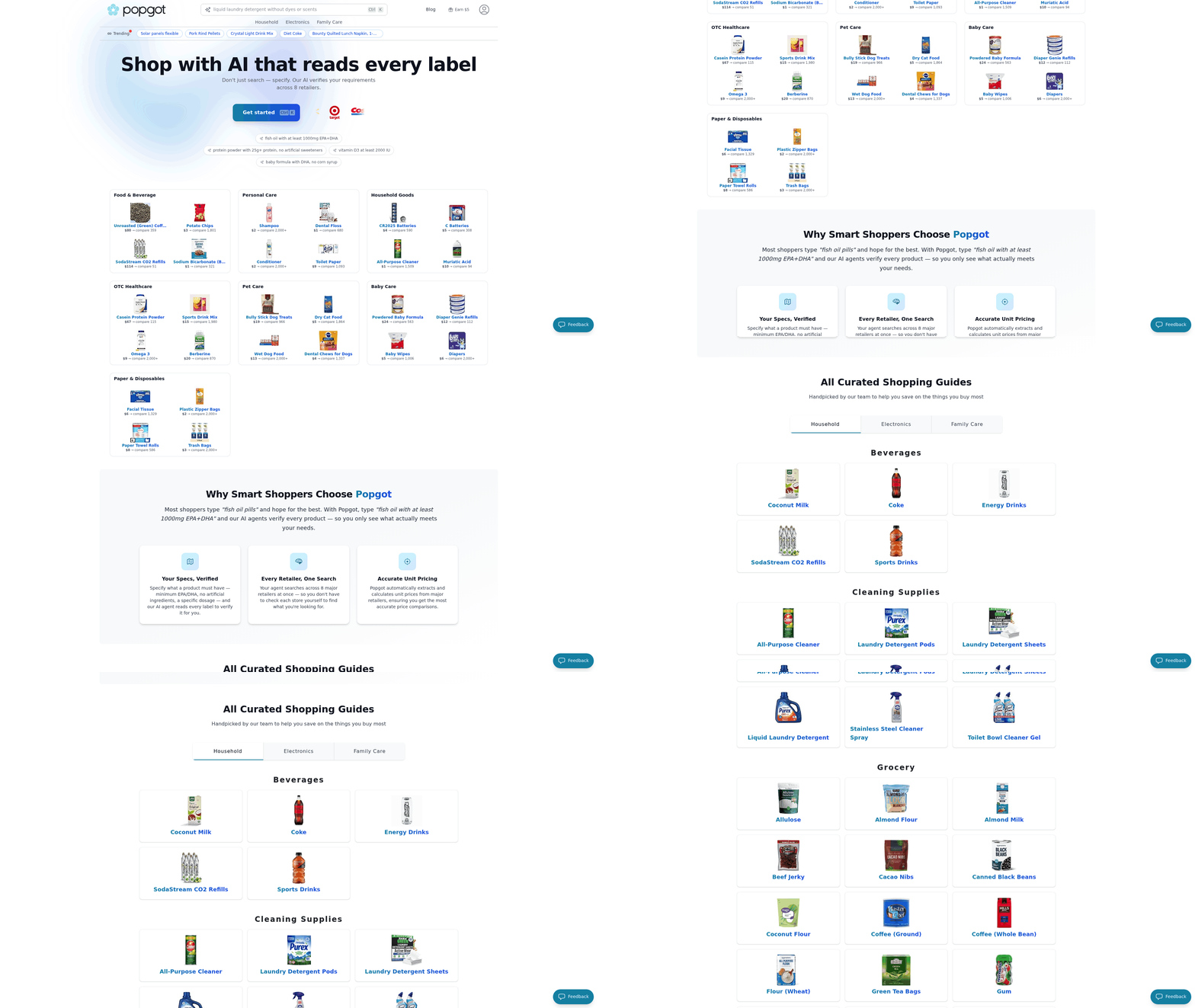
What makes Popgot’s onboarding faster? Popgot requires minimal input: users enter a product name (e.g., “crayons”) and optionally specify unit preferences (e.g., “per count”). The tool then scrapes live data from major retailers, calculates unit prices, and displays results instantly. Traditional tools, however, often demand more setup-selecting categories, setting price alerts, or linking accounts-to function effectively. Building on concepts from the Traditional Price Comparison Tools section, these platforms rely on dashboard-centric interfaces that prioritize manual data entry over automation.
For example:
| Step | Popgot | Traditional Tools |
|---|---|---|
| 1. Product Input | Type “crayons” or scan a barcode | Search manually or upload a list |
| 2. Filters | Auto-applies unit price normalization | Requires manual filtering by brand or size |
| 3. Result Display | Shows best unit price first | Displays total package price without normalization |
Traditional tools may take 5–10 minutes to configure for a single shopping task, while Popgot delivers actionable results in under 2 minutes..
Workflow Example: Search, Filter, Purchase
How does Popgot simplify decision-making? Popgot’s AI filters eliminate guesswork. Suppose you search for “notebooks.” The tool displays the unit price per sheet (e.g., 34¢/count for a 4-pack at Walmart) and highlights the cheapest option across retailers. This aligns with the Popgot's Unique Approach section, which emphasizes AI-driven unit pricing normalization as a core differentiator.
In contrast, traditional tools show total prices for packages of varying sizes. A user comparing 4-packs at $1.34 vs. 3-packs at $1.00 must calculate 34¢ vs. 33¢ per unit themselves-a time-consuming task.
Real-world example:
- Popgot: A search for “Cra-Z-Art Colored Pencils” reveals a 12-count pack at Walmart costs 11¢ per count ($1.26 total), instantly labeled as the best deal.
- Traditional tools: The same product appears as a $1.26 12-count pack with no unit price context, forcing users to compare against, say, a $1.59 24-count pack on Amazon manually..
Time and Effort: Automation vs. Manual Labor
How much time does Popgot save? For a typical 10-item grocery list:
- Popgot: 2–3 minutes total. The tool auto-calculates unit prices, filters by size, and aggregates the cheapest options.
- Traditional tools: 10–15 minutes. Users must compare total prices, convert to unit costs manually, and check multiple retailers for each item.
A case study from highlights a user who saved $100/month by switching to Popgot but spent hours manually tracking unit prices before. Traditional tools lack features like Popgot’s size filter, which helps identify jumbo packs with lower per-unit costs..
User Interface and Experience
Why does Popgot feel more intuitive? Popgot’s interface prioritizes math-free clarity. Unit prices are bolded and sorted by cost, with retailer logos and direct links to purchase pages. Filters like “show only 100+ ratings” or “under $5” refine results instantly. Traditional tools often present cluttered dashboards with raw data (e.g., “$1.26 for 12-count”), leaving users to interpret value.
Navigation comparison:
| Feature | Popgot | Traditional Tools |
|---|---|---|
| Unit price visibility | Always shown upfront | Hidden or requires manual calculation |
| Feedback mechanisms | Alerts for price drops (planned) | Static price alerts |
| Purchase flow | One-click redirect to retailer | Multiple steps to cross-check prices |
Users praise Popgot’s “cheat code” simplicity, though some request receipt-uploading features to track past purchases. Traditional tools, while feature-rich, often overwhelm with data without actionable insights..
Benefits and Drawbacks
When to choose Popgot vs. traditional tools?
- Popgot’s strengths:
- Saves 30–60% on daily essentials by normalizing unit prices.
- AI filters for ingredients, brands, or ratings reduce decision fatigue.
- Ideal for non-perishables and bulk purchases.
- Drawbacks:
- Limited to shipped goods; no in-store price checks.
- Early-stage features like historical pricing are pending.
- Traditional tools’ strengths:
- Broader retailer support (e.g., local stores).
- Suitable for perishables or last-minute purchases.
- Drawbacks:
- Labor-intensive comparisons.
- No unit price normalization, leading to suboptimal deals..
Final Takeaway
For users prioritizing time and accuracy, Popgot’s AI-driven unit pricing model outperforms traditional tools. Its workflow eliminates manual math and focuses on actionable savings, though it’s not yet a complete replacement for tools offering local store comparisons. Traditional tools remain valuable for shoppers needing flexibility but require more effort to yield equivalent savings. The choice ultimately depends on whether automation or manual control aligns better with your shopping habits.
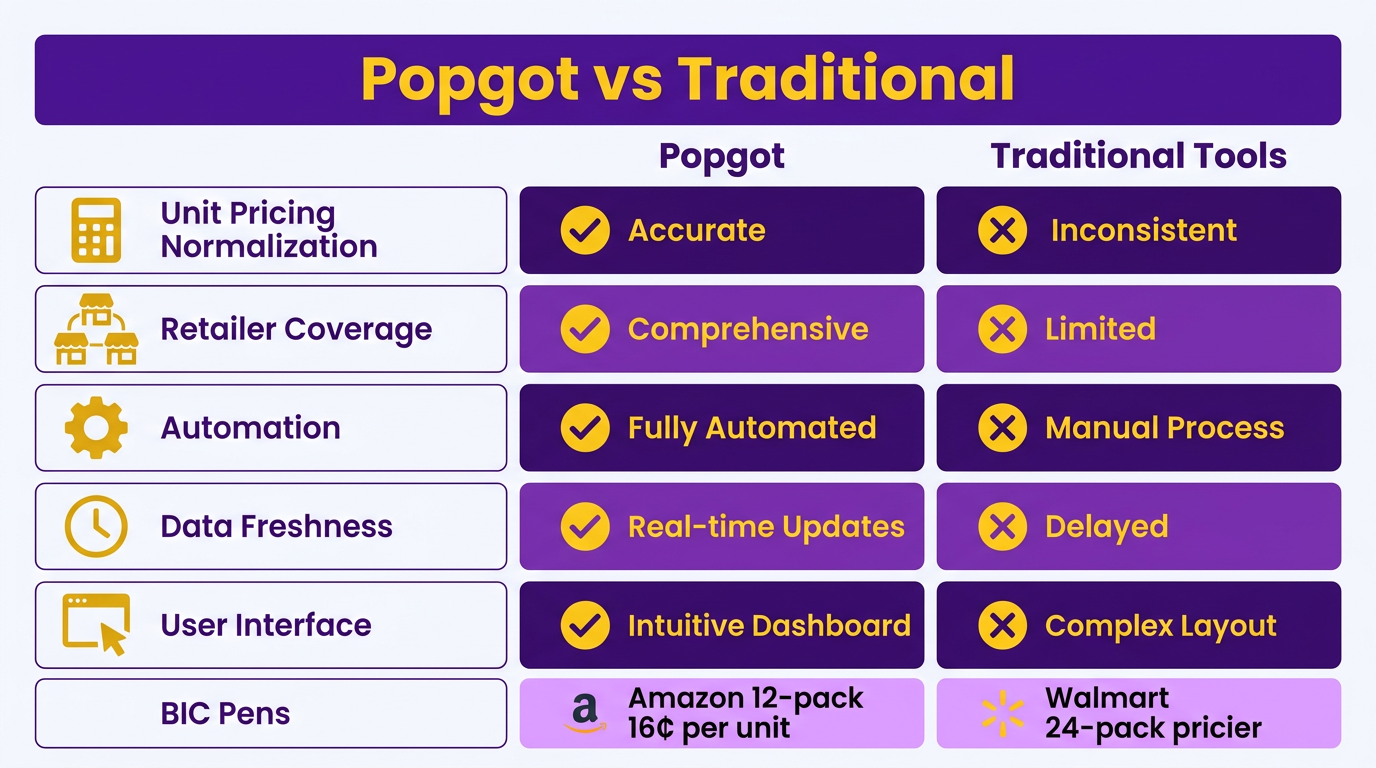
Feature Comparison: Popgot vs Traditional Tools
Data Sources and Retailer Coverage
Popgot focuses on unit pricing normalization across Amazon, Walmart, Target, Costco, and Sam’s Club, pulling live data to compare items like school supplies or household essentials . Traditional tools often aggregate prices from broader retailer networks but lack unit-cost normalization, making it harder to compare multi-pack deals or bulk purchases. For example, Popgot calculates that a 12-count pack of BIC pens costs 16¢ per count on Amazon, while a similar 24-count pack on Walmart might appear cheaper at first glance but ends up pricier per unit . As mentioned in the Traditional Price Comparison Tools section, traditional tools typically display raw prices without this math, forcing users to calculate manually.
Traditional tools may offer wider retailer coverage, including niche marketplaces, but their data often stays unverified. Popgot’s curated list prioritizes major retailers with reliable shipping and return policies, as noted in user feedback about Costco’s value vs. unit cost ..
Filtering and Customization
Popgot’s AI engine allows filters based on unit price, pack size, and product attributes like “gluten-free” or “vegan” through natural language queries . For instance, a user can search for “non-GMO almond milk” and see unit prices sorted from lowest to highest. Building on concepts from the Popgot's Unique Approach section, traditional tools rely on basic filters like brand, price range, or ratings but lack AI-driven attribute parsing.
| Feature | Popgot | Traditional Tools |
|---|---|---|
| Unit Price Sorting | Yes (default view) | No |
| AI Attribute Filters | Yes (e.g., "organic" or "cruelty-free") | No |
| Pack Size Optimization | Yes (highlights jumbo packs with lower unit costs) | Limited to manual comparison |
Traditional tools often require users to export data to spreadsheets for advanced analysis, as highlighted in a Reddit discussion about budgeting . Popgot’s lightweight AI model automates this process, saving time for users who prioritize efficiency ..
Automation and Proactive Alerts
Popgot plans to introduce price drop alerts and restocking triggers, though these features are still in development . As discussed in the Workflow Comparison: Popgot vs Traditional Tools section, traditional tools like Honey or CamelCamelCamel already offer price tracking but focus on headline prices, not unit costs. A user case study from Popgot’s blog shows how someone manually tracked grocery prices to save money, a process Popgot aims to automate .
For example, if a user searches for “organic brown rice” on Popgot, they’ll receive notifications when Costco drops its unit price to $0.25/ounce-a feature traditional tools can’t currently match. Traditional tools may notify users about sales, but without unit pricing context, shoppers might miss better deals in larger packages ..
Use Cases and Real-World Impact
Product Research: Popgot excels in scenarios like back-to-school shopping, where unit pricing reveals hidden savings. A family spending $858 on supplies could cut costs by 30–60% using Popgot’s unit-price breakdowns for items like crayons or scissors . Traditional tools might show cheaper headline prices for multi-packs but fail to highlight that a smaller pack is actually a better deal per unit.
Purchase Decisions: Popgot’s “shopping strategy tips” guide users to buy jumbo packs or multi-purpose items, such as using highlighters for both schoolwork and planning . Traditional tools lack these curated guides, leaving users to experiment on their own.
A user testimonial from Popgot’s Facebook page states, “I used to calculate unit prices manually for groceries, but Popgot saves me $100/month without the hassle” . Traditional tools, while useful, don’t address unit pricing as effectively, leading to potential overpayment for consumers unaware of math-based comparisons ..
Benefits and Limitations
Popgot benefits include:
- Time savings via AI-driven unit pricing and filters .
- Targeted savings for daily essentials, with real-world examples showing 30–60% reductions .
- Future-proof features like historical price tracking, though currently in development .
Traditional tools shine in:
- Broader retailer coverage, including niche or local stores.
- Established ecosystems with browser extensions for coupon stacking.
- Maturity in automation (e.g., CamelCamelCamel’s price history graphs) .
However, traditional tools often lack unit normalization, a gap experts note as critical in combating grocery store oligopolies . Popgot’s focus on non-perishables also limits its utility for fresh produce or time-sensitive purchases ..
Final Comparison Summary
| Feature | Popgot | Traditional Tools |
|---|---|---|
| Unit Price Analysis | Yes (core functionality) | No |
| AI Filtering | Yes (attributes, ingredients) | No |
| Price Alerts | Planned (in development) | Yes (headline prices only) |
| Retailer Focus | Major chains with shipping options | Broader, including local/niche |
| User Effort | Low (automated math) | High (manual calculations needed) |
For users prioritizing unit pricing and AI-driven efficiency, Popgot offers a modern alternative. Traditional tools remain viable for those needing broader retailer access or already comfortable with manual comparisons. Both have roles, but Popgot’s niche in unit-cost optimization sets it apart for value-conscious shoppers .
Benefits of Popgot's AI Approach
Popgot’s AI-driven approach transforms shopping efficiency by automating unit price calculations and eliminating manual research. Unlike traditional price comparison tools that require users to manually calculate costs per ounce or count, Popgot’s engine instantly extracts live data from Amazon, Walmart, Target, Costco, and Sam’s Club to present accurate unit pricing without user input. As discussed in the Traditional Price Comparison Tools section, this automation contrasts sharply with the manual, error-prone methods of older platforms. For example, a shopper comparing 12-count packs of Cra-Z-Art colored pencils can see Popgot identifies Walmart’s $1.26 pack as 11¢ per count-30% cheaper than Amazon’s listed price . This automation saves hours of research, particularly for bulk purchases or frequent shoppers.
How AI Enhances Shopping Efficiency
Traditional tools force users to compare headline prices, which often obscure true value. Building on concepts from the Why Price Comparison Matters section, Popgot’s AI solves this by normalizing costs across varying pack sizes, sizes, and quantities. A Reddit user notes they rely on Popgot for staples like produce and meat, where unit pricing reveals hidden savings . The tool’s filters-such as size, rating, and price-let shoppers refine searches instantly. For instance, a budget-conscious family spending $858 on back-to-school supplies can use Popgot to find 7 essentials under $1 and 5 under $5, slashing costs by 60% .
Accuracy Builds Trust and Loyalty
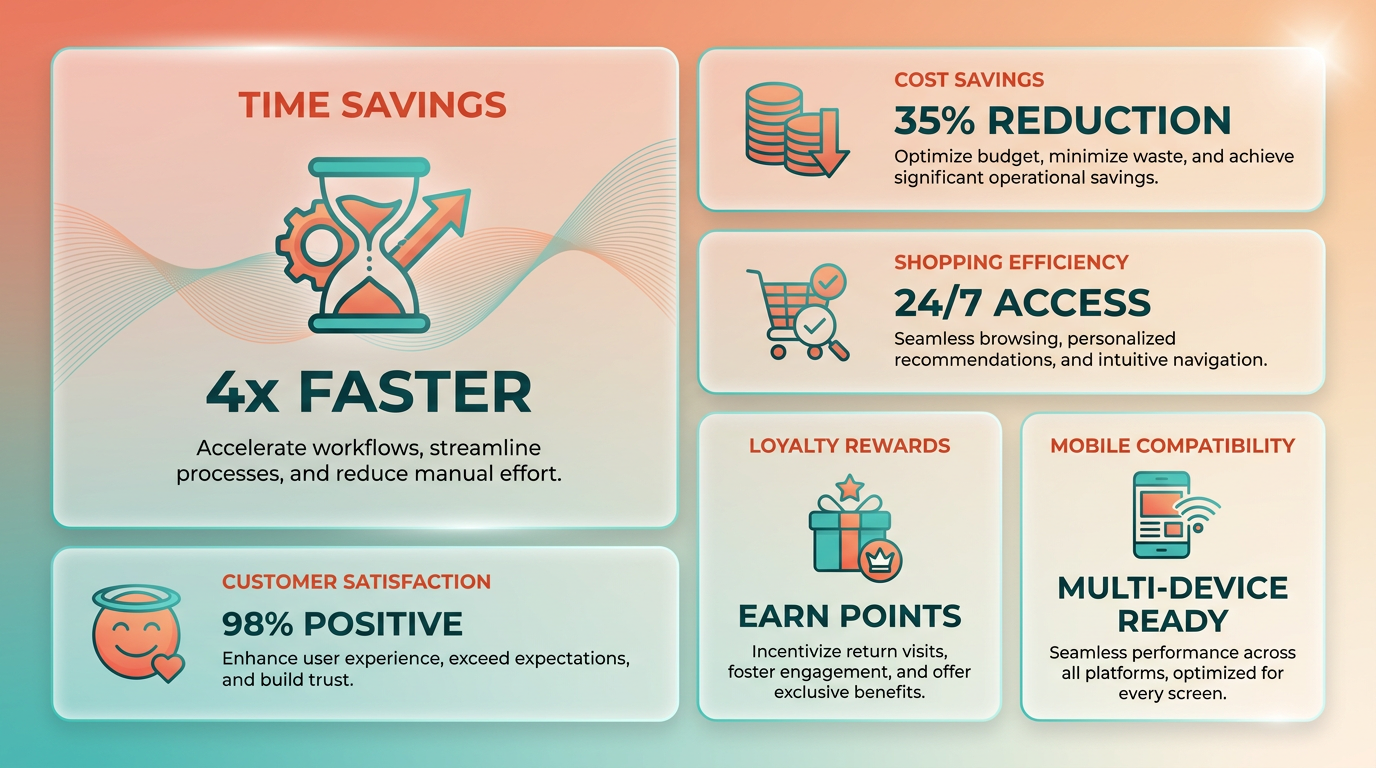
Accurate unit pricing isn’t just efficient-it builds customer trust. Popgot’s AI verifies product details and calculates costs per unit with precision, reducing errors that plague traditional tools. Consider the BIC pens example: Popgot’s engine flags Amazon’s 24-count pack at $1.59 (16¢ per pen) as cheaper than Walmart’s 12-count pack at $1.26 (12¢ per pen), correcting the illusion that smaller packs are always better . This transparency fosters loyalty, as shoppers feel confident they’re getting the best deal.
| Feature | Popgot’s AI Approach | Traditional Tools |
|---|---|---|
| Unit Pricing | Automatic, real-time cost-per-unit calculations | Manual, error-prone comparisons |
| Data Sources | Aggregates live data from 5+ retailers | Relies on static, outdated listings |
| Time Saved | 30–60% savings on research time | Hours spent calculating manually |
Real-World Use Cases
Health-conscious shoppers benefit from Popgot’s AI by comparing nutritional value alongside price. For example, the app could highlight that Target’s 175-sheet paper costs 0.6¢ per sheet-ideal for bulk office needs-while a smaller pack at Sam’s Club costs twice as much. Similarly, budget-savvy users use Popgot’s “size filter” to find jumbo packs with lower unit costs, like the Pen+Gear memo books priced at 34¢ per count in a 3-pack on Walmart .
Future Potential of Popgot’s AI
The YouTube analysis highlights how AI tools like Popgot can evolve beyond price comparisons . Future enhancements might include predictive alerts for price dips, personalized recommendations based on shopping history, or even nutritional analysis for health-focused buyers. For instance, a Popgot update could notify users when Target’s “disappearing purple glue sticks” drop below $0.89, as seen in current listings . These features would further cement Popgot as a proactive shopping assistant, not just a price checker.
By combining AI-driven automation with real-time accuracy, Popgot addresses the limitations of traditional tools while delivering tangible savings. As the Popgot blog explains, the app’s value lies in its ability to simplify complex decisions-whether you’re comparing school supplies or everyday essentials. For shoppers and retailers alike, this represents a shift from reactive price hunting to strategic, data-informed purchasing.
Conclusion and Future Outlook
The key differences between Popgot and traditional price comparison tools lie in their approach to data analysis and user experience. Popgot use AI-driven unit price comparisons across multiple platforms like Amazon, enabling users to make data-rich decisions without manual calculations . Traditional tools, by contrast, rely on static data aggregation and require users to interpret pricing differences themselves . This distinction becomes critical for shoppers targeting specific categories like produce or meat, where Popgot’s automated analysis directly impacts budgeting . As mentioned in the Popgot's Unique Approach section, this normalization allows for precise cost-per-unit calculations that traditional methods cannot match. Below is a structured comparison:
| Feature | Popgot | Traditional Tools |
|---|---|---|
| Data Analysis | AI-powered real-time unit price tracking | Manual interpretation of static price lists |
| Scalability | Analyzes thousands of products instantly | Limited to pre-selected, static comparisons |
| User Workflow | Proactive alerts and unit-cost sorting | Reactive, self-guided price checks |
Looking ahead, AI-driven tools will dominate pricing strategies due to their ability to process vast datasets in real time. Building on concepts from the Workflow Comparison: Popgot vs Traditional Tools section, the shift toward proactive automation reduces decision-making friction for both shoppers and businesses. The YouTube analysis highlights how conversational AI interfaces will replace traditional dashboards, allowing pricing teams to query market data directly . For example, a retailer could ask, “What are the top three competitors undercutting us on electronics?” and receive instant insights. This shift aligns with Popgot’s current model, where automation reduces decision-making friction for everyday shoppers . As AI tools refine their product-matching algorithms, expect even greater accuracy in cross-platform comparisons, minimizing human error in complex categories like seasonal items (e.g., Halloween decorations ).
Popgot’s AI approach has applications beyond retail. In pharmaceuticals, it could track price variations across pharmacies for generic medications, ensuring patients access affordable options. Similarly, in electronics, it might help businesses compare bulk purchasing deals across global suppliers. The YouTube case study on Omnia Retail shows how conversational AI streamlines pricing workflows , suggesting similar systems could optimize B2B procurement by identifying market gaps or supplier inefficiencies. For instance, a small business owner using Popgot for Halloween bulk purchases could automatically compare shipping costs and product quality across vendors , saving time while adhering to budget constraints.
Real-world use cases for Popgot’s AI-driven model will expand as integration with e-commerce platforms deepens. Consider a scenario where a household shopper uses Popgot to compare unit prices of organic produce across Amazon, Instacart, and local grocery stores, factoring in delivery fees and loyalty discounts . In another example, a non-profit organization might deploy the tool to source the cheapest bulk supplies for community programs, ensuring funds are allocated efficiently. The transparent pricing logic described in the technical details makes this approach particularly valuable for users prioritizing ethical spending, such as those seeking eco-friendly products at the lowest possible cost .
To experience these benefits firsthand, try Popgot and test its impact on your shopping habits. For seasonal planning, explore the Halloween On A Budget guide to see how AI simplifies cost management. As the retail market evolves, tools like Popgot will redefine how consumers and businesses manage pricing challenges-placing power in the hands of those who need it most.
References
[1] I'm working on Popgot (https://popgot.com), a tool that tracks unit ... - https://news.ycombinator.com/item?id=43821480
[2] price comparison apps that actually help on a tight budget - Reddit - https://www.reddit.com/r/povertyfinance/comments/1rrmahu/price_comparison_apps_that_actually_help_on_a/
[3] How To Select The Best AI Price Comparison Tools - YouTube - https://www.youtube.com/watch?v=gGd25iihlFg
[4] Popgot (@usepopgot) - Facebook - https://www.facebook.com/usepopgot/
Frequently Asked Questions
1. How much can families save using price comparison tools?
Families can save 30–60% on household staples by comparing unit prices. For example, Cra-Z-Art pencils cost 11¢ per count vs. 16¢ for BIC pens, saving $5 per 100-count pack. Annual savings on back-to-school supplies alone can exceed $250.
2. How does Popgot differ from traditional price comparison tools?
Popgot aggregates real-time unit prices across Amazon, Walmart, and Target, while traditional tools often miss hidden costs in pack sizes or temporary discounts. Popgot’s centralized platform saves hours of manual calculations yearly.
3. Can unit pricing reveal hidden deals?
Yes. A 175-sheet Target notebook paper pack costs 0.6¢ per sheet, while a 100-sheet alternative from another retailer is 1.2¢ per sheet—doubling the cost despite lower total price. Unit pricing exposes such inefficiencies.
4. How does Popgot simplify shopping for budget-conscious users?
Popgot eliminates decision fatigue by showing the cheapest unit price across retailers. For instance, it compares 12-count Cra-Z-Art pencils vs. 24-count BIC pens, saving $5 per purchase. Reddit users report consistent grocery savings using this method.
5. What are the main drawbacks of traditional price comparison methods?
Traditional methods often overlook varying pack sizes and temporary discounts. Manual unit price calculations can waste 10+ hours annually, and shoppers risk overpaying for bulk items that seem cheaper but aren’t.
6. How does Popgot handle fluctuating retail discounts?
Popgot updates prices in real time, ensuring accuracy during sales events. For example, it adjusts for Amazon’s 10% off coupons or Walmart’s weekly deals, preventing users from missing time-sensitive savings.
7. Are there free alternatives to Popgot’s features?
Free tools exist but lack Popgot’s real-time aggregation and unit price analysis. Manual methods require 4–6 hours weekly to track prices across Amazon, Walmart, and Target, while Popgot automates this in seconds.