
Product Search That Saves You Money on Shampoo, Snacks, and More

Key Takeaways
- The average American household spends over $7,000 a year on food and essentials. That's a lot of money to run on autopilot.
- Generic food costs 44% less than branded equivalents across categories, per a study of Australian supermarkets.
- Price comparison tools show you the gap before you buy, not after you've already overpaid.
- Research on comparison sites confirms they help people save and make smarter calls at checkout.
- Unit pricing exposes the "value size" that actually costs more per ounce.
- The same product swings wildly in price depending on the store. That gap is free money.
- Swapping brands on staples you don't care about is usually the easiest cut a household can make.
Why comparing prices beats trusting your gut
Smart shopping is just comparing prices before you buy instead of after. It saves real money on the boring stuff, shampoo, snacks, cleaning supplies. A good product search puts the price gap in front of you before you spend, so you don't overpay for the exact same item that's cheaper two clicks away.
The math is on your side. The average American household spends over $7,000 a year on food and essentials, according to Bureau of Labor Statistics data. Run a quick price check across stores instead of grabbing the first result, and small savings pile up fast.
Why does the same item cost so much more at one store?
Because retailers price the identical product all over the map. A comparative study of price comparison tools found that using one helps people save money and make wiser purchases.
Generic versus branded is where the gap gets loud. Researchers found a 44% saving buying generic over branded food across all categories, per a study of Australian supermarkets. Switch brands on staples you don't care about and you've made the easiest cut there is.
Price isn't the whole story though. Unit pricing tells you the real cost per ounce or per sheet, which is how you catch a "bigger" package that's secretly worse value.
How much can a real family actually save?
A family spending $600 a month on groceries can compare across retailers and swap a few branded items for generics, and trim $100 a month. That's $1,200 back over a year, with zero change to how they eat.
Cost is what most shoppers care about most. Consumer surveys rank it as the top factor in buying decisions, every time. You want the right product at the lowest price without digging through ten browser tabs to find it.
What a good search tool should do
Do the comparing for you. Check prices across retailers at once, confirm you're looking at the same product, and show accurate unit pricing so you can judge the real deal.
What to look for:
- Multi-retailer search: prices across several major retailers in one place, no tab-hopping.
- Product verification: confirms you're comparing identical items, not a 12-ounce bottle against a 16-ounce one.
- Accurate unit pricing: breaks cost down per unit so the cheapest sticker doesn't fool you.
- Customizable filters: narrow to your exact size, brand, or quantity.
- Curated shopping guides: expert picks that point you at proven savings.
Put those together and shopping stops being guesswork. A minute of checking, then you buy with some confidence and keep more of that $7,000.
Where smart shopping falls apart, and how to fix it
Smart shopping breaks down at two points: too much information, and too little pricing clarity. Both have fixes. Once you know what trips people up, the next search gets faster and cheaper.
Beating information overload
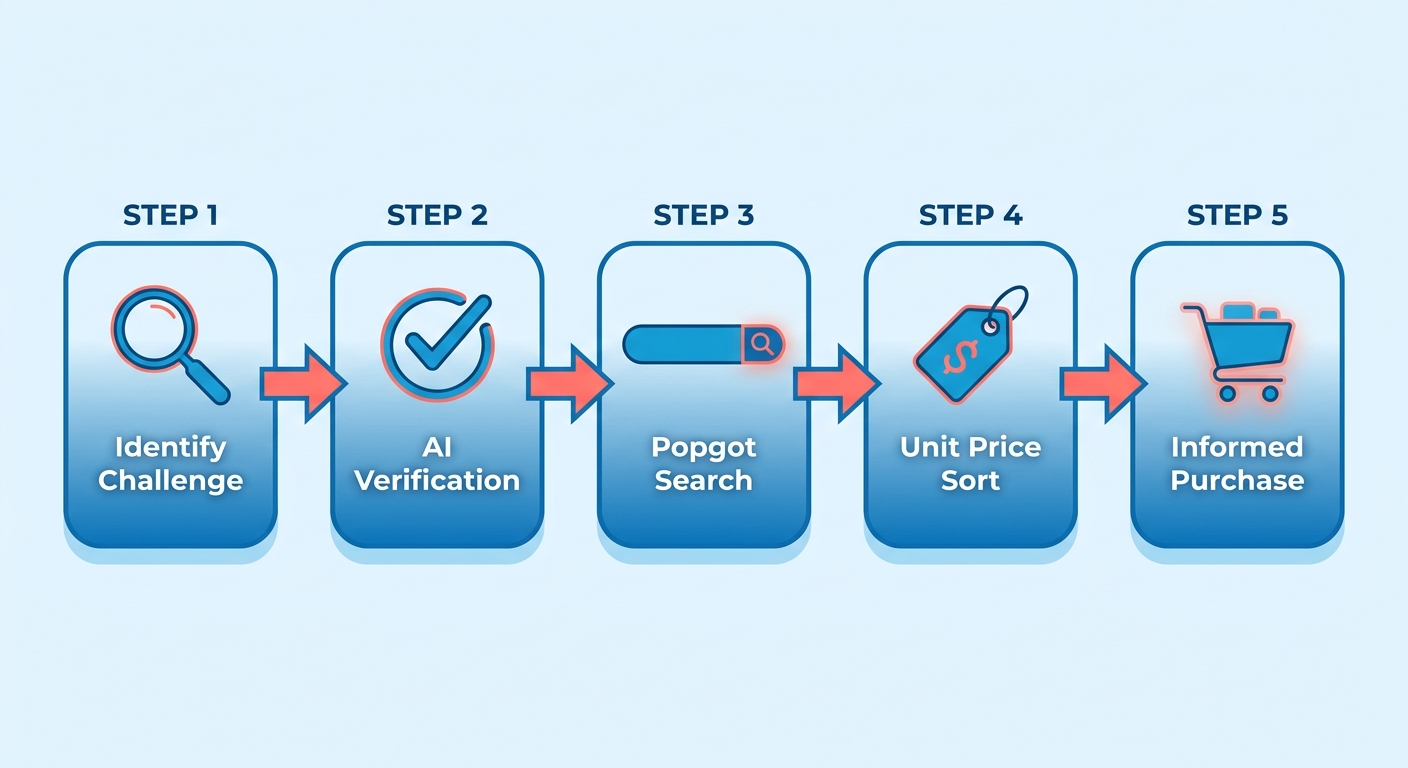
Information overload is the flood of options, labels, and claims that makes choosing feel impossible. The fix is verification: confirming a product is what it says before you compare prices. AI verification matches listings to the actual item, so you compare apples to apples instead of squinting at labels.
Search for one bottle of shampoo and you get dozens of results with different sizes, formulas, and sellers. Half of them aren't even the same product.
That noise is why people give up and grab the first thing. When verification filters the mismatches out first, your search shrinks to a clean, comparable list. Less second-guessing, more saving.
Why pricing is so hard to compare
Pricing hides real cost behind different package sizes. A bigger box isn't always cheaper per ounce. Unit pricing fixes this by breaking every item down to cost per unit, so you see true value at a glance.
The formula is simple. As the Food Equality Initiative explains, you divide the price by the number of units. That's your unit price.
Doing that by hand across ten products is exhausting. Automatic unit pricing runs it for you, so a "value size" that's secretly overpriced gets caught on sight.
Staying motivated when the savings feel invisible
Motivation fades when the payoff isn't visible. The fix is tracking small wins. Every dollar you skip overpaying stacks up over months.
Say you start checking unit prices on five staples: shampoo, coffee, laundry pods, snacks, cleaning spray. Pick the cheaper per-unit option each time and you save a few dollars a trip. Do it weekly and it's real grocery money by year's end. Watching that running total keeps you going when the habit feels tedious.
The trick is making comparison automatic instead of a chore. When verification and the unit math happen for you, staying disciplined stops requiring willpower. You just shop, and the savings follow.
The fixes, quickly
- Too many options: let verification narrow results to the exact item you want.
- Hidden real cost: use per-unit pricing to compare value across sizes and brands.
- Losing steam: track your small wins so savings stay visible.
Start with one category this week. Master unit pricing on a single shelf, then expand. The habit compounds faster than you'd expect.
Finding cheaper versions of the stuff you buy every week
Switching a name brand for a comparable generic is one of the fastest ways to cut a grocery bill. It adds up quick on weekly staples, cereal, pasta, cleaning supplies, personal care. The catch is finding the right swap without burning an afternoon on labels.
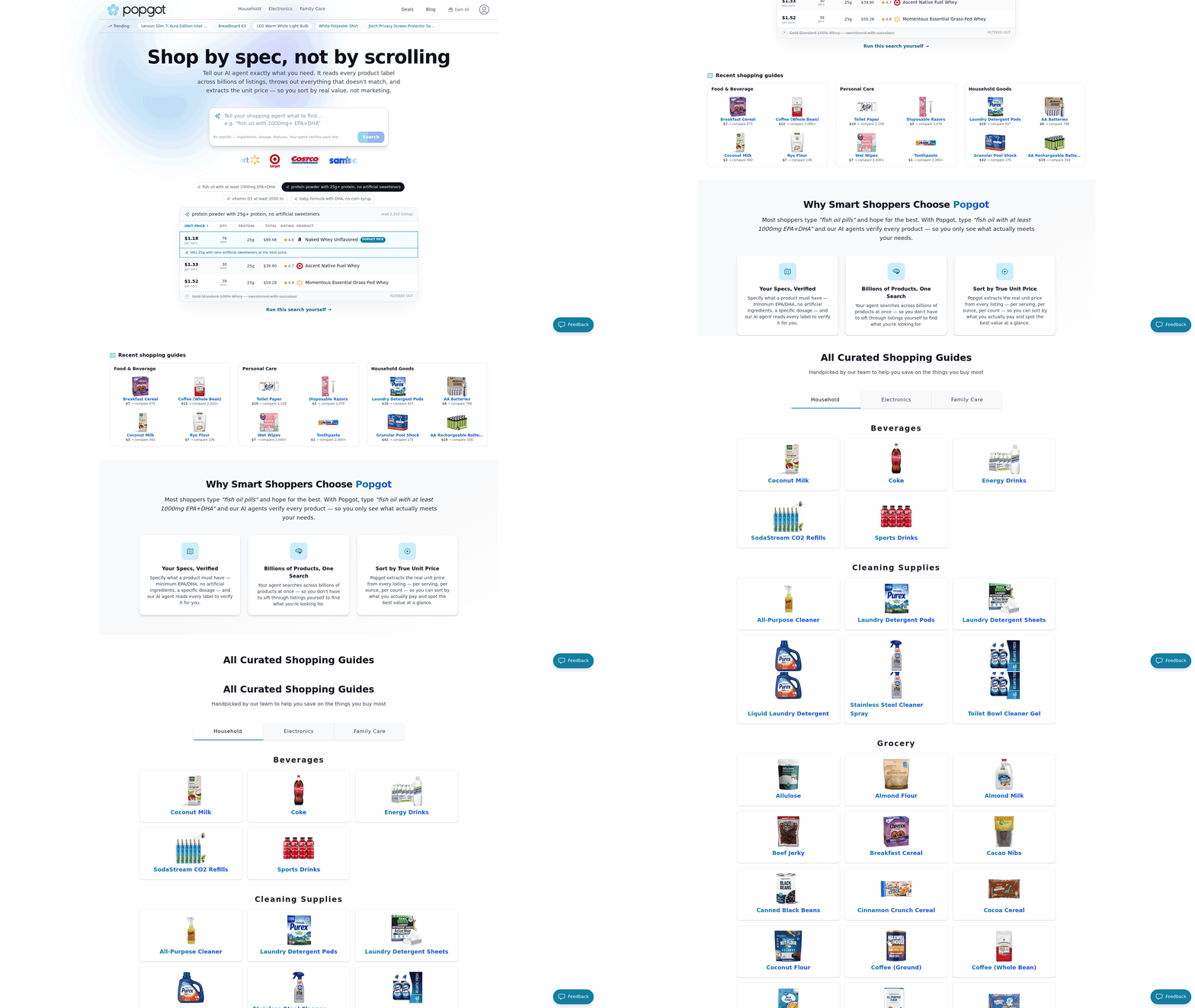
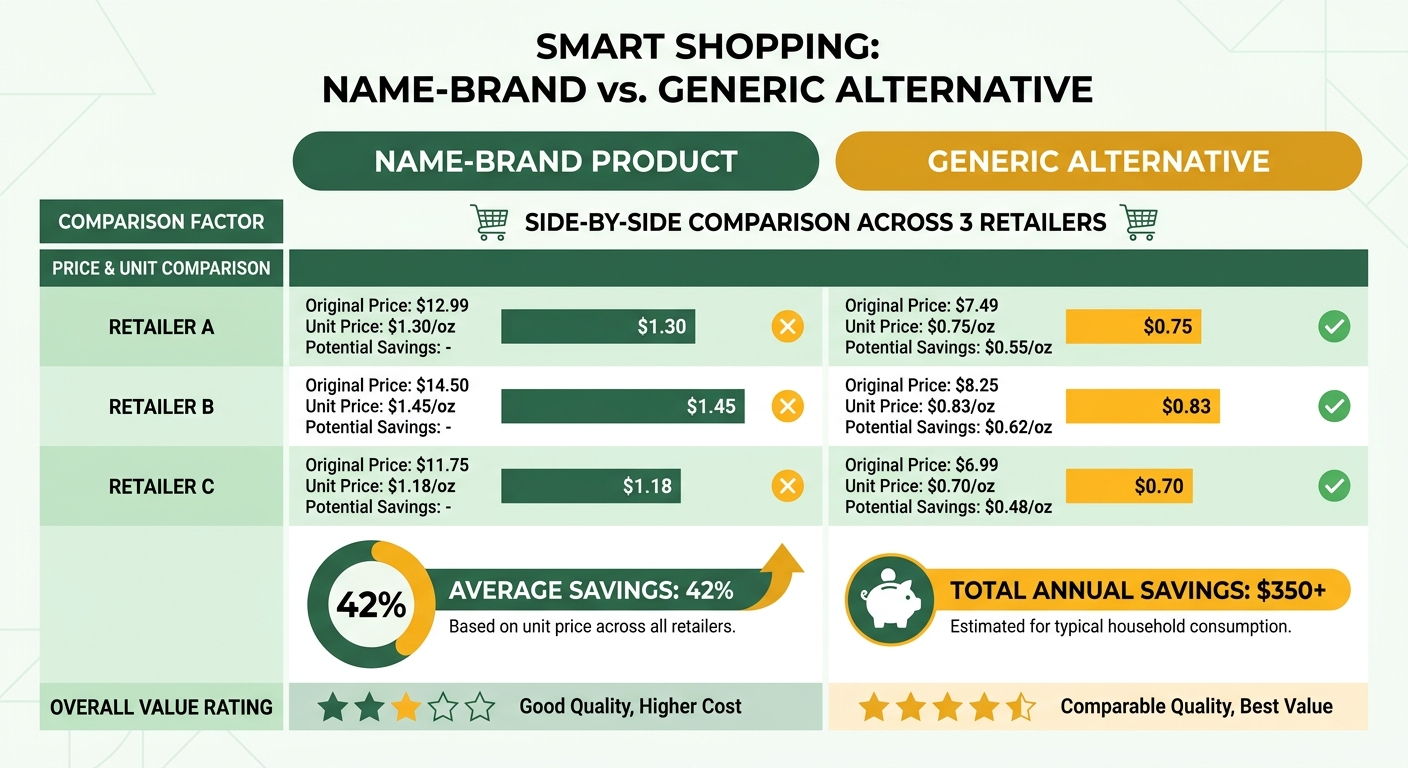
A focused product search does the heavy lifting, matching a premium item to cheaper equivalents that meet the same specs. Instead of scanning shelves, you compare verified options side by side.
How do you find a cheaper alternative to Dove soap?
Start with the exact item, then look for equivalents with the same properties at a lower unit price. Search "Dove beauty bar" and the platform surfaces moisturizing bars from other brands. The AI verification uses natural language processing to confirm each result actually matches the specs you care about, not just the name.
That matters because two soaps can look identical on a listing page and differ wildly in size and formula. Verification checks the real product details first. Then you compare a $6 name-brand pack against a $3 store-brand bar with the same moisturizing claim.
Multi-retailer search pulls results from 8 major retailers, including Amazon, Walmart, and Target. Every price for that soap in one view instead of eight open tabs.
How the filters narrow things down
Filters let you set exact requirements so results match before you compare prices. Set them for dietary restrictions, health benefits, or size, and the platform hides everything that doesn't qualify. A messy result list becomes a short, relevant one.
Step by step:
-
Search the base item. Type what you buy now, like "keto snack bars" or "shampoo for dry hair." That's your starting point.
-
Apply your filters. Add requirements like "keto," "sulfate-free," or a specific weight. Only products meeting those rules stay.
-
Sort by unit price. This extracts and compares real cost per ounce or count across retailers. This is the number that reveals true value.
Unit pricing is where most people overpay. A bigger box isn't always cheaper per serving, and filters plus unit pricing expose that instantly.
Where curated guides earn their keep
Curated guides are expert-built lists for the items you buy over and over. For keto groceries and snacks, a guide compares prices across retailers so you skip the research. You get the cheapest verified option for almond flour, low-carb bars, or cheese crisps in one place.
They shine for repeat purchases. Buy the same snacks weekly and small per-unit savings compound fast. Lean on guides for staples, use filters for one-off swaps.
Getting the most out of Popgot's curated guides
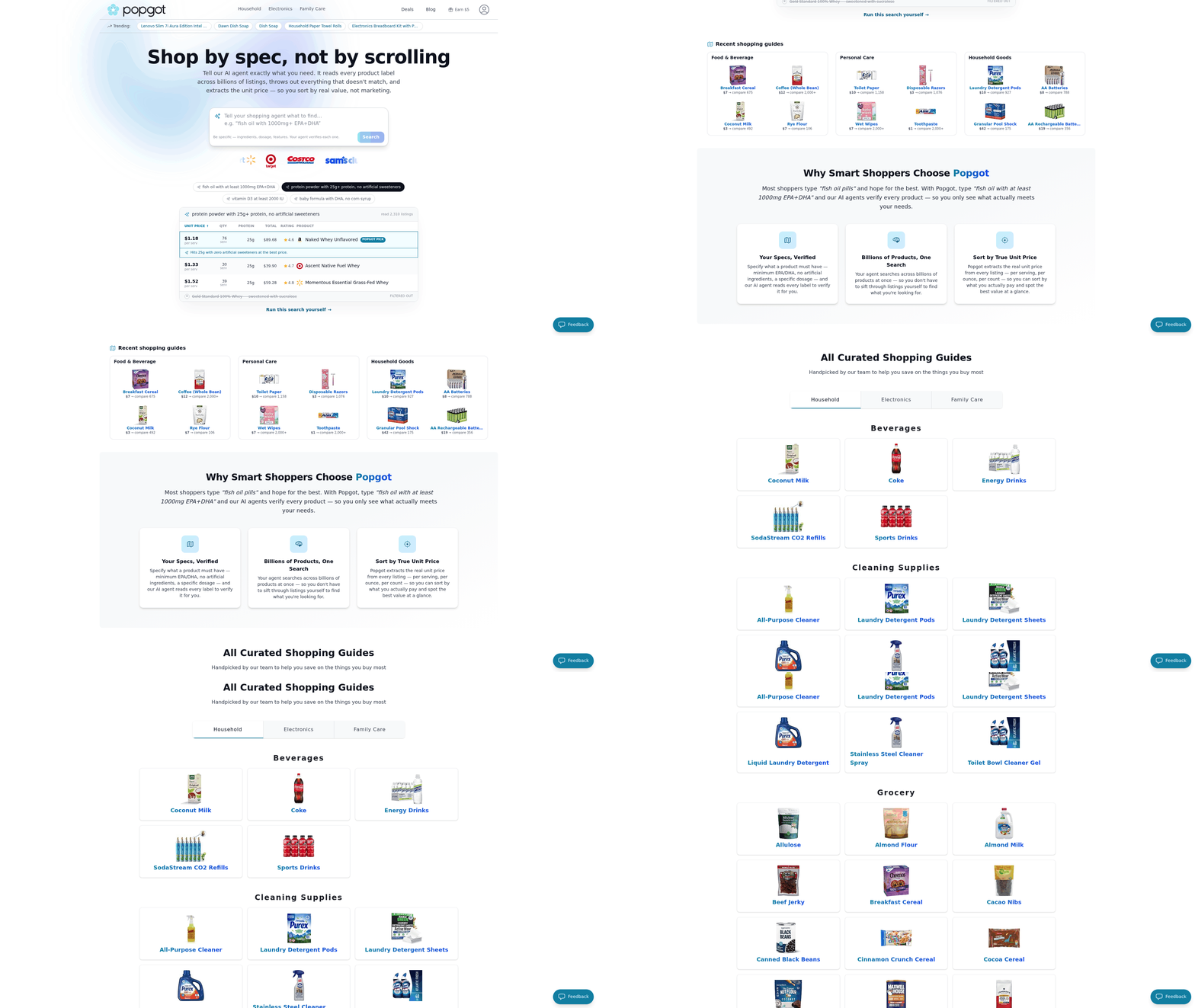
Curated guides pair everyday essentials with their cheapest verified matches across retailers. Instead of running a fresh search for every item on your list, you get a pre-vetted set of picks by category. The comparison work is already done.
Each guide starts with a real need, then narrows the field, matching brand-name staples to lower-cost equivalents that meet the same specs. You see the options side by side, prices already pulled from multiple stores.
What a baby products guide looks like
A baby products guide bundles the three biggest recurring costs for new parents: diapers, formula, and baby food. Each category lists verified picks at different price points, so you can trade down without giving up what matters.
Take diapers. The guide shows a name-brand pack next to a store-brand equivalent in the same size and count, with per-unit cost for each. Formula works the same way, matching the nutritional profile so you compare like for like. Baby food gets grouped by ingredient and serving size, not front-label marketing.
The point is speed. You spend money on these every week, and a guide turns a 20-minute comparison into a 2-minute scan.
How much you can save on household basics
Cleaning supplies and paper products swing wildly in price between stores, and a guide surfaces those gaps in one view. The same roll of paper towels or bottle of all-purpose cleaner can cost noticeably more at one retailer than another.
How a household guide breaks it down:
- Cleaning supplies: dish soap, surface sprays, and detergent matched to cheaper equivalents by volume.
- Paper products: toilet paper, paper towels, and tissues compared by sheet count, not package size.
- Storage and disposal: trash bags and food storage bags priced per unit across stores.
Someone already checked the prices for you. You act on the result instead of building the comparison yourself. Keep the effort low, keep the savings visible.
What I'd actually do with this
Saving money on everyday essentials comes down to one habit: comparing verified prices before you buy. That's the whole point. One search across eight major retailers, read the actual label, show you the real unit price so you never overpay for the same item sold cheaper down the road.
Here's what makes it automatic. The AI verifies ingredients and dosages, so a search for "fish oil with at least 500mg EPA" only returns items that actually hit that spec. It calculates cost per ounce, pound, or count for you. And it pulls curated guides together for the categories you buy again and again.
What Popgot actually does for your budget
Popgot is a shopping tool that reads every label for you, then compares verified unit prices across Amazon, Walmart, Target, Costco, and more.
The wins are practical. You stop doing mental math on price-per-load detergent. You catch when a "bulk" pack costs more per sheet than a smaller box. You filter for organic, keto-friendly, or low-sodium and see only products that qualify. For parents buying diapers and formula every week, those small per-unit gaps add up into real monthly savings.
A family of four watching the grocery bill can check verified unit prices on milk, bread, and cereal instead of grabbing the first option, and trim recurring costs without switching to worse products. That's the difference between shopping on autopilot and shopping on purpose.
When to skip it? If you only buy one or two items a month, the savings won't justify changing your routine. This pays off when you shop repeatedly for essentials where prices swing between stores.
Ready to start?
Start with your next shopping list. Sign up in minutes, set your dietary preferences and preferred retailers, then search for the items you buy most.
Type in a product, let the AI verify and compare, pick the best-value match. Do it a few times a week and the habit sticks.
References
[1] Thrifty Grocery Shopping: Utilizing Unit Pricing to Your ... - https://www.foodequalityinitiative.org/blog/unit-pricing-to-your-advantage
[2] A comparison of the cost of generic and branded food products in ... - https://www.researchgate.net/publication/223957395_A_comparison_of_the_cost_of_generic_and_branded_food_products_in_Australian_supermarkets
[3] A Comparative Study on Shopsavyy: A Website for Price Comparison - https://www.researchgate.net/publication/394124326_A_Comparative_Study_on_Shopsavyy_A_Website_for_Price_Comparison
Frequently Asked Questions
1. Are generic products always lower quality than name brands?
Generic products often match branded quality since many are made in the same factories using similar formulations. The main differences are packaging and marketing costs, not ingredients. For staples like pantry basics and cleaning supplies, generics typically deliver identical performance at significantly lower prices, making them smart swaps.
2. How do I calculate unit price myself when shopping in-store?
Divide the item's total price by the number of units it contains. A $4.50 package with 150 sheets costs $0.03 per sheet. Compare that figure across sizes to find true value. Many stores post unit prices on shelf tags, usually in small print below the main price.
3. Does Popgot work for in-store shopping or only online purchases?
Popgot compares verified prices across eight online retailers including Amazon, Walmart, Target, and Costco. While designed for online comparison, you can use the unit-price data to inform in-store decisions. The tool works best for repeat essential purchases where prices swing meaningfully between retailers.
4. What types of products offer the biggest savings from comparison shopping?
Repeat-purchase essentials with wide price variation offer the biggest savings. Diapers, formula, cleaning supplies, paper products, snacks, and personal care items like shampoo show significant gaps between stores. These recurring purchases compound small per-unit savings into substantial monthly totals, especially for families buying weekly.
5. Is comparison shopping worth the time for occasional buyers?
Comparison shopping delivers minimal returns if you only buy one or two items monthly, since savings won't justify routine changes. It pays off when you shop repeatedly for essentials where prices swing between stores. The habit compounds most effectively for households managing weekly grocery and household budgets.
6. How does AI product verification prevent mismatched comparisons?
AI verification uses natural language processing to confirm each result matches your exact specifications, not just the product name. It filters out mismatches like a 12-ounce bottle listed against a 16-ounce one, or different formulas sharing similar labels. This ensures you compare genuinely identical items before checking prices.
7. What's the best way to start a smart shopping habit without feeling overwhelmed?
Start with one category and five staples, like shampoo, coffee, laundry pods, snacks, and cleaning spray. Check unit prices and switch to cheaper per-unit options. Track your small wins so savings stay visible. Once the habit sticks on one shelf, gradually expand to additional categories.