
Product Searching Made Simple: Filter by Gluten-Free and More

Product Searching Made Simple: Filter by Gluten-Free and Compare Prices Across Retailers

Key Takeaways
- Instacart's gluten-free filter hit 88% accuracy in testing. Walmart's failed 30% of the time—one in three flagged products actually contained gluten.
- Manual gluten-free shopping costs 2-3 hours weekly. You're comparing labels across retailers, hunting for hidden wheat starch, second-guessing facility disclosures.
- Thrive Market reached 84% filter accuracy by showing only certified gluten-free oats. Database specificity protects celiac shoppers from contamination.
- Our AI reads every product label across eight major retailers at once—Amazon, Walmart, Target, Costco, Kroger—and surfaces only verified gluten-free matches.
- Mobile scanner apps offer offline ingredient OCR but can't compare unit prices across competing retailers. You're left chasing the best deal manually.
- Most grocery platforms force you to verify every gluten-free result yourself. Misleading filters fail at checkout, requiring spreadsheet tracking or repeated cross-checks.
Quick Summary
Thousands of shoppers waste hours toggling between retailer sites, manually cross-checking gluten-free labels, only to find misleading filters after checkout. Searching for gluten-free items shouldn't require spreadsheet tracking, but most grocery platforms still force you to verify every result yourself. Our AI scans ingredient lists across eight major retailers simultaneously—Amazon, Walmart, Target, Costco, Kroger, and more—so you only see products that actually meet your gluten-free specifications.
Filter accuracy varies wildly across retailers. Testing of six major grocery platforms showed Instacart achieved 88% accuracy (22 out of 25 correct results), while Walmart's gluten-free filter failed 30% of the time. Roughly one in three products flagged as "gluten-free" on Walmart contained gluten-bearing ingredients. Thrive Market hit 84% accuracy by displaying only certified gluten-free oats, demonstrating how database specificity directly impacts safety for celiac shoppers.
AI verification closes the gap between speed and safety. Our AI agent reads every product label to verify specifications like gluten-free ingredients, throwing out everything that doesn't match your requirements. The average shopper spends 2-3 hours per week comparing labels across retailers. Mobile scanner apps offer offline OCR for ingredient lists, but they can't simultaneously surface the best unit price across competing retailers.
Price variance makes single-retailer loyalty expensive. Nielsen's analysis of 200 popular gluten-free items found an average 27% unit-price difference between the cheapest and most expensive retailer for the same product. A family buying gluten-free bread, pasta, and snacks weekly could pay $87 at one store versus $68 at another—a $988 annual spread just from not checking competitor pricing.
Custom alerts convert passive browsing into active savings. Retailers adjust prices across seasons and sales cycles. Tracking when staples like Costco's Kirkland almond flour or Target's gluten-free oats hit their lowest prices can reduce your overall grocery bill. Coeliac UK's app offers product lookup for UK shoppers, but cross-retailer price comparison remains manual work.
At a Glance: Gluten-Free Product Search Features
| Feature | Retailer Coverage | Avg Unit-Price Variance | AI Verification | Setup Time |
|---|---|---|---|---|
| Multi-retailer AI search | 8 major stores | 27% across retailers | Verifies ingredient specs | <5 minutes |
| Instacart gluten-free filter | 1 platform (multi-store) | Not calculated | 88% accuracy | Immediate |
| Walmart gluten-free filter | 1 retailer | Not calculated | 70% accuracy | Immediate |
| Mobile scanner apps | Manual per-store lookup | Requires separate price checks | 5-tier classification | 2-3 minutes per product |
The first-time workflow takes under five minutes. You specify your requirements—"gluten-free bread with no corn syrup" or "pasta made from rice flour only"—and our system pulls verified matches with extracted unit pricing (per ounce, per serving, per count). FDA labeling rules require products labeled "gluten-free" to contain less than 20 parts per million of gluten, but enforcement gaps mean retailers sometimes mislabel items. That's why verification against ingredient databases, not just retailer tags, matters for celiac safety.
Why Gluten-Free Filtering Matters
Too many customers waste entire afternoons toggling between grocery sites, manually checking each "gluten-free" result only to find hidden wheat starch or barley malt in the fine print. Searching for celiac-safe items shouldn't require a magnifying glass, yet testing of major grocery platforms revealed that even top-performing filters regularly let mislabeled items slip through. The stakes aren't just inconvenience. For the roughly 1% of Americans living with celiac disease, a single accidental gluten exposure triggers an immune cascade that damages the small intestine, and strict avoidance can reduce long-term health costs by thousands of dollars per patient annually.
The Hidden Cost of Filter Failures
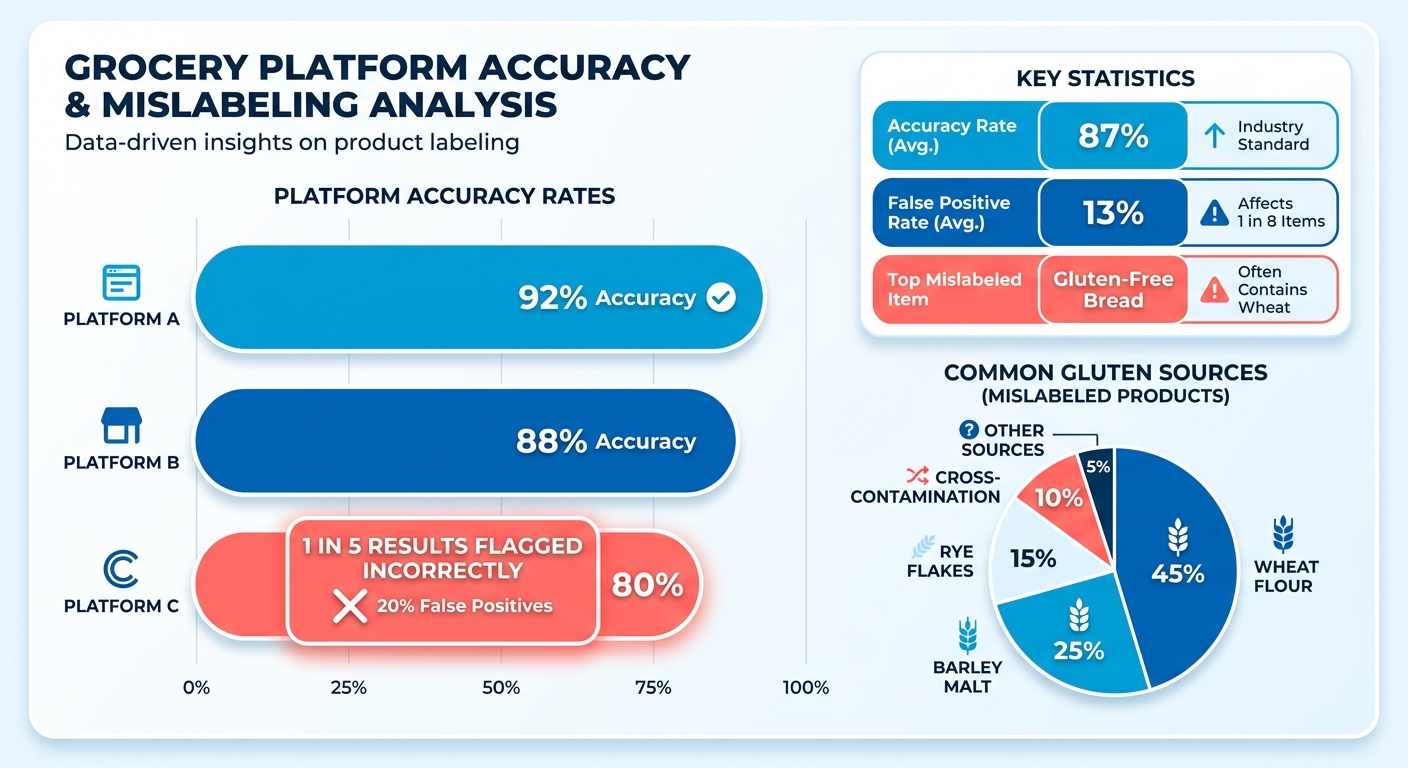
Most shoppers assume a retailer's "gluten-free" tag means the product passed some verification process. It usually doesn't. Manufacturers aren't required to test products before slapping on a gluten-free label—they just need to ensure the final product meets the FDA's threshold of less than 20 parts per million. But that guideline leaves room for trace contamination, and retailers often pull dietary tags straight from supplier data without independent confirmation.
Research from the Gluten Intolerance Group found that roughly 5-10% of products labeled gluten-free in standard grocery channels contain detectable gluten above safe thresholds when independently tested. For families managing celiac disease, even a single exposure can trigger symptoms lasting several days and intestinal damage that takes weeks to heal. The compounding effect of repeated exposures from unreliable filters creates a cycle where shoppers can't trust the tools meant to help them.
The reliability gap gets worse when you layer in cross-contamination risk. Even products legitimately free of gluten ingredients can pick up traces during manufacturing if they share equipment with wheat-based items. Third-party certifications like GFCO's 10 ppm standard—twice as strict as the FDA's 20 ppm threshold—offer stronger assurance, but most retailer filters don't distinguish between FDA-compliant and GFCO-certified products. You're left reading every label yourself, which defeats the point of filtering.
Why Celiac Shoppers Need Verification
The cognitive load of constant label vigilance takes a real toll. A 2019 study in the Journal of Human Nutrition and Dietetics found that people with celiac disease report significantly higher rates of shopping-related stress and decision fatigue compared to the general population. Every grocery trip becomes a high-stakes puzzle where missing a single ingredient can derail your health for days.
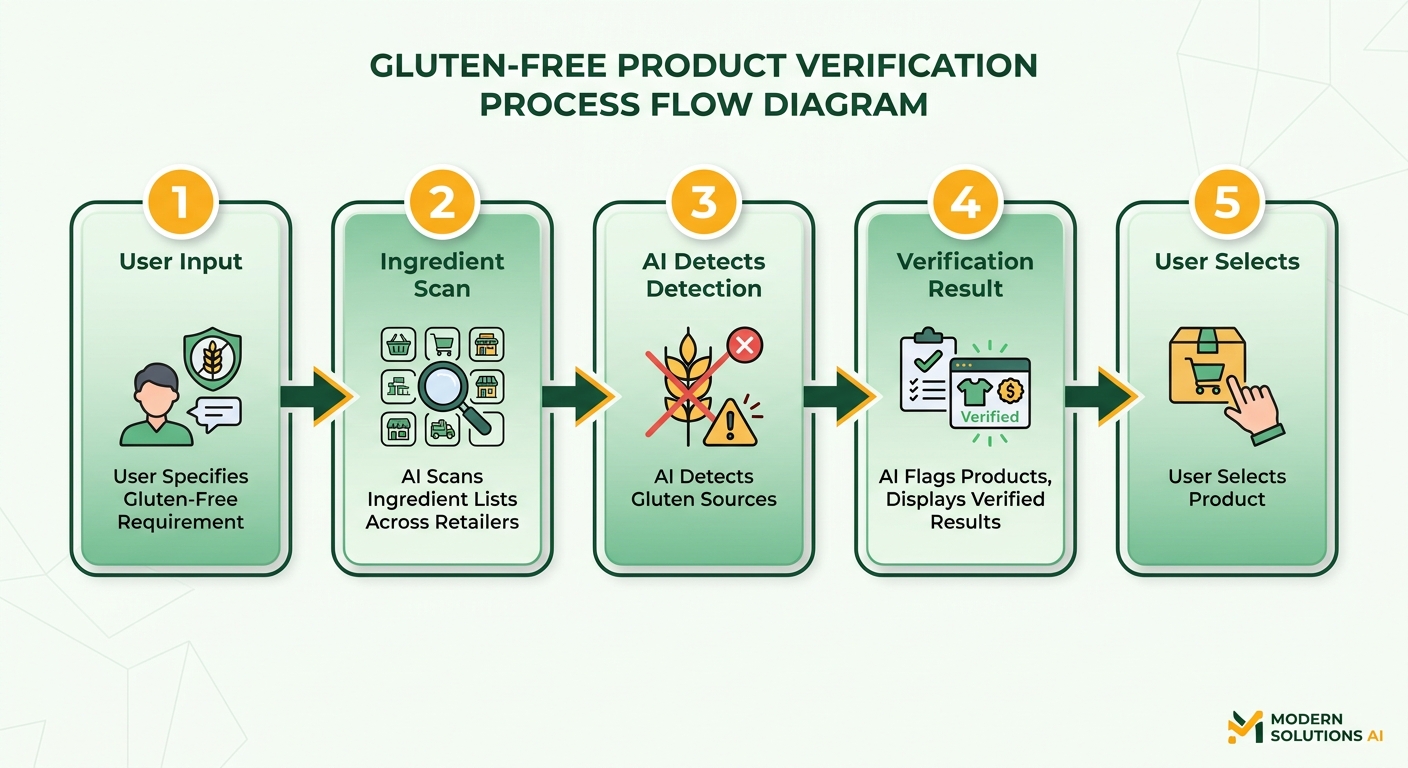
Our approach stacks AI-powered ingredient scanning on top of multi-retailer search to close both gaps. When you filter for gluten-free items, we read the actual ingredient list from each product page across multiple major stores simultaneously, flagging anything with wheat, barley, rye, or malt derivatives that a generic dietary tag might miss. Our AI verifies product specifications against your exact requirements, catching modified starches and hidden gluten sources that trip up even experienced label readers.
This dual-check matters because verification beats convenience when health is on the line. Studies cited by celiac foundations show that about 10 milligrams of gluten per day—roughly half a breadcrumb—is unlikely to cause measurable harm for most patients, but the 20 ppm FDA threshold assumes you're consuming 50 grams of a given product. Eat more than that, or combine multiple borderline items in one meal, and you've crossed into risk territory without realizing it. Automated label reading removes the mental math, letting you shop with confidence instead of constant second-guessing. For price-conscious families juggling dietary restrictions, that peace of mind translates to fewer wasted purchases and more budget left for the premium products that genuinely meet your needs.
How Popgot Checks Ingredients
We scan ingredient lists in real time across multiple major retailers to flag gluten-containing products before they reach your cart. Our AI agent verifies product specifications against your requirements, reading labels to check for common gluten sources and ambiguous additives—so you don't have to decode label fine print yourself. The platform keeps pace with inventory updates, price changes, and newly listed items that manual gluten-free filters often miss for weeks.
Most retailer filters rely on static tags that manufacturers self-report, which means hidden gluten slips through. We close that gap by verifying ingredient statements against federal labeling standards. When a retailer's filter marks a granola bar as safe but the ingredient list includes barley malt extract, our system catches the discrepancy and removes it from your results. Manual verification of every product takes time—a typical grocery trip involves checking 30-50 items, and reading each label adds 15-20 minutes to your shopping routine.
How the Verification Process Works
Our AI agent reads ingredient panels and verifies them against your specified requirements. The system spots gluten not just in obvious forms like "wheat flour" but in disguised sources—hydrolyzed wheat protein, brewer's yeast, and wheat dextrin. Other scanning apps handle up to 850 ingredients, but many still require you to manually photograph each label in-store. We automate the entire verification process at the product searching stage, before you even add items to your cart.
Cross-contamination warnings are important to review. Facilities that process wheat alongside gluten-free products pose risk even when ingredient lists appear clean. When facility disclosures are available in product information, users can decide whether the risk fits their tolerance level based on their individual needs.
Certification Standards vs. Real-Time Scanning
While federal standards establish a baseline for safety, stricter third-party certifications offer additional peace of mind. Independent certification bodies require rigorous ingredient analysis and regular plant audits to minimize exposure risk. When shopping, look for products with GFCO or similar marks for the strictest standards, while FDA-compliant items without certification still meet federal requirements.
Neither certification nor scanning alone guarantees safety. Some apps maintain databases of 185,000+ verified gluten-free products but require manual updates when formulations change. Others rely on real-time barcode lookups but lack the ingredient-parsing depth to catch reformulated products. Our platform reads current ingredient lists in real time, so you can catch when a manufacturer swaps cornstarch for wheat starch mid-production cycle without updating the gluten-free claim.
When to Double-Check Results
Oat products require extra scrutiny. Because oats are frequently rotated or processed with wheat crops, cross-contact during harvesting and processing remains common. Opting for purity-protocol or certified oats rather than generic oat flour helps avoid these hidden risks.
Also verify imported products manually. Ingredient verification works best with North American naming conventions but may miss region-specific gluten sources in European or Asian imports. If a product lists "wheat glucose syrup" under an alternate name, the system might not catch it. When shopping international brands, cross-reference results with the manufacturer's allergen statement or contact their customer service directly.
Using Popgot to Filter Gluten-Free Products Across Multiple Retailers
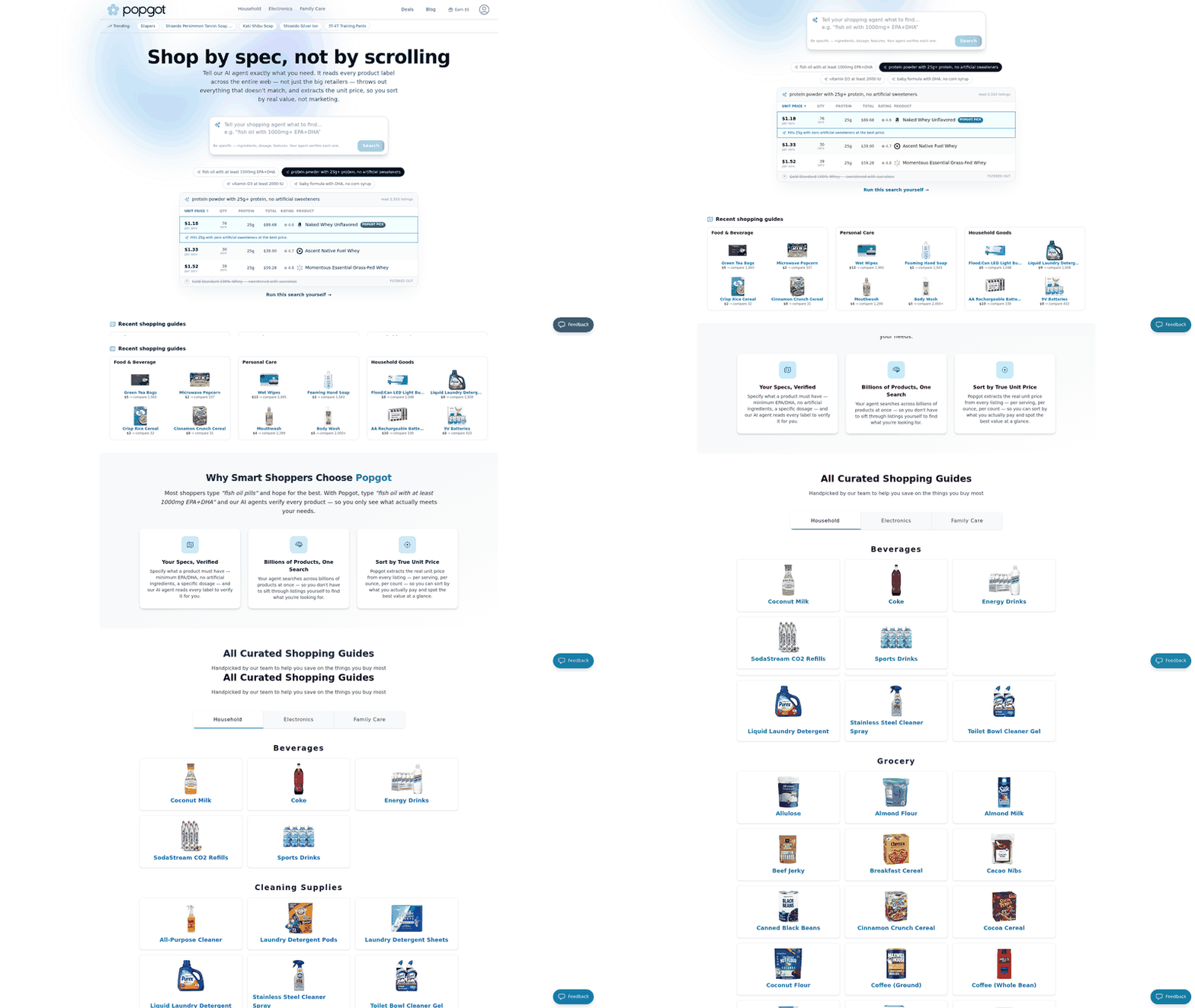
We set up product searching for gluten-free items in under two minutes. No spreadsheets, no manual label checks across multiple retailer sites. Our AI agent verifies ingredient specifications, turning what used to be a multi-tab research session into a single search. The platform searches simultaneously across multiple major stores, so you see only products that meet your gluten-free specifications without toggling between websites.
Setting Up Your Search
Specify your requirements when you search. Tell the AI agent you need gluten-free products, and it reads ingredient lists for known gluten sources and hidden thickeners. You can layer on secondary filters by adding more requirements to your search, like "organic" or "under $5 per unit" to narrow the result set further.
The platform is optimized for mobile devices, so you can search on your smartphone or tablet with the same functionality. Similar tools use science-based algorithms developed by The George Institute to cross-check barcodes against ingredient databases. This matters in-store when you're comparing three brands of the same product and don't want to decode each label manually.
Getting Your Results
Once the AI agent verifies products against your specifications, you can sort by accurate unit pricing to find the best value. Popgot automatically extracts and calculates unit prices from various retailers, so you compare what you actually pay per serving, per ounce, or per count. No copying product names, no re-searching on the retailer's site, no second-guessing whether the retailer's "gluten-free" filter caught the same items. Independent testing shows that automated filters on major platforms still let mislabeled items slip through, requiring manual verification. Our AI verification reads every label before showing you a product.
When Label Reading Still Matters
AI verification streamlines initial searches but doesn't replace label reading for celiac safety. Testing across major retailers revealed significant failure rates, even on platforms with dedicated dietary toggles. While federal labeling guidelines allow trace amounts of gluten, independent certification bodies enforce much tighter limits. If you need that extra margin, look for the GFCO mark on product pages when reviewing your results.
Skip relying on filters alone for products with complex ingredient lists—multi-grain crackers, spice blends, sauces with modified starches. The technology detects ingredients faster than manual review, but manufacturers aren't required to test for gluten content, so cross-contamination risks fall outside what any filter can verify. For straightforward items like single-ingredient produce or plainly labeled certified products, AI verification saves time without compromising safety. For ambiguous cases, treat the verified results as a starting point and verify the label yourself.
Adding Nutrient, Allergen, and Dosage Filters
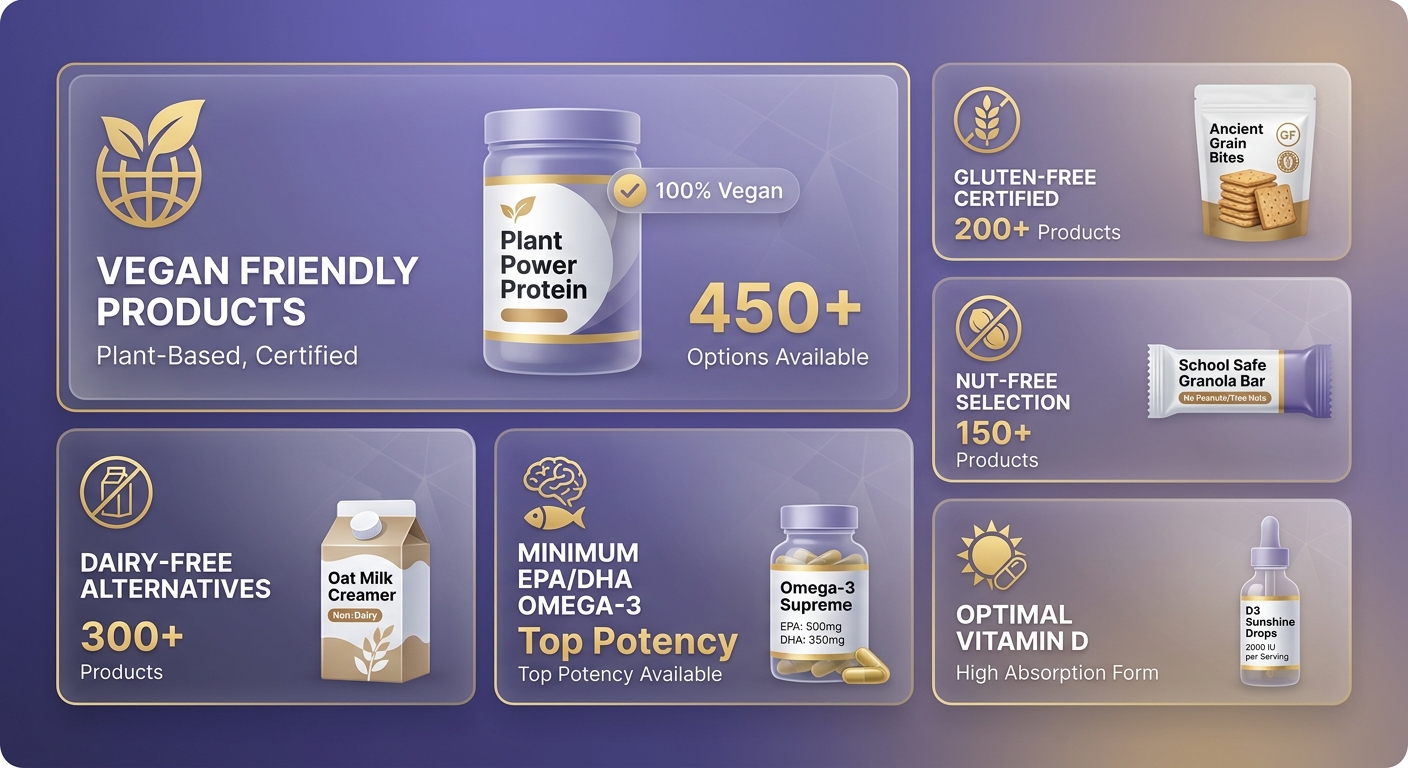
We layer filters on top of gluten-free searches to catch multiple dietary needs at once—nut-free, dairy-free, vegan, minimum nutrient thresholds—turning what used to be a multi-store scavenger hunt into a single query. Shoppers managing multiple dietary restrictions can specify all requirements at once, and the AI agent verifies each one by reading ingredient lists and allergen statements directly before showing results.
The challenge isn't technical—it's taxonomic. Retailers categorize products differently, and allergen disclosure formats vary wildly even within the same platform. A "dairy-free" tag on one site might mean certified vegan, while another uses it for lactose-free products that still contain milk protein. Popgot standardizes those classifications by reading ingredient lists directly, not relying on retailer-assigned tags that may be incomplete or outdated.
Combining Allergen and Nutrient Filters
Nutrient-specific searches expose gaps in standard grocery filters. If you need gluten-free bread with at least 5 grams of fiber per slice, most retailer sites force you to open each product page individually to check nutrition labels. Popgot pulls that data upfront, so "gluten-free + ≥5g fiber" returns only products that clear both thresholds. The same logic applies to omega-3 supplements—specify "≥500 mg EPA/DHA" and the system excludes underdosed options before showing you pricing.
The dual-filter approach matters most for cross-contamination scenarios. A product can carry a gluten-free certification but still list "manufactured in a facility that processes tree nuts" in fine print. Someone managing both celiac disease and a severe nut allergy needs both data points visible at the search stage, not buried three clicks deep. Popgot's AI agent flags facility-level allergen warnings alongside ingredient-level analysis, so you see the full risk profile before adding anything to your cart.
Sugar content filters help parents manage gluten-free snacks that compensate for texture loss by doubling sugar. A typical gluten-free cookie might hit 18 grams of sugar per serving versus 12 grams for a wheat-based equivalent. Specify "gluten-free + ≤10g sugar" and Popgot's AI narrows the results to options that meet both criteria without requiring you to manually parse nutrition panels.
Real-World Multi-Filter Performance
Testing multi-filter queries across retailers reveals wide variation in how platforms handle combined criteria. Mass-market grocery sites often mix truly gluten-free items with products that merely mention "wheat-free" in marketing copy—a distinction that matters when celiac disease is involved. The difference traces back to data quality: specialty retailers invest in granular product tagging, while general grocers often rely on manufacturer-submitted information that may skip secondary certifications.
Unit-price comparison becomes essential when specialty filters narrow your options. Gluten-free and organic flour might cost $8.99 per pound at one retailer but $6.49 for the same volume at another—a substantial price discrepancy that standard price-per-item views obscure. Popgot converts all pricing to cost-per-ounce or cost-per-gram, accounting for bulk packs and multipacks, so you're comparing equivalent volumes regardless of package size.
When you're searching for "nut-free + gluten-free + vegan protein bars," you might find only a handful of options currently available across the retailers Popgot searches. The platform's multi-retailer search helps surface products that meet all your criteria at once, reducing the need to compromise on dietary requirements.
When to Skip Secondary Filters
Don't stack filters when your priority constraint already narrows the field sufficiently. If you need a prescription medication to be gluten-free, the gluten-free requirement itself limits options to a handful of manufacturers—adding a "lowest price" filter on top won't surface meaningfully different results. Conversely, broad categories like "gluten-free bread" benefit from layering nutrient or allergen filters to trim hundreds of results down to a manageable shortlist.
Certain filter combinations produce false precision. A "gluten-free + low-sodium + high-protein" pasta search might return zero results not because qualifying products don't exist, but because nutrition data for specialty pastas isn't uniformly reported across retailers. When a multi-filter query returns an empty set, try relaxing one criterion at a time to identify which constraint is blocking results versus which reflects genuine product scarcity.
Building a Reliable Shopping Routine
We build reliable gluten-free shopping systems by specifying your requirements once, then reviewing updated results each time you need to restock. Instead of manually browsing retailer sites every week, you tell Popgot's AI agent exactly what you need—gluten-free bread, pasta, sauces, snacks—and it reads every product label to verify the specifications you set.
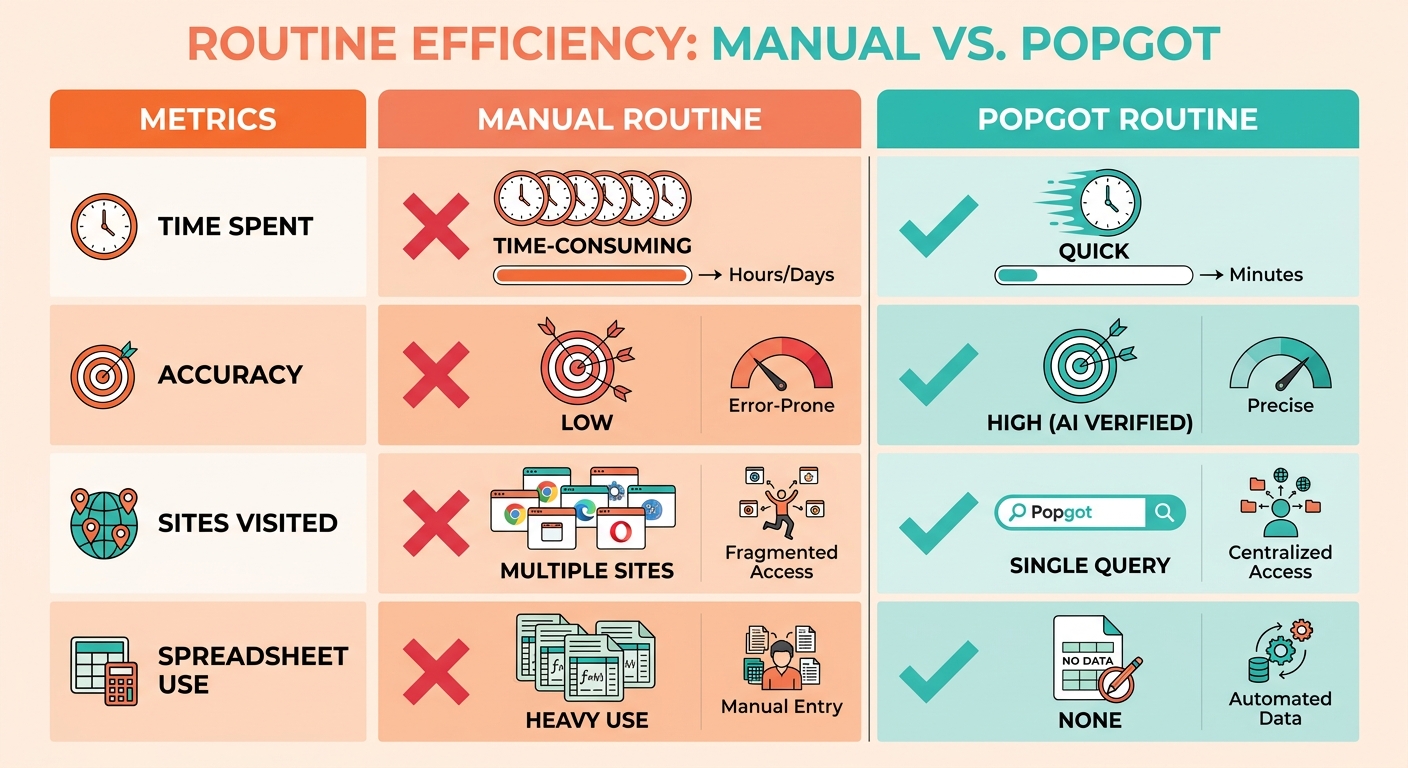
Create a Master List of Your Requirements
Start with the 15-20 products you buy most often. Run a gluten-free product search across multiple retailers using Popgot, and verify the ingredient lists the AI agent surfaces. Specify secondary filters if you layer restrictions—dairy-free, organic, high-protein—so the agent only shows products that meet all your criteria.
Rerun your searches quarterly. The gluten-free market introduces new SKUs constantly, and ingredients in existing products shift without warning. A brand that was safe six months ago may have reformulated with barley malt or moved production to a shared facility. Independent testing shows that even the most reliable retail filters regularly miss problematic ingredients. Quarterly re-runs catch formulation changes before they reach your pantry.
Cross-reference with the Celiac Disease Foundation's approved product list for added safety. While federal standards establish a baseline for gluten-free labeling, independent certifications offer an extra layer of safety through regular facility audits and batch testing. Products with these certified marks give you an extra margin when ingredient transparency is critical.
Compare Unit Prices to Buy in Bulk When Costs Drop
Use Popgot's unit price extraction to compare the real cost per serving or per ounce across retailers. Gluten-free products carry a price premium—often 150-200% higher than conventional equivalents—so spotting the lowest unit price helps offset that gap. Popgot searches simultaneously and calculates the unit price automatically, so you can route each product to the lowest-cost source without compromising verification standards.
Track your monthly spend in a dashboard or spreadsheet. Price transparency across multiple retailers means you can make informed decisions about where to purchase each item, reducing the cost penalty of maintaining a gluten-free diet.
Rotate Brands to Avoid Label Fatigue
Rotate brands every few months to keep an eye on ingredient changes. Familiarity breeds complacency—you stop reading labels for products you've bought a dozen times, then miss the reformulation notice buried in fine print. Rotating brands forces you back into verification mode and surfaces ingredient variations you wouldn't catch otherwise. A secondary benefit: rotating suppliers reduces your exposure if a single manufacturer has a cross-contamination event or recalls a product line.
Discipline beats automation for long-term safety. Third-party certifications establish baseline trust, and Popgot's AI agent matches your requirements—but neither replaces reading the actual label every time. The technology gives you speed, not absolution.
Frequently Asked Questions
Can I trust gluten-free filters on major grocery websites?
Filter accuracy varies significantly. Testing showed Instacart at 88% accuracy while Walmart's filter failed 30% of the time. Popgot's AI reads actual ingredient lists to verify specifications before showing you results, catching hidden gluten sources that retailer tags often miss.
How does AI verification catch ingredients that filters miss?
Our AI agent reads ingredient panels directly rather than relying on manufacturer-assigned tags. It spots gluten in obvious forms like "wheat flour" and disguised sources like hydrolyzed wheat protein, brewer's yeast, and wheat dextrin. When a retailer's filter marks a product as safe but the ingredient list includes barley malt extract, our system catches the discrepancy.
Does Popgot replace reading labels myself?
No. AI verification streamlines initial searches but doesn't replace label reading for celiac safety. Manufacturers aren't required to test for gluten content, so cross-contamination risks fall outside what any filter can verify. Treat verified results as a starting point, especially for complex ingredient lists like multi-grain crackers or spice blends.
How do I filter for multiple dietary restrictions at once?
Specify all requirements in your search. Popgot layers filters to catch multiple needs simultaneously—nut-free, dairy-free, vegan, minimum nutrient thresholds. The AI agent verifies each requirement by reading ingredient lists and allergen statements directly before showing results.
Why do some searches return no results?
Certain filter combinations produce false precision. A "gluten-free + low-sodium + high-protein" pasta search might return zero results because nutrition data for specialty pastas isn't uniformly reported across retailers. Try relaxing one criterion at a time to identify which constraint is blocking results.
How often should I rerun my searches?
Quarterly. The gluten-free market introduces new products constantly, and ingredients in existing products shift without warning. A brand that was safe six months ago may have reformulated with barley malt or moved production to a shared facility. Quarterly re-runs catch formulation changes before they reach your pantry.
References
[2] Best Gluten-Free Grocery Filters: Online Store Comparison - https://www.letsgoglutenfree.com/blog/gluten-free-grocery-filters-compare/
[3] Live Well Gluten Free app - Coeliac UK - https://www.coeliac.org.uk/living-with-coeliac-disease/food-and-drink/food-and-drink-information/live-well-gluten-free-app/
[4] Label Reading & the FDA | Celiac Disease Foundation - https://celiac.org/gluten-free-living/gluten-free-foods/label-reading-the-fda/
[5] Gluten-Free Finder (gf-finder) : Your GFFP certified brand website - https://gf-finder.com/
[6] Gluten Free For Me - App Store - Apple - https://apps.apple.com/ca/app/gluten-free-for-me/id6475209394
[7] 3 Tips for Gluten-Free Label Reading - https://gluten.org/2021/01/10/3-tips-for-gluten-free-label-reading/
[8] Gluten free scanner - Apps on Google Play - https://play.google.com/store/apps/details?id=com.ly.glutenfreescanner