
Product Searching Without the Overwhelm: How AI Filters the Noise

Key Takeaways
- AI product search reads what you actually mean, checks specs against the product label, and drops the mismatches before they hit your screen.
- Ask for fish oil with at least 1,000mg of EPA+DHA and a 600mg product never shows up. You don't scroll past it. It's just gone.
- Keyword search treats your query as a bag of words. It surfaces anything containing those words, specs be damned.
- Search "keto bread" the old way and you get wheat loaves wearing a "keto-friendly" sticker. String matching doesn't care what you meant.
- AI builds the results around your requirements instead of handing everyone the same page.
- The net effect: you stop sorting junk and start comparing options that actually qualify.
Quick Summary
Product search used to mean typing something vague, then scrolling through pages of half-matches. AI changes the math. It reads the product data, throws out what doesn't fit, and hands you a shortlist that matches what you asked for.
I've watched this shift up close. Keyword search struggles to grasp context. AI-powered search reads intent, checks specs against the label, and filters the noise before you see it. That's the whole game: you stop sorting junk and start comparing real options.
What does AI actually filter out?
AI drops products that fail your stated criteria before they reach your screen. Ask for fish oil with at least 1,000mg of EPA+DHA and a 600mg product gets cut. You never scroll past it. That's the core job.
Keyword matching can't do this. It surfaces anything containing your words, which is why "keto bread" returns wheat loaves with "keto-friendly" marketing slapped on. AI-powered search reads the intent behind the query instead of matching strings, which is exactly the limit this ResearchGate paper on AI-powered search sets out to address.
The payoff is tailored results, shaped around each shopper's actual needs rather than a one-size-fits-all page. Salsify's breakdown of tailored product search walks through the mechanics.
Traditional search vs. AI-filtered results
Here's how the two stack up on the things that matter when you shop:
| Metric | Traditional Keyword Search | AI-Filtered Search |
|---|---|---|
| What it matches | Words in the title or tags | Verified specs on the label |
| Irrelevant results | High. You filter manually | Low. Filtered before you see it |
| Time to a shortlist | Minutes of scrolling per query | Seconds |
| Unit price clarity | You calculate it yourself | Extracted and sorted for you |
| Handles specific needs | Poorly. Matches words, not nutritional reality | Reads dosage, ingredients, features |
The time saved comes from skipping the manual sift. When the system reads intent and verifies specs, you're not the filter anymore.
Where this pays off in real shopping
It works best when your requirement is specific and checkable. Dosage minimums, ingredient exclusions, unit counts, dietary flags. These are exactly the cases where keyword search fails and AI verification earns its keep.
Three common jobs. Affordable keto groceries: ask for almond flour or a sweetener with no added sugar, and matches get verified against the ingredient list. Pantry staples: compare cereal or coffee by true price per serving instead of sticker price. Household basics: sort paper towels and detergent by cost per count across retailers at once.
One honest carve-out. Skip AI verification for one-off impulse buys where you don't care about specs. If any laundry detergent will do, a plain keyword search is faster. AI product search matters when the details actually matter to you.
For deeper reading on making search match shopper intent, SCAYLE's guide to search optimization covers the mechanics well.
Why this beats scrolling through 200 near-matches
Most shoppers feel buried. Around 75% of consumers say they're overwhelmed by the number of options in front of them, and 60% struggle to find items that actually meet their specific needs. That gap between too many choices and too little clarity is what AI-driven search closes.
The payoff is concrete. Smarter product search can save shoppers roughly 30 minutes per trip and lift purchase satisfaction by about 25%. You skip the endless scroll and land on options that fit. AI systems do this by getting past traditional indexing limits and focusing on semantic relevance.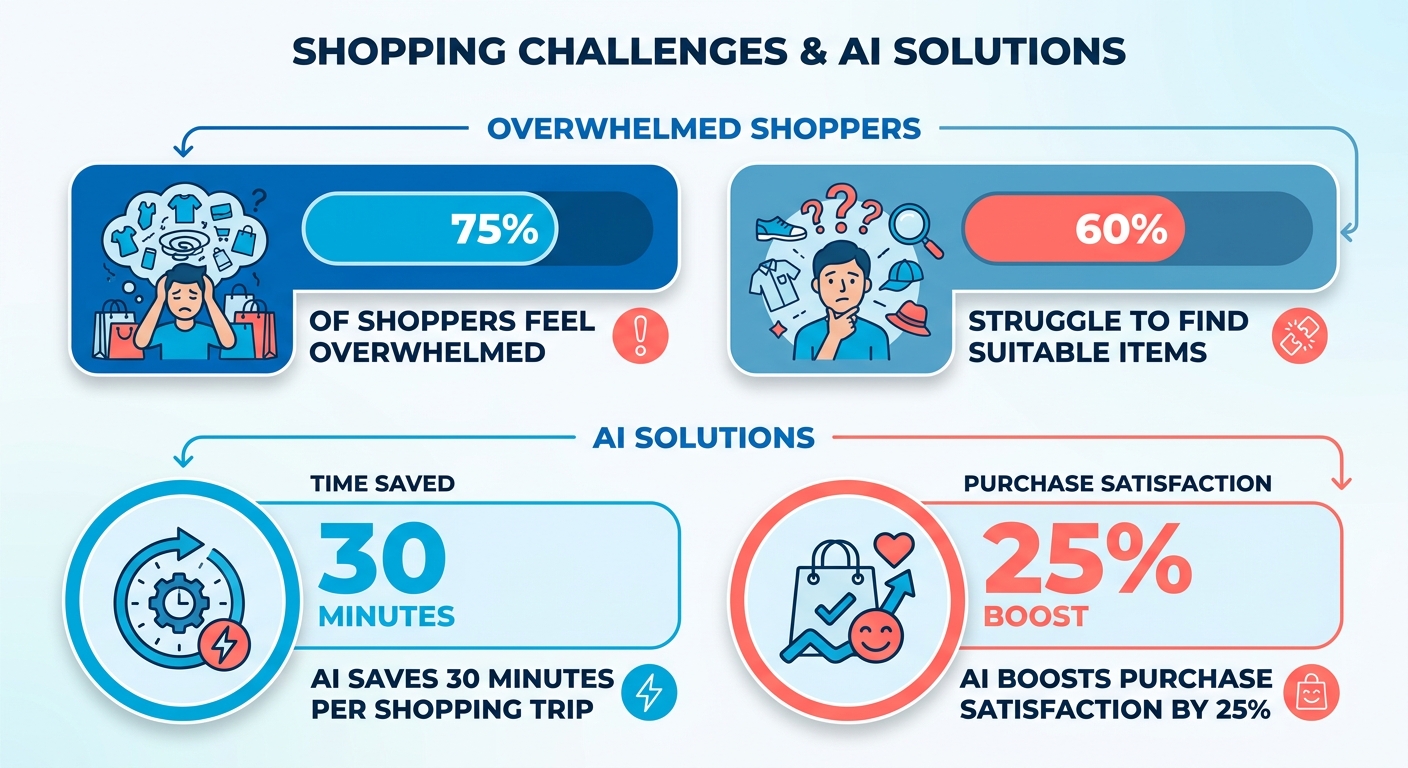
What makes AI search different from filters?
AI search reads meaning. Old-school filters demand exact matches. AI handles misspellings, partial names, and odd phrasing without breaking, according to ThreeKit's breakdown of AI search. Type a messy request and it still knows what you mean.
Traditional filters make you do the work. Pick a category, then a price range, then a brand, and hope the combination returns something useful. AI flips that. It reads intent up front and returns a shortlist that already respects your requirements.
Some systems go further by reading your history. Amazon's Help Me Decide feature analyzes your browsing and preferences to recommend a pick with a single tap. That kind of tailoring only works when the tool understands context, not just keywords.
Who benefits most?
Health-conscious shoppers, parents, and anyone managing dietary needs. These buyers can't afford vague matches. They need the ingredient list, the dosage, and the real cost to be accurate before anything hits the cart.
A tailored search gives each shopper a result set built around their own constraints. A parent avoiding a specific allergen and a lifter checking protein content both get filtered results that respect what they typed. Generative models can turn both text descriptions and product images into searchable vectors, as this research on e-commerce search explains. You can search by what a product actually is, not just how a listing happens to be worded.
The common thread is transparency. When a system verifies specs against the label and shows honest unit pricing, you stop guessing. You compare fewer options, but the ones you see are worth your time. For businesses building this out, strong site search best practices separate a helpful result from more noise.
How AI actually filters the noise
AI filters noise by reading meaning, not matching words. It analyzes your query, interprets the intent behind it, and checks each product's real data against what you asked for. The junk gets dropped before it loads.
That's the mechanical difference. Traditional filters demand exact matches. AI systems map your query to a broader web of synonyms and related concepts. You type something imperfect, and the system still connects the dots.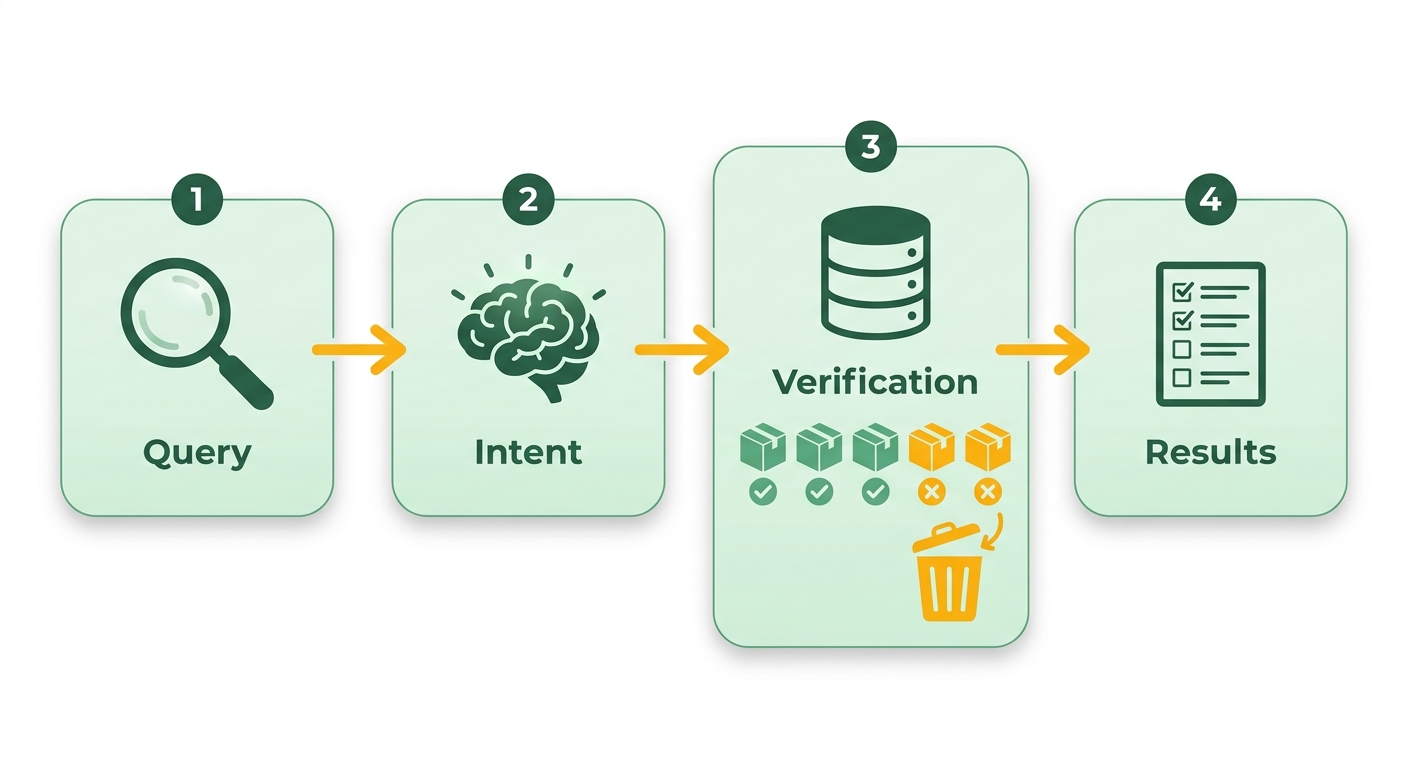
How natural language processing reads your query
NLP lets AI parse your search the way a person would. It breaks down both your query and the product descriptions, pulls out the relevant terms, and matches on meaning instead of literal string overlap.
Newer systems capture intent from conversational queries by combining domain knowledge with semantic understanding, as shown in this LLM-based semantic search framework. Ask for "a gentle cleanser for dry skin," and the AI reads "gentle" and "dry skin" as real requirements, then compares them against each product's actual attributes. Not random text to string-match.
How machine learning sharpens the filter
Machine learning improves filtering by studying real behavior. Models learn from browsing history, past purchases, and shopper preferences, then use those signals to rank what shows up next time.
By analyzing previous interactions and successful purchases, the algorithm refines its ranking weights. The more you use the platform, the sharper the match. Generative AI pushes this further, adjusting the results page to highlight the attributes that fit your profile, like organic ingredients or bulk packaging.
What spec verification looks like in practice
Spec verification means the AI checks the label, not just the listing title. It reads ingredients, dosages, and other stated attributes, then removes anything that fails your criteria before you see it. Want a magnesium supplement with at least 400mg of elemental magnesium and no added sugar? A verifying AI reads each product's ingredient panel, confirms the dosage, and drops the ones that fall short. You only see the products that clear both bars.
This is where the payoff shows up in numbers. AI-driven search can cut irrelevant results by up to 90% and lift conversion by around 40%. Read intent, verify data, filter noise. The result is a shortlist you can trust instead of a page you have to sort through.
Comparing products across multiple retailers
AI compares products across retailers by pulling pricing and feature data from many stores at once, then matching it against what you actually asked for. Instead of opening eight tabs, you get one shortlist ranked by real value.
The engine reads the intent behind your query and checks each product's specs against it. By translating product attributes into a standard format, it can compare items across catalogs, building a cross-retailer view that keyword search can't produce.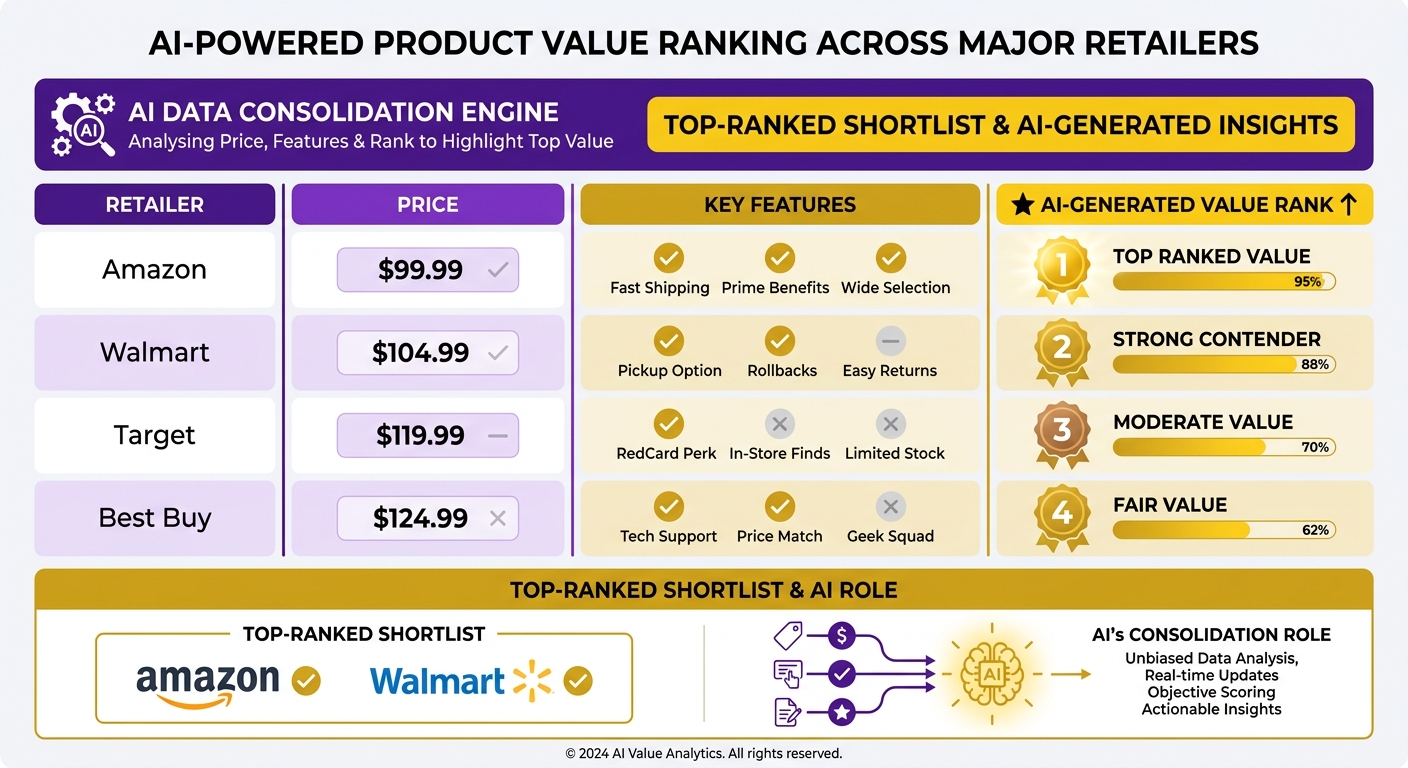
How AI compares prices across retailers
AI extracts pricing from multiple sources, then ranks products by value across every store it checks. It pulls prices from retailer sites and product labels, normalizes them, and lines them up side by side so you see the cheapest legitimate option first.
Some platforms now compare across eight major retailers at once, including Amazon, Walmart, and Target. You search once. The system fetches live pricing from each store and flags where the same item costs less.
This matters because a lower sticker price isn't always the better deal. AI-driven comparison saves consumers an average of 15% and lifts satisfaction by about 20%. You spend less and feel better about the choice.
Why unit pricing beats sticker price
Unit pricing reveals the true cost per ounce, count, or serving that the shelf price hides. AI calculates these values automatically and compares them across products and retailers, so a larger container that looks pricey often wins on real value. Two bottles of extra virgin olive oil: one has a lower shelf price but far fewer fluid ounces. The AI does the cost-per-ounce math and shows you which bottle is actually cheaper.
This is where AI-driven search moves past text matching and starts doing calculations on your behalf. A Consumer Reports study found AI-driven unit pricing saves shoppers an average of 10%, with a 15% bump in purchase satisfaction. Small edge per item, real money over a full cart.
What feature analysis does under the hood
AI reads specific attributes like ingredients, dosages, and certifications, then filters out anything that misses your requirements. Ask for a third-party-certified supplement at a set dosage, and products failing either test never reach your screen.
That depth is what separates cross-retailer comparison from a plain price scraper. The system verifies the substance behind each listing, not just the headline number. By standardizing these hidden details, it makes sure you're comparing identical metrics. Better inputs, better decisions.
Practical tips for finding better products faster
Better results start with better queries. The way you phrase a request shapes what the AI hands back, so learning to write for these systems pays off fast. Good product search leans on natural language, not stacked keywords.
You don't need to strip your request down to two words anymore. AI systems read full, conversational phrasing and pull the intent out of it. Type what you actually want, in plain English, and let the system parse it.
How to write a query that gets relevant results
Write your query the way you'd describe the item to a friend, including specifics like quantity, budget, and dietary needs. AI captures intent from conversational phrasing, so detail helps rather than hurts. Vague queries get vague results.
Want keto-friendly pantry staples under a certain price? Instead of "keto snacks," write "affordable keto pantry staples with low net carbs." The system reads each condition and matches products against it. Detail also helps because AI forgives imperfect input, mapping typos and regional phrasing to the right catalog so you don't lose a good match to a spelling mistake.
What makes cross-retailer comparison worth it
Comparing across retailers means you get the best value, not just the first decent option you find. AI does the legwork by reading specs and prices from many stores and ranking them against your stated needs. You compare real value, not marketing copy.
The engine processes both text and product images, so it can match visual attributes to your request rather than relying on the written title alone. Some tools go further by reading your browsing history to narrow the field, delivering a relevant shortlist with minimal manual effort.
How AI verifies product specs
AI extracts specs from sources like manufacturer sites and product labels, then validates them against your query before showing results. This is where accuracy comes from. The system checks the label, not the marketing headline.
Take mineral sunscreen. An AI agent reads the active ingredients off each label, confirms it contains only zinc oxide or titanium dioxide, and drops any product with chemical UV filters. You only see options that meet the criteria you asked for. This matters for products where the label is the whole decision. Supplements, groceries with dietary restrictions, anything spec-sensitive benefits most from this step.
A few quick habits sharpen your results:
- Name your must-haves. Price ceiling, quantity, and dietary limits all filter better when stated.
- Use full sentences. The system reads intent, so write like you talk.
- Trust the shortlist. If the AI validated specs against your query, the top results already fit.
Start specific, let the AI verify, and compare what it returns. That sequence is how you find better products in less time.
Building custom filters for health and diet needs
Custom filters let you lock in health and diet requirements once, then only see products that clear them. For fish oil, you set a minimum EPA/DHA. For protein powder, you flag dairy-free. The AI reads each product's real data against those rules and drops everything that fails. That's product search built around your body, not the retailer's inventory.
The engine reads meaning, not just labels. It translates complex attributes into a unified map. Type "gluten-free oats, no added sugar" and the system understands the constraint even if the listing phrases it differently.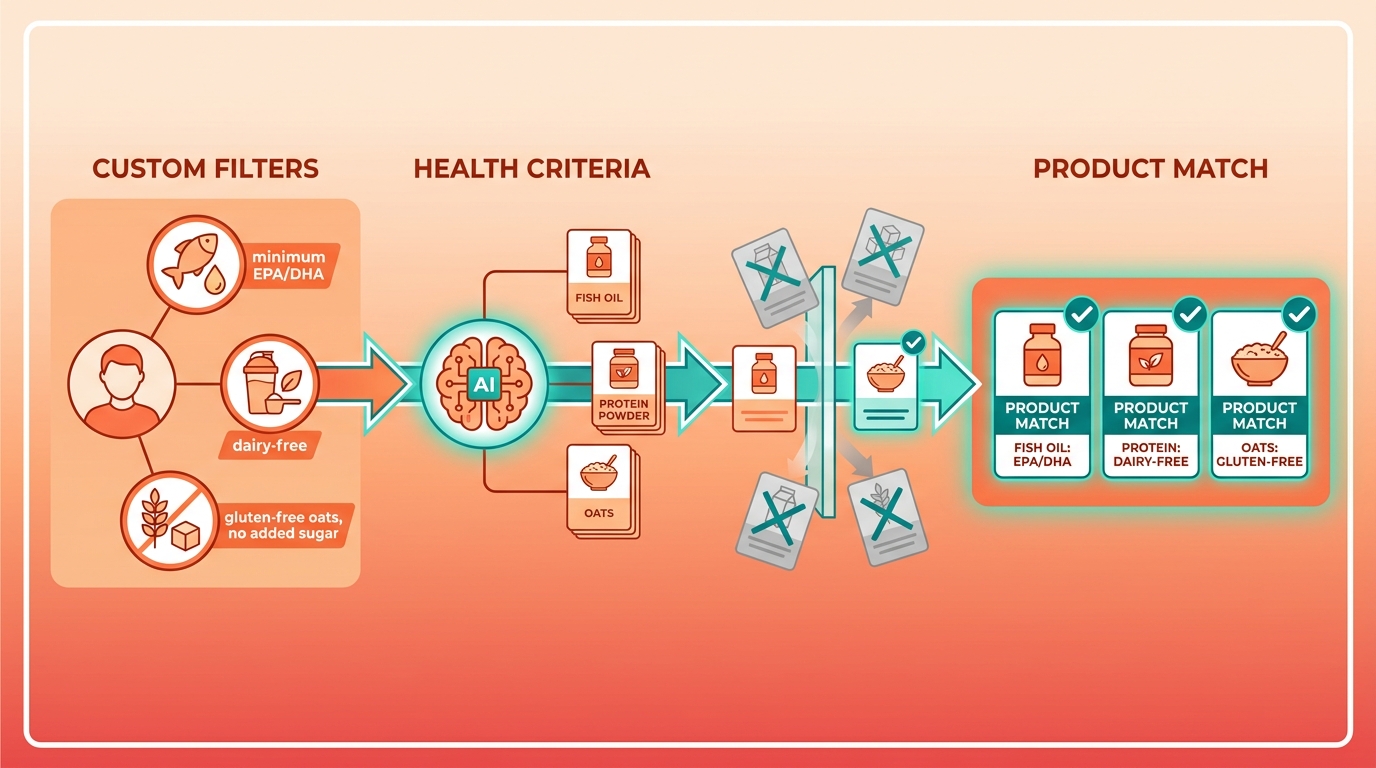
How natural language turns a health need into a filter
AI reads your query and the product description together, matching the intent behind your words to the specs on the label. You describe a dietary need in plain language. The system pulls the relevant terms and applies them as hard filters, so only qualifying products survive.
This matters for health shopping because your needs are rarely one keyword. Type "vegan omega-3 with at least 500mg per serving" and the AI treats each piece as a separate rule to enforce. It also forgives sloppy input, mapping phonetic spelling errors and alternative names to the right database entries. Misspell "magnesium glycinate" and the filter still holds.
How machine learning sharpens your filters over time
Machine learning models study your behavior and purchase history, then refine what they surface. The more you shop within your dietary constraints, the better the system predicts which products fit before you finish typing.
This is where tailored search pulls ahead. If you consistently buy low-sodium and nut-free items, those preferences start shaping your default view. The payoff is accuracy. A minimum protein threshold for dog food means you skip the products that miss your mark. You compare real contenders instead of sorting through near-misses.
What a configured filter looks like in practice
Say you need a multivitamin with active methylated folate, no artificial dyes, and a third-party purity certification. You set those three parameters. The system checks every listing's data and returns only the handful that pass all three.
That's the shift. Instead of reading forty labels to find three matches, you start with the three. For anyone managing allergies, intolerances, or strict macro targets, that precision saves time and cuts the risk of buying something that quietly breaks a dietary rule.
If your health needs are simple, basic filters work fine. Custom AI filtering earns its value when your requirements stack up and a single missed spec actually matters.
References
[1] 5 Ways AI-Powered Search is Different Than Traditional Filtering - https://www.threekit.com/blog/product-discovery-for-ecommerce-5-key-ways-ai-powered-search-functions-are-different-than-traditional-filtering
[2] How To Use AI To Tailor Product Search for Every Shopper - https://www.salsify.com/blog/use-ai-to-tailor-product-search?hs_amp=true
[3] Amazon's new AI-powered shopping feature 'Help Me Decide' makes it ... - https://www.aboutamazon.com/news/retail/amazon-things-to-buy-help-me-decide-gen-ai
[4] (PDF) Enhancing Product Search in E-Commerce Using ... - https://www.researchgate.net/publication/386573183_Enhancing_Product_Search_in_E-Commerce_Using_Generative_AI_for_Text_and_Image_Query_Retrieval
[5] (PDF) AI-powered search: Revolutionizing the online ... - https://www.researchgate.net/publication/391322819_AI-powered_search_Revolutionizing_the_online_shopping_experience
[6] LLM-based Semantic Search for Conversational Queries in ... - https://arxiv.org/html/2601.16492v1
Frequently Asked Questions
1. Does AI product search work on mobile apps or only desktop browsers?
AI product search functions across both mobile apps and desktop browsers, since the intent-reading happens server-side. The interface adapts to your device, but the same natural language processing, spec verification, and cross-retailer comparison run identically. Mobile users often benefit more, since conversational voice queries pair naturally with intent-based systems.
2. Can AI search make mistakes when verifying product specs?
AI spec verification depends on accurate label and manufacturer data, so errors occur when source listings contain outdated or incomplete information. If a retailer misprints a dosage or omits an ingredient, the AI may pass a product incorrectly. Cross-checking flagged items against manufacturer sites remains a smart habit for critical dietary needs.
3. Is my browsing history required for AI search to work well?
Browsing history sharpens personalization but is not required for effective results. Core functions like intent parsing, spec verification, and unit-price comparison work from your query alone. History mainly refines ranking and default preferences over time. First-time users still get accurate, filtered shortlists without any prior data collected.
4. How does AI product search handle out-of-stock or discontinued items?
AI systems pull live pricing and availability data, so out-of-stock items are typically flagged or dropped from your shortlist automatically. When comparing across eight retailers, the engine prioritizes in-stock options at genuine value. This prevents the frustration of finding an ideal match only to find it's unavailable at checkout.
5. Can I use AI search for non-spec purchases like clothing or electronics?
AI search works for any category, though it shines brightest with checkable specs like dosages, ingredients, or unit counts. For clothing, it reads size, material, and style attributes; for electronics, it verifies technical specifications. For pure impulse buys where details don't matter, a plain keyword search is often faster.
6. What's the difference between AI search and a price comparison website?
Price comparison sites match listings by product name and rank purely on sticker price. AI search reads query intent, verifies specs against labels, and calculates true unit pricing before ranking. This means AI filters out mismatched products entirely, while comparison sites show every near-match regardless of whether it meets your actual criteria.
7. Will AI search recommend cheaper products that miss my requirements?
AI search prioritizes value only among products that already clear your stated criteria, so it won't push a cheaper item that fails your specs. If you require a specific active ingredient dosage, a lower-priced option that falls short gets dropped first. Value ranking applies to qualifying products, protecting you from false savings on inadequate items.