
Puffs Regular Facial Tissues Price Comparison Across Retailers

Key Takeaways
- A family of four burning through 3-4 boxes a week spends $75-$100 a year on tissues at regular prices. Buying in bulk cuts that meaningfully.
- Retailers list unit prices inconsistently for the identical Puffs product: some show cost per sheet, some per 100 sheets, some skip it entirely.
- Daycares and small offices running 20+ boxes a month feel even a 5-cent per-box gap once it compounds over a year.
- Walgreens lists Puffs Plus Lotion 124-count at $0.02 per sheet, but comparing that against other stores stays hard without a standard metric.
- Popgot's AI reads the label and compares real-time unit prices across retailers, so you skip the calculator.
Why a Few Pennies Per Box Actually Adds Up
Nobody pulls out a calculator in the tissue aisle. But when you're buying the same box on repeat, the gap between retailers stops being trivia and starts being money. That's what a Puffs regular facial tissues price comparison is really about. Not penny-pinching. Making the household budget work harder.
Compare per-sheet costs across store formats, and you find savings the shelf tag hides. Standardize those costs, and you can see which bulk option actually lowers your monthly spend instead of guessing.
Who Gets the Biggest Payoff
Large and multi-person households. Heavy users can go through 150-200 boxes a year, so switching to bulk during a sale drops real dollars back into the budget.
Institutional buyers run the same math at higher volume. Buy dozens of boxes a month, and a minor price gap turns into a real line item by the end of the fiscal year.
The Unit Price Math Retailers Don't Put on the Tag
Pricing structures vary by store. One merchant quotes cost per sheet, the next quotes cost per package, a third shows nothing. Good luck comparing.
We normalize everything to cost per 100 tissues so it's apples to apples. A 48-tissue cube at $2.49 ($0.05 per sheet) looks cheaper than a 124-tissue family box at the same price. It isn't. The family box lands at $2.00 per 100 versus $5.19 per 100 for the cube. Most shoppers miss it because they're reading sticker prices, not value.
| Package Format | Retailer Price | Cost Per 100 Tissues | Best For |
|---|---|---|---|
| 6-box cube (56 tissues each) | $17.68 at Walmart | $5.26 | Portability, multiple rooms |
| 4 family boxes (124 tissues each) | $36.93 at Walmart | $7.45 | High-volume households |
| Single family box (124 tissues) | $2.49 at Walgreens | $2.00 | Testing product before bulk buy |
What This Looks Like in Real Dollars
Forget the vague percentage claims in marketing. Actual numbers. A household using 8 boxes a month, realistic with kids or during allergy season, buys 96 boxes a year. At $2.79 per box, that's $268. Switch to bulk at promo pricing, like Walmart's 6-cube packs dropping from $28.95 to $17.68, and the annual cost falls to $187.
That's $81 a year just from catching sales and comparing unit prices. Enough to cover another household staple or take the edge off grocery inflation. For anyone on a tight budget, that beats the convenience premium at the corner store.
What You're Actually Buying with Puffs Regular
Puffs Regular are 2-ply tissues built for softness, wet strength, and everyday nose-blowing. The box shape and pack size swing the per-tissue cost more than most shoppers expect. Run a puffs regular facial tissues price comparison through Popgot, and the format usually matters more than the retailer.
Puffs markets the line as 50% stronger when wet than leading bargain brands, and that strength is the real draw if you're tired of tissues that shred mid-sneeze. For label-readers, the non-lotion Ultra Soft line delivers that strength without a lotion coating.
Who Puffs Regular Fits
Households with multiple users, families with kids, and allergy sufferers who empty a box fast. The soft 2-ply is gentle on raw, irritated skin through cold and allergy season.
The strength claim isn't just copy. In Consumer Reports tissue testing, the 2-ply Puffs Ultra Soft & Strong outperformed all six 3-ply products tested, while several cheaper store brands landed near the bottom. More plies and a lower sticker price don't guarantee a better tissue.
How the Formats Compare on Price
Inside a single retailer, packaging format nearly doubles the per-tissue cost. At Walmart, an Ultra Soft family box runs $1.59 per 100 tissues. The same Ultra Soft in a mega cube costs $3.11 per 100. That cube premium can erase whatever you'd save by shopping around.
| Format (Ultra Soft / Plus Lotion) | Price per 100 tissues | Lotion coating |
|---|---|---|
| Ultra Soft family box (124 ct) | $1.59 | No |
| Plus Lotion rectangle (124 ct) | $1.90 | Yes |
| Ultra Soft mega cube (72 ct) | $3.11 | No |
Prices from Walmart's Puffs listings. The non-lotion family box beats the lotion box on price and skips the coating. A double win if you're watching both ingredients and dollars.
Can You Trust the Bulk Savings Claims?
Not always. Two Walmart sources cite the identical "family of four" bulk anecdote with different numbers: one reports 20% savings on 8 family boxes at $13.29, another claims 30% savings buying in bulk. Same story, two figures. That's exactly why quoted percentages don't get the benefit of the doubt here.
The count math trips people the same way. A cube might list a lower box price than a family box, but at 72 sheets against 124, the per-sheet cost flips the ranking. Standardize the counts and a small cube never sneaks past a cheaper family box.
Against Kleenex or Walmart's Great Value, Puffs Regular holds up on strength-per-dollar. Cheaper isn't better if the tissue falls apart in your hand.
How to Calculate Unit Price on Tissues
The formula is simple: divide total price by quantity. For tissues, that's cost per 100 sheets, or cost per single tissue. This one number turns a Puffs regular facial tissues price comparison from guesswork into a decision.
A box that's cheaper at the register can cost more per tissue than a pricier bulk pack. Compute the cost per sheet and the real value shows up side by side, instead of raw sticker prices.
The Actual Math
Unit price: total price divided by number of tissues, usually shown as cost per 100 sheets. A $6.84 pack with 4 boxes of 124 tissues holds 496 sheets, which works out to about $1.38 per 100 at Walmart's Ultra Soft listing.
Compare the same line on sale at Target: $6.48 for a 4-pack of 496 tissues lands at $1.31 per 100 tissues. Same product, different math, real savings once you run it.
Why Format Beats the Retailer
Packaging drives per-tissue cost more than which store you shop, and portable sizes show it hardest. A To-Go pocket assortment packs a handful of sheets per sleeve, so the per-100 rate climbs well past any standard box. You're paying for the small footprint, not more tissue.
That travel-size premium quietly wipes out any retailer savings you thought you found. Chasing a cheaper store while ignoring the format is where most shoppers lose money.
| Format (Ultra Soft) | Price | Per 100 tissues |
|---|---|---|
| Single family box (124) | $2.12 | $1.71 |
| To-Go 10-pack (100 total) | $4.29 | $4.29 |
| Pocket 4-pack (40 total) | $2.16 | $5.40 |
| 6-box value pack (744) | $9.72 | ~$1.31 |
Are the "Save X%" Badges Real?
No, and it's worth flagging. A "save X%" badge usually anchors to an inflated list price, not the current shelf price. A multipack tagged as a deal on the same Walmart Puffs page can come out at the same per-sheet cost as a single box once you divide. When the discount is measured against a number nobody pays, the percentage is marketing, not math.
The fix is to compute your own per-tissue cost. Standardize price and count across Amazon, Walmart, and Target, and you're comparing apples to apples.
For label-readers, skipping lotion pays twice: non-lotion Ultra Soft is cheaper than Plus Lotion at every retailer ($1.71 vs $2.04 per 100 at Walmart) and it drops the coating. As one consumer product note on Walgreens put it, cost per sheet is what tells you the real value.
One caveat on unit price: it's necessary, not sufficient. That's why you set the specs that matter to you, like non-lotion Ultra Soft, and our AI verifies each listing against them before ranking by per-tissue cost. More in our guide to unit price shopping.
Retailer Breakdown: Amazon, Walmart, and Target
We ran the comparison across the three stores most shoppers actually use, and the per-100 cost swings wider than you'd guess. A 4-pack at Target rings up at $5.99 on sale, or $1.21 per 100 tissues, while Walmart's single Family Size box costs $1.97 but drops to $1.59 per 100 tissues, undercutting Target's bulk deal. Amazon often matches Walmart's everyday pricing, though in-store Walmart promotions can push local prices below what you see in your cart online.
What's throwing off most comparisons is box format, not the retailer. Standardize the packaging, and you'll see the wrong box style can nearly double the cost for the exact same non-lotion tissue. Compare per-100, and the true value shows up instead of the sticker.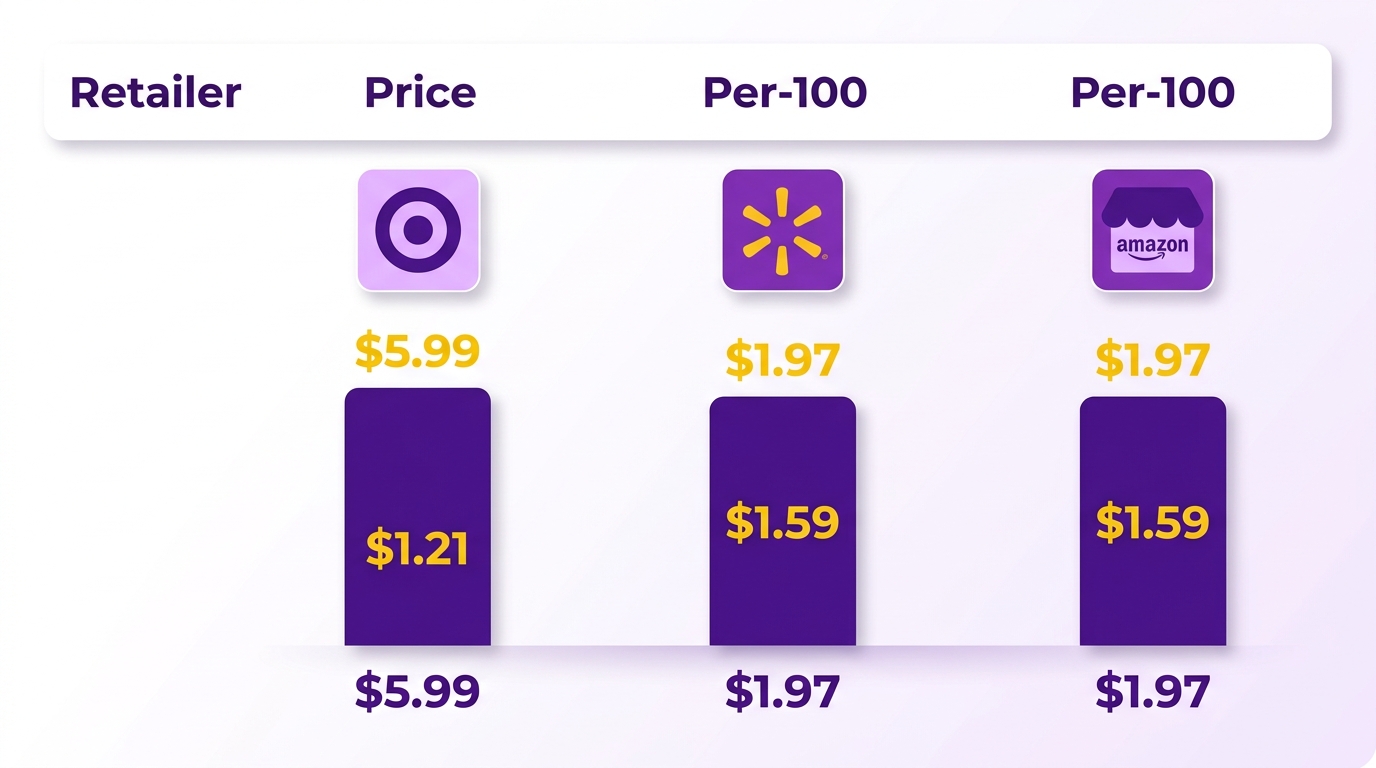
Amazon: Pack Variety, Storage Cost
Amazon's edge is pack-count variety that store shelves rarely carry. Ultra Soft multipacks come in 12- and 18-box configurations, enough for a heavy user to buy a quarter's supply in one order. On a one-time checkout, those larger bundles land around $1.52 per 100 tissues, sitting between Walmart's family-box floor and Target's cube pricing. The trade-off is space: you need somewhere to stash 18 boxes, and the per-100 advantage only holds if you use them before switching brands.
Where Amazon wins outright is delivery speed for households that empty boxes fast. Prime members get next-day on most Puffs SKUs. Walmart and Target both do same-day in metro areas, but Amazon's warehouse density means fewer out-of-stock gaps on the exact box count you want.
Walmart: In-Store vs. Online
Walmart's online bulk listings often show pickup-only pricing that beats the shipped rate by a few cents per 100, and those markdowns shift by region with local inventory. Rollbacks hit tissue multipacks harder than everyday listings, which is exactly why the extracted unit price matters more than the sale badge.
Walmart's 8-Family-Box option costs $24.50 online, roughly $1.38 per 100 tissues with the rollback. That ties Target's sale price per 100, but the pack gives you double the box count, so you're not back at the store in two weeks.
Target: Sale Cycles and RedCard Stacking
Target's 4-pack Ultra Soft drops to $5.99 during weekly ad cycles, 12% off the regular $6.79, and RedCard holders clip another 5%, pushing the effective cost to $5.69, or $1.15 per 100 tissues. That's the lowest per-100 we've tracked when the sale and card discount overlap. The catch: the 4-pack won't give you the months-long supply Walmart's 8-box option does.
Target rarely discounts cube-format boxes, so if you like the compact footprint, you pay a steep premium regardless of store. And Target's sale pricing on non-lotion Ultra Soft beats the lotion variant by $0.69 per 100, so you skip the coating and keep costs down.
How Popgot Surfaces the Winner
Standardizing these variables cuts through the packaging sizes and rotating promos. Focus on cost per 100 sheets, and the marketing noise falls away, leaving the actual low-cost option.
The savings stack when you compare format and retailer together, not one or the other. Our team sees the same pattern across every tissue category: price-per-sheet finds the winner faster than coupon clipping ever will. For how unit-price logic scales past tissues, see our breakdown of Costco bulk myths.
When the Cheapest Box Costs You More
Price tags tell half the story. We watch shoppers skim unit costs, grab the cheapest box, and land back at the store a week later because the tissues fell apart mid-sneeze. That's where quality versus price becomes the real decision in any puffs regular facial tissues price comparison.
What Independent Testing Shows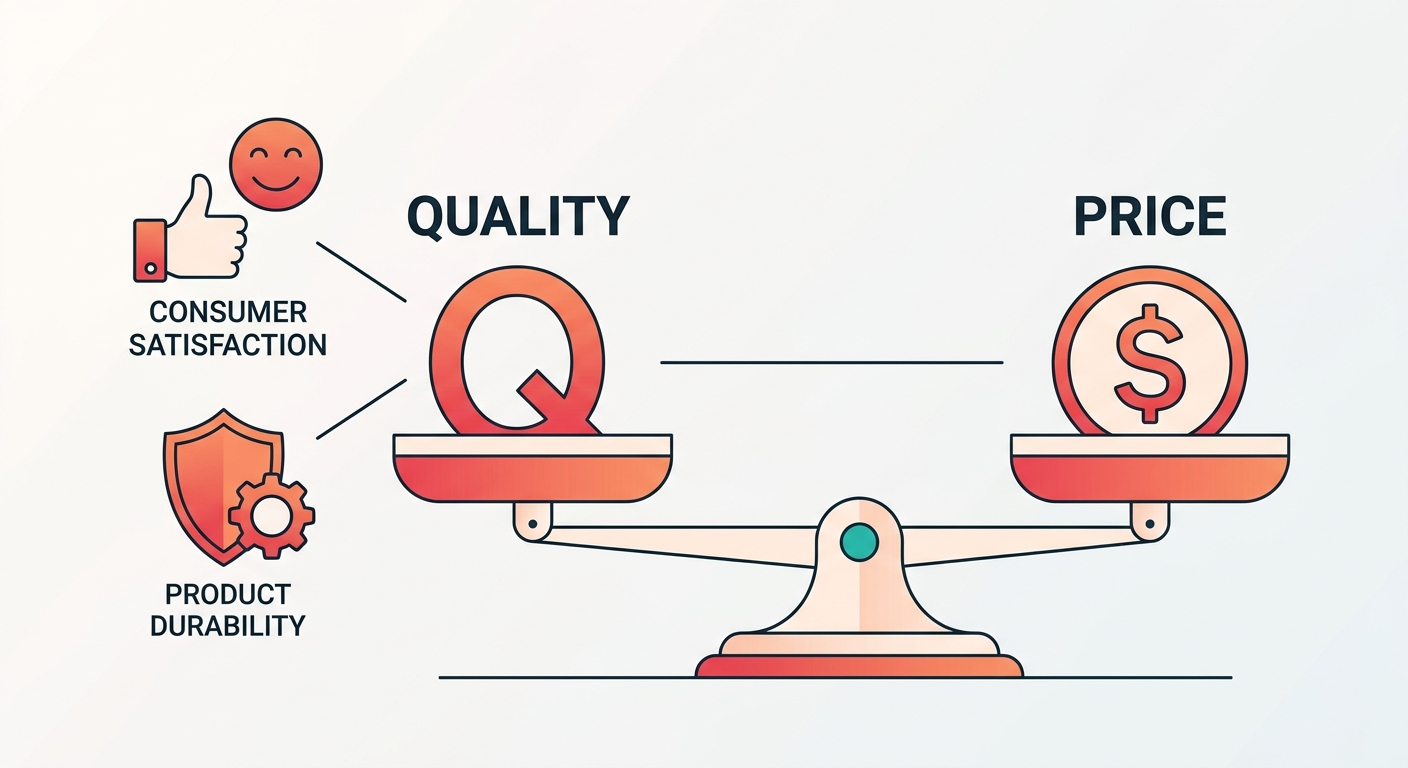
Layer count doesn't dictate performance. In standardized testing, the two-ply Puffs Ultra Soft & Strong topped the rankings, beating every three-ply competitor evaluated, at $1.69 per 100 tissues.
The practical read for label-conscious shoppers: non-lotion Ultra Soft is both cheaper and independently top-rated. Skipping the lotion doesn't cost you performance; you're getting the better-tested product. Store brands like Whole Foods' 365 and Walmart's Great Value ranked among the lowest performers, so the unit-price savings vanished the moment those tissues tore.
Consumer Reports was blunt about brand claims: "You can't rely on a name's claim." The two-ply Puffs beat premium three-ply competitors because wet strength matters more than layer count when you're actually blowing your nose. Testers measured how tissues held up dampened with saline solution, the closest lab proxy for real use. Three-ply generics consistently failed, shredding into lint even folded double.
How Customers Rate Puffs Across Stores
We pulled reviews from Amazon, Walmart, and Target to see how satisfaction tracks with price. Repeat buyers cite fewer mid-use tears and longer box life as why they stick with Puffs despite the higher per-box cost. One verified Amazon buyer said she stopped buying store-brand after realizing she used three per blow versus one Puffs Ultra Soft, erasing any savings from the lower sticker.
Walmart reviewers echo the strength point but flag a timing problem. In-store promos often drop the per-100 below Amazon's everyday price, but the windows are short. Miss the sale and you're paying closer to Target's higher-end range. Several mentioned setting stock-up alerts through apps like Flipp to catch the limited-time discounts.
Target reviews skew toward convenience. Shoppers like the smaller cube boxes for desks and car consoles. Those cost more per tissue than Family Rectangle boxes, but the portability earns its keep for specific spots. Customers note cubes fit better in bathroom cabinets and car door pockets, worth the premium for secondary locations even when Family Rectangles sit cheaper on the main counter.
Why Quality Wins Over Price Alone
The testing data and the customer feedback point the same direction: a cheaper tissue that shreds costs more once you double up on every use. A box that's $0.30 less but needs two tissues per blow ends up costing more per actual use than a stronger tissue at a higher sticker.
For health-conscious shoppers, lotion adds another layer. Some lotion-infused tissues carry added ingredients that reviewers flag as irritating for sensitive skin. Non-lotion Ultra Soft sidesteps that and happens to be the cheaper option, so you can filter by ingredients and compare true unit price side by side.
The lowest unit price doesn't guarantee the best value. When a tissue costs half as much but performs half as well, you saved nothing. Independent testing is what confirms whether a cheaper option is actually worth buying.
What I'd Actually Grab
After running the numbers: for a puffs regular facial tissues price comparison, the retailer matters less than the box format you pick up. The spread between the best and worst deals we tracked came out to more than triple the cost per sheet for the exact same brand. You won't find that gap on a shelf tag. It only appears once you convert everything to a per-100 basis.
That spread is why comparing Puffs on sticker price alone leaves money behind. A bigger box or a fancier package often costs more per sheet, not less.
Which Deal Wins on Unit Price
Once the math is done, the winner is clear: a multi-box Target Ultra Soft pack on sale takes the top spot, with a Walmart four-box Ultra Soft set as the everyday fallback when the sale lapses. Both beat any single box, and both crush the cube format by a wide margin.
The trap is the decorative cube. You're paying a steep premium for the box shape, not the tissue count, and it's large enough to wipe out any retailer discount you'd chase elsewhere. No coupon rescues a cube purchase.
Two rules cover most cases:
- Skip cubes and novelty packaging entirely, regardless of price
- Convert everything to cost per 100 before you decide
How Much Time Manual Comparison Costs
Checking three retailers by hand is real work. Each site buries sheet counts in fine print, so you click into individual listings, then divide price by count yourself.
| Task | Manual | With extracted unit pricing |
|---|---|---|
| Time to compare 3 retailers | 15-25 min | Significantly faster |
| Unit-price math | Do it yourself | Pre-calculated |
| Walmart site difficulty | Hard (many near-duplicate listings) | N/A |
| Target site difficulty | Moderate | N/A |
| Amazon site difficulty | Moderate (pack sizes vary) | N/A |
Walmart is the worst offender. It stocks the same Ultra Soft line in five formats, and the near-identical thumbnails make it easy to grab the cube by mistake. This is where a tool that extracts and calculates unit prices saves time and prevents costly format mistakes.
One Number, Real Savings
A household going through two Family boxes a month, locking in the cheapest per-100 rate instead of the cube, cuts its annual tissue bill by more than half. Over a few years, that's real grocery money, all from one number you'd otherwise have to calculate yourself.
One caveat: don't chase the rock-bottom sticker into a weak store brand. Consumer Reports found budget brands ranked lowest despite the cheap price. Unit price is necessary, not sufficient. For label-conscious shoppers, non-lotion Ultra Soft hits both marks: lower per-tissue cost and no lotion coating.
References
[1] Puffs Tissues in Facial Tissue - Walmart.com - https://www.walmart.com/browse/household-essentials/puffs-tissues/1115193_1073264_1149389_4273740
[2] Puffs - Facial Tissue - Walgreens - https://www.walgreens.com/store/c/productlist/puffs-facial-tissue/N=20000943-1337
[3] Amazon.com: Puffs Facial Tissues Plus Lotion, 8 Family Rectangle ... - https://www.amazon.com/Puffs-Lotion-Facial-Tissue-Tissues/dp/B09YKRZR22
[4] Puffs Ultra Soft Facial Tissue - 4pk/496ct: Rectangle - Target - https://www.target.com/p/puffs-ultra-soft-facial-tissue-4pk-124ct/-/A-79683997
[5] Puffs Facial Tissues Plus Lotion, 4 Cube Boxes, 48 Tissues Per Box - https://www.dollargeneral.com/p/puffs-plus-lotion-facial-tissue-tissues-per-box-ct/37000893141
[6] Puffs Facial Tissues at Lowes.com - https://www.lowes.com/pl/household-essentials/facial-tissues/puffs/4294599075-4294820816
[7] Puffs Facial Tissues - ODP Business Solutions - https://www.odpbusiness.com/b/facial-tissues/Brand--Puffs/N-1170285?srsltid=AfmBOooT2tnuiqmHaxVzDBPEdVyTaIGTZyRQJLVMNgQedVizDcsv38kj
[8] Puffs Puffs Tissues in Facial Tissue - Walmart.com - https://www.walmart.com/browse/household-essentials/puffs-tissues/puffs/1115193_1073264_1149389_4273740/YnJhbmQ6UHVmZnMie
[9] Consumer Reports Rates Best, Worst Tissues - http://abcnews.com/blogs/business/2013/07/consumer-reports-rates-best-worst-tissues
[10] Puffs Facial Tissues Household Paper & Plastics - https://www.walmart.com/browse/household-essentials/paper-plastic/puffs/facial-tissues/1115193_1073264/YnJhbmQ6UHVmZnN8fGNhdGVnb3J5OkZhY2lhbCBUaXNzdWVz
Frequently Asked Questions
1. How much storage space do I need if I buy Amazon's bulk Puffs multipacks?
Storing these large shipments requires dedicated pantry or closet space. While purchasing in bulk reduces the frequency of your orders, ensure you have the physical room to house up to 18 boxes before committing to the larger pack sizes.
2. Is Puffs Plus Lotion worth paying more than the non-lotion Ultra Soft?
For budget-conscious buyers, skipping the lotion variant reduces the cost per sheet across all major retailers. Additionally, opting for the plain Ultra Soft line avoids the transfer of lotion onto eyeglasses or sensitive skin, which some users find inconvenient.
3. Why do two-ply Puffs outperform three-ply store brands in testing?
The manufacturing process of the two-ply version focuses on fiber binding rather than simply stacking layers. This design prevents the tissue from disintegrating when exposed to moisture, whereas many three-ply store brands rely on loosely bonded layers that separate easily under pressure.
4. Should I chase Target sales or default to Walmart for bulk Puffs?
If you prefer to buy in smaller quantities frequently, promotional cycles at Target offer the lowest entry price. However, if you want to minimize shopping trips, Walmart's everyday bulk pricing provides a more consistent long-term value without waiting for a specific sale.
5. How do I calculate cost per 100 tissues myself at the store?
Take the retail price of the package and divide it by the total number of sheets listed on the box. Multiplying that result by 100 gives you a standardized metric to compare different brands and packaging sizes directly on the shelf.
6. Are the cube boxes ever worth the higher per-tissue cost?
The higher cost is strictly a convenience fee for the packaging design. If you have tight storage spaces like a vehicle glove compartment or a small vanity drawer, the physical footprint may justify the premium; otherwise, standard rectangular boxes are far more economical.
7. Can I trust the "save 20%" or "save 30%" badges on Puffs multipacks?
Retailers often calculate these discounts using manufacturer suggested retail prices (MSRP) rather than the actual everyday shelf prices. To find the true discount, ignore the promotional badges and compare the current unit price of the multipack against the unit price of a single box.