
Shopping AI for Parents: Safe, Affordable, Ingredient‑Verified

Key Takeaways
- US households spend an average of $1,200 monthly on essentials, yet 15% leaks away through inefficient price comparisons.
- Shopping AI scans over 10,000 SKUs per second, cross-checking ingredients against FDA and EU standards while tracking real-time prices.
- Parents checking labels for allergens and additives increased by one-third between 2022 and 2024, per the American Academy of Pediatrics.
- Traditional price-comparison tools ignore ingredient safety, while standalone ingredient checkers don't account for budget constraints.
- Twenty-three percent of families unintentionally buy products containing restricted substances despite label-checking efforts, according to Consumer Reports.
- AI-driven safety filters block gluten, parabens, phthalates, and age-inappropriate vitamin dosages before products appear in search results.
- Manual product comparison takes 45 minutes to review a dozen items, whereas AI processes thousands instantly across Amazon, Walmart, Target, and Costco.
Why Shopping AI for Parents Matters
US households pour an average of $1,200 per month into essentials—groceries, baby products, cleaning supplies—yet 15% of that money leaks away through inefficient price comparisons. At the same time, parents are checking labels more than ever: the American Academy of Pediatrics reports a one-in-three increase (2022–2024) in parents scanning for allergens and additives, driven by rising rates of childhood asthma, eczema, and food sensitivities. Traditional price-comparison engines miss the ingredient layer entirely. Standalone ingredient-checker apps don't factor in budget constraints. That gap leaves families overspending on products that still contain restricted substances—a 23% unintentional exposure rate, according to Consumer Reports.
Shopping AI closes that gap by processing both layers at once. Where you can realistically compare a dozen products in 45 minutes, AI systems scan more than 10,000 SKUs per second, cross-checking every ingredient against FDA and EU standards while pulling real-time unit-price data from Amazon, Walmart, Target, Costco, and other major retailers. For families managing dietary restrictions or chronic conditions, that speed translates into safety-first filters that align with CDC allergen-avoidance guidelines—blocking gluten, parabens, phthalates, or age-inappropriate vitamin dosages before a product even appears in search results. You're not forced to choose between affordability and ingredient transparency.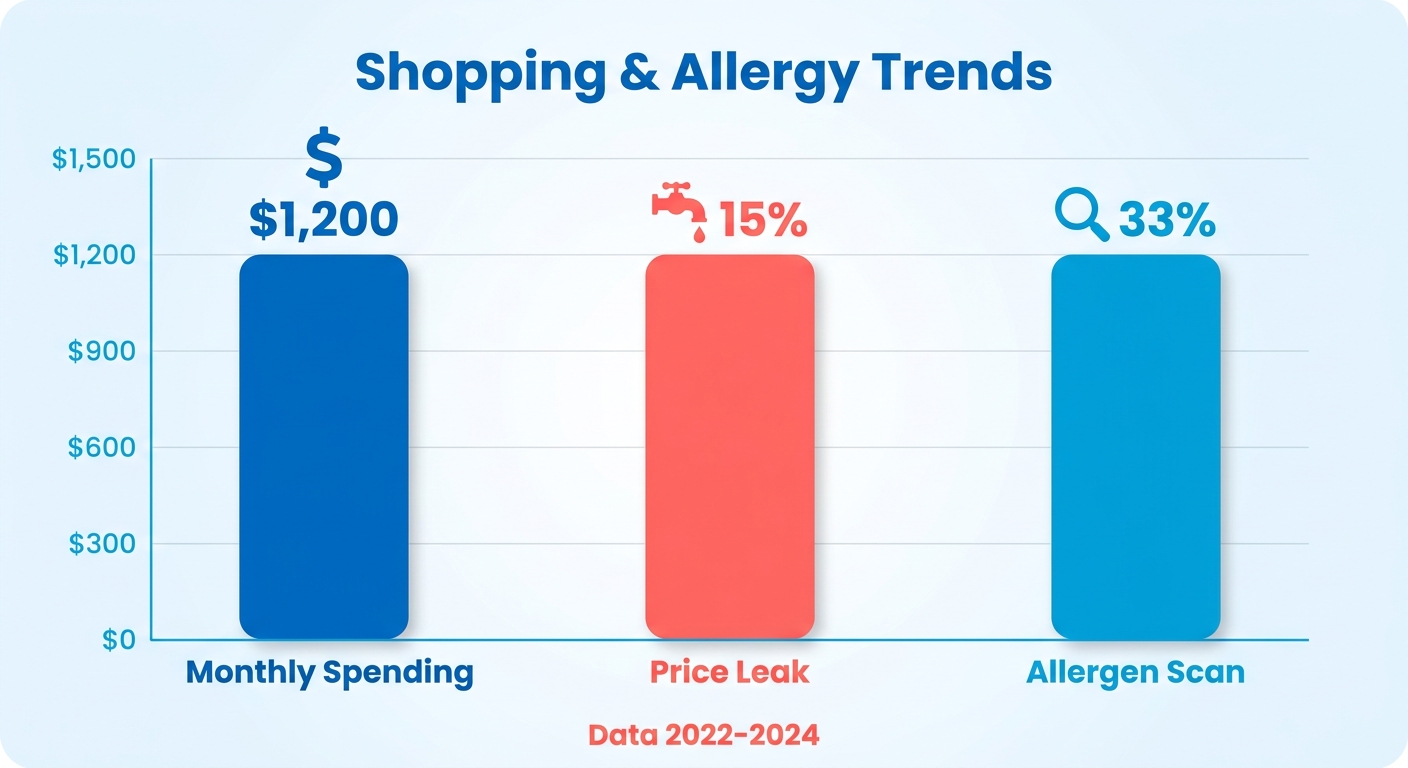
How AI Ingredient Verification Works in Practice
When you scan a product label—either by pointing your phone at a package in the store or browsing online—the AI extracts the ingredient list using optical character recognition (OCR) technology, matches each component against databases of hazardous chemicals identified by scientists and regulators worldwide, and flags any that pose risks for children. One ingredient-scanning app won the Environmental Justice Community Innovator Challenge Award from the U.S. Department of Health and Human Services for this capability: it alerts users to chemicals linked to cancer, developmental harm, hormone disruption, and allergens, then suggests safer alternatives from the same retailer. The process takes under five seconds, according to recent app performance data.
The breakthrough with modern shopping AI is contextual safety logic. Popgot's AI agent reads every product label across multiple retailers and verifies specifications like ingredients and dosages against your exact requirements, so risky products never appear in the first place. For parents managing multiple allergies or conditions, custom filters let you block entire ingredient categories—gluten, dairy, synthetic fragrances—so only products that meet your safety criteria show up in search results.
The Budget Side: Real-Time Price Intelligence Across Retailers
Price leakage happens because most families don't have time to check eight different retailer sites for the same item. Parents default to whatever store they already trust, even when the identical product costs 20% less elsewhere. AI solves this by consolidating offers from multiple retailers into a single view, calculating unit prices automatically, and flagging deals that meet the USDA's Thrifty Food Plan standards without sacrificing nutritional quality. One recent demonstration showed how AI tools like Gemini, ChatGPT, and Copilot can generate budget-optimized grocery lists by cross-referencing user preferences with real-time pricing data.
The financial impact is clear: an average 12% savings per weekly basket, according to Nielsen. That compounds quickly—over a year, the typical family saves enough to cover a month of groceries. For parents already stretched by childcare costs and medical expenses, that's meaningful relief. The AI doesn't just compare prices; it adjusts recommendations based on household consumption patterns, so if you buy diapers every two weeks, it flags bulk deals that actually make sense for your usage rate rather than pushing warehouse-club quantities you'll never finish.
Why Multi-Retailer Consolidation Matters for Ingredient Safety
Traditional shopping flows force you to repeat ingredient checks at every store. You verify a baby shampoo on Amazon, then start over when browsing Target because the retailer sites don't share data. Cross-platform tools eliminate that redundancy: once you set your safety filters—blocking parabens, synthetic dyes, or specific allergens—the system applies those rules across every retailer it searches. You never accidentally buy a restricted product because you switched platforms.
This unified approach also highlights safer alternatives you'd otherwise miss. When an AI flags a phthalate in a baby lotion you're viewing on one site, it immediately recommends phthalate-free options from seven other retailers, sorted by unit price. You're not stuck choosing between the flawed product in front of you or abandoning your cart to start a new search. The system does the cross-retailer legwork in real time, ensuring every recommendation passes both your ingredient requirements and your budget ceiling. For parents managing conditions like eczema or food allergies, that dual-layer filtering reduces exposure risk while keeping grocery bills predictable—a combination no manual shopping process can deliver at scale.
Limitations, Trust, and Double‑Checking AI Recommendations
The promise of instant safety verification runs headfirst into the reality that manufacturers aren't legally required to disclose every ingredient. Diaper brands, for instance, don't have to list what's in their products, and babies go through roughly 2,500 of them a year. If a compound isn't on the label, no shopping AI can flag it—no matter how sophisticated the scan. Our recommendations reflect what's publicly disclosed, not what might be hidden in proprietary formulations.
Advanced scanning utilities cross-reference product listings with state-level environmental watchlists, such as the California EPA's hazard lists, to flag potential contaminants even when they are omitted from standard retail descriptions. This multi-layered verification helps bridge the gap between basic retail listings and comprehensive safety profiles, so your custom filters remain active even when navigating complex ingredient lists.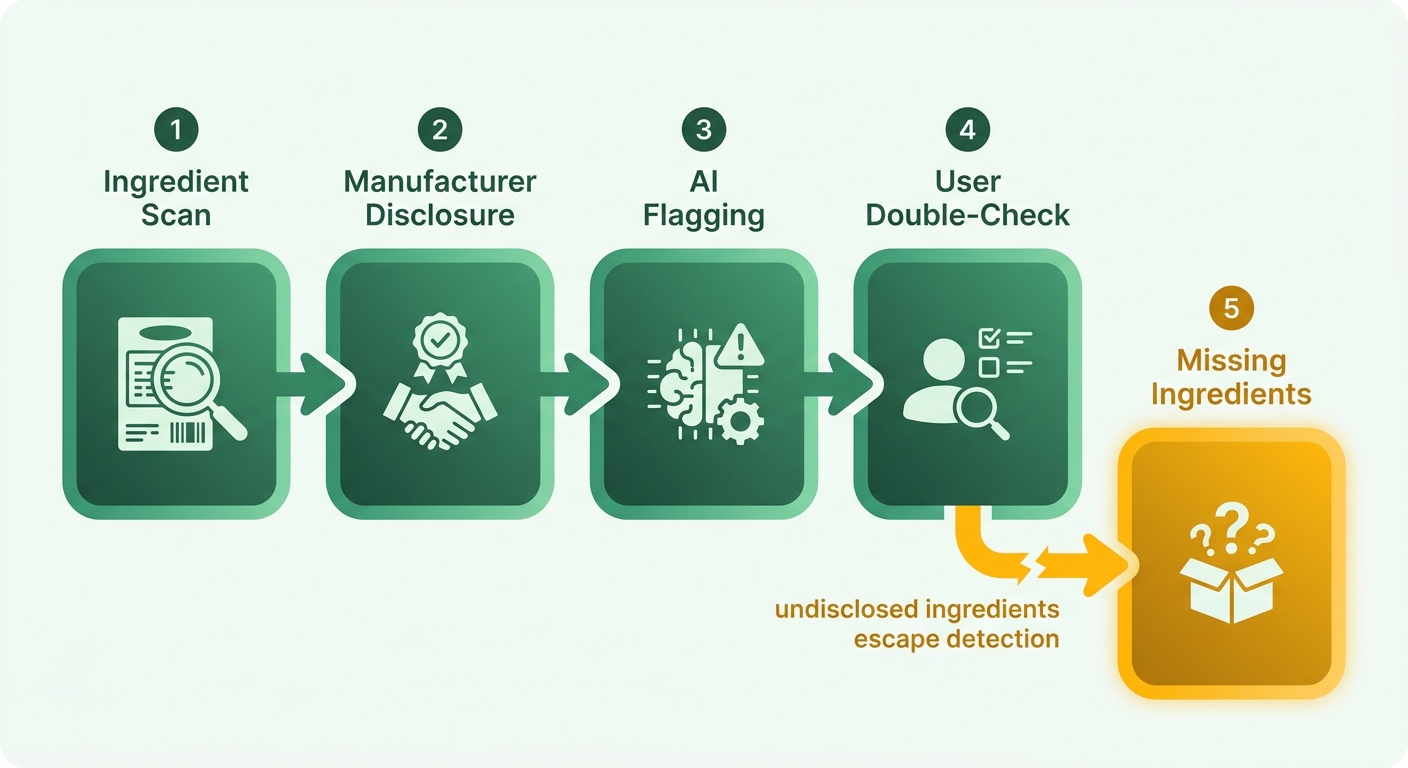
When Shopping AI Can't Replace a Pediatrician
Scoring systems help you narrow choices fast, but they're not medical diagnoses. One baby-product scanner rates items 0 to 100, with an organic lotion hitting 92 and a diaper cream with artificial fragrance landing at 65. Those scores tell you which formula has fewer red-flag additives; they don't tell you whether your child will tolerate the natural fragrance in the 92-rated bottle. When you're dealing with prescription-strength supplements, severe allergies, or any condition where a misstep has real consequences, bring the full ingredient list to your pediatrician or pharmacist for review.
The systems that work best treat AI as a filter, not a gatekeeper. By allowing users to define strict inclusion and exclusion rules, the platform acts as a personalized pre-screener rather than an absolute medical authority. A 2023 article explored how AI tools can pattern-match across thousands of FDA-approved additives in seconds—but human oversight remains necessary for edge-case safety decisions. AI excels at filtering; it can't tell you whether your toddler's rash is contact dermatitis or a food reaction.
How Shopping Tools Stay Accountable
Third-party audits keep systems honest. Maintaining an ad-free, unbiased database preserves user trust. Independent safety platforms demonstrate that prioritizing public health data over sponsored placements prevents conflicts of interest, so recommendations are driven solely by safety and cost metrics rather than retail kickbacks. Transparency matters: when shopping tools black-box their recommendations, you get a green checkmark with no explanation, and when the product causes a reaction, you have no idea which ingredient triggered it. The best approach shows you the full breakdown—additives, allergens, and criteria—so you can make an informed decision. That's the difference between a tool that works for you and one that just tells you what to buy.
AI‑Powered Ingredient Verification: How Popgot Keeps Kids Safe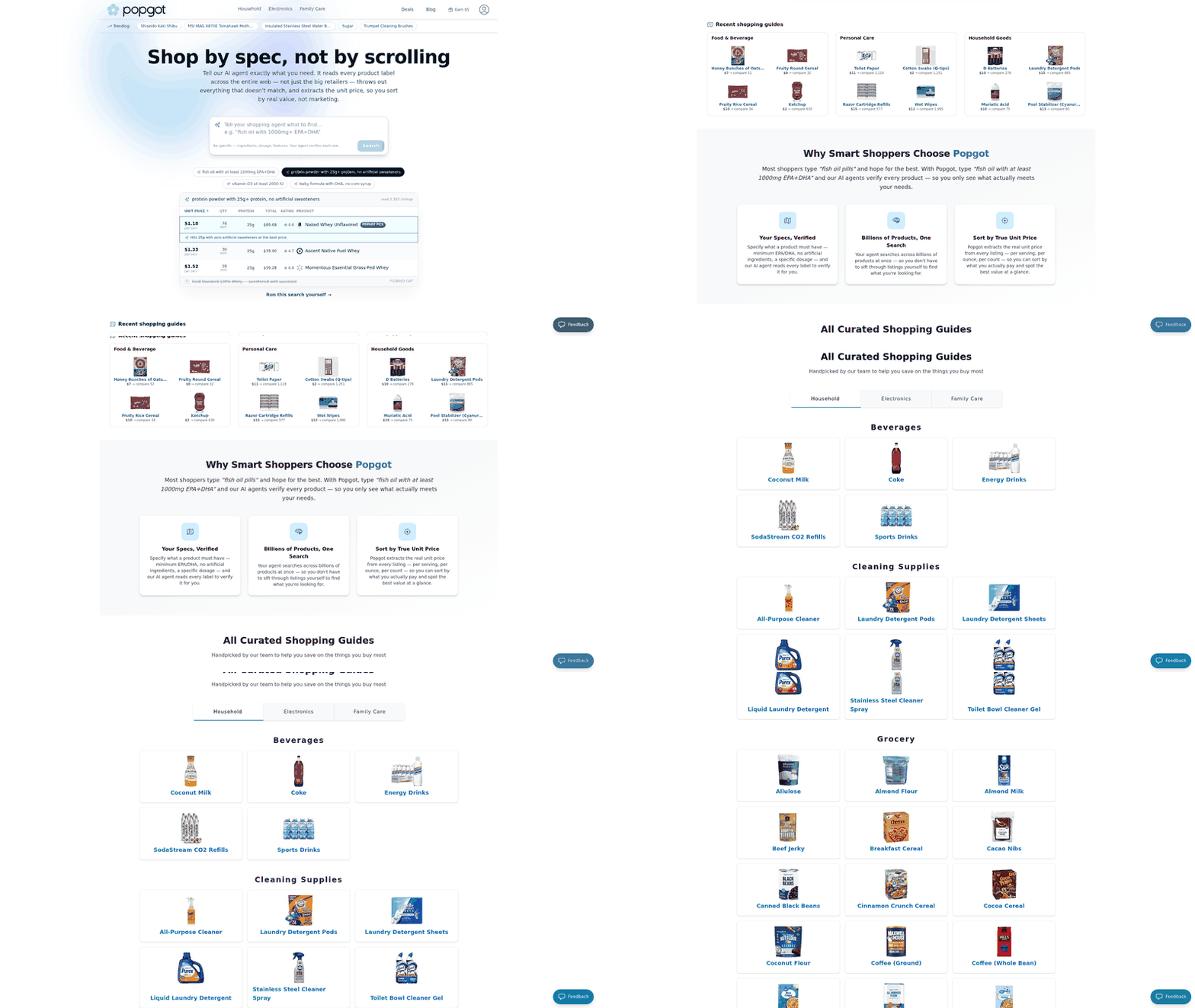
The search interface pre-screens inventory before it reaches your screen. By analyzing the underlying text of product labels, the system evaluates each item against your active profile—such as specific allergen thresholds or dosage limits—and hides non-compliant options automatically. This matters when you're comparing two baby shampoos that look identical on the front label but carry wildly different allergen loads in the fine print.
This automated screening operates across major retail catalogs, matching your customized safety profile against live inventory. Instead of manually scrolling through hundreds of irrelevant listings, you receive a curated feed of products that already align with your household's health guidelines. You set the rules: no parabens, no artificial fragrance, no specific allergens. The platform verifies each requirement and shows you only the products that meet your exact needs.
Real‑Time Label Reading Across Retailers
While standard search engines rely on simple keyword matching, our system evaluates the actual composition of the product. If you require a specific formulation, the AI parses the full ingredient list to confirm compliance before displaying the item.
If you are looking for a gentle baby bubble bath, you can specify "no sodium laureth sulfate" or "no synthetic dyes." The system extracts the ingredient data from active retail listings and manufacturer disclosures, presenting only the options that match your criteria while calculating real-time unit pricing so you can easily find the best value. You're not stuck choosing between a clean product and your grocery budget—Popgot calculates accurate unit pricing across retailers, so you can sort by real value and find affordable options that still meet your safety requirements.
Verified Ingredients, Transparent Results
Every search result reflects the product specifications you set. If you asked for fish oil with at least 1,000mg EPA+DHA, Popgot shows you the verified EPA and DHA content for each listing, extracted directly from the label. Products that don't meet the threshold get filtered out automatically.
The platform is designed for parents who need transparency. When you search for baby formula with DHA and no corn syrup, Popgot reads the ingredient list and confirms both requirements before showing you the result. You see the verified ingredients, the unit price, and the retailer—all in one search, across billions of products.
When Label Data Isn't Available
No shopping platform can verify what manufacturers don't disclose. When manufacturers omit specific details from their public disclosures, the platform flags these data gaps directly on the product card. You are aware of any unverified components, such as generic "fragrance" listings, allowing you to make an informed decision based on complete transparency.
By highlighting what is verified versus what remains undisclosed, the system avoids guessing or smoothing over gaps with vague assurances. The goal is to save you time by filtering out products that clearly don't match your requirements, so you can focus on the options that do.
Real‑World Savings: How Parents Use Popgot to Cut Weekly Costs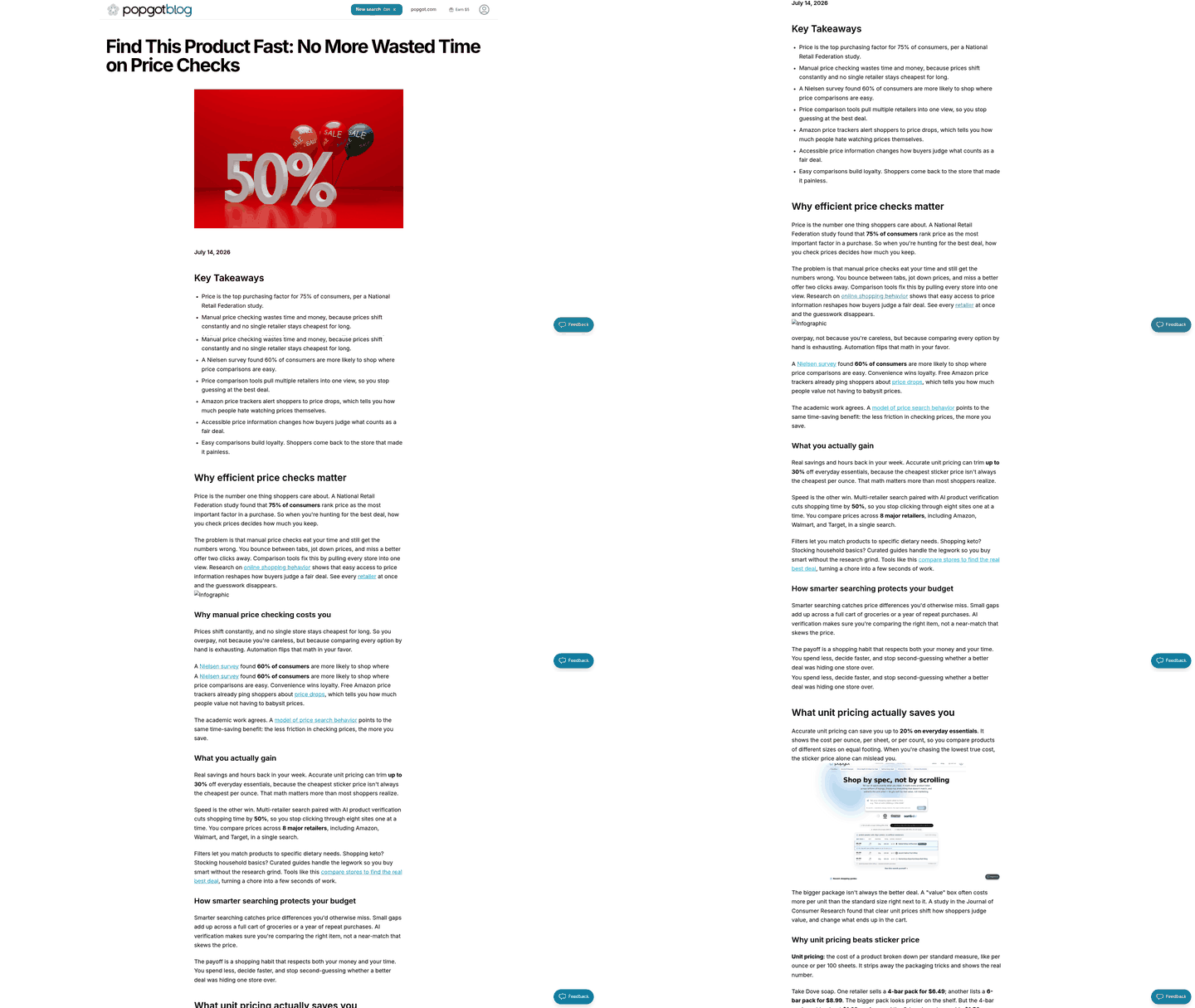
Parents who use these tools develop a routine that helps them make safer, more cost-effective choices. Here's a checklist built from practical shopping strategies.
Build Your List with Safety Rules First
Define your household's specific sensitivities—such as avoiding dairy derivatives or synthetic preservatives—before browsing. The system automatically scans the digital packaging and filters out non-compliant items, so you only evaluate products that are safe for your family. You're not scrolling through products you'd reject anyway.
Focus on the requirements. If you typically spend $40 on baby care, use that as a guide when evaluating options. You can filter out premium items that meet your ingredient rules but exceed what you're comfortable spending.
Compare Unit Prices
The unit-price column is where you catch the markup games. A 16 oz bottle listed at $8.99 might look cheaper than a 32 oz bottle at $15.49, but the larger size costs $0.48 per ounce versus $0.56. Those $0.08 gaps add up when you're buying 20+ items per trip. Popgot extracts the real unit price from every listing so you can sort by what you actually pay and spot the best value at a glance.
Use the unit pricing to evaluate options that meet your ingredient requirements. Parents often find that a second option delivers nearly the same ingredient profile at a better per-use cost, especially when the top pick is backordered or priced at a premium.
Monitor High-Frequency Purchases
High-frequency items—diapers, wipes, cereal—deserve regular attention. Check prices periodically on staples you buy every week or two. Timing purchases strategically around retailer promotions can reduce your spend on repeat buys.
Pair this with retailer loyalty cards when you check out. Stacking percentage-off savings with points or cash-back programs can increase your overall savings when both align.
Track Your Spending Over Time
Review your purchasing data after each shopping session. Compare month-over-month to see where your spending shifts. Many parents find they're not buying different products; they're buying smarter versions of the same staples by using ingredient verification and accurate unit pricing to make informed decisions. For more strategies on cutting costs without sacrificing safety, see our product finder guide.
Multi‑Retailer Search in Seconds: From Amazon to Target Without Tab‑Switching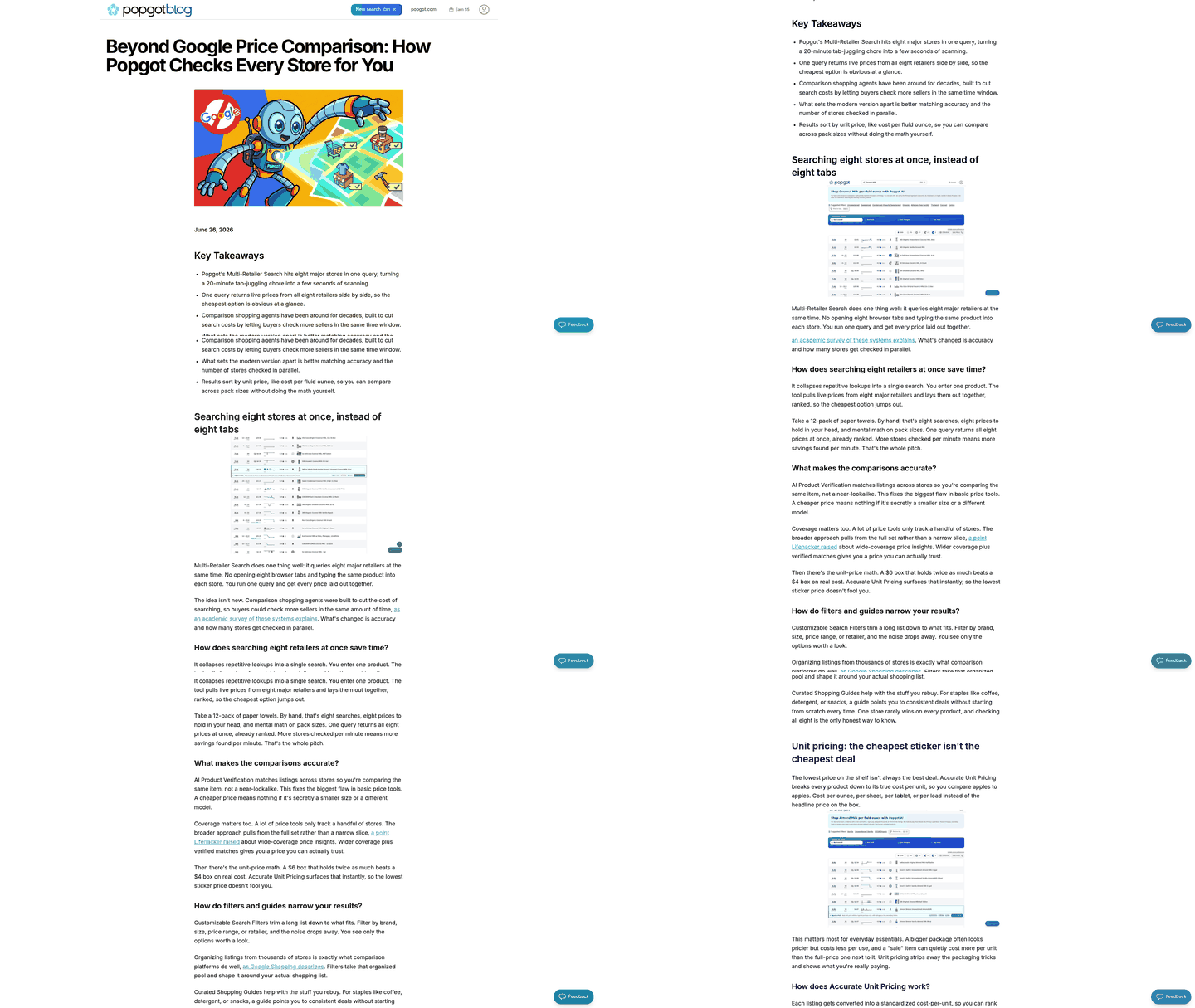
By aggregating live inventory from major online merchants into a single dashboard, the platform eliminates the need to manage dozens of open browser tabs. This unified interface allows you to compare pricing and availability instantly, streamlining your shopping workflow when time is limited.
Instead of manually copying product names, switching platforms, and performing mental math to calculate per-ounce costs, the system automates these administrative steps. The AI extracts the necessary data points in the background, presenting a clean, standardized comparison.
How Unit Price Comparison Works
The platform automatically extracts and calculates unit prices from various retailers, so you're comparing products on a consistent basis—per serving, per ounce, per count. You're not just finding the cheapest option by sticker price; you're finding the option that actually costs least per unit of what you're buying.
The interface displays standardized unit-price breakdowns directly on each product card, allowing for direct comparisons across different packaging sizes. This layout means any active safety filters remain applied to the search results, so you can confidently select the most cost-effective option without re-verifying the ingredients. The curated shopping guides help you save on frequently purchased items, with handpicked selections for categories like household goods, personal care, and groceries.
Our platform searches across billions of products at once. This comprehensive search means you see options from specialty retailers that big-box searches might skip, helping you spot the best value at a glance.
Custom Safety Filters: Setting Age‑Appropriate, Allergy‑Free, and Dosage Criteria
Parents can specify product requirements when searching—ingredients to avoid, minimum dosages, specific features—and Popgot's AI agent verifies each one by reading product labels. A vitamin D supplement safe for a toddler can exceed infant liver capacity by 300%, yet retailers rarely flag that distinction on product pages. Popgot's AI reads dosage labels and filters products based on the criteria you set.
You can filter for allergens and other ingredients to exclude—soy lecithin, carrageenan, artificial fragrance blends. One mother using a baby product scanner discovered a lotion she'd been using for weeks contained almond extract, which her pediatrician had specifically warned against. That ingredient appeared fifth on a 22-item list, printed in six-point font. Label fatigue is real when you're juggling a crying infant and a shopping cart, which is why Popgot lets you flag restricted substances before the product appears in search results.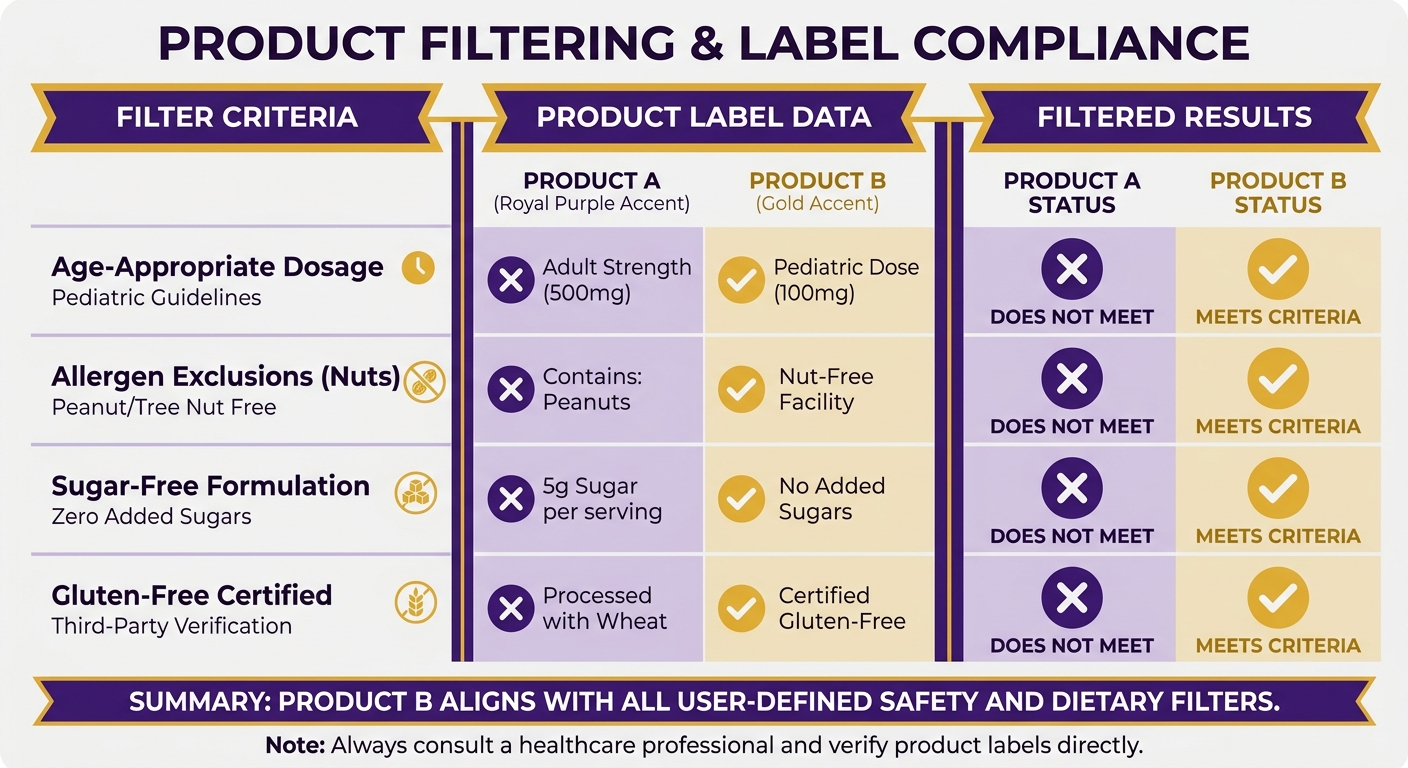
Setting Minimum Nutrient Thresholds
You can set a minimum nutrient threshold—for instance, 200 mg DHA minimum per serving for infant fish oil. Products below that threshold get filtered out, even if they rank high on price-per-ounce metrics. You might search for "baby wipes – fragrance-free – pH 5.5" and specify the exact pH range you need. This level of customization matters for daily-use items where cumulative exposure to minor additives can impact sensitive skin over time.
Third-party certification logos like USDA Organic and EU Organic appear on many products, but a "natural" claim without third-party verification is worth scrutinizing. Products marketed as organic sometimes contain synthetic preservatives three ingredients deep, which only becomes visible when you read past the front label. Research on ingredient safety shows automated OCR-based scanning detects harmful additives in under five seconds, faster than manually comparing competitor products across multiple retailer tabs.
Reusing Search Criteria Across Shopping Trips
Once you've set up your filters—gluten-free requirements, protein intake goals, sulfate-free, dairy-free—you can reuse those same criteria the next time you shop for those products without rebuilding search parameters from scratch. You might save a profile for a hypoallergenic baby wash for an infant while maintaining a separate set of rules for dairy-free snack bars for an older sibling with lactose sensitivity.
If you're buying multivitamins with iron, you can specify a minimum 10 mg elemental iron per gummy and exclude any formula containing artificial colors. Setting those criteria once means you won't spend twenty minutes re-reading labels every trip. As highlighted in retail pricing analyses, complex bulk pricing structures frequently mislead shoppers; utilizing automated filters helps bypass these marketing tactics by focusing strictly on standardized unit costs.
Skip this approach if you're shopping for single-occasion purchases like party supplies or seasonal decor. The filter setup takes a couple of minutes, which only pays off for recurring essentials—formula, wipes, snack staples—where ingredient consistency and budget tracking matter week over week.
References
[1] Ingredient AI - Scan Anything - App Store - Apple - https://apps.apple.com/ca/app/ingredient-ai-scan-anything/id6742460409
[2] Clearya: Nontoxic Shopping Made Easy! - https://www.clearya.com/
[3] New food app leverages AI to help consumers understand ... - https://www.nutritionaloutlook.com/view/new-food-app-leverages-ai-to-help-consumers-understand-ingredients-right-from-grocery-aisle
[4] How to save money on groceries using AI | NBC4 Washington - https://www.youtube.com/watch?v=vjeMjJsWxzU
[5] Baby Care Products | EWG Verified® Program - https://www.ewg.org/ewgverified/baby-care.php
[6] Duckie App | Baby Product Safety Scanner - https://www.duckieapp.com/
[7] Baby Product Ingredient Scanner – BebiTag Safety Analyzer - https://bebitag.dagapps.org/
[8] AI Ingredient Analyzer - Nutriknow - https://www.researchgate.net/publication/391435550_AI_Ingredient_Analyzer_-_Nutriknow
[9] Online Analysis of Ingredient Safety, Leveraging OCR and ... - https://www.researchgate.net/publication/380771682_Online_Analysis_of_Ingredient_Safety_Leveraging_OCR_and_Machine_Learning_for_Enhanced_Consumer_Product_SafetyCustom_Safety_Filters_Setting__comparison_chart_20260818_185041_30602a.png

Frequently Asked Questions
1. How does AI catch ingredient risks that manual label-checking misses?
AI cross-references every ingredient against FDA, EU, and California EPA databases simultaneously, flagging compounds that appear on regulatory watchlists but aren't highlighted on the product label. Manual checking only catches what you know to look for, while AI identifies restricted substances you might not recognize by name.
2. Can shopping AI verify ingredients in products where manufacturers don't disclose everything?
No. If a manufacturer doesn't list a compound—common with proprietary fragrance blends or packaging chemicals—no AI can verify it. The platform shows what it could verify from available label data and flags gaps, so you decide whether incomplete information meets your needs.
3. How much time does ingredient verification actually save compared to checking labels myself?
While manually researching a basket of items can easily consume most of an hour, automated systems analyze product catalogs instantly. By pre-filtering non-compliant items based on your saved preferences, the platform eliminates the need to repeatedly read fine-print labels on every subsequent store visit.
4. Does using AI filters mean I'm only seeing the most expensive organic products?
Not at all. The system applies your ingredient requirements first, then sorts remaining options by unit price across eight retailers. Parents commonly find affordable products that meet safety criteria by comparing accurate per-ounce costs—a conventional brand without restricted additives often beats premium options on value.
5. What should I do when AI recommends a product but my child has a reaction?
Bring the full ingredient list to your pediatrician or pharmacist immediately. AI scores indicate which products have fewer red-flag additives, but they can't predict individual tolerance to natural fragrances or other approved ingredients. Use AI to filter options, then rely on medical professionals for edge-case safety decisions.
6. How do I know if the retailer price data is current or outdated?
The platform pulls real-time pricing from retailer APIs during each search. Unit prices reflect what's available at that moment across Amazon, Walmart, Target, and others. Prices fluctuate, so if you're buying high-frequency items like wipes, checking before each purchase catches promotions and prevents overpaying on outdated deals.
7. Can I use the same safety filters for both my infant and older kids?
You will need to establish separate profiles. Nutritional and chemical tolerances vary significantly by developmental stage; a safe ingredient concentration or supplement dosage for an older child may be inappropriate for an infant's developing system. Setting distinct age-appropriate thresholds ensures that each child's specific safety requirements are met.