
Skip the Black Friday Hype: Buy These Everyday Essentials Cheaper

Key Takeaways
- Household staples like dish soap, laundry detergent, and paper towels go on sale several times a year. Black Friday isn't special.
- Mrs. Meyer's Clean Day multi-surface cleaner dropped to $11 from $14.67 in a recent sale, per Mashable's roundup. That's $3.67 off a bottle.
- The five categories worth buying whenever they dip: cleaning supplies, laundry detergent, dish soap, paper towels, and cleaning wipes.
- Paper towels usually hit bottom during off-season promos, not the November rush.
- Seventh Generation and similar detergents get marked down repeatedly across retailers throughout the year.
- Consumer Reports tracks these exact items in its household deals roundup and flags dish soap as a recurring discount.
- Track prices, buy at the low, stock up. No single hyped day required.
What I'd actually buy, and when
Buying everyday essentials year-round beats waiting for Black Friday. The math is simple. Dish soap, laundry detergent, and paper towels cycle through sale prices all year, so you rarely need to wait for one loud shopping day. Track prices, buy at the low, stock up.
Here's what to prioritize and how to save with minimal effort.
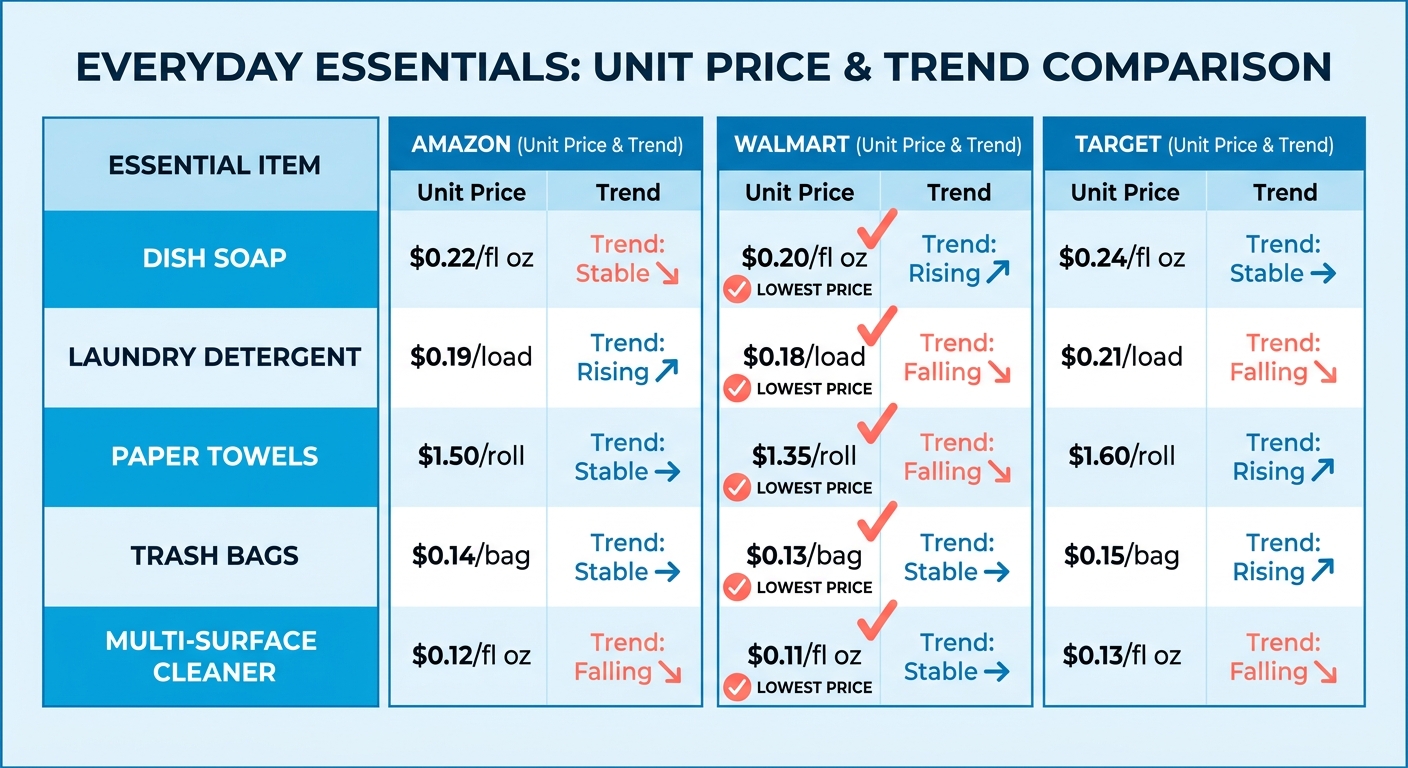
The five essentials to stop overpaying for
The best everyday items to buy cheap year-round: cleaning supplies, laundry detergent, dish soap, paper towels, and cleaning wipes. These are the same categories retailers push on Black Friday, and they go on sale multiple times a year anyway. Consumer Reports tracks them in its best household goods deals roundup.
- Multi-surface cleaner: Mrs. Meyer's Clean Day hit $11, down from $14.67 in a recent sale, a $3.67 saving per Mashable's essentials roundup.
- Laundry detergent: Seventh Generation and similar brands get marked down all year, not just in November.
- Dish soap: A recurring discount item across retailers, per Consumer Reports.
- Paper towels: Bulk buys hit their lowest during off-season promos.
- Cleaning wipes: Rarely worth a Black Friday wait.
How much smart timing actually saves
You save real money by matching each purchase to its natural sale cycle instead of paying full price. Even a modest markdown on one bottle adds up fast when you stack it across five categories over a year.
Consumer Reports' shopping tips back this up: price-tracking beats impulse-buying at a single event. The Commons guide on what to skip makes the same case for boring essentials.
Here's how prices shake out in a typical week:
| Essential | Full Price | Sale Price | Savings | Best Time to Buy | Effort to Find |
|---|---|---|---|---|---|
| Multi-surface cleaner | $14.67 | $11.67 | Off-season promos | 5 min | |
| Laundry detergent | ~$18.00 | ~$13.00 | ~$5.00 | Quarterly sales | 5 min |
| Dish soap | ~$5.00 | ~$3.50 | ~$1.50 | Monthly cycles | 3 min |
| Paper towels | ~$22.00 | ~$16.00 | ~$6.00 | Bulk promos | 5 min |
| Cleaning wipes | ~$8.00 | ~$5.50 | ~$2.50 | Monthly cycles | 3 min |
Prices marked with ~ are estimates. The cleaner figures come from sourced sale data.
The actual routine
Track prices on those five essentials, then buy each at its low instead of waiting for one big day. An AI shopping tool cuts the research to a few minutes per item, so you spend under 30 minutes a month finding deals.
The routine is dumb-simple. Check prices when you're about to run low, compare two or three retailers, buy when it drops. That's the whole system.
The Kiplinger shopping tips say the same thing: timing across the year beats crowding into one sale. Buy essentials when they're cheap, pay less, skip the wait.
How to tell quality from hype
Judging quality means ignoring the sale price and asking one question: does this actually work as well as its pricier competitor? Usually the answer is yes. But a big discount on a mediocre product still leaves you with a mediocre product. Quality comes first.
Reading a label the smart way
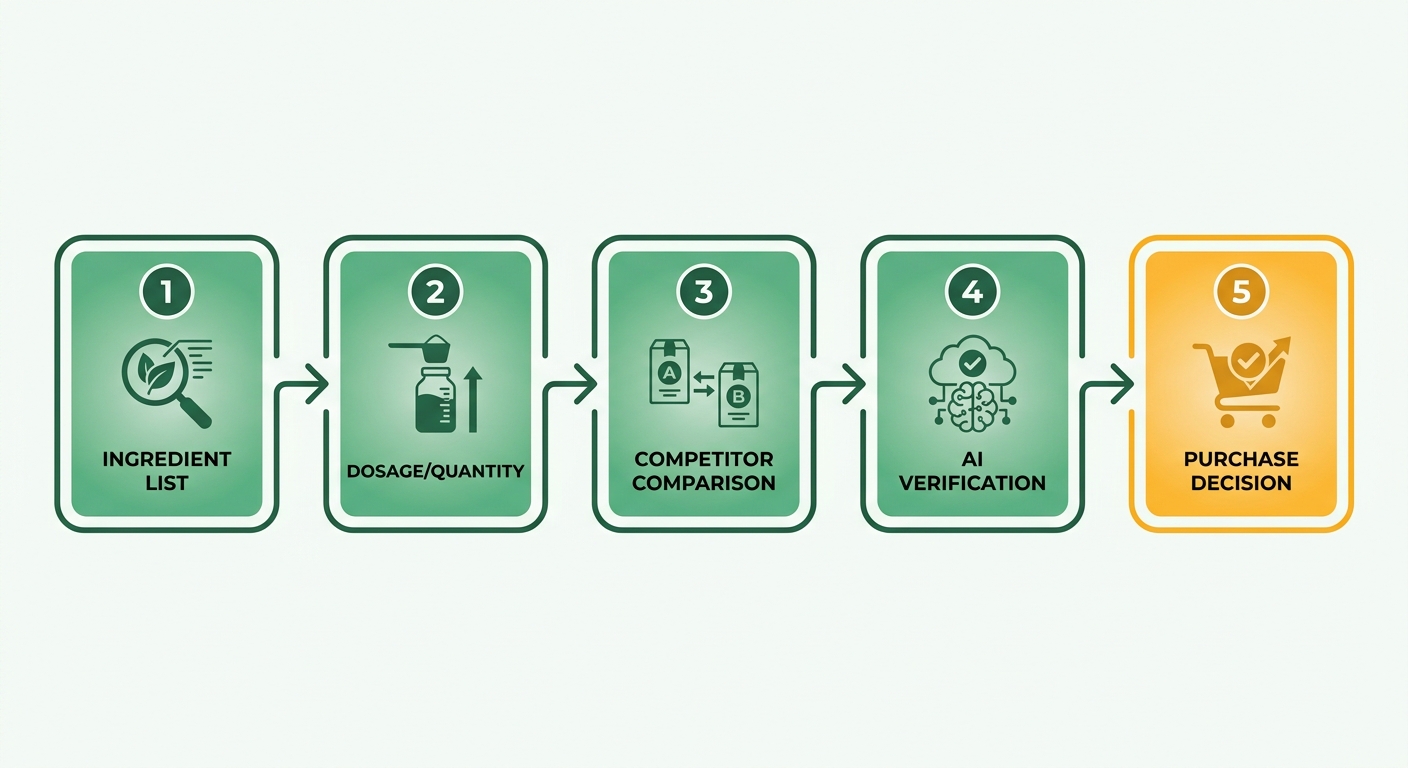
Start with the ingredient list, not the front of the package. "Ultra," "premium," "professional strength" — that's branding, not a standard. Flip to the back and compare the actual active ingredients against the store brand sitting right next to it.
For cleaning supplies and detergent, the working ingredients are often identical across brands. If a generic dish soap lists the same surfactants as the name brand at half the price, you're paying for the logo. Independent testers routinely find store brands match name brands on performance.
Watch the packaging tricks too. A bigger bottle isn't always cheaper per ounce. Check the unit price on the shelf tag, because a "sale" jug can cost more per load than the everyday size.
Spotting fake or biased reviews
Trust reviews that describe specific use. Distrust vague praise. "Works great, five stars!" tells you nothing. A review explaining how a paper towel held up scrubbing a spill tells you plenty. Read the two- and three-star reviews first. That's where the honest tradeoffs live.
Be suspicious of a flood of five-star reviews posted in a short window. That pattern usually means incentivized or planted feedback. Cross-check against independent testing instead of trusting one retailer's star average. Retailers benefit when their listings look flawless.
There's a psychology angle worth knowing. Research on how shoppers judge discounts found that people mentally discount the discounts themselves. In plain terms, we distrust deals that look too good. Apply that same instinct to reviews. If the enthusiasm feels manufactured, it probably is.
The most overhyped essentials
Clothing, beauty, and footwear top the overhyped list on Black Friday. Kiplinger recommends skipping clothing and beauty on the day itself, since those categories see better prices on Cyber Monday and through text-message coupon codes.
The same overpricing shows up with brand-name staples. You're paying a premium for a familiar label on paper towels, wipes, and detergents that perform the same as the store brand. A discount only counts if the product was worth buying at full quality.
My rule: buy the generic first and test it. If it cleans, wipes, or washes as well as the name brand, you've found your permanent swap. If it genuinely falls short, upgrade. That one-item test saves more over a year than any single sale day.
What to skip on Black Friday
Some categories carry a holiday markup, not a markdown. Apparel, cosmetics, and shoes are notorious for it. Retailers save their deepest discounts for online-only events later in the season.
The categories to walk past
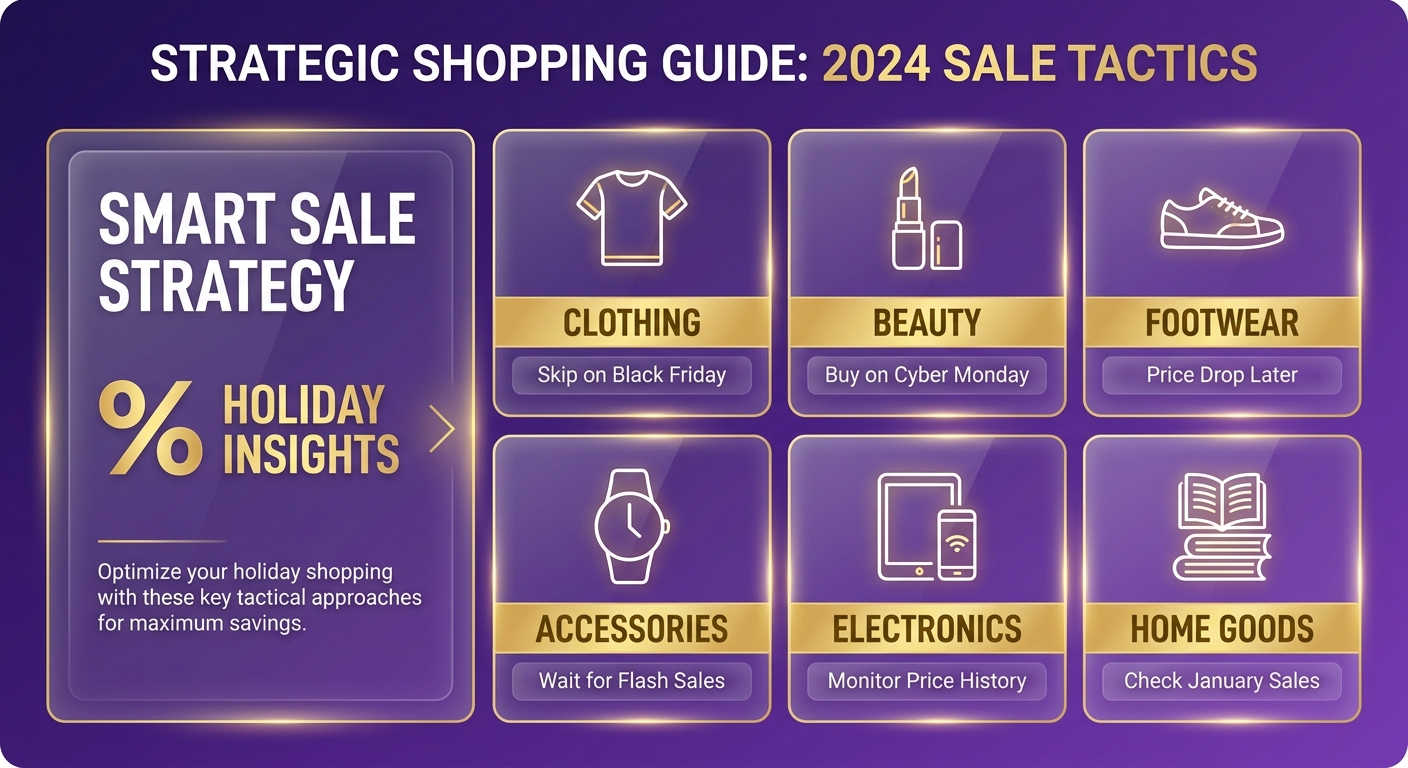
Fashion and cosmetics doorbusters are rarely the best deals of the season. Analysts say to skip clothing, beauty, and footwear during the initial rush, because brands run their steepest online-only promotions after the weekend. A doorbuster sweater priced Friday morning often drops further by the following week.
Same logic for hyped electronics and "limited-time" bundles. A sale sign doesn't mean the price is low. It means the price is labeled as low. Not the same thing.
Do discounts actually save you money?
Not always, and shoppers know it. A study on promotion thresholds shows people mentally shave down a claimed discount because they doubt the "original" price was ever real.
That skepticism is earned. Retailers inflate a reference price, then slash it to manufacture the feeling of savings. You end up anchored to a number that was never a genuine market price.
So the "50% off" tag on a jacket may just reflect a marked-up starting point. Compare the actual dollar amount against what the item costs on a normal week, not against the crossed-out number on the tag.
Finding better deals on the alternatives
Focus on everyday essentials that discount on real cycles, and compare across retailers before you buy. You'll find reliable price comparisons on household basics like dish soap, detergent, wipes, and paper towels. These beat apparel because their sale prices are consistent and verifiable.
Prices swing widely by store, so cross-check. A curated list of boring-but-essential deals is worth scanning for staples you restock anyway, where a dollar or two off reflects an honest discount rather than a manufactured one.
Use a price-tracking tool to log what an item costs across major retailers over several weeks. When the everyday price and the "sale" price match, the deal is fake. When you catch a real dip, that's your buy signal. The habit protects you from both hyped apparel deals and inflated reference prices.
Why skipping the hype pays off
Black Friday hype costs you money more often than it saves it. The single-day rush pressures you into buying at prices that aren't the year's lowest. Skip it and you shop on your own schedule, at real lows, without the manufactured urgency.
Why the hype backfires
A big discount sign doesn't guarantee a low price. The urgency does the selling, not the underlying value. When a countdown clock and a "limited stock" banner push you toward checkout, you stop asking whether the price is genuinely good and start reacting to fear of missing out.
This ties back to how we perceive value. That same research on price promotions shows shoppers treat a discount as real only once it clears a certain size. Retailers exploit it by inflating the "original" price so the markdown looks like it clears your mental threshold.
So a doorbuster that feels like a win is often the same product at a normal price with a louder sign. You end up buying things you weren't planning to buy, at prices that repeat several times a year anyway.
Who benefits most from skipping it
Anyone on a fixed budget. If you plan purchases around household needs instead of a shopping calendar, skipping Black Friday removes the pressure to spend before you're ready. Budget-conscious families and single-income households gain the most.
Standard shopping advice backs the timing point directly: check price history before you buy, because plenty of "deals" match prices you'll see again in January or spring.
The impact is simple. Overspending on hyped days means paying a premium for stuff that goes on sale repeatedly. Track the price, wait for the actual low, and your grocery and cleaning budget stretches further with zero extra effort.
What smart timing actually fixes
Two big traps: fake urgency and category confusion. You stop guessing whether a price is genuinely good, and you stop buying the wrong things on the wrong day.
Category confusion is the sneaky one. Different products bottom out at different times. Buying everything in one Friday sweep means overpaying on half your cart.
Price-tracking tools watch the market for you. Instead of reacting to a sign, you get alerted when a staple hits its real floor. That flips the whole dynamic. The retailer's urgency stops working, and you buy on evidence instead of adrenaline. For a deeper breakdown of which items reward waiting, this sustainability-focused shopping guide is a useful companion. The pattern holds across categories: buy on price history, not on hype.
Best deals to watch across major retailers
The best deals right now are on cleaning supplies, laundry products, and kitchen essentials. Same categories that get hyped during holiday sales, available cheap year-round if you know which items to track. Testing organizations monitor promotions on home essentials all year, and these items drop on a regular schedule.
The household essentials with the best prices
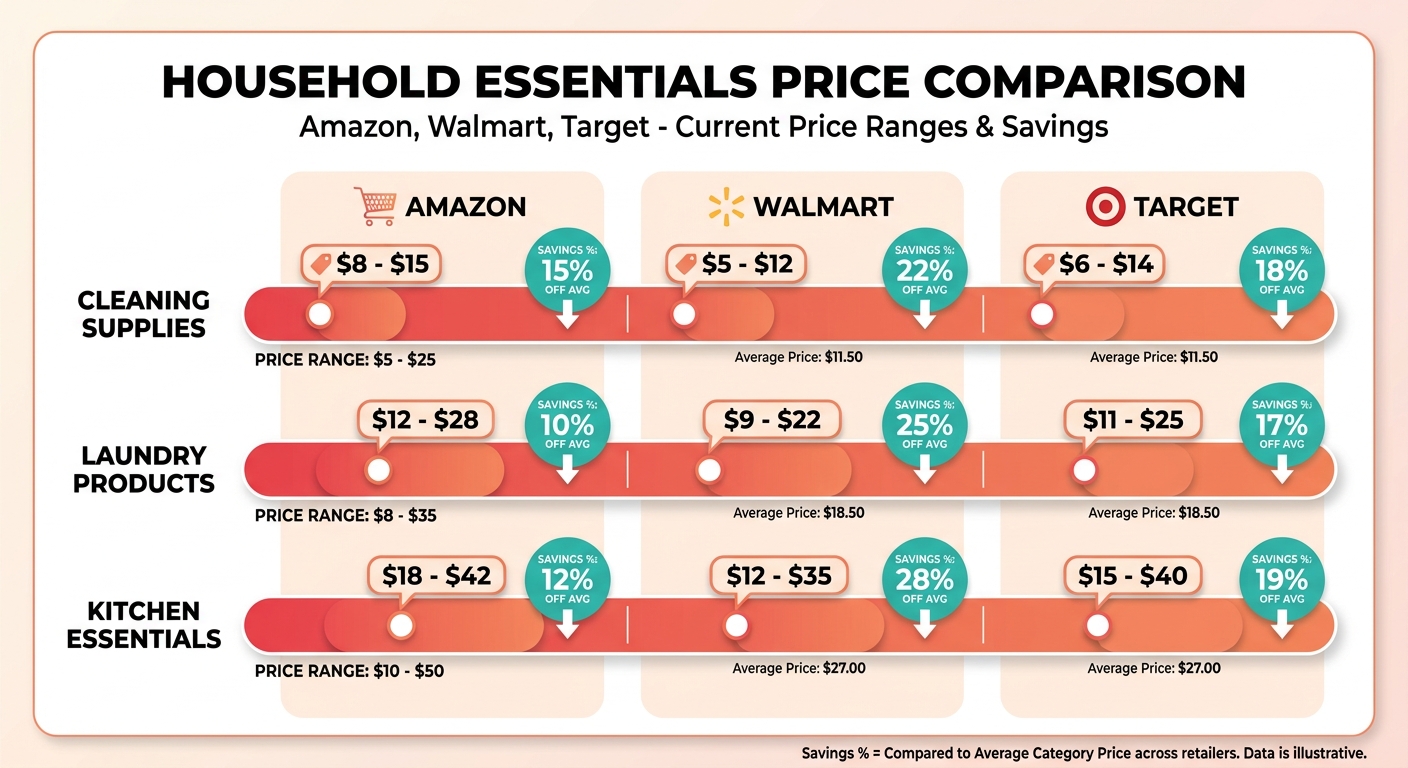
Cleaning supplies and laundry products deliver the most reliable savings. Everyday products like dish soap, sponges, and trash bags cycle through markdowns on a predictable schedule, as seen in lists of essential home deals.
Laundry supplies follow the same rhythm. Eco-friendly and plant-based detergents cycle through markdowns regularly, so you can find sustainable options on sale without waiting for November.
The discount you see today on a staple detergent or wipes multipack isn't tied to one shopping day. Watch it over a few months and that same price returns, no holiday hype attached.
Amazon vs. Walmart vs. Target
Prices for identical essentials vary between Amazon, Walmart, and Target, which is why cross-checking matters. The same bottle of multi-surface cleaner or box of detergent carries a different sticker at each store on any given week. No single retailer wins every category.
Compare before you buy rather than assuming one store is cheapest. A cleaner might hit its low at one retailer this month and a competitor the next.
This is where a multi-retailer search tool earns its keep. Instead of opening three tabs and checking each store by hand, you search one item and see every retailer's current price side by side. You buy at the lowest point without the legwork.
When to actually buy
Buy when the price hits its cyclical low, not when a calendar tells you to. Look for coupon codes via text alerts to stack extra savings on top of an already-low base price.
Coffee makers work the same way. A drip machine or single-serve brewer goes on sale several times a year, so waiting for one hyped day means missing three or four cheaper windows.
Set price alerts on the specific coffee maker you want. When it drops below your target, buy. Track the item, not the date.
A practical workflow
List the exact essentials you rebuy: detergent, dish soap, paper towels, your preferred coffee maker. Search each across retailers in a single view so you see who's cheapest today.
Then layer any available coupon codes at the retailer showing the lowest base price. That combination catches the real floor. Buy there, stock up, skip the wait.
Everyday essentials worth buying year-round
Personal care and pantry staples are the everyday items most worth buying year-round. Dove soap, body wash, toothpaste, shampoo — they run through predictable sale cycles, so you almost never need to wait for a holiday event to pay the low price. Track them, buy at the dip, stock your shelves.
Personal care worth stocking up on
Bar soap, body wash, and deodorant hit their lowest prices multiple times a year, not just on one day. A multipack of Dove bars or a family-size body wash is a smart stock-up target because these don't expire quickly and you'll use every unit.
The pattern holds across brands. Trackers follow promotions on everyday items including dish soap, wipes, and paper towels. The same discount rhythm applies to the bathroom shelf.
Buy the size that matches your usage. A larger bottle almost always beats the small one on cost per ounce, and personal care items store well for months.
How prices compare across retailers
Prices for the same essential swing widely between stores, which is why a single "sale" tag rarely tells the full story. Price tracking of Black Friday home essentials shows the gap in action, with the same paper towel multipack listed several dollars apart depending on where you looked.
Same tracking applies to plant-based laundry supplies and concentrated formulas. Stable, everyday products where discounts reflect real inventory cycles instead of manufactured holiday urgency.
The practical move: check three retailers before you buy any staple.
- Compare cost per unit, not the sticker price. A "$3 off" tag means nothing if the base price started higher.
- Match the exact size and count. A 6-pack on sale can lose to a 12-pack at full price.
- Note the regular price first. If you don't know the baseline, you can't judge the deal.
The best time to buy
Whenever they hit their tracked low, which happens several times a year across all major retailers. The single-day event is one price dip among many, not the only one.
Recent shopping seasons prove it. Household and personal care staples cycled through sale prices in spring, summer, and fall, so waiting until late November often costs you more.
Set a target price for each staple you buy often. When a Dove multipack or body wash drops to that number at any store, buy two or three. You skip the hype, dodge the fake urgency, and keep your shelves stocked at the real low all year.
Budget-friendly home and kitchen staples
Coffee, tea, and kitchen consumables are the home staples most worth restocking year-round instead of waiting for one big sale. Coffee pods, filters, pantry drink mixes — they run through the same repeating discount cycles as cleaning gear, so the low price shows up several times a year. Track the dip, then buy.
Kitchen staples that are cheaper year-round
The best kitchen items to buy off-holiday: coffee and beverage supplies, food storage bags, and dish and surface cleaners. Retail trackers follow promotions on everyday items, and these categories keep resurfacing at low prices well outside the November rush.
Coffee is the clearest example. A daily-brew household burns through pods and grounds fast, so a multipack bought at its cycle low pays off within weeks. It doesn't spoil quickly, which makes it a smart stock-up target.
Kitchen cleaning ties into the same pattern. Roundups of boring-but-essential home deals group kitchen supplies and cleaning products together because both restock on predictable schedules. You buy what you'll use, not what a countdown clock tells you to grab.
How much you save buying year-round
You save most by matching your purchase to the item's natural sale cycle rather than a single date. An advertised discount only matters if the starting price was fair, so the real win is buying at a genuine low.
For beverage staples, watch the per-unit price, not the sticker. A "family size" coffee tub isn't a deal if the cost per ounce beats a smaller pack you'd have bought anyway. Do the quick math before you commit.
The savings add up because these are repeat purchases. Shave a few dollars off every coffee restock across a year and the total dwarfs whatever a one-day doorbuster would've saved you.
Finding the best prices across retailers
Compare the per-unit price at two or three stores before you buy, since the same coffee or storage bags rarely cost the same everywhere. Note the low you've seen, then buy only when a listing hits or beats it.
A practical routine works best. Check the unit price, confirm it against the lowest you've logged, skip anything padded with a fake "was" figure. This cycle-based approach over holiday impulse buys is reinforced by independent consumer guides.
Skip the urgency. Kitchen staples come back on sale again and again, so there's no reason to overpay this week for something that dips next month.
How to use Popgot for everyday essentials
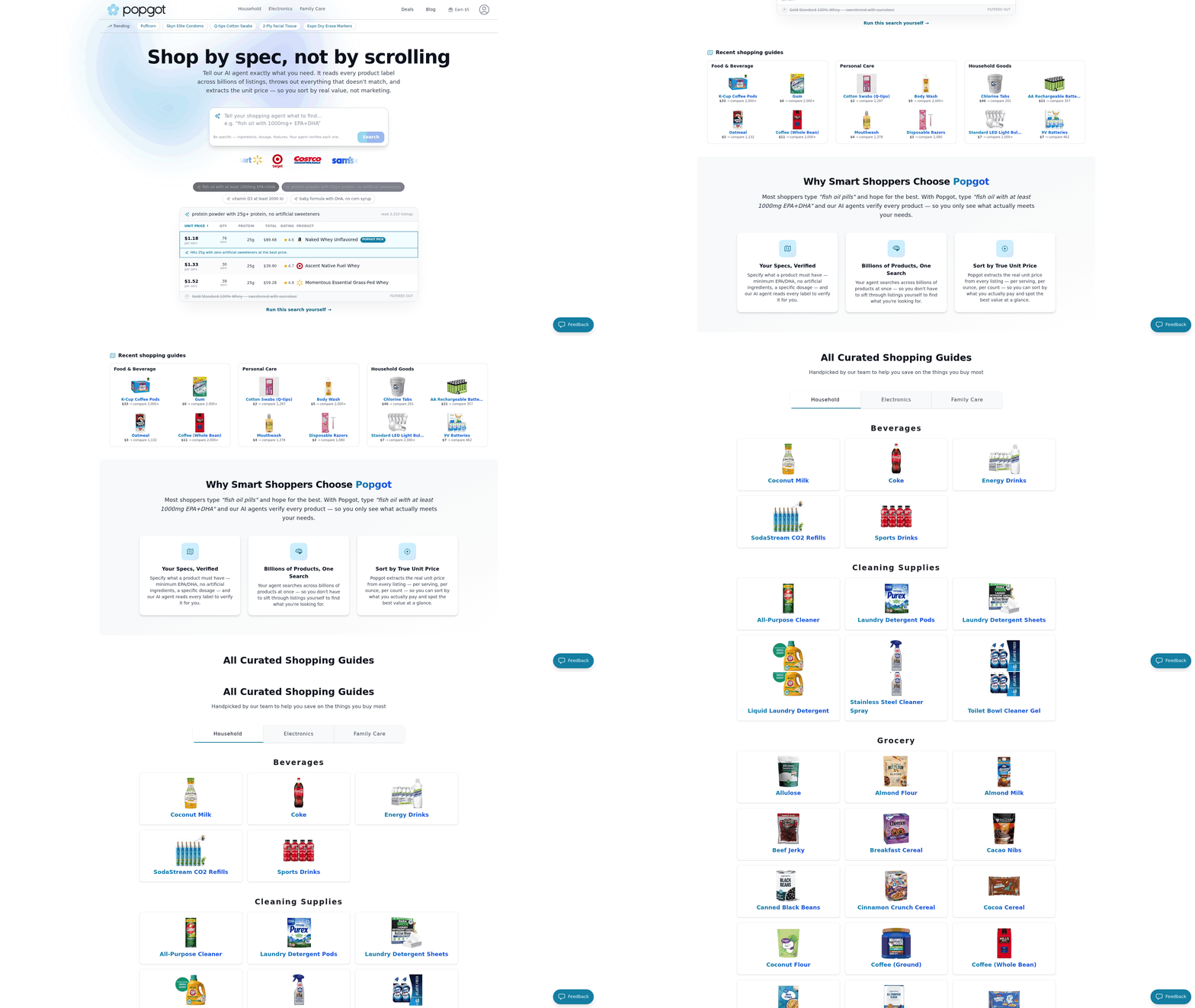
Saving on everyday essentials comes down to two things: knowing a product actually matches what you need, and paying the lowest real price for it. Our AI does both. You give it your specs, it reads every label across eight major retailers, and it shows the true unit price so you sort by value instead of guesswork.
Here's how that works in practice.
Using AI product verification to find the right deal
Type what a product must have, not just its name. Most shoppers search "laundry detergent" and wade through hundreds of listings. Instead, tell the AI exactly what matters: a specific scent, a sensitive-skin formula, a pods count. It reads each label and drops everything that doesn't match.
This matters most where the fine print hides real differences. Search "fish oil with at least 1000mg EPA+DHA" and the agent filters out a 1200mg bottle that only delivers 600mg of actual EPA+DHA. You skip the mislabeled options entirely.
Same logic for household staples. Specify a dye-free liquid detergent or a bleach-free all-purpose cleaner, and you only see products that clear your bar.
How accurate unit pricing helps you compare
Our Accurate Unit Pricing feature pulls the real price per serving, per ounce, or per count from every listing and lets you sort by it. That's the number that tells you what you actually pay, not the sticker on the front.
A big bottle isn't always the better deal. In that same verified search, the Popgot Pick landed at $0.38 per serving across 60 servings, beating a competing bottle at $0.44 and a bulk warehouse option at $0.51. The lowest total price wasn't the best value.
Run it across cleaning supplies, coffee, toilet paper, or razors and the pattern holds. We compare 1,000-plus listings on common items like foaming hand soap and cotton swabs, so the true low surfaces without you opening a dozen tabs.
Check our curated shopping guides for the essentials people restock most. Set your specs once, sort by unit price, buy at the dip.
References
[1] Best Holiday Deals on Household Goods - Consumer Reports - https://www.consumerreports.org/money/sales-promotions/best-black-friday-deals-household-goods-a2342703309/
[2] Best Black Friday home deals: Stock up on essentials like cleaning... - https://mashable.com/article/black-friday-2025-boring-but-essential-deals
[3] Top 10 Black Friday Shopping Tips for 2025 - Consumer Reports - https://www.consumerreports.org/money/shopping-retail/top-10-black-friday-shopping-tips-a4423942586/
[4] 7 Black Friday Tips to Score Deals - Kiplinger - https://www.kiplinger.com/personal-finance/shopping/7-tips-for-shopping-smart-on-black-friday-and-cyber-monday
[5] What you should and should not buy on Black Friday - YouTube - https://www.youtube.com/watch?v=rRnTg8mDf-k
[6] (PDF) The Discounting of Discounts and Promotion Thresholds - https://www.researchgate.net/publication/24098748_The_Discounting_of_Discounts_and_Promotion_Thresholds
Frequently Asked Questions
1. How do I set up price alerts for household essentials?
You can use digital price-monitoring tools to log the baseline cost of your frequent purchases. Input the specific brand or model you want, establish a notification threshold based on historical lows, and let the software alert you when a retailer drops its price. This automates the process so you only buy during genuine market dips.
2. Are store-brand cleaning products actually as effective as name brands?
Many private-label alternatives use the exact same active chemical formulations as their branded counterparts. By checking the back label for active surfactants or enzymes, you can verify if a cheaper option will deliver the same results. Trying a small bottle of the store brand first is a low-risk way to find permanent, budget-friendly alternatives.
3. Do household staples like detergent and dish soap expire before I use them?
Yes, these products are highly stable and can be stored for extended periods without losing potency. Items like soaps, detergents, and packaged coffee maintain their quality for up to a year when kept in a cool, dry place, allowing you to safely buy in bulk when prices bottom out.
4. How can I tell if a "50% off" tag reflects a real discount?
Track the actual dollar cost of the item over several weeks rather than trusting the crossed-out MSRP. Retailers frequently inflate the baseline price to make a standard discount look like a massive bargain. If the promotional price matches what you normally pay on a regular Tuesday, the discount is purely cosmetic.
5. Why should clothing and beauty products wait until Cyber Monday instead of Black Friday?
Apparel, cosmetics, and shoes typically see their steepest online-only promotions after the physical store rush ends. Retailers frequently offer exclusive digital coupon codes that stack additional savings on these categories early the following week. A designer winter coat priced Friday morning frequently drops further by the following week, so buying early means overpaying.
6. How many times per year do these essentials typically go on sale?
Most household consumables follow predictable promotional calendars tied to inventory rotation rather than holidays. You will typically see deep discounts on cleaning sprays and paper goods every four to eight weeks, while larger laundry and dish care items tend to drop in price once a quarter. This means you have multiple opportunities to save throughout the year.
7. Is buying a larger bottle always cheaper than the smaller everyday size?
While bulk packaging often offers a lower cost per unit, promotional pricing can sometimes disrupt this rule. Retailers occasionally discount standard sizes so heavily that they beat the bulk rate per ounce. Always divide the total price by the volume or count to ensure you are getting the absolute best value.