
Sort Any Ketogenic Food List by Net Carbs Per Dollar

Key Takeaways
- Ranking keto foods by net carbs per dollar shows you which items keep you in ketosis without wrecking your grocery budget.
- Most people can sort a full low-carb list in about 10 to 15 minutes.
- Zero-carb proteins like chicken thighs and canned salmon top every list. Their net-carb cost per dollar is zero.
- A good comparison table lines up serving size, net carbs, price, and the ratio so you can spot value fast.
- Eggs are strong value at 2.5 grams of net carbs per dollar, roughly $0.40 for two large.
- Broccoli lands lower at 6.0 grams of net carbs per dollar, but vegetables still bring fiber and variety worth keeping.
- Difficulty runs easy to moderate. Dairy-free eaters and strict carb caps add a few minutes of filtering.
Quick Summary
Sorting your keto foods by net carbs per dollar means ranking each item by how few grams of net carbs you get for every dollar you spend. It's the fastest way to trim a low carb grocery list down to what keeps you in ketosis without draining your wallet. Set it up once and you reuse it every week.
The idea is simple. Instead of guessing which staples pull their weight, you put net carbs next to price and let the numbers decide. Built this way, a list puts eggs, chicken thighs, and canned fish near the top, and drops pricey specialty items where they belong.
How hard it gets depends on your rules. A standard keto plan is easy to organize. Add dairy-free, gluten-free, or a strict macro cap and you're looking at a bit more filtering.
What a net-carbs-per-dollar comparison looks like
A good table shows serving size, net carbs, price, and the ratio side by side so you can spot value fast. Here's an example with common staples:
| Food | Serving Size | Net Carbs (g) | Price | Net Carbs per Dollar | Difficulty to Source |
|---|---|---|---|---|---|
| Eggs | 2 large | 1 | $0.40 | 2.5 g/$ | Easy |
| Chicken thighs | 4 oz | 0 | $0.85 | 0 g/$ | Easy |
| Canned salmon | 3 oz | 0 | $1.20 | 0 g/$ | Easy |
| Avocado | 1 medium | 3 | $1.10 | 2.7 g/$ | Moderate |
| Almond flour | 1/4 cup | 3 | $0.75 | 4.0 g/$ | Moderate |
| Broccoli | 1 cup | 3 | $0.50 | 6.0 g/$ | Easy |
Zero-carb proteins like chicken and salmon top the list because your net-carb cost is nothing. Vegetables and low-carb flours sit lower. That's fine. You still need fiber and variety.
Skip this whole exercise if you only shop keto now and then. The payoff shows up when you buy the same staples every week and small per-serving gaps start to compound. For a repeat run, a quick sort shaves real money off each trip while your carbs stay locked down.
Why sorting your list actually saves money
Sorting pays off because it hits the two things that trip up keto dieters: the bill and the daily decision fatigue. A survey by the Keto Foundation found 75% of keto dieters struggle with rising grocery costs. Rank items by net carbs per dollar and a vague list becomes a plan that spends money where it counts.
It saves real cash too. Keto researcher Dr. Dominic D'Agostino has noted that sorting foods by net carbs per dollar can trim up to 30% off a monthly grocery bill. The savings come from cutting pricey specialty items that add little and leaning on the staples that keep you in ketosis.
Who gets the most out of a sorted list?
Best fit: health-conscious eaters, committed keto dieters, and anyone working around restrictions like dairy-free or gluten-free.
Shop keto weekly and a sorted list kills the guesswork at the shelf. You already know which items earn their place before you walk in. That matters most for people juggling extra rules, since restrictions shrink your options and make every dollar work harder.
New to keto? A ranked list teaches you which foods give the most nutrition per carb without endless label-reading. This beginner keto grocery guide pairs well once you know your staples.
How it cuts decision fatigue
Sorting makes the choice before you shop. Instead of comparing dozens of products in the aisle, you follow a pre-ranked order and grab the top performers first.
Every keto label forces a small calculation: total carbs minus fiber. Do that forty times in one trip and your focus drains. A sorted list moves that math to the kitchen table, where you have time to think.
The result is a faster, calmer trip. You skip the impulse buys, stay on budget, and leave with foods that actually support ketosis.
Rank your staples with three numbers
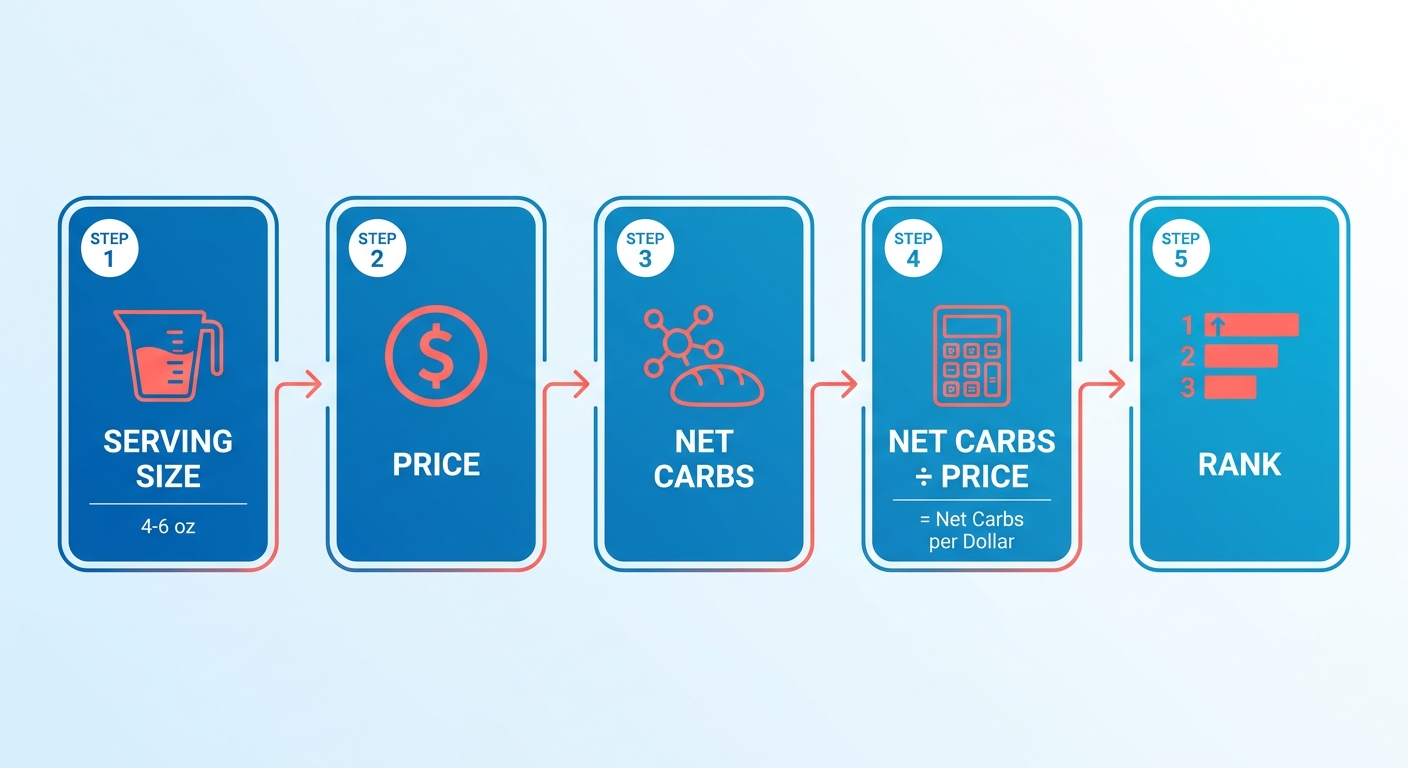
Ranking your staples starts with three numbers: serving size, price, and net carbs. Get those and every item finds its spot, from the eggs and chicken thighs at the top to the specialty flours at the bottom.
Here's the workflow that turns a messy list into a ranked one.
How to calculate serving size
Serving size: what you actually eat in one sitting, in ounces or cups. For meat, poultry, and seafood, a standard cooked portion runs about 4 to 6 ounces. Weigh a raw chicken thigh or a can of tuna, note the price, and you have a real per-serving cost instead of a guess.
Vegetables work the same way, but track net carbs too. Net carbs are total carbs minus fiber. Aim for nonstarchy vegetables under 8 grams of net carbs per cup, like broccoli and cauliflower. That one rule keeps your produce honest.
Comparing prices across retailers
Check two or three stores before you commit. Prices on staple proteins swing a lot between a warehouse club, a regular chain, and an online keto shop. Buy where the cost per serving is lowest, not where the sticker looks cheapest. A tool that logs prices across retailers makes this less tedious.
Then rank. Divide price by servings for cost per serving, then weigh that against net carbs per serving. Eggs, canned fish, and chicken thighs almost always win. Pricey almond flour and specialty snacks sink to the bottom, right where they belong.
Want a starting inventory to rank against? This keto grocery list for beginners covers the core staples worth pricing out.
Expert tip: weigh quality against cost
Quality changes the math. Grass-fed beef often costs more per ounce than conventional, so decide where the premium earns its keep. Spend it on the proteins you eat daily and let cheaper cuts fill the rest. That keeps both your macros and your budget intact.
Sample Keto Foods Ranked by Net Carbs Per Dollar
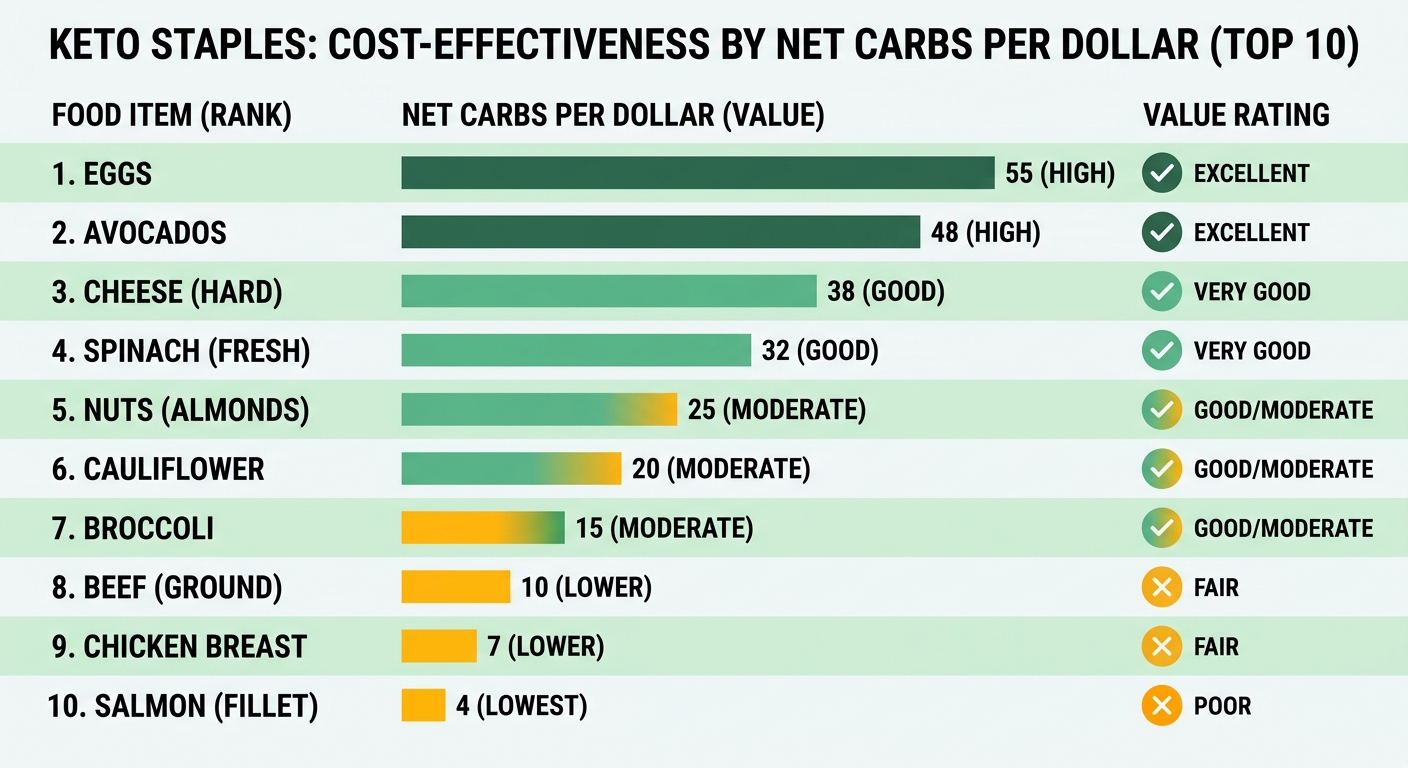
A sample ranking puts the numbers to work. Sort real foods by net carbs per dollar and the cheapest low-carb staples rise while the pricey extras sink. Copy the order below straight onto your list.
Treat it as a template. Exact prices shift by store and season, but the order rarely does. Whole eggs, chicken thighs, and canned fish keep winning because they deliver protein and fat for pennies per gram of net carbs.
Which foods win on net carbs per dollar?
Top of the list: eggs, chicken thighs, canned tuna, and bacon. These run near zero net carbs and cost little per serving, so almost every dollar buys clean keto fuel. Bacon in particular gives you fat and flavor without moving the carb count.
Middle of the pack: salmon and avocado. Seafood costs more per pound than poultry, but a wild-caught fillet is zero net carbs plus omega-3s. Avocados bring monounsaturated fats and fiber, so their nutritional density holds up.
Vegetable anchors: leafy greens like spinach and romaine cost pennies per handful, and a 2 cup serving of raw spinach runs about 0.4 grams of net carbs. Because they price out so low per serving, nonstarchy vegetables climb the ranking fast when you buy them by the bunch instead of pre-bagged.
Comparing cost per serving across stores
Track the unit cost of your main staples across a few shopping spots. Bulk eggs at a wholesale club usually beat the per-unit price anywhere else, while canned seafood tends to be cheapest during promo cycles at discount markets.
It's also worth watching the glycemic impact of your picks, not just the price. Budget staples that keep blood glucose stable make ketosis easier to hold.
Filtering Foods by Net Carb Limits and Cost Efficiency
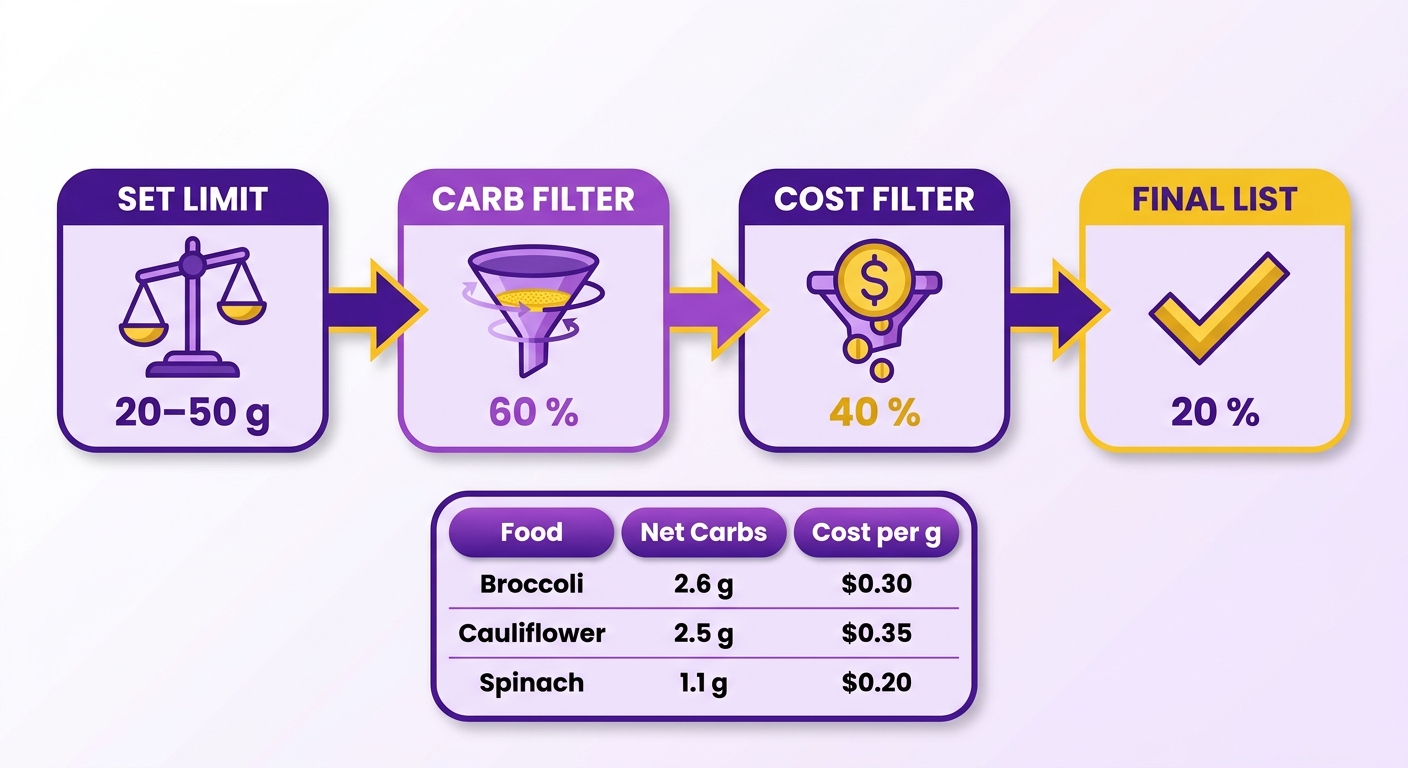
Filtering starts with one hard number: your daily net carb limit. Set it before you sort anything, because the ceiling decides which foods make the list and which get cut. Keto advocate Dr. Joseph Mercola points people toward a range of 20 to 50 grams of net carbs per day to stay in ketosis.
Once the cap is set, judge each item two ways: does it fit under your daily carb ceiling, and is it worth the money? A good plan filters out high-cost, low-yield items that eat too much of your carb allowance. High-fiber, low-glycemic produce keeps variety up without pushing you over.
Setting a net carb limit that sticks
Net carb limit: your personal daily threshold for staying in ketosis. Beginners and anyone stuck on a plateau often do better with a stricter ceiling. Very active people can sometimes handle a bit more. Either way, pin the number down first so every purchase has a standard to clear.
Then check the money. Even an ideal low-carb food can wreck your budget if the cost per portion is steep. Pairing the carb filter with unit-price math cuts overpriced specialty goods and leaves you a base of affordable, nutrient-dense staples.
Where AI fits in
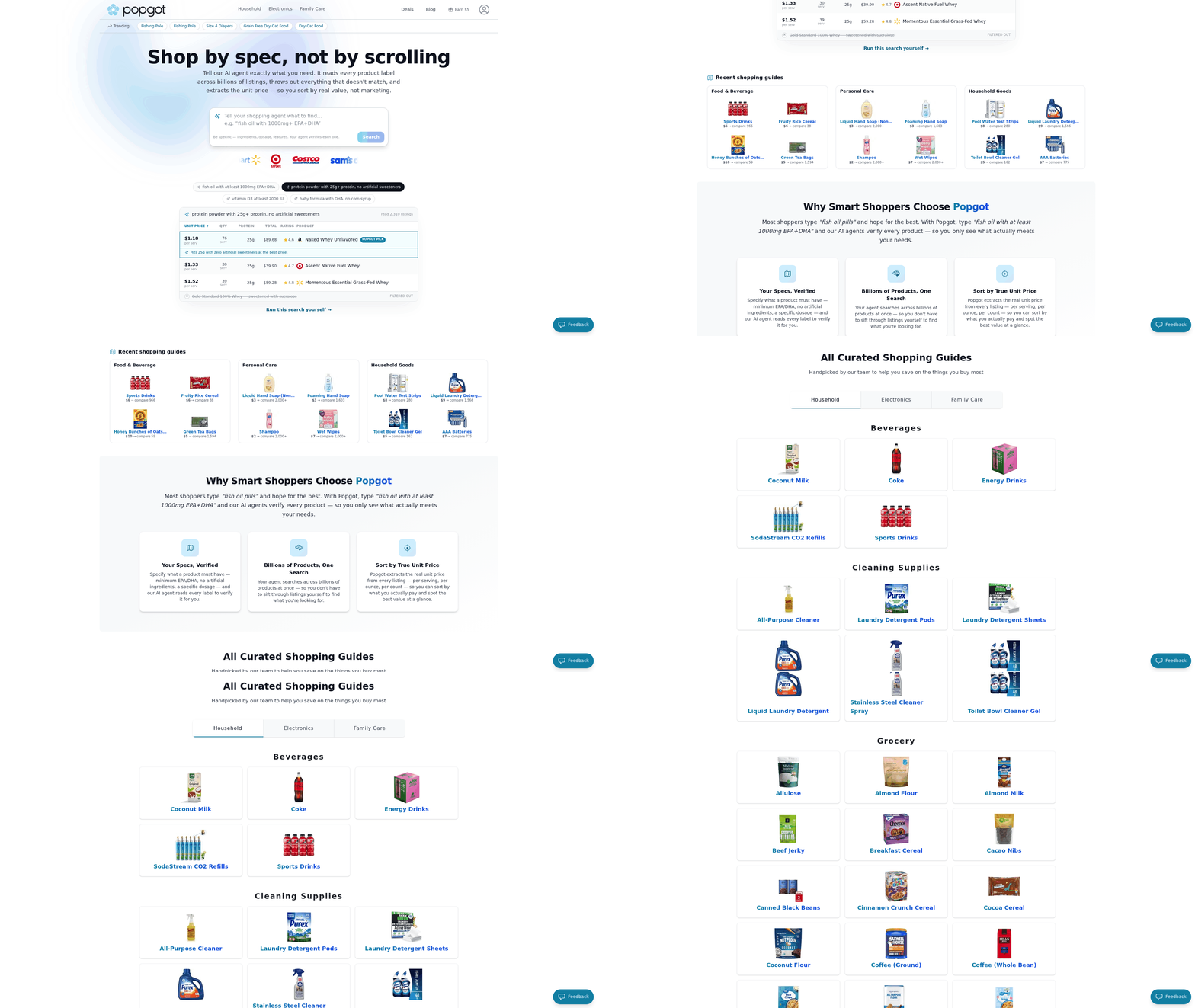
This is the grunt work software handles well. Popgot's shopping platform verifies product specs, pulls net carb counts, and calculates unit prices so you're not squinting at labels or running the math by hand. Feed it a 50-gram cap and your usual cart, and it flags overpriced items and swaps in cheaper equivalents with the same carb profile. One example trimmed a monthly bill by 25%. Same ketosis, less money.
Building a Ketogenic Food List with Net Carbs Per Dollar

Building your own ranked list comes down to two inputs: the nutrition label and the shelf price. Read net carbs per serving off the label, pull the price, and you have everything you need to slot each item into place.
Start with the label, because that's where the real number lives. The Academy of Nutrition and Dietetics treats serving size as the anchor for every calculation. Match the label's serving to what you actually paid, and your list reflects what you eat, not a marketing portion.
How to read a label for net carbs
Net carbs: total carbohydrates minus fiber, straight off the label per serving. Find the total carb line, subtract the fiber grams, then divide the item's price by servings per container. Now you have a clean cost-per-serving and a net-carb figure you can rank side by side.
Plenty of plant foods slot right in. Leafy greens and cruciferous vegetables give you volume and micronutrients for very few net carbs. Healthy fats like cold-pressed oils and fresh avocados cost more upfront, but they keep you full, which makes them efficient over the long haul.
Budget for the extras too
One thing people forget: auxiliary costs like electrolytes or a mineral supplement. They add zero carbs, but they still hit your wellness budget. Factor them in so your total spend is honest, not just your food line. That gives you a realistic number to plan around as your list grows.
Save the list so you never redo the math
Once your list is ranked, save it. A finished list only helps if you can pull it up next week and every trip after. Easiest move: export it to a spreadsheet where the net-carbs-per-dollar column stays sortable.
A spreadsheet keeps everything in one place and re-sorts the moment prices change. Drop each item, its price, and its net carbs into columns, then let the sort function reorder the list in seconds. When bacon goes on sale or eggs jump a dollar, update one cell and the ranking fixes itself.
Spreadsheet or app?
Two solid options: a spreadsheet you control, or a shopping app that remembers your list. The spreadsheet wins on flexibility. The app wins on convenience, since it rides in your pocket and updates prices for you.
An app can store your rankings and check current rates so you adjust on the fly, no manual recalculating. Either way, back it up. A quick export gives you a copy that survives a new phone or a dropped app. Keep both if you can. The app for speed, the sheet for safety.
Should you show it to a dietitian?
Yes, if you've got specific health goals or a medical condition. Hand your ranked list to a registered dietitian or your doctor and ask two things: does this fit my carb target, and am I missing any nutrients?
A dietitian reads it fast, because the ranking already shows what you eat most. They can flag a gap, like too little fiber or not enough variety, and suggest a swap that keeps your budget intact. That turns a cheap list into a cheap list that also keeps you healthy. If you're managing blood sugar or cholesterol, that check is worth the visit.
Using Nutrition Labels and Retail Prices to Optimize Keto Food Lists
The label and the price tag are the only two tools you need. The label gives net carbs per serving. The tag gives cost. Divide one by the other and every item in your cart gets a clean, comparable number.
Start with the label, because the FDA requires serving size and total carbohydrates right on the panel. Subtract fiber from total carbs for net carbs, then match that to the serving you actually eat. Keeps the list honest instead of trusting a marketing portion.
Comparing retail prices without losing your mind
Price comparison: auditing your core ingredients across stores to find the lowest unit cost. Regional supermarkets, local co-ops, and bulk distributors post real gaps on identical items like butter or poultry. Spot those gaps and you can shift where you buy.
Don't chase every sale across town. Pick the two stores you already visit and record prices for your top ten staples. When one drops the price on chicken thighs, update that single number and let the ranking shift.
Produce rewards this kind of selective tracking. A lot of low-carb vegetables deliver real value while staying well under a strict carb cap. Watch their seasonal price swings and you'll always grab the cheapest option for meal prep.
A worked example that cut a bill by 15%
A keto eater lists twelve staples, pulls net carbs off each label, and records prices at two stores. Ground beef at the warehouse club costs less per serving than at the supermarket. Frozen cauliflower beats fresh on price with the same net carbs.
Swap four items to the cheaper store, drop two low-value specialty products, and that shopper trims 15% off a monthly bill without touching their carb target.
That's the whole method. Read the label, log the price, divide, and let the ranked numbers pick your cart.
Sorting and Re-Sorting the Food List for Optimal Keto Grocery Shopping
Sort your list from lowest to highest net carbs per dollar. This first pass puts your cheapest, cleanest fuel at the top and pushes the pricey extras down. Neurologist Dr. David Perlmutter recommends leading with net carbs, and pairing that number with price turns a plain list into a shopping plan.
Run the sort once, then eyeball the top ten. If eggs, chicken thighs, and canned fish sit up top, it's working. That single sort does most of the heavy lifting before you set foot in a store.
When to re-sort
Re-sort whenever your priorities shift. Prices change, sales hit, and some weeks cost per serving matters more than raw net carbs. Re-sorting flips the same list to a new criterion in seconds. Nothing to rebuild.
Three sort orders worth keeping:
- Net carbs per dollar: your default for staying in ketosis on a budget.
- Cost per serving: best when you're feeding a family and portion count rules.
- Total net carbs per item: handy when you're close to your daily cap and need the lowest-carb picks first.
Switch between them as your budget and carb goals move. Same numbers, different view.
How AI speeds it up
Software can parse nutrition databases, cross-reference current retail prices, and hand you a sorted hierarchy with no manual data entry. That matters because unit price is where most people slip. A jumbo pack looks cheap until you break it down per ounce. Letting the software crunch that keeps your ranking honest and your cart lean.
Expert tip: weigh sustainability when you re-sort. It belongs alongside cost and carbs. Pasture-raised eggs or responsibly caught fish may cost a little more per dollar, but as a tiebreaker between two close foods, it lets you pick the greener one.
References
[1] Keto Diet Food List: What to Eat and What to Limit If You Go Keto - https://www.eatingwell.com/article/291245/complete-keto-diet-food-list-what-you-can-and-cannot-eat-if-youre-on-a-ketogenic-diet/
Frequently Asked Questions
1. Do frozen vegetables offer better net carbs per dollar than fresh ones?
Frozen nonstarchy vegetables often win on value because they cost less per serving, resist spoilage, and carry the same net carbs as fresh. Frozen cauliflower and spinach match their fresh counterparts gram for gram while dropping the price, which pushes them higher in a net-carbs-per-dollar ranking.
2. How does going dairy-free change my ranked keto grocery list?
Eliminating dairy means removing highly cost-effective fats like cheese and heavy cream. To compensate, you must source lipids from alternative options such as extra virgin olive oil, avocados, and marine sources. While this shift can increase your average cost per serving, core proteins like poultry and wild-caught seafood remain highly efficient anchors for your budget.
3. Do keto specialty snacks ever earn a spot on a value-ranked list?
Specialty keto snacks rarely rank well because their price per serving runs high while adding little nutrition. Reserve them for occasional convenience, not weekly staples. If you buy them, treat them as a budget line item and expect them to sit near the bottom below eggs, proteins, and vegetables.
4. How often should I update prices on my ranked keto list?
Updating your list every few weeks ensures your calculations reflect current market conditions. If you use a spreadsheet, a quick adjustment to a single cell will instantly re-sort your items. Utilizing digital shopping tools can also help, as many of them automatically sync with local retail databases to keep your cost-per-serving metrics current.
5. Does buying grass-fed or organic proteins break the budget method?
Premium proteins raise cost per serving but don't have to break your method. Reserve the splurge for proteins you eat daily and let cheaper conventional cuts fill the rest. The ranking still works; grass-fed items simply drop lower unless you decide the quality premium earns its place in your macros.
6. Why track net carbs instead of total carbs when ranking foods?
Net carbs subtract fiber from total carbohydrates because fiber doesn't raise blood sugar or affect ketosis. Ranking by net carbs gives credit to high-fiber foods like broccoli and avocado that would otherwise look worse under total carbs. This keeps fibrous vegetables competitive while still respecting your daily carb ceiling.
7. Should I factor supplements like fish oil into my grocery budget?
Yes, incorporating dietary supplements into your financial tracking provides a more accurate picture of your overall health expenditures. While these products do not alter your daily carbohydrate counts, their purchase price directly impacts your available grocery funds. Accounting for them ensures your financial planning remains realistic and sustainable.