
Stop Trusting One Store's Price: Let Popgot Check Shampoo Deals Everywhere

Key Takeaways
- The average American spends over $100 a year on shampoo, and a chunk of that is just overpaying at whatever store they always use.
- Checking prices across a few retailers can shave up to 30% off a single purchase.
- The same product routinely costs different amounts online versus in-store at the same chain.
- Unit price (cost per ounce) is the number that actually tells the truth. Sticker prices lie.
- A $7.49 bottle became the most expensive option at $0.73/oz once a $4.99 shipping fee got folded in.
- The bottle with the highest sticker price, $9.29, turned out to be the best value at $0.41/oz.
- Shoppers increasingly check comparison sites first to know what a fair price even looks like.
Why bother comparing shampoo prices at all
The average American spends over $100 a year on shampoo. Small, until you notice how much of it is just loyalty tax paid to one store. Checking a few retailers is the fastest way to plug that leak.
And this isn't some fringe habit anymore. People routinely check price comparison sites before they buy, just to know what a fair number looks like.
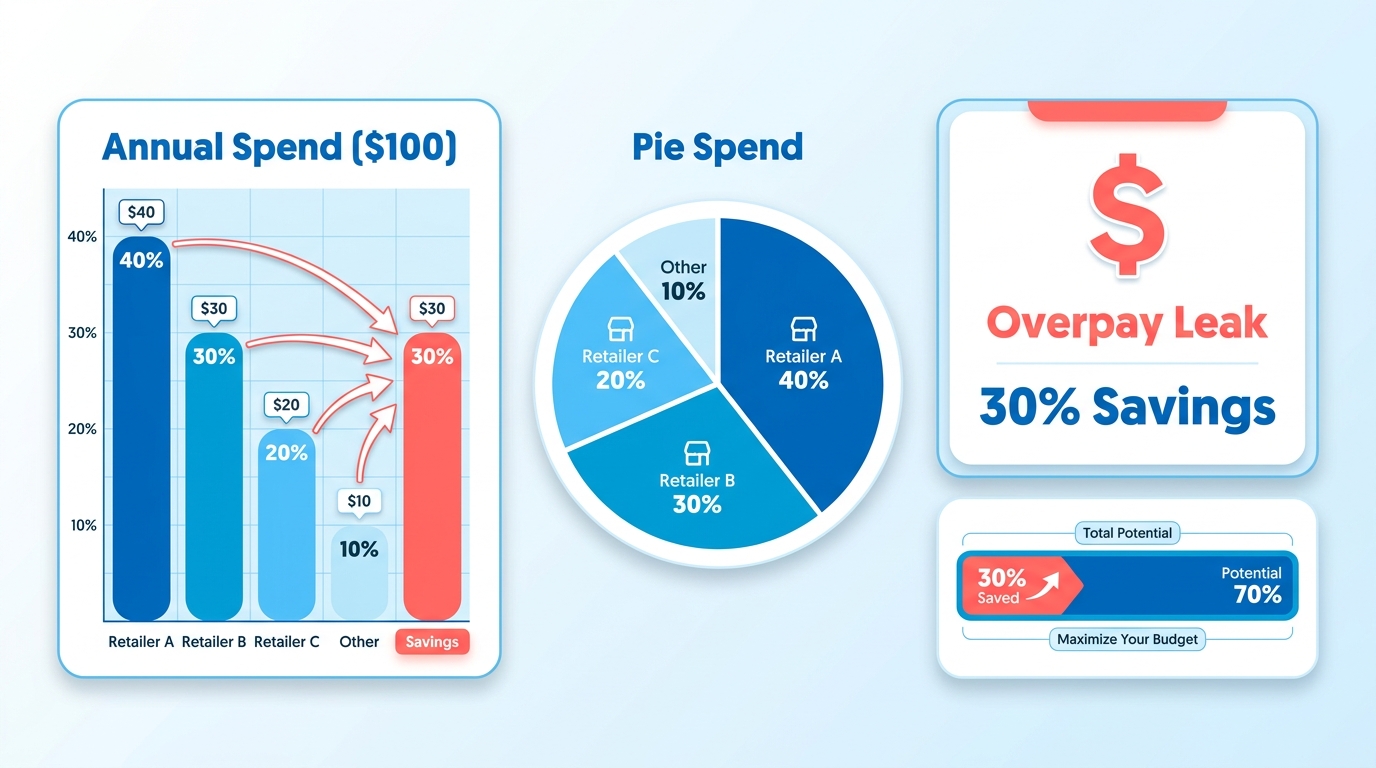
How much are we actually talking about?
Up to 30% on a single purchase. That gap exists because the same bottle rarely costs the same everywhere, and hidden fees make the sticker price a bad guide.
Multi-channel retailers often price the same product differently online than in their own stores, as one pricing study documents. So the "deal" you spotted at one shop might get beaten by another the same afternoon.
Here's the kind of thing a quick price check surfaces:
| Retailer | Listed Price | Shipping | Unit Price |
|---|---|---|---|
| Retailer A | $8.99 | Free | $0.53/oz |
| Retailer B | $7.49 | $4.99 | $0.73/oz |
| Retailer C | $9.29 | Free | $0.41/oz |
Retailer B looks cheapest. Add shipping and it becomes the most expensive on the shelf. The unit price is what gives it away.
Why hidden fees keep tripping people up
A low listed price often drags along delivery charges, minimum-order thresholds, or a smaller bottle than you assumed. Any one of those inflates the real per-ounce cost.
If you already read labels closely, you're halfway there. Comparing formulas and comparing prices are the same instinct, and price-checking protects your budget without forcing you into a cheaper formula you don't trust.
The tools that solve this pull listings from a lot of stores at once. The better comparison apps let you compare and find deals across your usual stores in one place, instead of you babysitting a dozen browser tabs.
What makes automated comparison worth it
Time, mostly. A barcode scan or a name search can check thousands of stores in seconds, a job that'd take you 20 to 30 minutes by hand.
Popgot's AI takes it a step further. It pulls shampoo prices from up to 8 major retailers, confirms you're looking at the exact product you think you are, and normalizes everything to the same per-ounce scale so nothing is measured on a different ruler.
The loop is simple:
- Search once instead of visiting each store
- See true costs with shipping and fees baked in
- Confirm the product so you're comparing the same bottle, not a look-alike
One more thing worth doing while you hunt: follow basic safer online shopping habits so your data stays put. Spend two minutes comparing and that $100 habit gets noticeably lighter.
Working out the real per-ounce price
A bigger bottle isn't automatically the better deal. The only way to know is to compare price per ounce, not the sticker. That one number strips away the packaging games and tells you which shampoo actually costs less.
Popgot does the math. It reads the real price at each retailer, factors in discounts, promos, and shipping, then divides by bottle size for a clean per-ounce figure. One apples-to-apples number instead of a wall of mismatched sizes.
How the calculation works
Unit price is the true cost per ounce after every fee and offer is applied. It lets you weigh a 12-ounce bottle against a 33.8-ounce pump without squinting.
Why it matters: a store advertises a jumbo bottle at a "value" price, then quietly adds shipping that eats the savings. Popgot rolls that shipping into the total before dividing, so the per-ounce number reflects what you actually pay at checkout.
The same shampoo, three stores
Retailer A lists a 16-ounce bottle at $8.00, free shipping. Retailer B sells the same brand in a 32-ounce bottle for $14.99, plus $4 shipping. Retailer C runs a promo: a 24-ounce bottle for $10.50, shipping included.
By sticker price, C looks cheapest. Run the unit math and it reshuffles:
- Retailer A: $0.50 per ounce
- Retailer B: $0.59 per ounce (after shipping)
- Retailer C: $0.44 per ounce
C still wins, but only because the per-ounce view exposed the shipping penalty buried in B's "bulk" deal. Without that breakdown, plenty of people grab the big bottle and pay more for the privilege.
That's the whole game. Sticker prices lie more often than you'd think, and bottle sizes are engineered to make comparison annoying. A clean unit price cuts through it in seconds.
Using AI to check ingredients, not just price
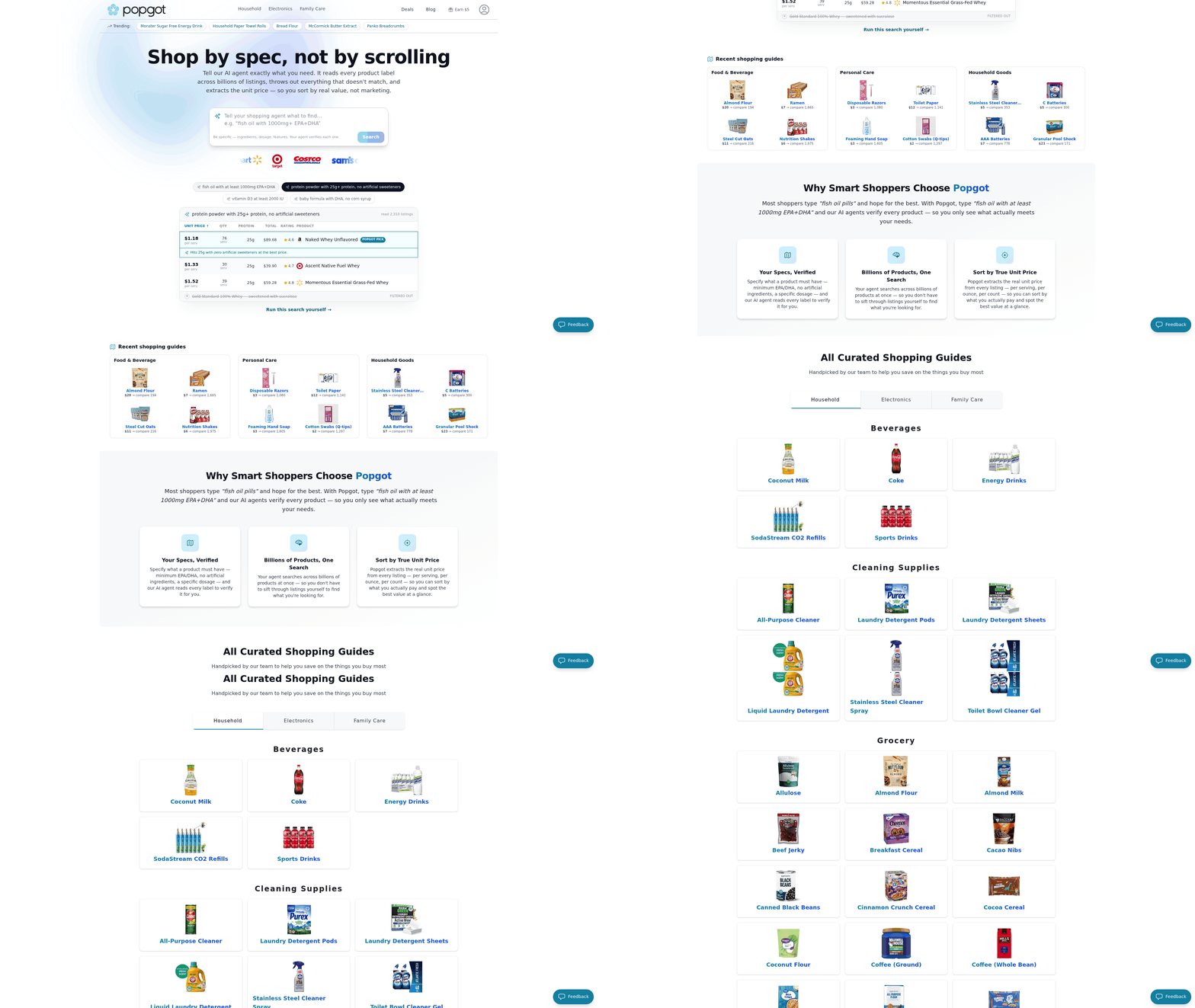
Popgot's AI reads the actual product page for each shampoo and pulls the specs that matter: the ingredient list, the bottle size, the concentration. Instead of trusting a vague product name, you get verified facts about what's in the bottle.
It uses natural language processing to parse messy retailer descriptions into clean data. When a shampoo claims sulfate-free or paraben-free, it checks that claim against the actual ingredient panel. Label and ingredients don't match? The product doesn't pass.
How custom filters narrow things down
You tell Popgot what you need, and it hides everything that doesn't qualify. Type something plain like "sulfate-free shampoo for color-treated hair," and the results collapse to bottles that genuinely fit. No scrolling past products that fail your one requirement.
The filters run on real specs, not marketing tags. Screen for ingredients to avoid, target a hair type, set a size range. Each filter runs against data the AI already pulled and verified, so the matches you see are matches you can trust.
What verification looks like
Say you've got a sensitive scalp and need a fragrance-free shampoo under 20 ounces. You type exactly that.
The AI reads every candidate across the retailers it tracks. It drops any bottle listing fragrance, even the ones whose front label promises "gentle." Then it cuts the oversized bottles that blow past your limit. What's left is a short list that actually meets both conditions.
That saves you from the classic trap: buying a "clean" shampoo that contains the exact thing you were dodging. Ingredient transparency matters most when your skin or hair reacts badly to something specific. Popgot runs that check before the price comparison, so the cheapest option on your screen is also a safe one for you.
Curated guides for the shampoos you rebuy
Buying the same shampoo every few weeks creates a quiet problem: you keep paying whatever your one store charges, because you already know where to grab it. Curated guides fix that by doing the legwork up front. Instead of raw search results, you get a structured recommendation set for a specific brand or product type, with prices already checked across multiple retailers.
What a curated guide actually does
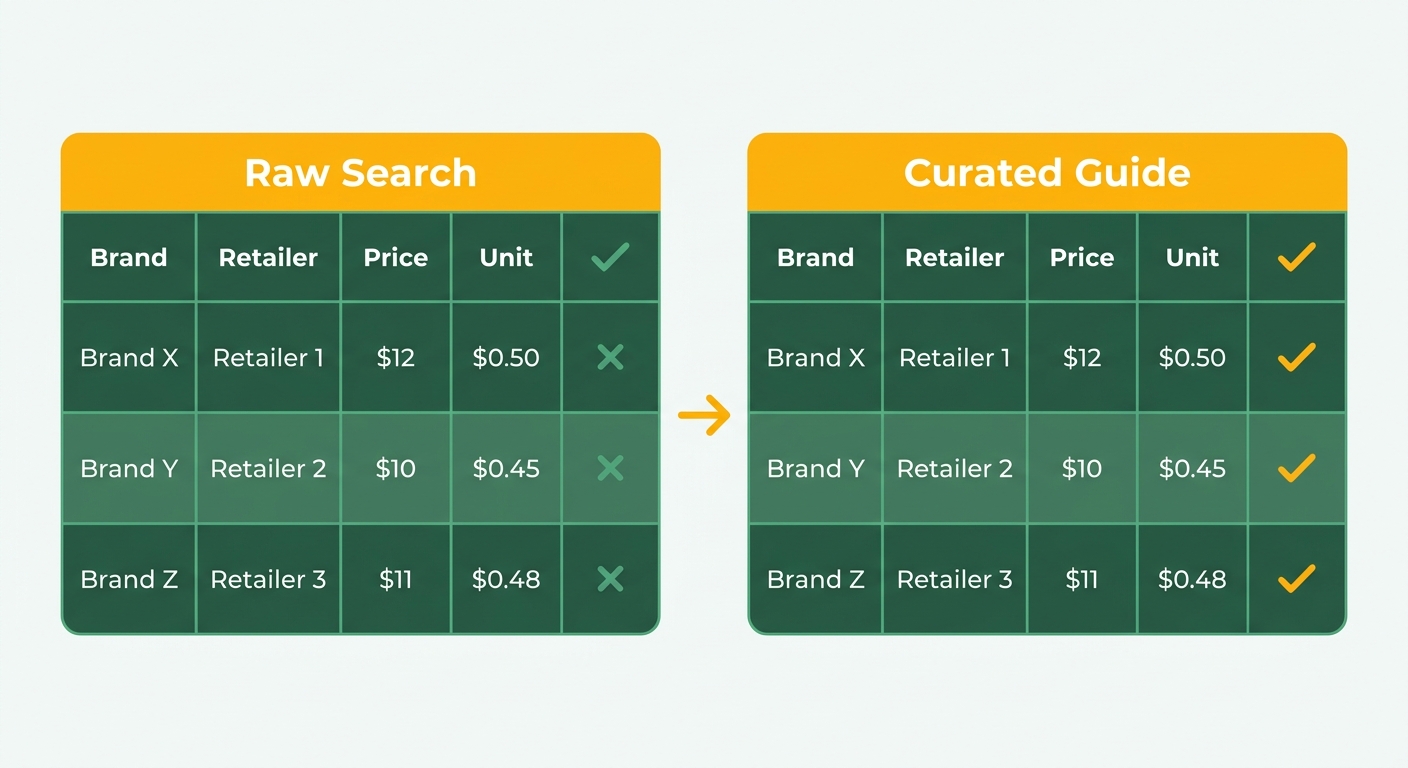
It narrows your options before you even start browsing. For a shampoo you buy often, the relevant bottle sizes, current per-ounce prices, and any live promos are already lined up in one place. You skip the part where you open six tabs and lose track of what you were comparing.
Take a color-safe shampoo you restock monthly. A guide for it shows which retailer ranks first on total cost, whether a two-pack beats buying singles, and how loyalty points or free-shipping thresholds move the final number. One ranked view instead of a manual comparison.
That structure pays off most on repeat buys. When you already know what you want, the guide works as a standing price-check: is your usual store still the right call, or does switching retailers this cycle save money without switching products?
Why curated beats a generic search
A keyword search returns whatever the retailer wants to push at you. A curated guide filters that out. The recommendations reflect actual product matches, not paid placements or loosely related alternatives.
For anything you buy on a recurring cycle, that difference adds up. You spend less time re-evaluating the same product and more time acting on a clear price signal. The savings compound because the habit sticks: check the guide, confirm the best price, buy. Faster and more reliable than starting from scratch every time.
How Popgot pulls prices from 8 stores at once
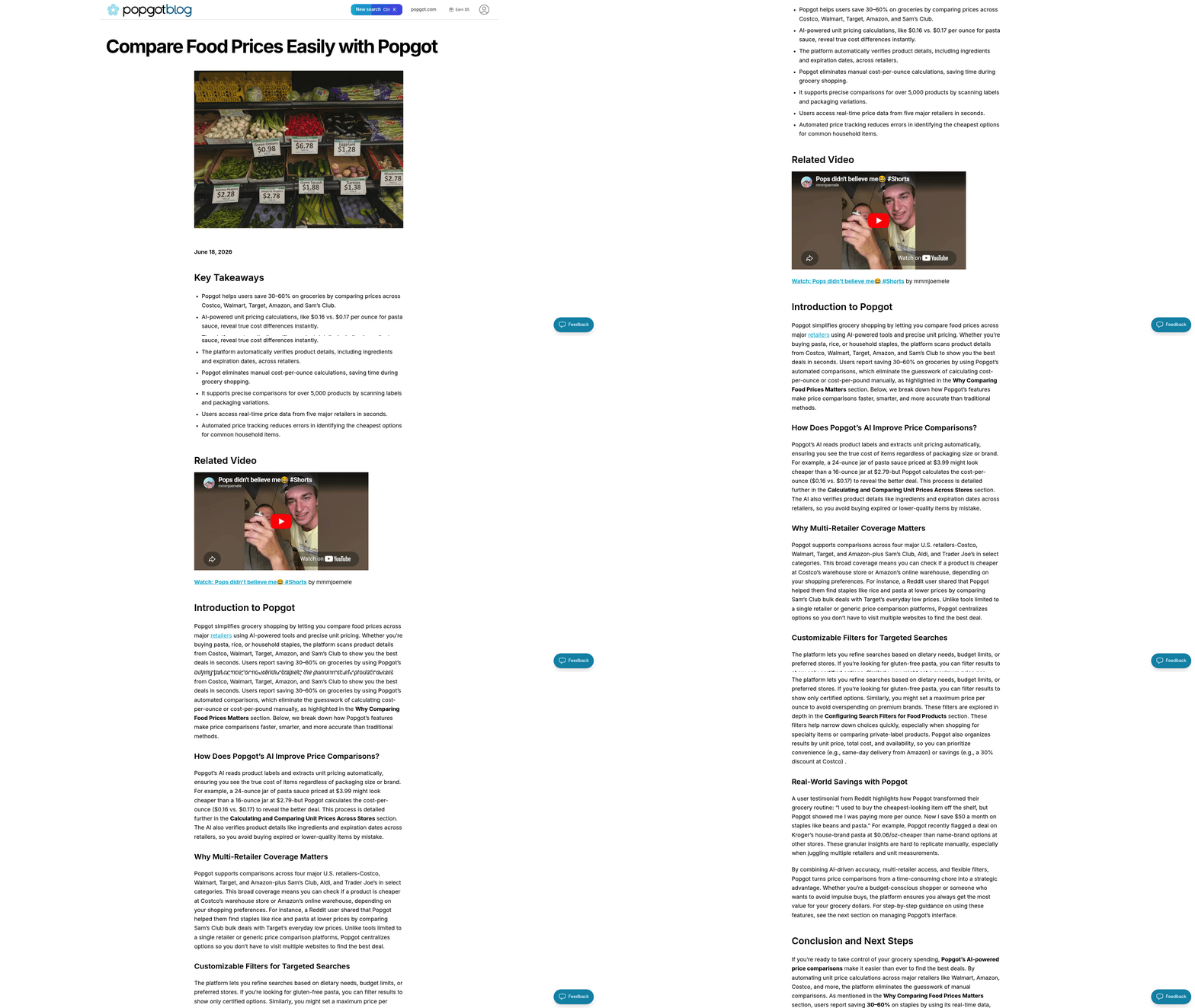
Popgot pulls live shampoo prices from 8 major retailers at once, including Amazon, Walmart, and Target. One search, every store's price side by side. That single view is where the savings start.
It matters because the same bottle rarely carries the same price across channels. Popgot surfaces those gaps so you stop assuming one store's number is the fair market rate.
How the multi-retailer search works
You type a shampoo name and Popgot fans the query out to every connected retailer. It reads the current price, the bottle size, and any active promo from each product page, then lines the results up in a grid you can scan in seconds.
The value is speed plus coverage. Barcode-and-name tools like the ones among the better comparison apps exist because shoppers want instant cross-store checks. Popgot pulls all eight in one pass, so you catch a limited-time promo that a tab-by-tab search would probably miss.
What a side-by-side comparison looks like
Take a popular sulfate-free shampoo sold at several stores:
- Retailer A: $9.99 for 12 oz, no promo
- Retailer B: $14.49 for 20 oz, free shipping
- Retailer C: $18.99 for 33.8 oz, 15% off applied
At a glance, C looks priciest. Once the per-ounce math runs, it flips. The AI checks the ingredient panel first to confirm all three are the same formula, then ranks them by true cost. That verification step keeps you from comparing two different products that happen to share a name.
The range you see here also changes how you judge deals offline, as research on comparison sites shows. Once you know the real spread, a $14 bottle at the drugstore stops looking like a bargain.
Why verified specs change the ranking
Accurate comparison depends on matching identical products, not similar-sounding ones. Popgot's AI reads each retailer's page and confirms ingredients and dosage before ranking anything. A mismatched formula drops out instead of skewing your results.
This guards against a common trap. Retailers list the same brand in different concentrations, sizes, and bundle counts. Without spec verification, a cheap sticker price can hide a two-pack listed as a single unit, or the standard version swapped in for the color-safe one you wanted. Popgot checks the facts so the price you compare belongs to the product you actually want.
One habit before you commit to any listing: buy through secure checkout. A verified price only helps if the page you're paying on is trustworthy.
Finding your best shampoo deal, step by step
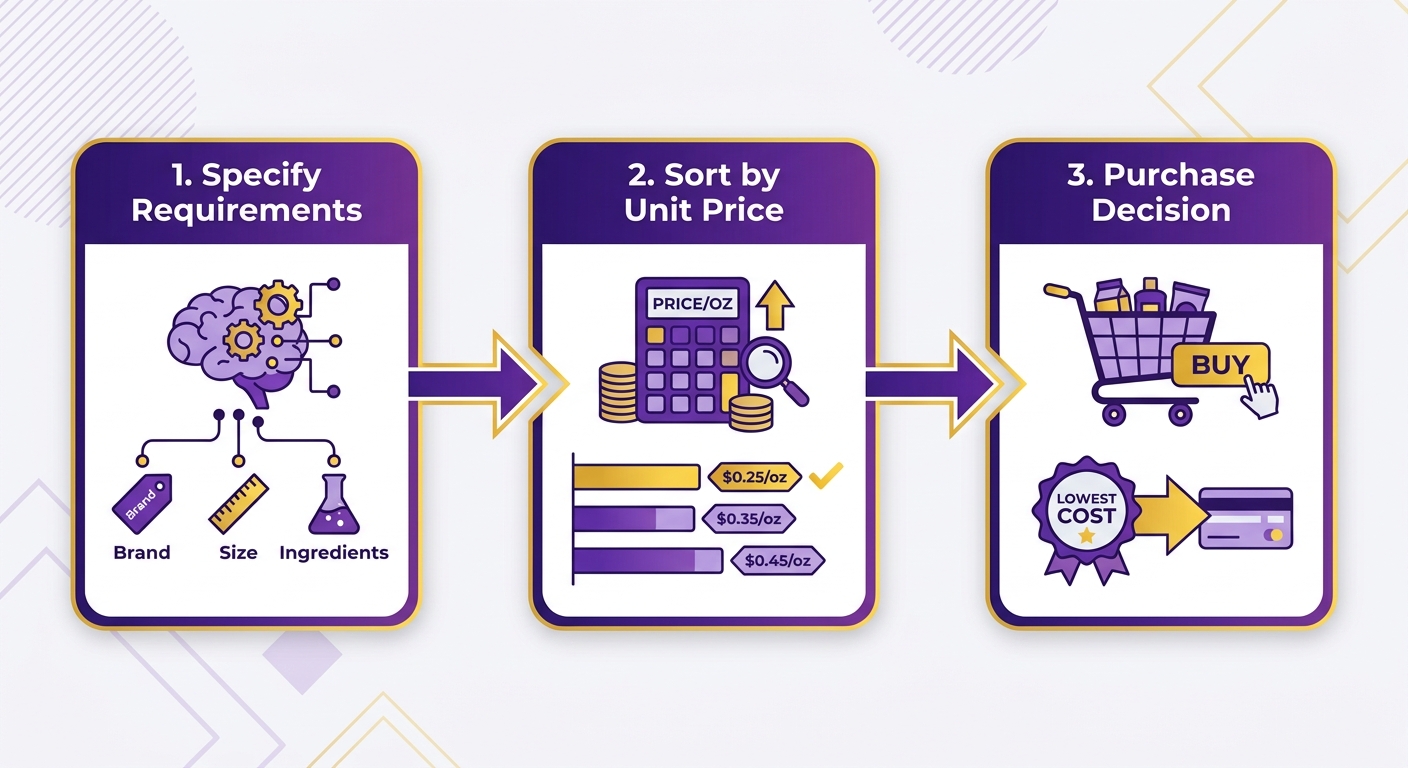
Three steps: tell the AI what you need, sort by real unit price, buy from the retailer with the lowest per-ounce cost. The whole thing runs on one search instead of a dozen tabs.
Running your first search
Type a plain-language request into the search bar. Be specific: brand, size, and any requirement that matters, like sulfate-free or color-safe. The AI reads every matching label across eight retailers and tosses the ones that don't qualify.
Try "sulfate-free shampoo for color-treated hair, 12 oz or larger." You get a clean list that actually meets those terms. No guessing whether a bottle hides sulfates halfway down the panel.
Once results load, sort by unit price. That column shows what each bottle costs per ounce after discounts and shipping, so the best real value floats to the top.
Squeezing out the last dollar
Layer your filters before you compare. Stacking an ingredient filter with a minimum bottle size cuts the noise fast, and it stops you comparing a travel bottle against a family-size pump. Tighter specs, more honest ranking.
A shopper hunting a specific salon brand runs one search and watches the same bottle show up at three different prices. Lowest per-ounce wins, the marked-up listings drop out.
Two habits that maximize savings:
- Trust the per-ounce number, not the sticker. A bigger bottle isn't automatically cheaper. The math settles it.
- Check the curated Personal Care guides. If you buy the same shampoo often, they surface current prices without a fresh search each time.
For repeat buys, skip the search entirely. The curated guides already track those prices, so you only run a manual search when you're switching brands or hunting something new.
References
[1] 12 best price comparison apps in 2025: Compare prices & find the ... - https://www.moonsift.com/guides/best-price-comparison-app
[2] ShopSavvy - https://shopsavvy.com/
[3] Online versus in-store: Price differentiation for multi-channel retailers - https://www.researchgate.net/publication/286921325_Online_versus_in-store_Price_differentiation_for_multi-channel_retailers
[4] Impact of Price Comparison Sites on Offline Price Evaluations - https://www.researchgate.net/publication/269729170_Online_Price_Search_Impact_of_Price_Comparison_Sites_on_Offline_Price_Evaluations
Frequently Asked Questions
1. Does Popgot work for shampoo bought in physical stores, or only online?
Popgot focuses on online listings across 8 retailers, but its price data helps you evaluate in-store deals too. Since research shows comparison-site prices shape how shoppers judge offline pricing, seeing the true online range lets you recognize when a drugstore shelf price is inflated or genuinely competitive.
2. Can I compare shampoo prices if I don't know the exact brand I want?
Type a plain-language request describing what you need, like "sulfate-free shampoo for oily hair." Popgot's AI reads product labels across retailers and returns matching options, so you can compare formulas and prices without naming a specific brand upfront. This works well when switching products or exploring alternatives.
3. What happens if two retailers list the same shampoo in different bottle counts?
Popgot's AI verifies specifications before ranking, catching mismatches like a two-pack listed as a single unit. This prevents a deceptively low sticker price from skewing results. The platform confirms bottle size, concentration, and bundle count, so the per-ounce number you compare reflects the exact product you intend to buy.
4. How often should I re-check shampoo prices if I buy the same one regularly?
For recurring purchases, check Popgot's curated Personal Care guides instead of running a fresh search each time. These guides track current prices continuously, so you only need a manual search when switching brands. This habit compounds savings by confirming whether your usual store still offers the best deal each cycle.
5. Will a bigger shampoo bottle always save me money?
Larger bottles aren't automatically cheaper once shipping and promotions factor in. A 32-ounce bottle with a $4 delivery fee can cost more per ounce than a smaller free-shipping option. Sorting by unit price reveals the true cost, since bottle sizes are often designed to make direct comparison difficult.
6. Can Popgot flag shampoos containing ingredients I need to avoid?
Set a custom filter naming ingredients to avoid, and Popgot's AI screens every candidate against its actual ingredient panel, not just marketing labels. A bottle claiming to be "gentle" still drops out if fragrance appears in the list. This verification runs before price comparison, protecting sensitive scalps from reactive compounds.
7. How much time does automated price comparison actually save?
Scanning across multiple stores manually takes 20 to 30 minutes of opening tabs and calculating unit prices yourself. Popgot pulls results from all 8 retailers in a single pass within seconds, catching limited-time promotions that tab-by-tab searching often misses entirely. You compare once instead of visiting each store separately.