
Total vs Net vs Impact Carbs: The Fiber Math That Wrecks Your List

Key Takeaways
- Total carbs count everything, including fiber and sugar. Net carbs subtract fiber and sugar alcohols from that total.
- Impact carbs measure the real effect carbs have on your blood sugar and insulin. That's a different thing from either total or net.
- A protein bar can shout "2g net carbs" on the front while its own label reports 22g total. The marketing number and the honest number aren't the same.
- A medium apple runs about 25g total carbs and 4.5g fiber, which puts its net carbs near 20g.
- Fiber passes through mostly undigested, so it doesn't spike blood sugar the way starch does.
- Sugar alcohols deserve caution. You subtract only half of some, all of others, because some still move blood glucose.
- Confusing these three numbers is where most low-carb grocery lists fall apart before you leave the store.
Quick Summary
Three carb numbers show up when you build a low carb grocery list, and they don't mean the same thing. Total carbs count everything: starch, sugar, and fiber. Net carbs subtract fiber and sugar alcohols. Impact carbs measure what actually raises your blood sugar.
Mix them up and your progress quietly stalls. A packaged snack flashes a single-digit carb count on the front while the nutrition panel tells a much bigger story. Track the wrong metric and you get a blood sugar spike before you realize your math was off.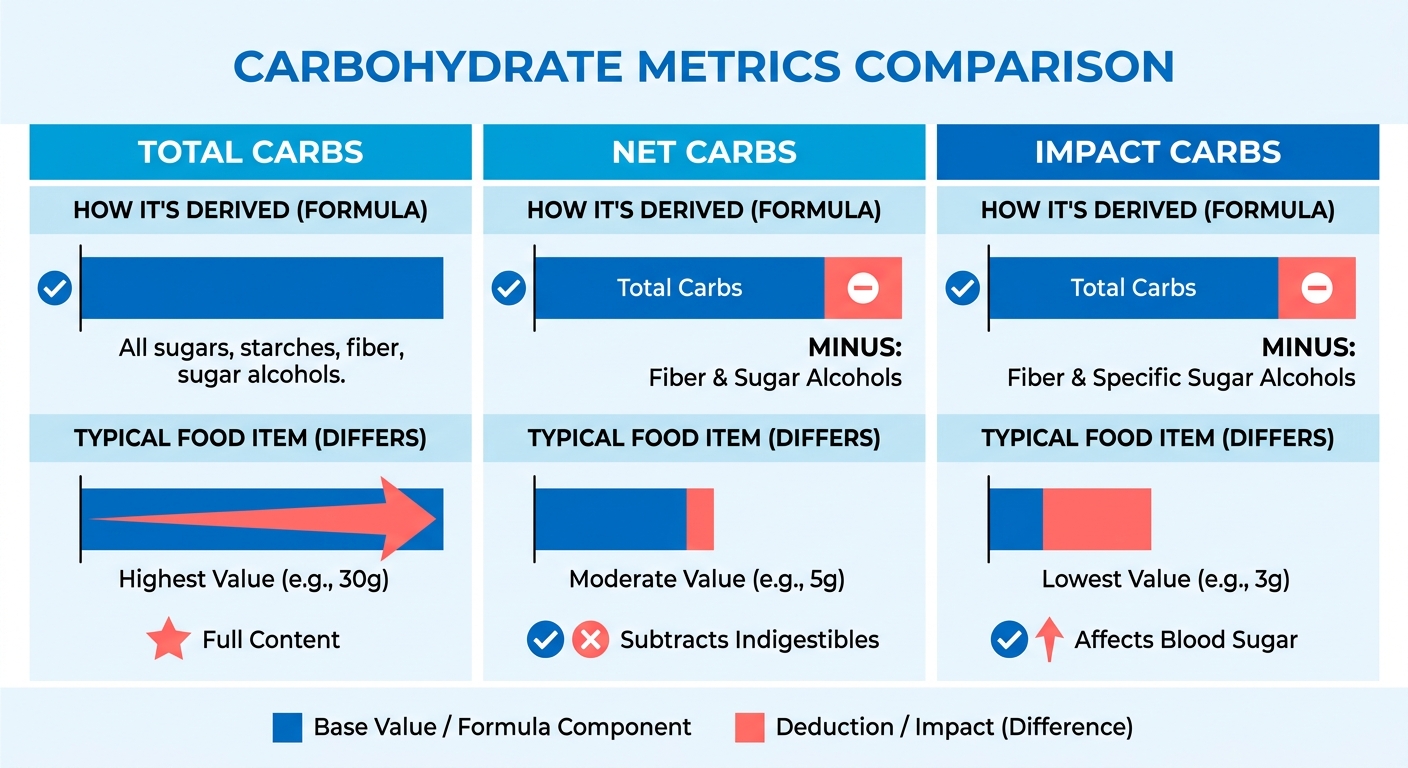
What's the difference between total, net, and impact carbs?
Total carbs are every carbohydrate in the food, fiber and sugar included. Net carbs are total carbs minus fiber and sugar alcohols, as UCLA Health explains. Impact carbs describe the real effect those carbs have on blood sugar and insulin.
Take a medium apple. About 25g total carbs, roughly 4.5g fiber, which puts net carbs near 20g. Fiber passes through mostly undigested, so it doesn't spike blood sugar the way starch does.
Sugar alcohols get treated with more suspicion. Everyday Health notes you subtract the full fiber amount but only half or all of the sugar alcohols, since some still hit blood glucose. That "half" hedge is exactly why net carbs and impact carbs can land on different totals.
How do the three compare side by side?
Here's a single food across all three measures. Same medium apple, so you can see the gap in real numbers.
| Carb Type | What It Counts | Fiber Subtracted? | Sugar Alcohols? | Apple Example |
|---|---|---|---|---|
| Total Carbs | All carbohydrates | No | No | ~25g |
| Net Carbs | Digestible carbs | Yes (full) | Yes (half or all) | ~20g |
| Impact Carbs | Blood-sugar effect | Yes | Yes (glycemic ones) | ~20g |
| Fiber | Indigestible portion | . | . | ~4.5g |
| Sugar Alcohols | Sweeteners | . | . | 0g (whole apple) |
Net carbs are the digestible carbohydrates in a food, as Virta Health puts it. Some labels also subtract glycerin on top of fiber and sugar alcohols, according to Medtronic's diabetes blog.
Which number should you actually track?
Track total carbs if you have diabetes and dose insulin. It's the honest ceiling, and no marketing math can inflate it. Net carbs work well for keto planning, where fiber genuinely doesn't count against you.
Skip the "net carb" claim on any packaged bar or cookie without checking the total first. Front-of-package net carb figures are a marketing tool, not a regulated number, and processed sugar alcohols behave differently than the fiber in whole foods. Start from total carbs and do the subtraction yourself.
Pick one measure and apply it consistently. Whole foods rarely trip you up. Packaged "low-carb" products are where the fiber math gets creative, so read the full panel every time.
Why carb counting is worth the effort
Carb counting matters because it controls how sharply your blood sugar spikes after a meal. The type and amount of carbohydrate you eat drives your insulin response. Get the tracking right and you keep that response steady. Get it wrong and even a "healthy" food can send your levels swinging.
That's why the number you track shapes your low carb grocery list before you ever pick up a cart. Count total carbs and your budget fills faster, your choices stay conservative. Count net carbs and high-fiber foods look cheaper on paper. Two people with the same daily limit can walk out of the same store with completely different bags.
Why does carb counting affect blood sugar control?
Fiber and sugar alcohols behave differently in your body than starch and sugar do. Fiber is a carbohydrate you can't fully digest, so subtracting it gives you net carbs: the digestible portion that actually reaches your bloodstream.
That distinction has real stakes for anyone managing diabetes. A food with 20g total carbs and 15g fiber delivers only 5g net carbs to your system. Dose insulin off the total number and you overestimate the hit. Ignore fiber entirely and you undercount.
The T1D Exchange points out that net carbs come from subtracting dietary fiber from total carbohydrates. For anyone timing insulin to carbs, that subtraction changes the dose.
What makes carb counting hard to get right?
Labels fight you. Front-of-package claims advertise net carbs while the nutrition panel reports total. You're stuck reconciling two numbers that measure different things.
Sugar alcohols add another layer. Some get subtracted fully, others only partially, and the digestive effect varies person to person. A protein bar boasting low net carbs might still nudge your blood sugar more than the label implies.
Fiber counting isn't universal either. Some methods subtract all fiber, others cap how much you deduct. So the same food can carry different net-carb values depending on which method you follow.
Which number should you actually track?
Pick one method and stick with it as you walk the aisles. Mixing total and net calculations mid-trip is how you overshoot on active carbs without noticing.
For most people managing weight or blood sugar, net carbs give a practical picture of what hits your system. If you have diabetes and dose insulin, match your method to your treatment with your care team. Knowing the difference between net and total carbs is what keeps your choices aligned with your goals. Know which number you're counting before you shop, and the rest of your plan holds together.
Total carbs: the number nobody can fudge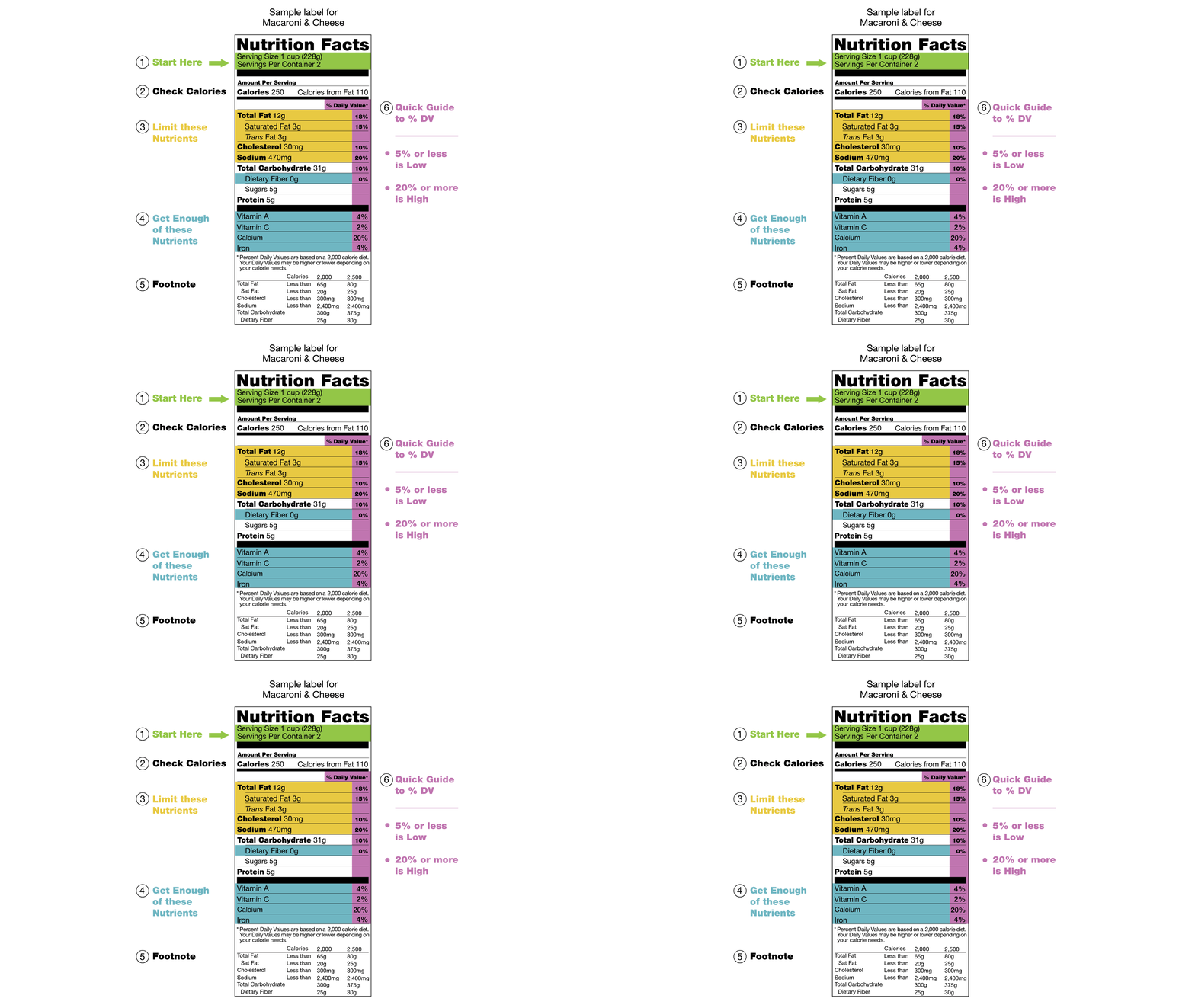
Total carbs are every carbohydrate in a food added together: starch, sugar, and fiber. It's the number printed at the top of the carbohydrate section on any label, the baseline for everything else. Nothing gets subtracted. You see the full, unadjusted load.
That's why total carbs are the starting point for every other calculation. Net carbs come from subtracting fiber and sugar alcohols from this baseline, a process Healthline walks through. Track total carbs and your shopping stays conservative from the first item.
What counts as total carbs?
Three components: starch, sugar, and fiber. All three sit under one heading on the label, even though your body handles each differently. Starch and sugar break down and raise blood sugar. Fiber mostly passes through.
Take a slice of whole wheat bread. Around 20g total carbohydrates, only 2g fiber, so nearly the entire count hits your daily tally. That's why total-carb trackers reach their limits faster. Low-fiber foods leave almost no gap between total and net.
Which foods are highest in total carbs?
The biggest sources are grains, starchy vegetables, and legumes. They pack starch and sugar tightly, so their totals climb fast even in small portions. First things to watch when you shop low-carb:
- Grains: bread, rice, pasta, oats, cereal, heavy starch per serving.
- Starchy vegetables: potatoes, corn, and peas run far higher than leafy greens or peppers.
- Legumes: beans, lentils, and chickpeas combine starch with a solid dose of fiber.
Legumes are the interesting case. High in total carbs, but their fiber narrows the gap between total and net. That's exactly the split covered in the net versus total carbs breakdown.
Why do total carbs affect blood sugar?
The starch and sugar inside them convert to glucose. The more total carbs on your plate, the more raw material your body has to raise blood sugar and trigger insulin. Fiber is the exception. It doesn't digest the same way.
That's why the American Diabetes Association points people toward the total carbohydrate figure first. Their guide to carb counting treats total carbs as the baseline, then subtracts fiber and sugar alcohols to reach net.
Should you count total carbs? For blood sugar control, it's the safer bet. It never underestimates your load. Net carbs can flatter a food's numbers. Total carbs tell you the full story before fiber math ever enters the picture.
Fiber math: turning total carbs into net carbs
Fiber math is the calculation that turns total carbs into net carbs. You subtract the grams of fiber, and sometimes sugar alcohols, from the total. What's left is the number that actually feeds your blood sugar.
This one calculation decides what earns a spot on your low-carb grocery list. Because fiber passes through mostly undigested, counting it as an active carb inflates your daily intake for no reason. Get the subtraction right and high-fiber foods come back on the table.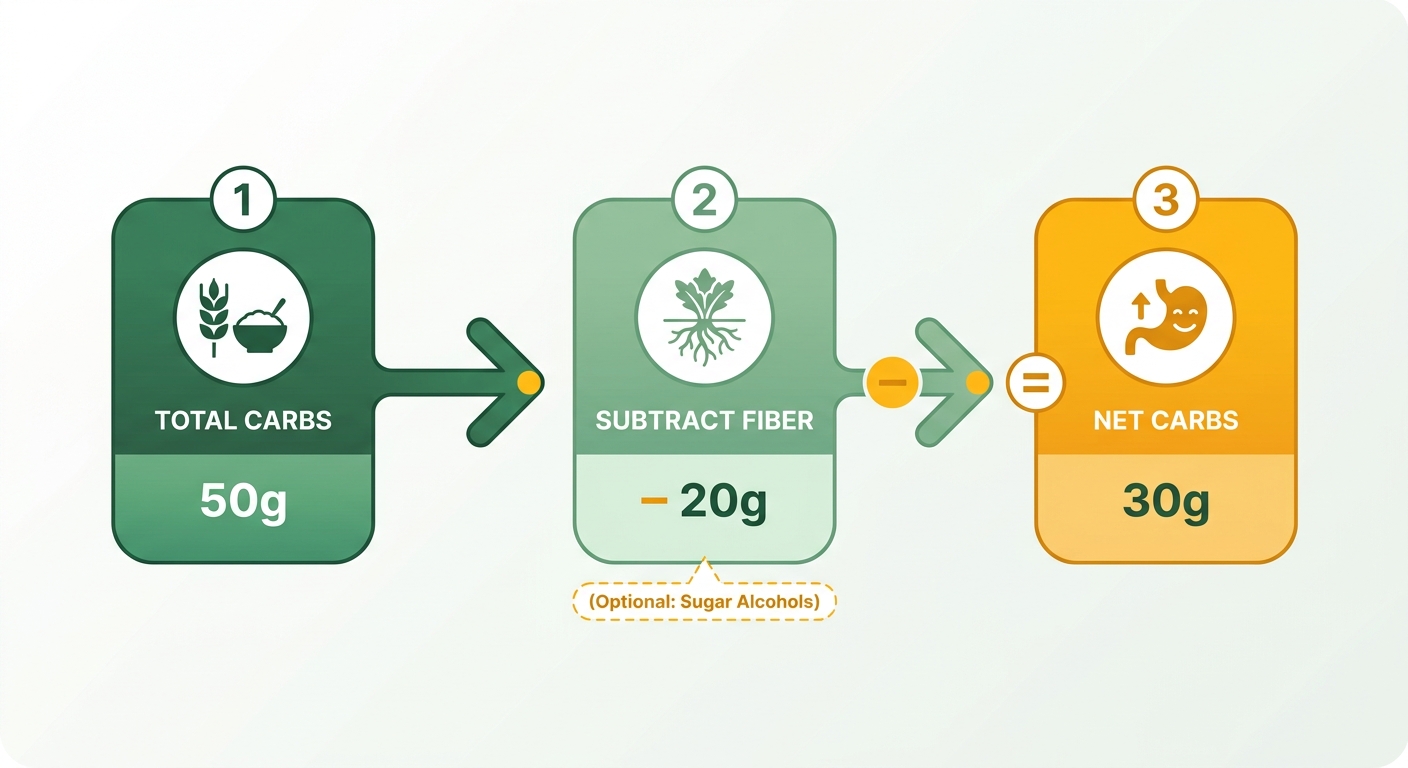
How do you calculate net carbs?
Net carbs are total carbohydrates minus fiber and sugar alcohols. For whole foods, it's straightforward because you only subtract fiber.
A food with 17.1g total carbohydrates and 13.5g fiber lands at just 3.6g net carbs. This example, from Healthline, shows how dramatically fiber can shift the digestible count.
Packaged products add variables. Many manufacturers subtract both fiber and sugar alcohols from the total, as WebMD covers. The American Diabetes Association backs a similar approach: deduct any listed fiber or sugar alcohols directly from the total carbohydrate line.
Sugar alcohols need closer inspection. Everyday Health suggests subtracting the full fiber amount but adjusting the deduction for sugar alcohols, since their metabolic impact varies. Some manufacturers also exclude glycerin from the total, a practice documented on Medtronic's diabetes blog.
What does fiber math look like on real foods?
Fiber math shifts your numbers most on high-fiber whole foods. Fruits, legumes, and vegetables carry fiber that never converts to blood sugar, so their net count drops well below the total.
Take a cup of raspberries. Heavy fiber relative to total carbs, so subtracting it pulls the net count down sharply and keeps the fruit inside a tight budget. Half an avocado works the same way, where most of the total carbohydrate is fiber that never reaches your bloodstream.
Beans and lentils pack heavy fiber too, so their digestible load is much smaller than the total carbohydrate line suggests. These are the digestible carbs your body actually absorbs, as Healthline details.
Why fiber math improves your choices
Fiber math gives you an accurate carb count instead of an inflated one. That accuracy matters for blood sugar control and for building meals that fit a strict budget.
Isolating digestible carbohydrates lets you bring back nutrient-dense, fiber-rich foods that might otherwise seem off-limits. Compare the metrics and you see why a single food can fit or break a diet depending entirely on your tracking method.
One caution: fiber math only works when the label is honest. Verify the fiber and sugar alcohol grams before you subtract. Guess wrong and your carb count drifts, no matter how careful your shopping.
Net carbs: where fiber and sugar alcohols do the work
Net carbs are the carbohydrates your body actually digests. You calculate them by subtracting fiber from total carbs. Fiber and sugar alcohols pass through the digestive tract with minimal metabolic impact, so they're excluded from the active count.
This reshapes any low-carb shopping strategy. Whole foods heavy in fiber, like leafy greens and berries, drop in net-carb value the moment you do the math. Manufacturers lean on the same logic, subtracting fiber and sugar alcohols to advertise lower numbers on the front of the box.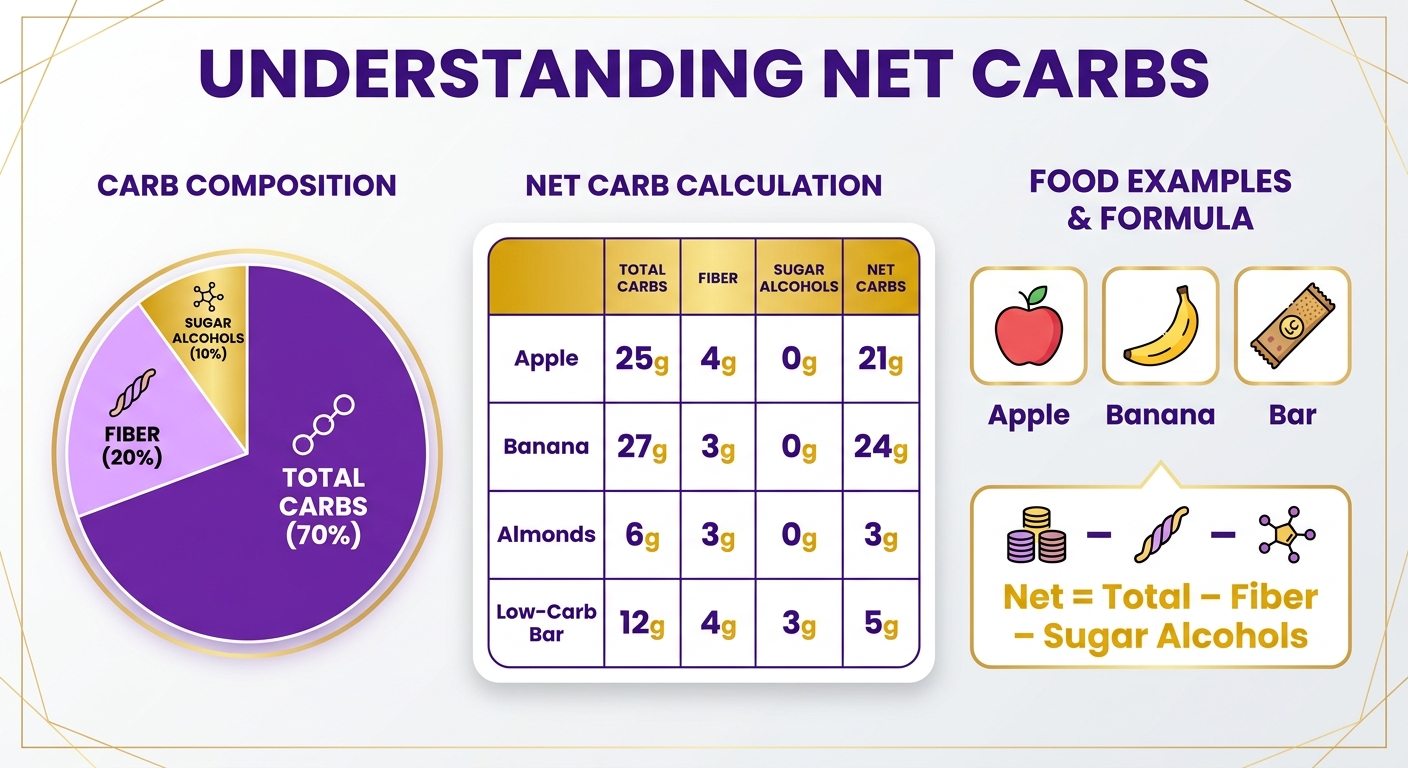
How do fiber and sugar alcohols change the count?
The standard formula subtracts both fiber and sugar alcohols from the total. But some protocols treat sugar alcohols differently, subtracting only a portion of certain sweeteners, as Everyday Health discusses.
Certain tracking methods also subtract glycerin. This variation is why two products claiming identical net carbs can have vastly different total carbohydrate loads.
The reason any of this works: fiber and sugar alcohols have a negligible impact on blood glucose. The American Diabetes Association confirms that subtracting these indigestible elements isolates the portion of the food that directly converts to glucose.
Which foods are high in fiber and sugar alcohols?
Fresh produce leads the fiber column. Sugar alcohols behave differently once digested. Erythritol carries close to zero calories and passes through almost untouched, while maltitol raises blood sugar more than most, as WebMD reports. That's why two sugar-free products with identical net carbs can affect you differently.
Vegetables, legumes, nuts, and seeds all push fiber high relative to total carbs. Sugar alcohols show up somewhere else entirely: low-carb branded products like keto bars, sugar-free chocolate, and diet-friendly baked goods. Manufacturers add them for sweetness without the glucose spike, then subtract them on the label.
Where the two categories split on your list:
- Whole foods: fiber is naturally present. Vegetables, berries, and beans give you a real net-carb discount backed by nutrition.
- Processed low-carb products: sugar alcohols and added fiber do the subtracting. The math checks out, but read the total carb line before you trust the front label.
Why net carbs matter for weight and blood sugar
Net carbs help with both ketogenic diets and blood sugar management because they isolate the carbohydrates that trigger an insulin response. Digestible carbs drive insulin. Fiber stays metabolically neutral.
Track total carbs exclusively and high-fiber whole foods can burn through your daily allowance fast. Switch to a net carb approach and you make room for nutrient-dense produce without blowing your metabolic goals.
The catch stays the same. A product's advertised net carbs mean nothing if the total carb figure tells a different story. Check both numbers every time.
Fiber math at the shelf: from label to cart
Carb counting turns abstract label math into real decisions at the shelf. Every time you compare two products, subtract the fiber, and pick the lower number, you're applying fiber math to your health. The payoff shows up as steadier blood sugar and easier weight management.
This is where a low-carb shopping list stops being theoretical. You walk the aisles with a clear rule: check total carbs first, find the fiber second, calculate the difference. That final number decides what goes in the cart.
How do you apply fiber math at the grocery store?
Read total carbs, find the fiber line, subtract. A simple habit that reframes which whole foods fit your plan. High-fiber items that look carb-heavy on the top line often shrink once you run the number.
In the produce section, half an avocado looks high in carbohydrates at first glance. But the vast majority of those carbs are indigestible fiber, which brings the active impact down to a fraction of the total.
The same logic reshapes packaged choices. A food with 15g total carbs and heavy fiber lands very differently in your system than one with 15g of pure sugar, a distinction the T1D Exchange guide emphasizes. Two products can share the same top-line number and hit your blood sugar in completely opposite ways.
Building a low-carb shopping list that actually works
Start with whole foods where the math is clean. No artificial additives, so you only subtract naturally occurring fiber from total carbs. That makes leafy greens, non-starchy vegetables, and berries easy additions.
Group your list by how the numbers behave. High-fiber whole foods in one column, processed items in another. The whole-food side rewards fiber math directly. The processed side needs a closer look, because manufacturers lean on the same subtraction to advertise low numbers on the box.
A practical build:
- Non-starchy vegetables: high fiber, low digestible carbs after subtraction.
- Berries: fiber pulls their net count down meaningfully.
- Nuts and seeds: fiber-rich, so total carbs overstate the real load.
- Packaged low-carb snacks: verify the total line, then check the fiber and sugar alcohols yourself.
Why does this change your meal planning?
Fiber math lets you build balanced plates without overcounting. Know an ingredient's digestible carbs and you portion around blood sugar instead of guessing from the top-line number.
Plan meals around the subtracted number, not the label headline. A high-fiber vegetable side barely moves your daily count, so you can add volume without spiking your budget. That's the difference between a plate that feels restrictive and one that feels full.
The habit compounds. Do the subtraction consistently and healthier choices start to automate, keeping your blood sugar steadier. The math you did at the store follows you all the way to the plate.
Impact carbs: what actually hits your bloodstream
Impact carbs measure how a food actually moves your blood sugar, not just what the label subtracts. They're total carbohydrates minus the fiber your body doesn't break down. The difference is that impact carbs account for how you respond, not just the math on paper.
This is the metric that separates a working plan from a hopeful guess. Two people can eat the same 30g of oats and see completely different blood sugar curves. Your digestive health and insulin sensitivity change the real-world effect, so the printed net-carb figure is a starting estimate, not a promise.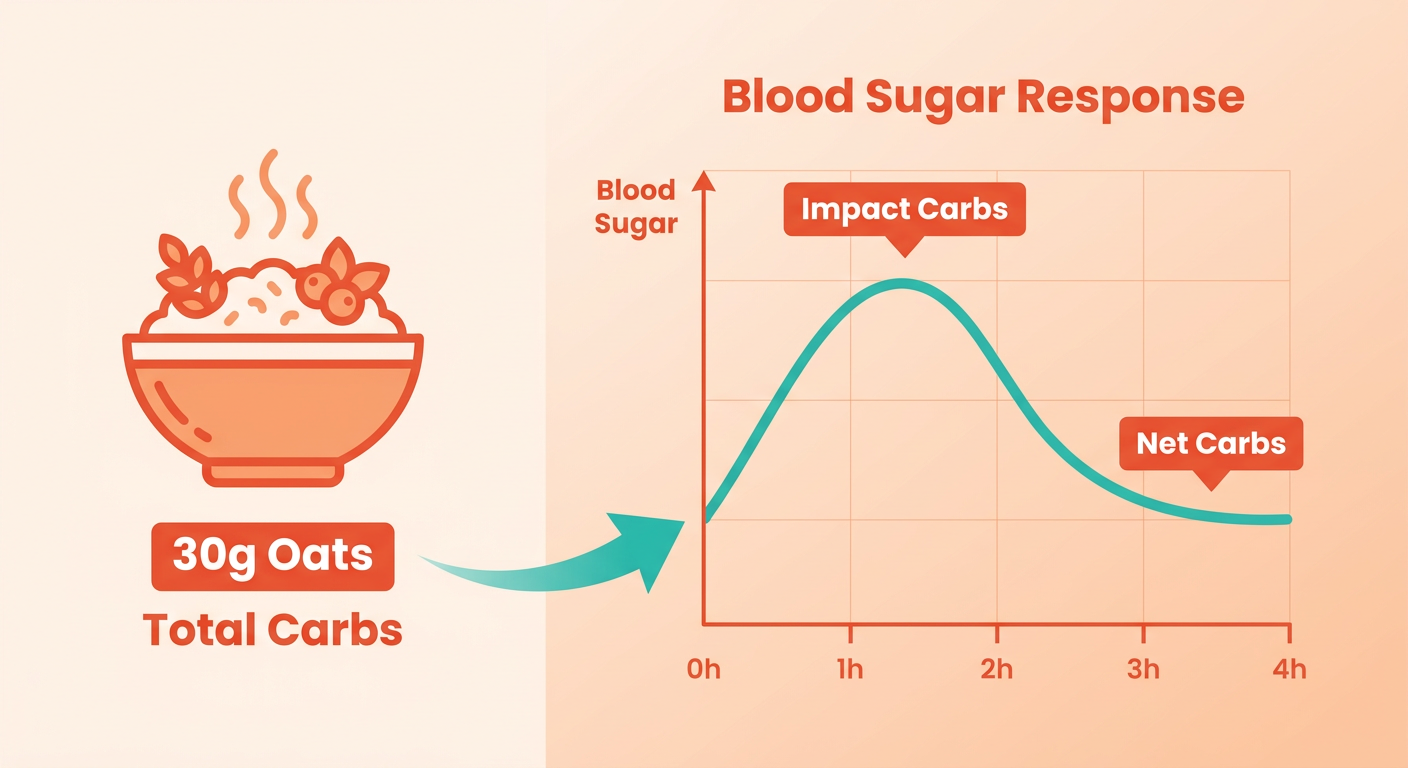
What are impact carbs, exactly?
Impact carbs are the carbohydrates that raise your blood sugar and trigger an insulin response after you eat. Fiber and sugar alcohols get subtracted because they pass through with little metabolic effect. What remains is the actual glycemic load your body has to manage.
The term overlaps with net carbs on the label. Manufacturers calculate the advertised figure by taking total carbohydrates and subtracting fiber and sugar alcohols. Some also subtract glycerin.
But "impact" is the honest word for it. It names the goal: knowing what hits your bloodstream, not just what a bar wants to advertise. A useful primer on what impact carbs are walks through the same distinction.
Why do impact carbs vary from person to person?
Your body isn't a spreadsheet. Digestive health and insulin sensitivity decide how fast and how high a food pushes your blood sugar. The same net-carb number can behave differently in two people, which is why personalized tracking beats blind label math.
You and a friend both grab a high-fiber wrap listing 8g net carbs. If your insulin sensitivity is high, your rise stays gentle. If your friend's sensitivity is blunted, that same wrap can cause a higher, longer spike. The label didn't change. The bodies did.
This is why sugar alcohols deserve caution. Subtracted on paper, but some still nudge blood sugar in certain people, as WebMD reports. Trust the front-of-package number without checking your own response and you can quietly stall your progress.
Which foods have high vs low impact carbs?
Low-impact foods are heavy in fiber and light in digestible starch: leafy greens, non-starchy vegetables, berries. Subtracting the fiber drops the amount of glucose that reaches your bloodstream.
High-impact foods carry dense, digestible starch with little fiber to offset it. White rice, potatoes, refined flours, all push more sugar into your bloodstream per serving. Legumes sit in the middle: real fiber, but real starch too.
The payoff for tracking impact carbs shows up as steadier blood sugar and easier weight management. Getting the number right is what keeps a low-carb pantry working after you unpack the bags.
References
[1] Net Carbs Vs. Total Carbs: What Counts? - https://www.minimed.com/en-us/loop-blog/net-carbs-vs-total-carbs-counts
[2] How to Calculate Net Carbs - https://www.healthline.com/nutrition/net-carbs
[3] When a Carb's Not a Carb: The Net Carb Debate - https://www.webmd.com/women/features/net-carb-debate
[4] Net carbs are carbs minus fiber and sugar alcohols - https://www.uclahealth.org/news/article/net-carbs-are-carbs-minus-fiber-and-sugar-alcohols
[5] What Are Net Carbs and Should I Count Them? - https://www.everydayhealth.com/diet-nutrition/net-carbs/
[6] Get to Know Carbs | ADA - https://diabetes.org/food-nutrition/understanding-carbs/get-to-know-carbs
[7] Should I Calculate Net Carbs? A Guide for Keto, Diabetes, and Weight Loss ... - https://www.virtahealth.com/blog/should-i-calculate-net-carbs-a-guide-for-keto-diabetes-and-weight-loss-goals
[8] Carb Counting and Beyond: Navigating Nutrition with Diabetes - https://t1dexchange.org/articles/navigating-nutrition-type-1-diabetes?hs_amp=true
Frequently Asked Questions
1. Do all fiber types count the same when calculating net carbs?
Fiber counting isn't universal across tracking methods. Some approaches subtract all dietary fiber, while others cap the deduction, especially for soluble versus insoluble fiber. This inconsistency means the same food can carry different net-carb values. Check which method your plan follows and apply it consistently to avoid drifting counts.
2. Why do erythritol and maltitol affect blood sugar differently?
Erythritol has a highly unique chemical structure that allows it to pass through the body largely unmetabolized, resulting in virtually zero glycemic impact. In contrast, maltitol has a higher glycemic index and is partially absorbed, which can cause a noticeable rise in blood glucose. Consequently, two products with identical net carb counts can have completely different metabolic effects depending on which sweetener they use.
3. Can two people eat the same net carbs and get different blood sugar results?
Yes. Individual metabolic rates, insulin sensitivity, and gut microbiome health dictate how carbohydrates are processed. While a specific food might have a low net carb count on paper, one person might experience a negligible glycemic response while another experiences a significant spike, particularly if the food contains certain sugar alcohols or processed fibers.
4. Should someone with type 1 diabetes use net carbs or total carbs for insulin dosing?
Individuals managing type 1 diabetes should always consult their healthcare team to establish a safe dosing protocol. While total carbohydrates provide a reliable, uninflated baseline for insulin calculations, subtracting fiber to determine net carbs can sometimes prevent over-dosing, as fiber does not convert to glucose. Consistency and medical guidance are key.
5. What is glycerin and why do some labels subtract it?
Glycerin is a sugar alcohol-like compound used as a humectant and sweetener in low-carb processed foods. Because it has a minimal impact on blood sugar, some manufacturers subtract it from the total carbohydrate count to lower the advertised net carbs. However, because this practice isn't standardized, it can make comparing packaged foods confusing.
6. Are net carb claims on packaged products regulated?
No, the FDA does not officially define or regulate 'net carbs' on food packaging. These claims are primarily marketing terms used by manufacturers. Because the math used to calculate these figures can vary widely and often relies on highly processed fibers or sugar alcohols, it is always safest to calculate the digestible carbs yourself using the standard nutrition facts panel.
7. Why do legumes cause confusion when building a low-carb list?
Legumes like beans, lentils, and chickpeas rank high in total carbs but pack solid fiber, narrowing the gap between total and net figures. This split makes them look strict on the top line but more usable after subtraction. Their fiber content is why the same food reads very differently depending on your tracked number.