
Which Indian Spices Add Zero Net Carbs to Keto Meals

Key Takeaways
- Ten classic Indian spices—turmeric, cumin, coriander, black pepper, and the rest—land at essentially zero net carbs per teaspoon.
- Asafoetida is the lowest at roughly 0.1g net carbs per teaspoon. Turmeric and cinnamon top the range at about 0.5g each. Still negligible.
- Fiber subtraction drops most of these to effectively zero, so they add flavor without threatening ketosis.
- Grinding whole spices fresh beats pre-ground every time on flavor.
- Adding spices takes 2 to 5 minutes. Toasting whole spices runs about 60 seconds; blooming ground spices in ghee, another minute or two.
The short version
Most classic Indian spices add flavor without touching your carb count. That makes them the closest thing keto cooking has to a cheat code that isn't a cheat. Ten of them come in at essentially zero net carbs per serving: turmeric, cumin, coriander, cardamom, cloves, black pepper, cinnamon, mustard seeds, fenugreek, and asafoetida.
If you're building a keto grocery list, these belong in the cart before anything fancy. They bring warmth and depth to eggs, meats, and roasted vegetables without the sugar or starch that wrecks ketosis. Buy whole, grind fresh, and you get the biggest flavor payoff.
The zero-carb spice table
Net carbs are per 1 tsp, and most round to zero once you subtract fiber.
| Spice | Net Carbs (per tsp) | Keto-Friendly Use |
|---|---|---|
| Turmeric | ~0.5g | Cauliflower rice, egg bhurji |
| Cumin | ~0.4g | Roasted meats, keto curries |
| Coriander | ~0.3g | Spice rubs, paneer dishes |
| Cardamom | ~0.4g | Keto chai, fat bombs |
| Cloves | ~0.3g | Slow-cooked meats, broths |
| Black Pepper | ~0.4g | Everything savory |
| Cinnamon | ~0.5g | Keto desserts, coffee |
| Mustard Seeds | ~0.3g | Tempering, oil infusions |
| Fenugreek | ~0.5g | Butter chicken, greens |
| Asafoetida | ~0.1g | Dal substitutes, tempering |
If you want a deeper kitchen breakdown of each one, this guide on 24 top Indian spices is worth a read.
How long does this actually take?
Time: 2 to 5 minutes for most dishes. Toasting whole spices takes about 60 seconds. Blooming ground spices in ghee adds a minute or two.
Difficulty: Easy. If you can heat fat in a pan and stir, you can temper spices. Cardamom and fenugreek need a bit more attention because they turn bitter if you burn them, so pull them off the heat the moment they smell fragrant.
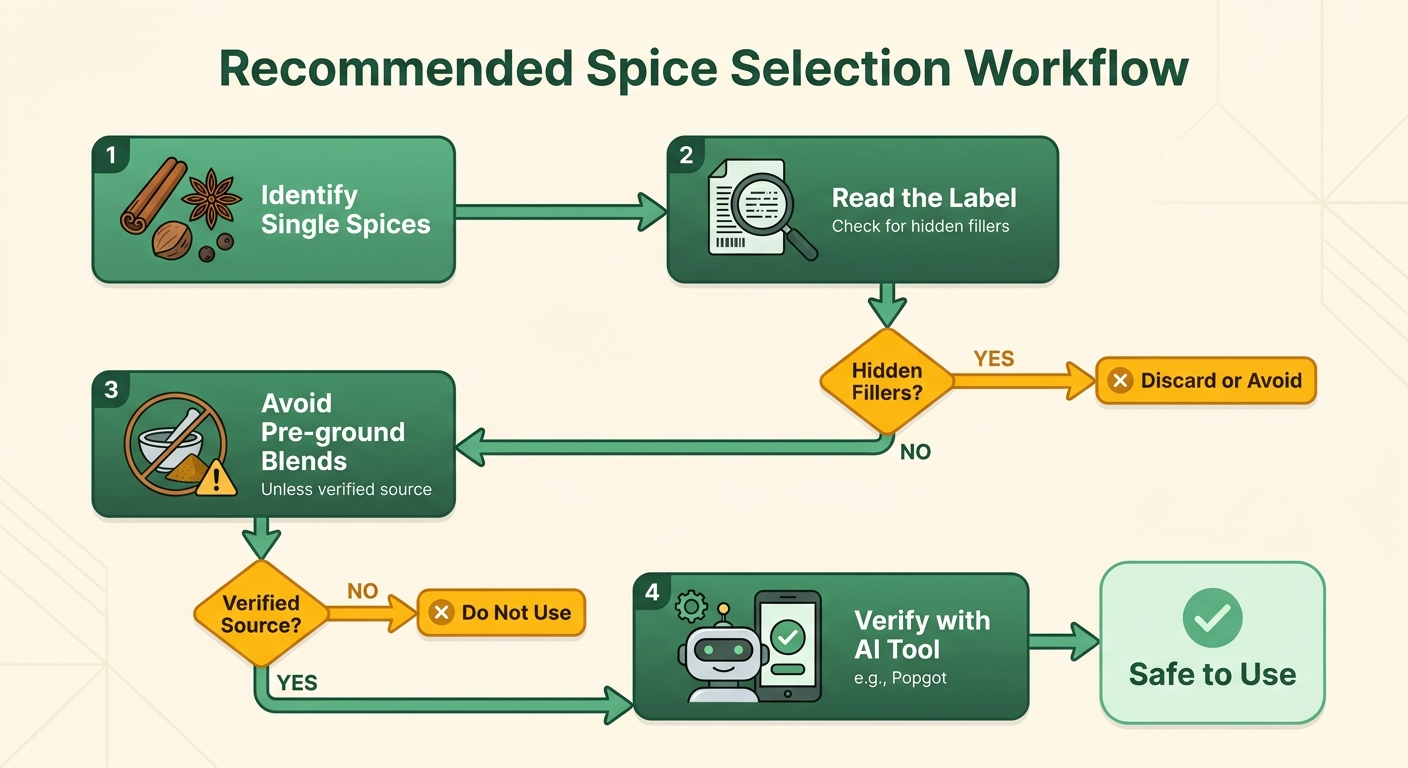
One carve-out: skip pre-mixed masala blends unless you read the label. A lot of them pack in sugar, maltodextrin, or dried onion and garlic powder that quietly stack carbs. Buy single spices and blend your own.
What each spice actually costs you in carbs
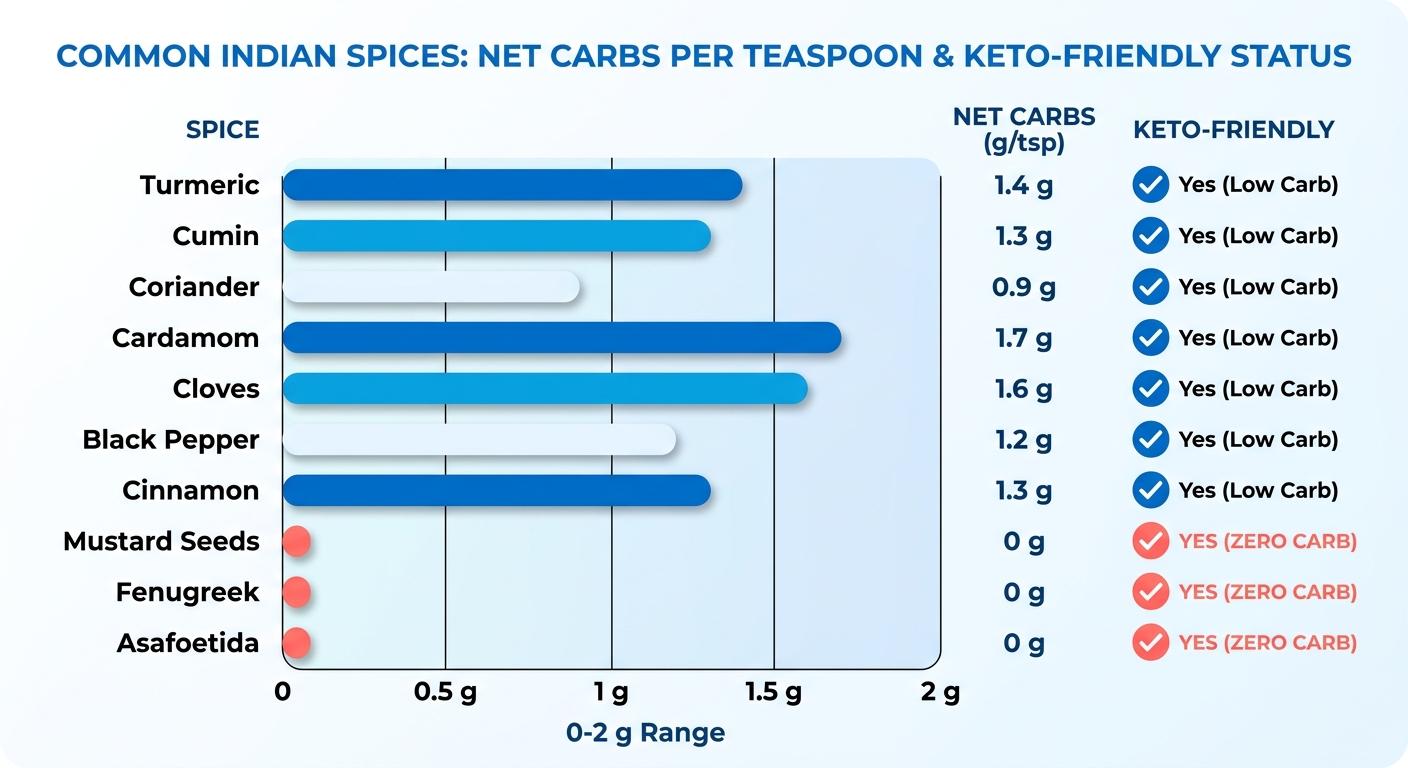
Most whole Indian spices sit between 0 and 2 net carbs per teaspoon, so they barely move a keto tracker. The trouble starts in ground blends and seed-heavy spices, where a single tablespoon can add real carbs. Knowing which is which keeps your macros clean.
When you build the list, sort spices into two piles: single spices and pre-mixed blends. Single spices win almost every time. Blends hide sugar, dried onion, and starchy fillers that push net carbs up fast.
Which spices stay lowest?
Lowest of the low: turmeric, cumin, black pepper, cardamom, cloves, and asafoetida all round to roughly 0 net carbs per teaspoon. Safe bets for daily cooking.
Seed spices carry a little more. Coriander seed, mustard seed, and fenugreek land near 1 net carb per teaspoon after fiber. Cinnamon sits around 1 too, thanks to its fiber. Dried red chili, ajwain, nigella, and fennel stay under 2 at normal serving sizes.
Ground versions behave the same as whole. You just tend to use more. A heaping tablespoon of ground coriander adds up faster than a level teaspoon. Measure, don't eyeball.
Where blends sneak carbs in
Pre-made masalas and curry powders often add sugar, dried garlic, or dried onion, which pushes net carbs above what pure spices contain.
Garam masala made from only whole spices stays keto-friendly. But a lot of store blends use maltodextrin or ground onion as bulk. Check the label. If sugar or a starch sits in the first few ingredients, put it back.
The fix is DIY. Toast whole cumin, coriander, cardamom, and cloves, then grind them yourself. You control every ingredient and drop the hidden carbs to near zero. For sweet dishes, swap jaggery-based mixes for plain cinnamon and cardamom. Same warmth, no sugar.
The mistakes that quietly wreck your macros
The single biggest mistake keto cooks make with Indian spices is reaching for pre-ground blends instead of single spices. A packaged garam masala or curry powder often hides dried onion, sugar, or starchy fillers that spike net carbs without warning. Read the label. If it lists more than the spices themselves, leave it on the shelf.
Treat whole spices as the default and blends as the exception. Whole cumin, coriander, and mustard seeds give you clean macros and fresher flavor. Grind them yourself in small batches. You control what goes in, and you dodge the sneaky carbs that ruin an otherwise clean meal.
The errors that trip people up
Overusing seed-heavy spices is the quiet carb creep most people miss. Coriander and fenugreek carry a little more than turmeric or black pepper. A teaspoon is fine. A heaping tablespoon across a big batch adds up.
The usual suspects:
- Buying pre-mixed blends blind. Sugar and dried alliums hide in curry powders and masalas. Single spices keep your count honest.
- Adding ground spices too late. They need fat and heat to bloom. Toss them into cold food and you get dusty, flat flavor.
- Storing spices near the stove. Heat and light kill potency fast. You then use more to compensate, which drags carbs up.
- Skipping the bloom. Whole spices like cumin and mustard seeds want a quick sizzle in ghee or oil first.
Fixing flat flavor without adding carbs
Bloom your whole spices in fat before anything else hits the pan. Heat ghee or coconut oil, drop in cumin or mustard seeds, and wait for the pop. No carb-heavy sauce matches that aroma.
Then pair warm spices with the right base. Turmeric and black pepper love eggs and roasted cauliflower. Cardamom and cloves brighten fatty meats.
Toast, measure, store cool. Nail those three and your spices carry the flavor while your macros stay flat.
How to store spices so they don't go dull
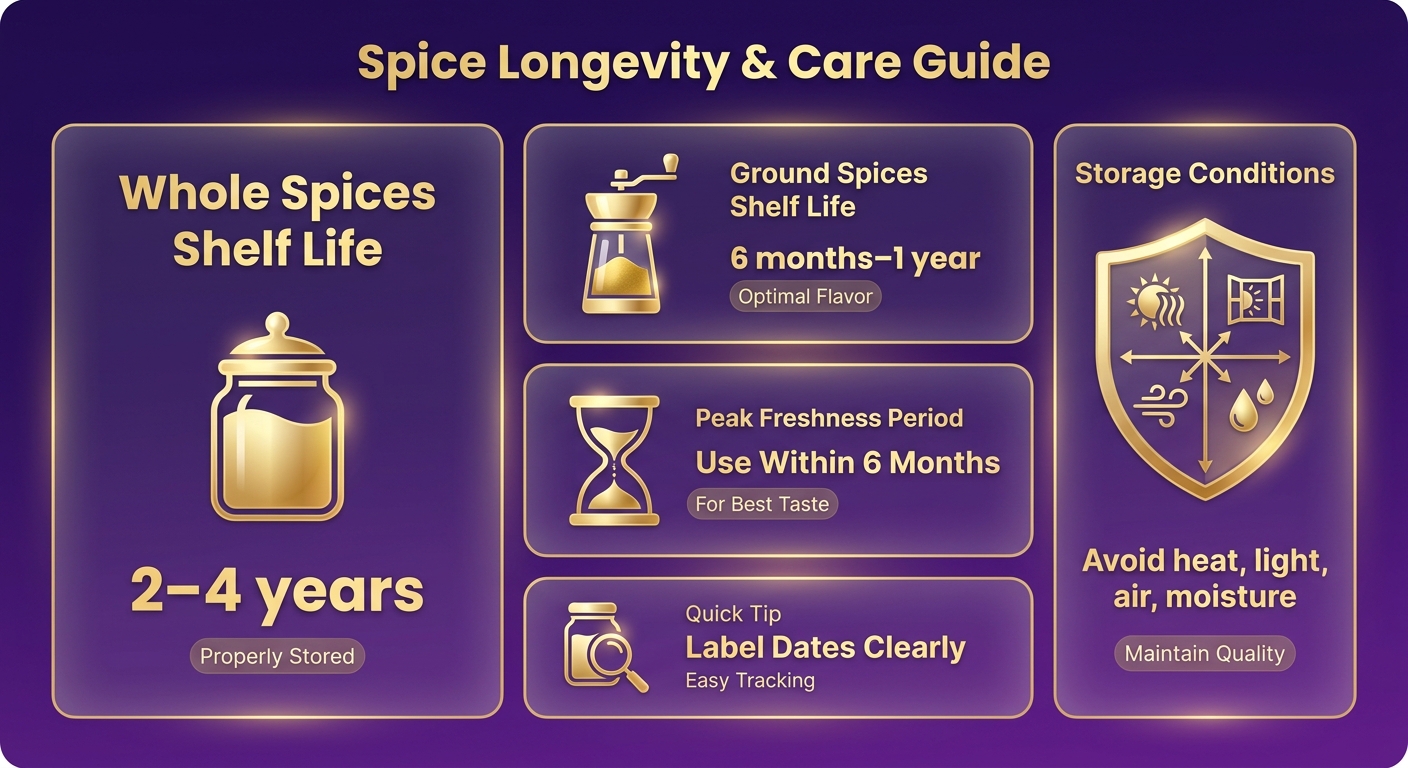
Whole spices last 2 to 4 years stored right. Ground spices fade faster, holding peak flavor for 6 months to a year. The enemies are simple: heat, light, air, and moisture. Cut those out and your spices stay potent far longer.
Buy whole and store in airtight containers. Whole cumin, coriander, cardamom, and cloves keep their essential oils locked inside until you grind. Ground versions expose more surface area, so they lose punch quickly.
Where to keep them
Cool, dark, dry, in airtight glass or metal. Away from the stove, sunlight, and steam. Heat and light break down the aromatic compounds that give turmeric, black pepper, and fenugreek their kick.
Glass jars with tight lids beat plastic bags. Plastic lets air seep in and can absorb odors. Label each jar with the fill date so you know what to use first.
Skip the cabinet directly above your cooktop. Convenient, sure, but the heat cooks your spices a little every time you turn on a burner. A pantry shelf or a drawer away from the range is far better.
Refrigeration helps spices with high oil content, like chili powder and cardamom, especially in hot climates. Just seal them well so they don't pick up fridge smells or moisture.
How to tell when they're done
Spices rarely spoil. They lose potency. The test is your nose. Crush a pinch between your fingers. If the aroma is faint or flat, the flavor is gone, even if the jar isn't technically expired.
Color fading is the other signal. Vibrant turmeric turns dull. Rich red chili powder goes brownish. Both mean the spice is past its prime.
Whole spices give you a longer runway. That's exactly why grinding fresh in small batches matters so much for keto cooking. Maximum flavor, clean zero-carb ingredients.
Pairing spices so keto curries taste like the real thing
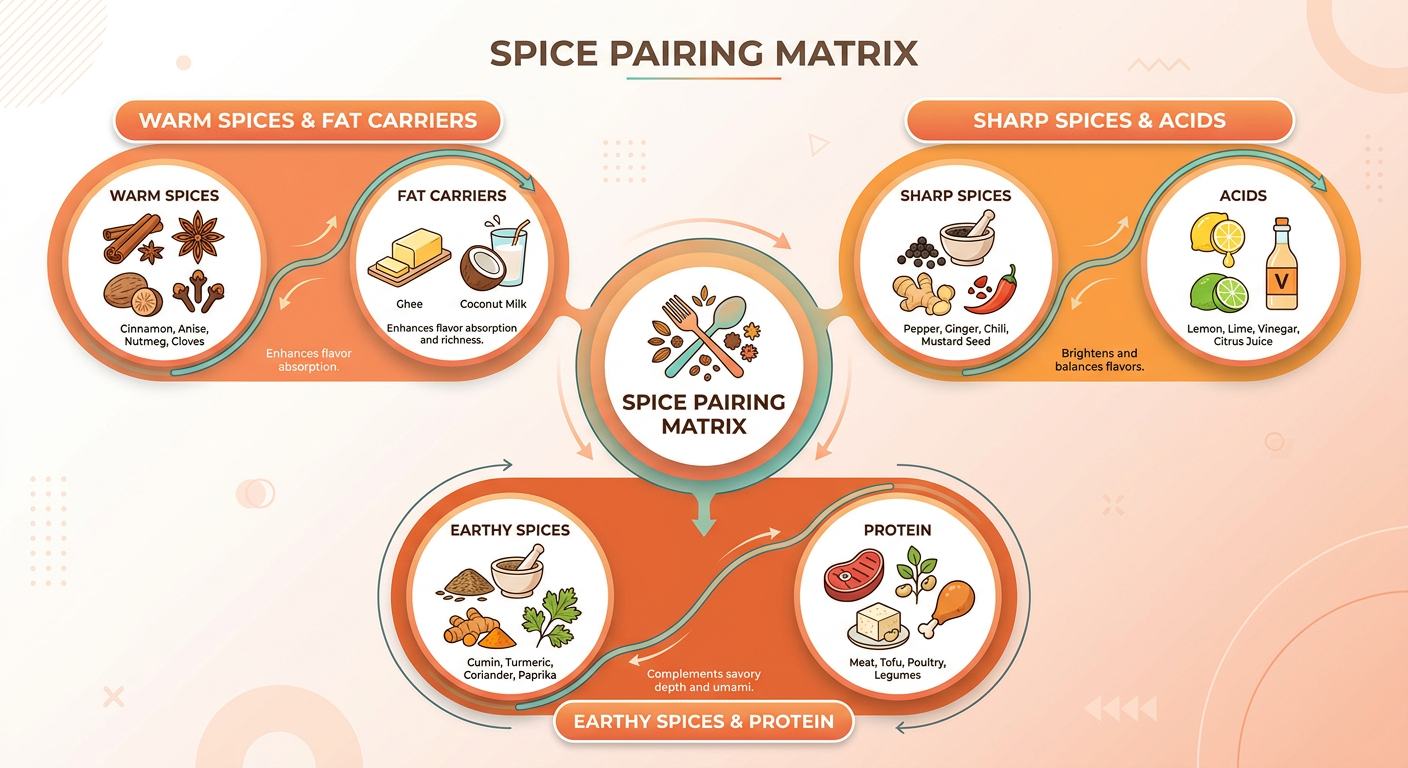
Good flavor pairing on keto comes down to balance: warm spices with fat, sharp spices with acid, earthy spices with protein. That's how Indian cooking builds depth without sugar or starch. Get the ratios right and your low-carb curries stop tasting like a compromise.
Keep the carriers on your list alongside the spices. Ghee, coconut milk, and heavy cream carry the fat-soluble compounds in turmeric and cumin. Lemon, lime, and full-fat yogurt brighten heavy dishes and cut the richness.
The four anchors
Balance flavor with fat, acid, heat, and aromatics. Bloom whole spices in hot ghee first. That releases their oils and sets the base note before protein or vegetables go in.
A framework that works:
- Warm spices + fat: Cinnamon, cardamom, and cloves shine in coconut-milk curries. The fat rounds out their sweetness without sugar.
- Earthy spices + protein: Cumin and coriander pair with lamb, chicken, and paneer. They add depth that stands up to rich meat.
- Sharp spices + acid: Mustard seeds and black pepper wake up with a squeeze of lime or a spoon of yogurt.
- Aromatics + everything: Fresh ginger, garlic, and green chili tie the plate together and add heat without carbs.
Fenugreek is the one to watch. It carries a slight bitterness, so use it in small amounts and always with fat to soften the edge.
A few recipes to start with
Butter chicken on heavy cream and tomato, seasoned with garam masala you grind yourself. Skip the sugar most restaurant versions sneak in. A tablespoon of ground almond thickens the sauce without flour.
Saag paneer works beautifully on keto. Spinach, ghee, cumin, and a hit of ginger deliver bold flavor at near-zero carbs. Paneer brings the fat and protein.
For a fast weeknight win, roast cauliflower with turmeric, cumin, and black pepper. Finish with lime. Warm, tangy, clean on macros. And remember the layering order: whole spices first, ground spices in the middle, delicate ones like garam masala or fresh herbs in the last two minutes to keep their aroma.
The ten spices, and what each one does
These ten belong in every keto kitchen because they carry huge flavor at zero net carbs. Turmeric, cumin, coriander, cardamom, cloves, black pepper, cinnamon, mustard seeds, fenugreek, and asafoetida each bring a distinct profile to eggs, meats, and vegetables without touching your macros. Buy all ten and you cover warm, earthy, sharp, and bitter in one shopping trip.
What each one brings
- Turmeric: Earthy, slightly bitter, golden. Bloom it in ghee for scrambled eggs or roasted cauliflower.
- Cumin: Warm and nutty. Toast whole seeds until fragrant, then use in ground beef or paneer.
- Coriander: Citrusy and mild. Softens the sharpness of chili and pairs well with cumin in a homemade rub.
- Cardamom: Sweet and floral. A crushed pod flavors keto chai or heavy-cream desserts without sugar.
- Cloves: Intense and warming. One or two in a slow-cooked lamb curry; more will overpower.
- Black pepper: Sharp and pungent. Grind it fresh over anything. It also boosts turmeric's absorption.
- Cinnamon: Sweet and woody. A pinch in coffee or full-fat yogurt for a dessert feel.
- Mustard seeds: Nutty and pungent when popped in hot oil. They anchor South Indian vegetable stir-fries.
- Fenugreek: Bitter with a maple edge. Use the seeds sparingly; they punch above their weight.
- Asafoetida: Savory and onion-like. A tiny pinch replaces onion and garlic flavor without the carbs.
How to cook with them
Start with fat. Heat ghee or coconut oil, add whole spices, and let them sizzle before anything else. That releases their oils and builds the base of any curry.
Keep a small grinder for cumin, coriander, and cardamom. Fresh-ground tastes sharper, and whole seeds last longer in storage. Measure by the quarter-teaspoon at first, since a single clove or a pinch of asafoetida can carry an entire pot. Layer in stages: whole seeds early to bloom in the fat, ground turmeric and black pepper near the end so their oils don't scorch and turn bitter.
Where to actually buy good spices
Quality Indian spices come from three places: online retailers, local Indian grocers, and dedicated spice merchants. Each has trade-offs. Online shops carry the widest range and clearest labeling. Local grocers win on price and freshness.
Buy from sellers who move product fast. High turnover means fresher stock. A busy Indian grocery restocks whole cumin and coriander weekly, so the essential oils stay intact. That freshness matters more than any premium brand claim.

Which source for what
Local Indian grocers are your first stop. They sell whole spices in volume at low prices, the fast turnover keeps stock fresh, and you can smell and inspect before buying. You can't do that online.
Online retailers earn their keep on range and labeling. If you're hunting for asafoetida or a specific grade of cardamom, a specialist ships it with clear ingredient lists. That transparency helps you dodge blends with hidden fillers.
How to spot the good stuff
Judge spice quality by aroma, color, and whole form. Fresh whole spices smell sharp and bright when you crush them. Dull color or weak scent means old stock.
Good turmeric glows deep orange-yellow. Quality peppercorns feel firm, not brittle. Cardamom pods should be plump and green, not faded and papery.
Read the label on anything pre-mixed. A real single spice lists one ingredient. If a "spice" jar names anticaking agents, sugar, or dried vegetables, put it back. Watch the price, too: saffron at a few dollars per gram is almost certainly cut with dyed corn silk or safflower, since genuine saffron runs $5 to $10 per gram at retail.
Buy in small batches. Whole spices hold up for years, but ground versions fade fast. Buy only what you'll use in a few months and grind fresh as you cook.
Ten keto Indian recipes that use only zero-carb spices
Every dish here uses only zero-net-carb spices, so it stays keto-clean while tasting like the real thing. Each one leans on whole spices bloomed in fat, the technique that pulls maximum flavor from turmeric, cumin, and cloves. They repeat the same core spices, too, so you buy once and cook ten different meals. Macros are per serving and assume single spices, not blends.
Ten to build your rotation
- Turmeric Scrambled Eggs: Bloom turmeric and a pinch of asafoetida in ghee, then fold in eggs. Roughly 2g net carbs, 22g fat, 14g protein.
- Cumin-Roasted Cauliflower: Toast whole cumin, toss florets in ghee, roast at 425°F. About 5g net carbs, 12g fat, 4g protein.
- Black Pepper Paneer: Sear paneer cubes, finish with cracked black pepper and cardamom. Near 4g net carbs, 28g fat, 18g protein.
- Keto Chicken Curry: Simmer thighs in coconut milk with cumin, coriander, and cloves. Around 6g net carbs, 30g fat, 32g protein.
- Fenugreek Ground Beef: Brown beef, add a light hand of fenugreek and cumin. About 3g net carbs, 24g fat, 26g protein.
- Mustard Seed Green Beans: Pop mustard seeds in hot ghee, add beans. Roughly 5g net carbs, 10g fat, 3g protein.
- Cardamom Coconut Fish: Poach white fish in cardamom-spiked coconut cream. Near 4g net carbs, 20g fat, 30g protein.
- Cinnamon Lamb Stew: Slow-cook lamb with cinnamon and cloves. Around 7g net carbs, 34g fat, 28g protein.
- Turmeric Cream Spinach: Wilt spinach in heavy cream with turmeric. About 4g net carbs, 18g fat, 6g protein.
- Spiced Egg Bhurji: Eggs with cumin, black pepper, and asafoetida. Roughly 3g net carbs, 20g fat, 15g protein.
Batch-cook the base spices once a week to cut prep time. Bloom a tablespoon each of cumin, turmeric, and coriander in about 3 tablespoons of ghee, then refrigerate the spiced fat for up to 5 days. That covers 4 to 6 meals and lets you build any dish above in under 20 minutes on a busy night.
Why any of this matters for keto
Zero-net-carb spices solve the biggest problem keto dieters actually face: boredom. Cut carbs and you also cut most of the flavor sources you leaned on before. Bread, rice, sugar, gone. Spices fill that gap with warmth and depth, no macros attached.
Low-carb eating has moved from niche to mainstream over the past few years. As more people build a keto grocery list around whole foods, they hit the same wall. Grilled chicken and steamed vegetables get dull by week two. That's where these spices earn their spot in the cart.
Who gets the most out of them
Keto dieters and anyone cooking to stay off processed food. Variety keeps people on the diet longer, and adherence is the whole game. A diet you abandon in a month does nothing.
Take a home cook trying to go low-carb. You eat plain roasted chicken breast for a week, then quit. Bloom turmeric and cumin in ghee first, and that same chicken tastes like a restaurant dish. Same macros, completely different meal. That small change is often what separates the people who stick with keto from the people who don't.
These spices also help anyone managing blood sugar or dodging processed food. You control every ingredient. No hidden sugar, no starchy fillers, no mystery blends.
What they actually fix
Two problems at once: flavor fatigue and recipe monotony. Ten single spices give you hundreds of combinations. Cook Indian one night, then pivot the same spices toward eggs or roasted meat the next. Turmeric, coriander, cardamom, and black pepper each pull a dish in a different direction. Rotate them and no two weeks taste the same.
Whole spices also outlast the packaged shortcuts most keto cooks reach for. Buy once, store right, cook clean for months. That range is what keeps keto sustainable.
Putting the technique to work
These spices work best when you bloom them in fat first, layer them in stages, and lean on whole seeds over ground blends. Deep flavor, no macro hit. The technique matters as much as the spice.

Once your list covers the core ten, the real skill is knowing when to add each one. Whole spices go in early, into hot ghee or oil. Ground spices go in later, off direct heat, so they don't scorch and turn bitter.
Turning six spices into dozens of meals
Rotate your base pairings and the same turmeric and cumin taste completely different depending on the fat, acid, and protein you pair them with.
Three swaps that keep meals fresh:
- Change the fat carrier. Ghee gives a nutty base. Coconut oil pushes dishes toward South Indian flavor. Heavy cream softens sharp spices into a mild sauce.
- Switch the finishing acid. Lime brightens cumin-heavy dishes. Full-fat yogurt cools clove and cardamom. Each acid resets the profile.
- Toast to different levels. Lightly toasted cumin tastes gentle and grassy. Darker toasting brings out smoke and depth. A few extra seconds in the pan controls the intensity.
A single tablespoon of whole cumin seeds can flavor a pot of curry that serves six, so a small spice budget stretches across dozens of meals. Buy in modest amounts and cycle through your ten staples weekly.
The mistakes that ruin the dish
The most common error is dumping all the spices in at once. Whole and ground spices need different timing, and combining them wrong gives you raw, gritty, or burnt notes.
Two more traps:
- Skipping the bloom. Add turmeric or cumin straight to a watery sauce and they stay flat. Hit them with hot fat first.
- Over-salting to compensate. If a dish tastes dull, it usually needs acid or a fresh toast of spice, not more salt. Reach for lime before the salt jar.
Nail the timing and the fat, and your low-carb curries taste like the full-carb version. Nobody at the table will guess it's keto.
References
Frequently Asked Questions
1. Can I use these Indian spices if I have acid reflux or a sensitive stomach?
Start with milder spices like turmeric, coriander, and cumin, which are gentle on digestion. Asafoetida actually aids digestion and reduces bloating, replacing hard-to-tolerate onion and garlic. Introduce sharper spices like black pepper and mustard seeds gradually, and always bloom them in fat to soften their intensity.
2. Do any of these spices interact with medications or affect blood sugar?
Cinnamon and fenugreek may lower blood sugar, so monitor levels closely if you take diabetes medication. Turmeric can have blood-thinning effects at high doses, relevant if you're on anticoagulants. Culinary teaspoon amounts are generally safe, but consult your doctor before consuming concentrated spice supplements alongside prescriptions.
3. How much do these spices actually cost to stock a full keto pantry?
Building a ten-spice starter kit typically costs $15 to $30 at a local Indian grocer, where whole spices sell in volume at low prices. Since whole spices last two to four years, the per-meal cost is negligible. Avoid saffron scams priced under $5 per gram.
4. Can I make these spices into a keto-friendly spice blend for gifting or meal prep?
Toast whole cumin, coriander, cardamom, and cloves, then grind them into homemade garam masala using only single spices. Store in airtight glass jars labeled with the date. This blend keeps peak flavor for about six months and avoids the sugar, maltodextrin, and dried alliums in commercial masalas.
5. Are ground turmeric supplements the same as cooking with turmeric on keto?
Cooking turmeric differs from supplements in dosage and absorption. Culinary turmeric adds negligible carbs and pairs with black pepper, which boosts curcumin absorption naturally. Supplements deliver concentrated doses but skip the flavor benefits. For keto meals, whole cooking turmeric bloomed in ghee gives both taste and fat-soluble absorption.
6. What's the difference in flavor between toasting whole spices and blooming ground spices?
Toasting whole spices in a dry pan develops nutty, deeper aromas over about 60 seconds before grinding. Blooming ground spices in hot ghee releases fat-soluble oils quickly, adding richness. Whole toasting builds complexity; blooming adds immediacy. Ground spices scorch faster, so watch them and pull off heat when fragrant.
7. Can I freeze bloomed spice-infused ghee for longer storage?
Freeze spiced ghee in ice cube trays for portioned, ready-to-use flavor bases lasting up to three months. While refrigerated spiced ghee keeps four to five days, freezing extends this considerably. Thaw a cube directly in your hot pan, then add protein or vegetables for a fast, keto-clean weeknight meal.