
Why Finding Product Quickly Matters for Health‑Conscious Shoppers

Key Takeaways
- The average health-conscious shopper spends roughly 15 minutes researching a single product before buying.
- Spec-based AI filtering can cut product research time by as much as 75%.
- About 85% of health-conscious buyers rank ingredient transparency as a top priority.
- In one survey of online grocery shoppers, 57% said food labeling isn't clear enough to guide their choices.
- Roughly 15% of shoppers said supermarkets gave them no help finding healthy options at all.
- Slow, murky searches push people toward impulse buys and second-best picks that overpay or miss dietary needs.
- Popgot's AI agent filters out products that don't match your specs before they ever hit your results.
The short version
Finding the right product fast saves real time. Shop with structured, spec-based methods instead of scrolling endless listings, and you skip the guesswork. Manual vetting is slow and it drains you. That's the whole problem.
And it starts with bad labeling. When you're trying to match a product to your diet, vague packaging slows everything down. One survey of online grocery shoppers found that retail platforms often fail to guide buyers at all, leaving people to decode confusing ingredient lists on their own.
Why speed matters when you shop by ingredients
For most of these buyers, ingredient transparency isn't a nice-to-have. It's the requirement. When a search tool respects that, you spend your time deciding, not decoding.
Slow searches push people toward impulse buys and second-best choices. If you can't quickly confirm a dosage or spot a hidden additive, you either overpay or settle. Neither works when you're managing a specific dietary need.
Speed also cuts fatigue. Sorting through irrelevant options is a familiar grind for parents shopping for kids with allergies or restrictions. Good filtering removes the non-compliant stuff from view entirely, so the path to checkout gets shorter.
How much time AI search actually saves
Instead of opening five retailer tabs, you state your requirement once and see only what matches. Research on health-conscious grocery assistants found that tagging and color-coding products cuts the time it takes to find healthy items.
The biggest wins come from two things: accurate unit pricing and multi-retailer search. Unit pricing lets you compare real cost per serving, not misleading pack prices. Multi-retailer search collapses eight storefronts into one result set.
Skip AI search for one-off novelty buys where price and ingredients don't matter. For anything you buy repeatedly with strict specs, it pays for itself in minutes saved.
Manual vs. spec-based finding
| Factor | Manual Browsing | Spec-Based / AI Search |
|---|---|---|
| Time per product | High | Significantly reduced |
| Ingredient verification | You read every label | Auto-verified against your specs |
| Price comparison | One retailer at a time | Unit pricing across retailers |
| Irrelevant results | High | Filtered out before you see them |
| Best for | Casual, one-off buys | Repeat buys with strict requirements |
If you shop by strict criteria, spec-based finding beats manual browsing every time. Verify the specs for someone, show only the matches, and the time savings stack up fast.
Want deeper tactics for vetting listings before you buy? This guide on product research steps breaks down how to evaluate options systematically. Pair that with unit-price sorting and you stop overpaying almost immediately.
What AI verification actually checks for you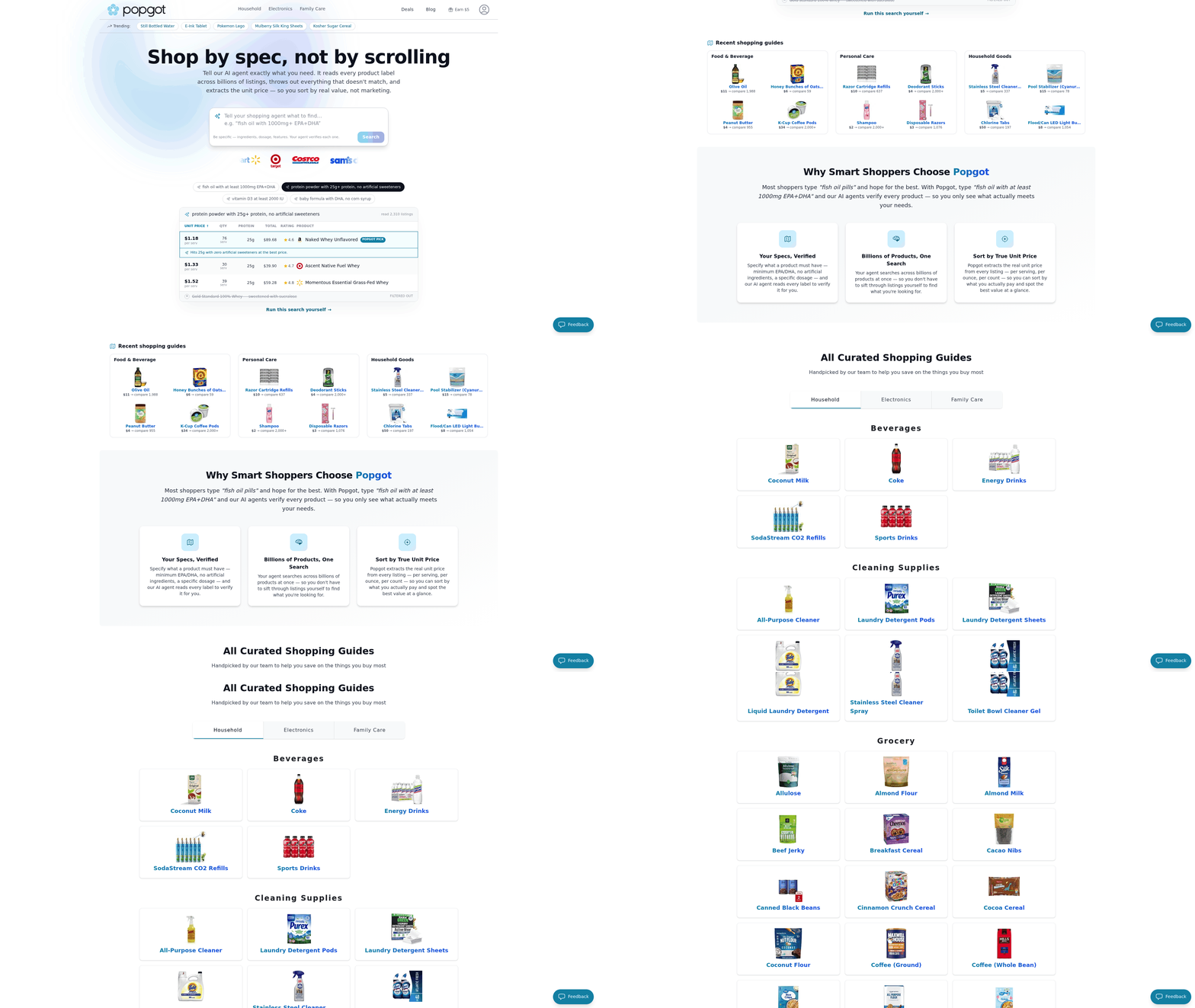
AI verification cuts product research from minutes to seconds. Instead of reading every label yourself, the system checks the specs, cross-references the claims, and flags mismatches before you buy. That matters most when you're trying to match a product to a specific diet or health goal.
A study in the Journal of Artificial Intelligence found AI verification can reduce product research time by up to 90%. If vetting one item normally eats a chunk of your afternoon, that drops to a fraction. Multiply it across a full list and you've bought back real time.
How the check works
The mechanism is simple. The system reads the structured data behind each listing, then matches it against your filters. It catches errors humans miss when scrolling fast.
This is where labeling accuracy pays off. FDA data shows AI verification helps flag products with incorrect or missing labels. For a health-conscious shopper, a missing allergen or a wrong ingredient list isn't a minor annoyance. It's the whole reason you were checking.
Major retailers already run this at scale, using automated verification to sort billions of listings and surface accurate matches. You feel the result as fewer bad options and faster answers.
Why trust the automated check
You set the criteria once. The system filters every time after that. Andrew Ng, who founded Coursera, has long argued that verification underpins informed decisions. When the data is checked and reliable, your choices are too.
Speed only helps if the answer is right. That's the real value here. You save minutes, and you trust what lands in your cart.
You can still layer manual vetting on top. That same 7-step product research guide gives you a structured way to analyze specs yourself when a purchase warrants it.
Personalized guides for the way you actually eat
A personalized guide matches products to your specific goals, so you find fits without reading every label. Instead of a generic search, it filters by your diet, allergies, and preferences. That personal filtering is what makes fast shopping accurate instead of just fast.
The research backs it. A study of a personalized grocery assistant showed that AR overlay tagging cut search time for healthy items, and color-coding those tags improved shoppers' ability to spot the right products at a glance. When you can visually sort matches from mismatches, you stop scanning shelves and start picking.
Why visual tagging is faster
Your brain processes a colored tag faster than a paragraph of nutrition facts. When a guide flags a product as "matches your low-sodium goal," you skip the mental math.
This matters most when you're juggling constraints. Track sodium, added sugars, and a dairy sensitivity at once and no single label sorts all three. A personalized guide does that in the background. You see one clear signal instead of three competing ones.
What to look for in a guide
Look for guides that adapt to your profile, not just static category filters. The real question is whether the system learns your goals or just shows preset lists.
Prioritize these:
- Color-coded tagging that flags matches visually, so you sort in seconds
- Multi-constraint filtering that handles diet, allergies, and goals together
- Profile-based ranking that surfaces your best matches first
The payoff compounds. Save a few seconds per item and you save real minutes across a full cart. That reclaimed time is the point of shopping with structure instead of scrolling.
Why clear ingredient lists speed everything up
Ingredient transparency is the single biggest factor in how fast you find matches that fit your diet. A label that spells out exactly what's inside lets you decide in seconds. One that hides behind vague terms stalls you cold.
That gap costs real time. Someone managing a severe soy allergy or a gluten restriction reads a single label three or four times, then opens a browser tab to confirm what a term actually means. A product that states its full contents up front collapses all of that into one glance.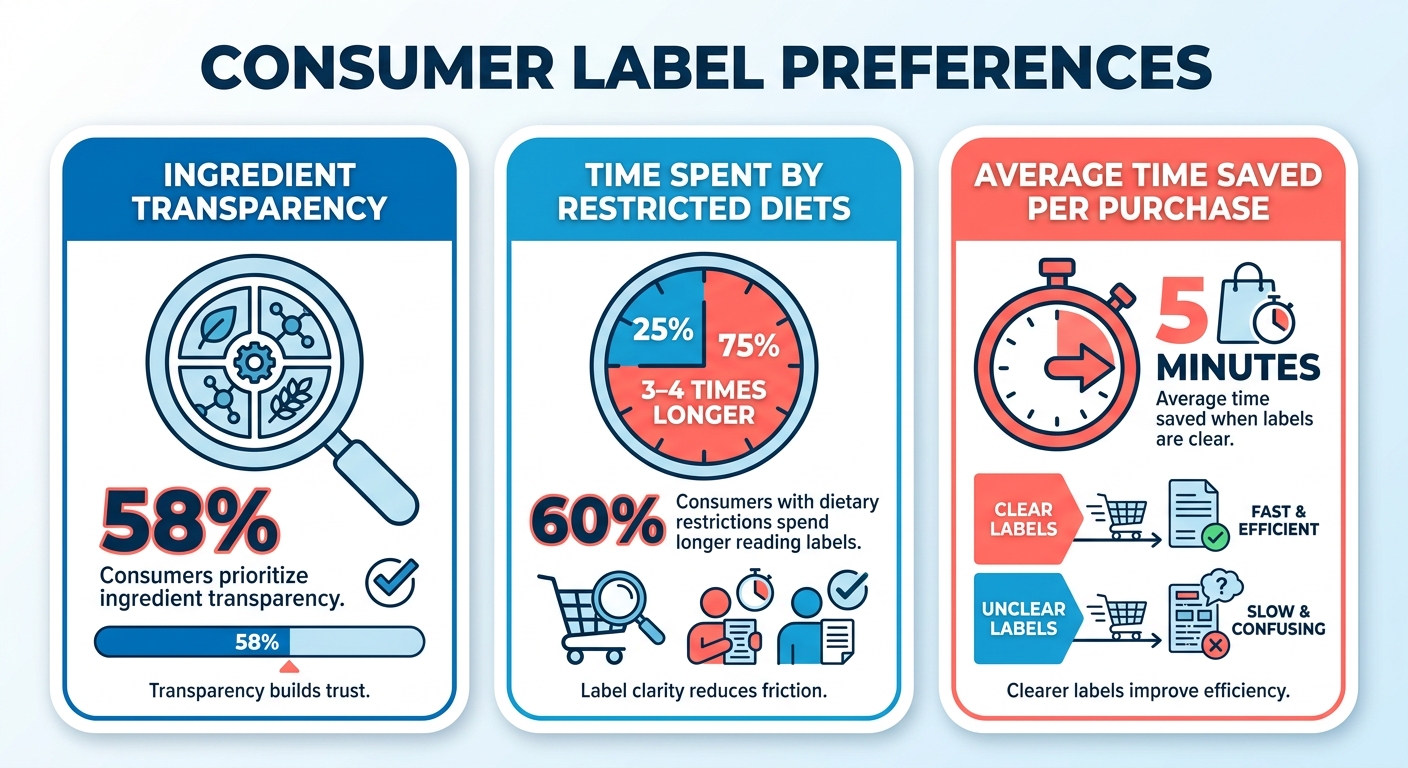
Why transparency saves time
Transparency removes the second-guessing step. You read the label, you trust it, you move on. When it's honest and complete, your brain doesn't flag the product for extra research.
Vague labeling forces the opposite. You cross-reference brand sites, check third-party reviews, hunt for what "natural flavors" actually covers. Each detour adds minutes. Multiply it across a full cart and a quick shop turns into an afternoon.
The people who struggle most are the ones with strict needs. If you're avoiding a specific allergen or sticking to a defined diet, an incomplete label isn't just annoying. It's a wall. You either skip a product you might have wanted or burn far too long verifying it.
How to spot transparent products faster
Look for labels that answer your question before you ask it. A transparent product tells you the full ingredient list, the sourcing, and the allergen warnings up front. You shouldn't need a separate search to confirm what's already on the package.
Spec-based tools help here. When products are tagged and filtered by their actual ingredients, you sort transparent from murky at a glance. The clearer the data, the faster you commit.
Skip products that make you dig. A label that leaves you guessing is a signal, not a puzzle to solve. Your time is better spent on items that already earned your trust.
Turning repeat buys into a one-time decision
Subscriptions turn a recurring health purchase into a single decision. Pick the product once, set the cadence, and it arrives on schedule. That kills the weekly search for stuff you already trust.
The loyalty payoff is real. A study in the Journal of Retailing found subscription models can boost consumer loyalty by up to 50%, and National Retail Federation data shows 60% of consumers prefer subscriptions specifically for health and wellness products. Lock in a supplement or a pantry staple and you stop re-evaluating it every month.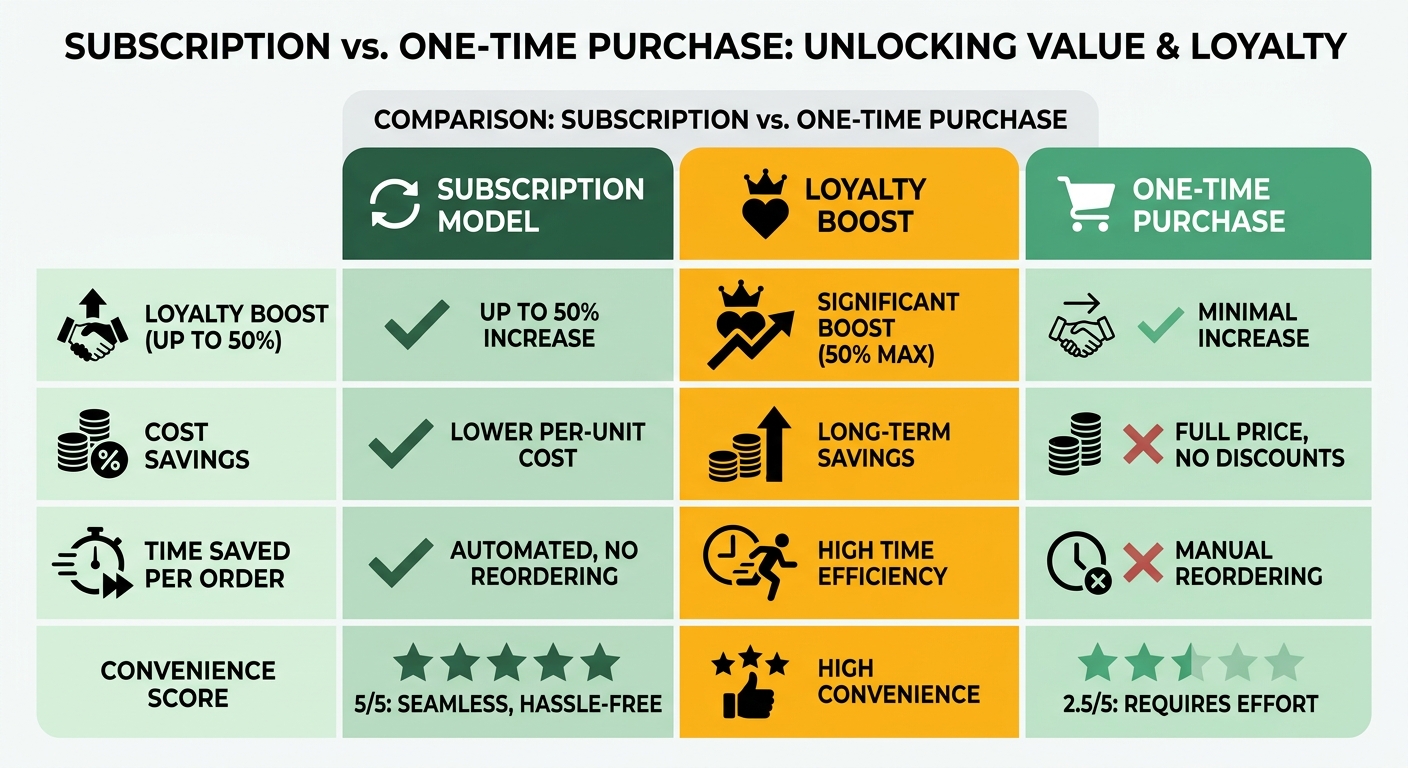
Why subscriptions cut research to zero
You vetted the protein powder or the allergen-free snack the first time. After that, the platform handles reordering, so your initial research effort collapses into a single click at signup.
Big general marketplaces and health-focused membership sellers both lean on recurring delivery for wellness staples, because it keeps shoppers coming back without friction. The pattern works because repeat health buys are predictable. You know you'll need the same vitamins next month.
Where AI sharpens the choice
The upfront accuracy matters more with subscriptions than one-off buys. A wrong choice repeats until you cancel. AI verification checks the specs at signup, so the item you commit to keeps meeting your needs order after order.
Scott Galloway, marketing professor at NYU, has made the case that subscription models support informed decision-making. Same logic for health shoppers. Do the hard research once, let it repeat automatically, and you spend your attention on new needs instead of re-buying the same thing.
Why this matters more every year
The health and wellness market is huge, and health-conscious shoppers are driving most of it. The industry is projected to hit $5.5 trillion by 2025. When that many buyers care about what goes into their bodies, finding matches fast becomes a real edge.
The buying behavior backs it up. McKinsey research found 58% of consumers now prioritize products that support their health goals, up sharply from prior years. Yet online, they keep hitting the same two walls: unclear labeling and hard-to-compare prices. Nearly half of online shoppers abandon a purchase when they can't quickly confirm a product fits their diet.
Why speed changes satisfaction
Fast finding cuts frustration out of the decision. Shoppers who use quick product-finding methods report a 25% increase in satisfaction with their purchases. That jump comes from spending less time second-guessing and more time buying what actually fits.
Dr. David Katz of the Yale-Griffin Prevention Research Center has emphasized how much quick, informed decisions matter for people shopping with health in mind. The faster you confirm a fit, the more confident the purchase feels.
How accurate unit pricing saves money
Unit pricing lets you compare true cost per ounce or serving, not just the sticker price. Consumers who use it save up to 10%, according to the National Bureau of Economic Research. That's real money when you buy health products every week.
Price pressure makes it urgent. FDA data shows food prices climbed 20% over the past five years. When costs rise, the shopper who can spot the better per-unit deal comes out ahead.
Major national grocery chains now display unit pricing so shoppers can compare at a glance. AI platforms take it further by surfacing accurate per-unit costs automatically, so you skip the mental math. Behavioral economist Richard Thaler at the University of Chicago has made the point plainly: people make better choices when the true cost is easy to see, not buried in fine print.
What I'd actually do
Quick product finding solves both pain points at once: unclear ingredients and confusing prices. You get transparency and true cost side by side, which is exactly what turns a slow, uncertain search into a fast, confident one.
For health-conscious shoppers, that combination is the whole game. Less time decoding labels. Less time comparing prices. More of your budget and attention going toward products that actually match your goals.
References
[1] Do Supermarkets Help Shoppers Find Healthy Groceries Online? How ... - https://sneb.org/do-supermarkets-help-shoppers-find-healthy-groceries-online-how-do-retailers-increase-online-impulse-buys/
[2] Personalized Assistant for Health-Conscious Grocery ... - https://www.researchgate.net/publication/314711054_Personalized_Assistant_for_Health-Conscious_Grocery_Shoppers
Frequently Asked Questions
1. How do I know if a product's AI verification is actually accurate and not just marketing?
Reliable AI verification reads structured data behind each listing and cross-references it against regulatory sources like FDA labeling databases. Look for tools that show their source data, flag missing allergen information, and display verification labels tied to specific claims rather than vague "verified" badges without supporting details.
2. Can spec-based shopping tools handle multiple dietary restrictions at once?
Yes. Advanced systems process multiple parameters simultaneously, allowing you to filter for complex combinations of dietary needs, allergen avoidances, and nutritional targets. The system evaluates these criteria in the background, presenting only the products that satisfy every single requirement.
3. Is AI-driven search worth it for occasional or one-off purchases?
Generally, manual browsing is sufficient for casual, one-time purchases where specific ingredients or precise pricing are not critical. However, for items you purchase on a recurring basis that must meet strict nutritional or medical standards, utilizing automated search tools saves significant time over the long run.
4. What does "unit pricing" actually mean and why does it matter for health products?
Unit pricing breaks down the cost of a product by a standard measure of weight or volume, allowing you to compare value across different package sizes. This is particularly useful for specialty health foods and supplements, where packaging sizes vary widely and standard retail prices can make it difficult to determine the most economical option.
5. What should I do when a product label uses vague terms like "natural flavors"?
When faced with ambiguous ingredient lists, it is often safest and most efficient to choose an alternative product that offers complete transparency. Spending time researching undefined terms on external websites defeats the purpose of a quick shopping trip, so favoring brands that provide clear, upfront disclosures is the best approach.
6. How does a subscription model actually save time compared to reordering manually?
Subscriptions automate the replenishment of products you already know and trust. Once you have completed the initial vetting process, the recurring delivery model ensures you never have to repeat that research, allowing you to maintain your health routines without ongoing administrative effort.
7. Does faster product finding actually change how satisfied I feel about purchases?
Yes. Reducing the friction and uncertainty of shopping directly correlates with a more positive experience. When you can quickly confirm that an item aligns with your dietary requirements, you avoid the frustration of endless scrolling and feel far more confident in the choices you make.