
Why Ingredient Transparency Matters for Everyday Shoppers

Key Takeaways
- Over 58% of U.S. shoppers read labels most of the time, and 72% prioritize ingredient transparency when buying groceries.
- Half of consumers worry about artificial ingredients, and 79% trust brands with clear labeling.
- A parent hunting for DHA-rich baby formula without corn syrup can burn hours comparing products across Amazon, Walmart, and Target.
- AI can scan 1,847 listings in seconds to find the cheapest product that actually meets your ingredient criteria.
- Automated comparisons filter to exact dietary or health requirements, cutting the errors that creep into manual searches.
- Unit-price analysis surfaces the truly cost-effective option, not just the one with the smallest sticker price.
Quick Summary
Ingredient transparency isn't a trend. It's a shopping requirement. For health-conscious buyers, that means dodging artificial additives, verifying allergen-free claims, or matching a product to a specific diet. The problem: manually digging through thousands of products across retailers to find the cheapest compliant option is slow and mistake-prone.
Why shoppers are reading labels harder than ever
Modern shoppers are stuck balancing safety against cost. Concern over synthetic additives keeps climbing, and people are actively hunting brands with clear, unambiguous labeling. Try finding a specialized dietary product that meets strict health criteria and comparing its price across five online retailers. That's a multi-hour chore, fast.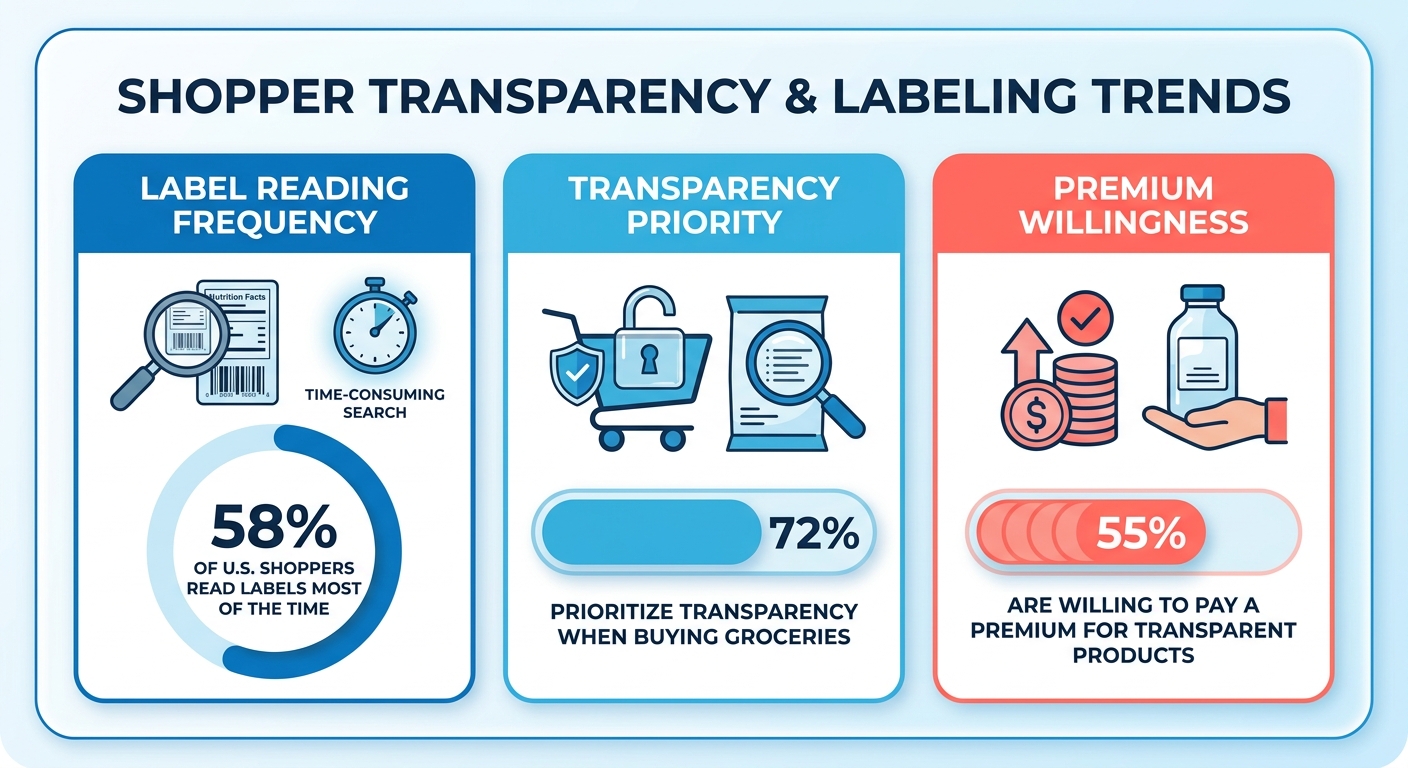
How AI cuts the search down to seconds
The fix is to compare prices between stores automatically while filtering for exact ingredient requirements. Traditional shopping means scanning site after site. AI narrows results to products that only meet your criteria. Search for a high-potency supplement with specific active-ingredient thresholds, and the system scans thousands of listings in seconds, pulls unit prices, and surfaces the cheapest option from major retailers. Less guesswork, less risk of overpaying for something subpar.
Unit pricing: the number brands hope you skip
Unit pricing is where the real decisions get made. A product labeled "$10" can cost more per serving than a $12 alternative if the quantity is smaller. Calculate unit prices dynamically across every retailer and you see actual value. A 60-serving fish oil bottle at $22.80 ($0.38 per serving) beats a $19.80 option with fewer servings, even though $19.80 looks cheaper at a glance. That cuts through the marketing and lands on real cost-efficiency.
When to skip the ingredient filter entirely
Ingredient filtering isn't always worth it. Buying toilet paper or batteries? Ingredient scrutiny is pointless there, and a plain price comparison does the job. A good system adapts, letting you toggle between strict ingredient filters and broad price checks depending on what you're buying.
Pair AI-driven unit pricing with multi-retailer comparison and you can hit health goals without torching your budget. The next section gets into how this works in practice.
Why Ingredient Transparency Matters
Ingredient transparency hits two things at once: your health decisions and your shopping time. A recent study found 55% of consumers will pay a premium for products with fully disclosed ingredients. When products hide additives or bury allergens, the downside ranges from a surprise allergic reaction to long-term concerns tied to synthetic ingredients. AI unit-pricing tools step in here, letting you filter by health needs, dietary restrictions, or ethical preferences. Line those criteria up against cost, and transparency turns into an actual advantage for both health and budget.
Clear labels are a safety net, not a preference
About 25% of U.S. households include someone with an allergy or sensitivity, which makes label scrutiny non-negotiable for a lot of people. A product stamped "natural" can still carry hidden synthetic additives, and 64% of shoppers say they'd switch brands for better ingredient clarity. Retailers like Hy-Vee responded with private-label lines that exclude over 150 questionable ingredients, high-fructose corn syrup included. Even then, finding the cheapest compliant version across retailers is its own headache. Unit-pricing transparency closes that gap. AI scans thousands of products in real time and flags the lowest-cost option that fits your health goals.
Turning filters into savings
Manual cross-referencing of labels and prices is slow and error-prone. AI applies filters for allergens, artificial ingredients, or certifications like gluten-free or vegan, then calculates unit prices to show real value. Looking for organic oat milk without rapeseed oil? You can evaluate cross-retailer costs instantly instead of fighting inconsistent labeling. That matters more every month: 40% of health-focused buyers report reading labels more often than they did six months ago, usually because of additive concerns.
Trust is the whole market
Clear ingredient definitions are the backbone of consumer trust, and 70% of shoppers globally expect food to be 100% natural. Hide the details and you risk those trust-based sales. Walmart and Target are rolling out QR codes for on-demand product info to meet the demand, but most of those efforts stop short of addressing price. An AI system that merges ingredient filters with multi-retailer price comparison covers both: it rewards transparent brands and lets shoppers act on their values without blowing the budget.
The shift is from transparency as a passive preference to transparency as an active shopping tool. Link health criteria directly to cost, and safety, ethics, and affordability stop competing.
How AI Streamlines Ingredient-Filtered Price Comparison
Modern shoppers live in a paradox: they want to scrutinize every label, but sifting through thousands of products to find an affordable compliant option isn't realistic. AI handles the sifting. It applies real-time filters for allergens, preservatives, or ethical certifications, then calculates unit prices across retailers. Someone after a gluten-free flour blend sees the lowest-cost option meeting those criteria immediately. Price comparison and health safety, one step.
Transparent pricing builds trust too
Transparency isn't only about ingredient lists. It's about trusting the price. When shoppers can see that a product's cost per ounce lines up with its health claims, loyalty gets stronger. AI platforms help by showing unaltered unit prices from multiple retailers, no hidden markups. A shopper avoiding high-fructose corn syrup sees Brand A's compliant product at $0.12/oz at Store X versus $0.15/oz at Store Y. That builds confidence in the product and the decision.
Where this is heading
Regulations keep tightening. The EU's stricter sunscreen ingredient disclosures are one example. Consumers need tools that keep up. AI platforms adapt to shifting standards, so the filters stay current. A user prioritizing reef-safe sunscreens can lean on AI to surface EU-certified options with transparent pricing. Compliance becomes convenience, which is the point. This isn't a passing trend.
Merge health criteria with unit pricing and AI changes how people reach pricing data: faster decisions, safer ones, and cheaper ones.
Accountability and Brand Trust Through Transparency
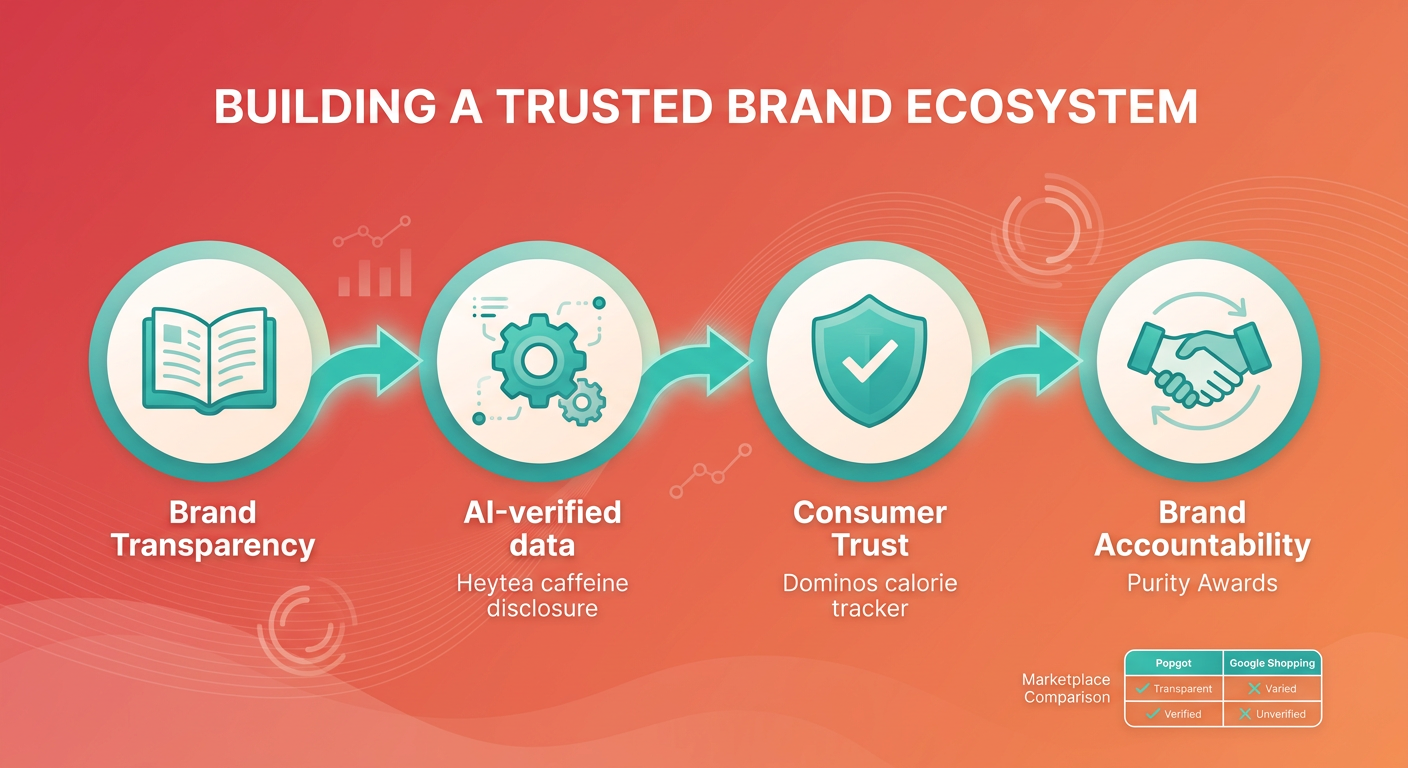
Ingredient transparency makes companies answerable for what they put in their products. When shoppers can analyze multi-store pricing while verifying compliance, they gain the power to reward brands that stay open and skip the ones that hide the details. Give consumers direct visibility into what they're buying and what it costs against alternatives, and the market drifts toward integrity on its own.
How transparency creates accountability
Transparency isn't just listing ingredients. It's building traceable, verifiable systems. Hy-Vee and Walmart introduced private-label lines that exclude artificial additives, backed by QR codes linking to full production details. That makes companies answerable at every step of the supply chain. A 2026 analysis found 68% of shoppers associate transparent labeling with higher product quality, while 63% avoid brands with vague sourcing claims. And it sticks: 71% say they'd switch retailers if transparency standards dropped.
Add AI unit-pricing and ingredient filtering, and the accountability effect compounds. Shoppers can evaluate cross-retailer costs while confirming products meet dietary or ethical standards. Someone looking for organic peanut butter without added palm oil finds the cheapest compliant option instantly, which forces brands to compete on cost and integrity.
Social media as the enforcement layer
Social platforms now work as watchdogs. Brands that share transparency efforts, like Heytea's caffeine disclosure system or Domino's calorie tracker, see higher engagement and trust. Hide harmful additives and you risk viral backlash instead.
That's a feedback loop: keep transparency rigorous or take the reputational hit. The Clean Label Project's Purity Awards spotlight products tested for contaminants and call out the ones that fail. Third-party validation like that shrinks information asymmetry and helps people make safer choices.
Will shoppers actually pay more for it?
Transparency drives trust, but it doesn't guarantee premium pricing. A 2026 study of household chemical products found ingredient disclosure boosted brand trust by 38% while reducing price sensitivity by 12%, meaning shoppers leaned toward safety over cost. AI shopping tools ease that tension by optimizing cost and transparency at the same time. Instead of trading affordability for ethical sourcing, shoppers compare retail prices to find the cheapest product that still meets their criteria. That keeps transparency from becoming a luxury for high earners and turns it into a baseline for everyone.
Pair ingredient transparency with dynamic pricing and accountability becomes a competitive advantage. The result is an ecosystem where trust is earned through visibility and paid back in loyalty.
Survey Insights: Consumer Priorities for Transparency
Demand for ingredient transparency has grown fast, pushed by health-conscious buying and ethical consumption. It goes past label reading now. Shoppers want tools that speed up decisions while keeping them aligned with dietary restrictions and sustainability goals. Artificial ingredients stay near the top of the worry list, and the old way of weighing nutrition against cost usually ends in frustration.
What actually drives the demand
Trust in a brand tracks closely with how clear its sourcing and manufacturing are. 71% of U.S. shoppers want stricter regulations on additives, a real pivot toward preventive health. But behavior splits: 45% put health benefits above cost, while 30% will pay a premium for ethically produced goods. That divergence is exactly why transparency is hard to address across markets.
Demographics shape the expectations
Age and household makeup matter here. Gen Z and Millennials keep pushing clean-label movements, favoring organic certifications or non-GMO verification. Families managing food allergies scrutinize packaging harder and often cross-reference pricing to balance safety and affordability. Higher-income consumers tend to weigh sustainability metrics like carbon footprint disclosures, even when it costs more.
How technology speeds it up
Digital tools are reshaping product selection. Automate filters for allergens, ethical certifications, or environmental impact, and shopping time drops by up to 75%. One analysis found users of these platforms saved an average of $12 a month by pulling real-time pricing across retailers. That fits with the 85% of consumers who rank easy access to nutritional data as essential.
The bottom line
Transparency went from a competitive edge to a baseline expectation. Brands that embed adaptive tech for local dietary standards and shifting preferences, like the rising demand for regenerative agriculture certifications, can hold loyalty while keeping information access fair.
Practical Steps for Retailers to Enhance Transparency
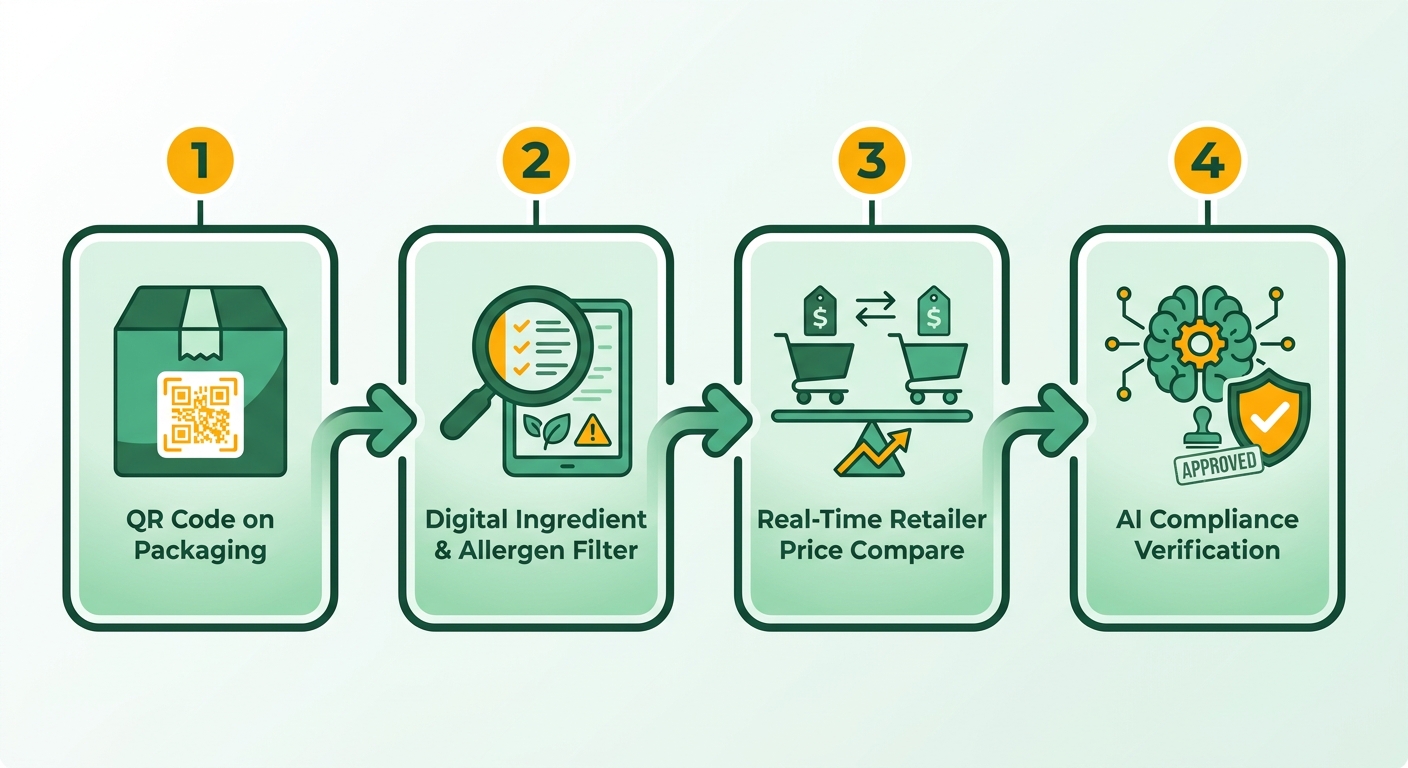
Retailers can raise their transparency game by adding digital tools that let shoppers filter by ingredients while analyzing multi-store pricing in real time. One major retailer put QR codes on packaging to show full ingredient lists, allergen details, and sourcing info, which streamlines decisions for health-conscious buyers. That pairs well with online platforms where users apply filters like "no artificial additives" or "organic certified" and sort by unit price.
Automate the price comparison
AI platforms take over the grind of comparing prices while confirming ingredient compliance. An algorithm can scan thousands of products across retailers and flag the cheapest organic almond milk free of carrageenan. That matters, because only 36.5% of online products currently show full nutrition and ingredient data. Combine AI with unit pricing and retailers can push cost-effective options that meet dietary needs, turning transparency into an edge. A Progressive Grocer case study found real-time price alerts plus ingredient filters cut customer decision fatigue by 40% and grew basket sizes by 12%.
Certifications do the heavy lifting on trust
Third-party certifications simplify messy ingredient decisions. Independent testing programs check products for hidden contaminants and toxins, giving retailers a framework to showcase what's trustworthy. FMCG Gurus reports 65% of global consumers prioritize "free-from" claims, which makes certification a real differentiator. Retailers should also standardize allergen labels and use digital badges like "organic" or "non-GMO" to cut confusion, especially since 78% of shoppers actively look for health and wellness details. One European retailer added a "Traceability Index" linking each product to farm-level sustainability scores, and repeat purchases among eco-conscious buyers rose 22%.
Combine digital filters, AI comparisons, and rigorous certifications, and transparency stops being a compliance chore. It becomes a feature customers actually use.
Using Certifications for Transparency
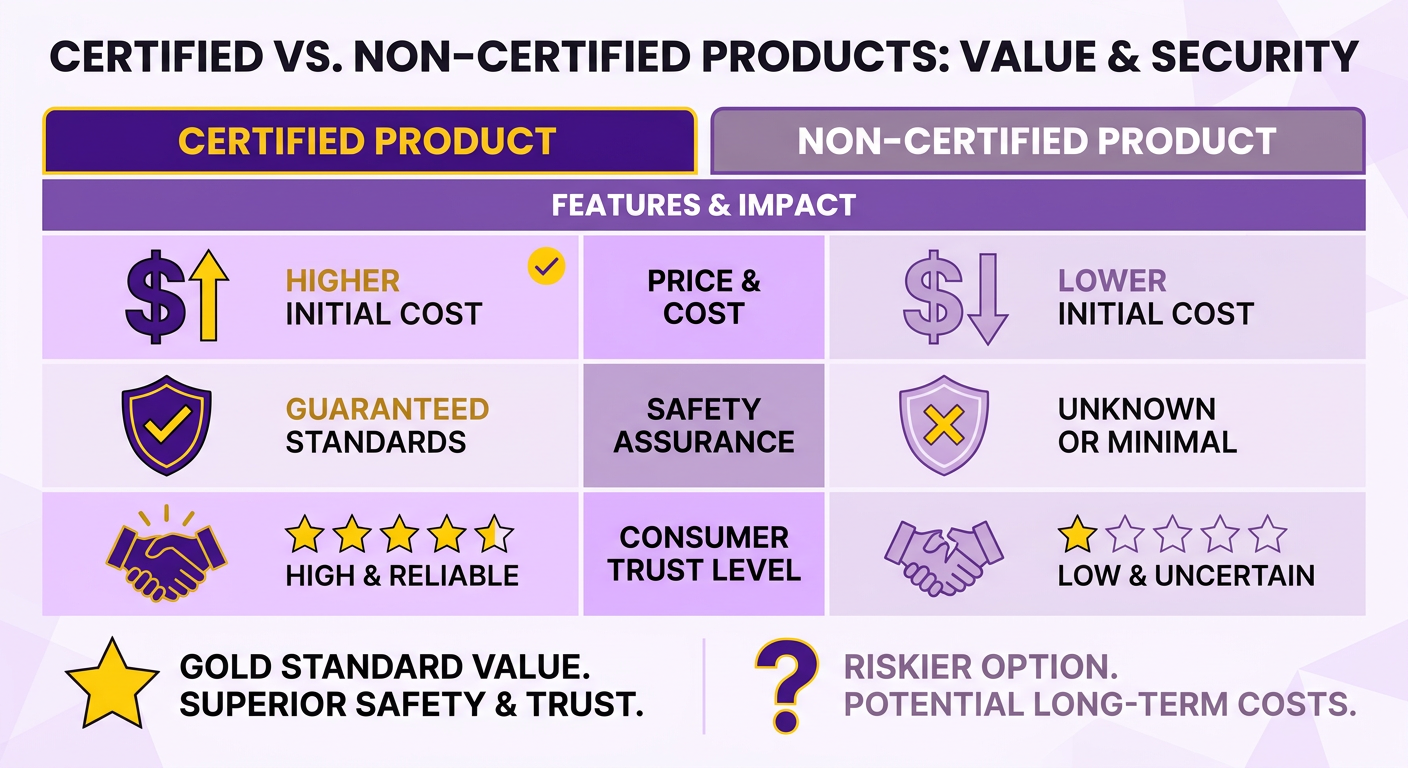
Independent certifications let shoppers evaluate cross-retailer costs while confirming products meet health and ethical standards. They set testing protocols and transparency benchmarks that AI can use to filter products automatically, so price comparison doesn't come at the cost of safety or dietary needs. As trusted third-party validators, certifications strip a lot of guesswork out of ingredient research.
How certifications make comparison possible
Certifications create standardized criteria that AI can read and filter on. Lab testing screens for hundreds of contaminants and toxins that never appear on labels, so a product carrying a purity seal has cleared strict safety thresholds Clean Label Project. That lets shoppers compare retail prices knowing the cheapest option still fits their health priorities. The EU's tighter sunscreen rules, which mandate full ingredient lists and UVA protection ratios, give clearer data for cross-retailer comparison than the looser U.S. standards.
Certifications as consumer safeguards
Recognized seals and awards flag brands that meet rising expectations, and AI-driven comparisons can build on that trust. A shopper prioritizing "free-from additives" can lean on certified products to auto-exclude artificial ingredients, which simplifies the hunt for the cheapest compliant option. It also cuts down on greenwashing, where vague claims mislead buyers. Independent audits and public reporting from certifiers back the claims with verifiable data instead of marketing copy.
Certifications in action
Plug certifications into AI unit-pricing tools and shopping turns data-driven. Third-party testing databases let shoppers filter by purity while algorithms compare unit prices across retailers. Certifications also cover niche needs like gluten-free or cruelty-free by providing structured data points for AI to process. One analysis found shoppers using certified-filtered search tools spent 30% less time researching ingredients, no safety tradeoff.
Anchor transparency in third-party certifications and shoppers get the confidence to compare cross-retailer costs efficiently. Certifications work as both quality assurance and the bridge between what consumers need and what AI can deliver.
Targeting Health-Aware Consumers Through Transparency
Health-aware shoppers increasingly lean on AI to line up purchases with dietary needs, ethical values, and health goals. These tools automate the tedious work of checking products for compliance, which cuts the oversight risk that comes with doing it by hand. Blend real-time unit-price analysis with customizable dietary filters, and transparency becomes a genuine edge for cost-conscious buyers who want both safety and speed.
Ingredient-filtered comparison, in practice
Shoppers with specific dietary needs struggle to balance affordability against compliance, especially with allergies or restricted diets. AI cross-references retailer databases to apply filters like "gluten-free" or "low-sodium" and sorts by cost. Someone after a plant-based protein powder free from soy derivatives gets a ranked list of products meeting their criteria, price-compared across local stores. This matters because 60% of health-focused consumers report spending over two hours a week researching ingredients.
Where certifications fit
Third-party certifications give AI benchmarks to validate products beyond the basic ingredient list. Labels like "Non-GMO Project Verified" or "Fair Trade Certified" are quantifiable standards AI can filter on, keeping results aligned with a user's ethical or safety thresholds. A consumer prioritizing sustainably sourced seafood might use AI to find the cheapest certified wild-caught salmon nearby. That verification layer reinforces trust, since 55% of users cite certification seals as decisive in their purchases.
What people will pay for it
Transparency shapes behavior and loyalty, not just information. Recent surveys show nearly half of health-conscious buyers will accept slightly higher prices for detailed sourcing or production disclosures. It's strongest among Gen Z shoppers, who tie ingredient clarity to corporate responsibility. AI platforms feed this by pulling price, compliance, and ethical data into one interface, letting retailers stand out without racing to the bottom on price.
Building Consumer Trust Through Clear Ingredient Communication
Clear ingredient communication builds trust by pairing product transparency with shopping efficiency, especially when shoppers weigh cross-retailer costs against health or ethical criteria. When brands disclose openly and AI helps automate the verification, buyers feel backed up in choosing on their values and budget. A shopper prioritizing plant-based diets can efficiently find affordable, certified options across retailers, hitting dietary needs and cost in one shot.
Certifications validate the claims
Third-party certifications act as trusted validators, keeping ingredient claims accurate and verifiable. Purity seals test for contaminants and toxins that never make it onto standard labels, giving shoppers confidence in what they're buying. They also streamline price comparison by working as filters: AI can prioritize certified products and cut the mental load of manual cross-checking. USDA Organic or Non-GMO Project Verified address specific concerns, and a 2023 report found 62% of shoppers actively seek certified products to sidestep vague terms like "natural."
AI as a trust catalyst
AI turns transparency from a passive feature into an active trust-building tool. Automate unit-price comparison and ingredient filtering, and the guesswork disappears. Take a brand committed to eliminating preservatives: AI can surface those products across retailers and show the lowest price for compliant items. That rewards honest labeling and pressures competitors to catch up.
Clear labels are a safety mechanism
Transparent labels aren't just marketing. For shoppers with allergies or dietary restrictions, bad information carries real risk. Clear labeling reduces it, and AI sharpens that by cross-referencing retailer data for consistency. The FDA's Food Allergen Labeling Rules require explicit declarations of common allergens, a standard AI tools can build into price-comparison platforms. When AI aligns labeling with regulatory benchmarks, trust extends to both the product and the system behind it.
Merge ingredient clarity with AI pricing and you get a feedback loop: transparency drives trust, trust drives loyalty, and loyalty sustains a market where health-conscious shopping stays both accessible and affordable.
References
[1] Half of U.S. Shoppers Worried About Artificial Ingredients - https://www.acosta.group/half-of-u-s-shoppers-worried-about-artificial-ingredients/
[2] Ingredient Transparency Drives U.S. Shopping Decisions - https://www.linkedin.com/pulse/ingredient-transparency-drives-us-shopping-decisions-abasto-aftje
[3] 72% of shoppers say transparency matters. Here's what ... - https://www.grocerydive.com/news/72-of-shoppers-say-transparency-matters-heres-what-grocers-can-do/618016/
[4] Ingredient Transparency Is Now a Top Purchase Driver - https://progressivegrocer.com/ingredient-transparency-now-top-purchase-driver-new-research
[5] Consumer Demand for Food Transparency Remains ... - https://www.fmi.org/newsroom/news-archive/view/2022/01/25/consumer-demand-for-food-transparency-remains-strong-as-omnichannel-rises
[6] Seeing Through the Label: Why Ingredient Transparency ... - https://cleanlabelproject.org/seeing-through-the-label-why-ingredient-transparency-matters/
[7] Less mystery, more meaning: Clean labels win consumer ... - https://www.ingredion.com/na/en-us/be-whats-next/consumer-preference-clean-labels-healthier-choices
[8] Half of US shoppers worry about artificial ingredients, want ... - https://www.foodnavigator-usa.com/Article/2026/03/06/shoppers-are-reading-labels-more-closely-and-avoiding-unhealthy-ingredients/
[9] How Ingredient Integrity is Redefining Clean Label - https://fmcggurus.com/blog/how-ingredient-integrity-is-redefining-clean-label/
[11] (PDF) Transparency as a Trust Catalyst: How Self-Disclosure ... - https://www.researchgate.net/publication/392486506_Transparency_as_a_Trust_Catalyst_How_Self-Disclosure_Strategies_Reshape_Consumer_Perceptions_of_Unhealthy_Food_Brands_on_Digital_Platforms
[12] Evaluation of Ingredient Transparency in Chemical Products and Its ... - https://www.researchgate.net/publication/401439990_Evaluation_of_Ingredient_Transparency_in_Chemical_Products_and_Its_Influence_on_Consumer_Trust_and_Safety_Perception
[13] (PDF) The Clean Beauty Trend Among Millennial and Generation Z ... - https://www.researchgate.net/publication/380968604_The_Clean_Beauty_Trend_Among_Millennial_and_Generation_Z_Consumers_Assessing_the_Safety_Ethicality_and_Sustainability_Attributes_of_Cosmetic_Products
Frequently Asked Questions
1. How does ingredient transparency impact consumer trust in brands?
Clear labeling significantly boosts consumer trust, as transparency signals accountability and health safety, fostering long-term loyalty over competitors with opaque ingredient lists.
2. Can AI tools help avoid hidden additives in products?
Yes, AI can scan thousands of product listings in seconds to filter items by allergens or artificial additives, ensuring compliance with dietary restrictions without manual research.
3. Why is unit pricing more reliable than total cost?
Unit pricing reveals the true value per serving or ounce, helping shoppers spot cost-effective options beyond upfront price tags that might hide smaller package sizes.
4. How do independent certifications assist shoppers?
Certifications provide third-party validation of purity standards, enabling AI tools to filter products by verified health or ethical criteria across retailers.
5. What role does AI play in reducing shopping time?
AI dramatically reduces shopping time by automating cross-retailer comparisons, applying dietary filters, and calculating unit prices to surface the cheapest compliant products.
6. When is strict ingredient filtering unnecessary?
For routine purchases of non-consumable household items where ingredient scrutiny isn't required, generic price comparisons suffice without health risks.
7. How do certifications impact brand accountability?
Certifications force brands to maintain rigorous ingredient standards, as a clear majority of shoppers link transparent labeling to higher product quality and trust.