
Why Your Keto Bread Ranges 3g to 14g Net Carbs Between Brands

Key Takeaways
- Keto bread net carbs run from 3g to 14g per serving. Two loaves that look identical on the shelf can differ by 11 grams a slice.
- Three things drive the spread: serving size, ingredients, and how each brand does its fiber-and-sugar-alcohol math.
- Ingredients matter most. Almond flour, wheat protein isolate, and added fiber produce the lowest net carb counts.
- Serving size skews the numbers. A 45-gram slice carries more carbs than a 25-gram slice, and both can say "keto."
- In one tested review, one brand hit 0g net carbs while others in the same category cleared 8g.
- Net carb math subtracts fiber and sugar alcohols from total carbs, so isolated-fiber brands post lower numbers on nearly identical total carbs.
- The nutrition panel tells you what raises your blood sugar. The front-of-package "keto" label tells you the marketing angle.
How net carbs swing from one brand to the next
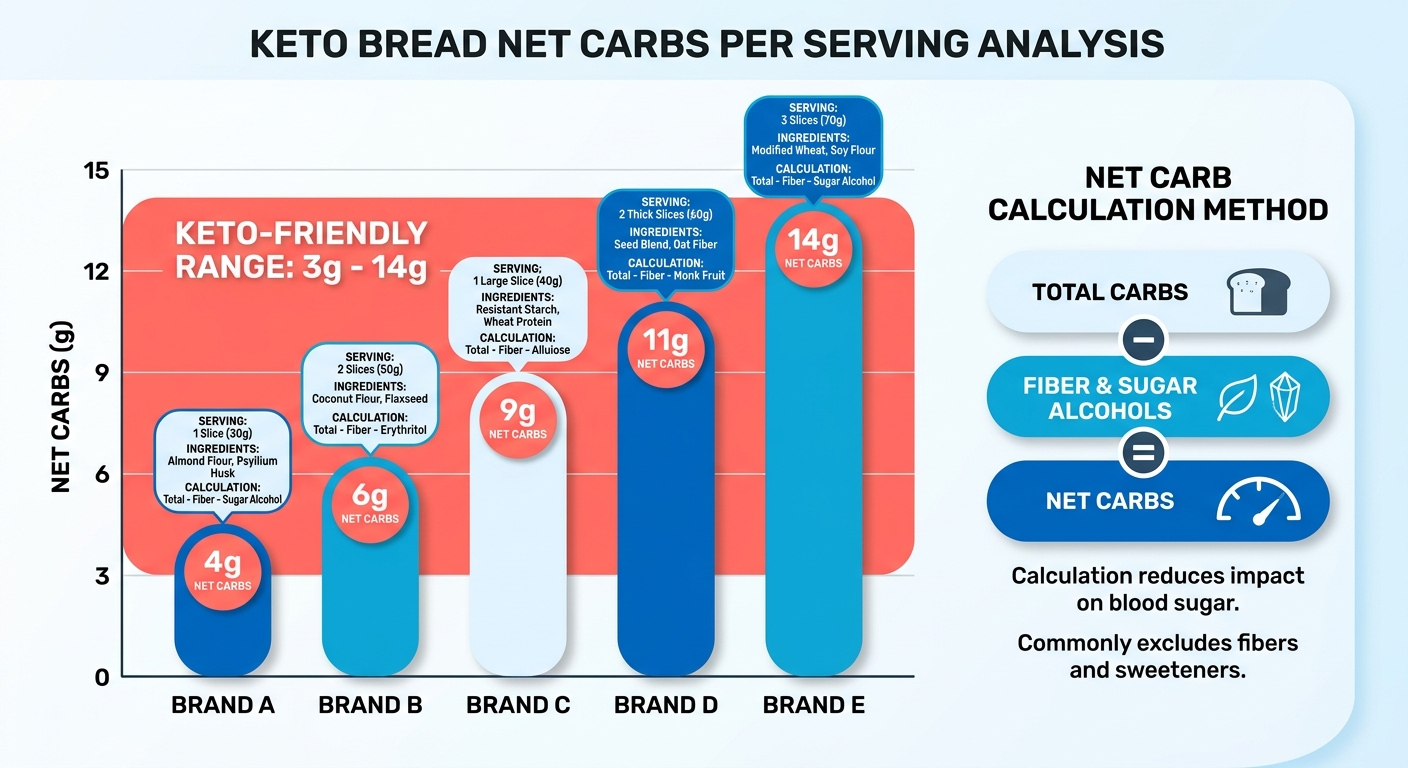
Net carbs in keto bread run from 3g to 14g per serving depending on the brand. That gap comes down to three things: serving size, ingredients, and how each company handles fiber and sugar alcohols. Two loaves can sit side by side on the shelf and still differ by 11 grams a slice.
Which is why a reliable keto grocery list starts with reading past the front of the bag. A "keto" label tells you the marketing angle. The nutrition panel tells you what actually hits your blood sugar. One tested brand landed at 0g net carbs, while others in the same review cleared 8g or more, according to Diabetes Strong.
Why two keto breads land on different net carbs
Ingredients are the biggest driver. Brands built on almond flour, wheat protein isolate, and added fiber post the lowest numbers. Brands leaning on modified starches or bigger flour ratios climb higher.
Serving size is the second lever. A 25-gram slice and a 45-gram slice can both say "keto," but the heavier one packs more of everything. One popular option sits at 8 grams of carbs per slice, which Levels lists as one of the lowest on the market for its category.
Then there's the fiber accounting. Net carbs subtract fiber and sugar alcohols from total carbs, so brands that load up on isolated fibers report lower net numbers even when total carbs look the same. The math is legal. It also means two loaves with identical total carbs can advertise very different net figures.
How the popular brands stack up
Here's how tested brands compare on net carbs, serving size, and typical price. The rankings from Chowhound's taste test and Diabetes Strong's review informed this comparison.
| Brand Type | Net Carbs (per slice) | Serving Size | Review Score | Approx. Price |
|---|---|---|---|---|
| Ultra-low sliced bread | 0 g | 1 slice | 2.5 / 5 | $6–8 |
| Low-carb loaf | 1 g | 1 slice | 3.5 / 5 | $6–9 |
| Mid-range keto bread | 3–5 g | 1 slice | 3–4 / 5 | $5–7 |
| Higher-carb "keto" bread | 8 g | 1 slice | Varies | $5–8 |
| Store-brand option | 8–14 g | 1 slice | Varies | $4–6 |
The lowest-carb slice reviewed hit 0g and scored only 2.5 stars on taste. The 1g option scored higher. Low carbs and good flavor don't always show up in the same loaf.
How long it takes to find the lowest-carb option
Comparing labels across five brands takes 10 to 15 minutes in the aisle. You're checking total carbs, fiber, sugar alcohols, and serving weight for each one, then doing the subtraction per slice.
Call it moderate difficulty. The labels aren't hard to read, but the fiber-and-sugar-alcohol subtraction trips up most shoppers. A slice listed at 12g total carbs with 9g fiber nets out to just 3g. Miss that step and you'll skip a solid option.
Research on ketogenic bakery products found wide nutritional variation across labeled products worldwide, per a gluten-free bakery study. That variation is exactly why cross-checking the panel beats trusting the front label.
The lowest-carb brands (and what they cost you in taste)
The lowest-carb keto breads land between 0g and 8g net carbs per slice. Small range. But the difference matters when you're rationing carbs across a full day, and picking wrong between two top-of-the-pile brands can cost you an extra 8 grams.
Finding options that won't wreck ketosis means looking past the marketing on the front. A handful of manufacturers manage to strip out digestible carbs through specialized formulation, which is what widens the gap between the true low-carb loaves and the standard ones.
Which brands test lowest
The carb load varies a lot even among products all calling themselves ultra-low-carb. Some specialty formulations eliminate digestible carbs entirely. Others under the same low-carb umbrella still carry a real load per slice.
| Brand | Net Carbs (per slice) | Review Score |
|---|---|---|
| Sliced keto loaf | 0g | 2.5 stars |
| Low-carb bread | 1g | Strong |
| Popular keto loaf | 8g | Mixed |
That 0g option usually costs you on texture. Zero-net-carb breads tend to run dry or spongy, which is why the slightly higher-carb loaves often win for daily eating. In Chowhound's evaluation of nine brands, the ones that paired modest fiber with traditional baking beat the zero-carb competitors on flavor pretty consistently.
Do the low numbers hold up?
Lab analyses of low-carb baked goods don't always match what's on the label. Some products lean on processing methods that introduce variability in how your body handles the remaining starches.
Peer-reviewed research on ketogenic bakery formulations points to a bigger problem: many regions have no standard definition of "keto," which leaves room for wide macro discrepancies. That's why verifying the ingredient list yourself is essential.
Slice thickness distorts comparisons too. A loaf with thicker slices shows higher carbs per serving even if the recipe is dialed in. Comparing grams per serving is the only way to get a fair baseline.
Picking from the top tier
Match the carb count to how much bread you actually eat. If you're a two-slice sandwich person, the 0g loaf saves you 16 grams versus the 8g option. For occasional toast, let taste win.
Say you eat bread three times a week. The gap between a 1g and an 8g brand runs you roughly 21 extra grams weekly. On a 20g daily carb budget, that's a meaningful chunk. Small per-slice differences compound fast.
The move is to pick a brand that respects your metabolic limits and still tastes good enough that you'll keep eating it.
The additives hiding carbs in your keto bread
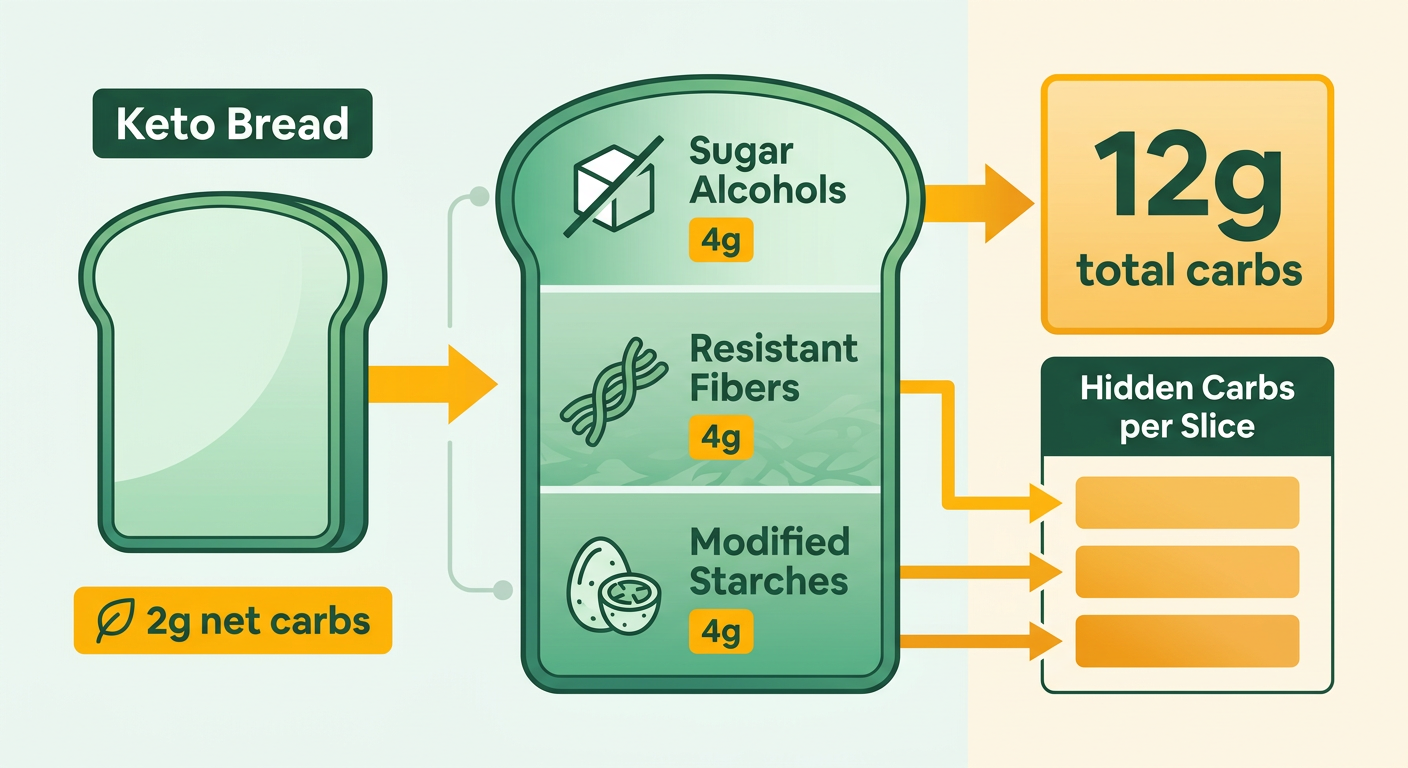
The same additives that make keto bread soft and sliceable are where hidden carbs sneak in. Sugar alcohols, resistant fibers, and modified starches all count toward total carbs, but brands subtract them out to get the net number on the front. That math can bury several grams per slice from a quick glance.
A loaf built on inulin, wheat gluten, and polydextrose might read "2g net carbs" while carrying 12g or more of total carbohydrate. Your gut and your blood sugar don't always agree with the label's subtraction.
What's actually padding the numbers
Three usual suspects: sugar alcohols, fiber supplements, and modified starches. All get deducted from net carbs. None behave the same way in your body. Some sugar alcohols still raise blood glucose. Some added fibers ferment and bloat you without delivering the promised "free" carb.
What to scan for:
- Sugar alcohols like maltitol. Maltitol has a real glycemic impact, unlike erythritol, yet both get subtracted equally on the label.
- Isolated fibers like inulin, chicory root, and polydextrose. These pump up the fiber count, which shrinks net carbs on paper.
- Modified wheat starch and vital wheat gluten. These add structure and total carbs even when the net number stays low.
This gap between the marketing and the metabolic reality is baked into commercial low-carb baking. To fake the elasticity of gluten and the bulk of wheat flour, manufacturers reach for complex chemical structures that behave unpredictably once you digest them.
Spotting them fast
Flip the loaf over and read the ingredient list before the nutrition panel. If sugar alcohols or three different added fibers show up in the first five ingredients, treat the net carb claim with suspicion.
Watch for maltitol specifically. It's the sugar alcohol most likely to spike you. Erythritol and allulose are safer bets if you tolerate them.
Watch for stacked fibers too. Inulin, chicory root, and polydextrose all listed together is a sign the net carb number leans hard on subtraction rather than genuinely low carbohydrate content.
The high-carb "keto" breads to leave on the shelf
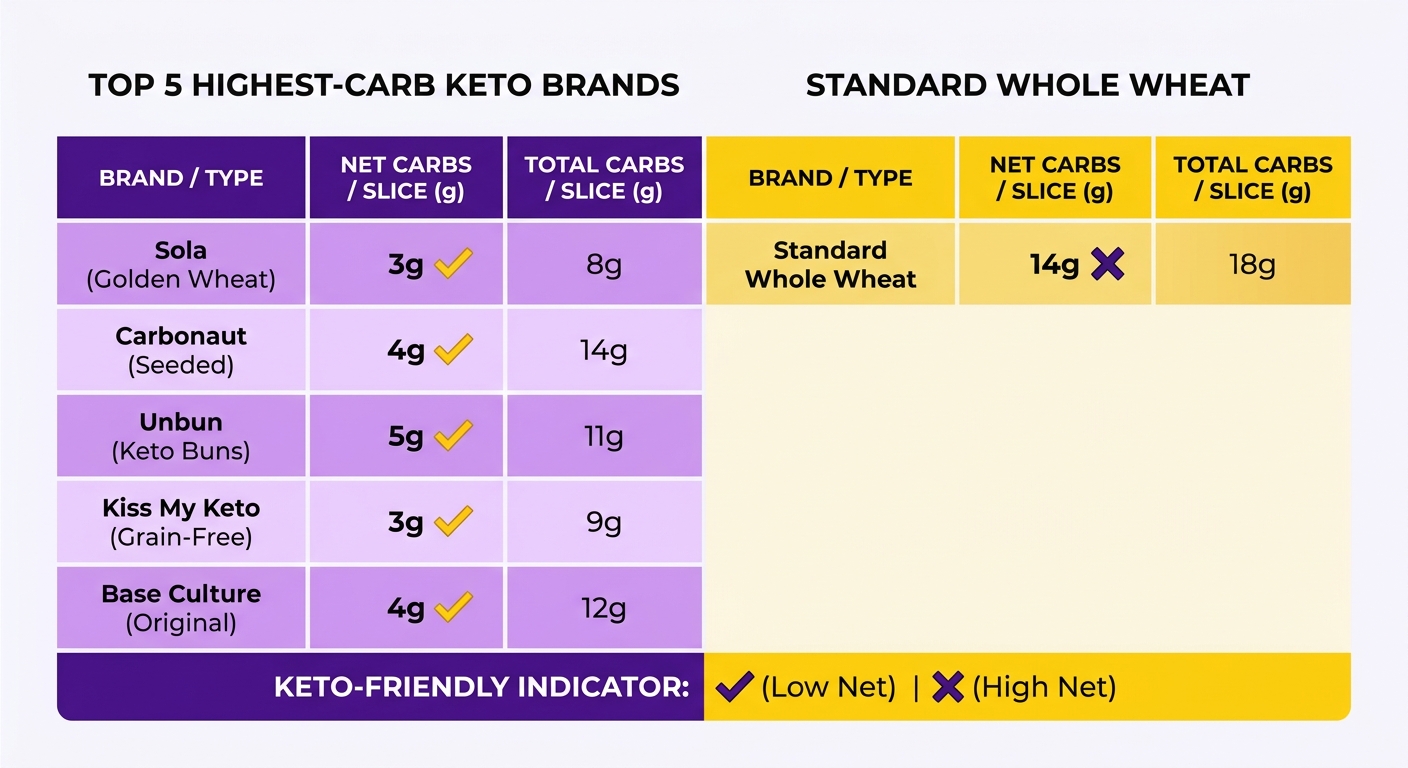
Some products marketed to low-carb shoppers carry digestible carbs that rival regular grain bread. Eat them without portion control, especially two slices in one meal, and they'll knock you out of ketosis.
This is the part of the grocery list that needs the most scrutiny. A single slice doesn't sound bad until you eat two and burn a fifth of your daily carbs on toast. The spread between the best and worst options is wide enough to end your ketosis by lunch.
Which ones test highest
Many of these lean on aggressive rounding or unusually small serving sizes to keep the advertised number down. They might beat standard white bread, but they don't meet the macros a therapeutic ketogenic diet demands.
| Tier | Net Carbs | What It Means |
|---|---|---|
| Lowest | 0–1g | Fits strict keto budgets |
| Mid | 3–6g | Watch your daily total |
| Highest | 8g+ | Skip for tight carb limits |
A brand can post a lower number just by shrinking the slice. Two loaves at the same net carb figure aren't equal if one slice weighs half as much as the other.
Why labels get the carbs wrong
Independent lab analyses keep turning up gaps between declared values and actual carbohydrate content in commercial low-carb foods. The market expanded fast, and regulatory oversight hasn't kept pace with the flood of novel starch alternatives.
Here's the real-world cost. A diabetic dosing mealtime insulin off a "2g net carb" label is in trouble if the bread actually carries 9g of glycemic carbohydrate from unlisted starches. That discrepancy turns into a postprandial glucose spike and an insulin dosing error. Not a rounding error. A meal that spikes you.
Who benefits from verifying the claims
Anyone with dietary restrictions gets the most out of checking labels against verified data. If you're diabetic, prediabetic, or strict keto, front-of-package math can't be trusted on its own. AI-driven product verification tools cross-check what a label claims against what's actually inside.
That transparency matters most for the brands at the top of the carb range, because the worst offenders look identical to the best ones on the shelf. Only the verified numbers separate them. Skip any loaf that won't survive the check.
How to read a keto bread label without getting played
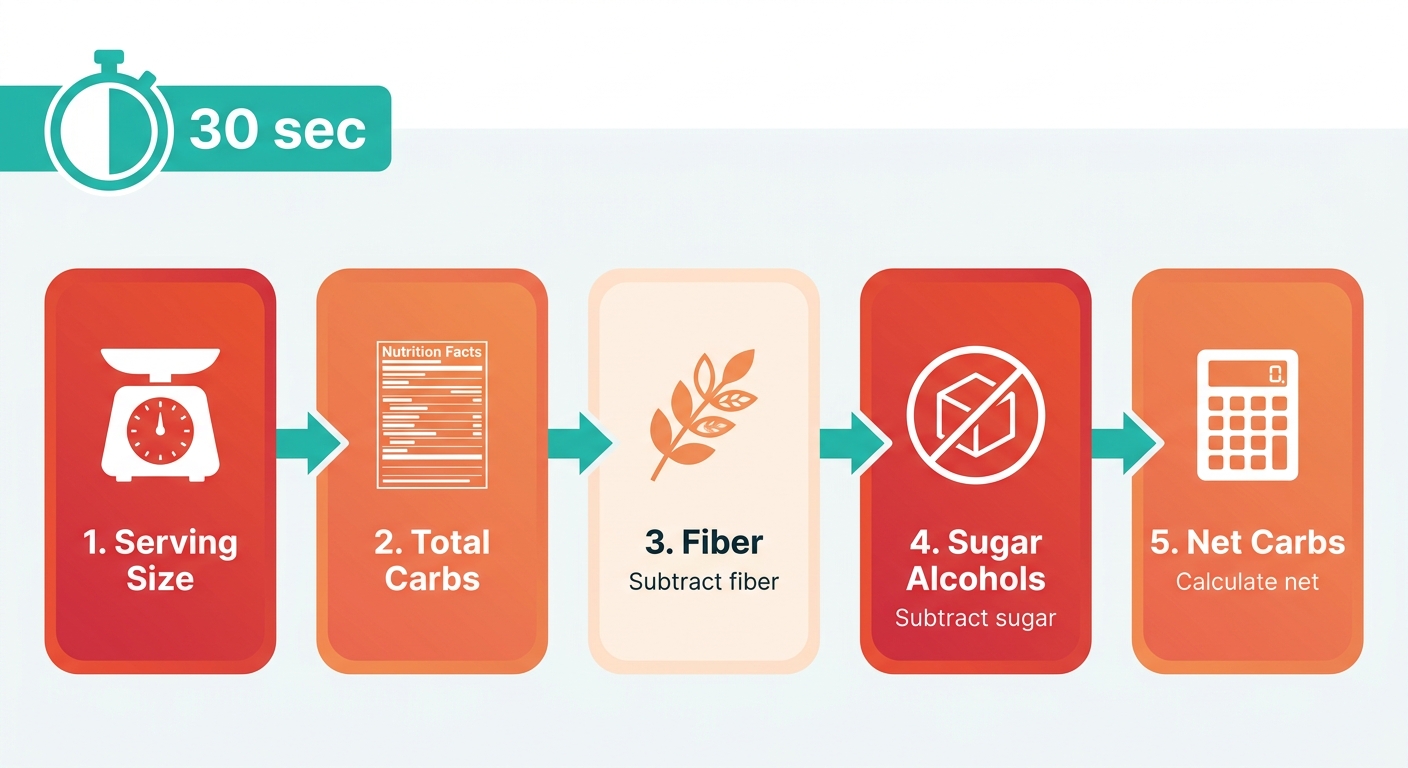
Reading a keto bread label takes about 30 seconds once you know the order. Serving size first, then total carbs, then subtract fiber and sugar alcohols yourself instead of trusting the front-package net carb math. That sequence catches the tricks brands use to make a loaf look lower-carb than it is.
Do this and the bold marketing buzzwords stop steering your cart toward products that don't fit your goals.
Serving size first, always
Check serving size before anything else, because every number on the panel scales to it. A brand can post a low carb count by shrinking the serving to one thin slice. Two slices doubles what you actually eat.
Some loaves count a serving as one slice. Others count two. Make a sandwich and you eat the serving twice, carbs and all. Match the panel's serving to how you actually eat the bread before you compare brands.
Do the net carb math yourself
Take total carbohydrate, subtract fiber and sugar alcohols, and you've got your own net carb figure. Do the math instead of reading the front label. This is where the honest number lives.
And the fibers themselves aren't all equal. Some pass through without touching blood glucose. Others get partially metabolized and quietly add to your daily carb load.
Write your calculated number next to each brand. When you build a shopping list, that column tells you more than any "keto" stamp on the bag.
What signals a misleading label
Scan the ingredient list for isolated fibers and starches that inflate the fiber count without the benefits of whole-food fiber. A long list built on processed additives is the clearest sign of a heavily engineered loaf that may not perform as advertised.
What to watch for:
- Modified starches high on the ingredient list, which push total carbs up
- A serving size that seems small for a normal slice of bread
- A front-label net carb claim that doesn't match your own subtraction
- Multiple isolated fibers stacked together to pad the fiber number
Accurate labeling matters most for people managing blood sugar or holding ketosis. A mislabeled loaf can cost you a fifth of your daily carbs before you notice. Trust the panel, run your own math, keep the brands that survive the check.
Matching the loaf to your macros
Choosing the right keto bread starts with your daily carb ceiling, not the brand on the front of the bag. Most keto plans cap you around 20 to 50g net carbs a day. Once you know your number, you can back into how much "bread budget" you've got to spend.
That single figure changes what belongs on your plate. On a strict 20g day, an 8g slice eats nearly half your allowance before you've added anything else. At 50g, that same slice fits fine. Same loaf, two very different verdicts.
Fitting a slice into your budget
Divide your daily net carb limit across your meals, then check whether a slice fits the breakfast or lunch slot without crowding out vegetables and protein. A slice under 2g net carbs leaves room for a full plate. A slice at 8g means you go carb-light everywhere else.
Even a small per-slice difference can dictate the whole menu. An ultra-low-carb slice frees up your allowance for nutrient-dense vegetables and nuts. A denser, higher-carb slice forces restriction elsewhere.
Rule of thumb: pick the lowest-carb loaf that still tastes good enough to eat twice. A bread you hate is a bread you'll abandon.
High-protein, or just low-carb?
Depends on your protein target. Chasing muscle retention or satiety? A high-protein keto bread does double duty. Only care about staying in ketosis? Prioritize the lowest net carb count and ignore the protein number.
Palatability drives long-term compliance. A bread that nails your macros on paper but tastes like a sponge goes uneaten, which defeats the whole point.
If you're already hitting your protein from meat, eggs, and dairy, skip the high-protein hunt. Treat bread as a pure carb line item and buy the lowest number you can find.
Why personalize it at all?
Because the "best" keto bread is the one that fits your specific day, not a universal winner. A parent packing school lunches has different needs than someone doing one meal a day. The gap between a 0g and 8g slice only matters relative to your own ceiling.
This is where checking specs against your requirements pays off. With Popgot, you tell the AI agent exactly what a product needs to have, down to the ingredients and features that matter to you. It reads every label to verify each one, so you only see loaves that actually meet your criteria.
Match the loaf to your numbers first. Everything else is preference.
References
[1] 9 Low-carb breads less likely to spike your blood sugar | Levels - https://www.levels.com/blog/levels-grocery-list-low-carb-bread
[2] Low-Carb Bread Review: 10 Popular Brands Tested - Diabetes Strong - https://diabetesstrong.com/low-carb-bread-review/
[3] 9 Popular Keto Bread Brands Ranked From Worst To Best - https://www.chowhound.com/2080664/popular-keto-bread-brands-ranked-worst-to-best/
[4] (PDF) Nutritional Quality of Gluten-Free Bakery Products Labeled ... - https://www.researchgate.net/publication/366393514_Nutritional_Quality_of_Gluten-Free_Bakery_Products_Labeled_Ketogenic_andor_Low-Carb_Sold_in_the_Global_Market
Frequently Asked Questions
1. Can I make my own keto bread at home to avoid the net carb guessing game?
Homemade keto bread gives you full control over ingredients and eliminates label uncertainty. Common bases include almond flour, coconut flour, and psyllium husk, which let you calculate exact net carbs per slice. You control serving thickness too, avoiding the thin-slice trick brands use to post lower numbers.
2. Does toasting or freezing keto bread change its carb content?
Toasting and freezing don't change the total carbohydrate count in keto bread. However, freezing then reheating starchy breads can increase resistant starch, which may slightly lower the glycemic impact. The net carbs on the label stay the same regardless of how you store or prepare the slice.
3. Is keto bread safe for people with diabetes despite the low net carb claims?
People with diabetes should verify keto bread labels carefully rather than trusting front-package claims. Maltitol and some isolated fibers can still raise blood glucose despite being subtracted from net carbs. Testing your own response with a glucose monitor after eating a slice reveals how a specific brand actually affects you.
4. Why does keto bread sometimes cause bloating or digestive discomfort?
Isolated fibers like inulin, chicory root, and polydextrose ferment in your gut, causing gas and bloating in sensitive individuals. Sugar alcohols, especially maltitol, worsen this effect. If a keto bread triggers discomfort, check the ingredient list for stacked fibers and switch to a brand using simpler, lower-additive formulations.
5. How does keto bread compare to regular whole wheat bread on carbs?
A standard whole wheat slice carries roughly 12-15g net carbs, while keto breads range from 0g to 14g. The overlap is the problem: some higher-carb "keto" loaves nearly match regular bread. This is why checking the panel matters, since the keto label alone doesn't guarantee a meaningful carb savings.
6. Can eating too much keto bread kick me out of ketosis?
Eating multiple slices of higher-carb keto bread can accumulate enough net carbs to disrupt ketosis, especially on a strict 20g daily budget. Two slices of an 8g loaf uses 16g, leaving almost no room for other foods. Portion tracking matters more than the keto label itself.
7. Are there tools that verify keto bread label claims automatically?
Yes, modern digital shopping assistants can automate this verification process. By using advanced search tools, you can filter products based on highly specific dietary parameters—such as excluding certain sugar alcohols or setting a strict maximum net carb threshold—allowing you to find compliant options instantly without manual label-checking.