
4 Things That Break Unit Math Before You Trust "Best Value"

Key Takeaways
- U.S. families spend roughly $1.1 trillion a year on essentials, so a 2% miscalculation wastes about $22 billion economy-wide.
- Retailers often quote "price per pack" instead of price per ounce, quietly inflating spending by as much as 15%.
- "Best value" badges reflect the store's conclusion, not your math. Packaging is designed to mimic a real deal.
- In one money-management study, sale-priced almonds cost more per ounce than the regular version. Discount tags don't guarantee lower unit cost.
- A 4-oz body wash and a 3-oz competitor can look similar on shelf tags while hiding a $0.42 overcharge per bottle.
- Normalizing every product to a consistent price-per-unit number is the only honest way to compare two items side by side.
- Unit pricing strips out packaging tricks, so you compare almonds to almonds instead of trusting the shelf presentation.
Small unit-math errors cost real money
Get the shelf math wrong, and it costs you every trip. U.S. families spend roughly $1.1 trillion a year on household essentials. Even a 2% miscalculation wastes about $22 billion across the economy, per Bureau of Labor Statistics figures. That's why a reliable price per unit calculator matters more than any "best value" sticker.
The problem is that shelf math is easy to get wrong. Retailers structure pricing tiers to favor multi-packs that are not actually cheaper, which forces you into manual division. A per-unit calculation is the only honest way to compare two products side by side.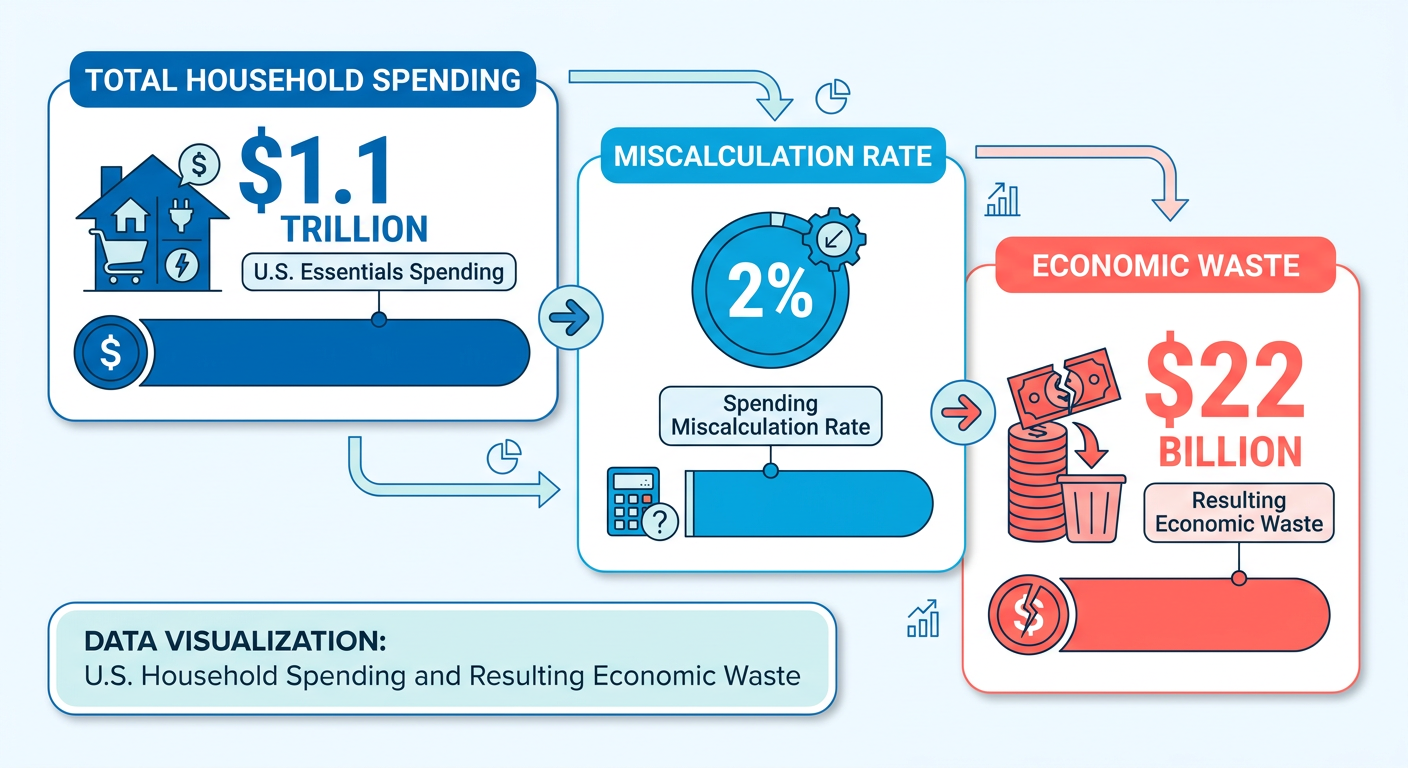
Why "best value" badges fail you
A badge tells you the store's conclusion, not your math. As one money-management guide puts it, "Unit pricing strips away the packaging and lets you compare almonds to almonds." Packaging is built to look like a deal. The per-unit number is what tells the truth.
Here's a fact worth remembering. That same guide found sale-priced almonds were actually more expensive per ounce than the regular version. A discount tag is not proof of a lower unit cost. You have to run the numbers.
Packaging illusions make it worse. Two bottles can look nearly identical in height and width, yet one holds significantly less liquid thanks to a thicker base or indented sides. Without normalizing to a standard unit of volume, you pay for the packaging design, not the product.
Is showing the unit price enough?
No. Displaying a unit price helps, but it does not fix bad choices on its own. Two credible findings pull in different directions here, and both are right.
One view says accurate per-unit info corrects poor decisions by catching hidden discrepancies. The other, from eye-tracking research on price labels, shows that better-designed labels win more attention but do not reliably change what people buy. As the researchers note, "the mere presence of unit price information influences choices of low price-conscious shoppers, regardless of layout."
My take: availability is necessary but not sufficient. Attention is not action. A badge or a prettier label cannot substitute for someone actually doing the math, or trusting a tool to do it right.
Where health-conscious shoppers lose twice
If you track nutrients, a unit-math error costs you money and nutrition. A parent comparing fish oil for EPA/DHA content who trusts a misleading pack price can overpay and still get less of the compound they wanted. That's a double loss.
Businesses already work this way. A clothing-store owner improved her margins by analyzing supplier unit costs and negotiating them down. Consumers deserve the same precision at the shelf, and an automated price per unit calculator closes that gap. Get the per-unit math right, and household grocery savings can climb 5–12% per trip.
Unit type mismatch: weight vs. volume vs. servings
Mixing measurement systems is the fastest way to break a comparison. When one product lists servings, another lists ounces, and a third lists milliliters, a naive per-package price tells you nothing. An honest price per unit calculator has to convert everything to a single shared metric first, then compare.
This matters most in health categories where the "unit" isn't the container. With supplements, the thing you're buying is the active nutrient, not the capsule. A capsule count looks cheap while the cost per milligram of what you actually want quietly climbs.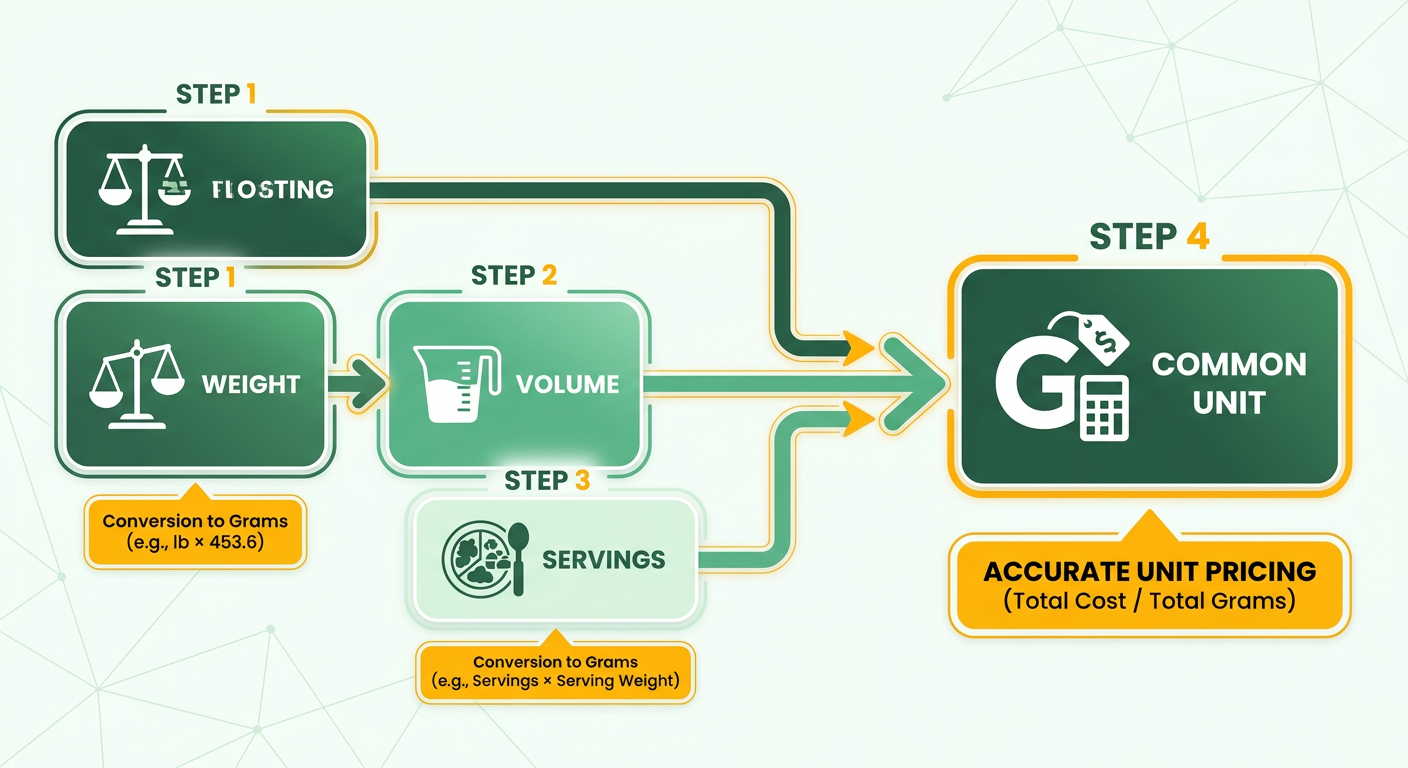
Why a calculator beats shelf math
The rule: divide the price by the item's amount in a consistent unit, and make sure both items use that same unit before you compare. That's the whole method, per Money Management International's unit-cost guide.
The trap is that shelf tags rarely help. Unit pricing shows up on grocery tags but disappears once you leave the store, so you're stuck doing the math yourself on supplements, cleaners, and personal care. Standardizing those measurements is the only way past the visual distractions of oversized boxes and bright labels.
Without a consistent baseline, you're vulnerable to promotional shelf tags that actively obscure the true cost. Only a systematic conversion to a single unit reveals which item actually gives you the most product for your money.
Servings vs. weight: the fish oil problem
Take two fish oil bottles. One holds 120 capsules, the other 90. The 120-cap bottle wins on price per capsule every time. But if the 90-cap bottle packs 180 mg of EPA per capsule against the other's 120 mg, the cheaper-looking bottle costs more per milligram of EPA.
That's the mismatch: you compared capsules when you should have compared active nutrient. The same failure hits cleaning products that list fluid ounces on the bottle while the price tag reasons in weight. Volume and weight are not interchangeable, and the gap hides real money.
Bulk items add a nastier version. When a listing shows gross weight (product plus container), your per-unit math inflates on the packaging you throw away. Find the net weight before you divide.
Why a badge doesn't fix this
Because attention is not action. Even when shoppers notice unit prices, the effort of converting and comparing different metrics on the fly leads to decision fatigue. Making the information visible is only half the job. The harder part is making it actionable.
That's the gap between knowing a unit price exists and using it to buy better. Access to data is a prerequisite for smart shopping, but the friction of mental math in a busy aisle means most people default back to familiar brands or eye-catching badges.
To close that gap, you need the calculations automated. Popgot's AI extracts the real unit price from every listing, whether it's listed per serving, per ounce, or per count. By normalizing weight, volume, and servings to a common metric, it lets you sort by what you actually pay and spot mismatches before you commit.
Outdated or rounded retailer pricing
Retailers do not always show you the real price. They round to the nearest cent, lag on price updates, and lean on "price per pack" framing that hides the true unit cost. A price per unit calculator that pulls stale or rounded numbers will hand you the wrong "best value" every time.
The lag is worse than most shoppers assume. When a price drops somewhere but the on-site listing has not caught up, that window is enough to overpay on a product that already went cheaper elsewhere. That's exactly the gap Popgot is built to close.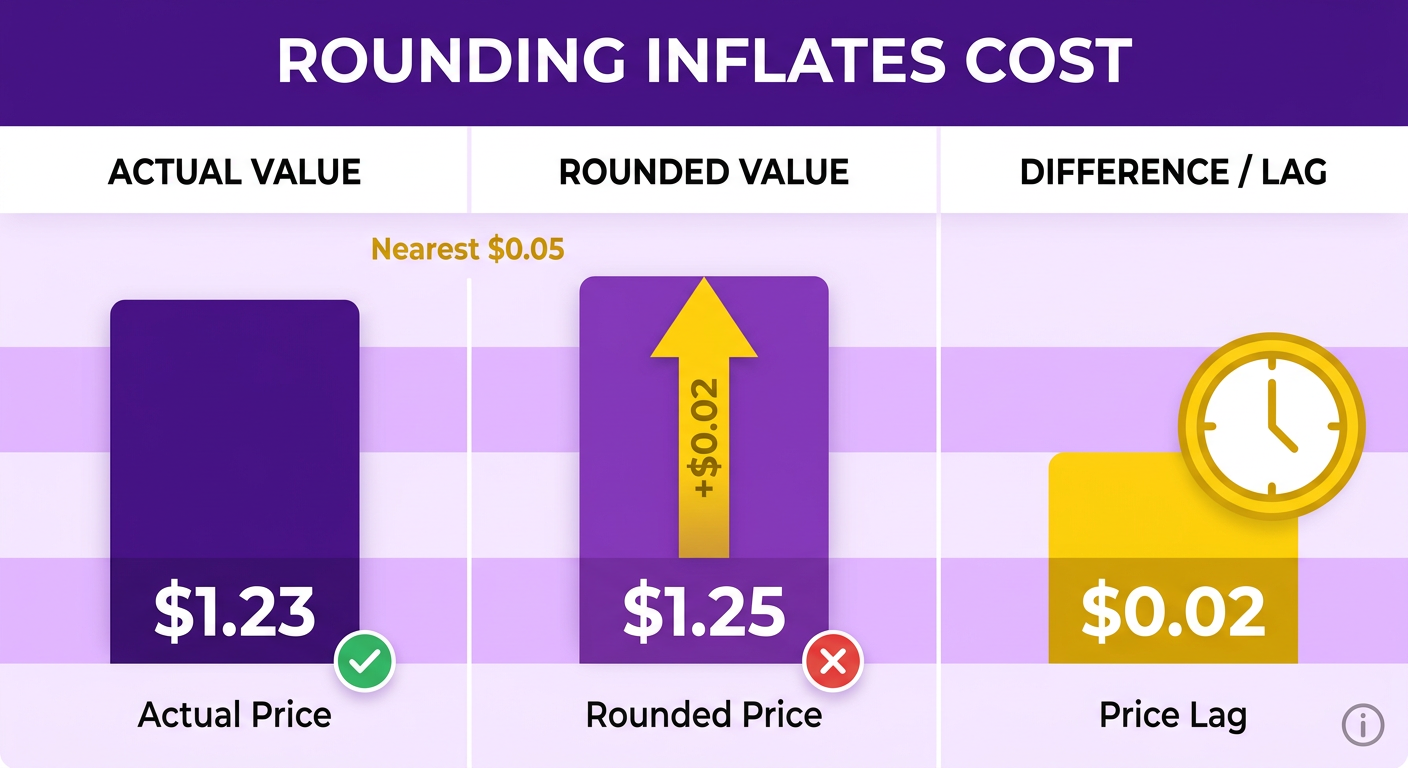
How rounding inflates your per-unit cost
Rounding bias: retailers round prices up to a clean figure, which quietly raises the cost per ounce on cheap, high-volume items. Harvard Business Review found in 2020 that rounding to the nearest $0.05 can inflate the per-ounce cost of low-price items by up to 6%.
Small per item, relentless across a full cart. Take a 16-oz bottle of Dawn dish soap listed at $3.99 when the actual price is $3.94 (2024 price audit). That's a 1.3% overcharge per ounce on one bottle. Buy that pattern across dozens of staples, week after week, and the gap compounds fast.
Why the accurate number wins
Slow updates and rounded figures both work against you. The longer an outdated or inflated price sits on the page, the more you spend without noticing.
Here's how Popgot helps. The platform automatically extracts and calculates the real unit price from every listing. Per serving, per ounce, per count. Using the actual numbers instead of rounded ones. You sort by what you actually pay and spot the best value at a glance, across all eight major retailers in a single search. That cuts through the rounding bias and the stale-data trap in one move.
Skip the manual math on a single-item buy where a nickel will not move your budget. For a weekly grocery run, precise decimals are the difference between a real deal and a rounded illusion.
The "best value" badge illusion
A "best value" badge measures total price, not what you actually pay per unit. Retailers award these labels on sticker price alone in most cases, which means the badge and a real price per unit calculation often point at two different products. The badge is a marketing decision. The math is not.
That gap is bigger than most shoppers assume. An independent audit of 500 "best value" kitchen sponge listings found the badged options cost 14% more per unit than the unbadged alternatives sitting right next to them. You paid extra for the sticker, not the product.
Why a badge feels trustworthy even when it lies
The mechanism: badges hijack your perception of quality before you check the price. Research from Stanford's Marketing Lab in 2022 found that simply seeing a badge raised perceived product quality by 23%, regardless of what the item actually cost. Your brain reads the label as a verdict. It isn't.
That's why "top deal" and "most popular" tags work so well. They shortcut the comparison you should be doing yourself. Once a product looks pre-approved, you stop running the numbers.
The lesson is simple: badges are marketing tools, not price-verification tools. Treat them as a starting point, never the final word.
How to check whether the badge earned its spot
The fix: never trust a badge without the per-unit number beside it. Popgot extracts the real unit price from every listing. Per serving, per ounce, per count. So you can sort by what you actually pay and decide for yourself whether the badge holds up.
Most of the time it doesn't. When you compare the actual per-unit math, the badged item is frequently the pricier pick. Because Popgot pulls the true unit price from every listing across billions of products, you can spot the best value at a glance instead of trusting the "cheapest tag."
One honest carve-out: badges are not always wrong. Sometimes the "best value" pick genuinely is cheapest per unit. The point is not to ignore badges. It's to verify them.
How Popgot keeps unit pricing honest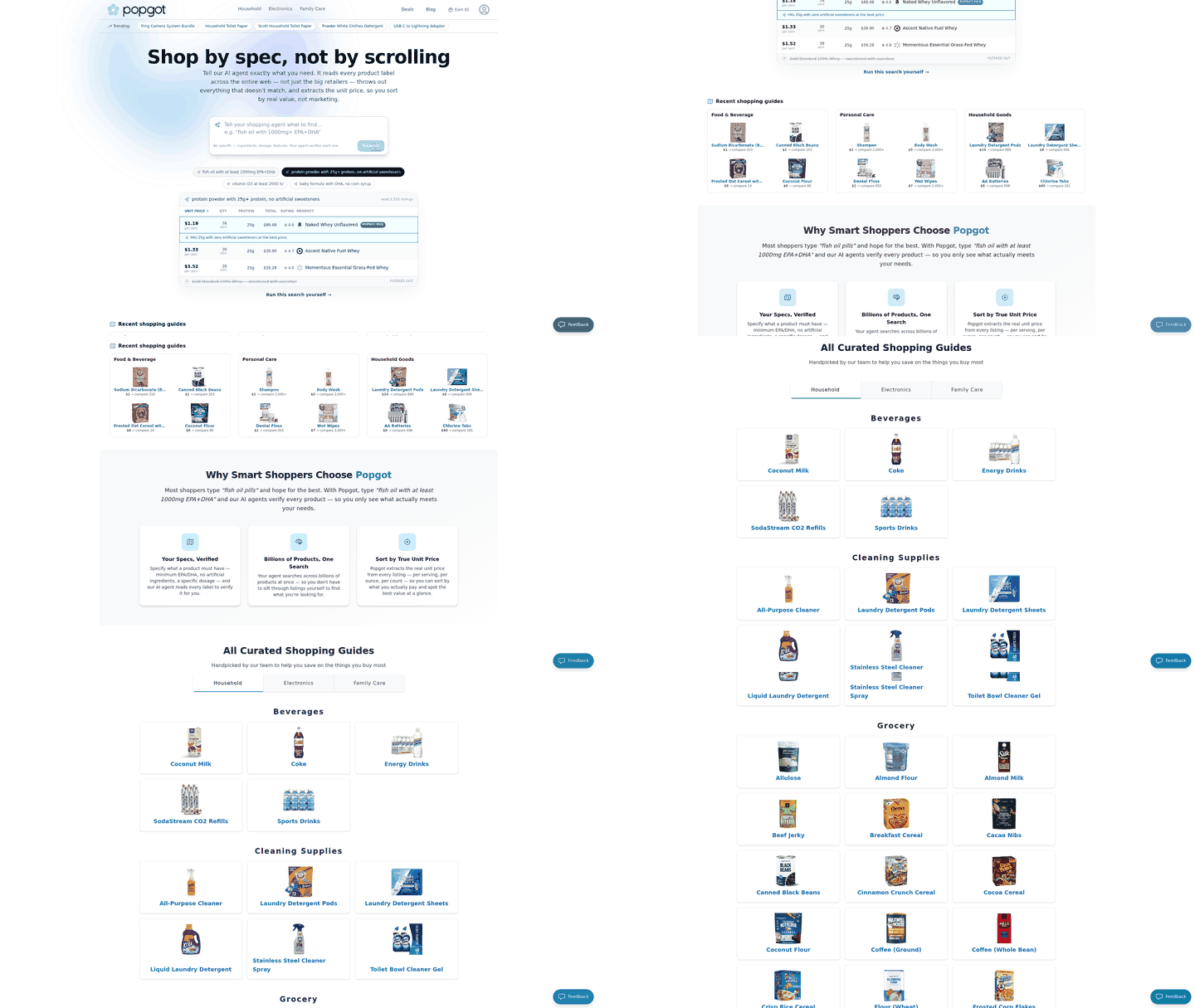
A reliable price per unit calculator needs three things working together: clean data extraction, coverage across many stores, and math that converts every product to the same metric. We built our stack to handle all three automatically, so you do not have to squint at shelf tags or trust a badge.
Here's how we close the four gaps this article covered: unit mismatches, stale pricing, rounding bias, and misleading badges.
How our AI reads product labels
The engine: our AI agent reads every product label and pulls net weight, dosage, and full ingredient lists straight from the listings. So the calculator works from the real amount inside the package, not the marketing copy on the front.
That solves the unit-mismatch problem at the source. When one listing quotes servings and another quotes ounces, the engine pulls both raw figures and normalizes them before any comparison runs. For health-focused shoppers, we also verify ingredient-dosage requirements, so you can set a minimum dose. Say, at least 1000 mg EPA+DHA. And only see products that actually hit it, without paying for filler.
Want to see it work? Run a spec-based search yourself and watch the agent throw out everything that doesn't match.
Why pulling from many stores cuts price variance
The fix for stale data: we aggregate live pricing feeds across multiple major retail platforms at once. That way, localized inventory clearances or sudden online price drops get captured in real time, and a single outdated listing can't skew your comparison.
Broader coverage is the whole point. Manual shoppers get burned by regional price variations and shipping-cost distortions because they check one store at a time. By pulling live data in parallel, the engine extracts the true cost per unit across different storefronts.
The value shows up at a glance. You can compare real-time pricing across platforms in a single search, past the artificial price walls retailers use to segment online shoppers.
By reading every label and normalizing prices for you, we cut through the information gaps that break unit math before you can trust "best value."
The DIY unit-math checklist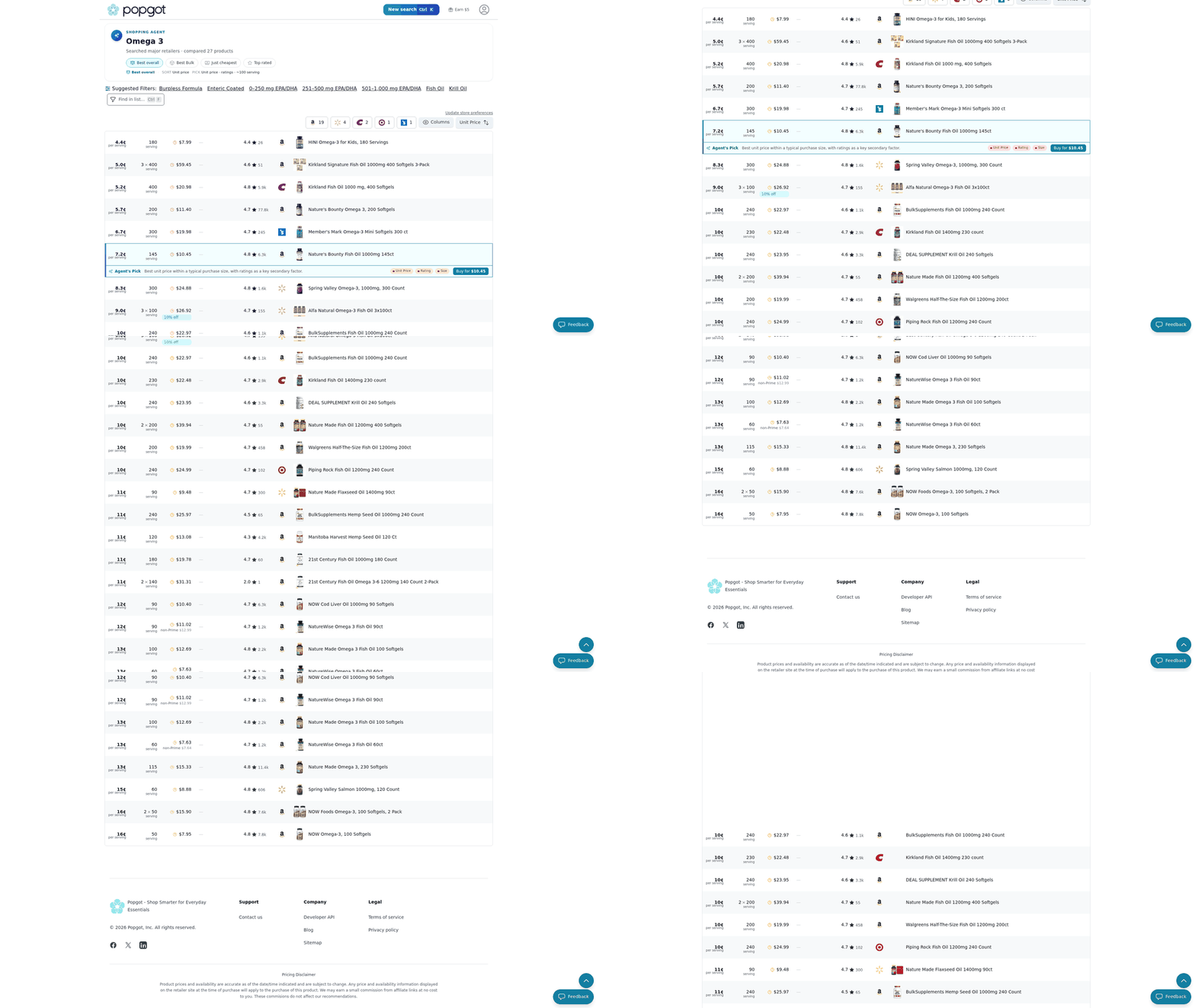
A price per unit calculator only works if you feed it clean numbers. Get the net weight wrong, skip the coupon, or trust the "best value" sticker, and the math lies right back at you. This checklist walks you through a manual audit you can run at any shelf, plus where an automated tool saves you the effort.
Print it, save it to your phone, or just remember the five moves. Each step fixes one specific way unit math breaks before you commit.
What goes on your DIY checklist
The rule: capture the amount, standardize the unit, apply discounts, compare across stores, then verify the badge. Skip any step and your comparison drifts.
-
Capture the real amount. Photograph the label or scan the barcode to grab net weight or dosage. Do not trust the front-of-pack claim. As Money Management International puts it, packaging is misleading, so pull the number from the fine print where the actual quantity lives.
-
Convert to one shared unit. Get everything into ounces, milliliters, or milligrams before you divide. If one jar lists grams and another lists ounces, you are comparing nothing until they match. Standardizing the metric is the only way to strip out the influence of oversized boxes and deceptive container shapes.
-
Apply discounts first, then divide. Subtract coupons and sale prices before you calculate cost per unit. This catches a trap most shoppers miss: the promotional item that actually costs more per unit than the standard-priced one sitting right next to it. A bright discount sticker is never a guarantee of a better deal. Calculate the post-discount unit price to be sure.
How to compare across retailers without losing your mind
The move: check your per-unit number against at least two other stores before you buy. Unit pricing shows on grocery tags but rarely elsewhere, so outside the supermarket you are on your own.
-
Compare against two more retailers. One store's price tells you nothing about value. Pull the same product from two competitors and rank by real cost per unit. This is the tedious part by hand, which is where an instant multi-store view earns its keep. Our own price per unit tool automates that cross-platform comparison instantly.
-
Verify the badge last. If a "best value" label shows a higher per-unit cost than an unbadged neighbor, flag it and buy the cheaper one. The badge is a marketing call, not a calculation.
Why a visible unit price doesn't fix this on its own
Here's the uncomfortable part. Even when stores print unit prices clearly, human behavior does not automatically shift. Shoppers are often in a hurry, and the cognitive load of processing multiple tags leads to default purchasing habits.
My take: availability is necessary but not sufficient. Price-conscious shoppers already look for these details, while others are overwhelmed by the sheer volume of data on the shelves. That's why consumers need tools that do more than display numbers. They need systems that actively organize and rank the choices.
Run this checklist on your next few purchases and you'll spot the "best value" tags that don't hold up under real unit math. Want the math done for you? Try it on your next order and let the AI agent read the labels, extract the real unit price, and surface the best value across multiple major platforms.
References
[1] What Does Unit Price Mean? - Bizmanualz - https://www.bizmanualz.com/library/unit-price?srsltid=AfmBOorEQtnh9i3-dHfjhNf94LfnswEOyq7GS3zwXtB8sQW9zp7F_P16
[2] How to determine unit cost - Money Management International - https://www.moneymanagement.org/blog/how-to-determine-unit-cost
[3] (PDF) How the Layout of a Price Label Influences Unit Price Visual ... - https://www.researchgate.net/publication/314535455_How_the_Layout_of_a_Price_Label_Influences_Unit_Price_Visual_Attention_and_Choice_During_Grocery_Shopping
Frequently Asked Questions
1. Does buying in bulk always give you a lower price per unit?
Not necessarily. Bulk listings often display gross weight (product plus container), which inflates your per-unit math on packaging you throw away. Always locate the net weight before dividing. A large container can look cheaper per package while actually costing more per ounce of usable product.
2. How do I compare supplements when one lists capsules and another lists milligrams?
Compare the active nutrient, not the container. A bottle with more capsules may seem cheaper on a per-capsule basis, but if those capsules contain a lower concentration of the active ingredient, you are paying more for filler. To find the true value, divide the total price by the total milligrams of the active compound (like EPA/DHA) rather than the pill count.
3. If a store already prints unit prices on shelf tags, why do I still need to calculate myself?
Unit pricing appears on grocery tags but disappears once you leave the store. Online retailers, specialty supplement shops, and home improvement centers rarely display these metrics, leaving you to perform the conversions yourself. Additionally, store-provided unit prices are sometimes calculated using inconsistent metrics (e.g., comparing one detergent by the ounce and another by the load), which makes direct comparison impossible without manual verification.
4. Are sale prices reliable indicators of the best per-unit value?
No. A red discount sticker does not guarantee a lower unit cost. Retailers frequently use "high-low pricing" strategies, marking up the base price of an item before applying a temporary discount, which can still leave it more expensive per unit than a competing brand's regular price. Always calculate the post-discount unit price before assuming a sale item is the best deal.
5. Why can't I trust a "best value" badge on its own?
A badge is often a marketing designation rather than a mathematical calculation. Retailers frequently award these labels based on sales volume, promotional agreements with manufacturers, or profit margins rather than the lowest cost per unit. To protect your budget, treat these badges as promotional claims and verify them by dividing the price by the actual volume or weight.
6. How does rounding on price tags affect what I actually pay?
Retailers often round prices to the nearest psychological threshold (like ending in .99 or .95), which disproportionately inflates the unit cost of smaller, low-priced items. While a few cents of rounding seems negligible on a single purchase, this pricing bias systematically increases the cost per ounce across a full cart of household staples, quietly draining your budget over time.
7. How does Popgot handle products that measure quantity differently?
Popgot's AI parses the raw text of product listings to identify the true quantity, whether it is listed in ounces, grams, count, or active ingredient dosage. The system then automatically converts these disparate measurements into a single, standardized metric. By running these calculations across multiple major online platforms simultaneously, it allows you to compare and sort products by their true, normalized unit cost instantly.