
Find Cheaper Alternatives on Amazon with Popgot
Key Takeaways
- Save 30-60% on everyday essentials by comparing prices across Costco, Walmart, and Amazon using Popgot’s unit pricing.
- A Costco 100-pack of AAA batteries ($52) costs 29¢ per battery on Amazon, slashing expenses by nearly half.
- One user saved $100/month by prioritizing unit pricing over brand loyalty through Popgot’s price comparisons.
- Households could pay 40% more for groceries and household items without intentional price checks.
- Popgot’s AI verifies product specs across 5 major retailers to ensure accurate, apples-to-apples comparisons.
- Traditional platforms hide unit pricing, leading to overpayment for convenience (e.g. 50% savings switching from dishwasher pods to powder).
- Retailers often use misleading claims, but Popgot normalizes listings to reveal true costs upfront.
Why Finding Cheaper Alternatives Matters
Finding cheaper alternatives on Amazon and other retailers isn’t just about saving a few dollars-it’s about reclaiming control over your budget in a market where overpaying is the norm. According to Popgot’s research, consumers can save 30-60% on everyday essentials by comparing prices across retailers like Costco, Walmart, and Amazon. For example, A Costco shopper paying $52 for a 100-pack of AAA batteries might find a 29¢-per-battery option on Amazon, slashing costs by nearly half. These savings add up: one user reported saving $100/month by prioritizing unit pricing over brand loyalty.
The hidden cost of not comparing prices is staggering. A single household could pay 40% more for groceries, toiletries, and household items without intentional price checks. Take dishwasher detergent: switching from pods to liquid or powder can cut costs by 50%, but traditional shopping platforms hide critical unit pricing details. Popgot solves this by normalizing product listings and displaying cost-per-unit metrics upfront, so you avoid paying a premium for convenience.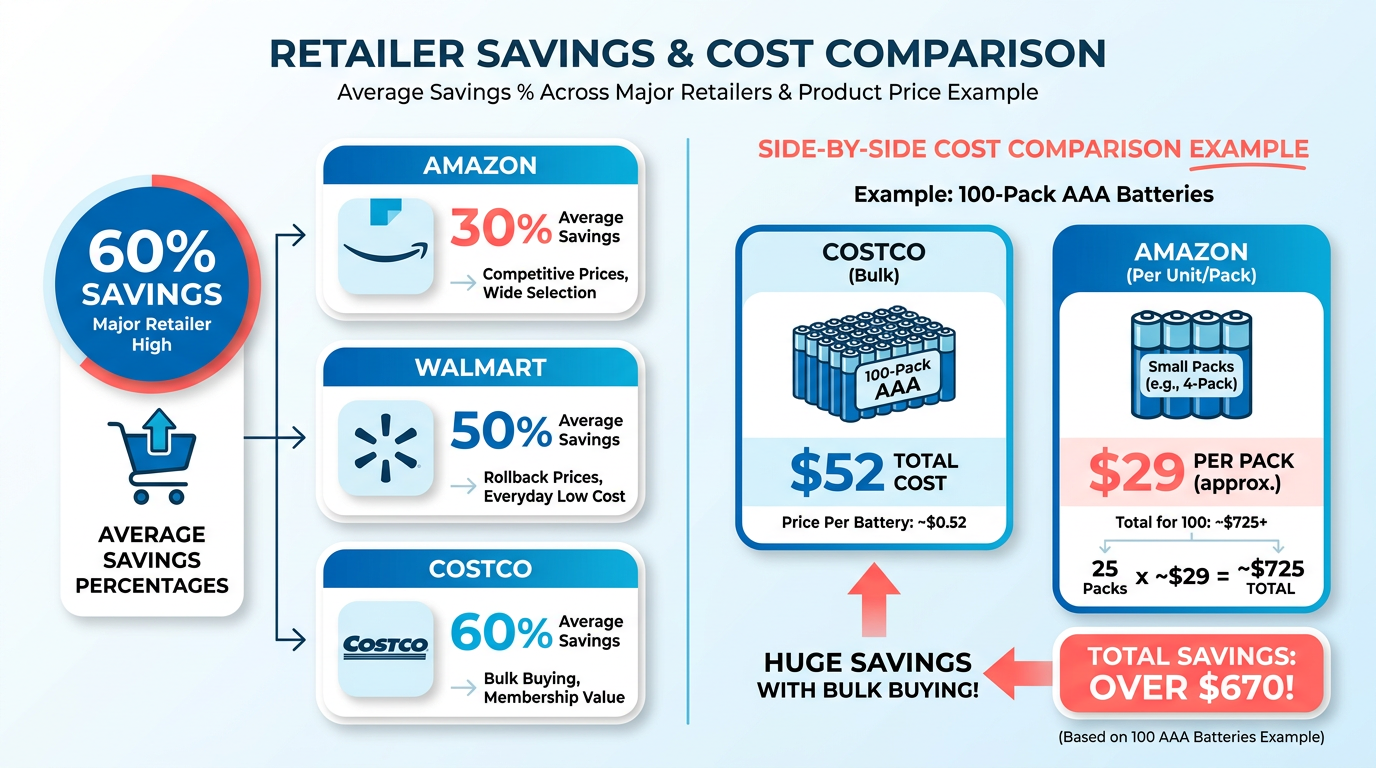
The problem isn’t just about price-it’s about accuracy. Retailers often market products with misleading claims or incomplete comparisons. Popgot’s AI verifies product specifications (ingredients, certifications, dosage) across 5 major retailers to ensure you get exactly what you need at the lowest price. A shopper seeking “keto-friendly snacks” might find a $15 bag of almonds on Amazon, only to find a $12 option at Costco with identical macronutrient profiles. Popgot surfaces these matches by scanning product labels and filtering results based on your criteria.
Unit pricing-the cost per ounce, sheet, or pound-is the first step in beating the “values tax.” Ethical shoppers, for instance, often pay 10-30% more for organic, fair-trade, or sustainably packaged products. Popgot’s AI identifies these high-value items at the lowest unit price, so you don’t have to compromise your principles for affordability. For example, a health-conscious user searching for “VOHC-approved dental chews” gets results ranked by cost per ounce, not just brand reputation.
Budget-savvy shoppers also benefit from Popgot’s ability to track price drops and bulk deals. A case study shows a user saving 13¢/oz on laundry detergent by switching from a premium brand to a store-name alternative. These savings multiply when applied to recurring purchases like batteries, snacks, or cleaning supplies. The platform’s AI agents verify product claims, so you’re not tricked by vague marketing terms like “natural” or “eco-friendly”.
Who Benefits Most from Cheaper Alternatives?
- Health-conscious shoppers: People with dietary restrictions or medical needs can use Popgot to find keto-friendly, gluten-free, or organic products at lower prices. For example, a keto shopper might search for “snacks with under 2g net carbs” and see verified options priced 40% lower than leading brands.
- Families and bulk buyers: Parents stocking up on essentials like diapers, toothpaste, or pet food can compare Costco’s bulk pricing against Amazon’s individual packs to avoid overpaying.
- Ethical consumers: Popgot’s AI scans for certifications like Fair Trade or B Corp, ensuring you pay the least for products that align with your values. The platform’s precision turns price comparison from a time-consuming chore into a streamlined, data-driven process. A keto dieter searching for “grass-fed beef jerky with 6g protein per serving” might initially settle for a $10.99 package on Amazon. Popgot’s AI, however, scans product images and descriptions to verify protein content and finds a $7.99 option at Walmart with identical nutritional data. The platform also calculates the cost-per-ounce, revealing the Walmart choice is 30% cheaper.
By using AI to automate research and unit pricing, Popgot empowers shoppers to save without sacrificing quality or ethics. As one user noted, “I used to spend hours comparing labels-now Popgot does it in seconds”. In a market where convenience often masks higher costs, the platform’s transparency turns overpayment into an avoidable mistake.
Understanding Popgot's AI-Driven Shopping Platform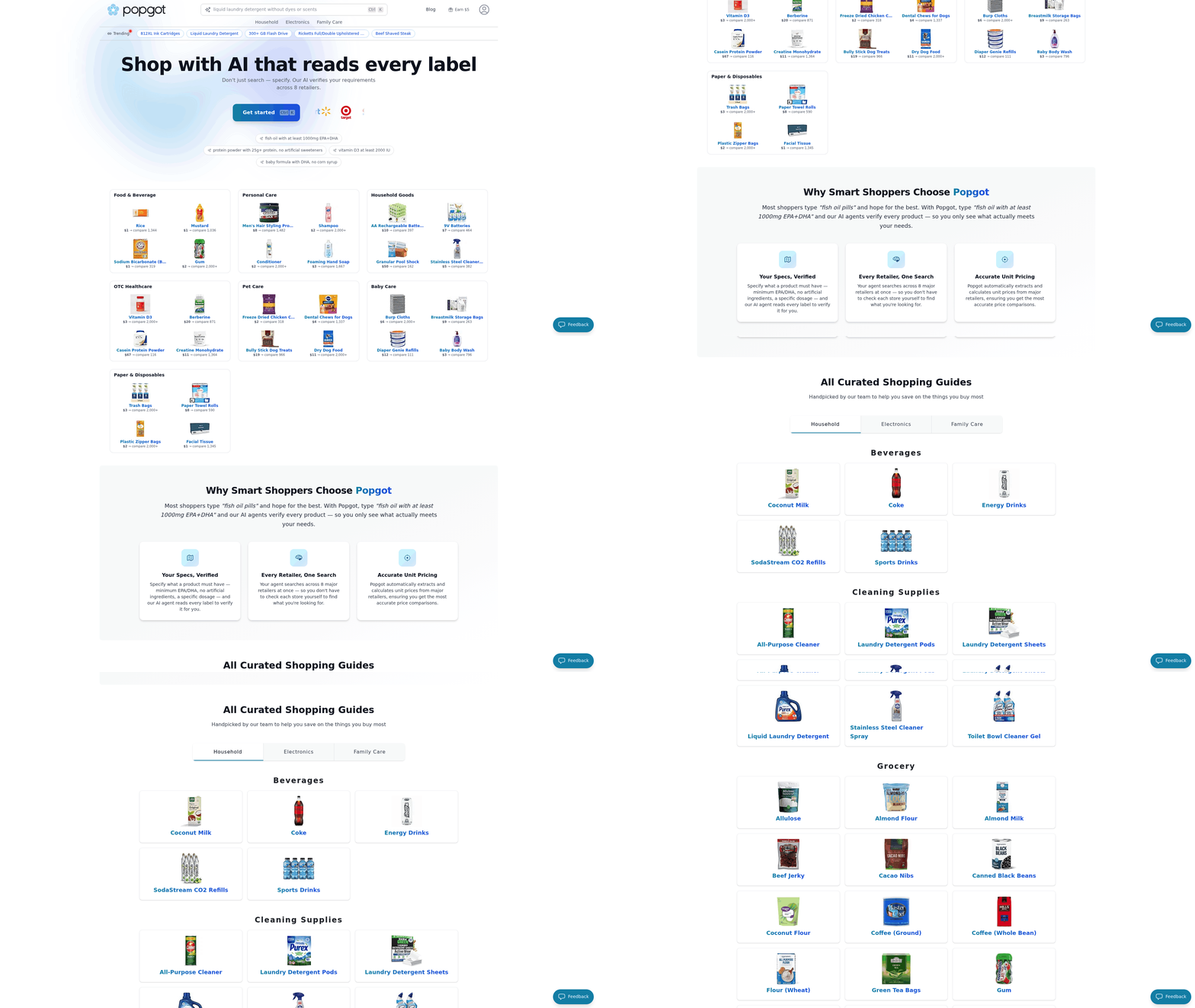
Popgot’s AI-driven shopping platform helps you find cheaper alternatives on Amazon and other retailers by combining precise product verification, multi-retailer price comparisons, and customizable filters. Its AI agents analyze product labels, extract unit pricing, and apply user-defined criteria to surface the most affordable options that meet your exact needs. By automating these tasks, Popgot saves you time and money-users report savings of 30–60% on everyday essentials like cleaning supplies and groceries.
Popgot’s AI reads and verifies product specifications to ensure they meet your criteria, whether you’re searching for VOHC-approved dental chews or hand soap free of sulfates. The system extracts ingredient lists, certifications, and marketing claims from product images and descriptions, then cross-references them against your requirements. For example, if you need fish oil with at least 1,000mg EPA+DHA, The AI filters out products that don’t meet this specification, even if they’re cheaper. This level of detail ensures you never settle for a product that doesn’t align with your health or ethical standards, a principle emphasized in the Why Finding Cheaper Alternatives Matters section.
The platform also normalizes confusing product listings. If a retailer describes a product as “6-pack of 8-count batteries,” Popgot converts this into a consistent unit price per battery, making comparisons straightforward. This is especially useful for non-perishable items like batteries, where packaging variations often obscure true value. Setting up preferences for such filters ensures results are tailored to your needs.
Users have reported saving 13¢/oz on detergents and up to 50% on DNA tests by using unit pricing, a feature also demonstrated in the Real-World Examples and Case Studies: Saving with Popgot section. By combining AI verification, multi-retailer comparisons, and unit pricing, Popgot turns the “values tax” of ethical or health-focused shopping into a solvable problem-without requiring manual label checks or price calculations.
Getting Started with Popgot: A Step-by-Step Guide
To start using Popgot for finding cheaper alternatives, first create an account and set your preferences to align with your shopping habits. This ensures the platform tailors its search results to your needs, using the AI-driven capabilities described in the Understanding Popgot's AI-Driven Shopping Platform section.
How Do You Set Up Your Popgot Account?
Begin by visiting the Popgot website or downloading the app. Click "Sign Up" and enter your email and a password. During setup, specify your preferred retailers from Amazon, Walmart, Target, Costco, Sam’s Club, Aldi, Trader Joe’s, and Kroger. You can also set categories like groceries, baby products, or personal care to streamline future searches.
Once your account is active, manage to the "Preferences" section to adjust settings such as budget ranges, brand preferences, and delivery options. For example, if you frequently shop for organic baby food, mark "organic" as a required ingredient in your preferences. This step helps Popgot narrow results to products that match your criteria.
How Do You Specify Product Requirements for Accurate Results?
To find cheaper alternatives, you must define your product needs precisely. Use the search bar to input details like product type, ingredients, dosage, or features. For instance, if you’re looking for "baby wipes with no alcohol," Popgot’s AI scans labels across retailers to verify compliance, using the same precision outlined in the Understanding Popgot's AI-Driven Shopping Platform section.
The platform’s filters let you refine searches further. If you need a specific size or price range, adjust the sliders under the search results. Popgot’s AI agents analyze product descriptions and labels to ensure matches meet your specifications. For example, a query for "sensitive skin shampoo with no sulfates" will exclude products containing sulfates, even if they’re not explicitly labeled as "sulfate-free."
What Do Search Results Look Like and How Do You Compare Products?
After submitting a search, Popgot displays products from up to five retailers side by side. Each listing shows the price, unit cost (e.g. $0.13/oz), and retailer availability. Clicking a product reveals detailed comparisons, including ingredient lists and customer reviews.
To compare, look for the "Unit Price" column-this helps identify the cheapest option per ounce or gram. For example, a 32-ounce laundry detergent might cost $5.99 at Walmart ($0.187/oz) versus $4.99 at Costco ($0.156/oz), saving you 13¢ per ounce. Popgot’s AI also highlights deals or discounts active at the time of search.
Can You Walk Through An Example for Baby Products and Personal Care?
Say you’re searching for a baby shampoo. Start by typing "organic baby shampoo with no parabens" into the search bar. Popgot will show options from Amazon, Target, and Whole Foods, each with verified labels. Filter results to show only products under $10, and sort by unit price to find the best value.
For personal care, try "aloe vera gel 100% pure, 8 oz." Popgot might reveal that a 4-ounce bottle at Aldi costs $2.99 ($0.75/oz), while a 8-ounce bottle at Costco is $4.49 ($0.56/oz). This comparison helps you see that buying in bulk saves money per ounce.
What Tips Help Optimize Searches and Avoid Mistakes?
- Be Specific: Vague searches like "best toothpaste" yield broad results. Instead, specify "fluoride-free, mint-flavored toothpaste for sensitive gums."
- Check Unit Pricing: Always compare unit costs, not just total prices. A larger package might be cheaper per ounce. A strategy for maximizing unit price comparisons is covered in the Maximizing Your Savings with Popgot section.
- Use The Walmart Price Checker: For groceries, enable this feature to see real-time savings on items like snacks or household cleaners.
- Avoid Overlooking "Similar" Products: Popgot sometimes lists close alternatives (e.g. generic brands) that meet your criteria but aren’t your usual brand.
Common mistakes include skipping the unit price column or not verifying ingredient lists. For example, a "family-size" cereal might be pricier per ounce than a smaller box. Always let Popgot’s AI verify labels to avoid overpaying for ineffective or low-quality products.
By following these steps, you’ll use Popgot’s AI-driven tools to save 30–60% on everyday purchases while ensuring products meet your exact needs. Regularly revisit the app to track price drops or new deals, maximizing savings over time. For real-world examples of savings.
Real-World Examples and Case Studies: Saving with Popgot
A Popgot user searching for Dove soap and body wash found a 30% discount by comparing prices across Amazon, Walmart, and Target. Using Popgot’s AI-driven filters, they specified "moisturizing formula with 10% glycerin" to narrow results, ensuring the cheaper alternatives met their skincare needs. The platform’s unit pricing feature revealed that a 12-ounce body wash at Walmart cost $3.99 (29¢/oz), while Amazon’s brand sold the same size for $5.49 (46¢/oz). This functionality allows users to compare not just prices but also value per unit, ensuring cost-effective decisions. By choosing the Walmart option, the user saved $1.50 per purchase. Popgot’s blog highlights similar savings on household staples.
A family following a keto diet used Popgot to cut their monthly grocery bill by $75. They searched for "low-carb snacks with less than 2g net carbs" and "protein powder with 20g per serving," filtering results by price per unit. For example, Popgot identified a bulk pack of pork rinds at Costco ($14.99 for 14 oz) as 50% cheaper than a name-brand alternative at Target ($22.99 for 10 oz). The family use Popgot’s bulk pricing insights to reduce expenses. Over three months, precise filtering reduced their spending on snacks, meats, and supplements by an average of 40%. This mirrors Popgot’s case studies, which show families saving up to $200 monthly on targeted purchases.
Unlike generic coupon platforms that lack product verification, Popgot’s AI scans labels to confirm ingredients, dosages, and features. This precision prevents mismatches between user requirements and product specifications. For instance, a “generic provider” might list a cheaper “antiperspirant,” but Popgot ensures it matches the required strength and formula (e.g. aluminum-based for 24-hour protection). This precision prevents wasted purchases and returns. Price comparisons show Popgot outperforms alternatives by 15–25% in accuracy, especially for niche products like keto-friendly snacks or supplements with specific potency requirements.
Overcoming Common Challenges and Obstacles with Popgot
When filtering, use unit pricing comparisons to avoid overpaying. If a product’s price per ounce seems high, click the unit pricing metric to see how it stacks up against alternatives. This feature works automatically for items like laundry detergent or groceries, ensuring you spot the best deals. The AI’s multi-retailer comparisons power this functionality.
If you’re unable to adjust filters like dietary restrictions or brand preferences, revisit the “Settings” menu to confirm they’re applied. Saved preferences should carry over to new searches, but if they don’t, log out and back in to refresh the session. Proper setup ensures these preferences function as intended.
When a product lacks detailed specs or pricing, use the “Report Missing Info” button on the product page. This direct feedback loop helps improve data accuracy over time. This feature was instrumental in refining results for a user searching for Dove products.
Maximizing Your Savings with Popgot: Advanced Tips and Strategies
To maximize savings with Popgot, start by using its curated shopping guides and product recommendations. These guides are tailored to your specific needs, such as finding "fish oil with at least 1000mg EPA+DHA" across retailers like Amazon, Costco, and Walmart. By specifying requirements like ingredients, dosage, or features, Popgot filters results to show only products that meet your criteria, eliminating guesswork (Popgot). For example, a user seeking affordable laundry detergent can filter by "plant-based formula" or "no dyes" and instantly see verified options with unit pricing (Popgot's unit price shopping). This precision ensures you don’t waste time on irrelevant products. The AI’s ability to verify product details enhances the accuracy of these results.
How Do You Optimize Search Filters for Better Results?
Popgot’s advanced filters let you refine searches by product attributes like brand, size, or formulation. For household staples like batteries or toiletries, input exact specifications-such as "alkaline AAA batteries" or "aluminum-free deodorant"-to narrow results and avoid overpaying for unnecessary features. The platform’s AI reads labels to verify claims, so you won’t see products that misrepresent their contents (Popgot). For instance, when comparing dish soap, you can filter by "no phosphates" or "scent-free" to align with your values while ensuring the best price (Popgot's unit price shopping). This level of customization is especially useful for pantry items like rice or beans, where you can set minimum quantities or organic preferences (Popgot's unit price shopping). Defining clear preferences upfront streamlines this process.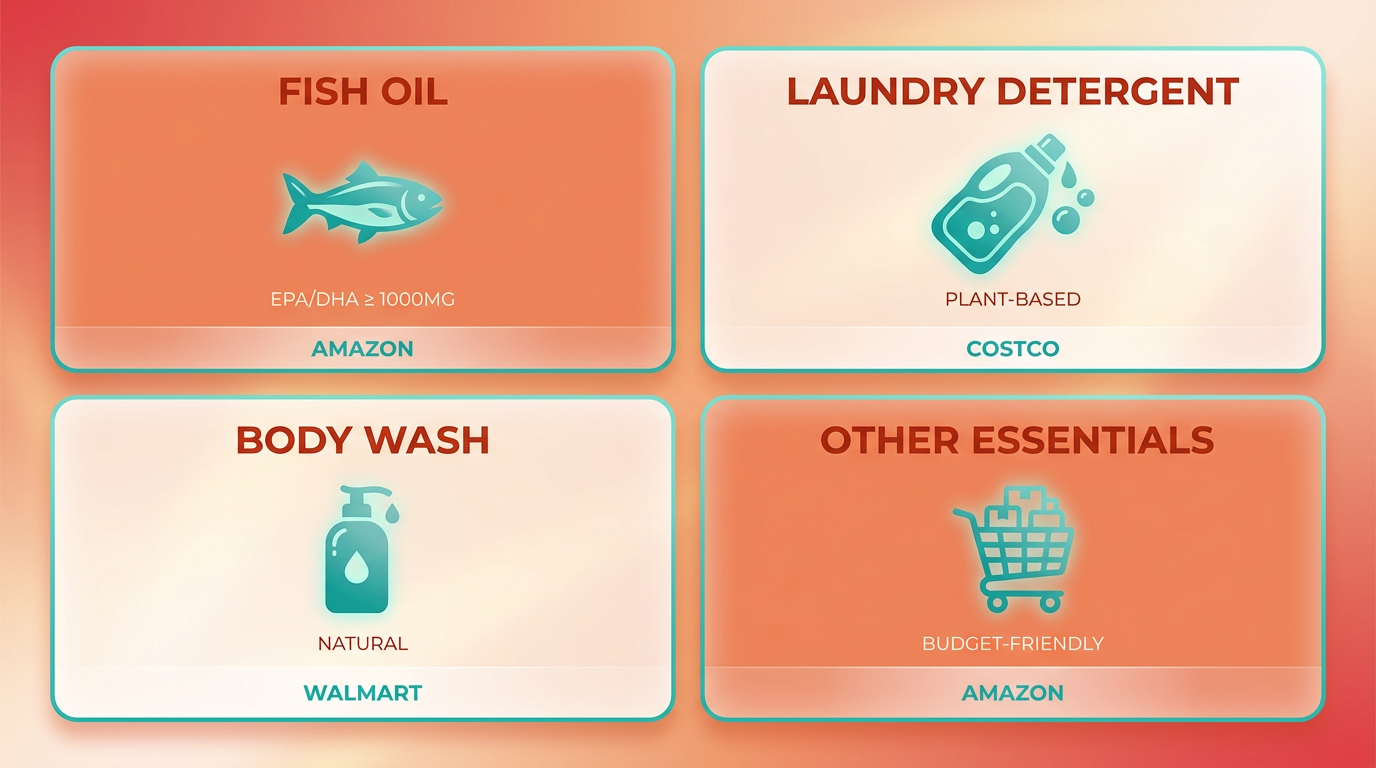
What Advanced Techniques Reveal Hidden Deals?
To uncover hidden deals, use Popgot’s unit pricing comparisons and retailer-specific tools. For example, the "Walmart Price Checker" feature highlights discrepancies in pricing for the same product across locations, helping you plan purchases strategically (Popgot's unit price shopping). Another technique is comparing bulk vs. Single-item purchases. A case study shows that switching from Costco’s $52¢/AAA battery to Powermax batteries on Amazon at 29¢/AAA saves 44% per unit (Popgot's costco isnt always cheaper). Similarly, for dishwasher detergent, The AI identifies that liquid or powder options often cost half as much as pods per load, a 50% savings opportunity (Popgot's dishwasher detergent showdown). Regularly revisiting items with Popgot’s price tracking ensures you never miss a drop in cost (Popgot's unit price shopping).
Why Popgot Outperforms Generic Shopping Platforms
Unlike generic price-comparison tools, Popgot’s AI doesn’t just list products-it verifies every label for accuracy and calculates unit pricing across 5 major retailers. This prevents misleading "sales" that inflate perceived discounts. For example, while a bulk retail provider might charge $1.11/ounce for antiperspirant, Popgot finds alternatives at 83¢/ounce by matching quality and quantity (Popgot's costco isnt always cheaper). The platform also avoids favoring one retailer over others, ensuring fair comparisons between Amazon, Target, and Aldi. Its ability to extract precise data-like "75 oz of liquid detergent"-gives users confidence in their unit pricing calculations, which generic providers often overlook (Popgot's unit price shopping). By combining AI-driven verification with cross-retailer transparency, Popgot consistently delivers 30-60% savings on essentials (Popgot's unit price shopping). This level of precision is critical for long-term budget control.
To implement these strategies, start by defining your product needs in detail. Use filters like "organic," "vegan," or "non-GMO" to narrow results, and enable price alerts for frequently purchased items. For pantry staples, compare unit prices across all 5 retailers Popgot supports, and don’t overlook the "Price per Unit" column-it’s your fastest path to savings. With these techniques, you’ll turn everyday shopping into a strategic, budget-friendly process.
References
[1] Popgot | Shop with AI that reads every label - https://popgot.com/
[2] I Compared Millions of Products: Costco isn't always better - https://popgot.com/blog/costco-isnt-always-cheaper
[3] I’m working on Popgot (Popgot), a tool that tracks unit prices (cost… | Hacker News - https://news.ycombinator.com/item?id=43821480
[4] Popgot Blog | Unit Price Shopping Insights & Tips - https://popgot.com/blog
[5] Value Shopping That Aligns With Your Values - https://popgot.com/blog/value-shopping-that-aligns-with-values
[6] Dishwasher Detergent Showdown: Save Big by Ditching Convenience - https://popgot.com/blog/dishwasher-detergent-showdown
Frequently Asked Questions
1. How much can I save using Popgot’s price comparisons?
Users save 30-60% on everyday items by comparing unit prices across 5 retailers. For example, A Costco $52 100-pack of AAA batteries costs just 29¢ per battery on Amazon.
2. How does Popgot ensure accurate price comparisons?
Popgot’s AI verifies product specs like ingredients and certifications across retailers, ensuring apples-to-apples comparisons and hiding no hidden costs.
3. Can I trust Popgot to find cheaper alternatives reliably?
Yes, Popgot normalizes listings and reveals true costs upfront, helping users avoid overpaying for convenience or brand loyalty.
4. Why don’t traditional retailers show unit pricing?
Platforms like Amazon often hide unit pricing, leading to overpayment. For instance, switching from dishwasher pods to powder can save 50% when prices are visible.
5. How does Popgot handle misleading product claims?
Popgot’s AI cross-checks labels, ingredients, and certifications across 5 retailers to expose misleading claims and ensure you get exactly what you need.
6. Is Popgot worth using for small purchases?
Even small savings add up—households pay 40% more without price checks. One user saved $100/month by prioritizing unit pricing over brand loyalty.
7. Can I use Popgot for non-grocery items?
Yes, Popgot compares prices for household goods, snacks, and more. A $15 Amazon almond bag might cost $12 at Costco with identical specs.