
No Good Deals Today? Popgot Flags When Prices Actually Drop

Key Takeaways
- Unit pricing breaks a product's price into a standard measure, cost per ounce, per sheet, per load, so you see the real cost, not the shelf tag.
- Popgot does the per-unit math for you, reading price and quantity from listings across the retailers it tracks.
- Bigger isn't always cheaper. A 12-pack can beat a 24-pack per unit.
- "Family size" sometimes costs more per ounce than the standard size. The shelf tag won't tell you that.
- Small per-unit gaps matter most on the stuff you rebuy constantly: paper towels, detergent, coffee, pantry staples.
- The pricier detergent bottle can win on cost per load. Popgot flags that at a glance.
What unit pricing actually tells you
Unit pricing tells you the real cost of what you're buying. It breaks the price down to a standard measure, cost per ounce, cost per sheet, so a bigger box doesn't automatically win. Popgot runs that math for you, pulling numbers straight from listings across the retailers it tracks.
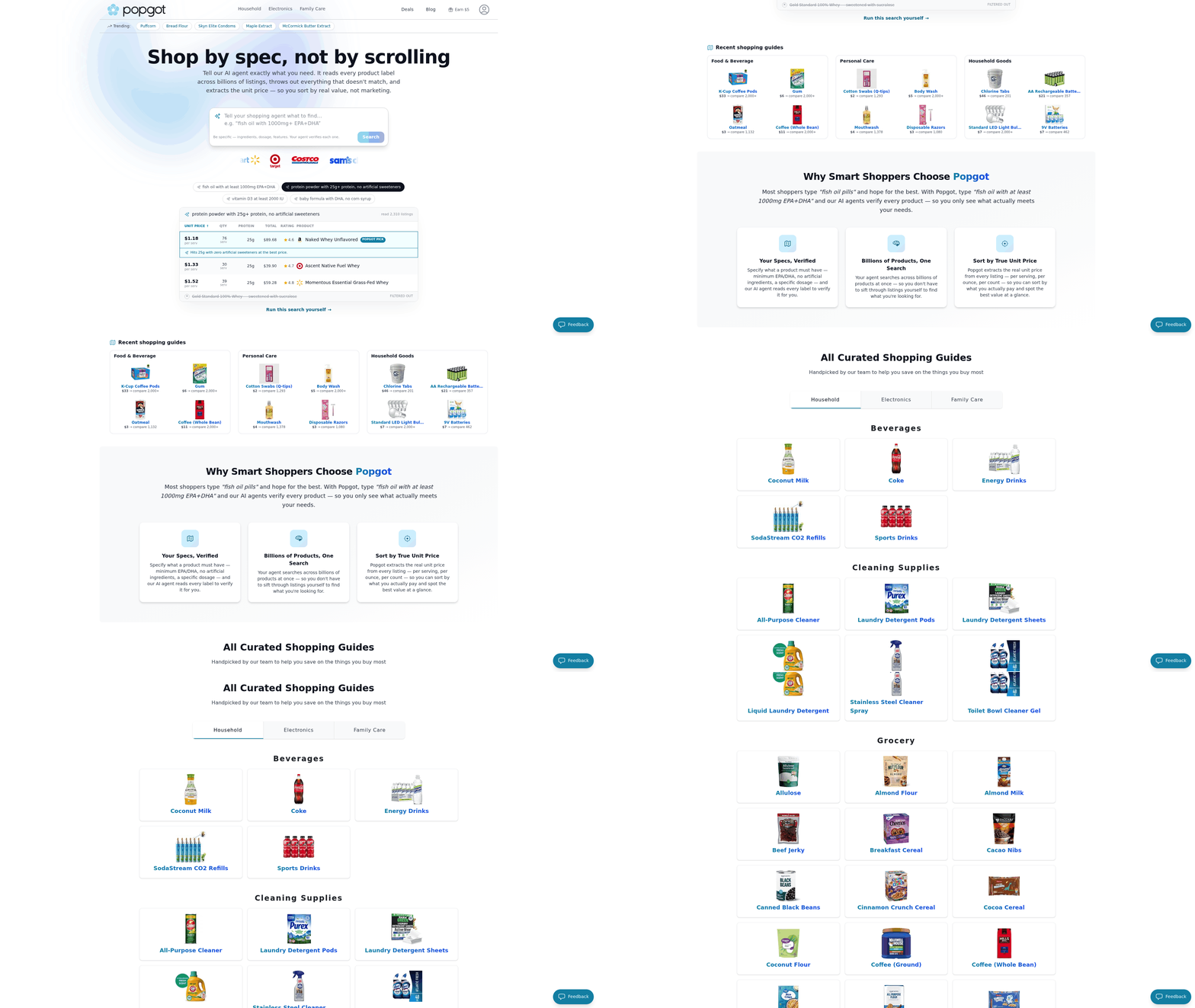
The problem with everyday shopping is that packaging hides the math. Bulk gets marketed as the smart-saver move, but manufacturers often price mid-sized containers more aggressively to clear inventory. You shouldn't need a calculator in the aisle to catch that.
How Popgot works out the per-unit cost
Popgot reads the listed price and quantity, then calculates cost per unit. It does this across every retailer it tracks, so the same product gets a consistent per-unit figure no matter where it's sold. That turns a pile of mismatched package sizes into one clean number you can actually compare.
This matters most for goods you restock on a cycle. Buy something week after week and a fractional difference in unit cost compounds into real money over a year. With liquid cleaning concentrates, a slightly higher upfront price might buy you double the actual applications. Popgot standardizes the measurement so that value is obvious instead of buried.
Why the shelf tag lies to you
The shelf price answers "what do I pay today." The unit price answers "am I getting value." Different questions, and only one protects your budget over time.
Pair unit pricing with price tracking and both get sharper. You see which size is cheaper per unit and whether today's price is a real drop or just a normal week. The Popgot vs Google Shopping breakdown digs into how this stacks up against other tools.
Start with what you buy most. Check the per-unit figure before you commit, and let the number decide.
Narrowing a search with filters
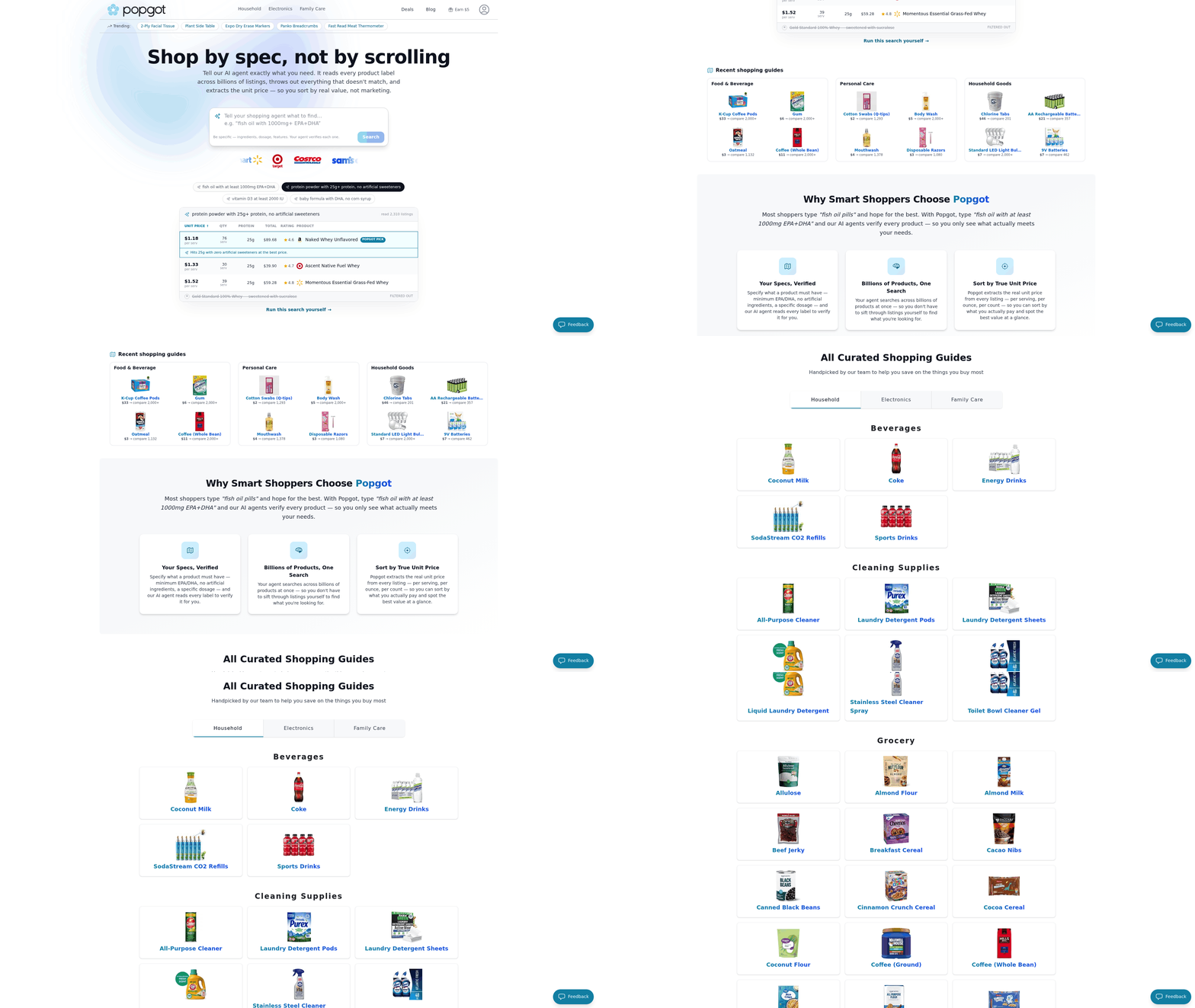
Filters turn a broad search into a precise one. Instead of scrolling past dozens of listings that almost fit, you tell Popgot exactly what you need and it hides everything that doesn't qualify. Saves time, and stops you buying the wrong thing at the "right" price.
The core idea: a cheap product isn't a deal if it fails your requirements. Filters make sure the price you're comparing is a price on something you'd actually buy.
Setting your requirements
Define the specs that matter, then let Popgot screen listings against them. For a supplement, that might be a minimum EPA/DHA level per serving. For groceries, a carb ceiling or an ingredient you want to avoid.
Fish oil is the clean example. Two bottles look identical on price, but one delivers far less EPA and DHA per softgel. Set a minimum and the weak formulas drop out. Now the cheapest remaining option is genuinely the cheapest one that meets your standard.
This pairs naturally with per-unit math. Once the filter clears out everything that doesn't qualify, you're comparing like with like, and the lowest true cost wins.
Where filters earn their keep
Filters pay off most on repeat purchases and spec-sensitive buys, where a small mistake repeats every month. Keto shoppers and household-basics buyers win biggest, because their requirements are strict and their carts refill often.
Keto's a good case. Set a carb limit, screen out everything above it, and Popgot ranks what's left by price. You buy the cheapest qualifying option without reading a hundred nutrition labels.
Household basics work the same way. Filter paper products by ply or count, cleaning supplies by concentration, then compare across the retailers Popgot tracks. The point isn't just a lower number. It's a lower number on the exact thing you meant to buy.
That's the difference between a coupon and a system. Filters keep your search honest, so every price you see is one worth acting on.
Curated guides for the stuff you rebuy
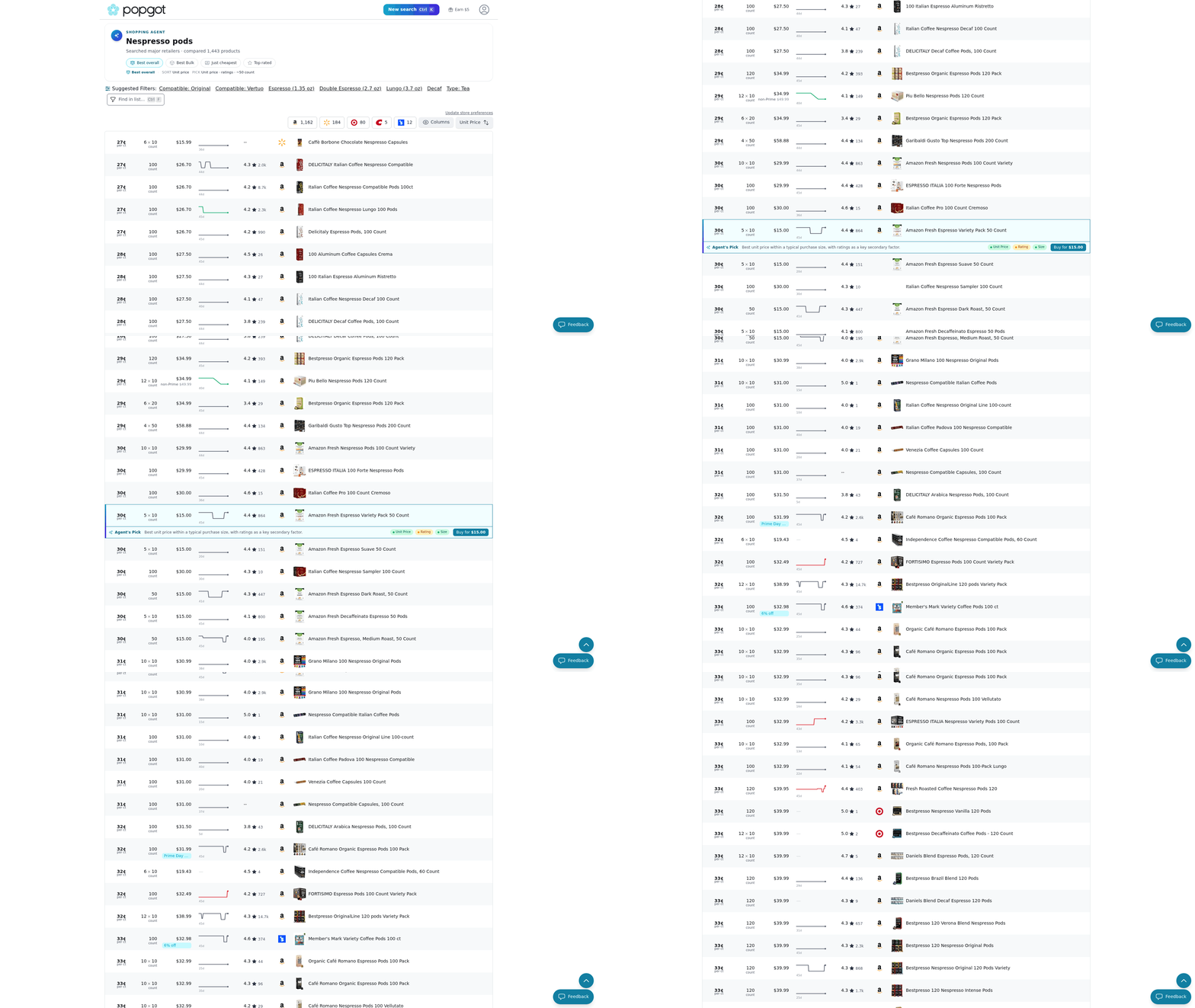
Curated guides are handpicked lists of the best-value options for things you buy over and over. Instead of running a fresh search every time you need soap, coffee, or pantry staples, Popgot groups vetted picks into ready-made guides. Each one shows where the real value sits right now. You already know you need the item. You just don't want to compare fifteen listings by hand every week.
How guides save you money on basics
Guides narrow thousands of listings down to a short set of genuinely good buys, then flag the retailer with the lowest current cost. You skip the research and land on the pick that's actually cheap today, not just cheap-looking.
Take Dove soap. A guide pulls the multipacks worth considering, lines up the price across the retailers Popgot tracks, and surfaces the one that beats the rest. You see the winner without opening a dozen tabs.
Same logic for specialty carts. Shop for organic baby foods and a guide can collect pureed options that meet strict ingredient standards — a shortlist built around your family's dietary needs, not a generic bestseller feed.
Where guides stop being useful
Guides work best for repeat purchases with clear substitutes. They're weaker for one-off or highly personal buys where your exact preference outranks price. Say you want one specific brand for a reason a guide can't know, like a scent you're loyal to. A list of "similar" picks won't move you. That's fine. Use guides for the commodity basics and decide the personal stuff yourself.
And pair the shortlist with real-time price tracking, so you don't buy a great item during a temporary spike.
Getting started, and getting it right
Getting started takes about a minute. You type what you need, the AI agent reads the labels across eight major retailers, and you get a list sorted by real value. No account setup gauntlet, no long onboarding. Here's how to get the most out of it from your first search.
Write a search that actually works
Be specific. The single biggest mistake is typing a category like "protein powder" and hoping for the best. Spell out your requirements instead: "protein powder with 25g+ protein, no artificial sweeteners." The agent verifies each spec against the label, so vague searches waste the whole point.
Think in the numbers that matter to you. For a vitamin, that's a minimum dose — "vitamin D3, at least 2000 IU." For baby formula, maybe "DHA, no corn syrup." The tighter the query, the more junk gets thrown out before you ever see it.
The best way to compare and buy
Sort by unit price, not sticker price. Popgot pulls the real per-serving or per-ounce cost from every listing, so the cheapest total isn't always the cheapest buy. A 90-serving bottle can lose to a 60-serving one once you run the per-serving math.
Watch the Popgot Pick flag. It marks the cheapest option that still clears your minimum spec. In a recent fish oil run, that meant a pick at $0.38 per serving while still beating a 1,000mg EPA+DHA floor.
Don't stop at one category. Because a single search scans multiple merchants at once, you can price-check groceries, cleaning supplies, and family care in one sitting.
A few habits that maximize savings:
- Start with curated guides for staples you rebuy weekly. They narrow thousands of listings to a short vetted set.
- Run a fresh search before big buys. Prices move, and the cheapest retailer shifts.
- Use the mobile site mid-aisle to sanity-check a shelf price against real unit cost.
One honest carve-out: if you genuinely don't care about specs and just want the lowest sticker on a generic item, the verification is overkill. Popgot earns its keep when the details matter.
Why comparing prices pays off at all
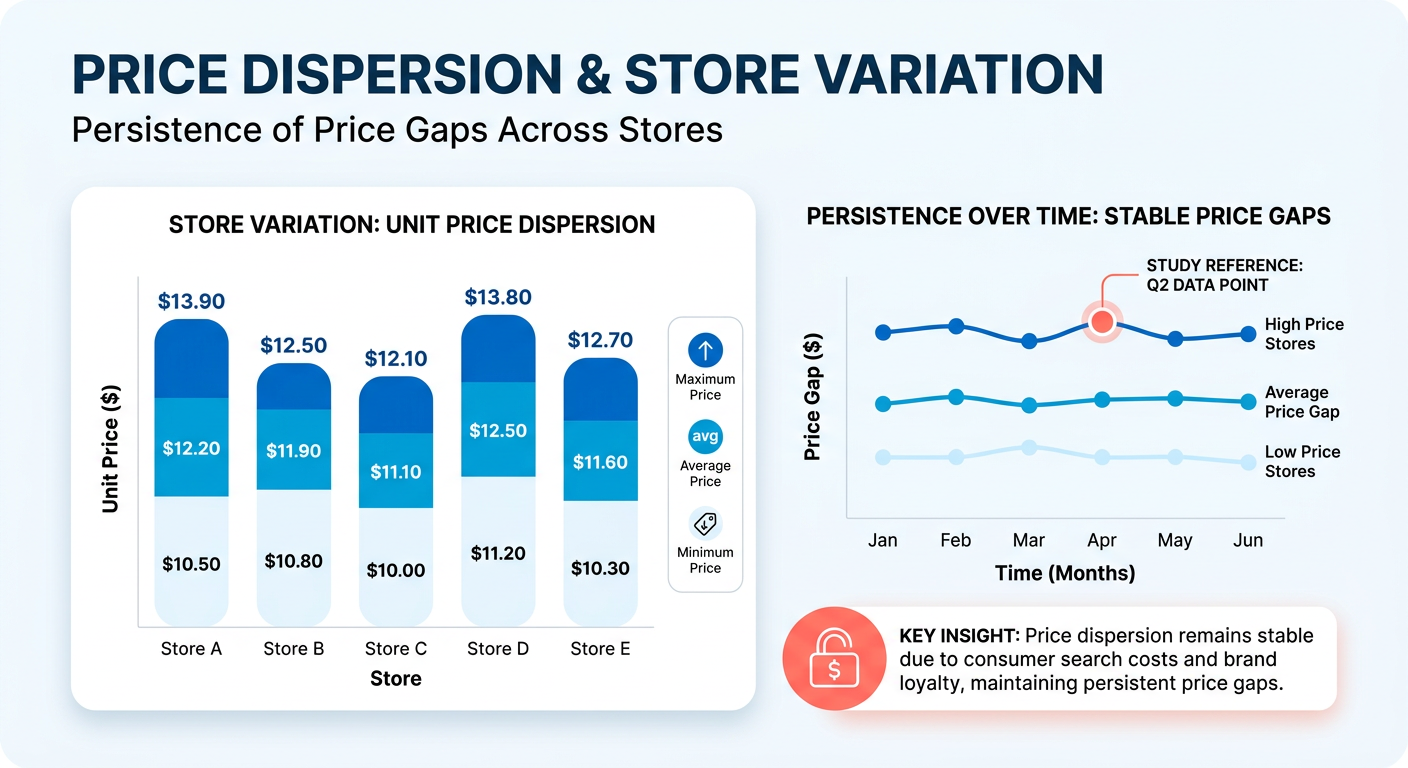
The same product costs different amounts at different stores, and that gap doesn't close on its own. Economists call it price dispersion, and it persists. One empirical analysis found the spread isn't random noise — it sticks around, which means the store charging more today often charges more next month too, as shown in this study on price dispersion.
That persistence is the whole reason comparison shopping pays off on everyday items, not just big purchases. If the gap were fleeting, chasing it wouldn't be worth your time. It isn't fleeting.
Why doing this by hand wastes your time
Checking prices manually means opening multiple store tabs, hunting for the right size, and doing the per-unit math yourself. Consumer advocates track prices precisely because shoppers can't easily spot trends on their own, as Consumer Reports explains here. The work is tedious, and most people quit before they finish.
Timing adds another layer. Even when you find the item, you don't know if the price is high or low against its own recent history. Google now tracks price changes and alerts you when a product drops, according to Google's shopping team. That solves timing on one item, but not the cross-store comparison at the moment you're ready to buy.
How much cross-store comparison actually saves
The savings come from two sources at once: the store gap and the timing window. Because price dispersion is stable, the cheaper retailer is often reliably cheaper. A tool that checks multiple merchants in seconds does in one search what would take you fifteen minutes across browser tabs.
Here's what that gap looks like on common essentials. These are illustrative examples to show the shape of the spread, not live quotes.
| Item | Retailer A | Retailer B | Retailer C | Retailer D | Unit Price Range |
|---|---|---|---|---|---|
| Bar soap (8-pack) | $9.47 | $8.99 | $10.24 | $8.49 | $1.06–$1.28/bar |
| Gluten-free flour blend (3 lb) | $14.99 | $13.49 | $16.20 | $12.99 | $4.33–$5.40/lb |
| Coffee (12 oz ground) | $7.29 | $6.49 | $8.15 | $6.99 | $0.54–$0.68/oz |
| Olive oil (25 oz) | $11.99 | $10.49 | $13.29 | $9.99 | $0.40–$0.53/oz |
| Paper towels (6-roll) | $12.49 | $11.29 | $13.99 | $10.99 | $1.83–$2.33/roll |
The last column matters most. A "cheaper" pack can lose on cost per unit once you standardize the math.
Who gets the most out of this
Health-conscious shoppers and families see the biggest returns. If you're already screening specialty foods for allergens or checking active-ingredient concentrations, you're filtering hard anyway. Layer price comparison on top and you get the right product at the lowest price, not one or the other.
Families buying the same staples every week feel the compounding effect. A dollar saved on a daily essential repeats fifty-two times a year. That's where a stable store gap turns into a real budget difference.
Getting more from multi-retailer search
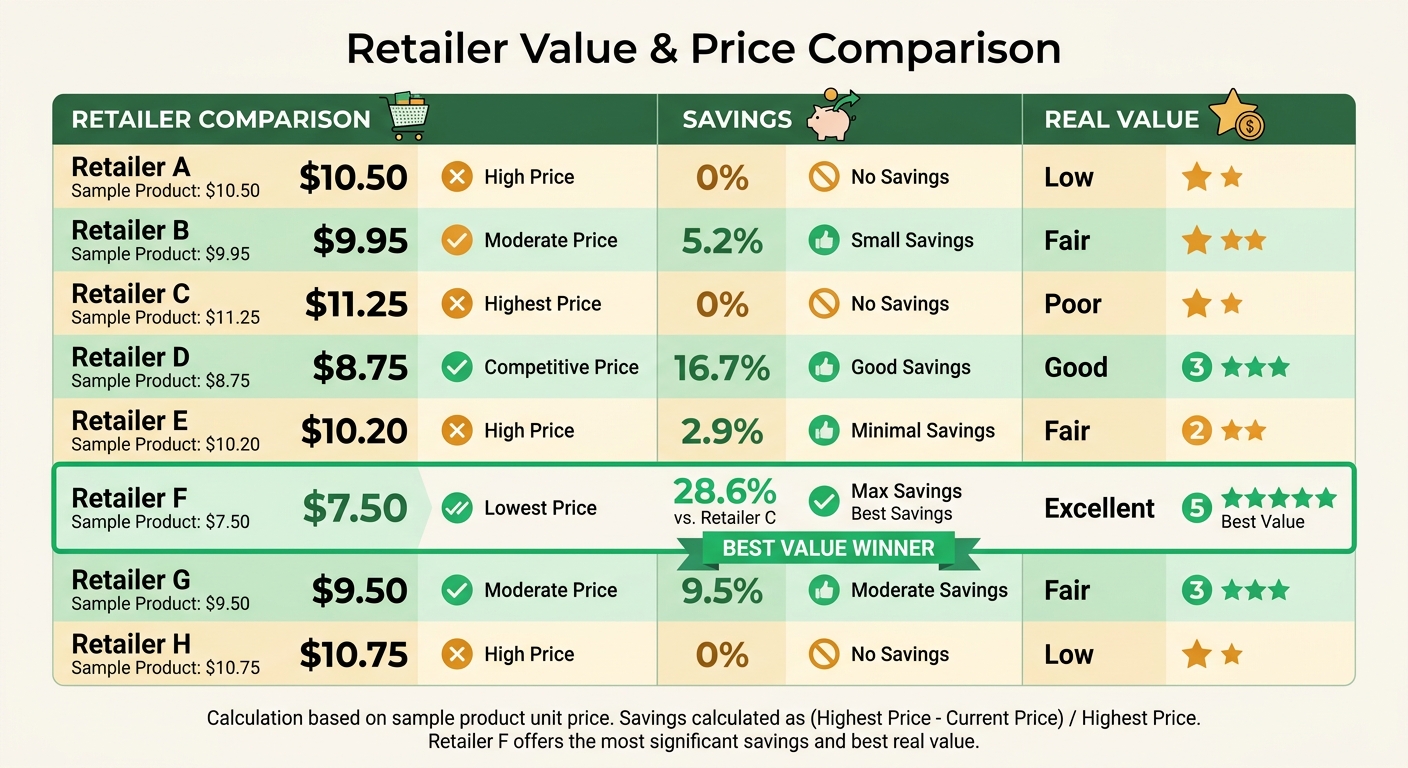
Popgot pulls listings from multiple major merchants at once and ranks the results by real value. You type what you need, the AI agent reads product labels across every store, and you see the cheapest qualifying option without opening a dozen tabs. One search replaces the manual price-checking that eats your afternoon.
The savings come from a simple fact: retail pricing is decentralized. Compare stores at once and you catch the low price instead of guessing which store to check first.
Why eight retailers at once beats one at a time
Comparing across merchants in one pass means you never settle for the first price you find. You see the full spread, then buy from the store charging the least right now.
Plant-based protein powder shows how this plays out. You search for a specific vegan blend with a minimum protein threshold. One retailer lists it at a markup, another runs a weekly special, a third bundles it in a size that beats both on cost. A single search surfaces all three, so you buy the real low. Doing that by hand across stores is exactly the tedious work consumer groups keep telling people to do — and that most people skip.
Timing the purchase
Multi-retailer search finds the cheapest store today. Timing adds another layer. If you're not ready to buy, price tracking watches for the drop instead, with alerts when a product gets cheaper over time.
That covers the "when" while the multi-store search covers the "where." For a non-urgent buy like a new piece of luggage, waiting for a price drop makes sense. For household basics you're out of today, the cheapest current store wins.
Where multi-retailer search falls short
It finds the best listed price, but it can't fix stock or shipping quirks. A store might show the lowest sticker, then tack on shipping that erases the gap. Always sanity-check the delivered total before you commit.
It also assumes you've defined what you need. A cheap listing on the wrong product is no deal. Pair the multi-store search with clear specs, so the winner is something you'd actually buy.
The practical version: use multi-retailer search for what you need now, and lean on price alerts for what you can wait on. Together they cover both halves of a smart purchase — the right store and the right moment.
References
[1] 4 ways to shop and save this summer - https://blog.google/products-and-platforms/products/shopping/save-money-price-insights-price-alerts/
[2] How to spot price trends and save on everyday purchases - YouTube - https://www.youtube.com/watch?v=nHfxfmwJ9Uc
[3] (PDF) Existence And Persistence Of Price Dispersion: An Empirical ... - https://www.researchgate.net/publication/24095767_Existence_And_Persistence_Of_Price_Dispersion_An_Empirical_Analysis
Frequently Asked Questions
1. Does Popgot factor in shipping costs when ranking the cheapest retailer?
Popgot ranks results by the listed price and unit cost, not delivered totals. A store may show the lowest sticker, then add shipping that erases the gap. Always check the final delivered total before committing, especially for single items that don't qualify for free shipping thresholds.
2. Can I use Popgot without creating an account?
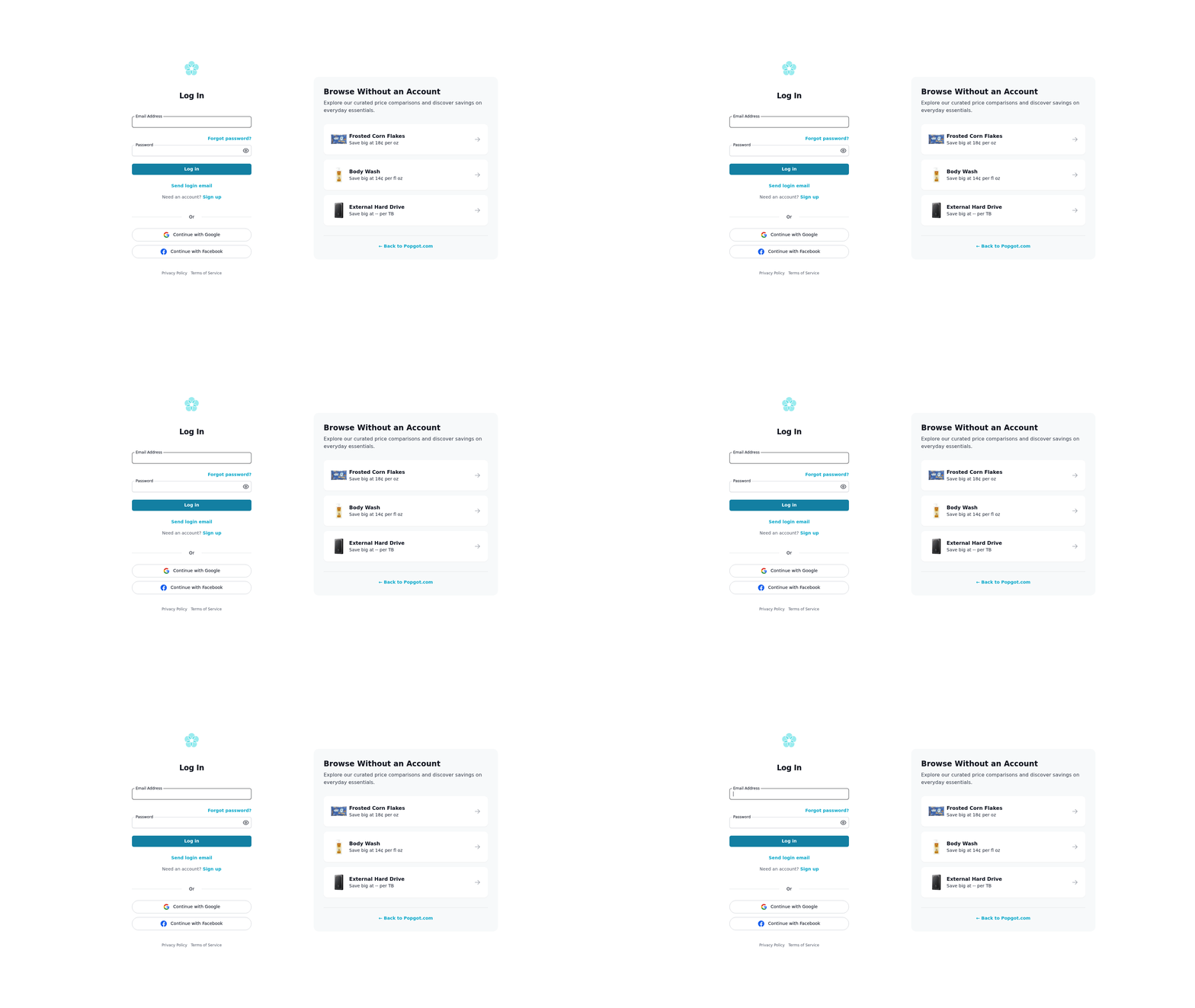
You can browse and search Popgot without setting up an account. The sign-up page includes a browse-without-account option. Simply type what you need, and the AI agent will scan product labels across multiple merchants, returning results sorted by real value without requiring any registration.
3. How do I write a search query that returns useful results?
Spell out specific requirements rather than broad categories. Instead of "collagen," type "collagen peptides with hyaluronic acid, unflavored." The agent verifies each spec against the label, so precise queries filter out junk before you see it. For other supplements, include a minimum dose like "magnesium glycinate at least 400mg."
4. What does the "Popgot Pick" flag actually mean?
The Popgot Pick flag marks the cheapest option that still clears your minimum spec. It combines the lowest price with your defined requirements, rather than just highlighting the cheapest sticker overall. This ensures you don't accidentally buy an under-dosed or low-quality product just because it has the lowest price tag.
5. When should I use price alerts instead of buying immediately?
Use price alerts for items you can wait on, such as a piece of luggage or a seasonal jacket. This allows you to monitor price drops over time. For household basics you need immediately, buying from the cheapest current retailer is the better approach since waiting offers no benefit.
6. Is Popgot worth using if I only want the cheapest generic item?
Popgot's spec verification is overkill if you don't care about product details and just want the lowest sticker on a generic item. It earns its value when details matter, such as verifying specific fabric blends, checking for allergen-free certifications, or avoiding certain additives. For simple commodity buys, a basic price comparison suffices.
7. Why do the same items cost different amounts at different stores over time?
Retailers use different pricing strategies, inventory levels, and regional promotions, which creates lasting price gaps for identical items. Because these store-to-store differences are stable over time rather than temporary fluctuations, shopping at the store with the lower baseline price consistently saves you money on recurring purchases.