
Nuts on a Budget: Popgot's Top Picks for Affordable Snacking

Key Takeaways
- Nuts cost far less per serving than most processed snacks, and they bring heart-healthy fats, protein, and fiber in a shelf-stable form.
- Buying in bulk and storing it right is where the real savings live.
- Nuts hold for up to four months in the fridge and six in the freezer, so less goes to waste.
- The unsaturated fats support your heart. The protein and fiber keep you full between meals.
- That fullness is the weight-management angle: satisfied snackers reach for fewer junk options later.
- Demand for portable, healthy snacks has climbed, and retailers have answered with cheaper pack sizes and more variety.
- Families on tight budgets and label-reading shoppers get the most out of it.
Why cheap nuts are an underrated grocery hack
Nuts deliver serious nutrition without wrecking your budget. Heart-healthy fats, protein, fiber, all in a shelf-stable snack that costs far less per serving than the processed stuff. A little planning is all it takes to eat well and spend less.
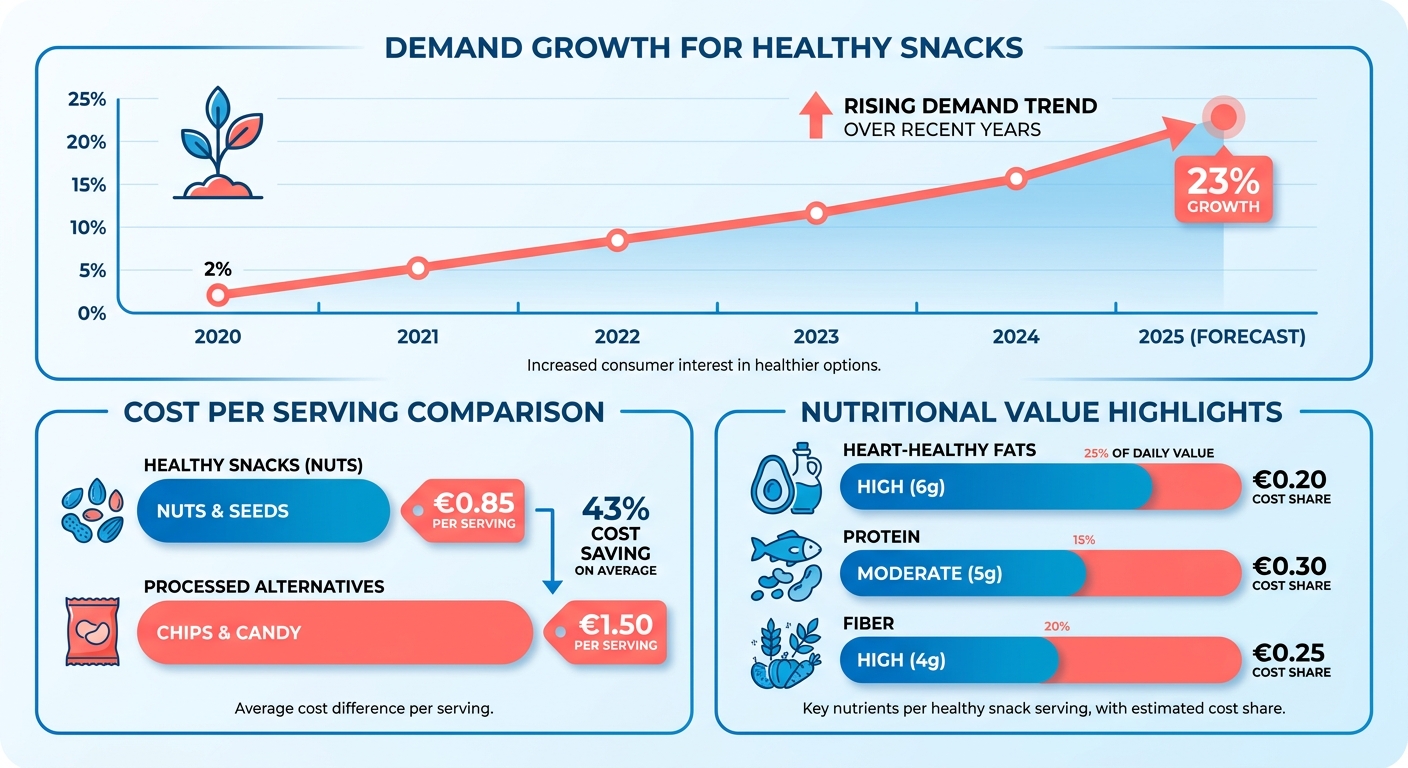
Demand for healthy snacks has climbed steadily the past few years. People want portable, filling options that aren't just empty calories. Nuts fit, and retailers have responded with more affordable pack sizes and variety.
The health-and-wallet math
A handful of nuts gives you unsaturated fats for your heart, plus protein and fiber to carry you between meals. That fullness is the part that matters for weight management. When a snack actually satisfies you, you reach for fewer low-value options later. No sugar crash included.
The affordability piece is real too. As Nuts for Life explains, you save the most by buying in bulk and storing smart. Fridge for up to four months, freezer for up to six, so nothing goes stale on you.
Who gets the most out of it
Health-conscious shoppers and families on a budget. Nuts solve two problems at once: they expand your options and stretch a tight grocery bill further per serving.
For families dealing with food insecurity, a shelf-stable protein that lasts months is genuinely useful. Buy once, store it right, pull from it for weeks. Fewer store runs, less waste.
Storage is what makes the payoff land. Sweet Spot Nutrition recommends buying the largest package size that makes sense for you and keeping nuts in the freezer. If you read labels while you shop, this checklist for health-conscious shoppers helps you compare fast.
What the prices actually look like
Unit price tells you far more than the sticker. A bigger bag looks pricier but often costs less per ounce, which is where the savings hide.
| Nut Option | Package Size | Total Price | Unit Price |
|---|---|---|---|
| Peanuts & Cashews Variety Pack | 30 oz / 24 ct | $10.99 | $0.37/oz |
| Unsalted Raw Mixed Nuts | 9 oz / 10 ct | $8.29 | $0.92/oz |
Those Good & Gather prices from Target show the gap plainly. $0.37 per ounce for the variety pack, $0.92 for the smaller raw mix. The bigger pack cuts your per-ounce cost by more than half.
Effort? About 15 to 20 minutes comparing unit prices across a few deals. Do it once, note the winners, repeat buys go faster. Difficulty is low. The only real skill is checking the per-ounce price and storing your stash cold.
Popgot's top affordable nut picks
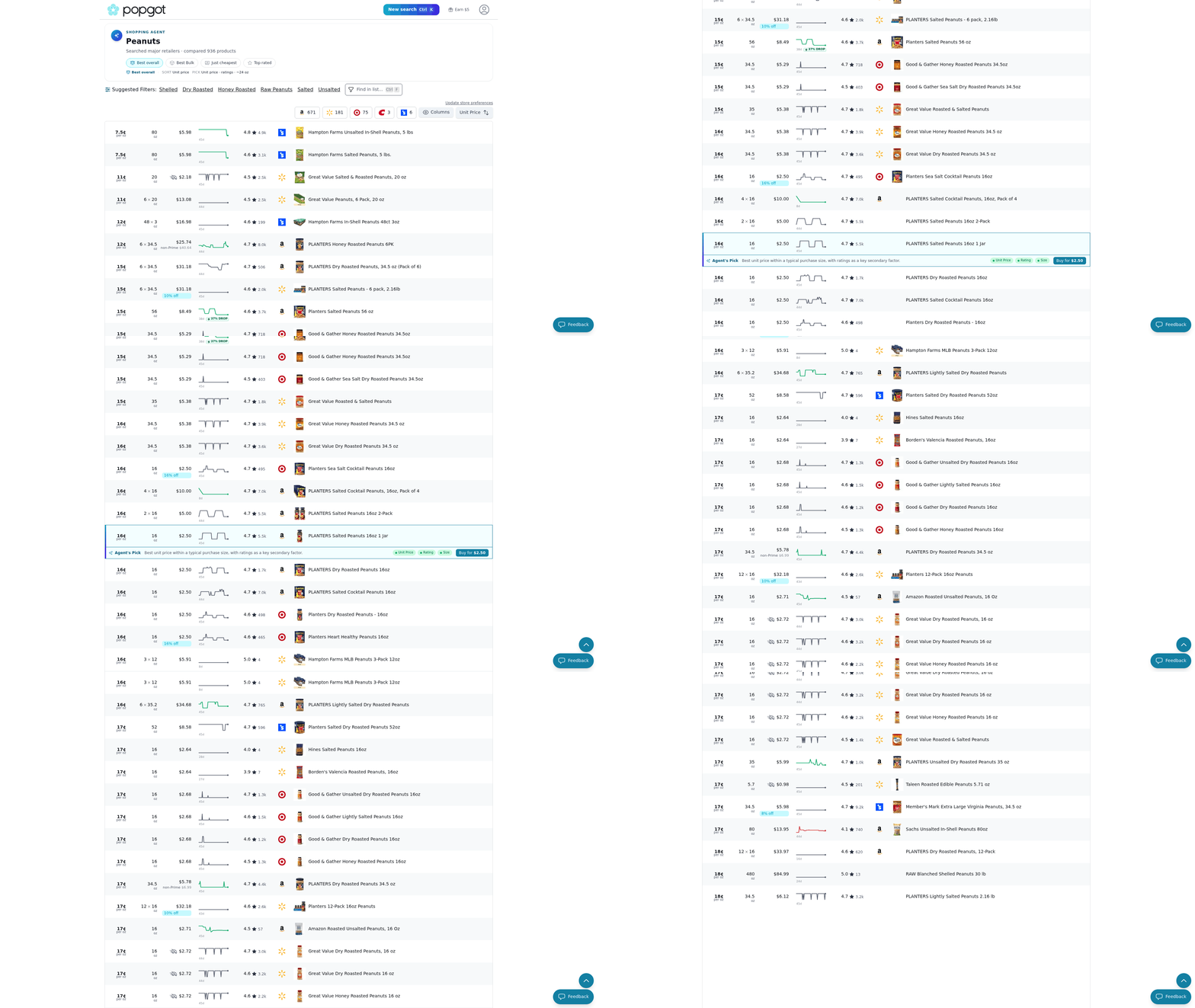
Peanuts win the affordability crown. Cheapest crunchy option in the aisle, and they still bring protein and heart-healthy fats. But smart shopping means matching the nut to your budget, your taste, and how you plan to eat it.
Here's what's worth stocking, based on what actually sells and what costs the least per serving.
The most nut for your money
Peanuts top the value list. A 2.5-pound Kirkland can breaks down to pennies per handful, per this Costco nut ranking. Technically a legume, but they bring the crunch and protein most snackers want.
Almonds give you the most nutrition per dollar among tree nuts. A one-ounce serving runs about 6 grams of protein and a full day's vitamin E, and 3-pound bulk bags typically cost roughly half of what small resealable pouches charge.
Sunflower seeds deserve a spot for the truly budget-minded. Often under $0.15 per ounce in bulk, they're one of the few options that beat peanuts on cost while still offering healthy fats and a real crunch.
How to compare nut prices
Shop by unit price, not sticker. A big can looks expensive next to a snack bag, but the per-ounce math usually favors the bulk container.
Quick trick: divide total price by ounces before comparing. A 16-ounce jar at $6 works out to $0.38 per ounce; a 5-ounce grab bag at $2.50 lands at $0.50. The jar wins even though it costs more upfront.
Want to sanity-check whether the warehouse actually saves you money? Costco isn't always cheaper than your regular grocery store. You can also track what's selling nationwide through Amazon's snack nuts best sellers.
Customizing for your diet and budget
Buy plain and season yourself. If you want salted nuts, a supermarket buyer's guide recommends salting them at home. You save money and control the sodium at the same time.
That one tip covers most dietary needs. Watching salt? Buy unsalted and add a pinch only where you want it. Prefer roasted? Toast raw nuts in a dry pan for a few minutes.
Match the format to your habits, too. Snack bags cost more per ounce but stop you from mindlessly finishing a can. Bulk cans win on price if you portion them into reusable containers yourself.
How to spot the best value per ounce
Best value comes from one number: total price divided by total ounces. That figure lets you compare a bulk can against a snack bag honestly. Bigger usually wins, but not always, so run the math before you trust the label.
Calculating unit price
Take the shelf price, divide by the ounces. That's your cost per ounce, the only figure that compares packages of different sizes fairly.
Most retailers already print it in small type near the price tag. Target's listings show it directly. A 16-ounce bag of roasted almonds at $7.99 works out to about $0.50 per ounce. A 6-ounce single-serve pouch of the same almonds at $4.49 lands near $0.75.
That gap is real. The larger bag costs a third less per ounce despite the higher sticker. Which is exactly why you calculate instead of trusting the total.
Comparing across retailers
Line up the cost per ounce from each store side by side. Lowest number wins, as long as the nut type and quality match.
Warehouse pricing often beats grocery shelves. A 3-pound bag of walnuts at a club might run about $13, near $0.27 per ounce, well under most grocery-shelf pricing on the same nut. Warehouses discount per-unit prices by selling in bulk, and it adds up on nuts you eat often.
But bulk isn't automatically cheaper. Sale prices, coupons, and store brands can flip the math at a regular grocery store.
Why nutrition factors into value
Cheap per ounce means little if the nut delivers less of what you want. Weigh the price against protein, fiber, and healthy fats per serving.
Raw and unsalted nuts skip the added sodium and oils that cheaper flavored mixes sometimes carry. Check the label for serving size and nutrient density before you decide.
Avoiding shrinkflation traps
Shrinkflation trims the package while holding the price, quietly raising your cost per ounce. Watch the ounce count on the front, not just the price.
A bag that dropped from 10 ounces to 9 at the same price just got about 11% more expensive per ounce. Recalculate the unit price on every trip, since packaging changes between restocks. The math protects you when the label doesn't.
Best budget snacking habits for saving more
Buying in bulk cuts your per-serving cost more than any other single move. Store what you can't eat now, salt nuts yourself, and time your purchases around the largest package that fits your household. Three habits, real money saved.
Buying in bulk without wasting money
Buy the largest package that makes sense for you, then store the extra properly. Bulk pricing only pays off if you actually eat what you buy before it goes stale. Storage is what makes it work.
Warehouse clubs sell nuts in large volumes at lower per-ounce prices, as Food & Wine's Costco nut guide explains. That discount only helps if you have a plan for the whole bag.
Nuts keep in the fridge for up to 4 months and the freezer for up to 6, per Nuts for Life. Portion a big bag into smaller containers, freeze most of it, pull out a week's worth at a time.
One caveat: bulk isn't automatically cheaper. Run the per-ounce math first before committing to a giant can you'll struggle to finish.
Simple habits that cut costs further
Salt your own nuts and choose the biggest sensible package. Buying plain and adding salt at home costs less than paying for pre-salted, and it lets you control the sodium.
Sizing your purchase to your actual habits matters too. Track how quickly a bag empties over a few weeks, then buy the next size up only once you're confident you'll finish it before it turns.
A quick checklist:
- Buy plain, season later. Skip the pre-salted markup and salt at home.
- Match size to household. The largest bag only saves money if you finish it.
- Freeze the surplus. Split bulk buys and freeze what you won't eat this month.
- Check unit price every trip. Sales and pack sizes shift, so the best value moves too.
Why cutting waste saves money and resources
Every nut you toss is money and growing effort in the trash. Proper storage stops the loss. Freezing extends shelf life to half a year, which means fewer stale bags binned and more servings per dollar.
Waste reduction is the quiet win here. Portion and freeze correctly and you stretch one purchase across months instead of racing an expiration date. That's the practical link between saving money and not wasting the resources it took to grow the food.
Why bigger packages aren't always cheaper
A bigger box doesn't guarantee a lower price per ounce. Sometimes it's the opposite. The only way to know is to check the unit price on the shelf tag and compare it against the smaller size. Drop the assumption that bulk always wins.
When a bigger package costs more per ounce
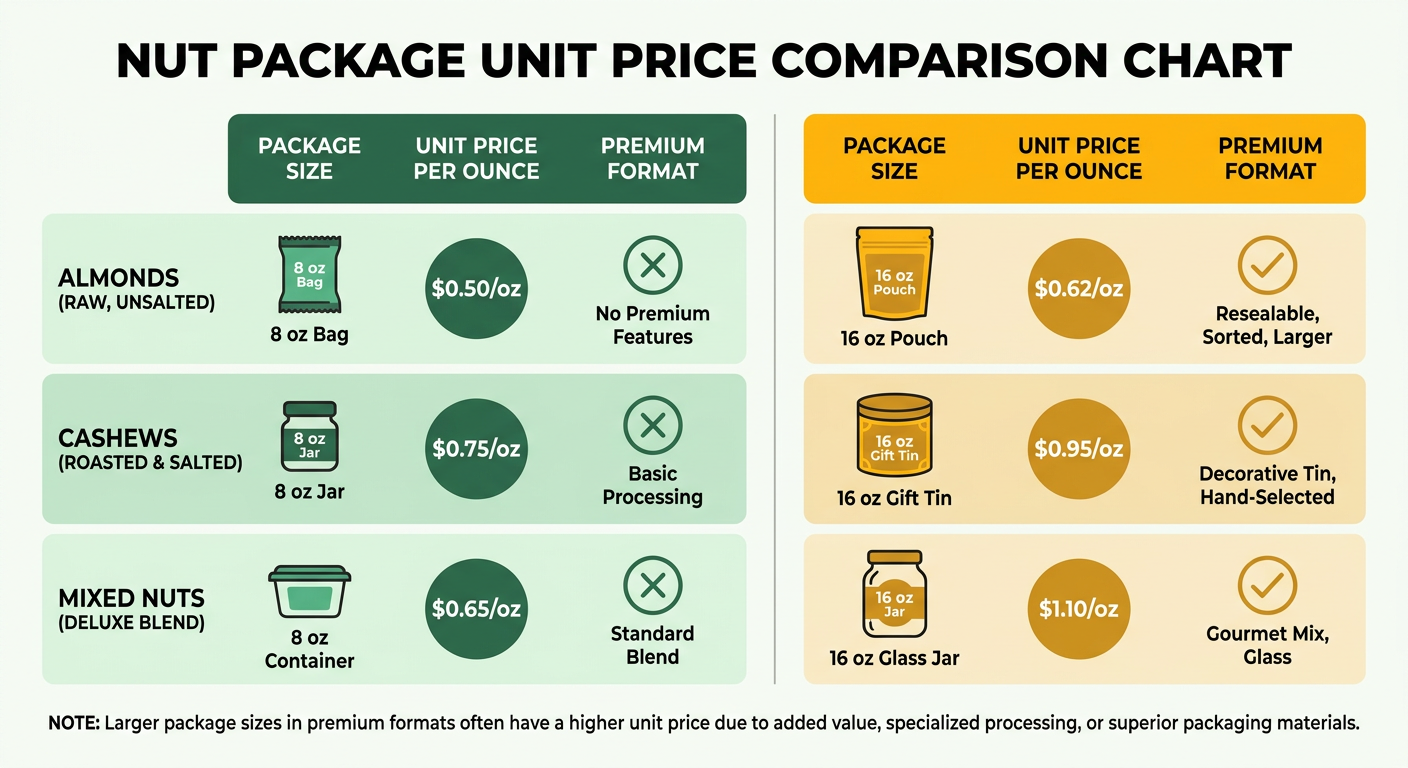
A larger package costs more per ounce when a premium format, a variety mix, or added processing pushes the price up. Bulk pricing works for plain, single-nut cans. It breaks down for pre-portioned bags and specialty blends carrying extra packaging and labor.
Look at two Good & Gather products at Target's nut selection. A 40-ounce roasted salted almond tub runs about $0.44 per ounce, while a 6-ounce honey-roasted cashew snack bag lands closer to $0.85.
Nearly double the unit price. Size didn't drive that gap. The flavored coating and single-serve packaging did. A plain version in the same large tub would land well below the snack-bag rate.
How packaging and waste change the math
Packaging and waste can erase a bulk discount entirely. Individually wrapped snack packs cost more per ounce because you're paying for all that wrapping. And if you buy a huge can you can't finish, the stale portion is money in the trash.
Take a 3-pound warehouse-club almond bag at around $14. Strong unit price on paper. But if a third goes rancid before you eat it, your real cost per eaten ounce climbs sharply.
The fix is matching size to your actual consumption. Freezer storage lets you commit to bulk without gambling on waste. And a big-box store isn't always cheaper once you factor in membership fees and the risk of spoilage.
Avoiding hidden price traps
Run the unit-price math yourself and ignore the sticker-shock framing on big displays. Retailers stack large packages up front to make them feel like the obvious value. The per-ounce number tells the real story, usually printed in tiny type you have to hunt for.
Watch the anchor effect. A jumbo tub placed beside an overpriced small pouch makes the big one look like a steal. That small pouch is often the decoy, marked up per ounce so the bulk buy feels smart by comparison.
Your checklist for beating these traps:
- Divide price by ounces on every option before deciding.
- Compare unit prices, not sticker prices, across sizes.
- Match the size to your household so nothing goes stale.
- Freeze the surplus when you commit to bulk.
- Ignore endcap displays that lead with the biggest box.
Do the arithmetic and the best deal reveals itself. Trust the per-ounce figure over the packaging every time.
Comparing retailers for the lowest nut prices
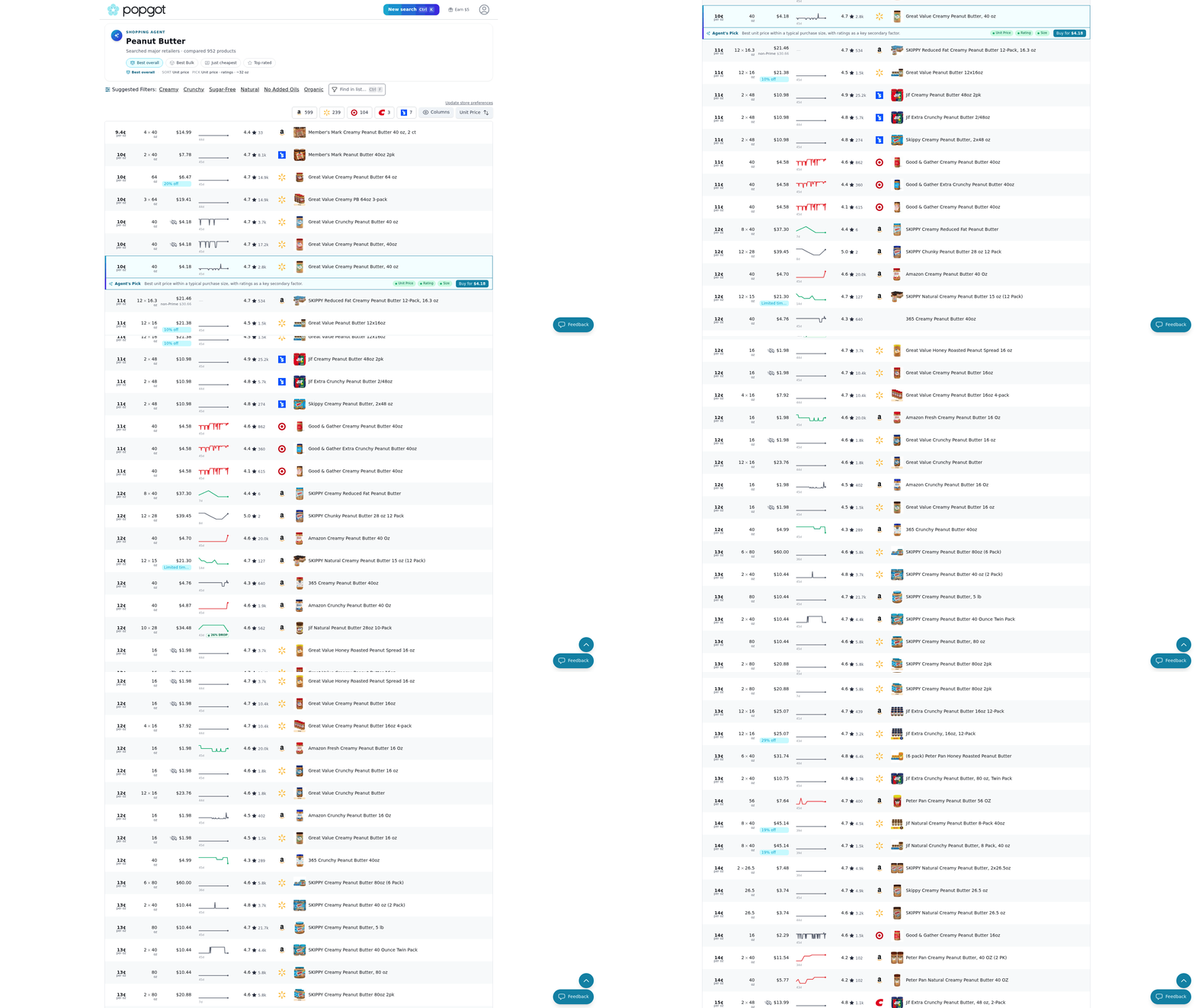
The cheapest nut retailer changes depending on the nut, the pack size, and whether you catch a sale. That's why comparing beats loyalty to any single store. A quick price check across three or four retailers can cut your per-ounce cost by a third or more.
Which retailer wins on price
No single store wins every category. Warehouse clubs lead on plain, single-nut cans, while big-box grocers and online marketplaces compete hard on snack-sized packs and variety blends.
Bulk clubs discount per-unit prices by selling in volume, which helps most on single-nut staples like peanuts. But peanuts are already the cheapest crunchy option in the aisle, so that advantage doesn't automatically carry over to pricier nuts like cashews or almonds, where the gap between stores tightens.
For variety and smaller portions, big-box grocers hold their own. Their snack-sized variety packs often undercut premium branded blends, even when they can't match bulk peanut pricing on raw cost.
Online marketplaces round out the picture. The Amazon snack nuts best-seller list tracks what shoppers actually buy, which is a useful gut check on where deals and demand line up.
How a multi-retailer search saves money
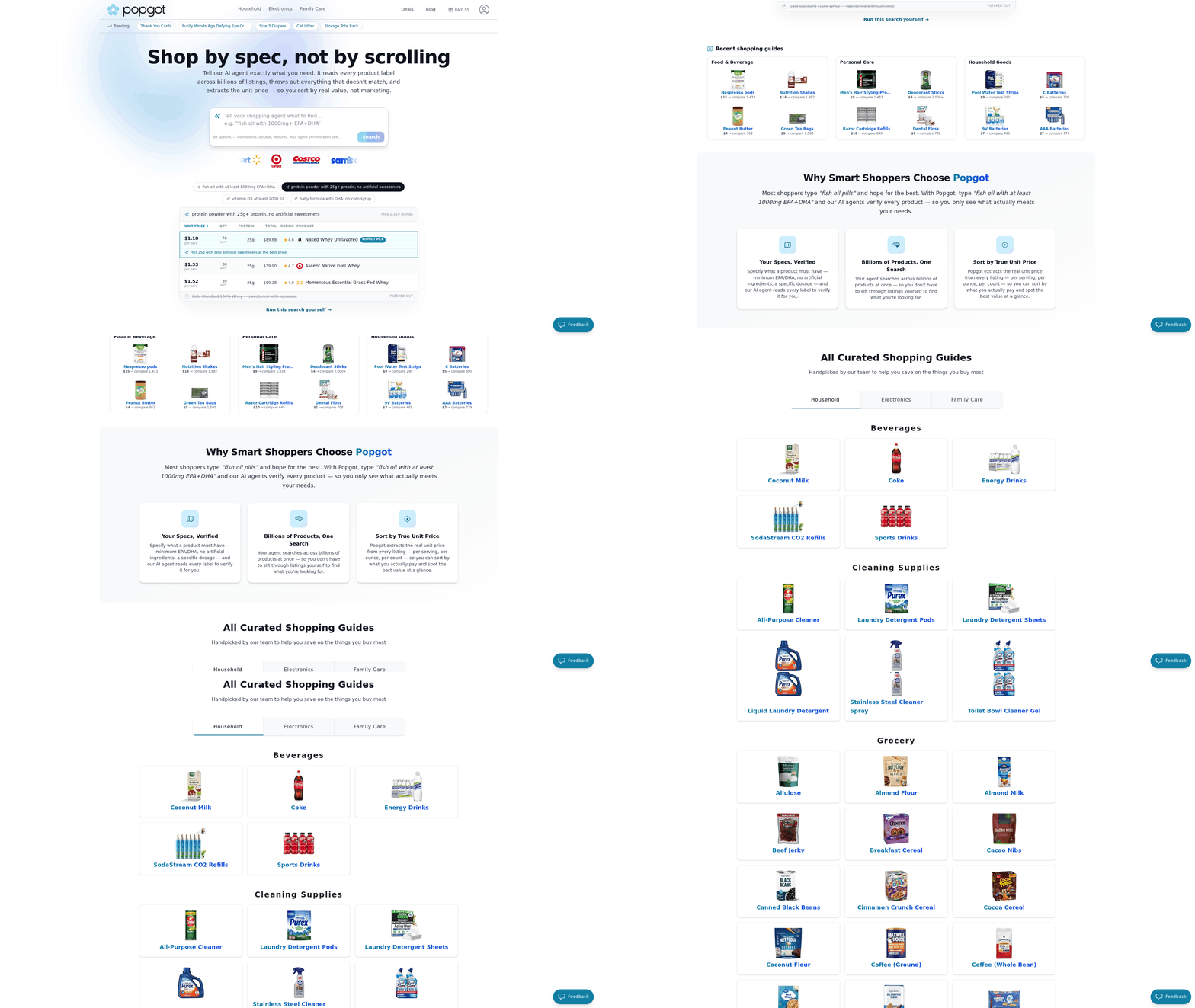
A multi-retailer search tool pulls prices from several stores into one view, so you compare unit prices without opening five browser tabs. Type in the nut you want, and the results surface the lowest per-ounce option across grocers, clubs, and online sellers.
Say you want roasted almonds. One grocer lists a mid-size bag; a bulk club sells a larger container at a lower rate per ounce. A search that lines up both figures side by side makes the cheaper choice obvious in seconds, instead of forcing you to convert package sizes by hand.
This matters because bulk isn't always the winner. A warehouse membership adds annual fees, and Costco isn't always cheaper once you factor those in. A comparison tool exposes those hidden gaps.
Why price alone shouldn't decide it
The lowest price loses value if the product goes stale before you finish it, or if a club membership costs more than you save. Weigh quality, freshness, and convenience alongside the per-ounce figure.
Three things to check before you commit:
- Freshness and form. Raw, unsalted, or roasted changes both price and shelf life. Match the form to how fast you'll eat it.
- Membership costs. Bulk pricing only pays off if you shop the club enough to justify the fee.
- Convenience. A slightly higher grocery price beats a bulk deal you have to drive across town to grab.
Run the unit-price math first, then layer these on top. That order keeps you from overpaying for a "deal" that doesn't fit how you actually snack.
How to find nuts that match your dietary needs
Matching nuts to your diet starts with reading the label, not the marketing on the front. Keto, vegan, and gluten-free shoppers all need different numbers, and the only way to know is to check the actual nutrition panel and ingredient list before you buy.
Which nuts fit keto, vegan, and gluten-free
Most plain nuts already fit all three. Nuts are naturally plant-based, so they clear the vegan bar. No wheat, so raw and dry-roasted versions are gluten-free. And several are low enough in carbs to work on keto.
For keto, macadamias and pecans lead on fat-to-carb ratio. Peanuts and cashews carry more carbs, so watch the portion if you're counting.
The catch is flavoring. Honey-roasted, barbecue, and candied coatings add sugar and sometimes wheat-based ingredients. That's where a diet-friendly nut goes sideways.
Reading the label for hidden ingredients
Check the ingredient list first, then the nutrition panel. A plain nut lists one thing: the nut. The moment you see added sugars, maltodextrin, or "natural flavors" on a seasoned product, your keto or clean-eating math changes.
Salted nuts are a common trap for sodium-watchers. Buy plain and salt them yourself at home, and you save money while controlling exactly what goes in.
For gluten-free shoppers, the risk isn't the nut. It's cross-contamination and seasoning blends. Look for a gluten-free label on flavored products, or stick to single-ingredient raw nuts to skip the guesswork.
One rule that saves money: buy plain in bulk, then flavor small batches yourself. You match your diet and stretch the dollar at once.
How AI can verify nuts against your diet
AI verification reads the ingredient panel for you and filters out anything that fails your spec. Instead of typing "keto nuts" and hoping, you tell the tool your exact requirement and it checks every label across retailers.
Say you want almonds under a certain carb count with no added sugar. Popgot's AI agent reads each listing, tosses the ones that miss, and shows what's left. A label-by-label slog becomes one search.
This matters most for flavored and mixed products, where ingredients hide in fine print. A Costco snack-nut ranking shows how much seasoning varies between products that look similar on the shelf.
Practical tips for diet-specific buying
Buy the largest plain-nut pack your diet allows, then freeze what you won't use soon. Freezer storage keeps nuts fresh longer, as Sweet Spot Nutrition notes, so bulk buying pays off even for a single-person household.
Skip pre-flavored variety packs if you're strict on keto or added sugar. They carry ingredients you'd rather avoid.
Match the nut to the diet, not the diet to whatever's on sale. A cheap honey-roasted bag isn't a deal if it breaks your macros.
References
[1] Amazon Best Sellers: Best Snack Nuts & Seeds - https://www.amazon.com/Best-Sellers-Snack-Nuts-Seeds/zgbs/grocery/11437481011
[2] Nuts Snack Bags - Variety Pack & Sizes | Good & Gather™ - Target - https://www.target.com/s/nuts+snack+bags
[3] 5 Costco Snack Sized Nuts, Ranked - AOL.com - https://www.aol.com/articles/5-costco-snack-sized-nuts-202300000.html
[4] The Ultimate Guide to Buying Nuts at Costco - Food & Wine - https://www.foodandwine.com/costco-nut-guide-11935903
[5] Nuts are healthy AND affordable - - Nuts for Life - https://www.nutsforlife.com.au/resource/snacking-on-nuts-is-healthy-and-affordable/
[6] The Least Expensive Nuts and Seeds for Heart Health - https://sweetspotnutrition.ca/cost-nuts-seeds/
[7] Nuts: A Buyers Guide | SupermarketGuru - https://www.supermarketguru.com/articles/nuts-a-buyers-guide/
Frequently Asked Questions
1. Are peanuts actually nuts, and does it matter for nutrition?
Peanuts are technically legumes, not tree nuts, though they grow underground and share similar nutritional profiles. For snacking purposes, the distinction rarely matters since peanuts still deliver protein and heart-healthy fats. However, people with tree nut allergies may still tolerate peanuts, and vice versa, so allergy status matters more than classification.
2. How can I tell if my stored nuts have gone rancid?
Rancid nuts develop a bitter, sour, or paint-like smell and a sharp, unpleasant taste. The texture may turn rubbery or overly soft rather than crisp. Since nuts spoil through oxidation of their fats, discoloration and an off odor signal it's time to toss them, even before any printed date.
3. Can I toast raw nuts to improve flavor without adding cost?
Toasting raw nuts in a dry pan for a few minutes deepens their flavor at no extra cost. Buy plain, unsalted nuts in bulk, then toast small portions as needed. This method lets you replicate the taste of pricier roasted versions while controlling sodium and avoiding added oils.
4. Do salted nuts pose a health concern for people watching blood pressure?
Pre-salted nuts can add significant sodium, which matters for anyone managing blood pressure. A single serving of heavily salted nuts may contain over 100 milligrams. Buying plain nuts and adding a light pinch of salt at home lets you control intake precisely while cutting costs at the same time.
5. Which nuts work best on a keto diet?
Macadamias and pecans lead for keto due to their high fat-to-carb ratio. Peanuts and cashews carry more carbohydrates, so portion control matters if you're counting. Avoid honey-roasted or candied coatings entirely, since these add sugars that quickly derail ketosis regardless of the base nut you choose.
6. How should I portion bulk nuts to avoid overeating?
Divide a large bag into single-serving containers of about one ounce each, roughly a small handful. Pre-portioning stops mindless eating straight from the can and helps you track intake. Store most portions in the freezer, pulling out only a week's worth at a time to maintain freshness.
7. Are flavored nut blends worth the higher price?
Flavored blends like honey-roasted or barbecue often cost nearly double per ounce compared to plain versions, driven by coatings and single-serve packaging rather than better nutrition. These coatings also add sugars, sodium, and sometimes wheat-based ingredients. For value and dietary control, plain bulk nuts seasoned at home win consistently.