
Popgot Reveals Cheapest Nut Butters Across Amazon Walmart and Target

Key Takeaways
- Target's Good & Gather Organic Creamy Peanut Butter is the cheapest jar at $4.79 for 16oz, or $0.30 per ounce.
- Smucker's Organic Natural Creamy runs $5.69 for the same 16oz at Target, a 19% premium over the store brand.
- Per-ounce pricing is the only fair way to compare jars of different sizes across retailers.
- Target's store brand undercuts most name brands while still offering organic options.
- Target runs a dedicated deals page with discounted almond, cashew, and seed butters.
- Popgot compares nut butter prices across Amazon, Walmart, and Target, with local or national pricing per retailer.
Target Nut Butter Price Breakdown
Target's nut butters start around $4.79 for a 16oz organic creamy peanut butter, which makes it one of the cheaper places to stock a pantry. The store's own Good & Gather brand undercuts most name brands and still comes in organic. Want the cheapest jar without scrolling through pages of listings? Start with the store brand.
The cheapest jar on Target, by the numbers
The winner is Good & Gather Organic Creamy Peanut Butter at $4.79 for 16oz, which works out to $0.30 per ounce in Target's organic nut butter listings. That per-ounce number is what actually matters once jar sizes stop matching.
Name brands cost more for the same size. Smucker's Organic Natural Creamy Peanut Butter runs $5.69 for 16oz, or $0.36 per ounce. That's a 19% premium over the store brand for a comparable organic product.
Target also runs a dedicated deals page for the category. Discounted almond, cashew, and seed butters show up in the nut and seed butters deals section, worth a look before you add anything to your cart.
How Target stacks up against Amazon and Walmart
Target holds its own against the other big retailers, especially on organic peanut butter. Here's how a 16oz jar compares across all three.
| Product | Size | Target Price | Price/oz | Amazon Range | Type |
|---|---|---|---|---|---|
| Good & Gather Organic Creamy PB | 16oz | $4.79 | $0.30 | Under $10 | Store brand |
| Smucker's Organic Natural Creamy | 16oz | $5.69 | $0.36 | Under $10 | Name brand |
| Almond butter (deals) | Varies | On sale | Varies | Under $10 | Name brand |
| Crunchy peanut spreads | 16oz | Varies | Varies | Under $10 | Mixed |
| Seed butters | Varies | On sale | $5–$20 | Mixed |
Amazon lumps most peanut butters into an under-$10 category, with filters for up to $5 and $5 to $20. That overlaps almost exactly with Target's price band, so the store brand stays competitive.
The real difference is per-ounce transparency. Target prints the price per ounce right on the listing. Amazon and Walmart often don't, so you're stuck doing mental math to size up a 16oz jar against a 40oz tub.
How long comparison shopping actually takes
Checking three retailers by hand runs 15 to 25 minutes per product once you factor in loading each site, applying filters, and converting to per-ounce cost. That's the tedious part most shoppers skip.
Difficulty by retailer:
- Target: Easy. Per-ounce pricing is right on the listing.
- Amazon: Moderate. Price filters help, but per-ounce data is hit or miss.
- Walmart: Moderate. Wide selection, but sorting for best unit price takes work.
A unit-price comparison tool saves you the legwork. Instead of tabbing between sites, you see the cheapest per-ounce jar in one view. More on that approach in these unit price shopping tips.
Top 5 Cheapest Nut Butters Across Retailers
The cheapest nut butters across the three major retailers start under six bucks for a 16oz jar, with peanut butter leading on price. Store brands and organic natural options own the low end. Here's the top five sorted by per-ounce cost, which is the only fair way to rank jars.
The five cheapest, and why they're all peanut butter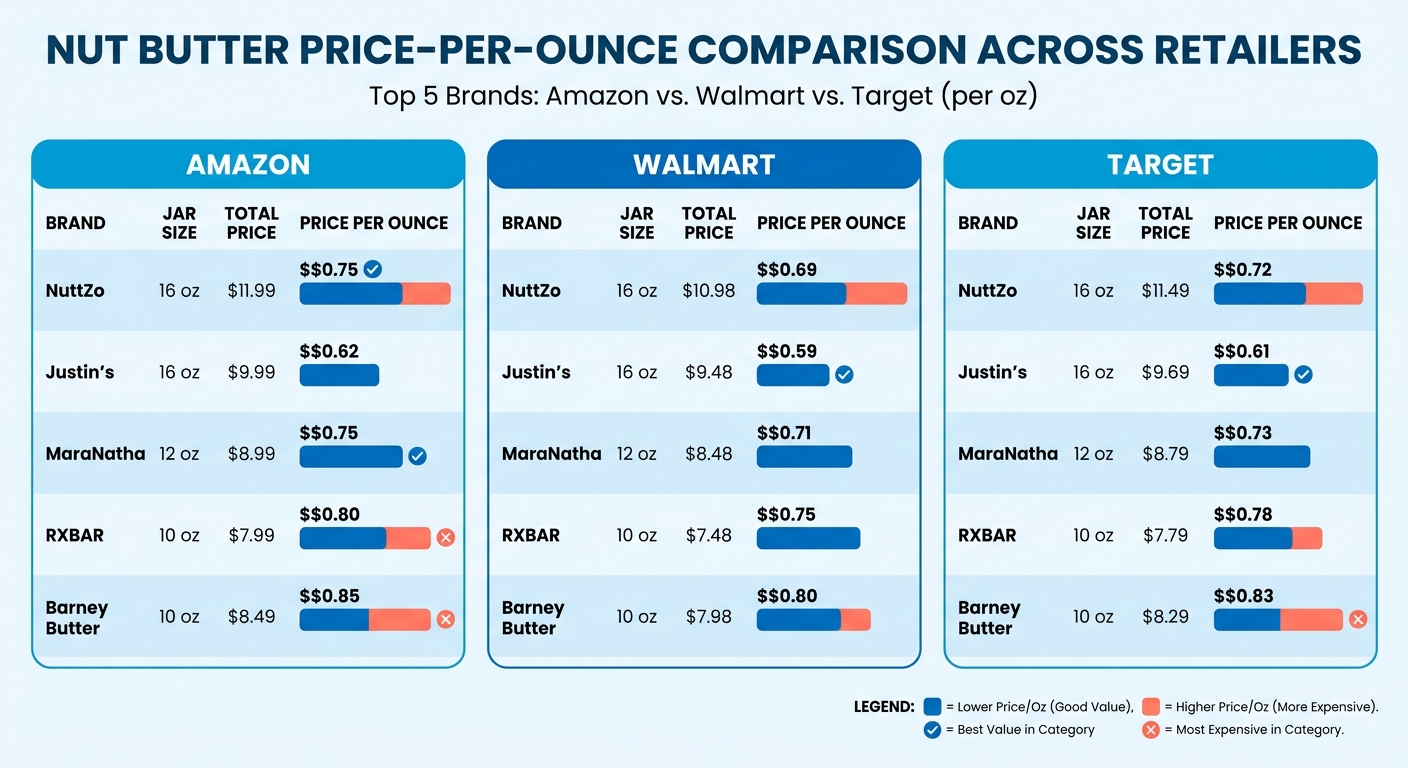
All five are peanut butters, and the price gap between them is smaller than you'd expect. Peanut butter stays cheap because peanuts cost a fraction of almonds or cashews.
A few patterns emerge once you rank them. The top two spots are organic, which puts a dent in the idea that organic means pricey. Spots three through five mix in conventional and deal-priced jars, where a temporary markdown can shuffle the order week to week. Creamy tends to edge out crunchy on price, and the standard 16oz jar stays the sweet spot for value. Larger tubs sometimes look cheaper on the shelf but rarely beat these per-ounce figures once you do the math.
Which retailer actually wins
Each one wins differently. Target leads on organic store-brand pricing. Amazon competes hard in the low-price bracket. Both run active deal sections worth checking before you buy.
Amazon runs "Buy More, Save More," so grabbing two jars can drop your effective per-ounce price. Stacking a multi-jar discount on an already-cheap jar is often how shoppers land the lowest cost per ounce anywhere. Subscribe-and-save shaves off a little more for regular buyers.
Target's deals section rotates weekly, so a jar that isn't in the top five today might be next week.
The ingredients worth checking
The cheapest jars split into two camps: organic and conventional. The organic natural peanut butters usually list just peanuts and salt, no added oils. That matters if you want a clean label.
Natural peanut butter separates because it skips the hydrogenated oils that keep conventional brands shelf-stable. You stir it, and you skip the palm oil trade-off. The organic pick at the top of the list proves you don't pay extra for that simplicity.
How much you'll actually save
Sorting by per-ounce price saves real money on every jar. The gap between the cheapest option and a mid-tier natural brand runs about 20 percent. Over a year of steady peanut butter use, that adds up.
The trick is comparing per-ounce numbers, not sticker prices. A bigger jar isn't always cheaper. Tools that surface unit pricing across retailers make the comparison instant.
Ingredient Filters for Health-Conscious Shoppers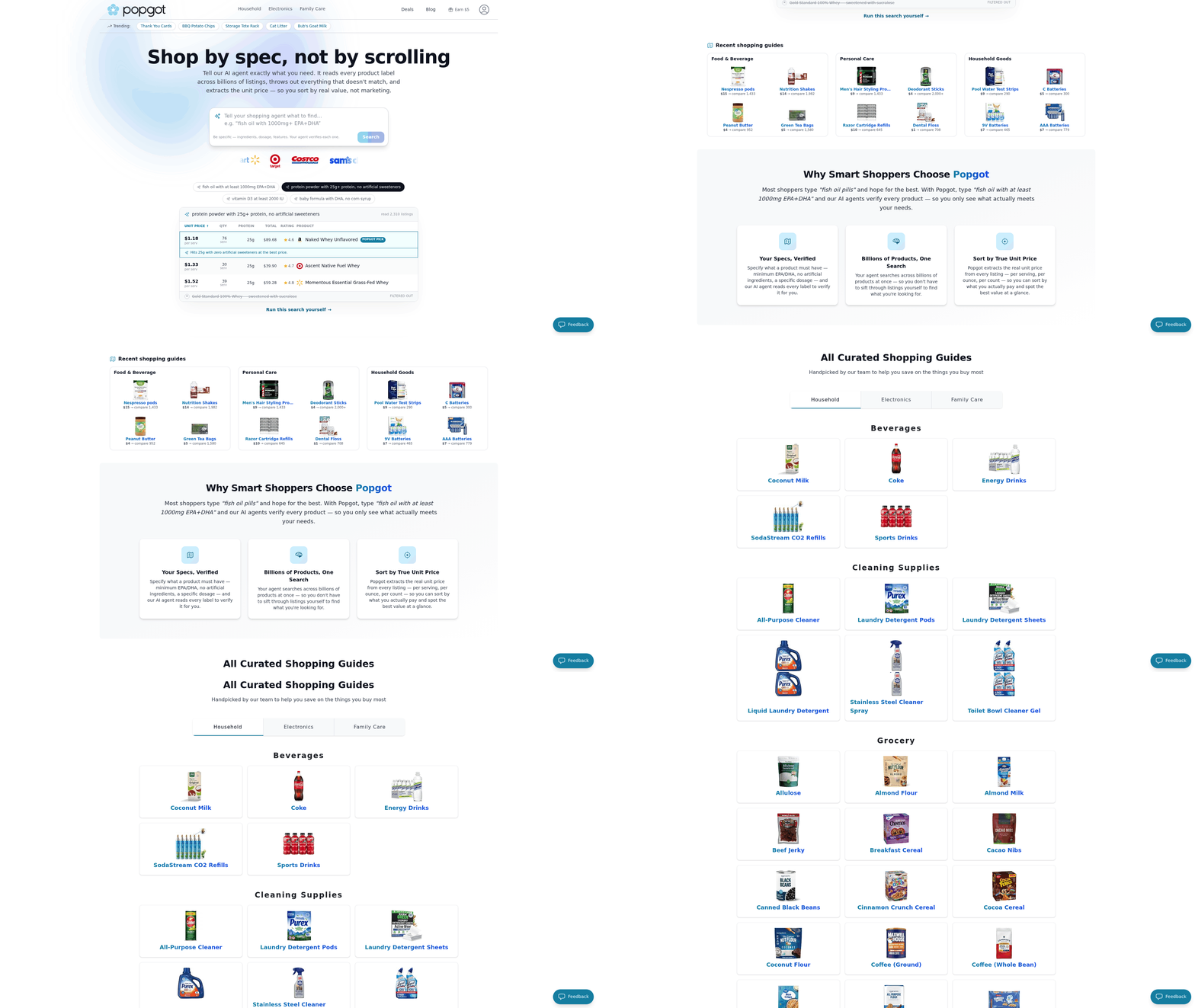
Ingredient filters narrow the listings to jars that match your dietary rules before you ever add one to your cart. Set the filter once, see only the products that qualify. That saves time and cuts the risk of buying something you can't eat.
How the ingredient filter works
The filter screens listings by what's actually inside the jar, so you can include or exclude specific components. Pick your criteria, and the results shrink to matching products with their per-ounce prices attached.
Say you want an organic peanut butter with no added sugar. Filtering drops any jar with cane sugar or added oils, leaving only spreads that meet both conditions. You compare the jars that fit your diet, then sort by price to find the lowest per-ounce cost among them.
This matters for people who read labels for a reason. Some shoppers avoid added palm oil. Others skip hydrogenated oils or extra sodium. The filter does that sorting instead of making you squint at ingredient lists across dozens of pages.
Filtering around allergens and diet needs
Ingredient filters route you around allergens and keep you inside a specific eating plan without manual label-checking. Steer toward almond or seed butters if peanuts are off-limits, or toward organic and natural if you avoid additives.
Where it gets practical for allergy households:
- Peanut allergy? Filter toward almond, cashew, or seed-based spreads.
- Watching sugar? Stick to natural jars where peanuts are the main ingredient.
- Want certified organic? Limit results to organic listings, then rank by cost.
The payoff is price clarity alongside dietary fit. Once you've filtered to jars you can actually eat, you still see the per-ounce number that tells you which is the better buy. A sunflower seed butter at $0.34 per ounce can undercut an almond option at $0.41 per ounce, even if the almond jar looks cheaper at a glance because it holds more.
Health-conscious shopping usually forces a trade-off between reading labels and comparing prices. Doing both at once is the whole point of filtering first, then sorting by cost.
Popgot's Unit Pricing Advantage for Nut Butters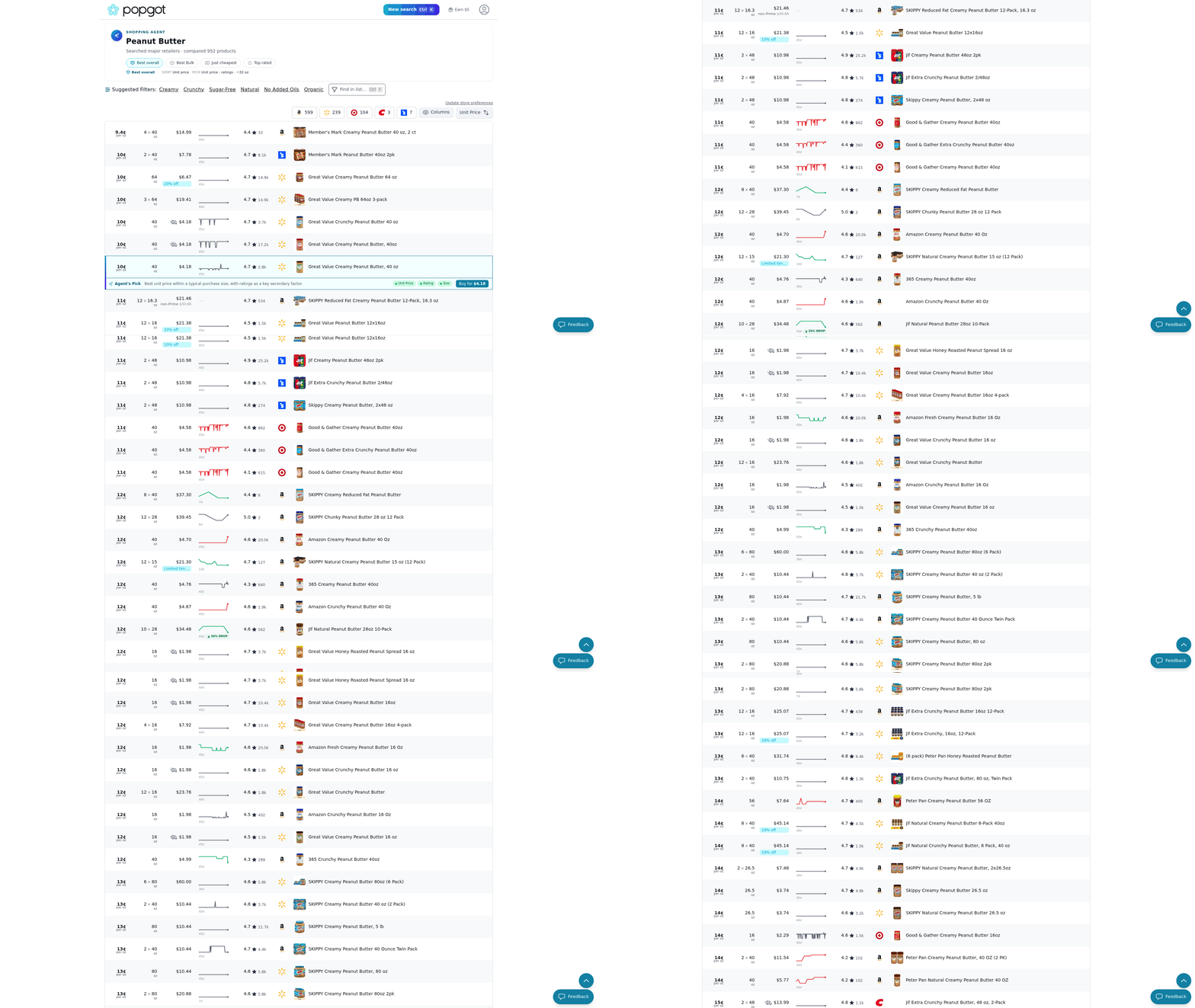
Unit pricing is the number that tells you which jar is actually cheaper, whatever the size on the label. An AI shopping agent works it out by verifying two things: the real price and the real weight. Then it divides one by the other. That gives you a clean per-ounce figure you can compare across any retailer.
How the AI verifies specs and calculates unit price
The agent reads the listing, confirms the jar size, and pulls the current price. Then it computes cost per ounce. A 16oz jar at $4.79 becomes $0.30 per ounce, matching the figure on Target's listings.
Why does verification matter? Listings lie by omission. A jar might flash a low sticker price but hold fewer ounces than the one next to it. The agent checks stated weight against price, so you never mistake a 12oz jar for a deal against a 16oz one.
The same math runs across every jar in a category. Sort by per-ounce cost and the cheapest option rises to the top instantly. No mental arithmetic on every listing.
Where this saves you money
The savings show up when two jars look similar but price out differently per ounce. A premium brand might charge a higher rate for a smaller jar while the store-brand equivalent keeps the unit cost low. That gap of a few cents an ounce is real money over a year of jars.
Standard search results sort by sticker price or relevance. Neither tells you the true cost. A per-ounce sort does, and it flips your instinct on which jar to grab.
Accurate unit pricing beats guessing every time. For how this compares to older tools, the Popgot vs traditional price comparison tools breakdown walks through the difference.
The practical takeaway: shop by per-ounce cost. A verified unit price turns a confusing wall of jars into a ranked list you can trust.
Saving Tips Beyond Price: Bulk Buying and Coupons
Buying nut butter in bulk cuts your per-ounce cost, but only if you'll finish it before the oil separates and the jar goes stale. That's the tradeoff. Bigger jars almost always drop the per-ounce price, but a 40oz tub is a waste if half of it ends up in the trash.
Pair bulk buying with active deals and coupons and the savings stack. The trick is checking both the sticker discount and the resulting per-ounce number, because a "20% off" tag on an overpriced jar still loses to a cheaper everyday option.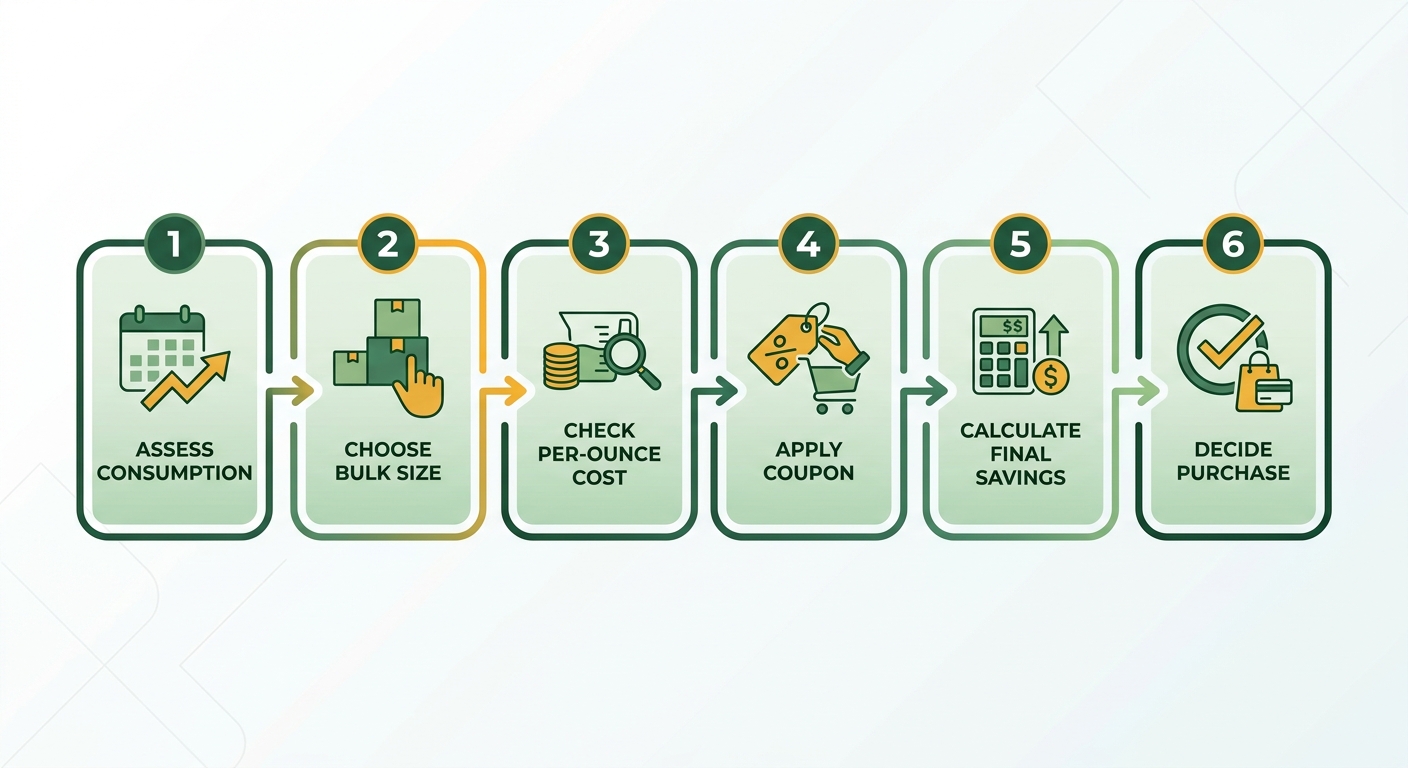
When bulk buying nut butter actually pays off
Bulk saves money when your per-ounce cost drops and you finish the jar before it spoils. A larger container spreads fixed packaging cost across more product, so the price per ounce falls. Natural nut butters with no preservatives separate and turn faster, so match jar size to how fast you go through it.
Peanut butter is the safest bulk bet. It's cheap, shelf-stable, and moves fast in most households. Almond and cashew butters cost more and often sell in smaller jars, so the bulk discount is thinner and the spoilage risk higher.
Check the expiration window before committing to a warehouse-size tub. Most opened natural nut butters hold quality for about 2 to 3 months, and refrigeration after opening stretches that. A two-person household going through one jar a month has little reason to size up to a container built to last half a year.
Stacking coupons without overpaying
Stack coupons only after you've confirmed the base per-ounce price is competitive. A discount on an inflated jar can still cost more than the everyday cheapest option. Run the math on the final number, not the percentage off.
A clean workflow:
- Start with per-ounce price, not the coupon. Find the cheapest jar first.
- Apply the coupon second to see the new per-ounce cost.
- Compare across retailers before checkout, since a rival's regular price may beat your discounted one.
Price beats speed here. A jar that's cheap only because of a one-time coupon isn't a real bargain if the same product sits cheaper elsewhere every day. Confirm the deal holds up on cost per ounce, then buy.
Why Nut Butters Matter for Health-Conscious Consumers
Nut butters pack protein, healthy fats, and fiber into a spoonful, which is why they've become a staple for people watching what they eat. Demand for healthy snacks keeps climbing, and nut butters sit right at the center of it. They work as a quick breakfast, a post-workout refuel, or a smear on apple slices when you need something filling that isn't junk.
The appeal comes down to what's inside. A jar of peanut or almond butter delivers plant protein and unsaturated fats, the kind linked to better heart health. Swap a sugary spread for a natural nut butter with no added sugar, and you cut empty calories while adding staying power to your meals.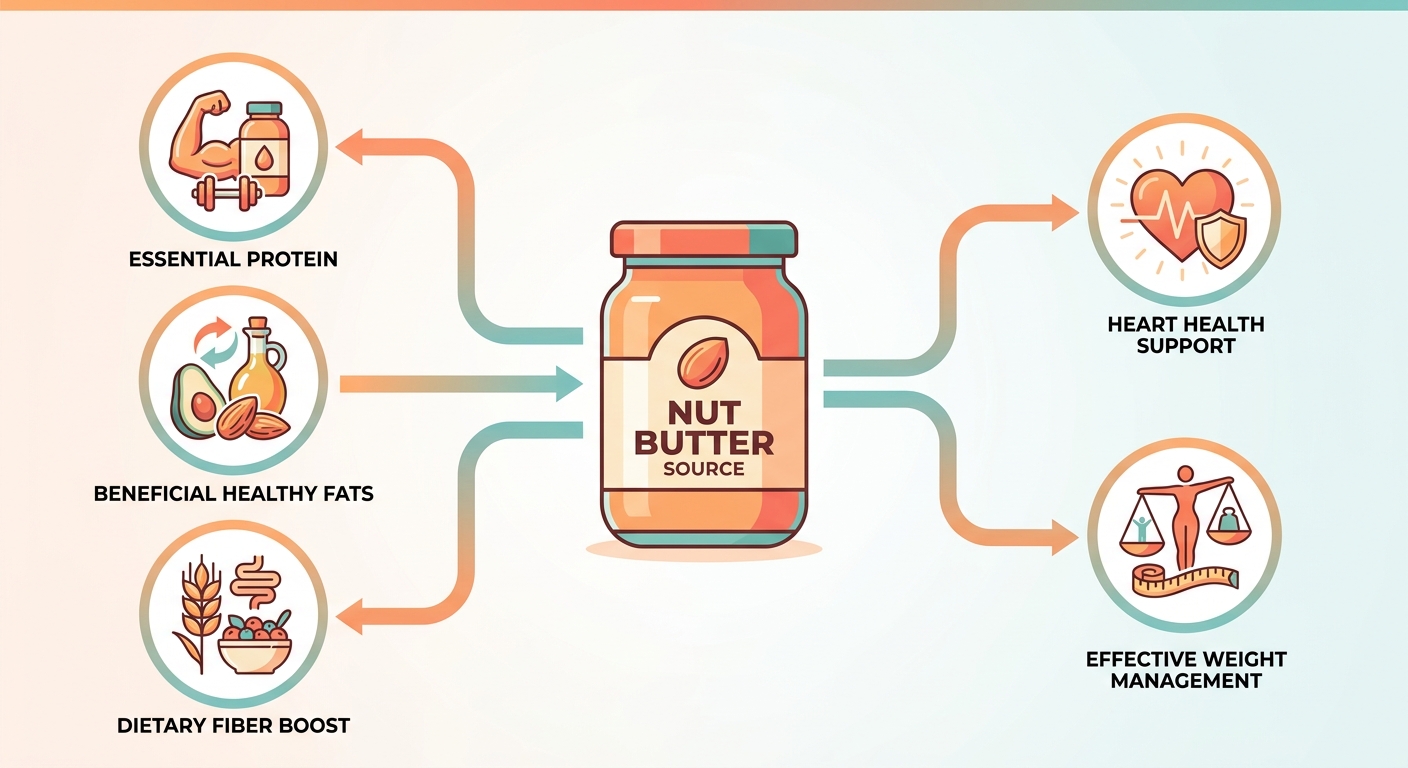
Who gets the most out of them
Anyone trying to eat more protein without loading up on meat. That includes athletes, vegetarians, busy parents, and people managing their weight. Plant protein and healthy fats make a small serving feel satisfying, so you eat less later.
They also solve a real problem for picky or time-crunched eaters. Nothing to cook. A tablespoon on toast or stirred into oatmeal turns a bare snack into a balanced one. For kids who skip breakfast, a nut butter sandwich is an easy win.
The catch is the label. Some jars hide added sugar and palm oil, which erase the health edge you're paying for. Stick to organic options with a short ingredient list. Target's listings make it easy to spot peanut, almond, and cashew spreads that keep things simple.
What about allergens?
Nut allergies are the one hard stop. Peanut and tree nut allergies are serious, so nut butters are off the table for anyone with those sensitivities. If a nut allergy rules out the usual jars, seed butters like sunflower give you a similar texture and nutrient profile without the risk.
Read every label if you share a kitchen with someone allergic. Cross-contamination is real, and "may contain nuts" warnings exist for a reason. When you know your dietary rules, filtering by ingredient saves you from second-guessing every jar.
Identifying Hidden Costs: Shrinkflation in Nut Butters
Shrinkflation is when a product shrinks while the price stays put or climbs. You pay the same for less. In nut butters, that often means a jar quietly drops from 16oz to 15oz while the sticker doesn't budge. The label looks familiar, so most shoppers never notice.
Nut butters are an easy target. Peanut and almond prices swing with harvest conditions, and brands would rather trim ounces than raise the number on the shelf. A jar that used to hold 18oz might show up next season at 16oz in the same-shaped container.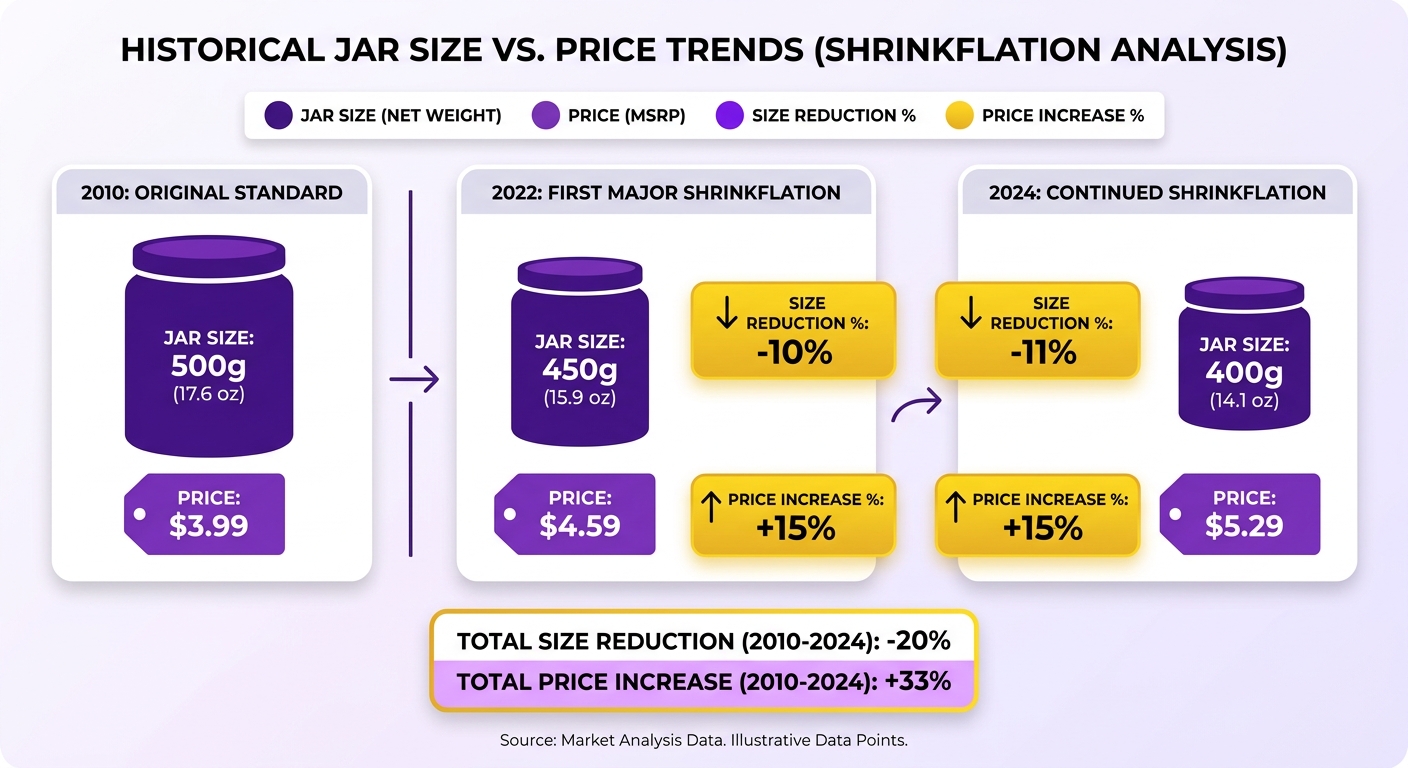
How shrinkflation hides in the price
It hides because your brain anchors to the sticker price, not the weight. You see a jar you've bought before, grab it, and move on. The size shrank, but the price memory didn't. That gap is where the hidden cost lives.
Container redesigns make it sneakier. A deeper dimple in the base, thicker glass walls, and the package looks the same height on the shelf while holding less. A wider lid or taller cap distracts the eye. When the shape stays consistent, your pattern recognition fails you, and a 1oz or 2oz cut slides by until you're scraping the bottom sooner than expected.
How to catch a shrunken jar
Catch it by ignoring the sticker and reading the per-ounce cost instead. That single number strips away the packaging tricks. A jar that shrank from 16oz to 15oz shows its true cost the moment you divide price by weight.
This is where verified unit pricing earns its keep. When the per-ounce figure comes from the real jar weight, a downsized product can't hide behind a familiar price. A $4.79 jar at 15oz costs $0.32 per ounce, not the $0.30 you'd get at 16oz. That two-cent jump is the shrinkflation tax, exposed.
Bring this habit to the nut and seed butter deals at Target and you'll spot the pattern fast. A discount on a smaller jar can still lose to an everyday price on a full-size one. The ounces tell the truth.
What I'd actually recommend
Finding the cheapest nut butter comes down to one number: price per ounce. Sort by that, verify the jar size and ingredients, buy the largest jar you'll actually finish. Everything above points back to those three moves.
Store-brand peanut butter wins on price almost every time. Name brands charge extra for a familiar label, not a better product. Almond and cashew butters cost more because the nuts cost more. Expect to pay two to three times the per-ounce rate of a basic peanut butter.
How to actually find the cheapest jar
Start with unit price, then confirm the specs, then match the jar to your diet. That order matters. A low sticker price means nothing if the jar holds fewer ounces than you assumed or contains something you can't eat.
The workflow:
-
Sort by per-ounce cost, not sticker price. A 40oz tub at a higher total often beats a 16oz jar per ounce. Check the Target nut and seed butter deals and compare the per-ounce figures side by side.
-
Verify jar size against price. Shrinkflation quietly trims ounces while the sticker stays put. Confirm the real weight before you trust the number.
-
Filter for your dietary rules. Set your criteria once. No added sugar, organic, single-ingredient. Then you only see jars that qualify.
Why ingredient verification matters here
Ingredient verification keeps you from buying something you can't use. A jar labeled "natural" might still carry added sugar or palm oil. Reading the back label on every listing is slow. Verifying the spec up front is faster and safer.
This matters most for people with real restrictions. If you're avoiding added sugar, one honey-sweetened jar in your cart wastes money and shelf space. Same trap catches shoppers who need single-ingredient jars. Plenty of "simple" spreads still sneak in stabilizers or salt that push the count past one.
This is exactly the work Popgot handles for you. Tell the AI agent what you need, no added sugar, organic, single-ingredient, and it reads every product label, tosses what doesn't match, and pulls the real unit price so you can sort by what you actually pay per ounce.
What to buy
Buy store-brand peanut butter in the largest size you'll finish before the oil separates and it goes stale. That single rule handles most shoppers. Peanut butter stays cheap, the store brand undercuts name brands, and a bigger jar drops the per-ounce cost further.
Skip the pricey specialty jars unless you have a reason. A single-ingredient almond butter makes sense if you're allergic to peanuts or want the different fat profile. For everyday spreading and baking, it's a waste of money.
And don't let a fancy label talk you into paying double. Creamy versus crunchy is a texture call, not a value one. Both cost the same per ounce within a brand. Do the math once, then keep buying the winner.
References
[1] Under $10 / Peanut Butter / Nut & Seed Butters - Amazon.com - https://www.amazon.com/Peanut-Butter-Under-10/s?keywords=Peanut+Butter&rh=n%3A16320591%2Cp_36%3A698503011&c=ts&ts_id=16320591
[2] All Deals : Nut & Seed Butters - Target - https://www.target.com/c/nut-seed-butters-spreads-jams-pantry-grocery/all-deals/-/N-mnyf1Zakkos
[3] Organic Nut Butter Creamy Peanut, Almond and Crunchy Spreads - https://www.target.com/s/organic+nut+butter
Frequently Asked Questions
1. How long does natural nut butter last after opening?
Most opened natural nut butters hold quality for 2 to 3 months, though refrigeration after opening can extend that window. Because natural varieties skip preservatives, they separate and turn faster than conventional brands. Match your jar size to how quickly your household consumes it to avoid waste from spoilage.
2. Why do almond and cashew butters cost more than peanut butter?
Almond and cashew butters cost two to three times the per-ounce rate of basic peanut butter because the nuts themselves are far more expensive than peanuts. Peanut prices stay low and the crop is abundant, keeping peanut butter cheap. Specialty nut butters make sense mainly for allergies or specific fat profiles.
3. Are seed butters a good option for people with nut allergies?
Seed butters like sunflower give people with peanut or tree nut allergies a similar texture and nutrient profile without the risk. They can also beat pricier options on cost—a sunflower seed butter at $0.34 per ounce undercuts an almond butter at $0.41 per ounce despite the almond jar holding more.
4. Does buying the largest jar always save money?
Larger jars usually lower the per-ounce cost because packaging expenses spread across more product, but bigger only saves money if you finish it before it spoils. A 40oz tub wastes money if half ends up in the trash. Two-person households going through one jar monthly rarely benefit from warehouse sizes.
5. How can I tell if a nut butter jar has shrunk due to shrinkflation?
Calculate the per-ounce cost by dividing price by weight instead of trusting the sticker price. Brands trim jars from 16oz to 15oz while keeping prices identical, sometimes hiding it with deeper jar dimples or thicker glass. A $4.79 jar at 15oz costs $0.32 per ounce versus $0.30 at 16oz.
6. What's the right way to stack coupons on nut butter?
Confirm the base per-ounce price is competitive before applying any coupon. Start by finding the cheapest jar, apply the coupon second to calculate the new per-ounce cost, then compare across retailers. A rival's everyday regular price may beat your discounted one, making the coupon a false bargain.
7. Does Popgot verify actual jar weights when comparing prices?
Popgot's AI agent reads each product listing, confirms the real jar size, and pulls the current price before calculating cost per ounce. This verification prevents comparing a 12oz jar against a 16oz jar and mistaking it for a deal. You then filter by dietary rules and sort by verified unit price.