
Popgot vs Amazon for Cheaper Essentials

Key Takeaways
- The average American household spends over $1,000 a month on groceries and household essentials. Shaving a few percent off that isn't penny-pinching. It's real money.
- Roughly 75% of shoppers rank price ahead of everything else when they decide what to buy.
- Bigger boxes aren't automatically cheaper. Per-unit pricing is where retailers quietly hide the real cost.
- Shrinkflation keeps the price flat and shrinks the package. One shopper tracked the same pattern for a decade.
- "The big retailer always wins on price" is a myth. The cheapest store changes constantly, item by item.
- In a CNET price test, the biggest savings came from a grocery chain, not the big-box store or the online giant everyone defaults to.
- Comparing a dozen stores for every item by hand isn't realistic. That's the whole problem.
Why cheap essentials add up faster than you think
The average American household spends over $1,000 per month on groceries and household essentials. That stacks up quickly. When 75% of consumers put price ahead of everything else, finding cheaper staples stops being a nice-to-have. It's how you keep the budget from leaking.
The catch is that finding those cheaper options is harder than it should be. Prices move constantly across retailers, labels bury the real cost per unit, and nobody has time to check a dozen stores for every line on the list.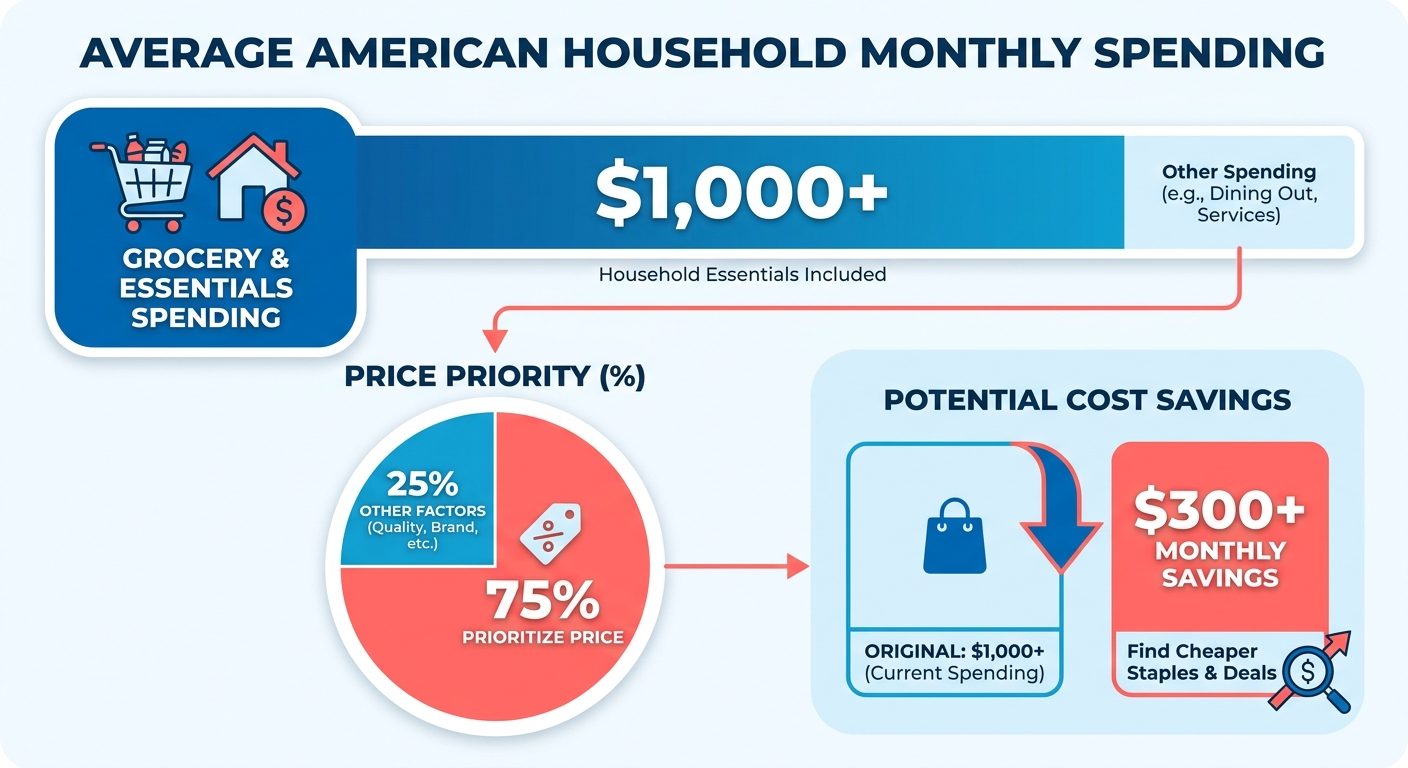
Why finding the cheap option is so hard
Hidden pricing is the main culprit. A bigger box isn't always cheaper per ounce, and retailers count on you not doing the math. Shrinkflation makes it worse by trimming the package while the price holds steady.
One shopper in r/Target started running a shrinkflation tracker and called the results "infuriating." Another in the same thread noted the pattern has held "pretty consistently, over the last 10 years," starting with food commodities and creeping into nearly everything since.
Then there's the assumption that one big retailer always wins on price. It doesn't. A CNET test found the cheapest household products came from a grocery chain, not the big-box store and not the online giant most people reach for first. The "obvious" cheap option lost.
Who feels this most
Three groups get hit hardest: health-conscious shoppers, parents, and anyone managing a specific diet. They face higher baseline costs and less room to swap to whatever's cheapest.
Parents buy in volume. Diapers, snacks, cleaning supplies move fast, so small per-unit savings compound across a month. Health-conscious shoppers pay a premium for specialty items, which makes accurate unit pricing matter more, not less. People with dietary restrictions can't just grab the cheapest brand. They need the right product at the best price, and that combination is genuinely hard to eyeball.
The payoff is steadier finances. Trim the essentials bill and you free up cash for everything else, plus a buffer against the next round of price hikes.
How much smarter shopping actually saves
Accurate unit pricing and product verification can save up to 30% on household staples, 25% on groceries, and 20% on personal care. Tools that automate the comparison also claw back up to 2 hours a week you'd otherwise burn checking prices by hand.
Here's how the savings break down by category:
| Category | Avg. Monthly Spend | Potential Savings | Common Challenge | Difficulty to Compare | Time Saved/Week |
|---|---|---|---|---|---|
| Household staples | $250 | Up to 30% | Shrinkflation, hidden unit cost | Hard manually | ~40 min |
| Grocery items | $500 | Up to 25% | Constant price shifts | Hard manually | ~50 min |
| Personal care | $120 | Up to 20% | Confusing size/price labels | Moderate | ~20 min |
| Cleaning supplies | $80 | Up to 28% | Bulk vs. Unit confusion | Moderate | ~10 min |
The savings are real. You just need a clear, accurate way to see them without losing a weekend to price math. For a deeper look at how unit pricing reshapes decisions, the Popgot blog walks through the practical tactics.
When to use Popgot and when to use Amazon
The right tool depends on what you're optimizing for. Care about price and health? A unit-price comparison tool wins. Care about speed and selection? Fast-shipping retailers win. Most smart shoppers use both, and there's no medal for loyalty.
When a price-comparison tool earns its keep
Comparison tools are built for health-conscious shoppers, parents, and anyone managing a specific diet. These buyers want more than the lowest sticker price. They want cost per unit, a heads-up when package sizes shrink, and healthier staples without the markup.
That matters because hidden pricing is everywhere, and a bigger box rarely means a better deal. The shrinkflation tracker thread on Reddit is a good gut-check on this. A tool that flags shrinking sizes automatically does the work those shoppers were doing by hand.
If you want to see how this stacks up against older comparison sites, the Popgot vs. traditional comparison tools breakdown is a solid start.
When fast shipping is the better call
Big retailers win on convenience and speed. Need it tomorrow? Want one cart for thousands of products? A major marketplace delivers. Just don't assume it's the cheapest.
The CNET test bears repeating here: Amazon came in slightly under one big-box competitor, but a grocery chain beat both. So use fast shipping for urgency and selection. Check the per-unit price first. The convenient store and the cheap store are often not the same store.
How families actually run both
The smartest setup blends them. Routine staples go through a comparison tool. Urgent or specialty items go to a fast-shipping retailer.
A family of four runs the weekly grocery list through a price tool to find affordable, healthy food. They catch a cereal box that quietly shrank and swap to a better-value brand, keeping the monthly food spend in line. Then they order the odd items separately. An allergy-friendly snack the kids need ships fast from a marketplace. A bulk pack of paper towels comes from wherever the per-unit math says it's cheapest.
That split gets you savings on the bulk of the cart and speed on the few things that can't wait. Nothing says you have to pick one tool and stick with it forever.
Why checking every store beats shopping Amazon alone
Multi-retailer search beats Amazon-only for one plain reason: Amazon isn't always the cheapest. Check one store and you miss better deals sitting one tab over. Searching several retailers at once is how you find the actual lowest price per unit.
Why Amazon isn't always cheapest
Amazon shows you Amazon prices. That's the whole limitation. Its comparison stays inside its own catalog, so you never see what the same item costs at the grocery chain or big-box store down the road.
CNET tested exactly this, comparing household products across Amazon, Walmart, and a major grocery chain. Amazon edged out Walmart, but the biggest savings came from Kroger, not Amazon at all.
That's the trap of single-store loyalty. You assume convenient equals cheap, and the data says otherwise. A tool that searches Walmart, Target, Amazon, and grocery chains together surfaces the Kroger price instead of hiding it.
How searching wide saves money
Cross-store search saves money by comparing the same product everywhere, so you buy from whoever's cheapest that day. Prices shift constantly and the winner changes by item. A tool checks them all in seconds. You can't replicate that by opening one app.
Baby products show it clearly. Diapers and wipes swing wildly across retailers, and the per-box cost on one site can undercut another by several dollars. Check only Amazon and you pay whatever Amazon decided that week. Check four stores and you pay the floor.
Same logic on everyday staples like Dove soap and body wash. The bar might be cheapest at a grocery chain while the body wash is cheaper elsewhere. Split the cart by lowest source per item and you beat buying both from one default store.
There are also alternatives worth knowing beyond the big three. The Hollywood Reporter rounded up where to shop online instead of Amazon, Target, and Walmart, covering groceries, cleaning essentials, and zero-waste goods. More stores in the mix means more chances to undercut the default.
Why unit pricing is the part that makes it work
Accurate unit pricing is what makes cross-store comparison actually useful. Sticker price lies. A bigger box can cost more per ounce than a smaller one, so the only honest comparison is cost per unit, normalized across every retailer.
This is where Amazon-only fails twice. You're locked into one store's prices, and you're stuck guessing whether the value pack is really a value. A tool that verifies specs and normalizes unit pricing kills that guesswork. Confirm the product matches what you need before showing the price, and you skip the wrong sizes and mismatched items entirely. Amazon-only is fast but blind. Wide search with verified unit pricing shows the full picture, and the full picture usually saves you money.
Reading the price tag retailers hope you skip
Unit prices tell you the real cost of what you're buying. That tiny number on the shelf tag, the price per ounce or per pound, is what decides whether the jumbo box is a deal or just a bigger sticker. Most shoppers skip it. The ones who don't save real money every month.
Why unit prices matter so much
Unit price: the cost of a product broken down to a standard measure, like cents per ounce, so you can compare package sizes head to head.
Take rice and pasta. A two-pound bag at one price and a five-pound bag at another tell you nothing until you run the numbers. One might be 8 cents an ounce, the other 12. The bigger bag loses, even though it feels like the bulk deal.
This is where automated comparison pays off. Instead of squinting at tags with a calculator, a tool runs the per-unit math across multiple stores at once. You see the true cheapest option without the mental gymnastics.
Where the savings actually live
The cheapest place for everyday essentials is often a grocery chain, not a big-box giant, which is the same lesson the CNET test handed down. If you only check one catalog, you assume you're getting a fair price. You're not seeing the grocery store down the road beating it on the identical item.
A family of four buying rice, pasta, canned goods, and cleaning supplies every month can trim roughly $50 off the same cart by running unit-price checks across several retailers instead of buying everything in one place. Over a year, that's $600 on products they were already buying.
What specialty diets like keto change
Specialty groceries punish lazy shopping the hardest. Keto staples like almond flour, nut butters, and low-carb snacks carry premium prices, and the gaps between retailers get wide. A bag of almond flour can swing by several dollars depending on where you look.
A one-pound bag of almond flour at a low sticker price might be a small package, while a higher-priced listing turns out to be double the weight. The per-pound math flips the obvious answer, and automated checking surfaces that gap instantly.
The same goes for anyone watching package sizes shrink. Shrinkflation buries cost increases inside smaller boxes, and you only catch it by tracking the per-unit number over time. That tracking is the difference between guessing and knowing. It saves hours too. Letting a tool handle the arithmetic frees up time you'd otherwise spend standing in an aisle doing math.
How Popgot digs up cheaper store-brand swaps
The AI agent searches across retailers for store-brand alternatives that match what you actually need. You set the requirements. It finds the cheaper equivalent that meets them, then shows the real cost per unit side by side.
Private-label sales have climbed steadily, with store brands now around one in five products sold in U.S. grocery stores. That growth tracks a simple reality: shoppers keep finding the cheaper option works just as well, especially on items that often roll off the same production lines.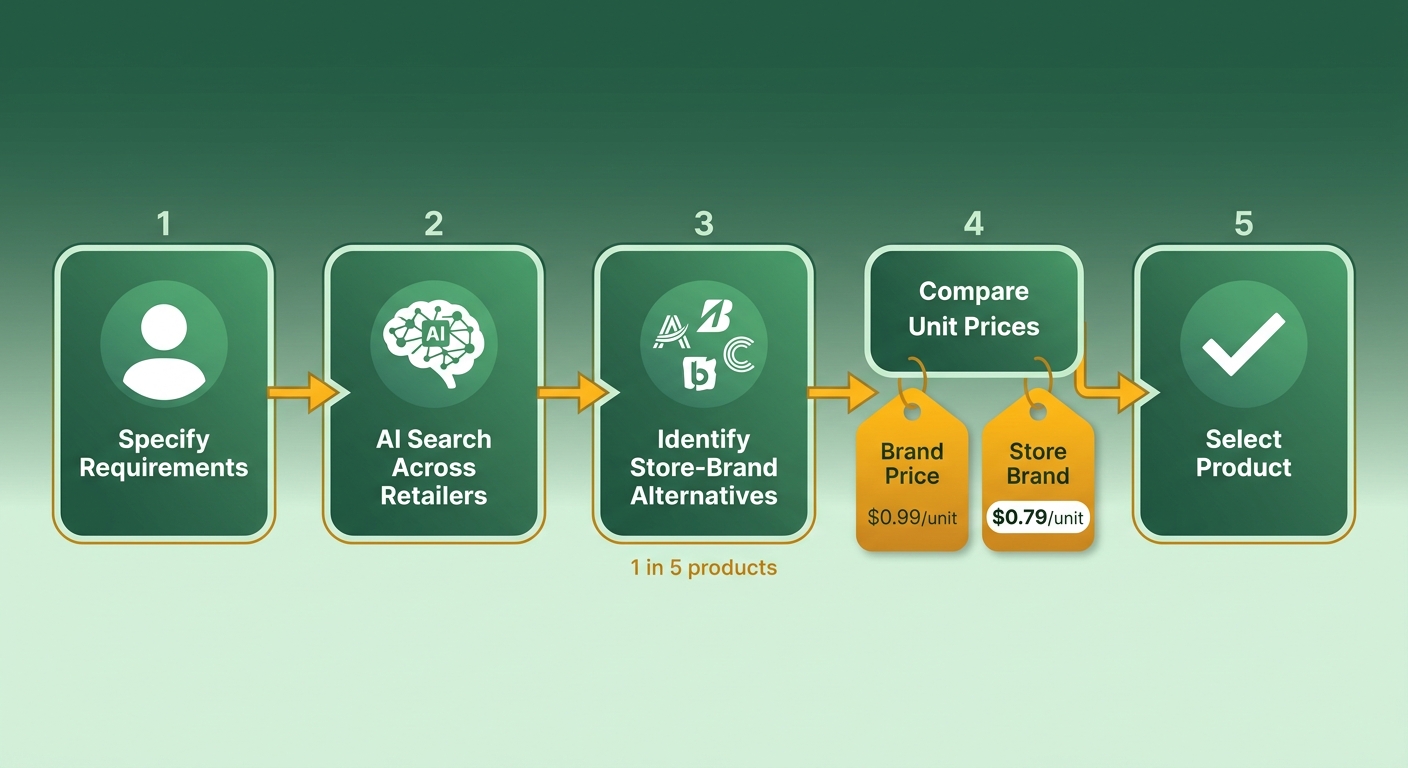
How the agent finds the matches
You tell it what matters: product type, size, any health or ingredient requirements. The agent scans store-brand options across retailers, drops the ones that don't fit, and ranks what's left by cost per unit.
That solves the hardest part of switching to store brands. You don't have to hunt through a dozen private-label products to confirm one actually matches the name brand you trust. The agent does the matching, so you skip the guesswork.
Dr. Paul Bloom, a marketing expert at Yale, has long argued store-brand alternatives improve consumer welfare. Cheaper private-label options force name brands to compete on price. You win either way.
A real comparison: cleaning supplies
A name-brand all-purpose spray might list at one price on a fast-shipping retailer. The store-brand equivalent, found through a unit-price search, often runs noticeably less per ounce for the same cleaning power.
That difference repeats across the whole cart. Dish soap, surface wipes, laundry detergent. Each swap shaves off a little, and the per-unit math is where the savings hide.
Case study: $20 a month on staples
A family running through the usual rotation of cleaning supplies, paper goods, and pantry basics can trim about $20 every month by swapping name brands for the store-brand matches the agent surfaces. That's roughly $240 a year on items they were buying anyway.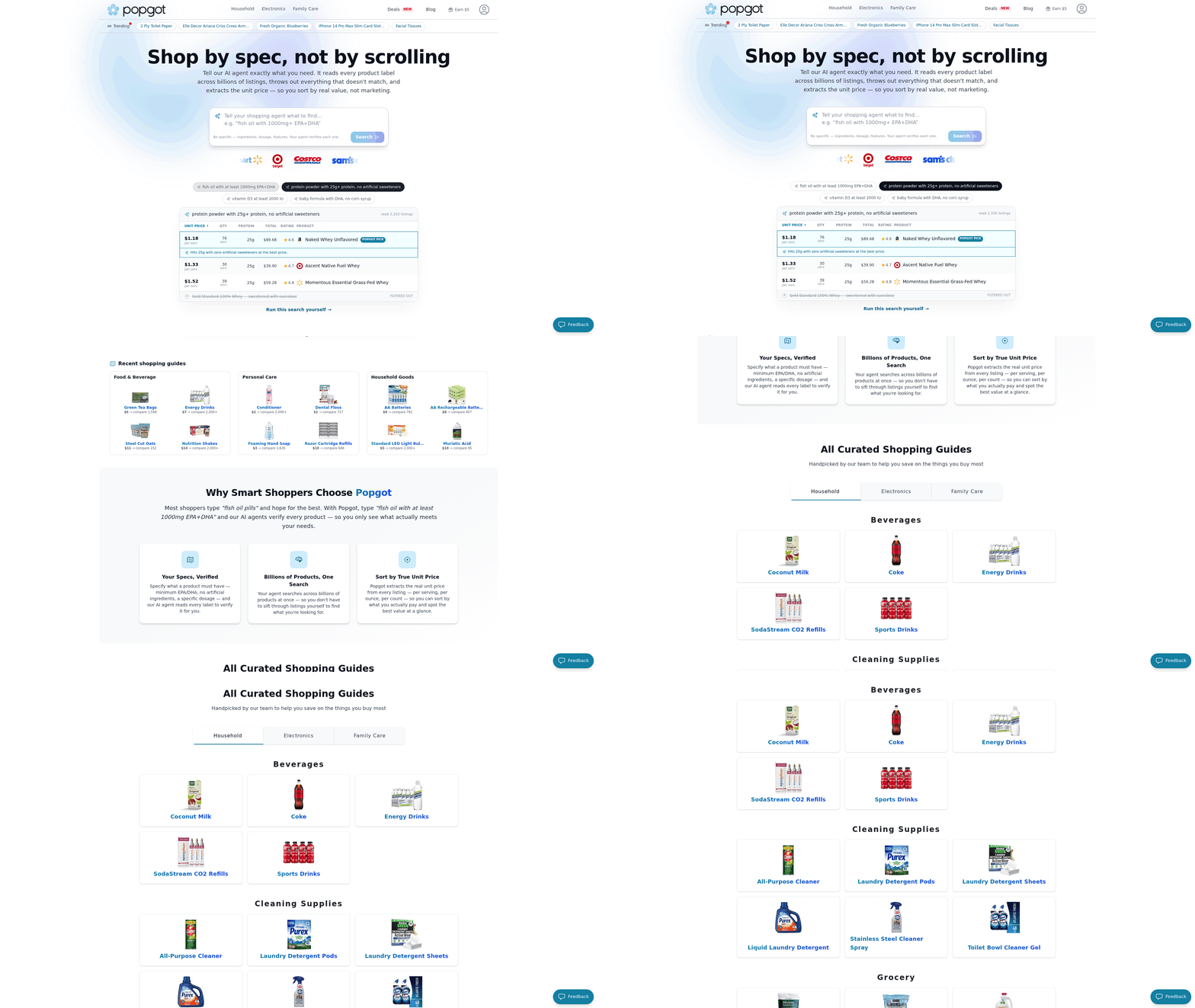
When the wrong ingredient is a health risk, not an inconvenience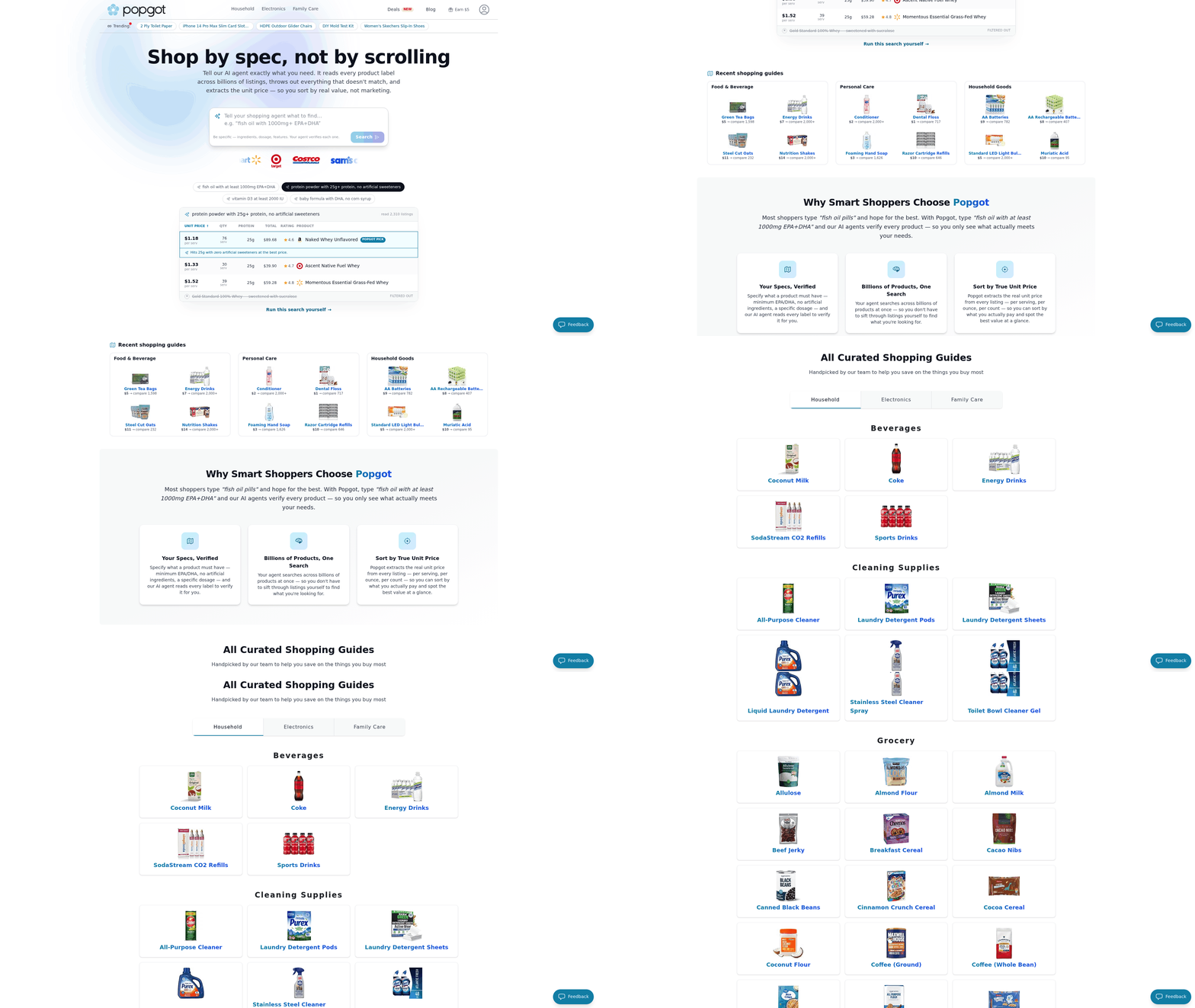
Shopping for someone with a food allergy or a strict diet, a wrong ingredient isn't a hassle. It's a risk. That's why the AI agent reads the actual label on every listing and checks it against the exact requirements you set, instead of trusting the marketing copy on the front of the box.
You tell the agent what a product must have and must not contain. Certified gluten-free. No corn syrup. A specific minimum of a nutrient. It verifies each spec across major retailers and hides anything that fails, so what you see already passed your rules.
How the verification actually runs
Ingredient verification: checking a product's real label and nutrition panel against your stated requirements before it ever lands in your results. Every listing, not a sampled few.
Most search boxes just match keywords. Type "gluten-free pasta" into a typical retailer and you still get results where the phrase showed up in a review or a related suggestion, not the ingredient list. The agent reads the panel itself and confirms the claim before showing you the item.
That gap matters most on health-sensitive essentials. Baby formula, protein powder, fish oil, allergy-safe snacks. These are the products where a hidden additive or an unmet dosage decides whether the item is safe to buy at all.
What it looks like for a family with restrictions
In a household where one kid needs gluten-free food and a parent is watching added sugar, shopping for both usually means two separate label-reading sessions in the aisle. With a verified search, you set both constraints once. The agent filters gluten-free options across eight retailers, drops anything with the sweeteners you flagged, and ranks what survives by cost per unit.
Gluten-free staples often carry a steep markup, and prices swing hard between stores for the same certified product. Comparing verified options side by side is how you find the safe version without paying the most for it.
References
[1] Is Amazon the Cheapest Place to Buy Household Products? We Do ... - https://www.cnet.com/home/kitchen-and-household/is-amazon-the-cheapest-place-to-buy-household-products/
[2] Where to Shop Online Instead of Amazon, Target, Walmart 2025 - https://www.hollywoodreporter.com/lifestyle/shopping/best-amazon-target-alternative-stores-online-1236148586/
Frequently Asked Questions
1. Does Popgot cost anything to use for price comparisons?
The article doesn't specify Popgot's pricing structure. To get accurate cost details, check directly at popgot.com. What's clear is the value proposition: the tool automates per-unit math across retailers, reclaiming up to 2 hours weekly and potentially saving 20-30% on essentials you already buy.
2. How often do prices change across retailers like Amazon, Walmart, and Kroger?
Prices shift constantly, sometimes daily, which is why the cheapest store changes by item and by week. A product cheapest at Kroger today might cost less at Walmart tomorrow. This volatility makes manual comparison impractical and is precisely why automated multi-retailer search tools exist.
3. Are store brands really the same quality as name brands?
Store brands frequently come off the same production lines as name-brand products, which is why they now account for roughly one in five U.S. grocery items. Yale marketing expert Dr. Paul Bloom argues private-label options improve consumer welfare by forcing name brands to compete on price.
4. Can ingredient verification handle multiple dietary restrictions at once?
Verification tools let you set several constraints simultaneously, such as gluten-free plus no added sugar. The agent reads each product's actual label and nutrition panel across retailers, then drops anything failing your rules. This replaces separate label-reading sessions for households managing different needs in one search.
5. Is buying in bulk always cheaper for household essentials?
Bulk packaging isn't reliably cheaper per unit. A two-pound pasta bag can cost 8 cents per ounce while a five-pound bag hits 12 cents, making the smaller package the better deal. Only the per-unit price reveals which size actually saves money, regardless of total sticker price.
6. When should I prioritize fast shipping over finding the lowest price?
Choose fast-shipping retailers when you need an item urgently or want one cart for thousands of products. For routine staples bought monthly, run a price comparison first. Most smart shoppers blend both: comparison tools for predictable essentials, fast marketplaces for urgent or hard-to-find specialty items.
7. How much can a typical family realistically save each month?
Savings vary by shopping habits, but examples cited show meaningful results: about $50 monthly by comparing unit prices across retailers, plus roughly $20 monthly from switching to store-brand matches. Combined, that approaches $840 yearly on products families were already purchasing, without sacrificing quality or specific requirements.