
Product Finder: Save Time on Grocery and Household Essentials

Key Takeaways
- Popgot's AI scans billions of listings across Amazon, Walmart, Target, and specialty retailers, ranking results by unit price instead of marketing spend.
- The platform verifies product specs—ingredient dosages, certifications, allergens—before showing you anything, so you get products that actually meet your requirements.
- Sign-up takes email and password. No browsing data sold. You can delete your account and all data anytime.
- Search results show the cheapest option first, period. Not the one with the biggest ad budget.
- The product finder extracts unit pricing across eight major retailers so you can compare actual cost per ounce, per serving, per load.
- You're searching in under two minutes. No long onboarding, no tutorial videos.
How to Use Popgot Without Wasting Time on Setup
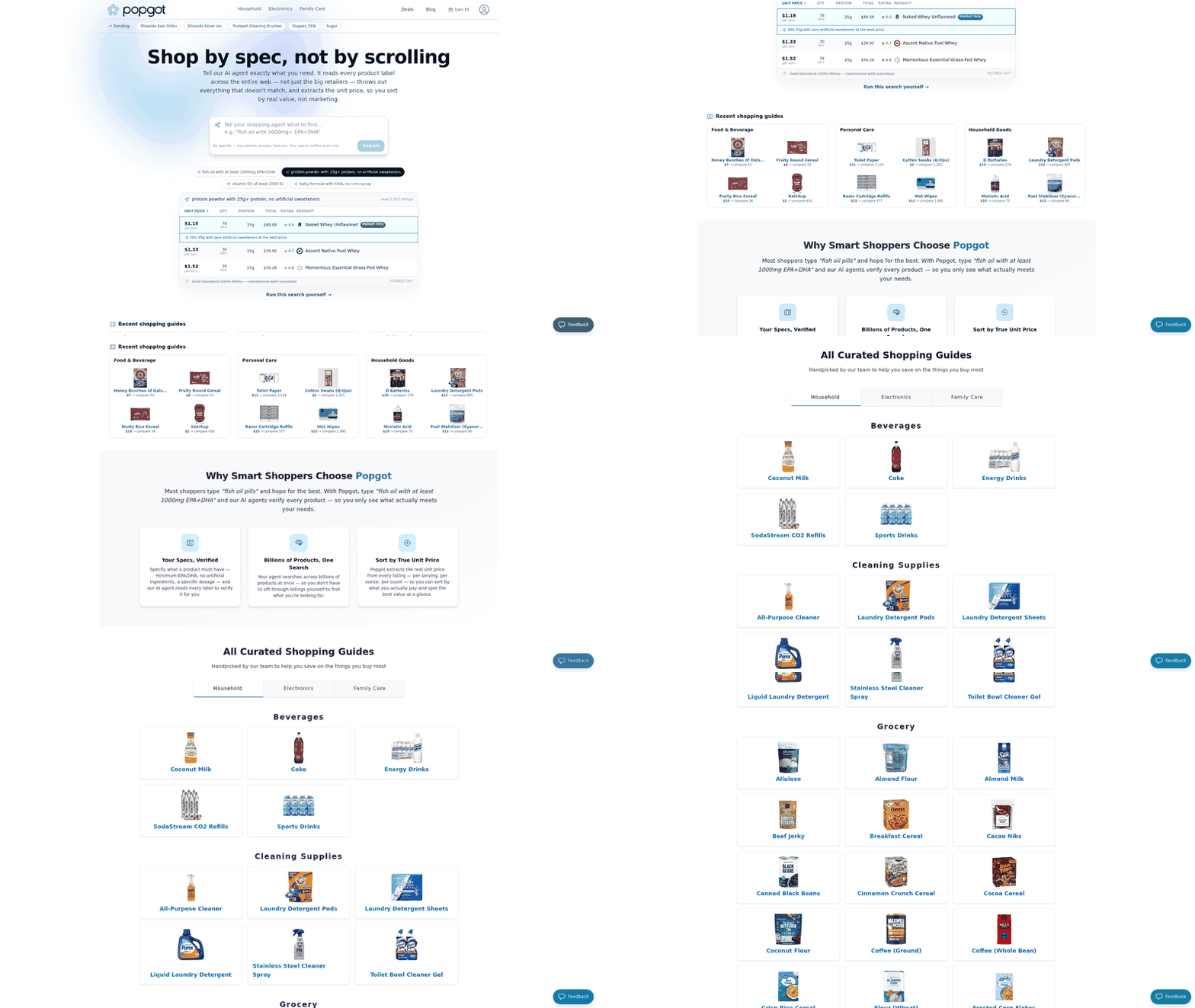
Most product finders make you scroll past sponsored junk that doesn't match what you asked for. Popgot scans listings across major online retailers and specialty stores, then throws out everything that doesn't meet your exact criteria. Ask for fish oil with at least 1,000mg EPA+DHA, and you won't see products with 800mg or vague "omega-3 blend" labels.
Creating Your Account
Email and password. That's it. Once you're in, you can start searching. If you always buy from certain retailers or need specific product types, adjust filters on each search to reflect that.
We don't sell your browsing data. Our privacy policy covers how we handle information. You can permanently delete your profile whenever you want.
Running Your First Search
Try this: type "Dr. Bronner's Liquid Soap 32 oz" into the search bar. The AI scans listings across multiple merchants and extracts unit prices per ounce. Results rank strictly by cost per measure, so the absolute cheapest option shows up first—even if it's from a specialty store that big-box search tools skip.
For items you buy regularly, save your search. Instead of retyping "organic almond milk with no added sugar" every time, save the exact spec and pull it up with one click. When your needs change, update the saved search and results adjust automatically.
Getting Help
Reach us through in-app chat or email. If you're unsure whether a product meets a dietary restriction or ingredient requirement, ask. We'll explain what the AI found when it verified the label.
For more tips, check our guide to using a product finder for instant deals. It covers search techniques and filter combinations that help you find what you need.
How the Label-Reading AI Actually Works
Our AI catches what manual scanning misses: vague serving sizes, hidden allergens, dosage claims that shift from one retailer's listing to the next. It reads ingredient statements and verifies them against your requirements before you see the product. Search for a specific supplement or allergen-free item, and you get results that match—not just keyword hits.
How the Verification Engine Reads Labels
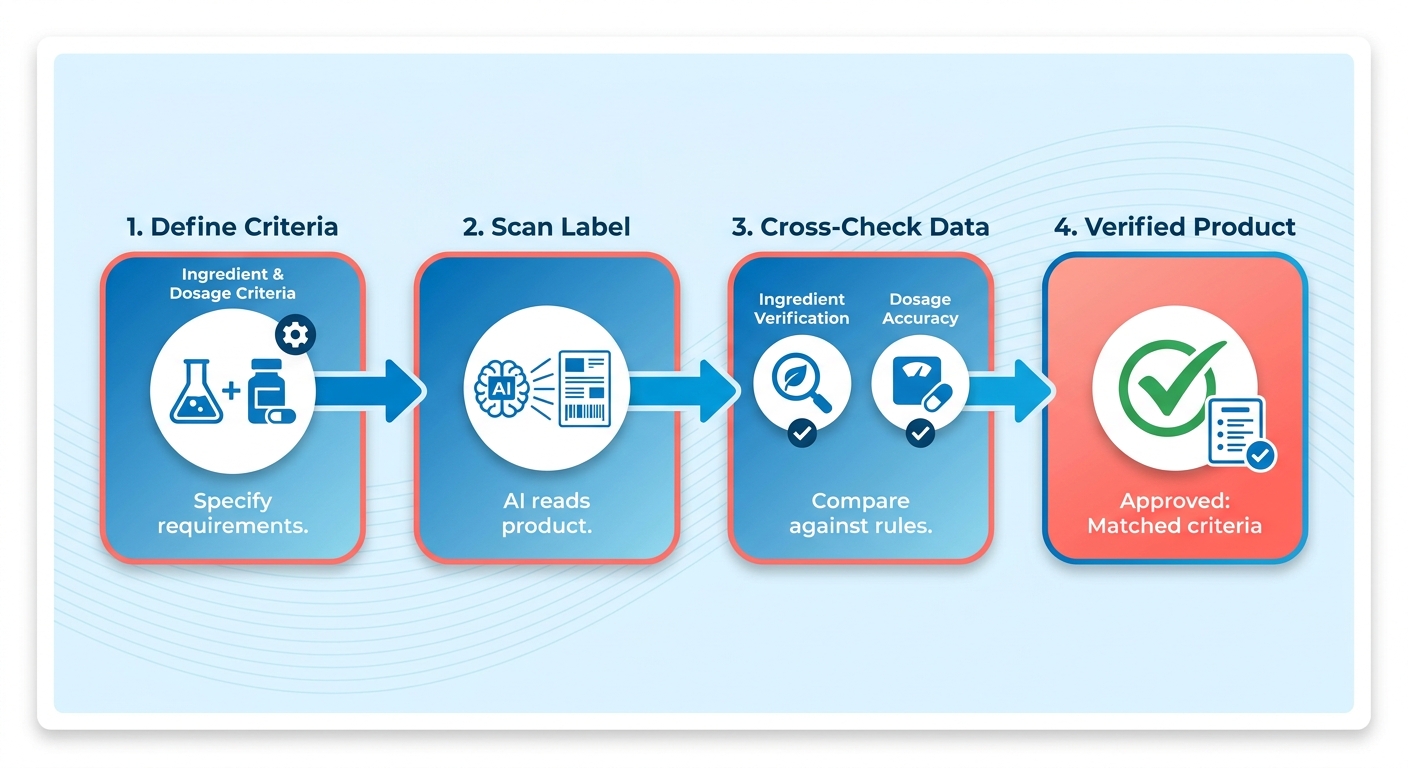
The system reads structured data (ingredient lists, nutrition panels, certification logos) and unstructured text like marketing claims. It standardizes units—mg to g, IU to mcg—so you can compare across retailers without converting anything yourself. Automated verification catches when a product label and a retailer's listing don't match.
When a protein powder listing shows lower protein per scoop than the manufacturer's current label, the AI surfaces that gap in real time. You can choose a correctly labeled alternative or wait for the listing to update.
Allergen Detection
Allergen scanning reads the allergen-warning block ("Contains:...") and the full ingredient list, catching cases where an allergen appears as a sub-ingredient—whey in "natural flavors," for example. Parents shopping for allergen-safe products can filter by specific triggers, and the AI removes anything that contains or may contain that allergen.
When you're managing dietary restrictions across multiple household members, every filtered-out mislabeled product prevents waste. Both the cost of an unusable item and the risk of an adverse reaction.
Moving from Search Results to Checkout
Once you've found products that meet your requirements, Popgot gives you clear product links across the retailers where items are available—major chains and niche merchants. You see all verified options in one place, with accurate unit pricing to help you decide where to buy.
How Multi-Retailer Search Cuts Down on Tab Overload
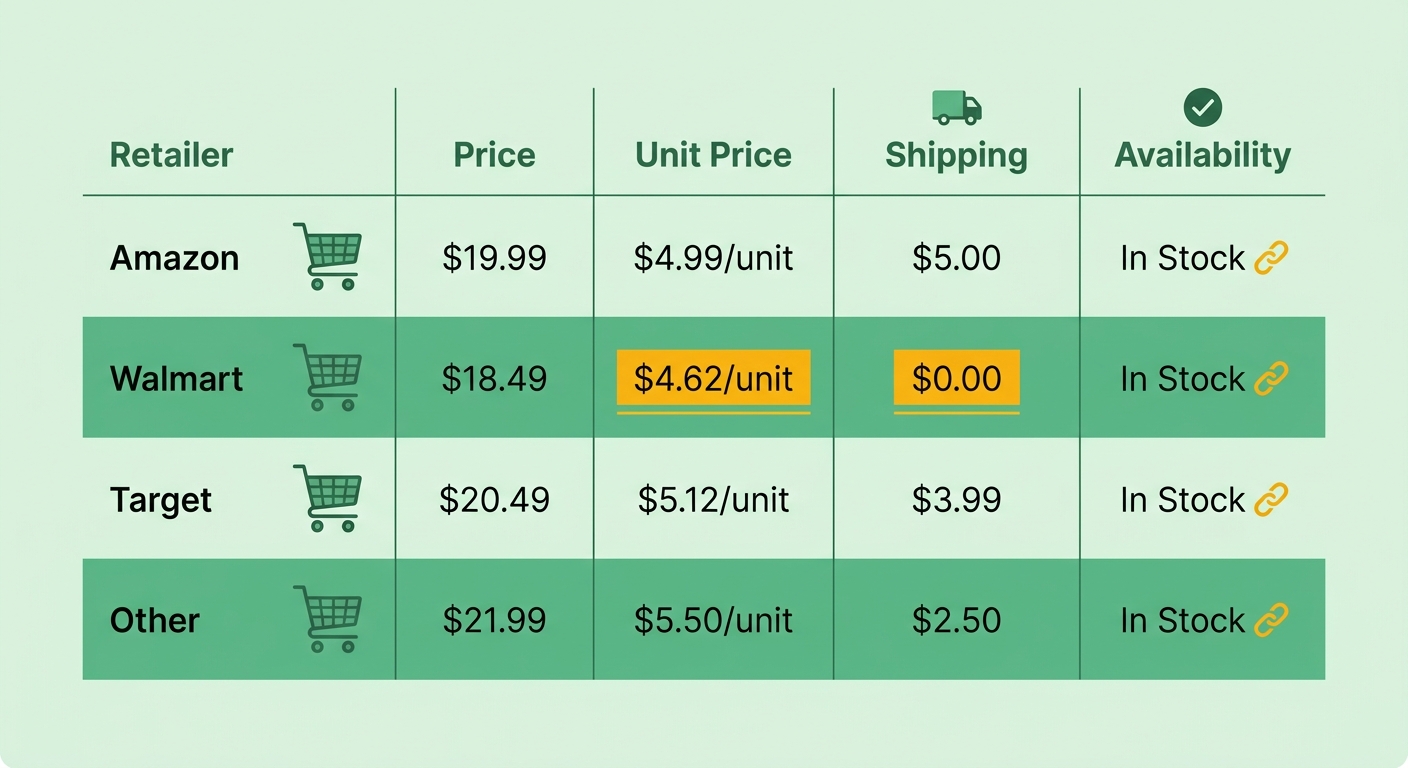
Manual cross-retailer shopping means searching each site separately, filtering results, reading labels, and checking out at each store. Popgot consolidates that into a single interface. Specify your product requirements once, and the AI searches across multiple national chains simultaneously, verifying each product against your criteria. You see only items that match, sorted by true unit price, so you can identify the best value and click through to purchase.
Retailers like Walmart and Amazon offer various fulfillment methods—same-day pickup, standard shipping, subscription options. Popgot displays products from all these retailers side by side, so you can choose the fastest or most convenient option for each item based on what the retailer provides.
Why People Use This Instead of Opening Ten Tabs
Shoppers consistently mention the value of avoiding multiple browser tabs and redundant searches. Searching across major retailers at once and filtering out products that don't meet specific requirements reduces the manual effort of comparing options. AI-driven verification means only relevant products appear, so less time reviewing irrelevant listings and more confidence in selections.
When you're ready to buy, you complete the transaction directly on the retailer's site under their checkout and security protocols. Popgot doesn't handle payment information. We help you find the right products and direct you to the retailer where you found the best deal.
Why Unit Pricing Matters More Than You Think
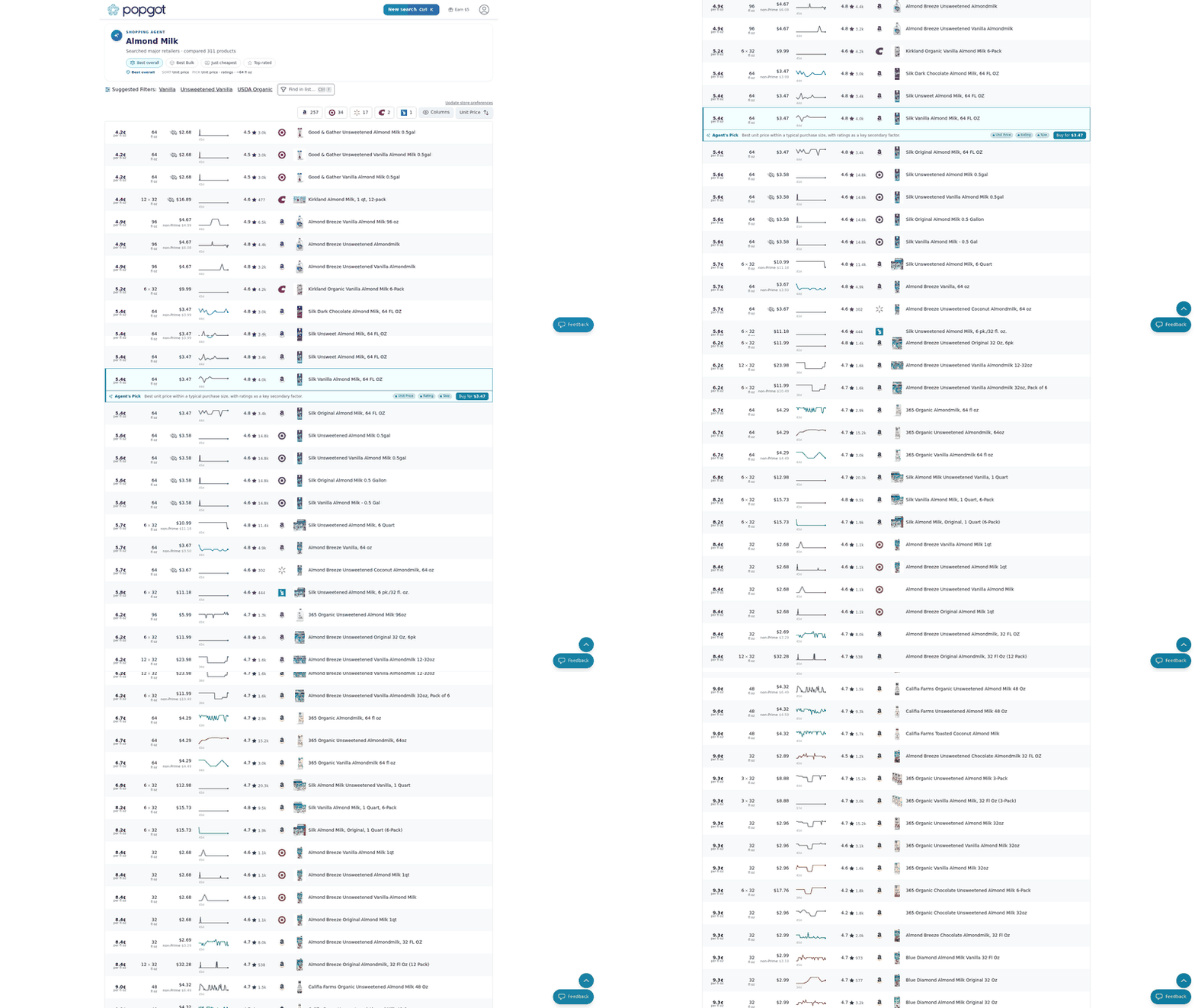
Shoppers overlook one of the simplest ways to cut their grocery and household budget: comparing unit prices instead of sticker prices. A 13 oz bottle of shampoo for $5.49 looks cheaper than a 22 oz bottle at $7.99, but the larger size costs $0.36 per ounce while the smaller one costs $0.42. That's a 14% saving just by checking the math. Our product finder automates this calculation across every listing.
Most retailers print unit prices on shelf tags, but they disappear when you shop online. Different sites use different units—price per ounce, per load, per tablet—making cross-retailer comparison nearly impossible without manual conversion. Popgot extracts and calculates unit prices from every retailer and standardizes them so you can sort by what you actually pay. Whether you're comparing a 2 L dish soap against a 1 L bottle or evaluating 30-serving snack packs, you see the real unit price—per serving, per ounce, per count—so you can spot the best value.
How Unit-Price Extraction Prevents False Savings
Tell us what you need—say, a 30-day supply of multivitamins or a month's worth of laundry detergent. We search major digital storefronts, then extract the per-serving or per-load cost from each listing. A bulk snack pack at $28.50 for 30 servings breaks down to $0.95 per snack. Another retailer lists the same brand at $1.20 per snack. That difference compounds across a month of grocery runs.
Popgot handles unit-price decisions without the mental math. The USDA notes that unit-price literacy can trim grocery spend by up to 15%. We make that literacy automatic.
When Price Per Ounce Isn't the Whole Story
Some products need a deeper look. Concentrated formulas deliver more uses per ounce than standard versions, but the shelf tag only shows price per fluid ounce. Industry best practice is to check the label's usage instructions—"use half as much per load"—and adjust the math to find the real cost per load, not just the liquid volume cost. Same logic applies to tablets, capsules, and single-serve items. A majority of shoppers who started comparing unit prices report feeling more confident in their purchases. Popgot's unit price extraction gives you that foundation without the manual effort.
Searching Across Amazon, Walmart, Target, and More at Once
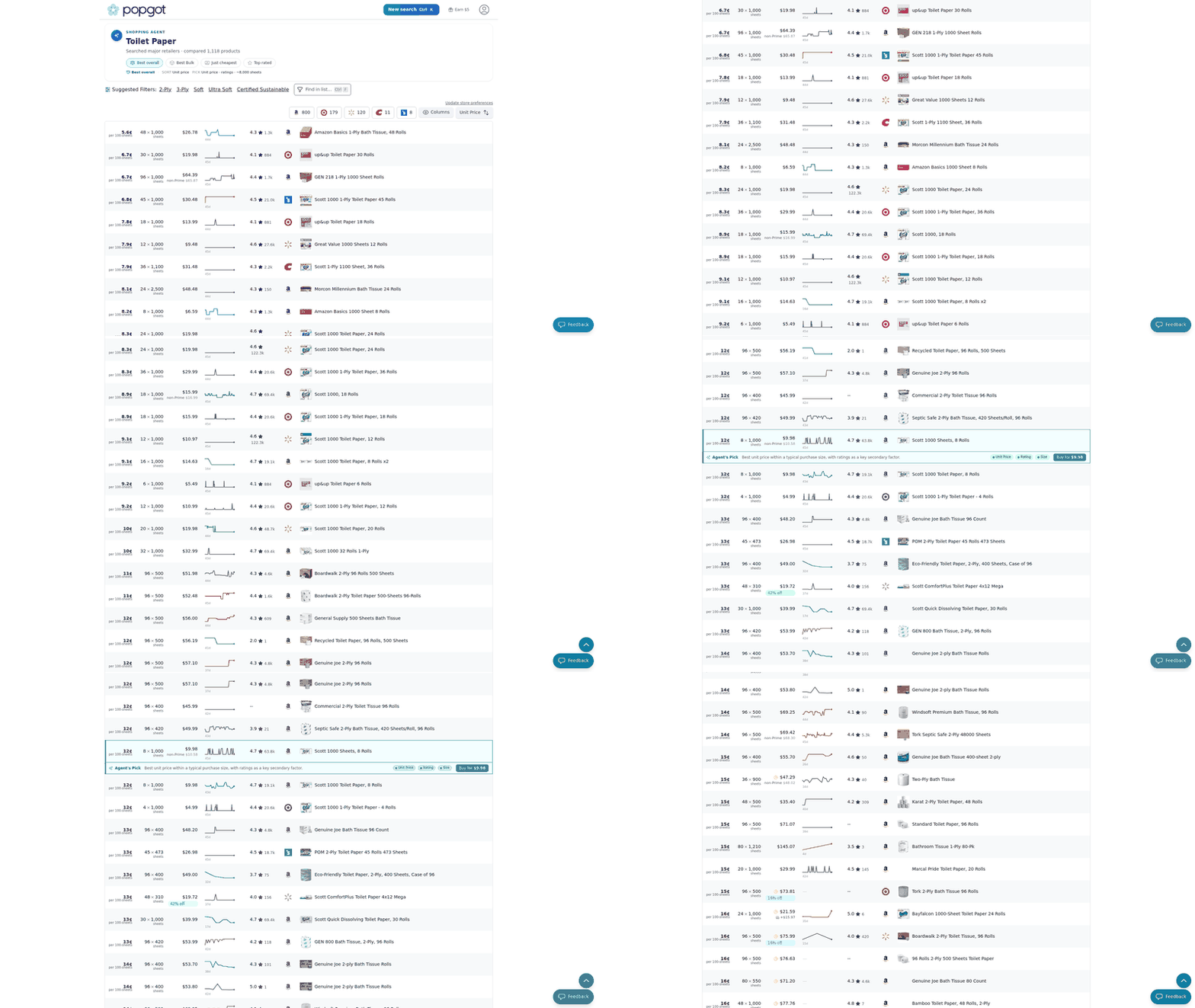
The multi-retailer search engine addresses a common inefficiency: consumers manually checking multiple sites, which often leads to overlooked savings. Our product finder aggregates live pricing, stock status, and shipping options from major national chains in a single query. Specify your requirements once—brand, size, dietary restrictions—and the system searches all platforms simultaneously.
Why Price Gaps on Everyday Items Are Wider Than You Think
Price gaps on identical products vary wildly by category. Real-time tracking across over a million products reveals that pantry staples show the highest variance, with some items varying by more than 20% between retailers. A family-size box of Cheerios recently ranged from $4.29 at one major retailer to $5.19 at another—a 17% spread on a single item.
The biggest savings opportunities are on high-turnover household goods: laundry detergent, body wash, baby wipes, and paper products. These categories shift pricing weekly based on promotions, regional inventory, and competitor matching. Manual checking misses those windows. Our system pulls fresh data continuously, so you see the current lowest price without refreshing tabs or revisiting searches.
How Real-Time Aggregation Cuts Research Time
Searching multiple platforms individually takes 15 to 30 minutes for a typical grocery run. Our platform searches across multiple major retailers at once, returning comparison results in a fraction of the time. Automated price tracking verified against real shelf prices shows that consolidated search eliminates up to 41% of missed deals compared to single-retailer browsing.
The backend scrapes product data—price, quantity, discounts, delivery charges—and normalizes it so you can evaluate equivalent values. Different sites use different units: price per ounce, per load, per tablet. We standardize everything to a base unit (grams, milliliters, count) and calculate the true cost. That's how we caught a recent case where a smaller pack at a higher sticker price actually delivered better unit economics than the "bulk" option.
What Unit-Price Calculation Reveals About Hidden Savings
Retailer pricing tactics often obscure true value. A 100-count box of dishwasher pods listed at $18.99 appears competitive until you compare it against a 75-count box at $12.99—the smaller package costs $0.173 per pod while the larger box costs $0.190 per pod, making the "economy size" 10% more expensive per use.
We flag when promotional pricing creates counterintuitive savings. During back-to-school sales, travel-size toiletries sometimes drop below bulk pricing on a per-ounce basis because retailers heavily discount high-margin impulse items. A 3-oz trial shampoo at $1.49 beats a 12-oz bottle at $6.79 when you calculate cost per ounce. Our system highlights those inversions automatically.
Why Price Transparency Beats Generic Coupons
Static coupon codes have limited reach because they require you to remember to apply them at checkout. Price comparison tools that show you the current best price across retailers work better because they surface savings opportunities on the specific products you're already shopping for, exactly when you need them.
We track pricing across retailers for every item in our index. When you search, you see which retailer currently offers the lowest price. Our accurate unit pricing means you're comparing true value, not just sticker prices.
When Multi-Retailer Search Delivers the Most Value
Cross-retailer comparison works best for non-perishable staples you buy repeatedly: cleaning supplies, personal care, shelf-stable pantry items, and baby products. Fresh produce and dairy don't benefit as much because quality variance matters more than price, and shipping windows are tight. Skip the product finder for perishables that require same-day delivery—local availability beats marginal savings there.
If you're restocking five or six household essentials at once, the time savings justify using a multi-retailer tool. For a single impulse buy, checking one or two sites manually is faster. Shoppers building monthly supply lists of multiple items benefit most from aggregated search.
Curated Shopping Guides and Budget Swaps That Don't Feel Like Downgrades
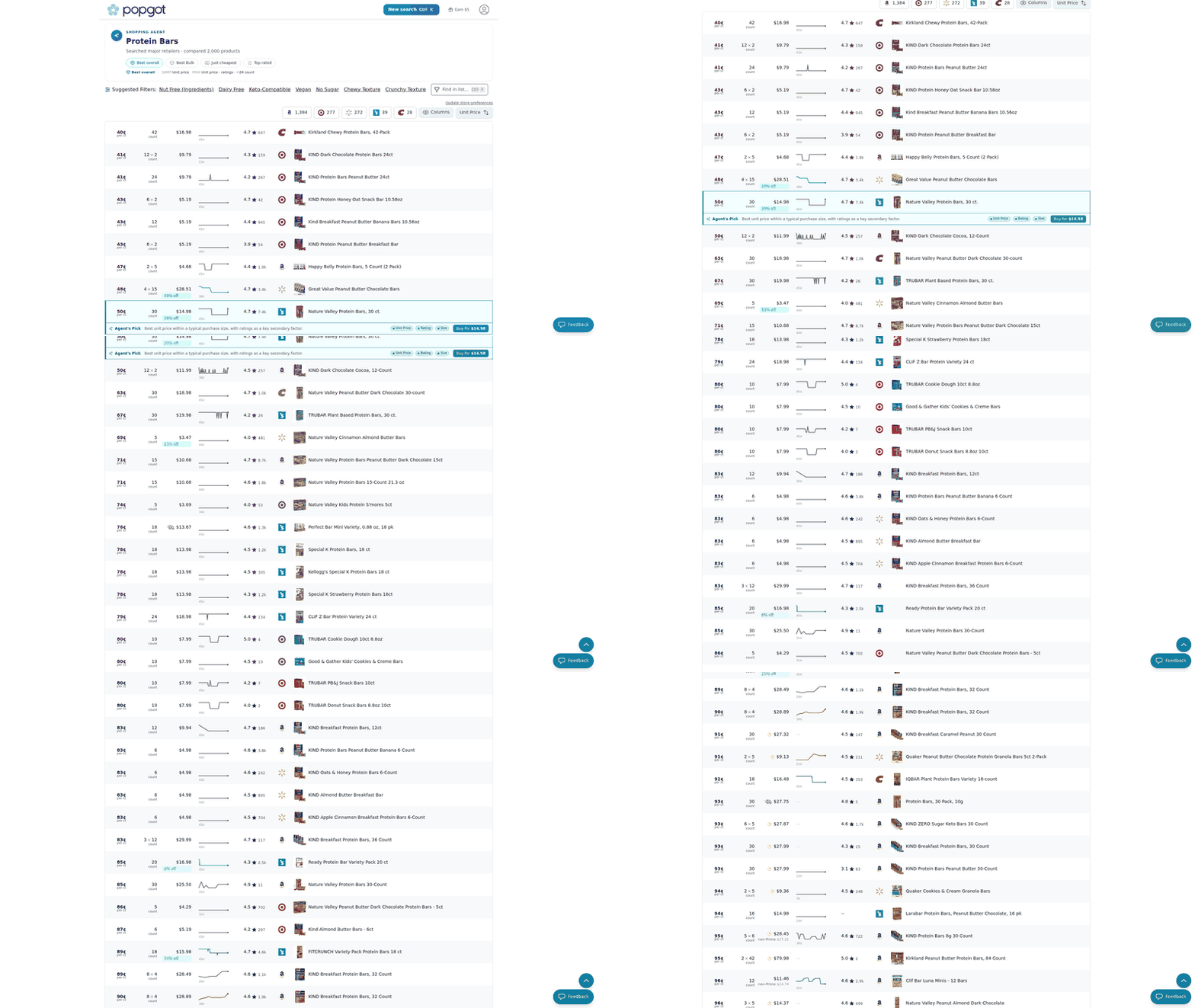
Our curated shopping guides help families discover budget-friendly alternatives without sacrificing quality. Guides combine live price data from our product finder with editorial filtering—we test formulations, read ingredient panels, and verify claims. Each recommendation includes side-by-side pricing across retailers, unit cost breakdowns, and notes on what makes a product worth buying at its price point.
Budget Swaps That Work
Dove Daily Moisture runs under $5 for 12 oz at most retailers—$0.42 per ounce—and contains the same moisturizing agents as bottles twice the price. Suave Essentials sits even lower at $0.28 per ounce while maintaining sulfate-free formulations. SheaMoisture options land between $0.50 and $0.65 per ounce but deliver salon-grade ingredients like argan oil and shea butter. Our AI agent searches across retailers to surface these comparisons so you can spot the best value.
Shoppers following specialized diets often find that whole-food equivalents outperform high-margin specialty products on both cost and control. Pre-packaged specialty bread runs around $8 per loaf, while almond flour costs approximately $0.80 per serving and lets you control sodium levels. Grass-fed butter costs the same per ounce as conventional at warehouse clubs but delivers higher omega-3 ratios—our platform verifies both price and nutrition data across listings.
Our "Cleaning Essentials" guide surfaces practical swaps that preserve effectiveness while lowering per-use cost. Moving from brand-name disinfecting wipes at $0.14 per wipe to concentrated all-purpose cleaner at $0.02 per application can reduce household-care spend. We provide dilution ratios and reusable bottle recommendations. For baby care, generic diaper rash cream with 40% zinc oxide performs identically to the $12 brand-name tube but costs $4.50. We link to the active-ingredient comparison so you can verify the match yourself. Every guide updates weekly using real-time price feeds, so recommendations stay current as promotions shift.
Setting Filters for Specific Health Requirements
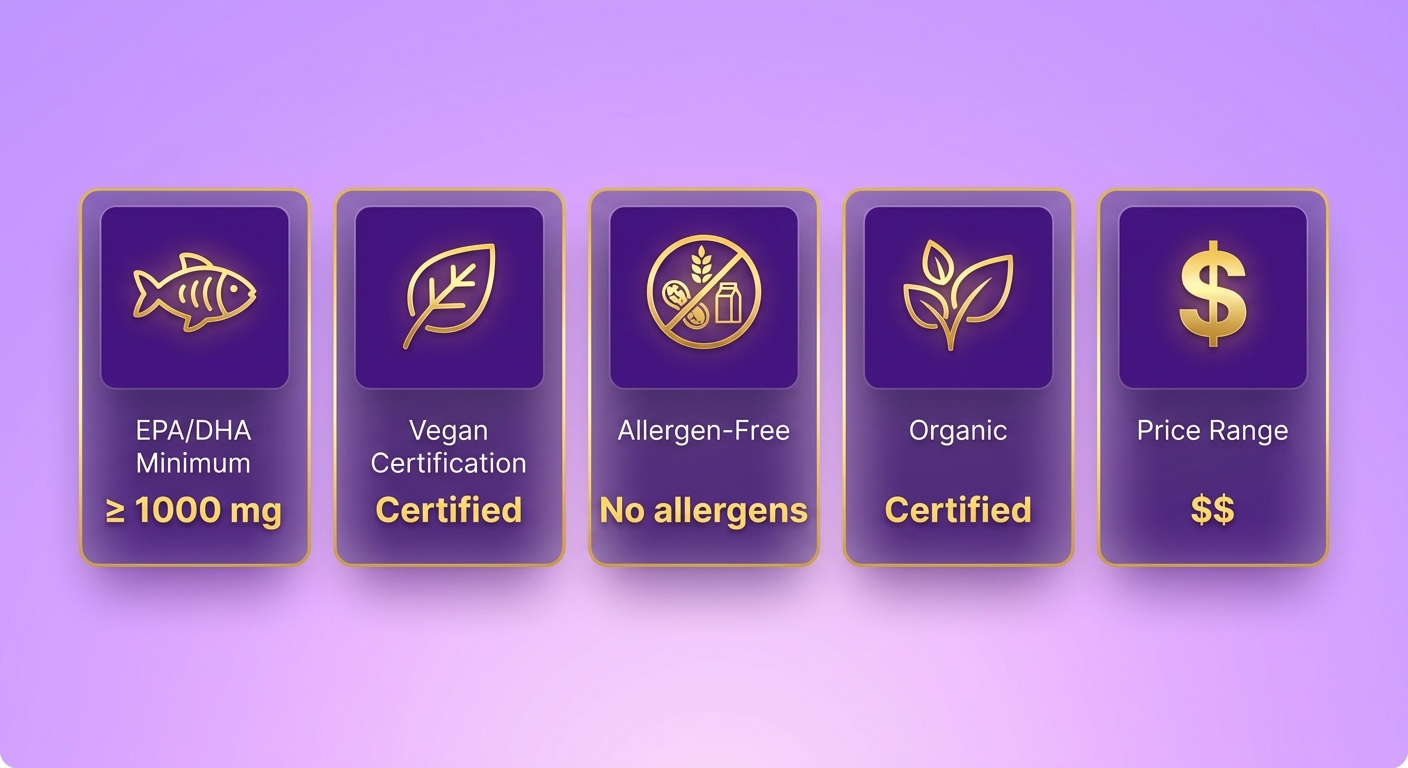
Granular filters eliminate irrelevant search results for shoppers with specific health requirements. When you search for coenzyme Q10 and need at least 200 mg active ubiquinol per serving, most product finders show you everything labeled "CoQ10," leaving you to read labels manually. Our filters let you set exact minimums. The system scans every supplement facts panel and shows only products that hit your threshold.
Setting Nutrition and Certification Filters
You can filter by omega-3 potency, vegan certification, non-GMO verification, and allergen exclusions. Our AI agent verifies each specification you set, so only products meeting your exact requirements appear. No guessing whether a product truly meets the standard. The non-GMO filter surfaces items with verified Non-GMO Project seals, while vegan certifications pull from databases maintained by organizations like Vegan Action and The Vegan Society. Over 600 companies participate in the Non-GMO Project Verified program, representing more than 65,000 verified products across North America.
Our allergen filters—covering peanuts, soy, gluten, and other common triggers—eliminate products that don't match your specifications. If you're managing celiac disease or a severe nut allergy, every product that slips through a weak filter creates risk. Precise filtering is critical for anyone managing chronic conditions where ingredient exclusions directly affect health outcomes.
Budget Controls: Price-per-Serving Ceilings
You can also set a maximum price per serving. This filter calculates cost per use, so a $30 bottle with 120 servings at $0.25 each ranks ahead of a $15 bottle with 30 servings at $0.50 each. Popgot automatically extracts and calculates unit prices from various retailers, so you can cap per-serving cost upfront. It eliminates products that look affordable but deliver poor value. You're not scrolling through options that break your budget on a per-use basis. Learn more in our detailed strategy guide, which explains how combining certification filters with price ceilings reduces decision fatigue while keeping you within budget.
References
[1] Grocery & Household Essentials - https://www.costco.com/grocery-household.html
[2] 17 Grocery List Categories to Make Shopping Easy - https://company.instacart.com/ideas/grocery-list-categories
[3] The Ultimate New Home Grocery Shopping List - https://updater.com/moving-tips/the-ultimate-new-home-grocery-shopping-list/
[4] Pantry Check - Grocery List - App Store - Apple - https://apps.apple.com/us/app/pantry-check-grocery-list/id966702368
[5] GroceryChop: Free Grocery Price Comparison Tool ... - https://grocerychop.com/
[6] Smart Grocery Shopping Assistant: Cheapest Price Finder ... - https://www.researchgate.net/publication/397562663_Smart_Grocery_Shopping_Assistant_Cheapest_Price_Finder_with_Cost_Optimization
Frequently Asked Questions
1. Can I use Popgot if I only shop at one retailer like Costco or Aldi?
Popgot currently searches several major national retailers, but doesn't include warehouse clubs like Costco or Aldi. If those are your primary stores, the platform won't help you compare their pricing. It works best for shoppers who split purchases across mainstream online and brick-and-mortar retailers.
2. Does Popgot show out-of-stock items or only what I can actually buy right now?
The platform displays real-time availability from each merchant during your search. You see only products currently in stock, along with the specific delivery and collection methods offered by the seller, preventing wasted trips to checkout.
3. If I save a search for a specific supplement or grocery item, will Popgot alert me when prices drop?
Saved searches let you rerun identical queries with one click, but the platform does not currently send automatic price-drop alerts. You manually rerun your saved search whenever you want updated results. The AI re-scans all retailers each time you search, so you see current pricing without needing notifications.
4. What happens to products that meet my ingredient requirements but cost more per serving than national brands?
When you apply a cost-per-use limit, the system automatically hides any item exceeding that threshold, regardless of how well it matches your other criteria. This ensures your search results remain strictly within your budget parameters while still prioritizing products that offer the best value per dose.
5. Can Popgot verify allergen claims for products that say "may contain traces" instead of listing the allergen directly?
The system cross-references the complete ingredients panel alongside standard allergen warnings. It identifies hidden sources of allergens—such as whey listed under 'natural flavors'—and automatically filters out products carrying precautionary 'may contain' statements to protect sensitive shoppers.
6. Does searching across multiple stores mean I have to check out multiple times if I want items from different stores?
Because Popgot functions as a search engine rather than a merchant, your final purchases are processed individually by each respective seller. If your order spans multiple stores, you will finalize each transaction with those specific businesses, utilizing their existing shipping and billing systems.