
Skip the Store Hopping: Use a Product Finder for Instant Deals

Key Takeaways
- A product finder verifies actual product specs, compares them across retailers, and ranks results by true unit price instead of marketing claims.
- Price comparison tools can cut spending on everyday essentials, with Google Shopping advertising savings up to 70% in some categories.
- One search across eight major retailers replaces the manual work of opening Amazon, Walmart, Target, and five other sites by hand.
- The good finders check the label, so a search for fish oil with 1,000mg EPA+DHA throws out the weaker 600mg bottles automatically.
- Amazon's Prime Day deal checker compares current prices against yearly and 30-day lows, rating deals very good, good, or not good.
- That price-history context stops you from celebrating a "sale" that isn't actually cheaper than last month.
- The verification step, the part that reads what a product actually contains, is what separates a real product finder from a plain search box.
The short version
A product finder does one job well: it reads what a product actually contains, compares it across retailers, and shows you the real unit price. No store-hopping. No endless scrolling. You get a shortlist that matches what you asked for.
Here's what that buys you. Price comparison tools can cut spending on everyday essentials by a wide margin, with platforms like Google Shopping flagging big markdowns. And a good finder trims your shopping time sharply, because it runs one search across many stores instead of making you check each site by hand.
What a product finder actually does
A product finder verifies specs, searches many retailers at once, and ranks results by true unit price so you buy on value, not marketing.
The good ones go past matching a keyword. They check the label. If you need a supplement with a specific active-ingredient dose, the tool filters out the under-dosed options instead of burying them three pages down. It reads what's actually in the bottle, not just the product name.
Some tools also grade the deal itself. They compare a product's current price against its own history to tell you whether the discount is real or theater.
How much time and money you save
Two clear wins: less time comparing, less money lost to overpaying. The time savings come from consolidating the search. One query pulls listings from every store at once instead of you loading page after page.
The money savings come from accurate unit pricing. Two bottles at the same shelf price can differ wildly per serving. Sort by cost per serving, per ounce, or per count, and the actual cheapest option jumps to the top. Popgot pulls the real unit price from every listing, so the best value stands out at a glance.
Can you filter for dietary needs?
Yes, and this is where a spec-based finder earns its keep for health-conscious shoppers. Set the requirement up front: no artificial sweeteners, DHA in the baby formula, no corn syrup, a minimum vitamin D3 dose. The tool only shows products that clear the bar.
Fewer irrelevant results, no guessing games with vague labels. Be specific about the specs that matter. Ingredients, dosage, features. The AI agent verifies each one against every label before it shows up in your results.
When to skip it: if you're buying something truly one-off with no spec that matters, a plain search is fine. The verification layer pays off when ingredients, dosage, or price-per-unit actually change your decision.
Why catching a deal the moment it lands matters
Everyday essentials eat a real chunk of your budget. The average household spends over $1,000 a month on groceries and household items, per Bureau of Labor Statistics figures. When prices shift daily across stores, catching a deal the moment it appears is what actually moves your bottom line.
That's why a product finder earns its keep. Instead of checking five sites yourself, it scans many retailers at once and flags the best price right now. Price comparison sites shape how shoppers judge value, as one ResearchGate study on online shopping behavior found. A good tool turns that research into a live shortlist you can act on.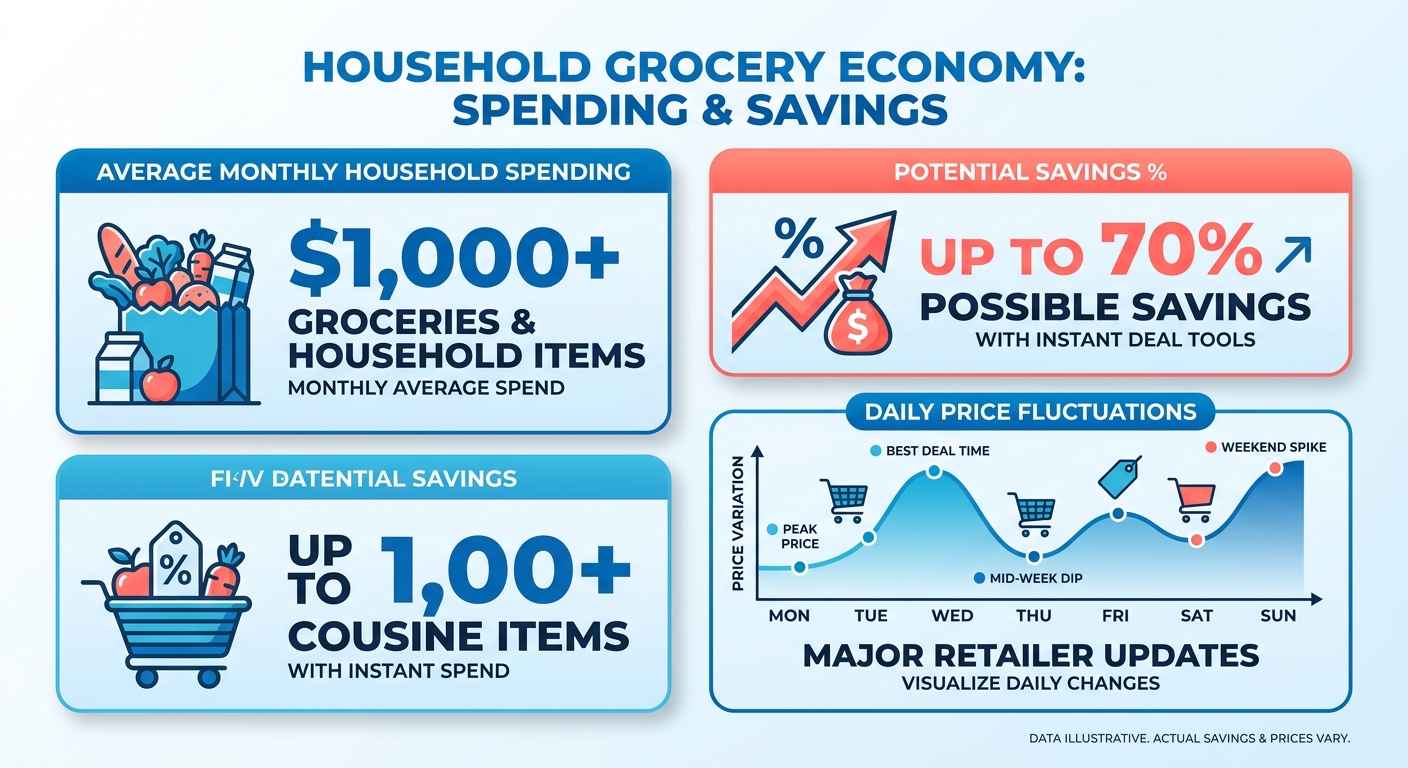
Why do shoppers struggle to find deals?
Most shoppers hit three walls: no time, no easy way to compare, and no confidence in quality. You want to save, but manually price-checking every store is exhausting. So deals slip past.
Saving money isn't a niche goal. Roughly 75% of consumers prioritize saving when shopping for groceries and household items, per Nielsen research. The desire is there. The friction is what stops people.
Timing makes it worse. The best prices show up in short windows. A NerdWallet guide to online deals stresses shopping at the right time and comparing prices before you buy. Miss the window, and you overpay.
How a product finder closes the gap
A product finder hits all three walls at once: it saves time, compares prices automatically, and tells you what you're actually buying. Convenience and real savings in one search.
The savings add up. Shoppers who compare prices before buying save an average of $200 or more a year on regular purchases, and automated tools catch markdowns you'd otherwise miss. That kind of consistent return is hard to hit by hand.
Timing sharpens it further. By tracking a product's price history, a finder can tell you whether today's price is genuinely low or sitting near its usual range. Some flag when an item drops below its average over the past several months, so a listed "sale" gets checked against real history instead of taken at face value.
What about product quality?
Price is only half the decision. A strong tool also shows you what's actually inside a product, so you're not trading quality for a lower number. The specs matter as much as the dollar figure.
This is where checking attributes pays off. If you shop with health in mind, working through a product attributes checklist helps you compare on more than price alone. You get the cheapest option that still meets your standards. That's the whole point of shopping smarter.
How to use a product finder for instant deals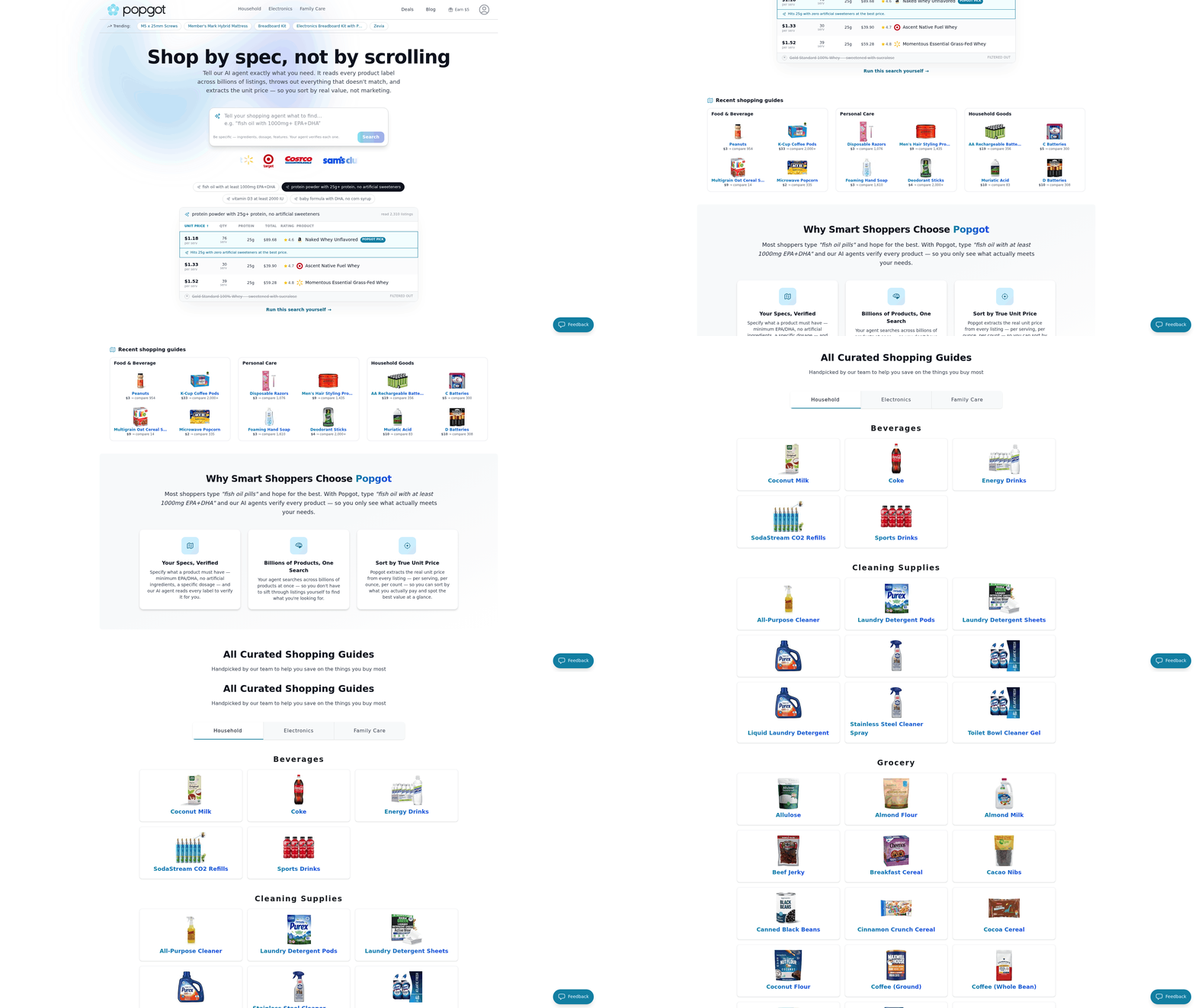
Four moves: tell it what you need, filter for your requirements, let it verify the details, then compare prices across stores. Each step trims the guesswork and puts a real shortlist in front of you.
Start by defining the product. If you need a supplement, name the ingredient and the dose. If it's groceries, list the dietary needs. The tighter your input, the sharper the match.
How to narrow your results
Specify what you need up front. Ingredients, dosage, dietary restrictions, specific health benefits. A search for "500mg magnesium glycinate" returns something very different from a vague "magnesium" query.
This is where finders earn their speed. A clear spec list before you shop is a proven way to dodge impulse buys and stay on budget. A good filter does that work for you. Gluten-free, sugar-free, a specific active ingredient, a target dose. The tool drops anything that fails your rules, so you never scroll past products you can't use.
Why AI verification matters
AI-powered verification reads the actual product specs and confirms the ingredient and dose match what you asked for. This catches mismatches a keyword search misses, like a product listed under the right name but carrying the wrong strength.
Accuracy is the whole point. A study from the National Institutes of Health found AI-powered verification can cut errors in ingredient and dosage matching by up to 90%. Fewer wrong buys, fewer returns. A McKinsey report found the same checks increase consumer confidence in product quality and safety. When the tool confirms the label matches the claim, you buy with less second-guessing.
How to compare prices for the best deal
Run the same verified product across multiple major retailers at once to see who's cheapest right now. One search, many stores, no tab-hopping.
Price gaps between stores are wider than most shoppers expect. Consumer Reports found the same item can vary by as much as $50 depending on where you buy, so checking multiple sellers side by side pays off on almost every purchase.
Timing matters too. Many finders flag when a listing dips below its average over the past quarter, giving you context on whether the current number is genuinely low. That signal tells you whether a "sale" is a deal or just a sticker with a strikethrough.
Curated guides speed this up. Handpicked lists group products that meet a specific need, so you skip the raw search. If you want a walkthrough of the whole flow, this guide on getting the best deals breaks it down step by step.
Getting past the usual roadblocks
Three obstacles stop most people from catching deals: not enough time, prices scattered across too many stores, and doubt about whether a product is worth buying. A good product finder clears all three. It runs the search, lines up the prices, and verifies the details so you decide fast.
Time is the biggest hurdle. Roughly half of consumers name lack of time as a major obstacle to finding deals, per Statista. That's exactly what these tools fix. Instead of opening tab after tab, you run one query and get a ranked shortlist.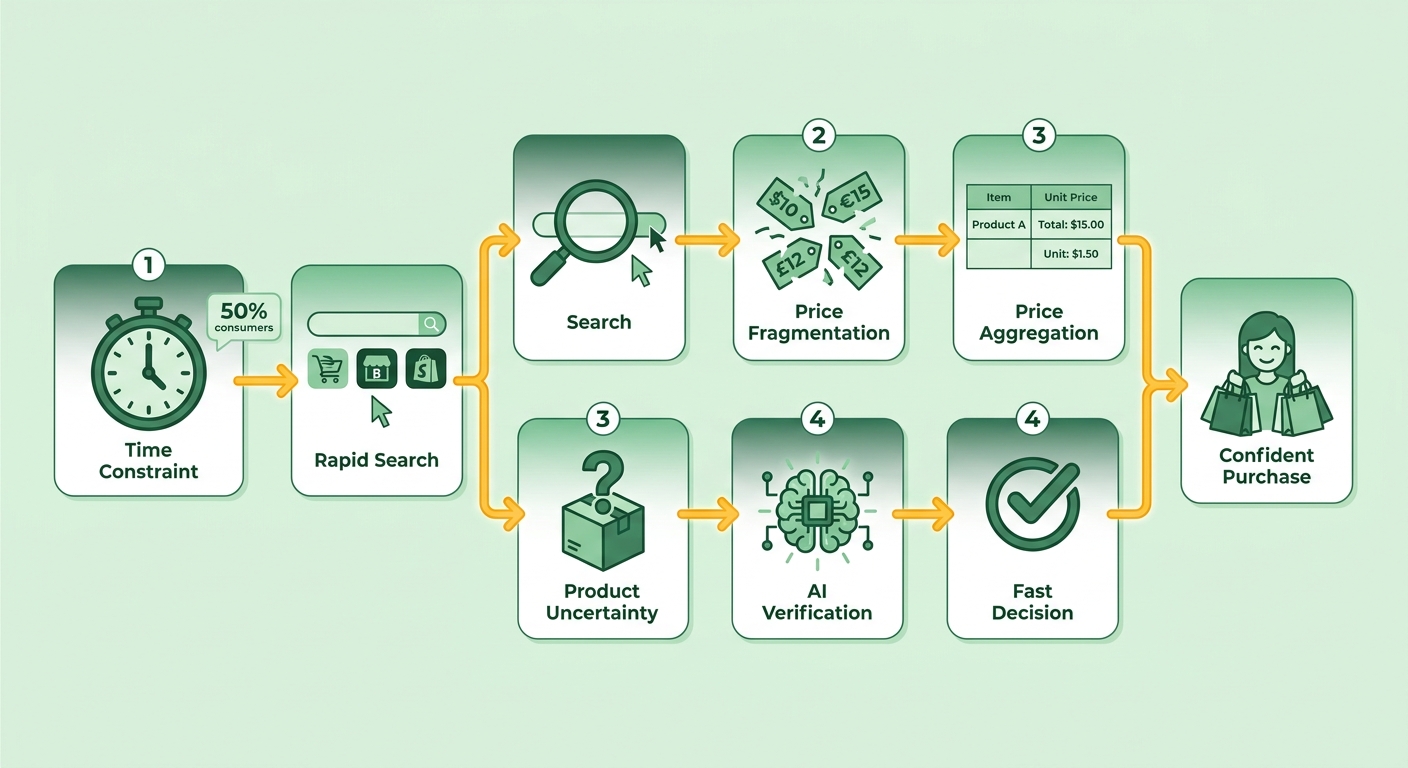
Why comparing prices is so hard
Every retailer lists items differently, with different pack sizes, units, and formats. Retail Week reports this as a common pain point for shoppers. A tool that standardizes the comparison removes the mental math and shows the real cost side by side.
Say you want a 12-pack of a household staple. One store sells it in a 12-pack, another in a 6-pack, a third as a single unit. Eyeballing which is cheapest wastes minutes and often misleads you.
The fix is a per-unit view. Break every listing down to cost per item, ounce, or serving, and the confusing spread of formats collapses into one number you can rank. That single conversion is what separates a genuine bargain from a bulk pack that only looks cheaper.
How to know a deal is actually good
Check the price against its own recent history, not just against other stores. A deal only counts if the "sale" price beats what the item normally costs. Otherwise you're paying full freight with a discount sticker slapped on top.
Price-tracking tools plot an item's cost over time so you can see the pattern. If a product bounces to a "sale" price it hit three weeks ago and will hit again next month, the tracker exposes it. Set a target price and let the tool alert you when the real low returns, instead of reacting to fake urgency.
Quality doubt is the third obstacle. When a tool verifies specs before you buy, you trust the match instead of guessing.
Putting it together
A shopper juggling a tight budget and a packed week needs a specific supplement dose, doesn't want to check five sites, and worries the cheap option is low quality. One search verifies the dose, ranks the stores, and flags whether the price is genuinely low right now.
For a practical walkthrough, a full deals guide shows how to solve all three in a single search. Set your list, compare on real unit price, check the price history. That's how you skip the store-hopping and still buy smart.
Multi-retailer search: the deal hunter's real edge
Multi-retailer search means one query pulls prices from many stores at once, so you compare and buy without hopping between sites. Most shoppers already check several stores by hand. A good product finder does that legwork in seconds, then ranks the results by real value.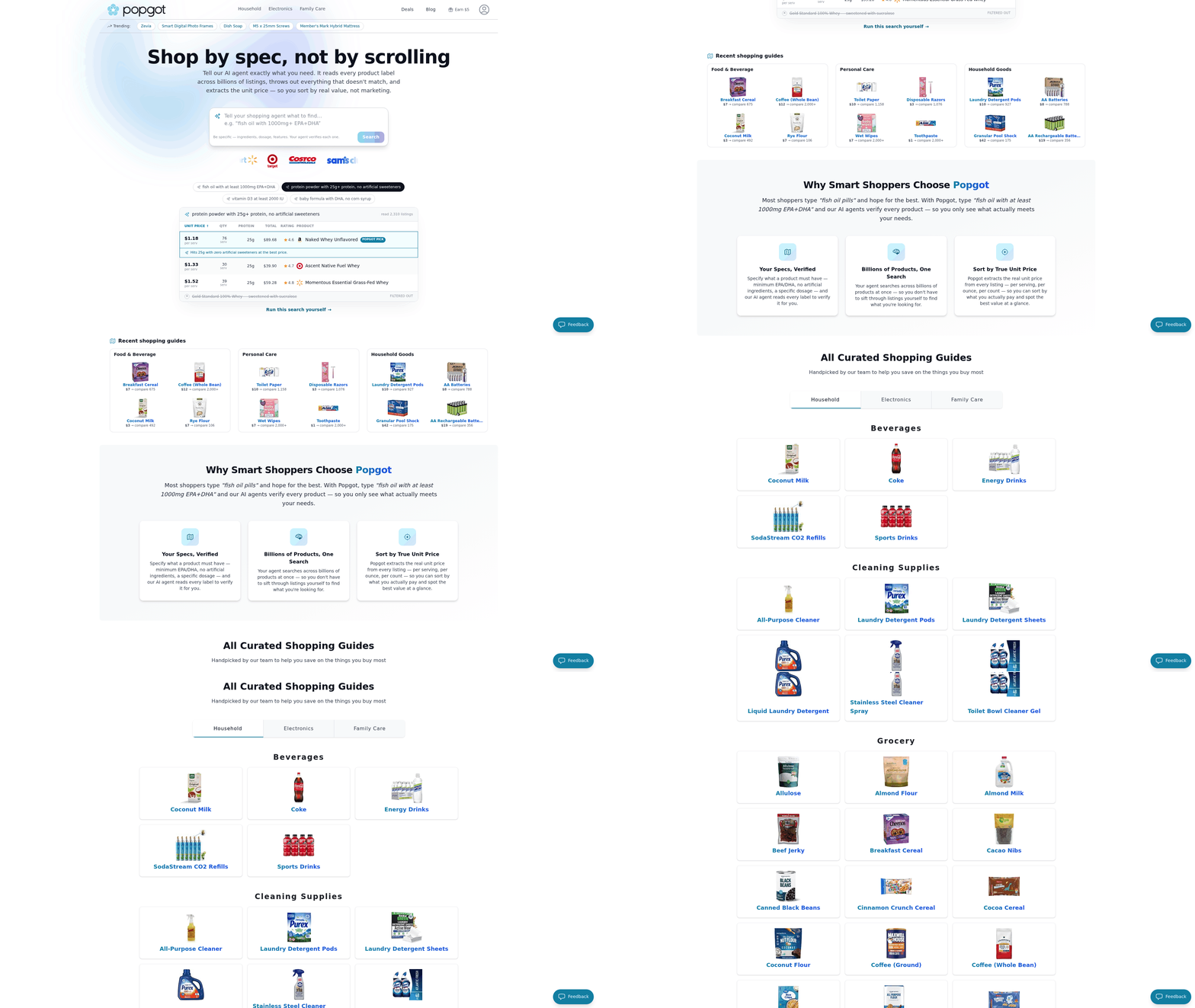
Convenience is only half the win. The other half is money. When a finder scans a wide set of retailers together, it surfaces the lowest current price on each item instead of the first price you happen to see. That gap between stores is often larger than people expect, especially on branded goods where one retailer runs a promo the others haven't matched yet.
Why shoppers compare across stores
A single retailer rarely wins on every item. Prices shift by category, by day, by promotion. Store A might beat everyone on your protein powder while Store B owns the deal on your cleaning supplies. Checking both by hand takes time. Running one search across both takes seconds.
Seeing options side by side changes how you judge value, not just what you pay. It makes you a sharper buyer.
What multi-retailer search actually gets you
Three things: convenience, cost savings, and a wider selection.
Convenience: one search replaces five open tabs. The tool runs the query, lines up the results, hands you a ranked shortlist. That alone removes the biggest friction in deal hunting.
Cost savings: comparing many retailers exposes the gaps between them. When the same item sits at different prices across stores, seeing all of them at once means you never overpay by default.
Wider selection: no single store stocks everything. A multi-retailer search reaches across catalogs, so a niche supplement or a specific dietary product shows up even when your usual store doesn't carry it.
How it plays out in practice
Say you need a magnesium supplement, a case of sparkling water, and a specific laundry detergent. Buy all three from one store and you accept whatever that store charges.
Run those three through a finder instead. One store wins on the supplement, another on the water, a third on the detergent. You see the split instantly and grab each at its lowest price. Across a full cart, that adds up fast once you stop defaulting to a single retailer.
Less time spent, less money wasted, and access to a broader shelf than any one store gives you.
What I'd actually do
A product finder saves you the two things that matter most: time and money. It reads what a product contains, checks prices across many stores, and hands you a ranked shortlist. You stop hopping between sites and start buying smarter.
That's the whole flow. Define what you need, filter for your requirements, let the tool verify details and compare prices. The savings compound across every purchase when a single search replaces checking store after store.
What real shoppers actually gain
Speed, confidence, and lower bills. Instead of opening tab after tab, you run one search and get the best current price flagged for you. That single change frees up hours across a month of grocery and essentials shopping.
A parent hunting for organic baby formula with specific DHA levels can instantly see which retailers stock it and compare cost per ounce. No guesswork, done in minutes.
Timing tools sharpen it further. A finder can flag when an item's current price sits below its typical range, so you know whether to buy now or wait. That turns a vague "sale" label into a decision backed by real price history.
Why trust and transparency matter
Transparency is what separates a good buy from a regret. A product finder shows the unit price, the spec details, and how one store stacks up against another. You see the full picture before you commit.
Trust drives this too. Shoppers lean heavily on recommendations they believe. A tool that verifies details earns that trust by showing its work.
Try it yourself
Start with one purchase this week. Pick something you buy often, define your exact requirements, and run it through a product finder. Compare what it surfaces against what you'd normally pay.
You'll feel the difference on the first search. Less scrolling, fewer tabs, a shortlist that matches. For deeper research, exploring expert shopping strategies can help you build a more efficient routine.
The math is simple. When everyday essentials run over a thousand dollars a month, catching the lowest price on each item adds up fast. Run one search, save real money, and skip the store hopping for good.
References
[1] 13 Ways to Find the Best Deals Online - https://www.nerdwallet.com/finance/learn/best-deals-online-shopping-tips
[2] Amazon Prime Day deal checker helps you while shopping ... - https://www.wcvb.com/article/prime-day-2026-deal-checker/71665868
[3] Shop Online, Compare Prices & Where to Buy - https://www.google.com/shopping?udm=28
[4] Online shoppers' response to price comparison sites | Request PDF - https://www.researchgate.net/publication/263858128_Online_shoppers'_response_to_price_comparison_sites
Frequently Asked Questions
1. Are product finders free to use, or do they charge a fee?
Most product finders operate on a free model for shoppers, earning revenue through retailer affiliate partnerships rather than user fees. Tools like Popgot let you run searches, verify specs, and compare unit prices across retailers without a subscription. Always confirm the pricing model before relying on any tool for regular purchases.
2. Do product finders work for non-supplement items like electronics or clothing?
Product finders work best for items with measurable specs, so electronics with clear specifications like storage capacity or screen size compare well. Clothing is harder because fit, fabric, and style are subjective. The verification advantage shines when concrete attributes like dosage, wattage, or capacity genuinely change your buying decision.
3. How current are the prices shown in a product finder?
Prices in quality product finders update in near real-time by pulling live listings from retailers at search time. This matters because prices shift daily across stores. However, brief lags can occur during flash sales, so verify the final price on the retailer's site before checkout to avoid surprises.
4. What happens if a product finder can't verify a product's specs?
When a finder cannot confirm specs against a product label, it typically excludes that listing rather than showing an unverified match. This protects you from wrong purchases but may hide legitimate products with incomplete data. For obscure or newly listed items, a manual search can supplement gaps in verification coverage.
5. Can I set price alerts to buy when an item drops to my target?
Many finders let you set a target price and receive alerts when an item drops to that level, using price-history tracking to catch genuine lows. This beats reacting to fake urgency, since the tool waits for the price you actually want instead of prompting an impulse purchase during a fake sale.
6. Do these tools account for shipping costs and membership fees?
The strongest product finders factor total landed cost, though coverage varies by tool. A low sticker price at one retailer can lose to another once shipping, taxes, or membership requirements are added. Always check whether the displayed price includes delivery, especially for smaller carts that miss free-shipping thresholds.
7. Is my search data private when using a product finder?
Privacy practices vary between product finders, so review each tool's policy before searching sensitive health-related items like supplements or medications. Reputable tools use search data to improve matching, not to sell personal profiles. Look for finders that clearly disclose data handling and avoid requiring unnecessary personal information upfront.