
Shopping AI for Health‑Conscious Parents: Find Safe, Affordable Essentials

Key Takeaways
- Shopping AI reads ingredient lists, certifications, and product claims across multiple retailers in seconds. No more squinting at labels in the aisle.
- Set filters once (gluten-free, vegan, fragrance-free), and the tool only returns products that qualify.
- For parents, the real value is catching hidden additives and flagging unverified claims before you buy.
- Certifications like MADE SAFE do the vetting for you: they screen out chemicals linked to health or environmental harm.
- You can get specific: fish oil with at least 1000mg combined EPA and DHA, for example.
- Saved filters mean the AI skips non-matching products automatically, so you're less likely to grab the wrong thing.
Using Shopping AI to check ingredients and labels
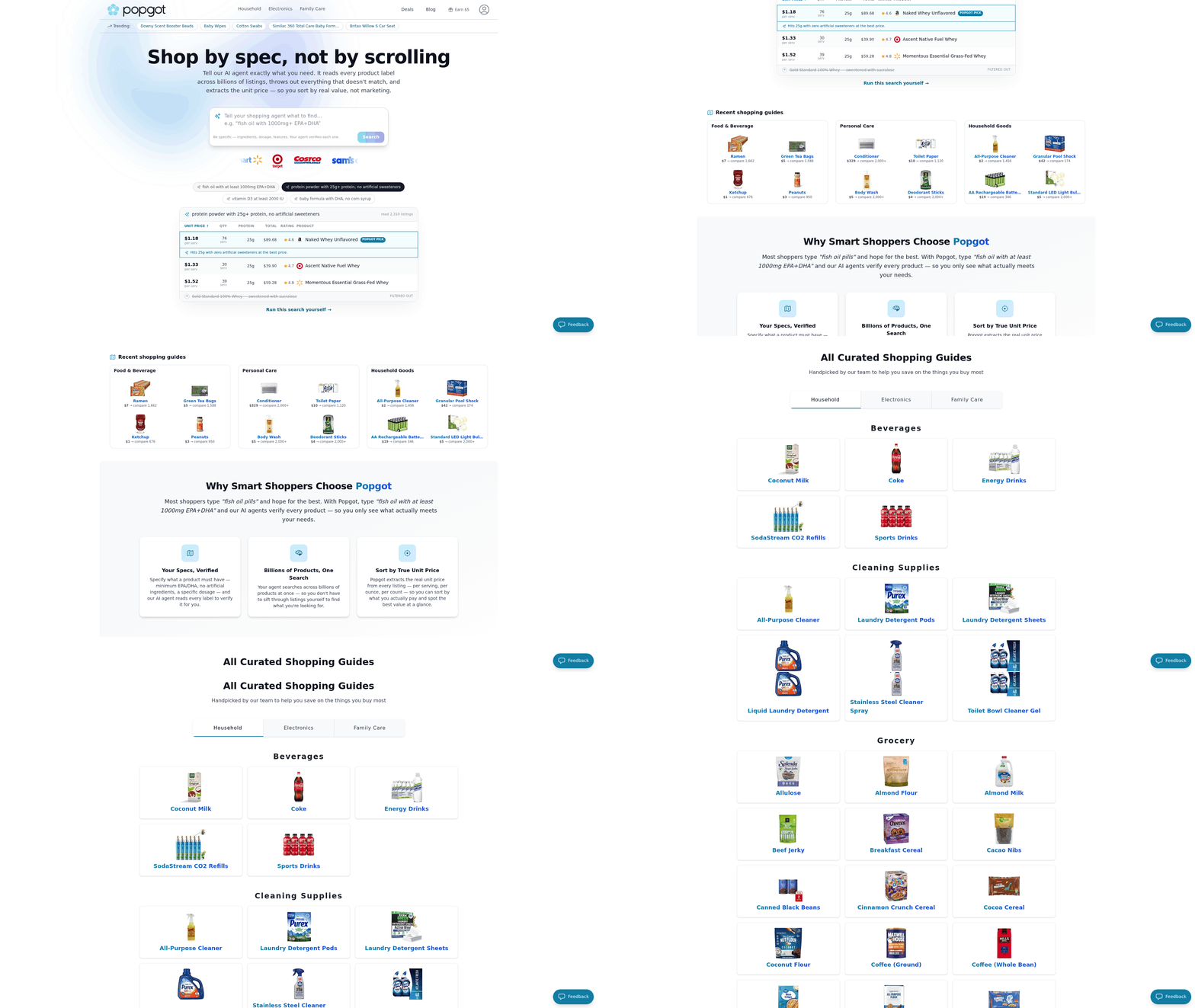
Checking ingredients used to mean squinting at fine print in a store aisle. Shopping AI changes that. You type what you need, set your filters, and the tool scans ingredient lists, certifications, and claims across multiple retailers in seconds.
For health-conscious parents, this is more than convenience. A tool that reads labels for you catches hidden additives, flags unverified claims, and confirms certifications before you buy. That saves time and cuts the risk of bringing home something you'd rather avoid.
Filtering for specific ingredients and labels
Set your criteria once (gluten-free, vegan, fragrance-free), and the AI only returns products that qualify.
Say you need a baby lotion with no synthetic fragrance. Add "fragrance-free" and "non-toxic" as filters. The AI pulls matching options and skips everything else. This is where third-party certifications earn their keep.
The MADE SAFE certification screens products so they don't contain toxic chemicals linked to human health or environmental harm. Filter for a mark like that and the vetting is already done. Instead of researching each brand yourself, you trust a standard that already tested the product.
Difficulty: Easy. Setting filters takes a few minutes and no technical skill.
What curated shopping guides add
Curated guides group vetted products by need, so you skip the research phase. Age-appropriate baby gear, verified non-toxic materials, personal care items that meet a specific safety standard.
Guides like the non-toxic baby products roundup from Gentle Nursery point parents toward safer gear, cleaner materials, and trusted brands in one place. A healthy baby guide built on MADE SAFE certified products does the same for household and personal care items.
These guides answer the two questions parents ask constantly. Is this age-appropriate? And does the claim on the label actually hold up? A good guide checks both before anything hits your cart.
Why label transparency matters
"Natural" and "safe" aren't regulated words. They can mean whatever a marketing team wants them to mean. Verification tells you whether the claim is backed by a real standard.
That's the whole point of certification programs. A product carrying a MADE SAFE seal has gone through independent laboratory screening. You get proof, not self-regulated marketing language.
Traditional price tools show you the cheapest option and stop there. AI product verification adds an ingredient and certification layer on top, as covered in this look at price comparison tools. You save money and confirm safety in the same search.
What you can actually find
Affordable essentials, fast: baby lotions, cleaning products, personal care items that pass your filters. Multi-retailer search compares prices across stores, so the safest option is often the cheapest too.
Time: 10 to 15 minutes for a full shopping list. Difficulty: Easy. The AI handles the label reading. You set the rules and pick from what qualifies.
Comparing prices and unit costs across retailers
Comparing prices used to mean five browser tabs and mental math at checkout. Shopping AI collapses that into a single search. Enter the item, and the tool pulls current prices from major retailers like Amazon and Walmart side by side.
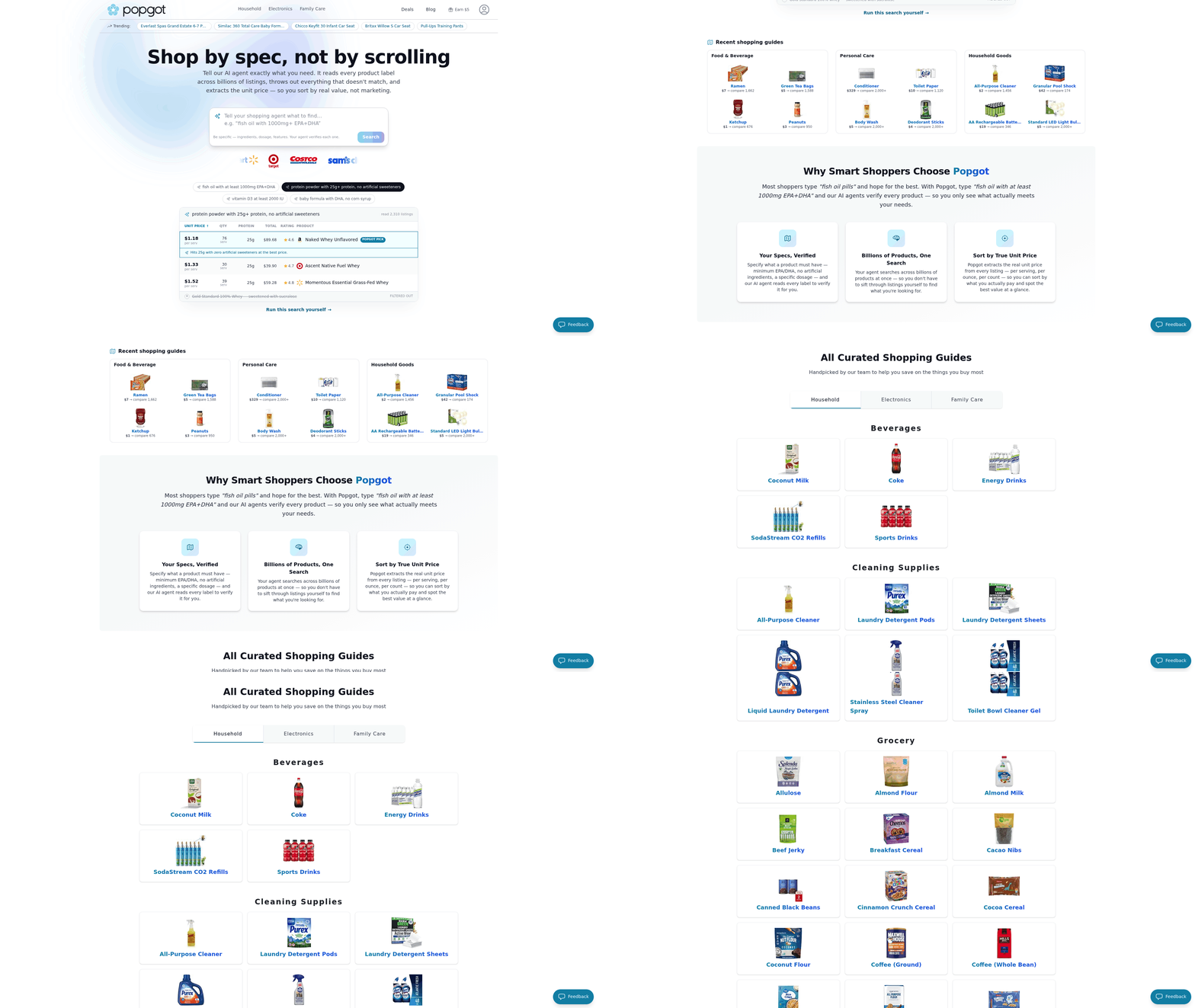
The real advantage is unit cost, not sticker price. The tool calculates price per ounce, per count, or per load, so a "cheaper" box that holds less gets flagged for what it is. That's the number Consumer Reports has pushed shoppers to check for years, because it's the only fair way to compare a 24-pack against a 40-pack.
How to compare unit costs
Unit cost is the price broken down to a standard measure, so different package sizes compete on equal terms. Set your item, and the tool ranks options by that per-unit figure instead of the headline price.
Start with the essentials you rebuy constantly. Diapers, wipes, laundry detergent, hand soap, pantry staples. That's where small per-unit gaps add up over a month of restocking.
Two detergent options: one retailer lists a jug at a lower total price, but a competing store sells a bulk size that works out to less per load. The AI surfaces that second option instantly, and the savings repeat with every future order.
Where the savings actually come from
Three places: catching lower base prices, spotting better per-unit value on bulk sizes, and avoiding the "convenient" pack that quietly costs more. Household basics and personal care items are the easiest wins because you buy them again and again.
A family buying wipes, baby shampoo, and cleaning spray each month: shifting each item to the lowest per-unit retailer trims a few dollars per product. Across a full cart, repeated weekly, those small cuts turn into real budget breathing room.
For how these automated calculations stack up against standard search engines, see the comparison with traditional price tools.
Finding safe, affordable baby and kids essentials
Finding safe, affordable baby gear starts with knowing what to search for. A shopping AI pulls diapers, formula, baby food, and gear from multiple retailers, then flags the products that meet your safety and budget requirements. You skip the aisle guesswork and get options that actually fit.
The stakes are higher with kids than with most purchases. Non-toxic materials matter, and a tool that reads certifications and nutritional labels helps you avoid products with questionable ingredients. That's the difference between grabbing the cheapest box and grabbing the safest one at a fair price.
Which essentials you can search for
The everyday stuff first: diapers, wipes, formula, baby food. These are where small per-unit savings add up fast, since you buy them week after week.
Beyond consumables, you can search for gear built from safer materials. For nursery furniture, mattresses, and feeding supplies, the AI cross-references product specs against known safety databases. That lets you apply strict material standards across multiple retailers at once, instead of settling for whatever a single storefront happens to stock.
For food specifically, nutritional label checks let you compare baby food and formula on more than price. Sugar content, added ingredients, certifications, side by side, before you decide.
What safety features to look for
Certification checks matter most for kids' products. Look for a tool that confirms third-party safety certifications rather than trusting the marketing on the front of the box.
MADE SAFE® is a good benchmark. Integrated into your search, it acts as an automated gatekeeper, filtering out products that fail its chemical safety criteria. You get a pre-screened starting point instead of a wall of unverified options.
When you search, prioritize:
- Ingredient and label scanning so you catch additives before they reach your cart
- Certification verification to confirm safety seals are real, not implied
- Material filters for gear, to screen out flagged chemicals in things like mattresses and toys
Balancing safety and cost
Safety and affordability aren't opposites. A good tool shows both certification status and price across retailers, so you find the cleanest product that still fits your budget instead of paying a premium by default.
Say you need formula that meets strict ingredient standards. Instead of assuming the safest option costs the most, compare certified products across stores and you may find one priced below a big-name alternative. That's a real win when you're restocking monthly.
Same logic applies to feeding the whole family without overspending. Harvard Health's tips for cost-conscious food shopping make the same point: smart comparison beats brand loyalty. Lock in your safety filters first, then let price sort the rest.
How AI-driven shopping platforms actually work
AI shopping platforms scan products across multiple retailers, read their labels and certifications, and match them against the exact criteria you set. For parents, safer picks surface first, and questionable ones get flagged before they reach the cart.
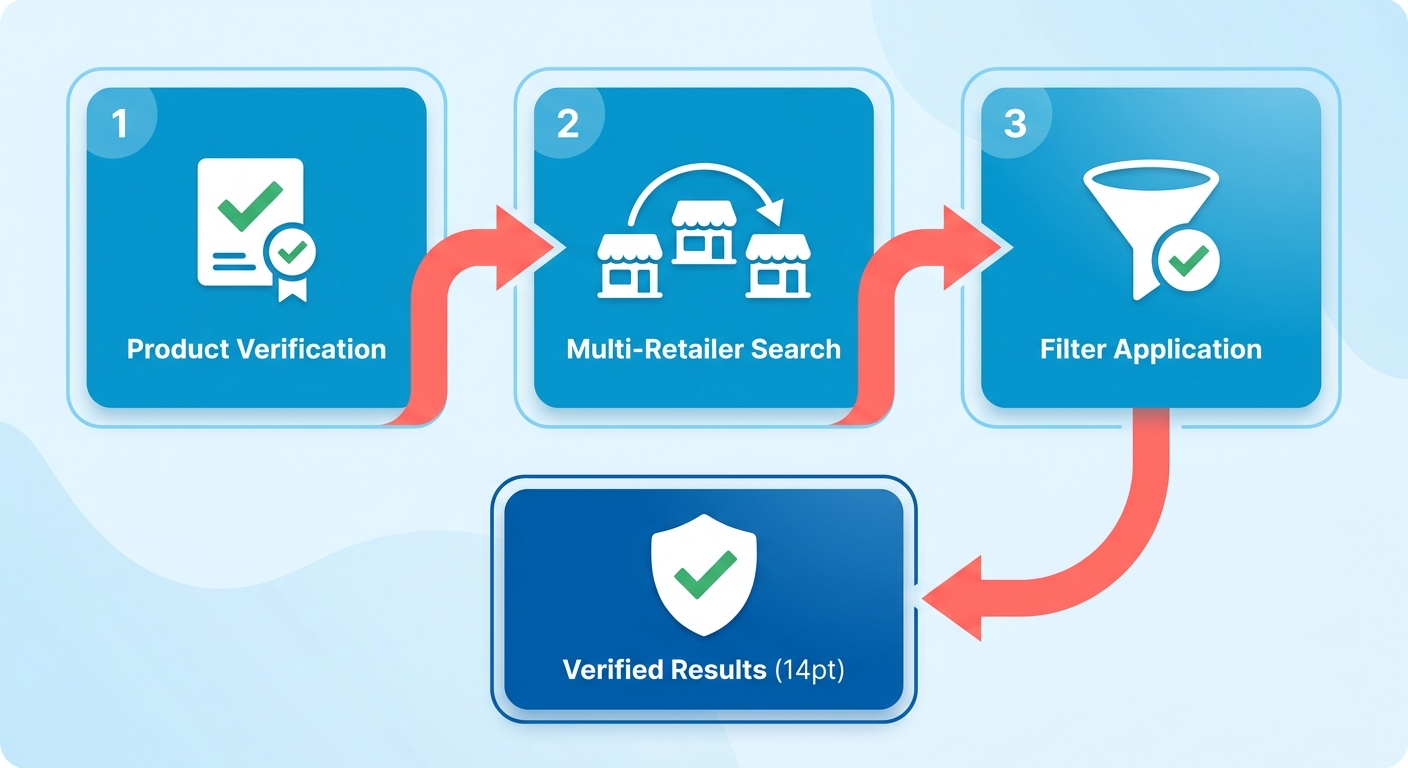
A good tool does three jobs at once. It verifies product claims, searches many stores in a single query, and applies your filters to every result. You get accuracy and breadth without opening a dozen tabs or trusting one store's inventory.
How product verification works
Verification is the tool checking a product's ingredients, certifications, and claims against trusted data before it shows up in your results.
It pulls the actual ingredient list and certification data for each item, then confirms whether a claim like "non-toxic" or "organic" holds up. If a label says fragrance-free but the ingredients say otherwise, that mismatch gets caught. That step is what separates a real safety filter from a keyword guess.
The point: your results are grounded in real standards, not promotional copy, and you get that without doing the research yourself.
Why multi-retailer search beats a single store
A single store's price comparison only ranks its own listings. That's a narrow view when you're hunting for a specific certified product.
Say you want an organic baby shampoo. A multi-store search surfaces it wherever it's stocked at the lowest price, instead of limiting you to one retailer's shelf. Scanning specialized organic shops alongside the big marketplaces in one pass means you don't miss niche stock or regional discounts.
Pair that reach with customizable filters, and you can ask for an age-appropriate product that also carries a verified certification. Less guesswork, options that fit both your safety standards and your budget.
Trusted sources and why transparency matters
A recommendation is only as good as the authority behind it. Health-conscious parents deserve to know where a product claim comes from before it lands in the cart. Good shopping AI shows its work: which certification backs a product, which retailer stocks it, and why it matched your filters.
That transparency matters most when your kid's health is on the line. A tool that surfaces third-party certifications, expert-vetted guides, and clear sourcing lets you judge a product on evidence, not marketing. You see the reasoning, so you keep control of the decision.
Why trusted sources matter
Trusted sources are the independent institutions, certifications, and expert guides that verify a product's safety claims before you rely on them. They cut through vague label language and give you a reason to believe.
Certifications carry real weight. A product with the credential has gone through comprehensive lab evaluation against strict non-toxic standards. That's a documented, verifiable benchmark, which is a different animal from a self-applied marketing claim.
Curated guides add similar rigor. When expert-vetted recommendations are built into the search itself, every pick comes with a paper trail you can follow.
How the tool makes recommendations transparent
Transparency means the tool shows you why a product matched, not just that it did. You set the criteria with filters, curated guides give the results a credible foundation, and you stay the decision-maker.
The mechanism is straightforward. You define what "safe" means for your family, the tool applies those rules to every result, and each match points back to the certification or guide behind it. A product flagged non-toxic links to the specific standard or lab report that validated the claim, so you can inspect the data yourself.
This is where opaque recommendations fall short. If a tool won't tell you why it ranked something first, treat that ranking as an ad, not advice. Demand the sourcing.
What to check before trusting a pick
Check three things: the certifying body, the filter that matched it, and whether an independent guide backs the choice. If all three hold up, the recommendation earns your trust. If any are missing, dig deeper before you buy.
Start with the certification. A third-party seal like MADE SAFE tells you an outside body screened the product, which beats a brand vouching for itself. Then trace the source back to its testing authority or certified distributor. Parents who shop this way spend less time second-guessing and more time trusting what's already in the cart.
Allergen and dietary restriction filters
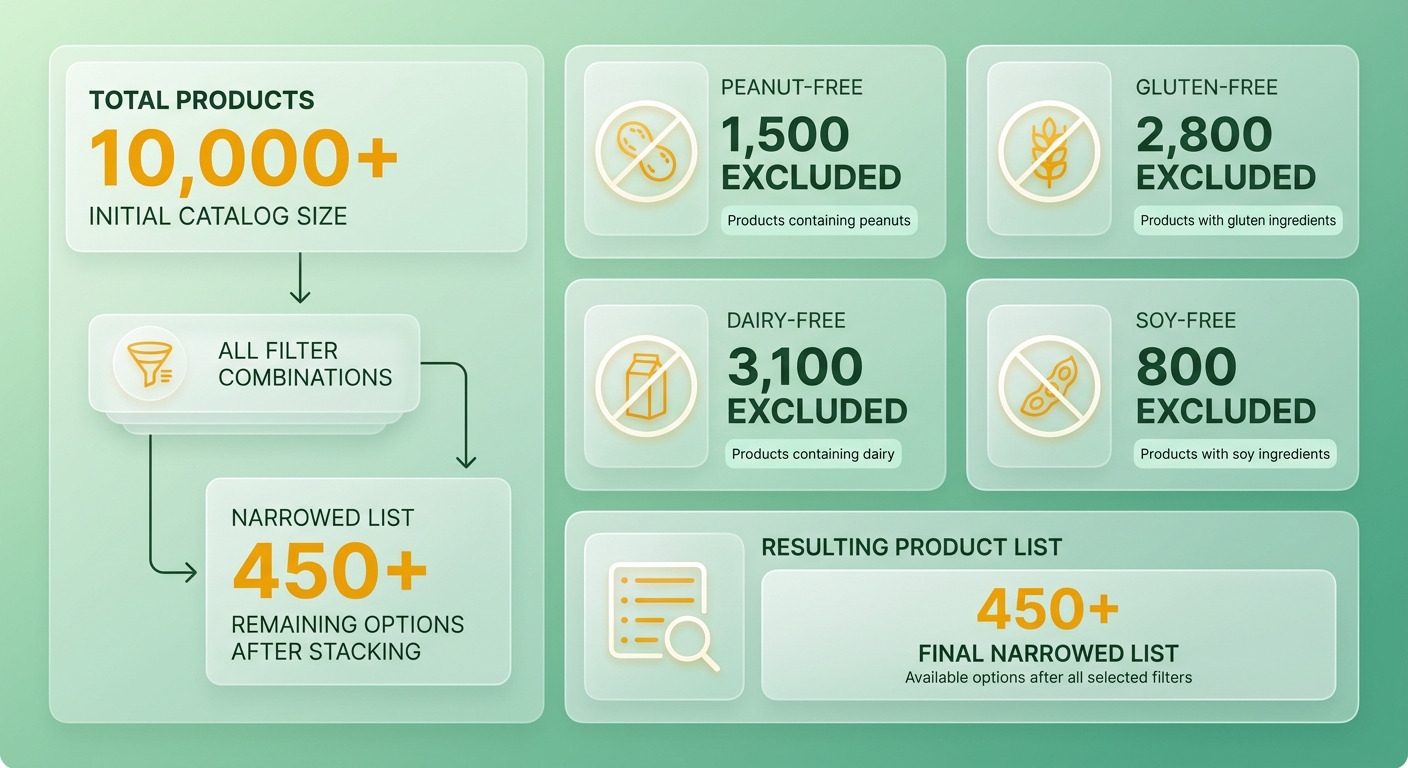
Allergen and dietary filters turn a shopping AI from a search box into a safety net. Set the rule once (peanut-free, gluten-free), and every product that fails gets removed before you ever see it. For a parent managing a food allergy, that means no more scanning the ninth line of an ingredient list under fluorescent aisle lighting.
The power comes from stacking filters. The AI holds several restrictions at once, so you can search dairy-free, soy-free, and no artificial dyes in one pass. The results that survive already clear all three. That's a different job than a keyword search, which only matches text and misses hidden derivatives.
How to filter for specific allergens and diets
Start with the strictest requirement, then layer softer preferences on top. List the allergen you must avoid first, because that's the non-negotiable. Add dietary goals like low-sugar or whole-grain after, and let the tool sort what remains by price or rating.
Filter combinations worth setting:
- Peanut-free and tree-nut-free snacks for a school lunchbox with a strict no-nut policy.
- Gluten-free and dairy-free baby food for an infant with two confirmed sensitivities.
- No high-fructose corn syrup formula, matching the exact spec the AI reads off the label.
One caveat: filters are only as trustworthy as the labels behind them. Cross-contamination warnings ("may contain traces of...") are often missing from structured data, so a severe allergy still deserves a direct check of the manufacturer's packaging before you buy.
Why certifications matter here
Lean on independent certifications, not marketing copy, when a claim affects your kid's health. A product carrying an independent safety seal has been evaluated by an objective third party. That's especially valuable when you're screening out synthetic compounds that might trigger skin sensitivities or respiratory issues.
For life-threatening allergies, don't stop at the filter. Use it to narrow the field, then confirm the final pick against the actual label.
References
[1] Best Places to Shop for Non-Toxic Baby Products - Gentle Nursery - https://www.gentlenursery.com/baby-gear/where-to-shop-for-non-toxic-baby-products/
[2] New Healthy Baby Guide Helps Parents Find Safe Options - https://madesafe.org/blogs/viewpoint/new-healthy-baby-guide-helps-parents-find-safe-options
Frequently Asked Questions
1. Does shopping AI work for kids with multiple food allergies at once?
Yes. The platform can process multiple dietary and allergen constraints simultaneously. For example, you can exclude soy, tree nuts, and specific chemical preservatives in a single query. The system cross-references these rules against ingredient databases to filter out non-compliant items. However, because cross-contamination warnings (such as "processed in a facility that handles wheat") are not always standardized in retail data feeds, parents of children with life-threatening allergies should still perform a final physical check of the product packaging.
2. Are MADE SAFE certified products more expensive than conventional options?
Not necessarily. While certified non-toxic items sometimes carry a premium, the AI's multi-retailer search often uncovers competitive pricing, bulk discounts, or store-specific sales that make them highly affordable. By displaying the safety status and current retail prices side-by-side, the tool helps you identify budget-friendly options that do not compromise on ingredient integrity.
3. How is a shopping AI different from a regular keyword search?
A standard keyword search only looks for exact text matches, which can easily miss hidden derivatives or chemical synonyms. In contrast, shopping AI parses structured ingredient databases and cross-references them with third-party safety standards. This allows the system to detect discrepancies—such as a product marketed as "hypoallergenic" that actually contains known skin irritants like methylisothiazolinone—providing a level of verification that simple text matching cannot match.
4. What does "unit cost" mean and why should parents track it?
Unit cost reveals the true value of a purchase by breaking down the total price into a standardized metric (such as price per fluid ounce, per individual diaper, or per washing machine load). This calculation allows you to compare different packaging sizes objectively. The AI performs this math automatically across all indexed retailers, ensuring you don't mistakenly buy a smaller package that has a lower shelf price but a much higher long-term cost.
5. Can I use shopping AI without creating an account?
Yes, you can perform searches and compare prices anonymously to evaluate the tool's capabilities. However, establishing a user profile allows the platform to remember your specific household preferences—such as dietary restrictions or preferred safety certifications. Once saved, these parameters are applied automatically to all future queries, streamlining your shopping workflow and preventing accidental purchases of non-compliant items.
6. How can I tell if a shopping AI recommendation is trustworthy?
Look for explicit data sourcing. A trustworthy platform will clearly display the specific independent certification (such as USDA Organic or EWG Verified) that triggered the match, rather than just labeling an item "safe" without explanation. If a shopping tool ranks products without disclosing its evaluation criteria or funding sources, those recommendations should be treated with skepticism.
7. Can I search for specific supplement dosages, not just categories?
Yes. The AI is capable of parsing numerical values and nutritional units within product labels. When you input specific dietary requirements—such as a vitamin D3 supplement with a minimum of 2000 IU per serving—the system filters out products that do not meet those exact nutritional thresholds. This advanced parsing works in tandem with standard allergen and certification filters to ensure precise product matching.