
Which Chips Actually Pass: Reading Labels Past the Front Claim

Key Takeaways
- The front of a chip bag is marketing space. The ingredient list and nutrition panel on the back are where the real information lives.
- Americans eat over four pounds of chips a year, most of it high in sodium, saturated fat, and refined carbs.
- Some "healthy-looking" bags pack 15 grams of carbs into a single small serving, enough to blow up a low-carb grocery list.
- "Natural" and "made with whole grains" carry almost no regulated meaning and rarely reflect what's actually inside.
- Canada's front-of-package nutrition symbol exists because so many foods blow past the limits for saturated fat, sugar, or sodium.
- Front-of-package claims measurably reduce how hard shoppers think about a product's real contents.
- Nutrient claims show up constantly on ultra-processed foods marketed to kids, even when the products are junk.
Why reading the back of the bag beats the front every time
That bag promising "baked" or "made with real potatoes" tells you next to nothing about what's inside. The front is marketing space. The real story sits on the back, in the ingredient list and the nutrition panel. If you're building a low carb grocery list, or just trying to snack smarter, reading past the front claim is the single most useful skill you can bring to the chip aisle.
The average American eats over four pounds of chips a year, and most of that comes from products loaded with sodium, saturated fat, and refined carbs. Add items to a list without checking labels and you'll get burned by "healthy-looking" bags hiding 15 grams of carbs per tiny serving. The front-of-package nutrition symbol Canada rolled out exists for exactly this reason: too many foods exceed the set limits for saturated fat, sugar, or sodium.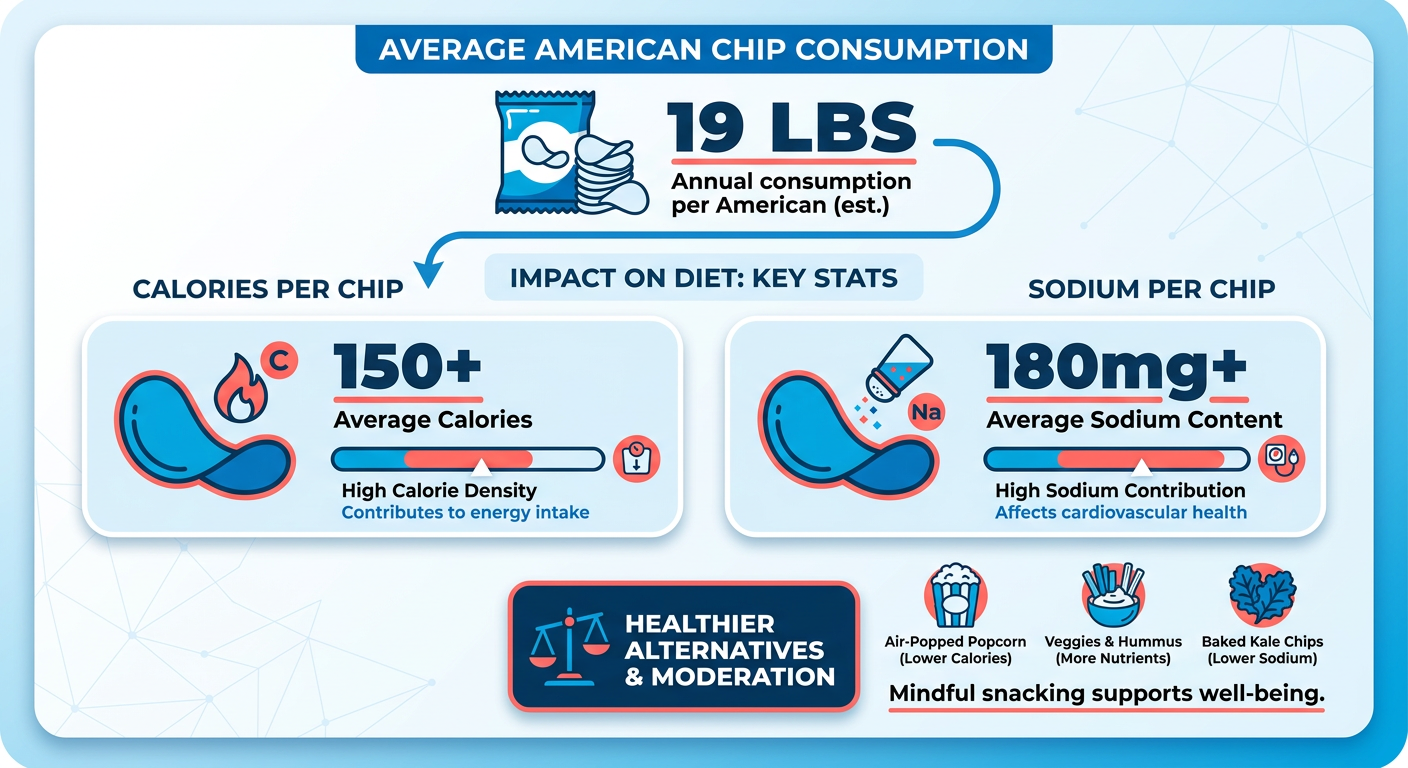
Why front claims mislead
Front claims are built to catch your eye, not to inform your decision. Words like "natural" or "made with whole grains" carry little regulated meaning, and studies show these labels actually lower the mental effort shoppers put into evaluating a product. You see the claim, you relax, you skip the panel.
Research on ultra-processed foods found that nutrient claims aimed at children show up constantly on products that are anything but nutritious. The Food Revolution guide to reading labels puts it plainly: front claims often lean on vague certifications that sound wholesome but describe how the food was grown, not what it does to your body.
The fix is boring but it works. Choose whole foods over packaged ones when you can, a point Houston Methodist makes about misleading claims too.
The three checks that catch most tricks
Start with the ingredient list and serving size, then work down to sodium and saturated fat. Those three catch most of what brands use to make a chip look healthier than it is.
Ingredient list: shorter is usually cleaner. Potatoes, oil, salt beats a dozen additives you can't pronounce.
Serving size: brands shrink servings to shrink the numbers. That "140 calorie" bag might list two or three servings, so a snack you finish in one sitting triples every figure on the label.
Sodium and saturated fat: the NHS food label guide uses red, amber, and green coding to flag high levels at a glance. Sodium is the one to watch. Chips are a major contributor to excess salt intake.
Who this matters most for
Anyone managing their diet benefits, but three groups get the most out of it: health-conscious shoppers, people with dietary restrictions, and parents buying snacks for kids. If you're feeding a family, reading labels protects your kids from products dressed up with health-halo claims. For a deeper walkthrough of the terminology, the Harvard Nutrition Source label guide breaks down what each term actually means. A quick habit at the shelf saves you from surprises at home.
Decoding the nutrition facts panel
The serving size line at the top of any chip bag controls every number below it. If the label says "1 oz (about 15 chips)" holds 150 calories and 8 grams of carbs, those figures only hold if you actually stop at one ounce. Most single-serve bags contain two or three servings, which turns a reasonable-looking snack into a carb bomb. Check servings per container before you check anything else.
Manufacturers pick serving sizes that flatter their products. A bag might list 140 calories per serving when the whole thing runs 420 across three servings. The FDA sets reference amounts for standard servings, but companies still make strategic choices within those ranges. One brand uses 28 grams, a competitor uses 30, and those small gaps add up fast when you're comparing carbs or sodium across products.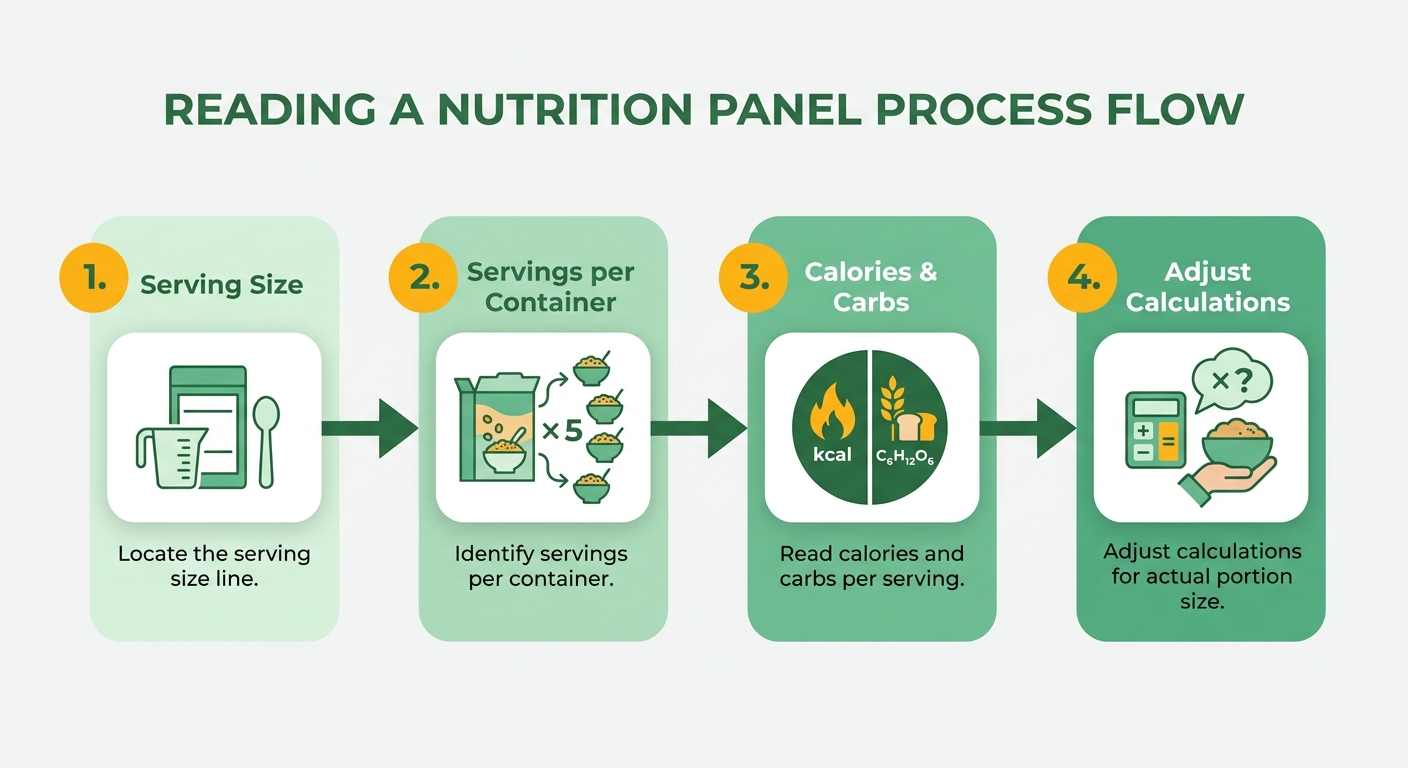
What the nutrient columns actually mean
The panel has two main columns: the amount per serving in grams or milligrams, and the percent Daily Value. Daily Value percentages assume a 2,000-calorie diet, so they won't match your needs if you're eating fewer calories or tracking specific macros. They're fine for spotting high-sodium or high-fat products quickly, but the raw gram counts matter more when you're tracking carbs precisely.
Total carbohydrates appear as one line, with dietary fiber and total sugars indented below. Net carbs, the number most low-carb eaters actually track, don't appear at all. You subtract fiber from total carbs yourself, so you have to read both lines. A chip with 18 grams of total carbs and 2 grams of fiber gives you 16 net carbs, not the 18 the bold number suggests.
Saturated fat, trans fat, and cholesterol each get their own line under total fat. Chips made with palm or coconut oil often run higher in saturated fat than ones fried in sunflower or canola. Front-of-package "heart-healthy" claims don't always match what the saturated fat line reveals. A chip bragging about avocado oil might still carry 3 grams of saturated fat per serving if that oil is blended with cheaper fats or used in tiny amounts.
Low-sodium and low-fat, decoded
When a bag says "low sodium," that's a specific FDA requirement: 140 milligrams or less per serving. "Reduced sodium" only means 25 percent less than the regular version, which could still leave you at 180 milligrams if the original ran 240. These nutrient content claims follow strict definitions, but they say nothing about whether the number fits your daily target.
"Low fat" requires 3 grams or less per serving. Baked chips usually qualify, but check sodium and carbs before you celebrate. Manufacturers often compensate for lost fat with more salt or starch. One popular baked chip carries just 2 grams of fat per serving but 19 grams of carbs and 200 milligrams of sodium, which makes it a poor pick if you're watching carbs or blood pressure.
"Light" or "lite" depends on the product. It might mean fat, calories, or even color and texture. The FDA requires a "light" claim to specify what's been lightened, but the definition varies enough that you still have to read the numbers. A bag of "lightly salted" chips might run 115 milligrams of sodium per serving instead of 170. Better, but not low.
Comparing two real labels
A standard bag of Lay's Classic lists a 1 oz serving (about 15 chips) at 160 calories, 10 grams of fat, 15 grams of carbs, and 170 milligrams of sodium. Kettle Brand Sea Salt uses the same 1 oz serving but shows 150 calories, 8 grams of fat, 16 grams of carbs, and 115 milligrams of sodium. The Kettle option gives you slightly less fat and sodium, one extra gram of carbs, and zero fiber either way. Neither clears low-carb by most definitions, which cap net carbs at 5 to 10 grams per serving.
Now compare those to a grain-free chip made from cassava or almond flour. These tend to show 13 to 14 grams of total carbs with 1 to 2 grams of fiber, which brings net carbs down to 11 or 12. Still high, but closer to the line. The nutrition labels on these products also tend to show more fat (12 to 15 grams) from nuts or seeds, which fits low-carb eating better. The tradeoff is price: two to three times more per ounce than conventional potato chips.
Spotting misleading front-of-pack claims
Front-of-pack claims exist to sell chips, not to inform you. "All natural," "wholesome," and "made with real ingredients" carry no strict legal definition, so they tell you almost nothing about carbs, sodium, or fat. Treat them as noise and flip the bag over.
The vague ones trip people up the most. A chip labeled "natural" can still be fried, salted, and packed with refined starch. Those production-style terms describe how a food was grown or made, not whether it fits your plan. The word says nothing about the numbers.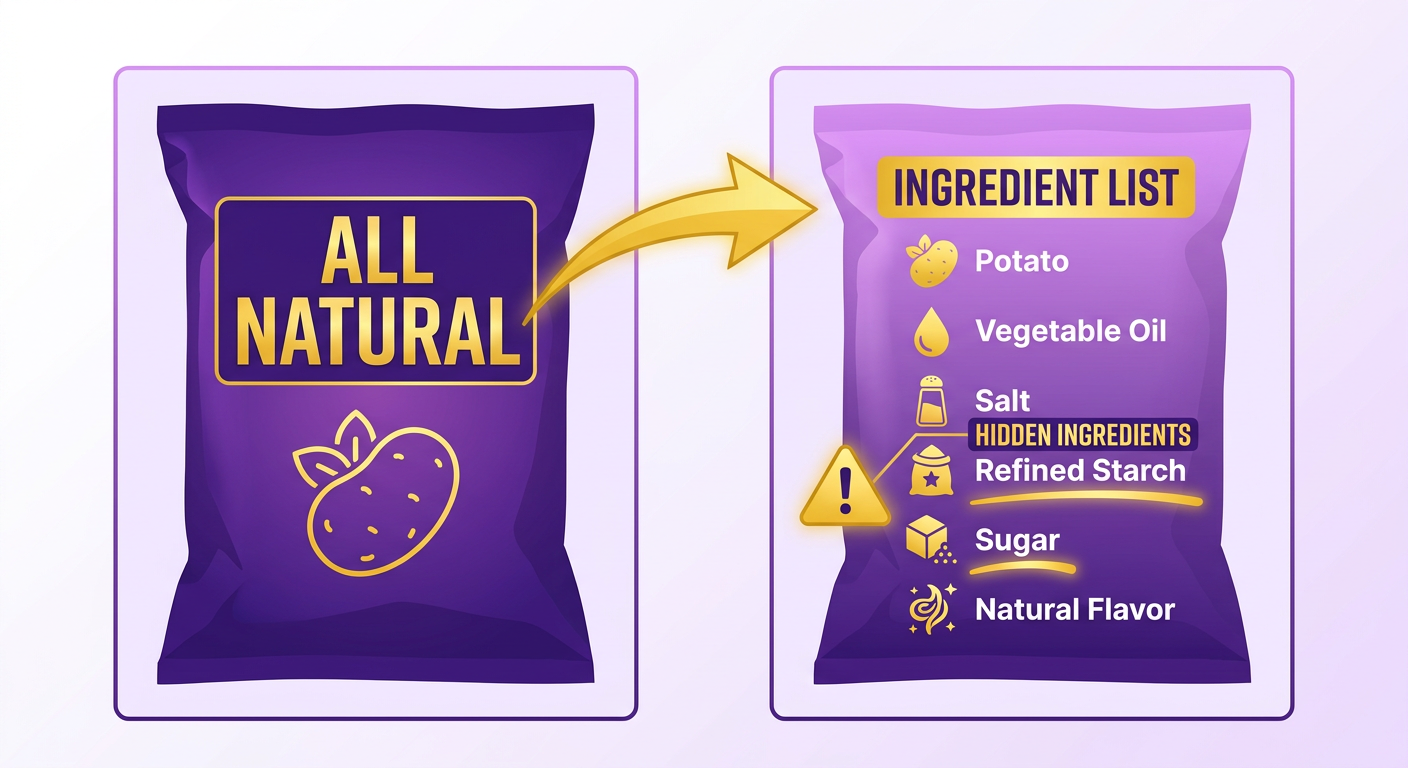
Which words are red flags
Vague claims are marketing dressed as nutrition. "Wholesome," "guilt-free," "lightly salted," "made with real potatoes"; they sound healthy but have no fixed meaning you can verify. The American Heart Association notes that shoppers routinely buy a food because the package says "low fat" or "low sodium," then never check what replaced the fat or how much sodium is actually in there.
Regulated terms behave differently. "Healthy" now carries a defined standard after the FDA finalized its rule on December 19, 2024. It's voluntary, and a chip has to meet specific nutrient limits to use it. "Wholesome" meets no such bar. Learn which words are policed and which are a free-for-all.
Reading a real chip label
Take a canister of Pringles. The front leans on shape, flavor, and "made with real potatoes," none of which say anything about carbs. Turn it over and you get the actual composition: dried potatoes, vegetable oils, and starches. The front sells the story. The back tells the truth.
Put two bags side by side and the trick gets obvious. One shouts "baked, not fried" and the other says nothing, and both can land at similar carb counts once you read the panel. The CSPI fact sheet on front-of-package labeling says it plainly: these systems won't tell you which foods are good or bad, or which to eat. That call is yours.
What the regulator actually requires
Front-of-pack claims sit under FDA oversight, but most descriptive words are voluntary and loosely governed. Only defined terms like "healthy," "low sodium," and "low fat" have to hit set thresholds. Everything else is fair game for marketers.
That's why the ingredient list beats the front claim every time. Question every front-of-package claim instead of trusting it. If a chip brags about one nutrient, check whether it's quietly high in another. A short health-conscious product checklist helps you standardize the scan so no bag slips through on a slogan.
Evaluating sodium and saturated fat claims
A bag labeled "low sodium" sounds healthier than one without the claim, but the gap might be smaller than you'd expect. The FDA sets strict thresholds for "low sodium," "reduced sodium," and "low fat," but those thresholds don't always line up with a low-carb grocery list. A chip can be legally low in sodium and still carry 15 grams of carbs per serving, which makes the front claim useless if carbs are your concern.
The disconnect is the serving size. "Low sodium" means 140 milligrams or less per serving, a fixed number, but servings vary wildly. A brand might list a 28-gram serving at 130 milligrams, which qualifies, but eat the whole single-serve bag (usually two or three servings) and you're at 300 or 400. Technically accurate, practically misleading. Check the per-serving sodium figure against the total servings in the package before the front label convinces you it's the better buy.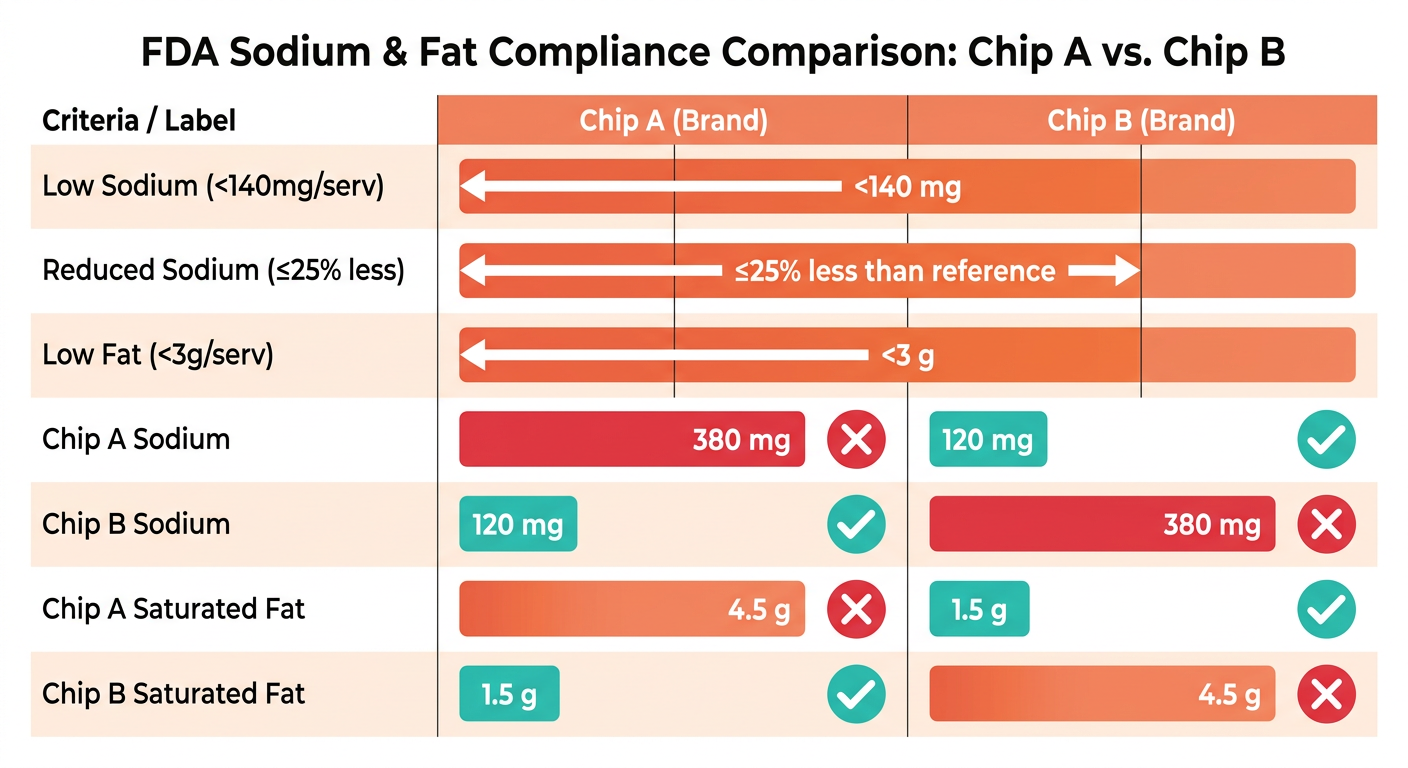
What "low fat" actually means
"Low fat" runs the same play, and the trick is almost always the serving size. Most chips hit the claim by defining a serving as half an ounce, roughly ten chips. Eat twenty and you've doubled the fat. Eat the bag and the claim is noise. Watch for "per serving" attached to any fat claim, because a smaller serving is the easiest way to shrink a number without touching the recipe. A bag that splits three ounces into six tiny servings can advertise low fat while delivering far more once you eat a realistic amount.
Saturated fat gets its own rules. A chip labeled "low saturated fat" must contain 1 gram or less per serving and pull no more than 15 percent of its calories from saturated fat. Manufacturers often reformulate to hit that threshold by swapping saturated fats for unsaturated ones, which improves the panel without changing the carb count. If you're building a low-carb list, saturated fat claims matter less than the total carb line, but they're still worth a look. High sodium and high saturated fat together usually flag a heavily processed product hiding other problems in the ingredient list.
Comparing sodium and fat across brands
Pick two bags from the same category and ignore the front. Flip them over and compare sodium per serving, saturated fat per serving, and servings per container. A brand might advertise "50% less sodium" while still carrying more total sodium than a competitor that made no claim at all, just because the serving is larger or the "50% less" baseline was unusually high.
Look at the numbers side by side. One popular brand lists 170 milligrams of sodium per 28-gram serving with 2.5 servings per bag, so 425 milligrams if you finish it. Another, with no sodium claim on the front, lists 200 milligrams per 30-gram serving but only 1.5 servings per bag, for 300 total. The quieter bag is the better choice, and the front label would never tell you that. Front-of-package symbols can flag foods that cross the thresholds for sodium or saturated fat, but they're not universal and they don't replace reading the panel yourself.
Same pattern with saturated fat. A chip labeled "baked, not fried" might list 1.5 grams per serving, which sounds low until you notice it's 2 grams per ounce and the bag is three ounces. A traditionally fried chip from another brand might show 2 grams per serving in a smaller, one-serving bag that caps your total. Which is better depends on how much you actually eat, not what the package promises.
The gaps between claims and reality
"Reduced sodium" only means 25 percent less sodium than the standard version of the same food. If the original had 300 milligrams per serving, the reduced version has 225, still above the FDA line for "low sodium." "Reduced" sounds like an improvement, but it's a relative term that tells you nothing about whether the final number fits your diet.
"Light" and "lite" work the same way. A chip labeled "light" must have either one-third fewer calories or 50 percent less fat than the regular version. That might make it a better option, or it might just mean the manufacturer cut the portion. Check the grams per serving line to see whether the lower numbers come from reformulation or a smaller serving. If the serving dropped from 32 grams to 21, "light" is a packaging trick, not a recipe change.
Applying the FDA's nutrient claim criteria
The FDA sets specific numeric thresholds a chip has to hit before a brand can print "healthy," "low fat," or "low sodium." These are legal definitions, not suggestions. Knowing the actual criteria lets you see whether a front claim holds up or falls apart the moment you turn the bag over.
The rules changed recently. The FDA's updated "healthy" rule, finalized December 19, 2024, tightened what manufacturers can voluntarily print. A chip carrying "healthy" now has to stay under limits on added sugar, sodium, and saturated fat while delivering a meaningful amount of food from a recognized group. The word finally has teeth. It still says nothing directly about carbs.
What "healthy" actually requires
"Healthy": a regulated term a food can carry only when it stays under FDA limits for saturated fat, sodium, and added sugar while contributing a set amount from a food group like vegetables or grains. Most fried chips don't clear the bar.
So a bag can be legally "healthy" and still carry enough carbs to wreck your daily count. The claim controls fat, sodium, and sugar, not total carbohydrate. As the American Heart Association puts it, claims like "low sodium" or "low fat" describe one nutrient in isolation, not the whole picture.
Running a claim against the serving size
Do the serving math before you trust the claim. Take the nutrient number, confirm the gram weight of one serving, then multiply by how many servings you'll actually eat. A claim that passes at 28 grams often fails at the two servings people finish in one sitting.
Say a kettle chip lists a 28-gram serving with no "low fat" claim but a "no artificial ingredients" line. That phrase carries no FDA nutrient threshold at all, so it tells you nothing about carbs or fat. Production-style claims describe how a food was made, not what it does to your numbers.
Compare that to "low fat," which the FDA caps at 3 grams per serving. That one you can verify. Cross-check it against the panel and confirm the serving weight matches. A product checklist helps you build a quick habit around this.
The practical takeaway
Front-of-package labels were never built to tell you what to eat. The Center for Science in the Public Interest makes the same point: these labels won't judge foods as good or bad, or tell you which ones to buy.
That's your job. Treat every regulated claim as one data point, verify it against the serving size, and read the carb line yourself. The claim narrows the field. The math makes the decision.
Finding hidden sugars in the ingredient list
Chips don't taste sweet, so you'd never think to look for sugar. Flip the bag over and you'll often find it sitting mid-list under a name you don't recognize. Sugar hides behind dozens of aliases, and spotting them is the difference between a chip that fits your goals and one that quietly blows past them.
The rule is simple: ingredients run by weight, most to least. A sweetener near the top means there's a lot of it. Scan the full list, not just the first three items. Sugar loves to sit in the middle, right where casual readers stop looking.
The sugar names worth memorizing
Sugar shows up under names that don't include the word "sugar." Learn the common ones and the disguise stops working.
- High fructose corn syrup: a cheap liquid sweetener that adds carbs with zero fiber.
- Sucrose: table sugar under its chemical name.
- Maltodextrin: a starch-derived powder that spikes blood sugar fast, often used as a flavor carrier or bulking agent in seasoning blends.
- Dextrose, glucose, and anything ending in "-ose": nearly all of these are sugars.
The Harvard Nutrition Source notes that added sugars now get their own line under total sugars on the panel. Check that number against the ingredient list. If the panel shows added sugar but you can't find "sugar" spelled out, one of the aliases above is doing the hiding.
What about "natural flavors" and "spices"
These vague terms can carry sweeteners you'll never see spelled out. "Natural flavors" and "spices" are legal catch-alls that don't have to break down every component. A seasoned chip might list maltodextrin as a flavor carrier without ever flagging it as sugar.
Take a stacked crisp like Pringles. The seasoning on flavored varieties often includes maltodextrin and dextrose alongside the salt and spices. Neither reads as "sugar," but both add carbs.
When the label goes vague, check the added-sugar line twice. The number on the panel tells you what the ingredient names are trying to blur.
References
[2] The Food Industry's False Claims About Front-of-Package ... - https://www.cspi.org/resource/food-industrys-false-claims-about-front-package-nutrition-labeling-fact-sheet
[4] Introduction to Food Label Claims - https://labelsunwrapped.org/labels-101
[5] Making Sense of Food Packaging Claims - https://www.heart.org/en/healthy-living/healthy-eating/eat-smart/nutrition-basics/food-packaging-claims
[6] 5 Tips for Avoiding Misleading Food Label Claims - https://www.houstonmethodist.org/blog/articles/2023/mar/quiz-are-these-health-claims-on-food-labels-actually-healthy/
[7] How to Read Food Labels: Your Complete Consumer Guide - https://foodrevolution.org/blog/how-to-read-food-labels/
[8] Understanding Food Labels - The Nutrition Source - https://nutritionsource.hsph.harvard.edu/food-label-guide/
[9] Food labels - https://www.nhs.uk/live-well/eat-well/food-guidelines-and-food-labels/how-to-read-food-labels/
[10] Nutrition Labels Made Simple: How to Read Food ... - https://dishwithdina.com/nutrition-labels-made-simple-how-to-read-food-packaging-like-a-pro/
[11] (PDF) Assessing nutrition and other claims on food labels - https://www.researchgate.net/publication/319625172_Assessing_nutrition_and_other_claims_on_food_labels_a_repeated_cross-sectional_analysis_of_the_Canadian_food_supply
[12] Analysis of the presence of nutrient claims on labels of ultra ... - https://www.researchgate.net/publication/311568298_Analysis_of_the_presence_of_nutrient_claims_on_labels_of_ultra-processed_foods_directed_at_children_and_of_the_perception_of_kids_on_such_claims
[13] Competitive Effects of Front-of-Package Nutrition Labeling ... - https://www.researchgate.net/publication/346721360_Competitive_Effects_of_Front-of-Package_Nutrition_Labeling_Adoption_on_Nutritional_Quality_Evidence_from_Facts_Up_Front-Style_Labels
[14] Front-of-Package Protein Labels on Cereal Create Health ... - https://www.researchgate.net/publication/379716546_Front-of-Package_Protein_Labels_on_Cereal_Create_Health_Halos
[15] Nutrition Label Viewing during a Food-Selection Task - https://www.researchgate.net/publication/275058383_Nutrition_Label_Viewing_during_a_Food-Selection_Task_Front-of-Package_Labels_vs_Nutrition_Facts_Labels
Frequently Asked Questions
1. How many net carbs should a snack have to fit a low-carb diet?
Most low-carb plans cap snacks at 5 to 10 net carbs per serving. Standard potato chips deliver 15 to 16 net carbs per ounce, well above that range. Grain-free cassava or almond flour chips land around 11 to 12 net carbs, closer but still worth portioning carefully.
2. Are veggie chips or multigrain chips actually lower in carbs?
Veggie and multigrain chips rarely beat regular potato chips on carbs. They are typically built on potato starch, corn, or rice flour, which push carb counts to 18 grams or more per serving. The vegetable content is often minimal, so flip the bag and check the total carb line yourself.
3. Which cooking oils in chips signal higher saturated fat?
Palm oil and coconut oil push saturated fat higher, often 3 grams or more per serving. Chips fried in sunflower, canola, or blended oils usually show less. Avocado oil sounds heart-healthy on the front, but if it is blended or used sparingly, the saturated fat line can still climb.
4. What daily sodium target should I compare chip labels against?
Most health guidelines recommend staying under 2,300 milligrams of sodium per day, with 1,500 milligrams as an ideal ceiling for many adults. A single-serve chip bag with three servings at 170 milligrams each hits 510 milligrams, roughly a quarter of your daily limit from one snack.
5. Does "organic" or "non-GMO" on a chip bag mean fewer carbs?
Organic and non-GMO labels describe how ingredients were grown, not their nutritional content. An organic potato chip carries the same carbs, sodium, and fat as a conventional one. These certifications tell you nothing about your daily count, so the ingredient list and nutrition panel remain your only reliable guides.
6. How can I quickly scan a chip label while standing in the store aisle?
Check three things in order: servings per container, total carbs minus fiber for net carbs, and sodium per serving. This 15-second scan catches the serving-size trick and the hidden carb load before any front claim influences you. Ignore words like "wholesome" or "natural" entirely during this check.
7. Are grain-free chips worth the higher price for low-carb eaters?
Grain-free chips made from cassava or almond flour cost two to three times more per ounce than conventional chips. They offer slightly lower net carbs, around 11 to 12 grams, plus higher fat that suits low-carb patterns. Whether the premium is worth it depends on how strictly you track carbs.