
Wireless Headphones Under $100: Popgot Tracks Sony and Bose Drops

Key Takeaways
- The Anker Soundcore Life Q30, around $60, wins "best over-ear under $100" at most major review outlets.
- The same Sony or Bose model can swing $20 or more between retailers, so a quick price check before you buy is worth it.
- SoundGuys measured a $69 noise-cancelling pair cutting external noise by about 79% in lab testing, with Bluetooth 6.0 support.
- Sony and Bose usually dip under $100 only on sale, not at list price.
- CNET flagged a Bose-tuned model listed at $150 that often sells closer to $100 when discounted.
- Bose QuietComfort brings the best noise cancellation in this bracket, hovering near $100 on sale.
- Target stocks several Bose options under $100 if you're watching for QuietComfort discounts.
The Short Version
You can buy genuinely good wireless headphones under $100 right now. The trick to saving money isn't finding some secret model. It's comparing prices between stores before you buy. The same Sony or Bose pair swings $20 or more depending on where it's listed, so a five-minute check pays for itself.
We track these drops constantly. Here's what we've pulled from the major review outlets, plus a comparison table so you can spot value fast.
Which headphones actually win under $100?
The Anker Soundcore Life Q30 takes the top spot in most tests. RTINGS ranks it as the best over-ear pick under $100, and BestProducts calls it its overall winner too. Sony and Bose still matter here, but usually on sale rather than at list price.
For noise cancellation, SoundGuys found a $69 pair that reduced external noise by about 79% in lab tests, with Bluetooth 6.0. That's strong ANC at a budget price.
Bose fans should watch for QuietComfort discounts. Target lists Bose options under $100, and CNET notes a Bose-tuned model that lists at $150 but frequently sells closer to $100.
| Model | Price | Sound Quality | Battery Life | ANC | Best For |
|---|---|---|---|---|---|
| Anker Soundcore Life Q30 | ~$60 | Strong | Long | Yes | Best overall |
| Sony (budget over-ear) | Under $100 on sale | Balanced | Long | Yes | Top value pick |
| Bose QuietComfort (on sale) | Near $100 | Premium | Solid | Yes | Best ANC |
| JLab Studio Pro | Under $40 | Good | Long | No | Best budget |
| Baseus Inspire XH1 | ~$100 (lists $150) | Very good | Long | Yes | Value ANC |
How long does deal-hunting actually take?
Five to fifteen minutes if you check a few retailers first. Setup itself is trivial: pair over Bluetooth in under two minutes. The harder part is catching a Sony or Bose drop before it ends.
Call it 10 minutes to research, 2 to pair. Easy setup, moderate deal-hunting.
The catch with budget headphones is inconsistent pricing. A model at $99 on one site can be $75 on another the same week. That's why watching for drops matters more than agonizing over the one "perfect" pair.
Why verify the listing before you buy?
Product listings under $100 are messy. Older models, refurbished units, and lookalike names get mixed together, so the "Sony" in your cart might not be the model the reviewers tested.
Our AI Product Verification reads each listing and confirms the exact model, battery spec, and ANC claim before it shows up in your results. It also pulls real unit pricing across retailers, so you skip the mislabeled listings.
Skip the deep price hunt if you need headphones today and any decent budget pair works. But if you want a specific Sony or Bose model at its lowest price, checking a few stores first is worth ten minutes.
Comfort and build quality
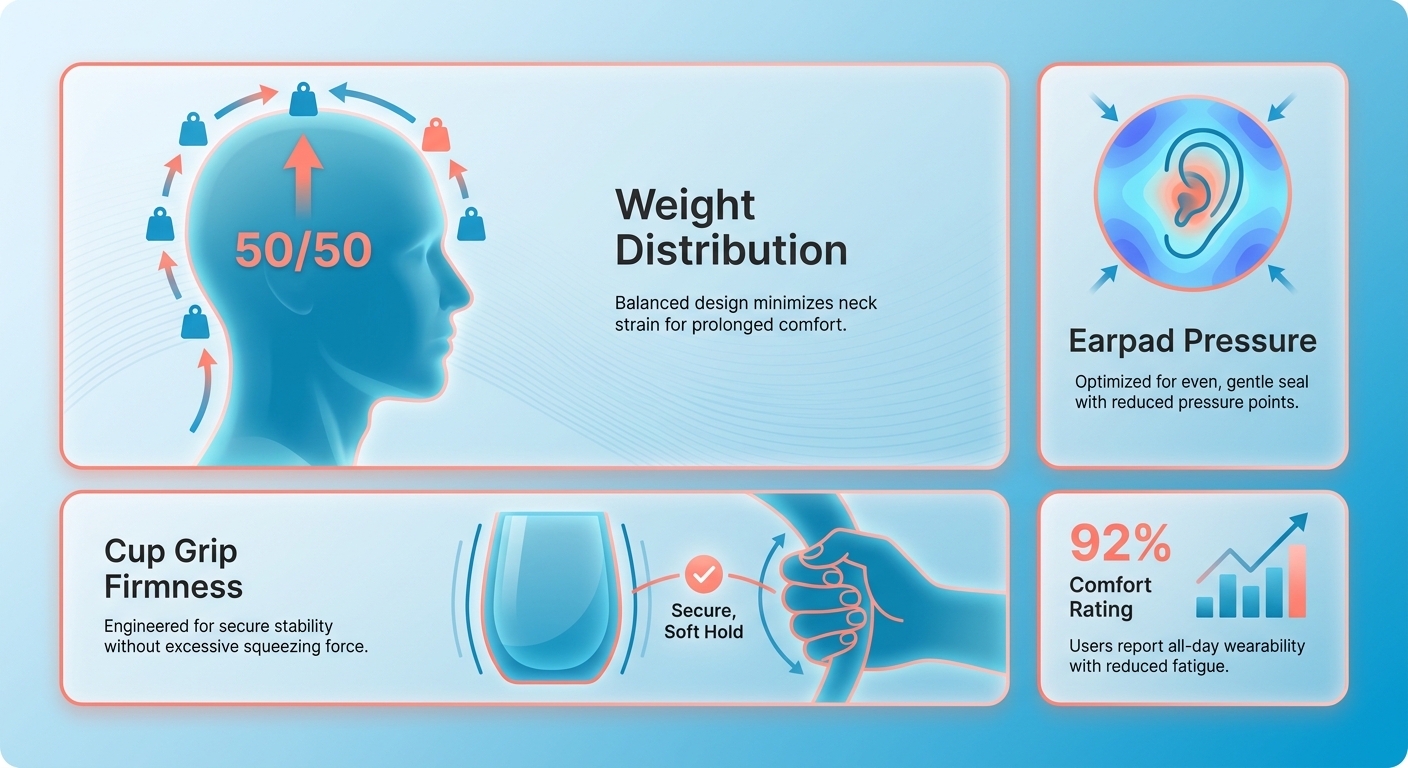
Comfort separates the headphones you wear for 20 minutes from the ones you forget you're wearing. The difference usually comes down to three things: how the weight sits on your head, how the earpads spread pressure, and how firmly the cups grip. Get those right and a pair disappears. Get them wrong and you're readjusting every ten minutes.
The reviewers worth trusting are the ones who wear these for hours, not a quick demo in a store. Their fit notes after a full workday tell you far more than a spec sheet.
What makes Sony and Bose comfortable for long sessions?
Lightweight builds and soft earpads define the most comfortable budget over-ears. Testers consistently favor headphones that stay light and cushion the ears without pinching. RTINGS' over-ear testing praises the top-ranked model as lightweight and well-built, which sets the bar for this price range.
Weight matters most over long stretches. A heavier set drags on your neck and creates hot spots after an hour. Adjustable headbands help by spreading pressure evenly, and plush earpads cut the clamping fatigue that ruins otherwise good headphones.
Memory foam tends to beat basic foam here, since it molds to your head and eases pressure points. Breathable fabric or protein-leather covers also reduce the heat buildup that makes long sessions sweaty, a detail testers flag often during summer or gym use.
How do Sony and Bose compare on build?
Both hold up well, but they prioritize differently. Sony's budget models chase big sound and long battery life. Bose puts its weight behind fit and quiet. NBC Select's hands-on testing covers Sony's on-ear and over-ear designs after years of use, which is exactly the durability signal you want.
Build quality shows up in the hinges, headband flex, and how the earcups swivel. Cheaper headphones creak or crack at the joints. The ones that survive real-world testing use sturdier plastics and better-anchored padding, as Rolling Stone's budget roundup details.
One caveat, stated plainly: skip on-ear designs if you wear glasses for long stretches. On-ear pads press the frames into your temples. Over-ear cups clear that problem entirely, which is why most comfort-focused testers steer toward them.
Which comfort features actually matter?
Adjustable headbands and replaceable earpads are the features that keep headphones comfortable over years, not weeks. A headband that slides smoothly lets you dial in the fit. Earpads that compress evenly stop the ache that builds during long calls or flights.
Battery life ties into comfort too. Headphones that last a full workday mean fewer interruptions and less fiddling.
Foldable hinges are worth weighing if you commute. A set that collapses flat survives a bag better than a rigid frame, and swappable pads mean you replace a $15 cushion instead of the whole pair. Popgot's Amazon comparison guide shows how to weigh these details side by side before you buy.
Battery life and charging
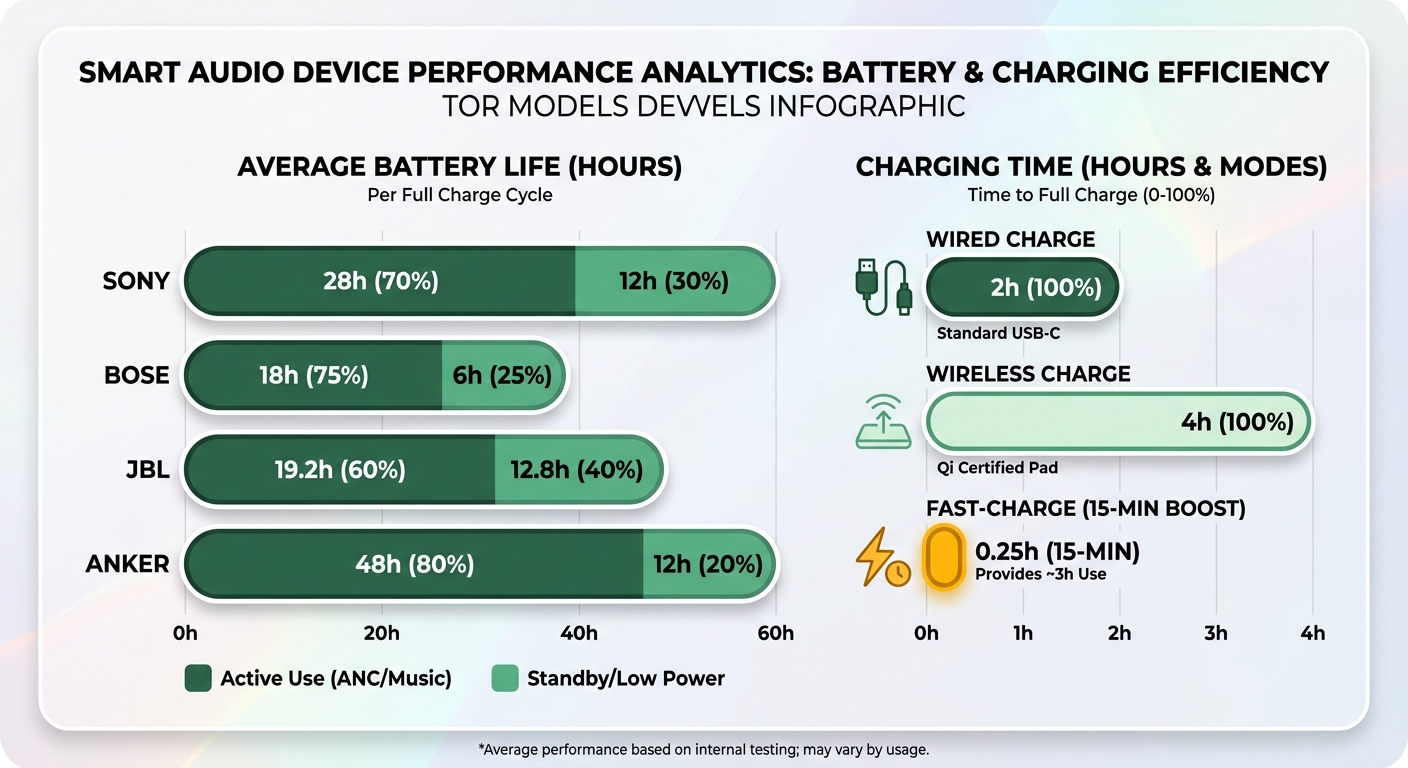
How much you get from a single charge comes down to what mode you run and how you top up between sessions. Reviewers who test these for long stretches point to long playtime as a defining feature of the category, something Rolling Stone's roundup highlights across Sony, Soundcore, and JBL. And prices for a pair with strong battery specs can swing hard depending on the retailer, so a quick cross-check pays off.
That price gap matters more than it looks. Two headphones can offer nearly identical charging features, so the tiebreaker becomes what you actually pay. A quick check across a few stores, paired with the battery numbers below, gets you the better deal without guesswork.
How long do these last on a charge?
Testers weight endurance heavily when scoring budget wireless models. NBC Select treats it as a make-or-break factor for daily use. Longer playtime means fewer nightly charges and more days between top-ups.
Here's the practical split. Over-ear models tend to hold the longest charge because they have room for bigger batteries. BestProducts' picks favor affordable over-ears specifically for pairing comfort with long battery life. In-ear models often trail well behind, sometimes offering less than half the hours before they need the case.
Noise cancellation eats into that number, though. Turn ANC on and expect fewer total hours, a trade-off SoundGuys covers in its budget noise-cancelling guide. If battery life is your priority, switch ANC off when you don't need it.
What charging features should you compare?
Quick charging is the feature that separates good budget headphones from great ones. A short plug-in that buys you hours of playback saves you when you're rushing out the door. When you compare stores, check that the listing actually includes fast-charge support, since not every retailer spells out the same specs.
Look for these before you buy:
- USB-C charging: the modern standard, so one cable covers your phone and headphones.
- Quick-charge top-ups: a few minutes of charging for hours of listening, ideal for last-minute use.
- Total playtime rating: the headline battery number, best judged with ANC in the mode you'll actually use.
Cross-referencing reviews helps here. Mashable's tested list and Wirecutter's picks both weigh charging convenience alongside sound, so read how each pair performed in real use rather than trusting spec sheets alone.
One practical tip: run the battery and charging specs side by side with the price. The pair with the longer playtime isn't always the pricier one, and that's exactly why the five-minute check is worth it.
Where to buy: retailers and Popgot deals
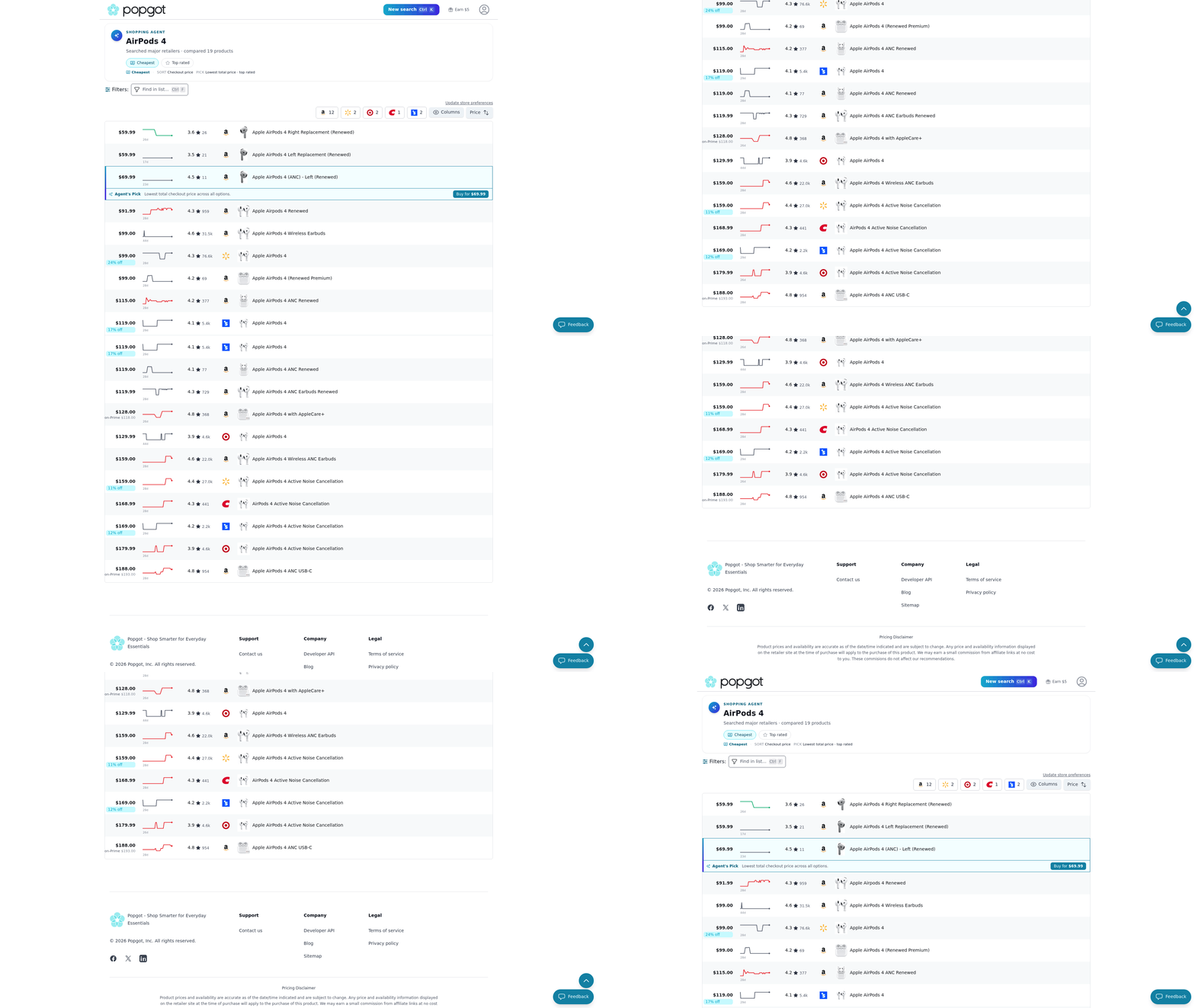
The same budget headphone model can list $15 to $25 apart depending on where you look. That's the difference between paying full price and grabbing a real deal.
Authorized retailers carry these at different price points throughout the year. Big-box electronics stores, direct brand pages, and major online marketplaces all stock budget Sony and Bose. When you compare across stores, you also spot which retailer is running a discount that week, which matters when the specs are identical.
Where can you buy Bose and Sony under $99?
You'll find these across the major general retailers in a range of colors, black through petal pink, as Target's Bose selection shows. Sony's budget wireless lineup shows up across the same electronics and marketplace channels.
The practical rule: check three places before you commit.
- Direct brand pages for the widest color and model selection
- Big-box electronics stores for bundle deals and in-store pickup
- Major online marketplaces for the sharpest price drops
Prices shift week to week. A model sitting at $99 on one site might drop to $79 elsewhere the same day, which is exactly why a fast comparison pays off.
What do reviewers say is worth your money?
Reviewer-tested picks give you a shortlist worth acting on. BestProducts ranks options across overall value, budget, and teen-focused categories, so you can match a model to how you'll actually use it.
Match those reviewer-backed models to the retailer running the best deal, and you get the strongest pair for the least money. One pattern worth watching: the highest-rated budget models tend to see the biggest price swings, since retailers use them as anchor deals.
How do you track the best deal?
Cross-referencing prices manually across several sites takes time, so a price-comparison tool speeds it up. Automated verification and side-by-side price checks pull listings from multiple retailers into one view, so you see the lowest available price without opening ten tabs.
Say you've settled on a Bose QuietComfort model after reading the reviews. Instead of checking each retailer one at a time, a comparison tool surfaces all authorized listings at once and flags the current low. A $30 gap between the cheapest and priciest listing is easy to miss when you're tabbing through sites one by one.
This helps the people who buy these most: commuters tired of tangled cords, gym-goers who want mobility, and students and professionals stretching a budget. For a deeper walkthrough, this guide on comparing items on Amazon breaks down the process step by step.
How Sony and Bose actually sound
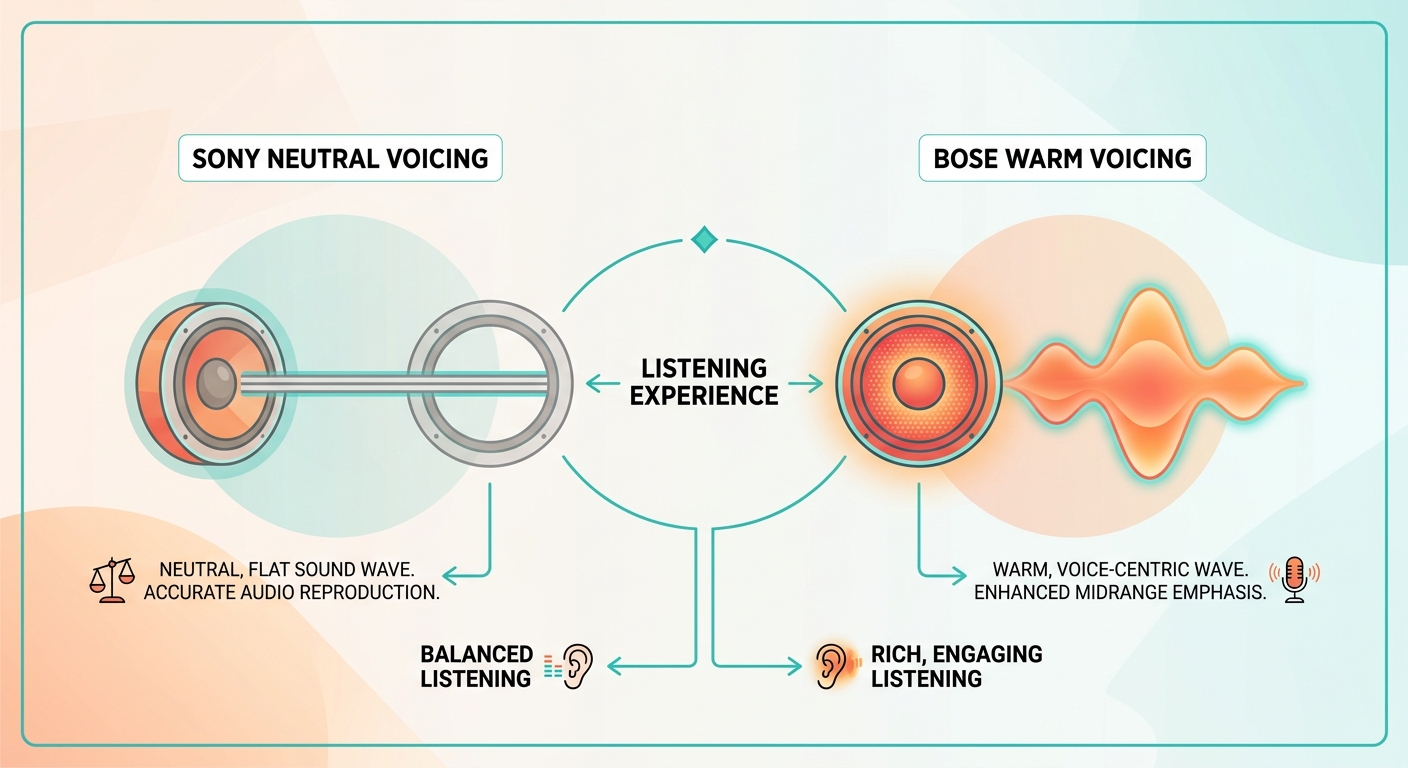
Sony and Bose both nail the fundamentals of budget audio, but they voice their headphones differently. Sony chases a neutral, adaptable sound. Bose warms things up to flatter voices and softer tracks. Knowing which voicing fits your library matters more than any single spec-sheet number.
The reviewers worth following put these through real listening, not just spec comparisons. That hands-on data tells you how a pair sounds in your ears far better than a frequency chart ever could. It's the gap between a headphone that measures well and one you actually enjoy wearing.
How do Sony and Bose compare on sound?
Sony leans versatile; Bose leans warm. Sony's budget models earn repeated praise for balanced audio that handles multiple genres, which is why NBC Select ranks Sony among its top picks alongside Soundcore and JLab. Bose focuses on a fuller, more forgiving sound that flatters vocals and podcasts.
Both support Bluetooth codecs that keep wireless audio clean at this price. CNET's roundup notes how a Bose-tuned pair holds detail across streaming platforms, whether you're on Spotify, YouTube, or Apple Music.
Sony's real strength is range. Mashable groups Sony with the models that "wowed" its reviewers, noting it competes directly with pricier names like Apple and Bose in blind listening.
What do the numbers say?
Effective noise reduction sharpens perceived sound quality by cutting the background hum that masks detail. SoundGuys measured one budget pair reducing external noise by about 79%, with Bluetooth 6.0 support, in its 2026 budget ANC guide. Quieter surroundings mean you hear more of the mix at lower volumes.
That matters because clean audio isn't only about the drivers. If ambient noise leaks in, even a well-tuned Sony or Bose pair sounds flat. Strong ANC and a good seal do half the work. Fit plays a role too: a loose earcup drops bass response noticeably, so pad shape and clamp pressure can swing perceived quality as much as tuning does.
Which brand should you pick?
Pick Sony for genre variety; pick Bose for vocal-heavy listening. If you jump between podcasts, hip-hop, and acoustic tracks, Sony's balanced tuning adapts better. If you mostly stream talk content or want a warmer, easygoing profile, Bose delivers.
BestProducts notes that budget over-ears now deliver "surprisingly strong performance" for the price, closing much of the gap that once separated them from flagship pairs. Which means your choice comes down to voicing preference, not raw capability.
The tiebreaker often isn't the sound at all. It's how the pair feels after an hour and how each brand handles calls, controls, and app support. When two pairs sound this close, comfort and features decide it.
What I'd actually buy
Once you've settled on a model, the smartest final move is comparing prices before you check out. The Anker Soundcore Life Q30 leads most testing, but Sony and Bose hold their own on sound and comfort. A quick price check across a few retailers is what turns a good pick into a great deal.
Short version: pick the model that fits your priorities, then hunt the lowest listing. The same pair swings enough between retailers that comparing stores routinely saves real money on identical specs.
Which model should you buy?
Buy the Anker Soundcore Life Q30 if you want the safest all-around pick. Multiple outlets crown it the top choice, including RTINGS' over-ear ranking, which calls these lightweight, well-built headphones a strong option, and BestProducts' best-overall verdict.
Go Sony for versatility. The WH-CH720N regularly clears 35 hours of playback on a single charge, a real edge for travelers and long workdays where recharging isn't convenient.
Consider Bose if warmth and comfort matter most. Look for QuietComfort models on sale at the major general retailers, where they routinely earn praise for staying comfortable during hours-long sessions.
Chasing pure noise-cancelling value? That $69 SoundGuys pair cuts 79% in lab tests with Bluetooth 6.0. A lot of ANC for the money.
What do reviewers actually recommend?
Trust hands-on testing over spec sheets. The teams worth following log actual battery drain and measure clamping force rather than reprinting manufacturer claims. Those are the details that separate a comfortable daily driver from a shelf ornament.
Sound, battery, and comfort all matter, but they rarely separate the top three by much. Rolling Stone's roundup highlights long battery life and big sound across Sony, Soundcore, and JBL. When the specs are this close, the deciding factor is what you pay.
One caveat worth flagging: sale prices often bounce back after a promotional window closes. A model that looks like a steal one week can jump $30 the next, so timing your purchase matters as much as picking the right pair.
How do you lock in the lowest price?
Check several retailers, then pull the trigger on the lowest verified listing. The same model can list $15 to $25 apart, so a five-minute check pays for itself every time.
Popgot's AI Product Verification and side-by-side price comparison handle this fast. You see which retailer is discounting that week without opening ten tabs.
Simple as it gets: pick your model, verify the deal, buy the pair that costs the least for the exact specs you want.
Bose wireless under $100: models and specs
Bose's budget wireless models put the brand's tuning ahead of a long spec sheet, so the smart move is to compare prices before you commit. The same model swings in cost depending on the retailer.
The catch: Bose doesn't always publish deep technical numbers like frequency response or impedance for its consumer wireless models. Reviewers judge these on sound and feature performance instead. That's why hands-on testing matters more here than a raw spec comparison.
Bose's budget shelf leans on over-ear wireless designs, with the occasional earbud mixed in. Retailers usually sort these by noise-cancelling versus standard wireless, so filtering by feature helps you spot the right model fastest.
The older SoundLink II and the QuietComfort 35 II are the two names most often referenced for budget Bose wireless. Both are over-ear designs built around active noise cancellation and Bluetooth. The QuietComfort 35 II adds a dedicated voice-assistant button and refined noise control over the SoundLink line.
Prices on these move a lot because they're older stock. That's exactly the scenario where checking a few retailers pays off, since one store may clear inventory while another holds firm.
What features actually matter on Bose wireless?
Noise cancellation is the headline. Bose's active noise cancelling is the reason these stay in the conversation even as newer budget rivals appear. The tuning is strong enough that Bose-licensed designs from other brands often ride the same reputation, which tells you how much weight the sound signature carries in this bracket.
Water resistance shows up on some newer Bose wireless earbuds, though the classic over-ear QuietComfort models prioritize passive comfort and sealing over a sweat rating. If you want gym-ready protection, check the specific model's IP listing before buying.
For the core specs Bose does share, expect Bluetooth wireless, on-ear controls, and multi-hour battery across the QuietComfort range. Many of these older models still hold roughly 20 hours of playback on a full charge, which keeps them practical for daily commutes and travel.
How do Bose models compare head-to-head?
Pick the QuietComfort 35 II for stronger noise cancelling; pick the SoundLink II to save money. The 35 II is the more complete package, with better active noise control and voice-assistant support. The SoundLink II trades some of that polish for a lower typical price.
Wirecutter has reviewed hundreds of headphones across wireless and over-ear designs, and the consistent takeaway is that Bose earns its spot on comfort and noise reduction, not spec-sheet bragging.
Since these two overlap in features but differ in price, the tiebreaker is what you pay. Run a quick comparison across retailers, and let the lowest listing on identical specs decide it.
Sony wireless under $100: models and specs
Sony's budget wireless range covers two distinct needs: dependable daily driving, and near-flagship audio for anyone willing to wait for a markdown. Before you buy either, compare prices across stores, because the same Sony model swings widely.
Sony rarely publishes deep technical numbers like impedance or exact frequency response for its budget models. Reviewers judge these on tested performance instead, which is why hands-on data beats a spec sheet here.
Sony's core over-ear pick is a wireless model with active noise cancellation, and multiple testers rank the brand near the top of the budget field. Both Rolling Stone's roundup and Mashable's tested list put Sony against Soundcore and JBL as the brands to beat.
CNET's editors highlight Sony's tuning and comfort as reasons it clears the budget bar. And Sony's premium over-ear occasionally drops into range during major sale events. When it does, you get flagship noise cancellation at budget money.
What features set Sony apart?
Noise cancellation and long battery are Sony's headline features. The entry model claims up to 35 hours of playback with ANC on, which is why NBC's testers keep Sony in their top budget group.
The step-up model adds smarter features: adaptive noise cancellation, touch controls, and multipoint pairing for switching between two devices. Reviewers treat it as the sound-quality benchmark, which is why it shows up in nearly every serious budget shortlist when discounted.
One caveat on water resistance: Sony doesn't market its budget over-ears as sweat-proof or waterproof. If you want a gym pair, look at Sony's earbud line instead. For desk, commute, and home listening, these over-ears cover you fine.
How do the two models compare?
Pick the entry model for everyday value; chase the premium model on sale for best-in-category sound. The cheaper option gives you reliable noise cancelling and wireless freedom without stretching your budget. The step-up delivers stronger tuning and richer cancellation, but only counts as budget-tier during a real discount.
Wirecutter has reviewed hundreds of headphones in this range, and its editors consistently favor models that balance sound, comfort, and price. Sony fits that balance on both ends of its lineup.
The tiebreaker between these two usually comes down to timing and price. Watch the premium model during sale windows, and compare listings across a few retailers before you commit. A five-minute check routinely saves real money on identical specs.
Sony vs Bose: the feature breakdown
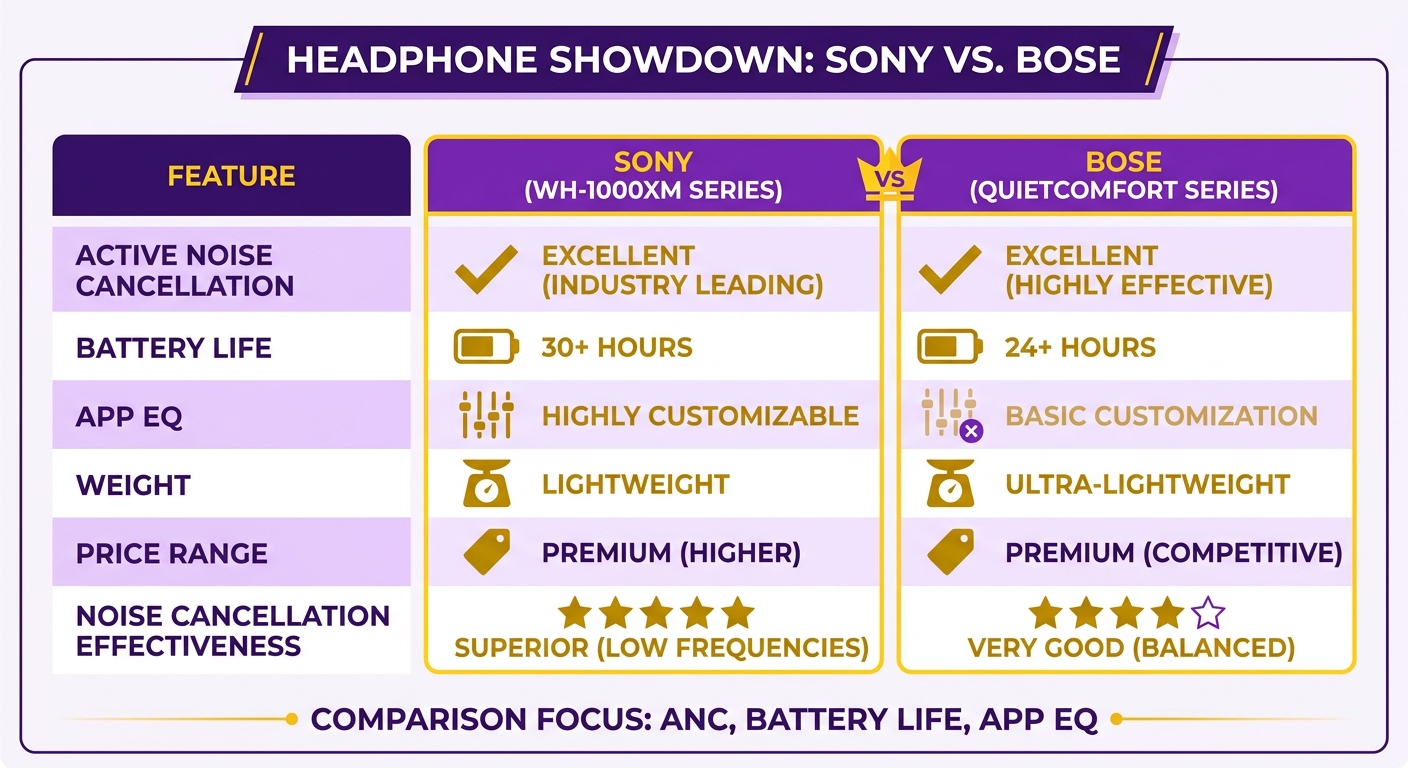
Sony and Bose take opposite approaches in the budget tier: one loads up on adjustable features, the other trims the menu and refines what's left. Sony's affordable models pack active noise cancellation, longer playtime, and app-based EQ. Bose leans on its signature sound and fit. Before you lock in either, compare prices across stores, since the same model routinely swings $15 to $25.
That price gap is the real decider once the specs are close. Two headphones can match on noise cancellation and battery, so what you pay becomes the tiebreaker. A quick check turns a decent pick into a genuine deal.
How do the features stack up?
Sony gives you more toggles; Bose gives you fewer, tuned better. Sony's cheaper wireless models tend to bundle multipoint pairing, adjustable ANC levels, and companion-app presets that let you shape the sound to your ears.
Sony's edge is active noise cancellation paired with app control. CNET's budget ANC guide names a Sony model among its top value ANC picks for 2026, which tells you the cancellation holds up against pricier rivals.
Bose keeps things pared down, betting on plush earcup padding, a lighter clamp force, and a warmer default tuning instead of a stack of settings. You trade granular control for a listen-and-go experience that many people prefer for long sessions.
What do the technical specs tell you?
Neither brand publishes deep specs for these budget models, so tested numbers matter more than a data sheet. You won't reliably find impedance or exact frequency response for Sony and Bose consumer wireless at this price. Reviewers judge them on real listening and lab measurement instead.
Lab data fills the gap. That budget ANC model reduced external noise by about 79% in SoundGuys' 2026 testing, with Bluetooth 6.0 support at $69. A measured result beats any unpublished spec sheet.
Battery claims are another place where testing beats marketing. Rated playtime usually assumes ANC off and moderate volume, so a headphone advertised at 30 hours may deliver closer to 22 with cancellation running. Hands-on reviews that log real drain give you the number you'll actually live with.
Which brand should you pick?
Pick Sony for features and ANC; pick Bose for a warmer, simpler fit. If you want the most control and cancellation for the money, Sony's lineup wins on tested value. If you care about Bose's tuning and don't need an app full of toggles, Bose earns its shelf space.
Either way, the specs get you a shortlist, not a purchase. Run a quick comparison across a few retailers and buy the lowest listing on the model you picked. That last step is where the real savings hide, and Popgot's Amazon comparison guide shows how fast that check can be.
References
[1] Best Wireless Headphones Under $100 of 2025 - https://www.rollingstone.com/product-recommendations/electronics/best-wireless-headphones-under-100-1143280/
[2] The 9 best budget headphones we've tested under $100 - https://mashable.com/roundup/best-budget-headphones-under-100
[3] The 6 Best Headphones Under $100 - BestProducts.com - https://www.bestproducts.com/tech/gadgets/g61439205/best-cheap-headphones/
[4] Best Budget Noise-Canceling Headphones Under $100 ... - https://www.cnet.com/tech/mobile/best-budget-noise-canceling-headphones-under-100/
[5] Bose Headphones Under $100 | QuietComfort & More - https://www.target.com/s/bose+headphones+under+100
[6] The Best Headphones Under $100, Tested and Reviewed - https://www.nbcnews.com/select/shopping/best-headphones-under-100-rcna244973
[7] The Best Headphones Under $100 - https://www.nytimes.com/wirecutter/reviews/best-headphones-under-100/
[8] The 4 Best Over-Ear Headphones Under $100 of 2026 - https://www.rtings.com/headphones/reviews/best/over-ear-headphones-under-100
[9] Best budget noise canceling headphones for 2026 - SoundGuys - https://www.soundguys.com/best-budget-noise-cancelling-headphones-7142/
Frequently Asked Questions
1. Can I use budget wireless headphones like the Anker Soundcore Life Q30 for phone calls?
Most budget over-ear models handle calls adequately, though microphone quality varies more than sound quality between brands. Bose tends to prioritize call clarity with better voice pickup, while Sony focuses on music playback. Check reviews specifically testing microphone performance in noisy environments before buying if calls matter most.
2. Do noise-cancelling headphones still work when the battery dies?
Active noise cancellation stops working once the battery drains, since it requires power to generate the cancelling signal. Most over-ear models still play audio via a wired connection with a 3.5mm cable, but you lose ANC entirely. This makes total playtime ratings important for daily commuters and travelers.
3. Is Bluetooth 6.0 backward compatible with my older phone?
Bluetooth 6.0 is fully backward compatible with older Bluetooth versions, so headphones supporting it work with any Bluetooth-enabled phone. You won't access newer features like improved range or efficiency unless both devices support 6.0, but basic pairing and audio streaming function normally across all previous versions.
4. Should I buy refurbished Sony or Bose headphones to save money?
Refurbished units can offer genuine savings, but budget headphone listings frequently mix refurbished, older models, and lookalike names together. Verify the exact model, battery spec, and ANC claim before purchasing. Popgot's AI Product Verification confirms these details across retailers, helping you avoid mislabeled listings that don't match reviewer-tested models.
5. How often do budget headphone prices actually drop enough to matter?
Prices for identical models swing $15 to $25 between retailers on any given week, with highest-rated models seeing the biggest fluctuations since stores use them as anchor deals. Sale prices often bounce back $30 after promotional windows close, so timing your purchase matters as much as picking the right pair.
6. Are over-ear or on-ear headphones better if I wear glasses?
Over-ear headphones work far better for glasses wearers because the earcups clear the frames entirely. On-ear pads press directly against your temples, pushing the frames into your skin and causing discomfort during long sessions. Comfort-focused reviewers consistently steer glasses wearers toward over-ear designs for this reason.
7. Will running ANC constantly significantly reduce my headphones' lifespan?
Active noise cancellation doesn't damage headphones long-term, but it noticeably reduces per-charge battery life by drawing continuous power. Switching ANC off when you don't need it extends playtime considerably. For maximizing daily use, models like Sony's WH-CH720N deliver around 35 hours, giving you flexibility between quiet and battery-saving modes.