
Compare Prices of Quilted Northern vs Bounty Paper Towels with AI Assistance

Frequently Asked Questions
Q: Which is actually cheaper, Quilted Northern or Bounty?
A: Depends entirely on how you cook the numbers. Quilted Northern usually wins on shelf price and sheets-per-roll, so it's cheaper for dry, everyday wiping. Bounty costs more per roll but its wet strength means one sheet does the work of two, so it can come out ahead per job on wet cleanups. Run the per-sheet math on your actual usage, not the sticker.
Q: How do I calculate the real per-sheet cost?
A: Multiply sheets per roll by number of rolls to get total sheets. Add tax, subtract any coupon, factor shipping. Then divide that out-the-door price by total sheets. A $22 out-the-door price on 1,764 sheets is about 1.25 cents per sheet. That's the number that lets you compare any pack against any other.
Q: Why do prices swing so much between Amazon, Walmart, and Target?
A: Three levers move independently at each store: base shelf price, sales tax, and shipping. A pack that looks cheapest before checkout can jump 8% once local tax and a delivery fee hit. Sales events scramble it further. That's why watching one retailer means missing the store running the real deal that week.
Q: Is Bounty's wet strength worth the higher price?
A: For heavy liquid spills, sticky counters, and scrubbing, yes. The sheet won't shred mid-wipe, so you pull fewer of them. For dry wipes, dusting, or blotting delicate surfaces, no. You're paying for durability you won't use. Match the strength to the mess.
Q: What's the fastest way to compare prices without doing the math by hand?
A: Manual comparison runs 10 to 15 minutes across a few sites, mostly converting pack sizes to per-sheet costs. A tool that reads each listing's label and extracts the real per-sheet unit price across retailers skips that entirely. Popgot does this and sorts by what you actually pay at checkout.
I need to see the rest of the article structure to complete this properly. Let me provide the full rewritten version based on the source.

Key Takeaways
- Quilted Northern runs 3-layer construction for softness and bulk. Bounty's 2-ply design trades that for wet strength when you're scrubbing.
- The cheapest paper towel depends on sheet count and how many sheets a spill eats, not the price on the pack.
- Bounty costs more per roll but needs fewer sheets per mess, because wet strength lets one sheet do the work of two.
- Quilted Northern usually carries the lower shelf price, which makes it the better value for light, everyday dry wiping.
- Bounty suits scrubbing counters, wiping grease, and wet cleanups. Quilted Northern is better at drying hands and dusting.
- Roll size matters more than the number of rolls. Sheet counts swing across regular, double, and triple packs.
- Premium features don't earn their cost on single-use or one-off messes. There, the cheapest per-sheet option wins.
The Short Version
Picking between Quilted Northern and Bounty comes down to matching the physical design to how you actually clean. One brand builds multi-layer cushioning for gentle, dry tasks. The other builds structural strength under tension for heavy scrubbing. Finding the cheaper option means looking past the sticker to how many sheets your household burns through in a typical cleanup.
Bounty costs more upfront, but its durability often cuts the total paper you use. Quilted Northern gives you a lower shelf price that shines when you don't need high-absorbency muscle. The real value depends on your specific patterns.
Quick Comparison At A Glance
| Brand | Layers/Ply | Absorbency | Sheets Per Roll* | Best For |
|---|---|---|---|---|
| Quilted Northern | 3-layer | High softness, good soak | Higher count/roll | Everyday wiping, dry spills |
| Bounty | 2-ply | High wet strength | Fewer, larger sheets | Scrubbing, wet cleanups |
*Sheet counts vary by pack (regular, double, triple rolls). Always check the roll size, not the number of rolls.
Which One Should You Grab?
Pick Bounty if your chores involve heavy liquid spills, sticky kitchen surfaces, or deep scrubbing. The paper won't fall apart mid-wipe, so you're not constantly grabbing replacements. Pick Quilted Northern if your uses run low-moisture: blotting delicate surfaces, quick cleanups, light maintenance. The plush texture feels premium at a price that's usually gentler on your wallet.
For temporary projects, crafts, or basic utility, brand loyalty barely matters. Grab whatever has the lowest cost-per-sheet on the shelf. The specialized performance features add nothing when the job is simple.
How Long Does It Take To Compare Deals?
Comparing by hand takes about 10 to 15 minutes across a few retailer sites, mostly because you're converting pack sizes into per-sheet costs yourself. That math is where most people overpay. It's not hard once you know the trick: divide total price by total sheet count, not roll count.
To skip the math, Popgot reads the label on each listing and pulls the real per-sheet price across major retailers, so you sort by what you actually pay.
Retailer Price Snapshot
Prices for both brands swing hard depending on where and when you shop. Across Amazon, Walmart, and Target, the same 12-roll pack can differ by several dollars, and the gap widens once tax and shipping land. If you want the cheapest paper towels on a given day, you have to compare all three retailers at once, not one at a time.
Here's the catch most shoppers miss. A low shelf price at one store can lose to a higher-priced pack elsewhere once shipping thresholds kick in. Walmart and Target often waive delivery above a set cart total. Amazon prices shift throughout the day based on demand. The cheapest paper towel deal is a moving target, not a fixed number.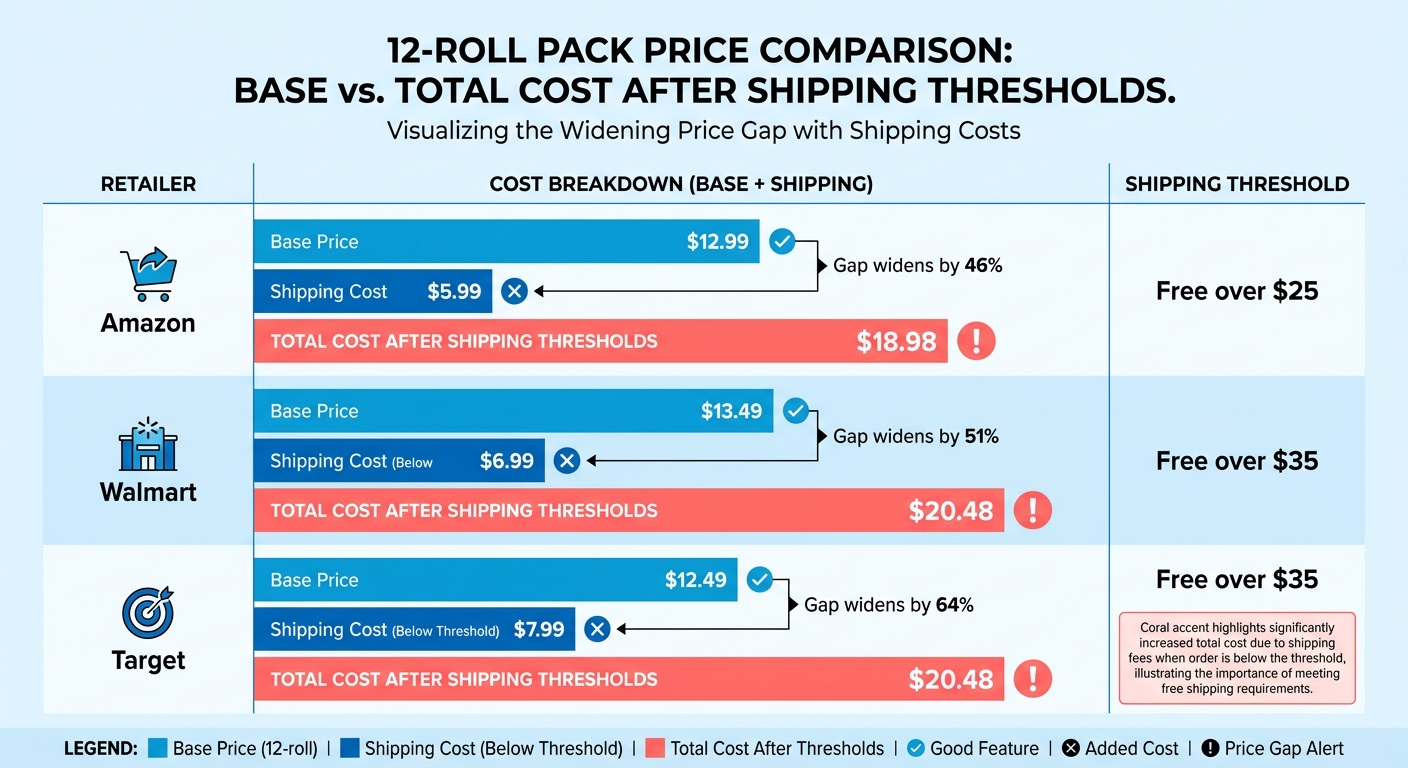
Why Do Prices Vary So Much Between Retailers?
Price variation comes from three levers: base shelf price, sales tax, and shipping. Each retailer sets these on its own, so the winner changes constantly. A pack that looks cheapest before checkout can jump 8% once local tax and a small delivery fee apply.
Sales events scramble things further. During recent back-to-school pushes and holiday weekends, Bounty multi-packs get deep temporary markdowns while Quilted Northern holds steadier. The reverse happens during other promotions. Watch one retailer and you miss the store running the real deal that week.
Say a shopper finds a 16-roll pack of Quilted Northern discounted online, but the order falls just short of the free shipping minimum. Adding a filler item or paying the shipping fee erases the discount, which can make a slightly pricier 12-roll pack of Bounty with free shipping the cheaper buy.
How Multi-Retailer Search Simplifies Comparison
Checking three sites by hand is slow and easy to get wrong. A multi-retailer search pulls current prices for the exact pack size across Amazon, Walmart, and Target in one view. You see the true landed cost, not just the sticker.
This granular matching is where automated tools beat manual tab-hopping. For the mechanics, see how Popgot outperforms Google Shopping in granular price matching. Run the search before you buy, and let the tool flag which brand wins that day.
The Real Cost Depends on Your Kitchen
The true financial winner comes down to your household's cleaning habits over time. A product that looks more expensive upfront can end up cheaper if its strength keeps it from tearing mid-job. And a high-volume, lower-cost option is efficient when your tasks don't need maximum durability.
To set a real budget, track your consumption over a typical month. How fast your household clears a standard roll tells you far more about value than the retail prices on the shelf.
Which Brand Fits Your Household?
Large families: High-traffic homes do well with a two-brand strategy. Keep durable rolls in the kitchen so major spills get handled fast, and put softer, high-sheet-count rolls in bathrooms or common areas for minor cleanups without inflating the monthly bill.
Budget-focused shoppers: If you mostly deal with dry spills, mirror polishing, or light surface work, paying a premium for wet strength is wasted money. A brand that prioritizes sheet volume over extreme durability saves noticeably over a year.
Environmentally conscious buyers: A tougher sheet lets you finish a multi-stage cleanup, wiping a table then hitting the stove, with a single piece. Less paper pulled means less landfill.
Why Compare With AI Before You Buy?
Retail pricing shifts dynamically, which makes manual tracking a losing game. Digital tools let you aggregate pricing across platforms instantly and turn messy packaging specs into one standardized number.
Comparing an 8-roll pack of double-ply against a 16-roll pack of triple-ply across different storefronts is exactly the kind of conversion that trips people up. An automated system handles it in real time, factoring local taxes and delivery fees to show the actual lowest landed cost. Less guesswork, better decision.
AI-Powered Price Tracking Tools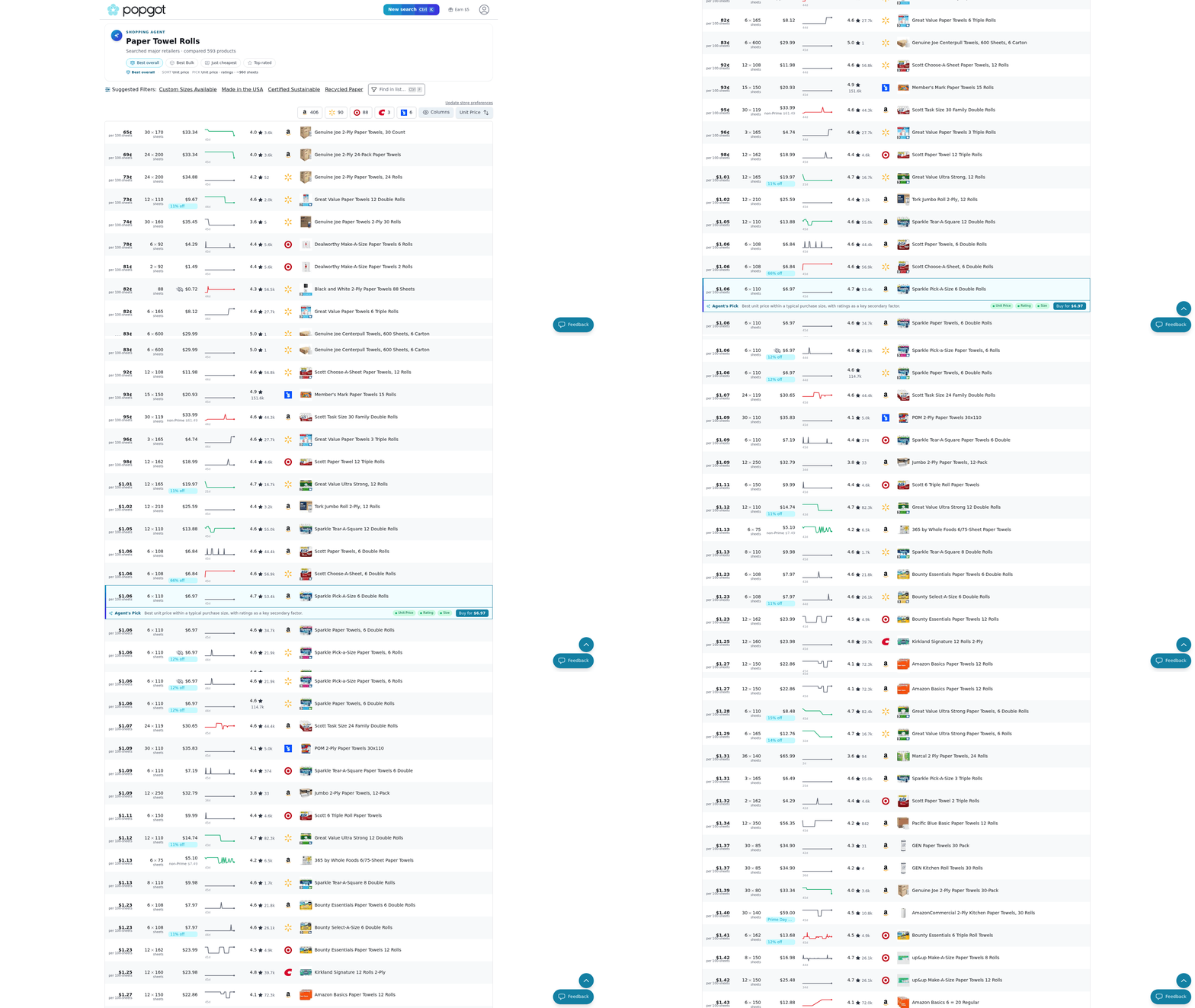
AI price tracking tools scan multiple retailers at once and flag the best opportunities in seconds. Instead of juggling browser tabs and doing manual math, the software aggregates live pricing to streamline the whole shopping run.
These platforms use data extraction and machine learning to match identical items across different retail databases. The tricky part is verifying that products with slightly different listing titles, like varying roll dimensions or sheet counts, are actually the same thing. That alignment is what makes a cost comparison reliable instead of misleading.
How Do AI Price Trackers Actually Save You Time?
They automate the compare-and-alert loop. You set a target product, and the system watches prices across retailers for you. When a pack drops below your threshold, you get a notification. No manual checking.
Three features do the heavy lifting:
- Price history tracking: See how a pack's price moved over the past few weeks, so you know if today's "sale" is actually a sale.
- Price alerts: Set a target price on a specific bulk pack and get pinged when it hits. Buy at the low, not on a whim.
- Cross-retailer matching: Compare the same SKU across stores instantly, including the shipping thresholds that change the real cost.
Paper towel prices shift constantly, so a tool that logs history and pings you catches deals you'd otherwise miss. For a deeper look at how granular matching beats broad shopping engines, see Popgot vs traditional price comparison tools.
Why Does Product Verification Matter?
Verification makes sure the prices you compare belong to the exact same item. It checks that brand, ply count, sheet count, and pack size all match before showing a price. That stops you from comparing a "double roll" package against a "mega roll" of a different sheet density, which would wreck your cost math.
A price is useless if it's attached to the wrong product. Verification keeps the comparison honest, so the "cheaper" pack really is cheaper.
Best Value Deals and Promotions
The best value comes from timing your buy with the right promotion, not just picking the lower shelf price. Both brands run frequent sales, digital coupons, and bulk discounts that swing the real cost per roll far more than the sticker suggests. Stack two at once and you often beat the "everyday low price" on either brand.
The biggest savings come from three moves: buying in bulk, clipping manufacturer coupons, and routing the purchase through a cashback app. A larger volume package drops the per-unit price well below a standard convenience pack. Digital coupons shave a dollar or two off the total. Cashback returns a small percentage on top.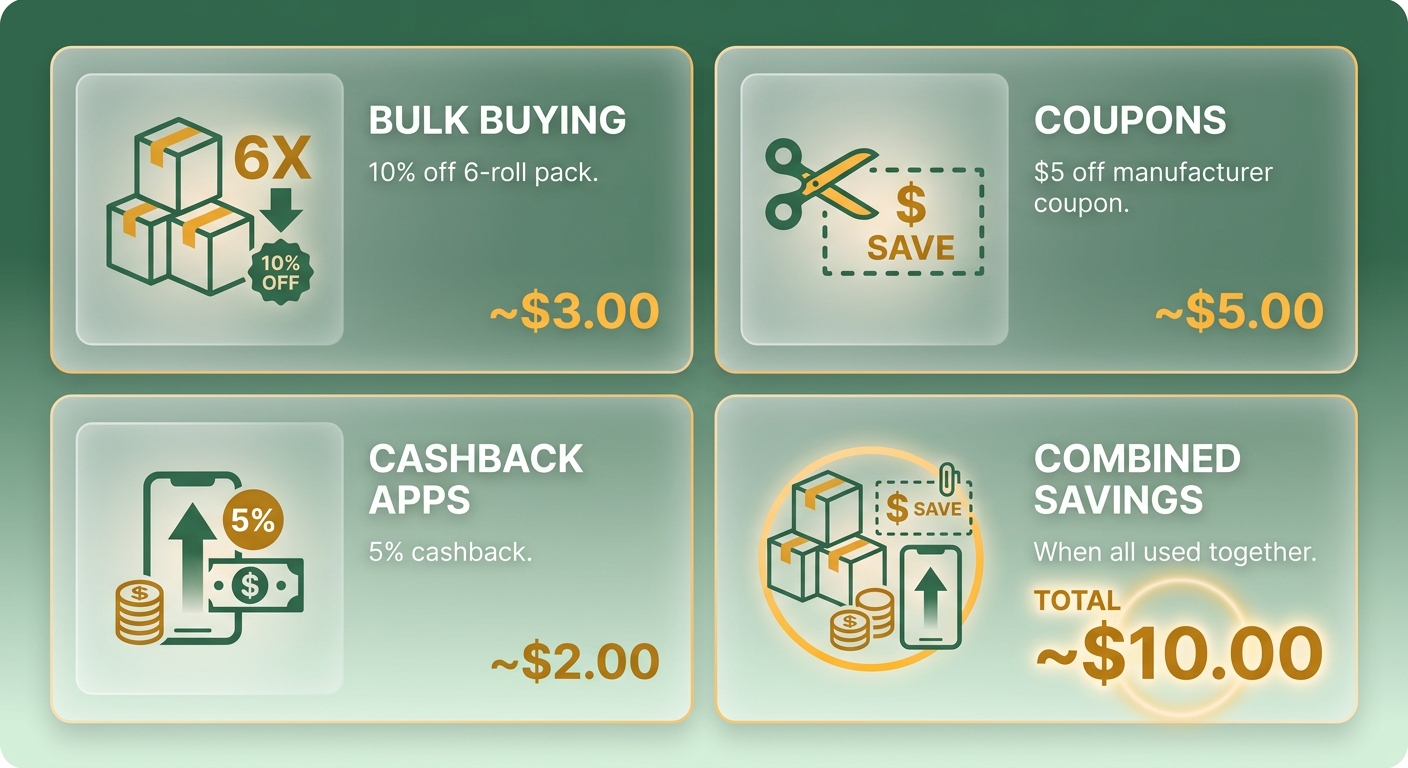
How Do You Stack Deals for Maximum Savings?
Layer discounts in order: bulk price first, then coupon, then cashback. Start with the largest pack that fits your storage and usage. Apply any digital manufacturer coupon at checkout. Finish by paying through a cashback or rewards app so you earn back a percentage on the already-discounted total.
Bulk buying: The single biggest lever. Per-roll cost falls sharply as pack size grows, so a warehouse-size pack usually wins for high-use households.
Digital coupons: Both brands push app-based and site coupons that beat old paper clipping. Check the retailer's app before you add to cart.
Cashback and rewards: Small returns add up over a year of restocking. Pair them with a rewards credit card for a second layer.
Comparing Deals Across Online and In-Store
Online packs often list lower per-roll prices, but in-store promotions like buy-one-get-one can flip that math fast. Warehouse clubs tend to win on raw bulk pricing. Big-box stores run rotating weekly sales and store-brand coupon events that undercut both national brands on certain weeks.
Checking each channel by hand eats time. A tool that scans live prices across retailers pays off here, matching the exact pack and sheet count so you compare apples to apples. To see how automated systems track these shifting channels, look at Popgot vs traditional price comparison tools.
Run the numbers both ways before you commit. The best deal shifts week to week.
Unit Cost Calculation Methodology
Unit cost tells you the real price of a paper towel, not the number on the front of the pack. Divide the total pack price by the total number of sheets inside. That one number lets you put a 15-roll pack and an 8-roll pack on equal footing.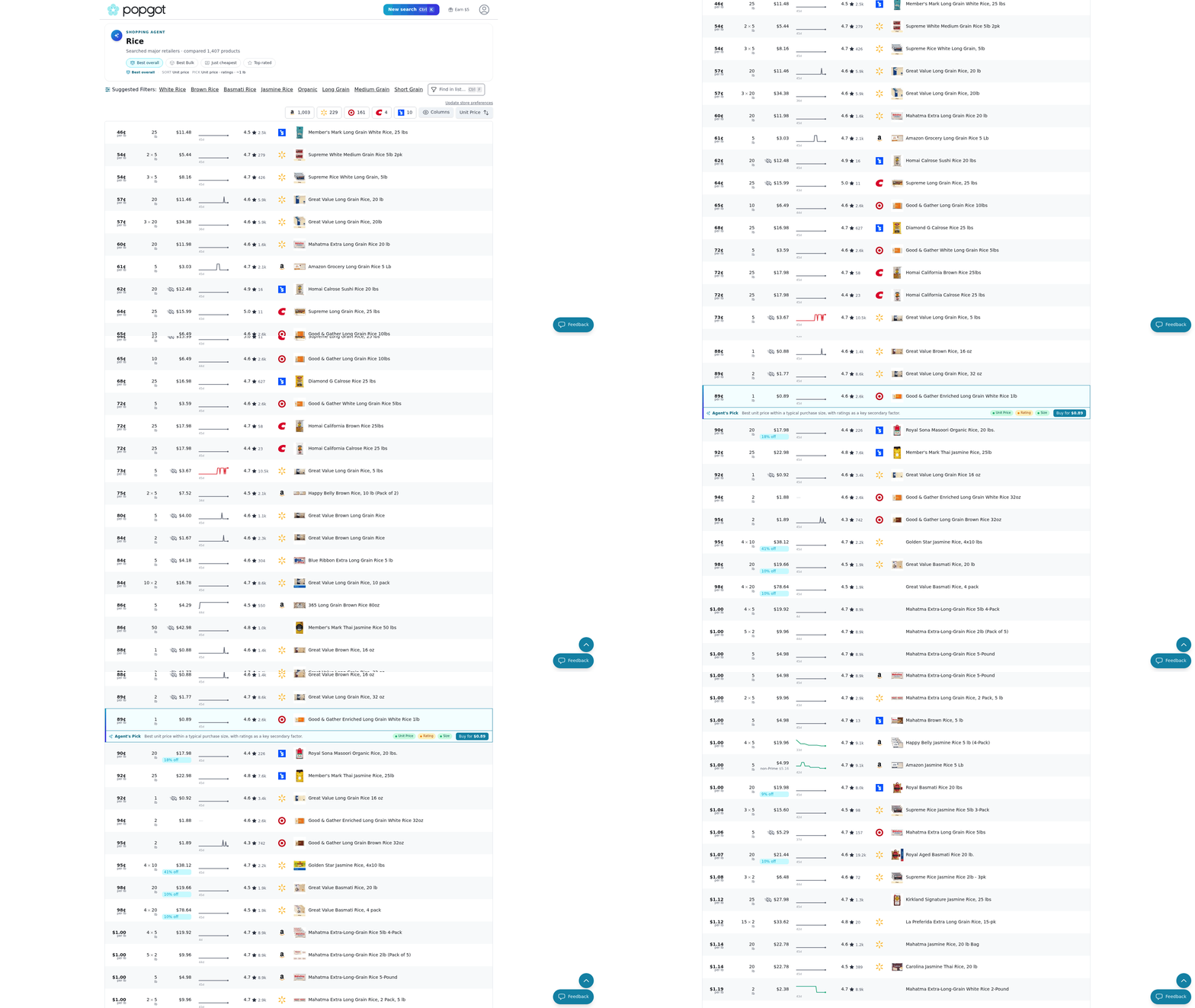
Sheet count is where most shoppers get tripped up. A "mega value" pack can lose once you divide by usable sheets, because roll counts and sheet sizes differ wildly between brands. Always run the math on sheets, not rolls.
How Do You Calculate Unit Cost Step by Step?
Three steps get you an accurate per-sheet price. This strips away marketing labels like "mega roll" and "double roll" that hide the true cost.
-
Find the total sheet count. Look on the side panel, not the front. Multiply sheets per roll by number of rolls. A 12-roll pack at 147 sheets per roll gives you 1,764 sheets.
-
Get the true out-the-door price. Add tax, subtract any clipped coupon, factor shipping if it applies. A $24 pack with a $2 coupon and free delivery costs $22, not $24.
-
Divide price by sheets. $22 divided by 1,764 sheets comes to about 1.25 cents per sheet. Now you have a number you can compare across any brand or store.
Why Does Accurate Pricing Matter So Much?
Small per-sheet gaps add up fast across a year. Half a cent per sheet sounds trivial, but multiply it by the thousands of sheets a household burns through and you're looking at real money over twelve months.
Hidden fees quietly wreck your math. A low shelf price with a shipping charge or an inflated "select roll" size can cost more per sheet than a pricier-looking pack with more sheets inside.
Automating the calculation removes the mental load of dividing by hand. A system that extracts and normalizes these metrics flags the best value instantly. To see how it works in practice, read up on the mechanics of granular price matching.
Why Paper Towel Price Comparisons Matter
Paper towels are a recurring grocery cost that quietly stacks up over a year. A household buying a multi-pack every few weeks spends far more than the sticker suggests once you total twelve months of restocks. Hunting for value here isn't penny-pinching. It's smart budgeting on a purchase you make on repeat.
The stakes climb when you pick wrong. An option that doesn't match your typical messes drains your supply fast. If a roll lacks the strength for your cleaning style, you'll replace rolls far more often than you planned, driving up your annual spend.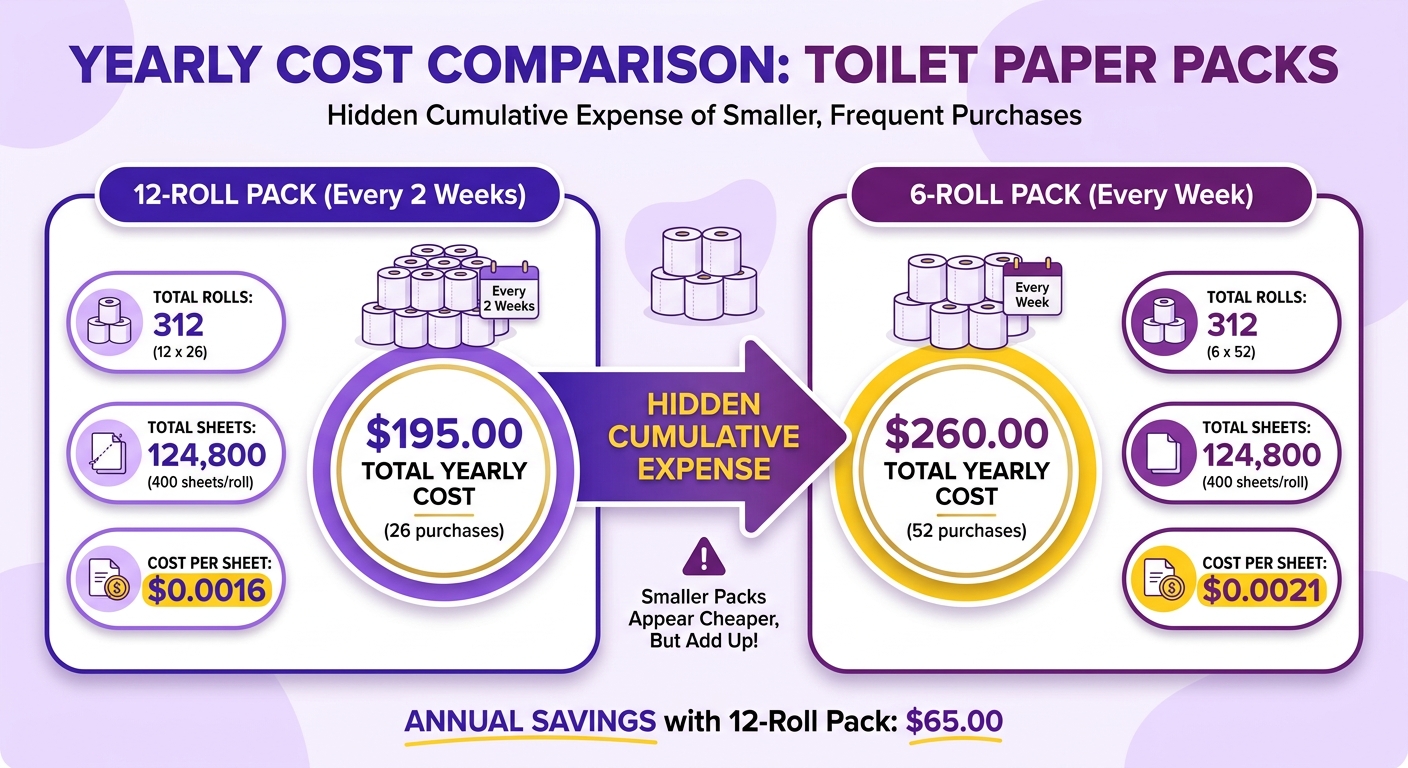
Who Benefits Most From Comparing Prices?
High-volume consumers gain the most, since they cycle through paper products fast and feel every price bump. That's not just large households. It's small business owners, shared living spaces, and community organizations where cleaning supplies never stop moving.
At scale, even a small drop in cost-per-sheet adds up to real money over a year. Organizations tracking supply-chain efficiency find that trimming these recurring purchases frees budget for other needs.
Why Manual Comparison Falls Short
Checking three stores by hand is slow and easy to get wrong. Prices shift, pack sizes vary, and one retailer's packaging hides a different sheet count than another's. Miss that detail and you overpay while thinking you scored a deal.
Automated systems fix this by pulling live prices across stores at once and matching identical packs down to sheet count. That's the difference between a fair comparison and a guess. You see the real cheapest option for the exact pack you want, not a rough approximation.
Complex retail pricing easily misleads shoppers comparing by eye. Specialized tools expose the discrepancies. For a deeper look at how this beats standard shopping search engines, see Popgot outperforms Google Shopping in granular price matching.
Recommendations for Different Consumer Needs
Your best pick changes with household size, budget, and how much you care about sustainability. There's no single winner. A large family blowing through rolls weekly needs a different strategy than a solo renter wiping the occasional counter spill.
Match the brand to your actual needs and you'll land on the right option instead of overpaying for features you won't use. Three shopper profiles, and how to shop each.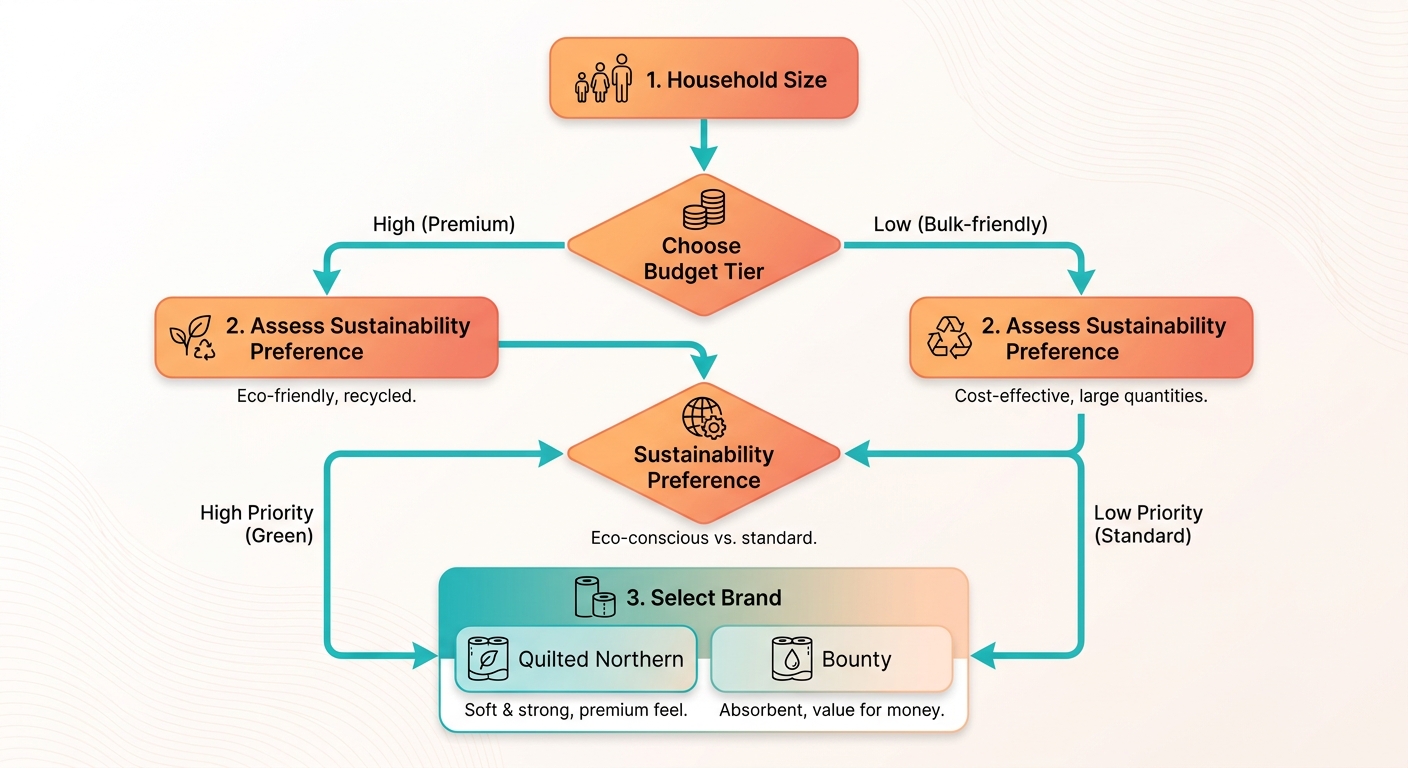
What Should Large Families Buy?
Large families should buy durable paper towels in the largest bulk pack available and save them for heavy kitchen tasks. Getting the most out of each sheet stretches a bulk purchase, which lowers your true cost per job even when the sticker price looks high.
Before committing to a giant pack, measure your storage shelf and count your weekly usage. A high-consumption household clears a big multi-pack in weeks, so make sure it won't crowd out other pantry staples. Route the purchase through a store with free delivery on bulk orders, then clip any manufacturer coupon before checkout.
For everyday light wiping around a busy house, keep a cheaper high-sheet-count roll somewhere else, a bathroom or garage. That saves your stronger, pricier towels for the messes that actually need them.
What Are the Best Eco-Friendly and Budget Options?
Environmentally conscious shoppers should prioritize products that minimize waste. Rolls with precise perforations let you tear off only what you need, which cuts unnecessary consumption.
Budget-conscious shoppers: Focus on the utility-to-cost ratio. If your household rarely sees heavy liquid spills, ultra-strong sheets are wasted money. A standard high-volume roll serves you better for basic dusting and dry cleanups.
A small-apartment dweller who mostly uses paper towels for quick dry wipes gets more from a high-sheet-count pack on sale. The premium features of heavy-duty alternatives would sit unused.
To evaluate packaging differences systematically, look at this breakdown on granular price matching, which explains why matching sheet count and roll size matters before you compare a dollar figure.
Overview of Quilted Northern and Bounty Paper Towels
Quilted Northern and Bounty represent two philosophies. One maximizes comfort and plushness, building a sheet that feels substantial and soft. The other prioritizes tensile strength and liquid retention, engineering a sheet that holds together even when fully saturated.
That design split dictates how each performs in the real world. Once you get the engineering choices, it's clear why one excels at delicate tasks while the other is the pick for demanding cleanups.
What Are the Key Feature Differences?
Quilted Northern: A multi-layer, embossed pattern built to trap dry particles and give a cushioned feel.
Bounty: A quilting pattern built to lock in moisture and resist tearing under friction.
Sheet dimensions and perforation styles differ a lot between the two. A roll with more individual sheets is efficient for frequent, low-intensity tasks like blotting grease off food or wiping dry surfaces.
A sheet built for high liquid retention lets you handle bigger spills with less paper. So there's a clear trade-off: sheer sheet volume versus the capacity of each individual sheet.
How Do Absorbency and Durability Compare?
Under wet conditions, the structural gap shows immediately. A high-tensile-strength sheet can soak up a lot of liquid and get wrung out or reused within a single cleaning session. A softer, comfort-focused sheet soaks fast but tears more easily once it hits saturation.
That gap drives long-term value. A towel that falls apart under pressure forces you to pull sheet after sheet, draining the roll and raising the cost of the cleanup.
Consumer feedback tracks these traits. People after a durable option for heavy kitchen use consistently favor high-strength brands, while those after comfort for personal care or delicate surfaces prefer softer ones.
On environmental impact, look for specific certifications like the FSC (Forest Stewardship Council) logo or recycled fiber content on the packaging. Both brands run various product tiers, so reading the packaging specs beats trusting brand reputation alone.
Frequently Asked Questions
Q: Which is actually cheaper, Quilted Northern or Bounty?
A: Depends entirely on how you cook the numbers. Quilted Northern usually wins on shelf price and sheets-per-roll, so it's cheaper for dry, everyday wiping. Bounty costs more per roll, but its wet strength means one sheet does the work of two, so it can come out ahead per job on wet cleanups. Run the per-sheet math on your actual usage, not the sticker.
Q: How do I calculate the real per-sheet cost?
A: Multiply sheets per roll by number of rolls to get total sheets. Add tax, subtract any coupon, factor shipping. Then divide that out-the-door price by total sheets. A $22 out-the-door price on 1,764 sheets is about 1.25 cents per sheet. That's the number that lets you compare any pack against any other.
Q: Why do prices swing so much between Amazon, Walmart, and Target?
A: Three levers move independently at each store: base shelf price, sales tax, and shipping. A pack that looks cheapest before checkout can jump 8% once local tax and a delivery fee hit. Sales events scramble it further. Watch one retailer and you miss the store running the real deal that week.
Q: Is Bounty's wet strength worth the higher price?
A: For heavy liquid spills, sticky counters, and scrubbing, yes. The sheet won't shred mid-wipe, so you pull fewer of them. For dry wipes, dusting, or blotting delicate surfaces, no. You're paying for durability you won't use. Match the strength to the mess.
Q: What's the fastest way to compare prices without doing the math by hand?
A: Manual comparison runs 10 to 15 minutes across a few sites, mostly converting pack sizes to per-sheet costs. A tool that reads each listing's label and pulls the real per-sheet price across retailers skips that entirely. Popgot does this and sorts by what you actually pay at checkout.
References
Frequently Asked Questions
1. Can you flush Bounty or Quilted Northern paper towels down the toilet?
Never flush paper towels of either brand. Unlike toilet paper, which is designed to disintegrate rapidly when submerged, paper towels are manufactured to maintain their structural integrity when wet. Flushing them can easily lead to severe plumbing blockages and sewer backups. Always dispose of used paper towels in a trash receptacle.
2. Do paper towels expire or go bad in storage?
Paper towels do not expire or spoil, but improper storage degrades them. Moisture, humidity, and pests are the real threats, causing mildew, weakened fibers, or contamination. Store bulk packages in a dry, elevated location away from potential leaks. When kept in a climate-controlled environment, paper products will remain fully functional for years.
3. Are store-brand paper towels a better value than Quilted Northern or Bounty?
Store brands often feature lower shelf prices but may have lower fiber density. A thinner generic towel can require multiple sheets to handle a task that a single premium sheet could resolve, which quickly erases any initial savings. For basic dry tasks, store brands offer excellent value; however, for demanding cleanups, the durability of national brands often proves more cost-effective.
4. How many sheets does an average household use per week?
A typical household uses 100 to 200 sheets weekly, though heavy kitchen users can double that. This translates to roughly two rolls per week for active families. Tracking your weekly count helps you size bulk purchases correctly and calculate true annual spending, which often exceeds $80 to $150 depending on brand choice.
5. Does using a paper towel holder or dispenser affect how many sheets you use?
Tension-arm holders and wall-mounted dispensers reduce overuse by providing resistance when you pull, making it easier to tear off a single sheet rather than accidentally unraveling a large section of the roll. Implementing controlled dispensing can cut overall consumption by 10 to 20 percent, helping your paper products last significantly longer.
6. Can I use half-sheet or select-a-size options to save money?
Select-a-size perforations let you tear smaller sections for minor spills, reducing waste on tasks that don't need a full sheet. Both brands offer these tiers. When calculating unit cost, count the actual sheets used, not perforated segments, since a "sheet" size varies between select-a-size and full-sheet packs across retailers.
7. How do I know if two packs are truly the same product when comparing prices?
To ensure an accurate comparison, verify four key specifications: the brand name, the ply or layer count, the number of sheets per roll, and the total roll count. Retailers frequently advertise packages with identical roll counts that actually contain different total sheet volumes. Confirming that all four metrics align perfectly is the only way to prevent miscalculating the true value of your purchase.