
Find Cheap Paper Towels Without Sacrificing Quality or Time

Key Takeaways
- Most paper towels run $0.01 to $0.02 per sheet, but sheet counts swing wildly between brands.
- Comparing cost-per-sheet beats grabbing the cheapest pack. Flimsy sheets make you use three where one should do.
- The lowest sticker price is rarely the cheapest actual choice, because absorbency and durability decide real usage costs.
- Large families save the most, since fractions of a cent per sheet compound over a year.
- Low-income households take the worst hit from cheap essentials that tear and waste money.
- Paper towels are a quiet grocery drain, repurchased often enough that the cost hides in plain sight.
- Consumer Reports and America's Test Kitchen both found name brands aren't automatically the best value.
Related Video
Watch: Consumer Reports tests paper towels. Are name brands best? by ABC4 Utah
Why the cheap pack isn't always the cheap choice
Paper towels are a line item that hides. The average household burns through rolls fast, and the per-sheet cost stacks up without you noticing. Finding cheap paper towels online lets you trim a recurring expense without downgrading your kitchen cleanup.
The catch: the lowest sticker price isn't always the cheapest choice. Most towels cost around $0.01 to $0.02 per sheet, but the sheet count per roll swings wildly between brands, according to America's Test Kitchen. A bargain brand with flimsy sheets forces you to use three where a stronger towel needs one. Compare by cost-per-sheet, not by whatever's cheapest on the shelf.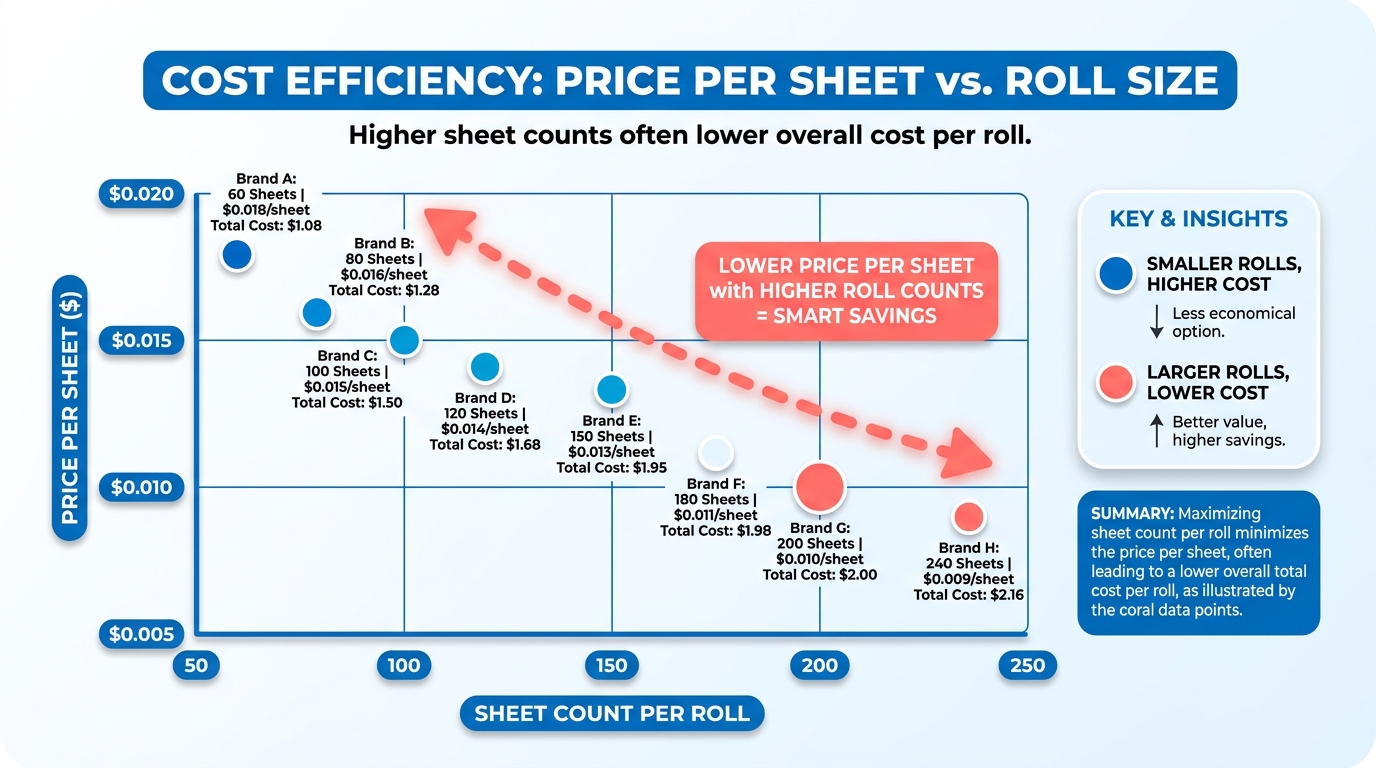
Who actually saves the most
Large families and budget-conscious households feel it first. When you go through several rolls a week, shaving even a fraction of a cent per sheet turns into real money over a year.
Low-income households take the hardest hit from overpriced essentials. A pack that looks cheap but tears easily wastes both money and product. Environmentally minded shoppers benefit too, since durable towels mean fewer sheets and less waste.
Price and sustainability aren't always at odds. One study on kitchen towel pricing dug into which performance properties actually drive shelf price. Strength and absorbency matter more than the brand name.
How to compare value without a headache
Focus on cost-per-sheet, not the price tag. A roll with more sheets or stronger plies often wins even at a higher upfront price.
| Brand Type | Est. Price per Sheet | Sheets per Roll | Strength | Best For | Waste Level |
|---|---|---|---|---|---|
| Premium name brand | $0.02 | High | High | Heavy spills | Low |
| Mid-tier brand | $0.015 | Medium | Medium | Everyday use | Medium |
| Bargain brand | $0.01 | Low | Low | Light tasks | High |
| Store brand | $0.012 | Medium | Medium | Daily cleanup | Medium |
| Bulk multi-pack | $0.011 | High | Medium | Large families | Low-Medium |
These are industry benchmarks. Use them as a starting point, then verify the actual sheet count before you buy.
How long does smart shopping actually take?
Comparing towels the old way means walking aisles and doing mental math. Call it 15 to 30 minutes a trip.
Searching online cuts that to a few minutes. An AI product verification feature checks quality and confirms details so you don't grab a flimsy pack by mistake. Same logic you'd use to compare keto beans by cost per gram: measure the true unit price, not the shelf price, and let the numbers pick the winner.
What you're actually paying for
Paper towel price comes down to three things: material quality, absorbency, and brand markup. A pricier roll isn't automatically better, and the cheapest one often costs more per use.
Absorbency and strength are the real product. When Consumer Reports tested six brands, Bounty scored highest overall on both, but it also priced above the group average. That same test flagged Brawny as a "good alternative" for saving money without giving up performance. So the top performer and the smart budget pick were two different products.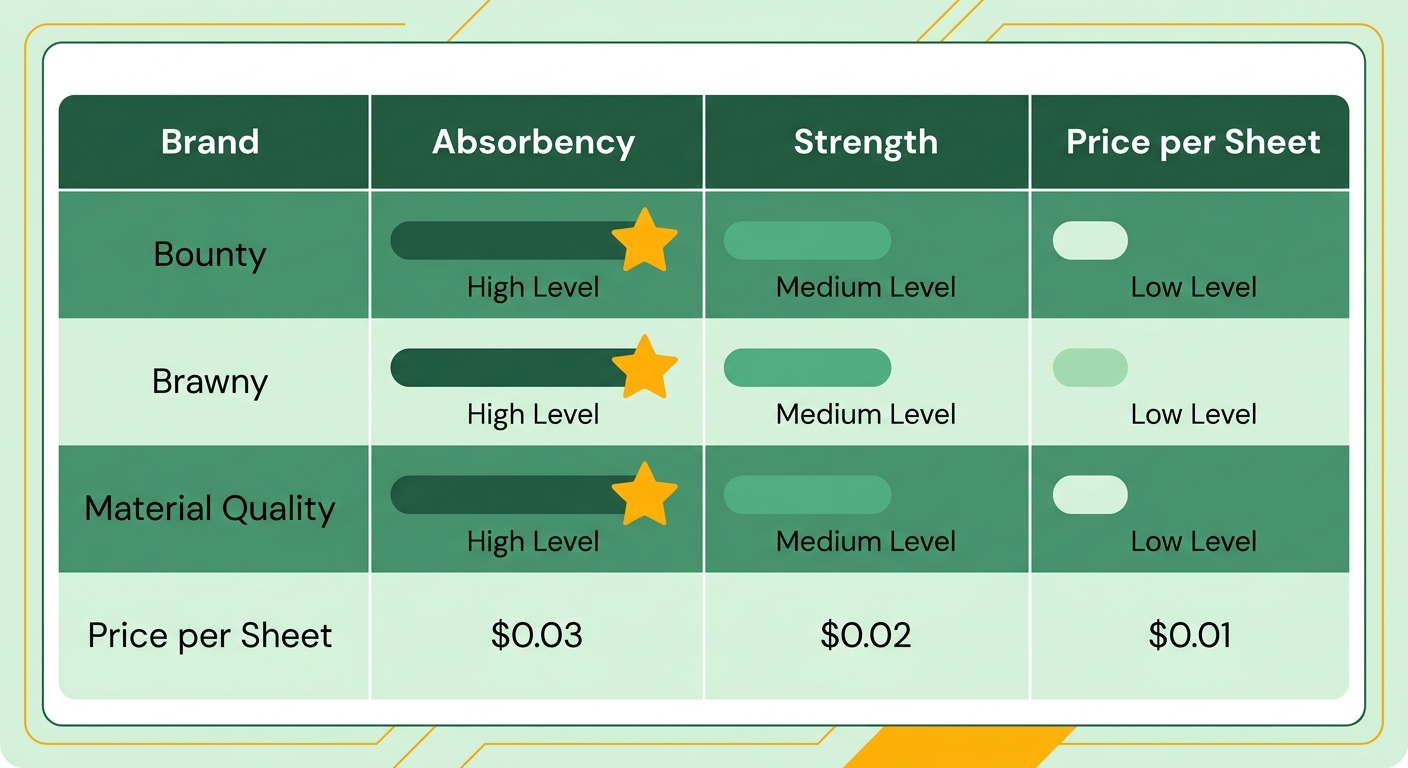
What drives the price
Ply, sheet thickness, and brand positioning drive price more than raw production cost. Manufacturing choices like embossing patterns and fiber sourcing feed into it too. Those physical attributes decide how well a towel holds together when wet, which is what you're really buying.
Store brands often win on cost-per-sheet. Bounty and the other name brands pour money into marketing and premium materials, and it shows on the sticker. But store labels tested well. Reviewed's 2026 roundup put Bounty on top while also testing Kirkland, Viva, Scott, and Sparkle. Kirkland, a warehouse store brand, held its own against the pricier names.
Why sheet count beats roll price
Two rolls at the same price can hold wildly different amounts of paper. Packaging hides this. A roll labeled "giant" or "double" might contain fewer physical sheets than a standard competitor, which makes sheet count the only number you can trust.
The move: ignore the price on the front of the pack. Divide total price by total sheet count instead. A roll with more sheets and stronger plies stretches further, so you buy less often. That's the number that decides your real annual spend.
What to prioritize when buying
Cost-per-sheet, ply strength, verified absorbency. In that order. The Serious Eats 2026 review named Brawny Tear-A-Square 3-Ply best overall for being thick, absorbent, and tough on stuck-on messes. The tear-a-square design lets you use a half sheet for small jobs, which cuts waste.
A quick checklist:
- Cost-per-sheet: total price divided by sheet count, not the shelf tag.
- Ply count: 2-ply or 3-ply resists tearing on wet messes.
- Absorbency: how much one sheet holds before it falls apart.
- Reusability: better sheets can often be rinsed and reused for light tasks.
Skip the flimsy single-ply bargain packs. They tear on the first wet spill, and you'll burn three sheets doing one sheet's work. Cheap only counts if the towel holds up.
Timing, coupons, and the rest of the savings game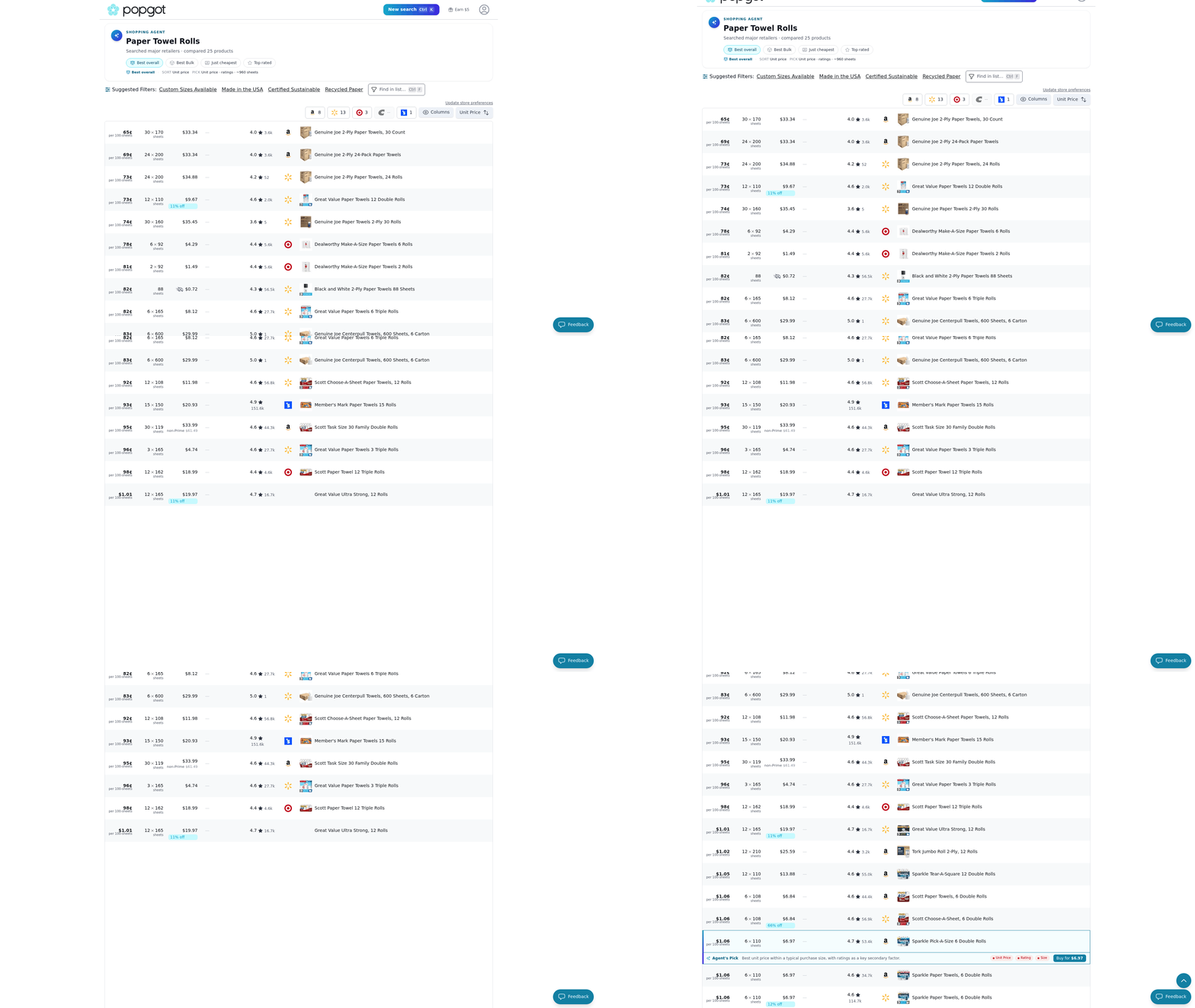
Timing is the single biggest lever for cutting paper towel costs. Sales cycles, coupons, and bulk math combine to shave real money off a recurring expense. You want a repeatable routine, not a one-time score.
Buying paper goods online works best when you stack three tactics: buy during promo windows, apply digital coupons, and compare by cost-per-sheet. Since this is a continuous, recurring expense, even a small percentage off adds up over a year of restocking.
When to buy for the best price
Buy during major seasonal sale events, when paper goods routinely dip below their everyday shelf price. Sale timing matters more than brand loyalty, because the same roll swings widely depending on the week.
Watch for these windows:
- Back-to-school and holiday sales, when retailers discount bulk staples to drive cart size.
- End-of-quarter clearance, when stores dump excess inventory.
- Subscription or auto-ship discounts, which layer a standing percentage on top of the base price.
Stock up when the per-sheet cost hits the low end. A pantry buffer means you never pay full price out of desperation.
How to stack coupons without them canceling out
Coupon stacking means combining a manufacturer discount, a store promotion, and a cashback or subscription offer on one purchase. Layered right, the three cuts compound instead of overwriting each other.
The order that works:
- Start with a coupon site. Search a deals aggregator for current offers, then match the coupon to a brand already on sale.
- Add the store's own promotion. Many online retailers run a percentage-off or multi-pack deal that applies on top of a clipped coupon.
- Finish with cashback or auto-ship. A subscription discount or cashback portal takes the final slice.
You end up with a lower effective price than any single discount delivers. Same idea as when you search products by cost and ingredients first instead of grabbing the first pack you see.
Which brands win on sale
Compare by performance-per-dollar, not sticker price. A discounted premium roll can beat a bargain brand once you factor in how many sheets each job takes.
Bounty: high absorbency and strength, at a premium price. Becomes an excellent value when a sale closes that gap.
Brawny Tear-A-Square: flexible sheet size that cuts waste. Strong pick for stuck-on messes when the premium brands aren't discounted.
Store brands like Kirkland, Viva, and Scott: reliable for everyday cleanups. Best value when their standard per-sheet price beats a discounted name brand.
Run the per-sheet math each time. The winner changes week to week, which is exactly why a flexible routine beats brand loyalty.
The reusable option: cloths and washable rolls
Reusable towels and cloths cut spending by swapping something you throw away for something you wash and reuse. One roll of reusable cloth "sheets" can stand in for dozens of disposable rolls over its life. If you're tired of hunting for budget rolls every month, moving part of your cleanup to washable cloths ends the restock cycle.
Disposables need constant repurchasing. Reusables cost more upfront but need almost nothing after that beyond the occasional wash. You keep a few disposable rolls for the gross jobs. Everything else moves to cloth.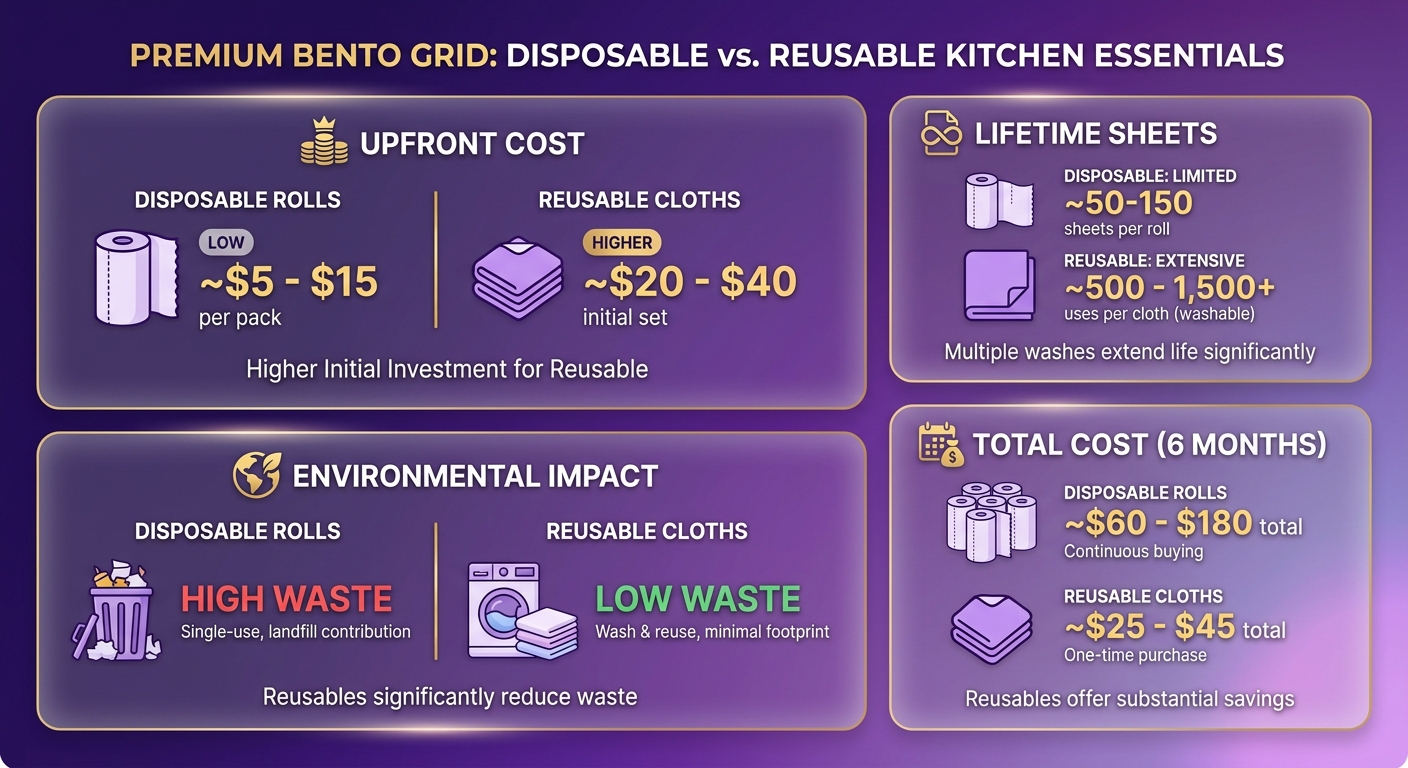
What the options cost
Three main choices, ranging widely in price and feel.
- Cotton dish towels: cheapest entry point. A pack of plain cotton or flour-sack towels runs a few dollars and handles drying, wiping, and spills. They wash hundreds of times and stay soft.
- Microfiber cloths: cheap per cloth in bulk multipacks. They grab dust and lift grease, which makes them strong for counters and glass.
- Reusable "paper towel" rolls: cloth sheets on a roll that snap onto a holder like a normal roll. They mimic the disposable habit while being washable. Priciest upfront, but they replace the roll experience directly.
Are they actually worth it?
For most kitchens, yes, with one honest carve-out. Reusables win on cost and waste over time, but they add laundry, and they're not ideal for raw-meat messes or anything you'd rather just toss.
My take: use cloths for the daily grind. Drying hands, wiping counters, mopping small spills. Keep a cheap disposable roll for bacteria-heavy or genuinely disgusting cleanups. That split gets you the savings without the ick factor.
The environmental angle helps too. Every disposable roll you skip is one fewer that gets manufactured, packaged, and landfilled. One cloth does the work of many rolls before it wears out.
Start small. Buy one multipack of cotton or microfiber, use it for a month, and count how many disposable rolls you didn't buy. That number tells you whether the switch pays off for your household.
What I'd actually do
Cutting your paper towel spend comes down to one habit: compare by cost-per-sheet, not sticker price. Buy strong sheets during sale windows, stack a coupon, and keep a stash of reusable cloths for the everyday jobs. That routine turns a recurring drain into a line item you barely notice.
Buying online rewards a little upfront math. Sort listings by real unit price instead of pack price, and the flimsy bargain rolls stop looking like deals. The strong mid-tier picks that need one sheet where a cheap towel needs three usually win per use.
What a smart trip looks like
Pair price math with the right performance tier. Skip the weakest bargain brand, target a strong-but-affordable roll, and buy it in bulk during a promo window. Then cover half your daily wiping with a reusable cloth so you restock less often.
A mid-tier roll on sale, with a digital coupon applied, plus stronger sheets that mean fewer per spill. Over a year of restocking, that per-use gap plus the sale price is where the real savings live.
A hybrid approach works best. If you like the convenience of disposables for heavy grease or sanitizing, smart purchasing on the rolls is still your most effective move.
Where to start
Pick one tactic and use it on your next restock. Sort by unit price. Wait for a sale. Try a cloth for your countertop wipe-downs.
If comparing dozens of listings by hand sounds tedious, digital shopping tools can read product specs and surface the true unit cost for you. Start with one small change, and your paper towel budget stops quietly shrinking your grocery bill.
References
[1] The 4 Best Paper Towels of 2026, Tested & Reviewed - https://www.seriouseats.com/best-paper-towels-11868180
[2] The Best Paper Towels of 2026 - https://www.reviewed.com/home-outdoors/best-right-now/the-best-paper-towels
[3] Why Most Bargain-Brand Paper Towels Actually Cost More - https://www.americastestkitchen.com/articles/8245-budget-paper-towels-cost-more
[4] Performance and sustainability vs. the shelf price of tissue ... - https://www.researchgate.net/publication/328465577_Performance_and_sustainability_vs_the_shelf_price_of_tissue_paper_kitchen_towels
[5] Consumer Reports tests paper towels — Are name brands best? by ABC4 Utah - https://www.youtube.com/watch?v=BOv1yFQzfMU
Frequently Asked Questions
1. How many paper towels does the average household use per year?
Annual consumption varies widely based on household size and cleaning habits. A typical home might use dozens of rolls each year, making small differences in unit price highly impactful over time.
2. Can you flush paper towels down the toilet?
Paper towels should never be flushed down toilets. Unlike toilet paper, they're designed for strength and absorbency, so they don't break down in water and readily clog pipes and septic systems. Always dispose of used paper towels in the trash or compost bin for compostable varieties.
3. Are recycled paper towels as absorbent as regular ones?
Recycled paper towels typically offer slightly lower absorbency and strength than virgin-fiber premium brands, since recycled fibers are shorter. However, many perform well for everyday tasks like drying hands and wiping counters. Check cost-per-sheet and reviews, since some recycled options match mid-tier performance at competitive prices.
4. How should I store bulk paper towels to keep them fresh?
Store bulk paper towels in a cool, dry place away from moisture, humidity, and direct sunlight. Basements or garages with dampness can cause mildew or weaken fibers. A pantry or closet works best. Keep packaging sealed until use to protect rolls from dust and absorbing ambient odors.
5. What's the difference between 2-ply and 3-ply paper towels?
Ply count refers to the number of layers bonded together. 3-ply towels have three layers, making them thicker, more absorbent, and more tear-resistant on wet messes than 2-ply. While 3-ply costs more upfront, it often needs fewer sheets per job, potentially lowering your true cost-per-use.
6. How do I wash reusable paper towel cloths properly?
Machine wash reusable cloths in warm or hot water with regular detergent, then tumble dry or air dry. Wash grease-heavy cloths separately to avoid residue transfer. Avoid fabric softener, which reduces absorbency. Microfiber should skip high heat. Most cotton and microfiber cloths withstand hundreds of wash cycles before wearing out.
7. Does buying paper towels online actually save money versus in-store?
Online shopping makes comparing unit prices much faster and allows you to stack digital coupons with subscription discounts. Digital tools can scan listings to display the true cost-per-sheet automatically, helping you avoid overpriced options without spending time on manual calculations.