
Find Product Deals Without Scanning Every Store

Key Takeaways
- Consumer Reports data shows everyday items can drop up to 70% during peak sales windows, so timing does a lot of the saving for you.
- One family cut back-to-school spending by over $50 using Google's shopping comparison; another shopper trimmed 30% off eyeglasses.
- Price aggregators often disclaim liability for accuracy, which leaves the store on the hook for the number you actually pay at checkout.
- ShopSavvy tracks price history across more than 100,000 retailers, which is how you tell a real discount from marketing theater.
- Cheaper alternatives frequently change their formulation, a hidden risk that matters more than price if you have a dietary restriction.
- Confirming a price was genuinely low over time is a different check from confirming today's cost and today's ingredients. You need both.
- AI-powered price tools add their own accuracy problems, as CNET's independent testing showed.
Why the cheap version can cost you the most
When you're hunting deals across supermarkets and pharmacies, the real cost isn't the sticker price. It's the hours spent scanning store after store, and the risk of grabbing the cheap version that quietly swaps an ingredient you can't have. If you're managing a dietary restriction, that second risk is the expensive one.
The savings themselves are real. Shoppers routinely find steep discounts on prescription eyewear by comparing online instead of buying local, and families lower their back-to-school bill using Google's shopping comparison. Consumer Reports has flagged that everyday items get marked down hard during seasonal clearance. The money is sitting on the table. The question is whether you can grab it without changing what's in the product.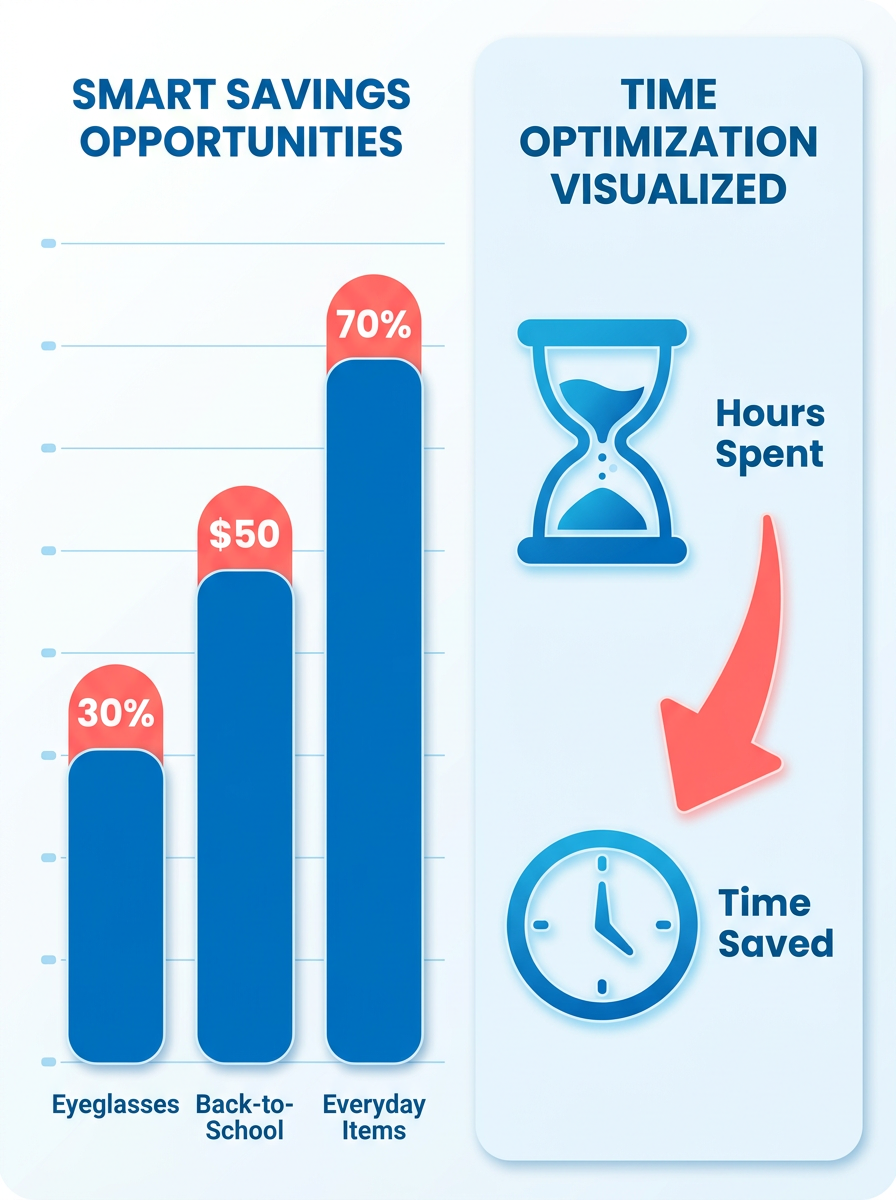
Why does cheaper sometimes cost more?
Because price is only half the label, and most tools never check the other half. A ShopSavvy price history can tell you whether a discount is genuine or staged, tracking trends across a huge merchant network. But another aggregator openly disclaims liability for price accuracy, leaving the store responsible for the number at checkout.
Those are two different jobs. Proving a price is genuinely low over time isn't the same as confirming the live cost, or the live formulation, is what you think it is. You need both checks. Not one.
AI widens the gap. CNET's tester found ChatGPT surfacing a MacBook that was $275 to $295 cheaper open-box, but it also mislabeled a refurbished unit as new. If an assistant can't be trusted on a product's condition, its ingredient and dosage claims deserve zero blind faith. That's why compliance has to anchor to a verified barcode or SKU, not an AI-generated description.
What should you actually compare?
Not headline price. Compare unit price per dose of the exact formulation, checked against a real product identifier. A $12 tub isn't cheaper than a $15 tub if it holds fewer servings, or if it leans on a filler your gut can't handle. Barcode-level identification plus honest running-cost math is the only fair comparison for a dietary buyer.
Here's how the common approaches stack up:
| Approach | Time / Effort | Savings Potential | Ingredient & Dosage Accuracy | Difficulty | Best For |
|---|---|---|---|---|---|
| Scanning stores yourself | 2-4 hrs/week | Low | High (you read every label) | Hard | Shoppers with time to spare |
| Generic price aggregator | 20-30 min | High (seasonal markdowns) | None (price only) | Easy | Standard products, no restrictions |
| AI assistant alone | 10-15 min | High | Unreliable (mislabels condition) | Medium | Quick research, then verify |
| Unit-price + SKU-verified | Under 5 min | High | Guaranteed (barcode-anchored) | Easy | Dietary restrictions, allergies |
Who gains the most here?
Parents feeding a kid with a nut allergy. Anyone eating gluten-free, keto, or low-FODMAP. Shoppers comparing supplement doses across brands. For these buyers, a wrong ingredient isn't an inconvenience. It's a health event.
The strategy is simple. Automate the mechanical hunt across retailers, keep verification anchored to the real label, and compare cost per dose instead of cost per package. That's how you skip the store-hopping without gambling on what's inside the box.
How AI-driven shopping platforms actually work
An AI shopping platform does three jobs at once. It reads product specs, searches many retailers in parallel, and works out which option is genuinely cheapest per unit. The point is to find deals without you opening twenty tabs. We treat that search as two separate problems: finding the low price, and confirming the item is the exact formulation you need.
That split matters most with a dietary restriction. A cheaper price is useless if the "same" product swapped a sweetener, dropped a dosage, or changed an allergen. So when the system finds a match, the agent has to verify what's in the bottle, not what the listing claims.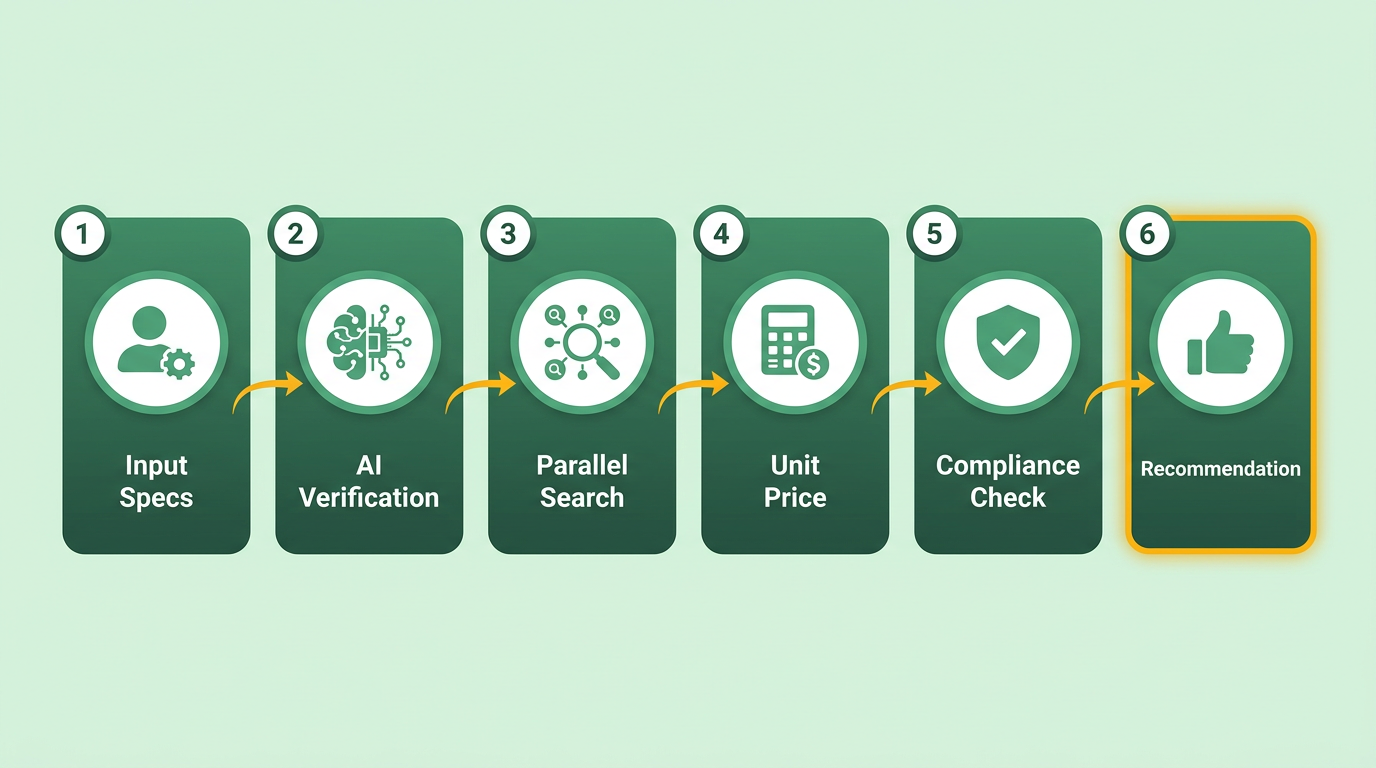
How does an AI agent verify product specs?
Verification means matching a listing to a confirmed source of truth, usually a barcode or SKU, instead of trusting the marketing copy. This is the part most tools get wrong.
Listing copy is written to sell, not to document. It lumps different product versions under one title, carries specs over from an older batch, or repeats a manufacturer claim the current label no longer supports. An assistant reading only that text inherits every error. Ingredient and dosage fields are exactly the ones most likely to drift between the description and the physical product.
Because those claims carry health consequences, they can't ride on AI-generated descriptions. Our agent reads every product label to verify each spec you set, whether that's a minimum EPA/DHA, a specific dosage, or no artificial ingredients. Products that don't actually meet your requirements get filtered out, so a deal only surfaces when the formulation matches.
Can you trust AI to compare prices across retailers?
Yes for the search, no for the final number. AI handles the mechanical work across thousands of retailers, sets price alerts, even fills a cart. You define a target price once and let the agent watch for it instead of checking listings by hand.
Two kinds of sources disagree here, and the disagreement is useful. Price-history tools help you tell a real sale from a fake one. Industry platforms remind users that final transaction terms are set by the merchant.
Both are right, at different layers. A trend check confirms a price is genuinely low over time. A live check confirms it's still correct at checkout. Separate jobs, and a good platform does both rather than assuming one covers the other.
What's the right unit for comparing dietary products?
Price per dose of the exact formulation, not the sticker price. This is where saving money and staying compliant finally meet.
Think about the running-cost logic behind an appliance review that used local electricity rates to name the heater that's actually cheaper to run. Apply that same total-cost-of-use thinking to supplements and specialty foods, and the real question becomes cost per verified serving.
Set your filters for what you can't have, let the agent compare across stores, and judge each result on unit price against a confirmed label. That's how you buy the cheapest version that's still the right version.
Getting the most out of Popgot
Four habits do most of the work: filter hard, lean on curated guides, sort by true unit price, and bring in friends who shop the way you do. Each one gets you to deals faster while keeping ingredient compliance locked in.
Start with the filters. With a dietary restriction, a low price means nothing if the formulation is wrong. So the compliance check is built into the search, not bolted on after. You set the constraint once, say no added sugar, a specific dose, a flagged allergen, and every result already meets it before you compare cost.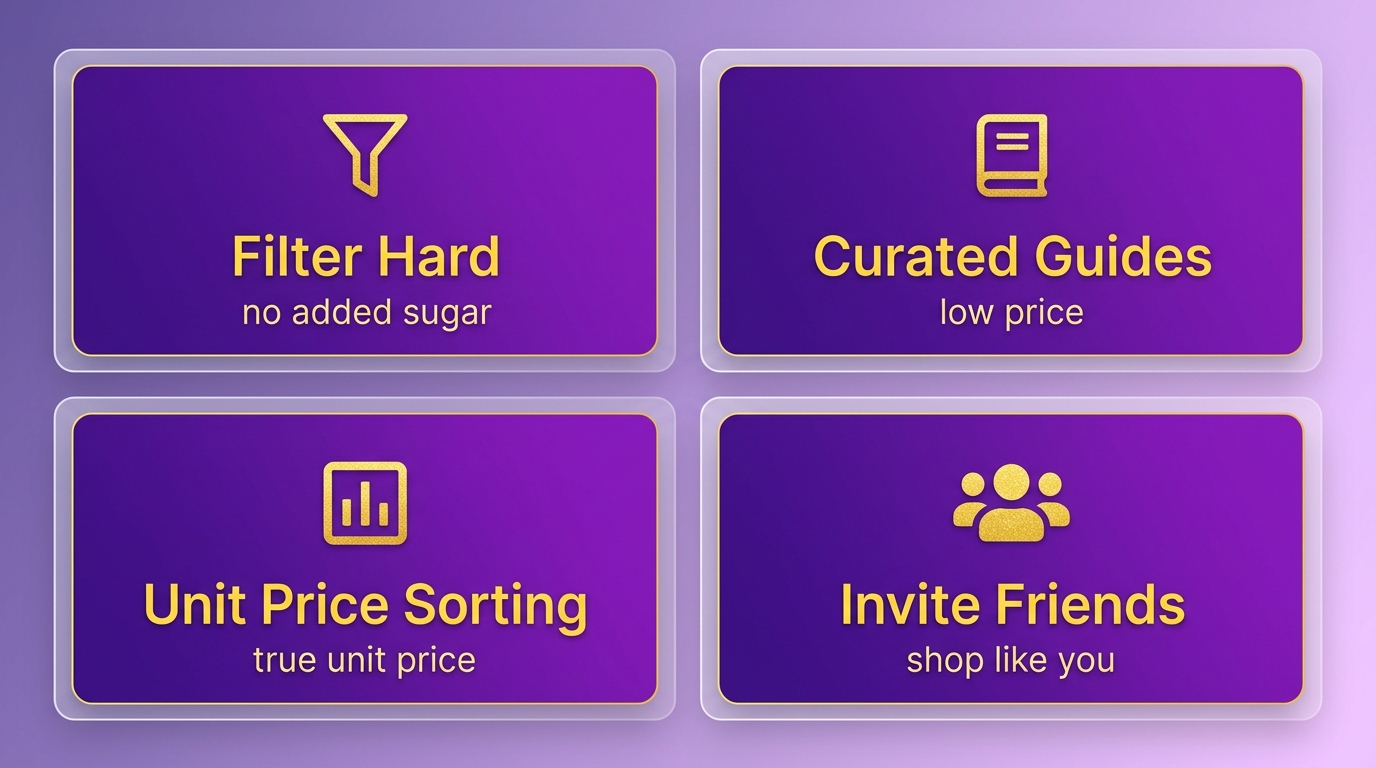
How do you find a product that actually fits your diet?
Match on formulation first, then sort by unit price. The right unit isn't the sticker. It's the cost of the exact formulation you need.
When automated systems scrape listings, they often pull outdated descriptions or miss updates to the ingredient list. An AI leaning only on cached web data can easily overlook a reformulation. That's why our agent reads every label to verify each spec instead of taking a scraped description at its word.
The same total-cost thinking applies to supplements and specialty foods. Compare verified items by active ingredient per serving and a slightly pricier bottle often wins on real cost.
What do curated guides add?
They do the pre-filtering for a whole category, so you skip the setup. Treat them as ready-made compliance lists: gluten-free pantry staples, low-histamine snacks, third-party-tested protein. You get a shortlist that's already screened, then you sort by price.
The guides pay off because price comparison itself pays off. Read one and you move straight to the deal without opening a dozen tabs, and that time savings is the whole reason price comparison tools exist.
Confirming the deal is real, and earning rewards
Compare compliant products by verified unit price, then confirm the real cost before you buy. A sale is only worth chasing if the price holds at checkout. Verified unit prices tell you whether a deal is real; a close look at the listing confirms the final cost, since third-party platforms don't guarantee checkout figures.
Automate the hunt, keep a human eye on the final accuracy check. Reading labels and comparing prices scales beautifully. The judgment call about whether a swapped ingredient matters does not.
Referrals close the loop. Invite friends who share your restrictions, earn rewards, and you both get to verified, compliant finds faster. For more ways to save on what you buy most, browse the shopping guides and tips on our blog.
What this looks like for real shoppers
For products that have to meet a dietary requirement, the gap between "cheap" and "right" costs more than money. We've watched shoppers land a bargain only to find the formulation swapped an allergen, the sugar content doubled, or the dosage dropped below what they needed. Price is irrelevant when the product is unusable.
Recent experiments with AI shopping tools show both the promise and the limits. A tester comparing wireless earbuds found $40 pricing gaps between stores for identical SKUs, but the AI also flagged a counterfeit listing that matched the product name yet shipped from an unverified warehouse. Another user tracking kitchen appliances found that automated tools merge listings for different model years under one price range, hiding that the older version lacks key safety certifications. The speed was real. The accuracy still needed manual checks.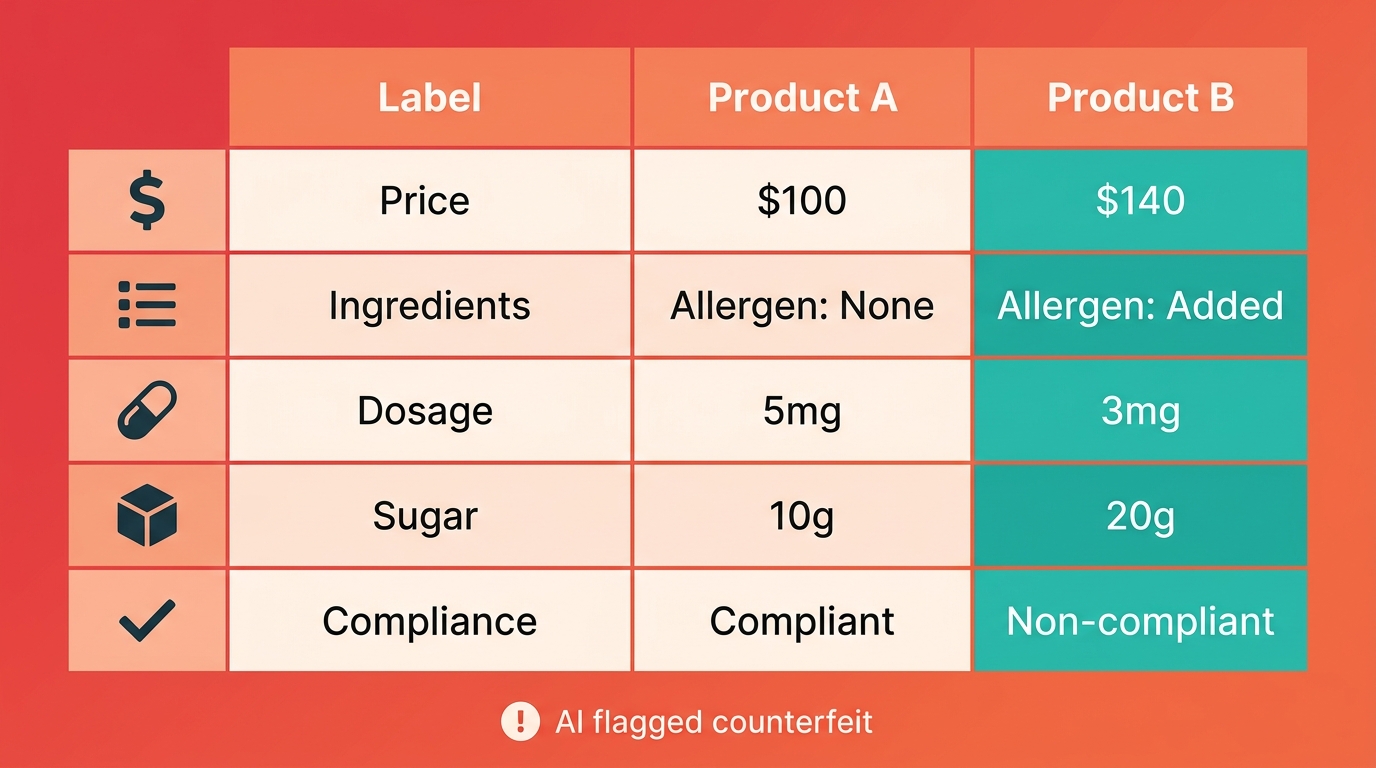
How do real shoppers balance price and ingredient compliance?
Set the dietary filter first, then compare unit cost. An athlete on a strict low-glycemic diet, hunting sugar-free breakfast items, used a browser extension that works across 30,000 sites to scan retailers in parallel. It surfaced three options under budget. They verified the nutrition labels by hand because the listings showed conflicting serving sizes, and one product had switched its sweetener since the last purchase. The lowest sticker used maltitol instead of stevia, so they bought the second-cheapest option to stay on plan.
A shopper managing IBS, tracking low-FODMAP pasta across four grocery chains, noticed sale cycles varied by region. One chain ran promotions every six weeks, another quarterly, and two had no predictable pattern. By mapping which stores discounted which brands, they built a rotation schedule that cut monthly pasta spend by a third without touching dietary safety. It took spreadsheets and calendar alerts, and price-alert tools couldn't replicate that insight because they watch individual products, not category-wide discount patterns across competing retailers.
A third shopper compared protein supplements with an AI tool that calculated cost per gram from serving size and container weight. It found that a 2.2-pound tub at $32 delivered more protein per dollar than a 1-pound bag at $18, even though the smaller package looked cheaper. That's total cost of use, not headline cost, and it's the same math when you're buying to hit a daily intake target. The per-serving number matters more than the shelf price.
What happens when the "same" product isn't the same?
Barcode-level verification catches silent reformulations. A shopper used image search to identify a snack bar from a photo, then price-compared across stores. Five matches came back at different prices. Three were the original formulation. Two were a new version with added soy. Product name and packaging looked identical. Only the ingredient list and the barcode told them apart.
The pattern repeats with vitamins, baby formula, and gluten-free staples. A listing aggregator might group them as one product because the brand and size match. An AI might scrape the description and miss the reformulation notice buried in fine print. The safe move pairs automated price-hunting with manual ingredient confirmation before checkout. Speed gets you to the options. Verification gets you the right one.
Where formulation matters as much as price, historical data helps spot a discount that's too good. A specialty organic olive oil that normally runs $45 suddenly showed up at $28 across three retailers. The shopper checked the manufacturing date and found the batch was four months from expiration, still safe, but that explained the price. Another case: a powdered electrolyte mix dropped from $38 to $19. The manufacturer had cut the active electrolyte dosage per scoop while keeping the container the same size. The low price was real. It just wasn't the same product. Cross-reference the SKU and read the current label before it hits your cart.
What I'd actually do
The cheapest way and the safest way to shop a dietary restriction turn out to be the same skill. Compare unit price across retailers, then refuse to buy anything that fails your ingredient rules. Do both at once and you stop paying for the wrong version of "cheap."
That's where AI earns its place. A person can find matches across eight stores, but reading every label for a swapped sweetener or a dropped dosage is exactly the tedious verification a machine handles well. The savings are real. Established search engines let you sort by value instead of tab-switching. The compliance check is what turns that value into a purchase you can actually use.
What are the real limits right now?
The biggest one is personalization cutting both ways. Research on price comparison platforms found that tailored recommendations lift click-through and conversion. The same paper flags the flip side: personalization can produce algorithmic bias and quietly narrow what you see.
For a shopper with hard constraints, that narrowing is dangerous. A system optimizing for engagement might hide a compliant, cheaper option because it doesn't fit your click history. So personalization should rank the results, never filter the compliance set. Your allergen rule isn't a preference the algorithm gets to override.
Privacy is the other open problem. The same researchers argue that "the integration of privacy-preserving AI techniques is essential for maintaining user trust." Techniques like differential privacy and federated learning point the way, but they're still maturing.
How should an AI treat a dietary restriction?
As a non-negotiable filter, not a soft suggestion. When ZDNet tested AI shopping agents, a query for a 4K TV under $100 returned nothing rather than a fake match. Copy that honesty.
A dietary restriction deserves the same. If nothing under your budget meets the spec, the right answer is "no compliant match at this price," not a cheaper product that breaks your constraint. A non-compliant bargain isn't a deal. It's a return waiting to happen.
Where does this go next?
Beyond the online grocery run, the same verify-then-compare logic fits any purchase with a spec sheet. Supplements with minimum dosages. Baby formula with specific inclusions and exclusions. Non-food items where a hidden material trips an allergy.
The near-term work is explainable AI: showing you why a product passed or failed your filter, so you trust the result without re-reading the label yourself. Pair that with privacy-preserving search and the trade-off between saving money and staying compliant mostly disappears.
Start small. Pick one item you buy on repeat, set your real constraint, and sort by true unit price. You'll see the gap between the sticker deal and the deal that actually fits your diet.
References
[1] Google Shopping - Shop Online, Compare Prices & Where to Buy - https://www.google.com/shopping?udm=28
[2] ShopSavvy - https://shopsavvy.com/
[3] Bizrate | Find Deals, Compare Prices, Read Reviews & Save Money - https://m.bizrate.com/
[4] 13 Best Price Comparison Websites for Smart Shoppers - Money Crashers - https://www.moneycrashers.com/best-price-comparison-shopping-engine-sites/
[5] Best Deals, Sales, & Savings Right Now - Consumer Reports - https://www.consumerreports.org/shopping-a5081917052/
[6] How to shop with AI: 6 ways I find deals, price track, and let agents ... - https://www.zdnet.com/article/how-to-shop-with-ai-6-ways-i-find-deals-price-track-and-let-agents-buy-for-me/
[7] How to Use AI to Find the Best Deals and Coupons - CNET - https://www.cnet.com/tech/services-and-software/how-to-use-ai-to-find-the-best-deals-and-coupons/
[8] (PDF) E-commerce Price Comparison Website Using Web Scraping - https://www.researchgate.net/publication/374386196_E-commerce_Price_Comparison_Website_Using_Web_Scraping
[9] (PDF) AI-Driven Personalization in Price Comparison Platforms - https://www.researchgate.net/publication/398784335_AI-Driven_Personalization_in_Price_Comparison_Platforms_Balancing_Efficiency_and_Privacy
Frequently Asked Questions
1. What happens if a cheaper product changes its formula after I've been buying it regularly?
Barcode verification catches silent reformulations that keep the same name and packaging but alter ingredients. Manufacturers often update recipes without changing the box design, making barcode-level checks essential for repeat purchases.
2. Can AI shopping tools be trusted to identify the cheapest option when comparing supplements or specialty foods?
AI reliably finds low prices across retailers but frequently fails on formulation details. Automated systems can misinterpret product conditions or specifications, proving AI-generated descriptions can't be trusted for ingredient or dosage claims. Compare automated price search with manual label verification before purchasing.
3. How do I know if a sale price is genuinely low or just marketing theater?
Price history tools distinguish real discounts from fake ones by showing whether current pricing is actually below historical averages. For instance, a sudden price drop might indicate an upcoming expiration date rather than a standard sale. Historical data plus manufacturing dates reveal true deal value.
4. Why does unit price matter more than the sticker price for dietary products?
A cheaper container isn't actually a deal if it holds fewer servings or uses lower active dosages. Calculating the cost per gram of active ingredient, rather than the shelf price, determines the actual value of dietary products.
5. What should I do when price aggregators show different costs than the store checkout?
Aggregators do not guarantee checkout figures. To protect your wallet, use automated tools for the initial search, but always verify the final price on the merchant's checkout page before completing the transaction. This two-step approach separates finding deals from validating them.
6. How can I avoid accidentally buying a counterfeit or wrong version when shopping online?
Match listings to confirmed product identifiers like barcodes or SKUs rather than trusting titles alone. This prevents buying counterfeit items from unverified warehouses or purchasing older model years that lack updated safety certifications or formulation standards.