
Popgot Scans 8 Stores for Deals While You Shop One Aisle

Key Takeaways
- Popgot scans eight stores at once, so you can compare unit prices while standing in a single physical aisle.
- Roughly 75% of shoppers rank convenience first — it drives which stores, products, and payment methods they pick.
- The two biggest time sinks in shopping: finding products that actually fit your needs, and comparing prices across stores.
- Most price tools compare prices without checking whether the product meets your requirements in the first place.
- You can find the cheapest item and still get something that fails your dietary, ingredient, or size needs.
- Friction makes people abandon carts and grab whatever's easiest in the moment.
- Popgot does both the searching and the unit-price math, so you're not doing it by hand.
Why shopping friction costs you money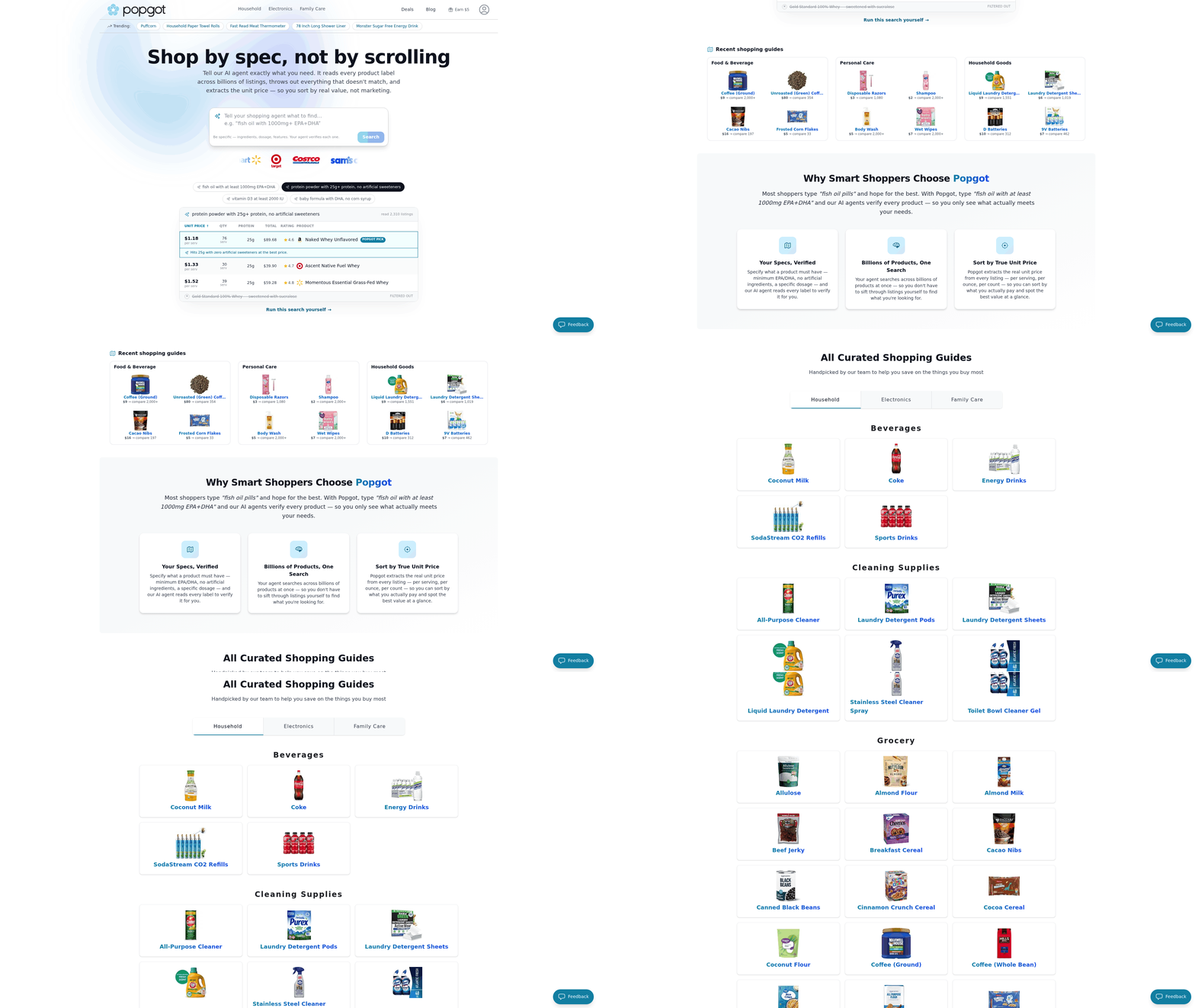
When buying something gets too complicated, people bail. They abandon the cart, or they grab whatever's in front of them even when it costs more. Decision fatigue is real, and every extra step feeds it. Cut the friction and you make faster decisions you don't regret.
The problem it actually solves
Traditional shopping is a tug-of-war between what you want and what you can afford. And because manually cross-referencing items across different retailers is tedious, that tug-of-war usually ends in a rushed call. Automation takes over the grunt work of collecting the data.
Digital shopping assistants have helped people add up costs for years — research on how online price comparison shapes offline evaluations has looked at this. But most of them run on basic keyword matching. They don't check whether the thing they found actually matches your standards.
That's the gap. A low price is a false win if the product shows up with unwanted additives or in the wrong size. Some apps now track live inventory, like the real-time grocery marketplace model, but they still make you read the fine print on every item yourself.
Who gets the most out of this
If you manage dietary restrictions, food allergies, or specific wellness goals, this is aimed squarely at you. Filter for gluten-free, low-sodium, or organic while staying on budget, and a simple grocery run gets complicated fast.
Take allergen-safe school snacks. You read warning labels on multiple brand sites, verify manufacturing facilities, then open a stack of tabs to check which local store has the best price. Exhausting, and it's a multi-step chore every single time.
A smart search system flips the order. You enter your criteria first, and the system drops the non-compliant items before you ever see them. What's left is a short list of safe options with normalized pricing, so you decide fast.
Why speed matters more now
Busy households don't have an afternoon to price-check. An automated tool that scans multiple storefronts at once lets you find the best deals without burning the day.
Three things make that work: automated spec checking, multi-store data aggregation, and granular search filters. Together they guarantee the prices you're comparing belong to products that actually fit your life.
Speed only counts if the tool is usable. A plain interface means no learning curve. If you want the step-by-step version of how the multi-store scan works, the Popgot guide on checking every store for you walks through it.
Filters that respect your dietary rules
Filters let you set hard limits before you browse. Instead of scrolling past listings that don't apply, you define the rules upfront. Searching for supplements? Specify exact active-ingredient thresholds and hide anything that falls short.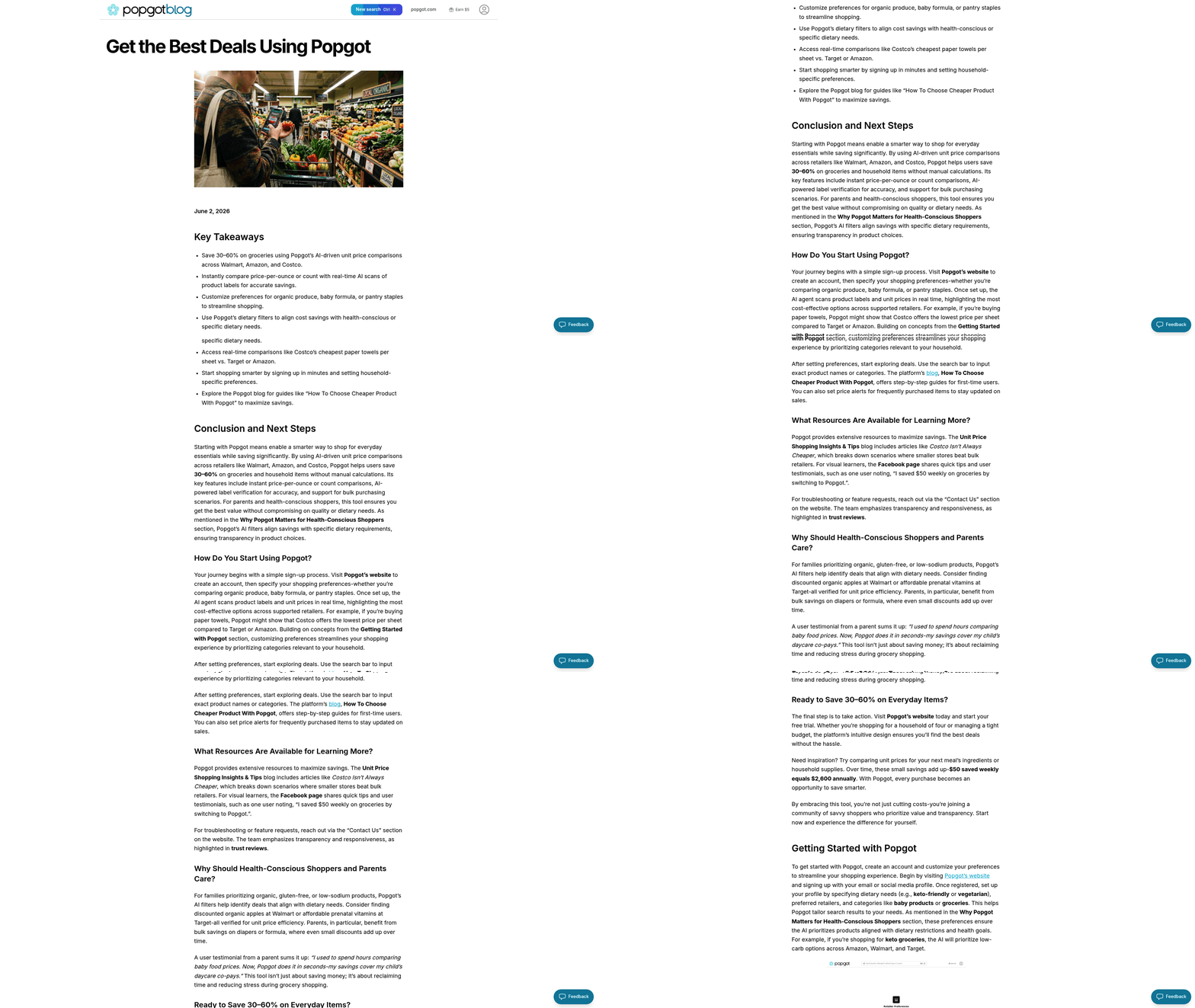
For anyone who reads nutrition panels, this is the whole game. You already know your target numbers. The system just becomes the gatekeeper enforcing them.
How the filters work
Pick a category, then apply criteria: ingredient exclusions, organic certifications, nutritional minimums. Looking for a plant-based protein powder with at least 20g of protein and under 2g of sugar per serving? Lock those in. Anything that misses gets cut, and you're left with a clean list of options that qualify.
This is where the cheaper alternatives surface. A heavily marketed brand charges a premium while a lesser-known one hits the exact same nutritional profile for a fraction of the price. Without smart filtering, those value picks stay buried in the results. With it, they sit right next to the market leaders.
For the data side of this, the comparison of Popgot and Google Shopping's LanguaL nutrition data explains how structured labels power the filtering.
Why filters lead to better buys
You stop manually inspecting digital labels, which shortens the path to purchase. The system does the verification and shows only what matches.
Two payoffs: more confidence that what you bought lines up with your health goals, and a lot less time cross-referencing product details across sites.
You get the specs you need at the best available price — instead of settling for whatever ranks highest on a generic search page.
How Popgot scans eight retailers at once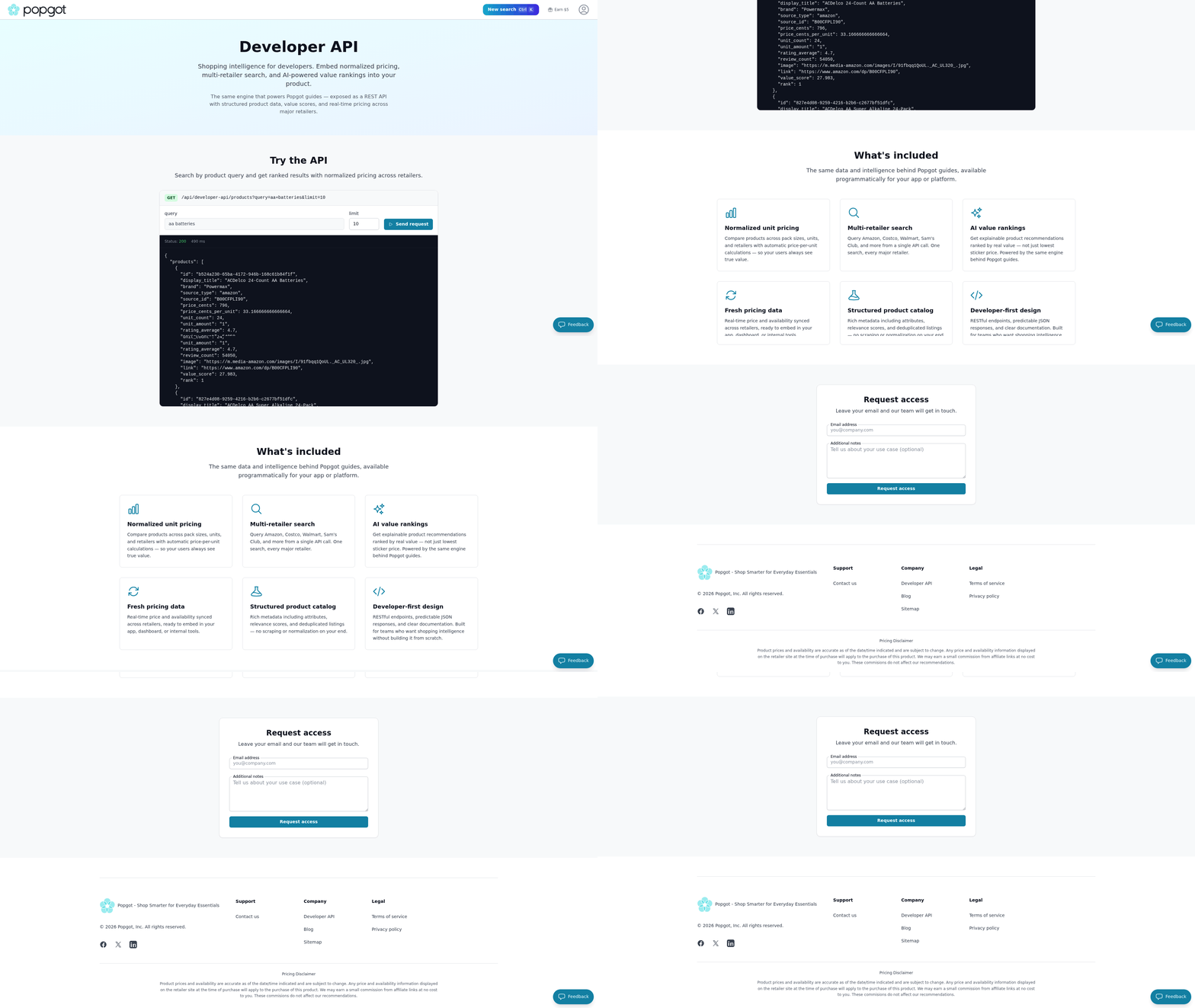
The platform plugs directly into major retail inventories and pulls their data into one interface. Instead of juggling browser tabs and re-typing the same search over and over, you submit one query and see a consolidated list.
That's the whole point of automation here. It gathers pricing and availability from multiple storefronts in real time, so you're not visiting each site by hand.
How the AI agent verifies products
The system reads the structured data on each listing before showing it to you. It cross-references active ingredients, concentrations, and packaging against your filters, then drops the irrelevant and near-miss results.
This is more than keyword matching. A standard search returns anything with 'Vitamin D3' in the title. The agent checks the actual dosage — confirming it's 5,000 IU per serving if that's what you asked for. Anything short of that gets excluded.
That scrutiny matters because titles lie. Two products can share identical packaging and carry completely different concentrations of active ingredients. The system trusts verified specs, not promotional copy.
How unit pricing works across stores
For a fair comparison, the platform calculates the unit price on every item it pulls. Retailers package products in different quantities, so a lower shelf price can hide a higher long-term cost. Shopping for Dr. Bronner's castile soap, one store lists a 16-ounce bottle and another a 32-ounce. Break it down to cost per fluid ounce and you see which one's actually the deal.
Some apps do basic price-matching across local supermarkets. Running automated unit-rate math across major national e-commerce platforms gives you a much clearer read on real value.
What the full workflow looks like
Three steps, and it collapses hours of research into minutes:
-
Set your parameters. Enter the product and apply filters. The system scans the connected retailers and cuts the non-compliant items.
-
Compare the options. Review a list sorted by unit cost, so you see the true value of each verified match.
-
Buy. Pick the best deal and jump to the retailer's site to check out.
A clean layout is what makes this usable. Verified matches and calculated unit costs on one screen mean you decide fast without digging through menus. You can see similar tools in recent roundups of the best price comparison apps.
Checking online prices from the physical aisle
In-store shopping poses a nagging question: is the item on the shelf the best deal, or is it cheaper online? Real-time verification answers it by checking digital inventories while you stand there in the aisle.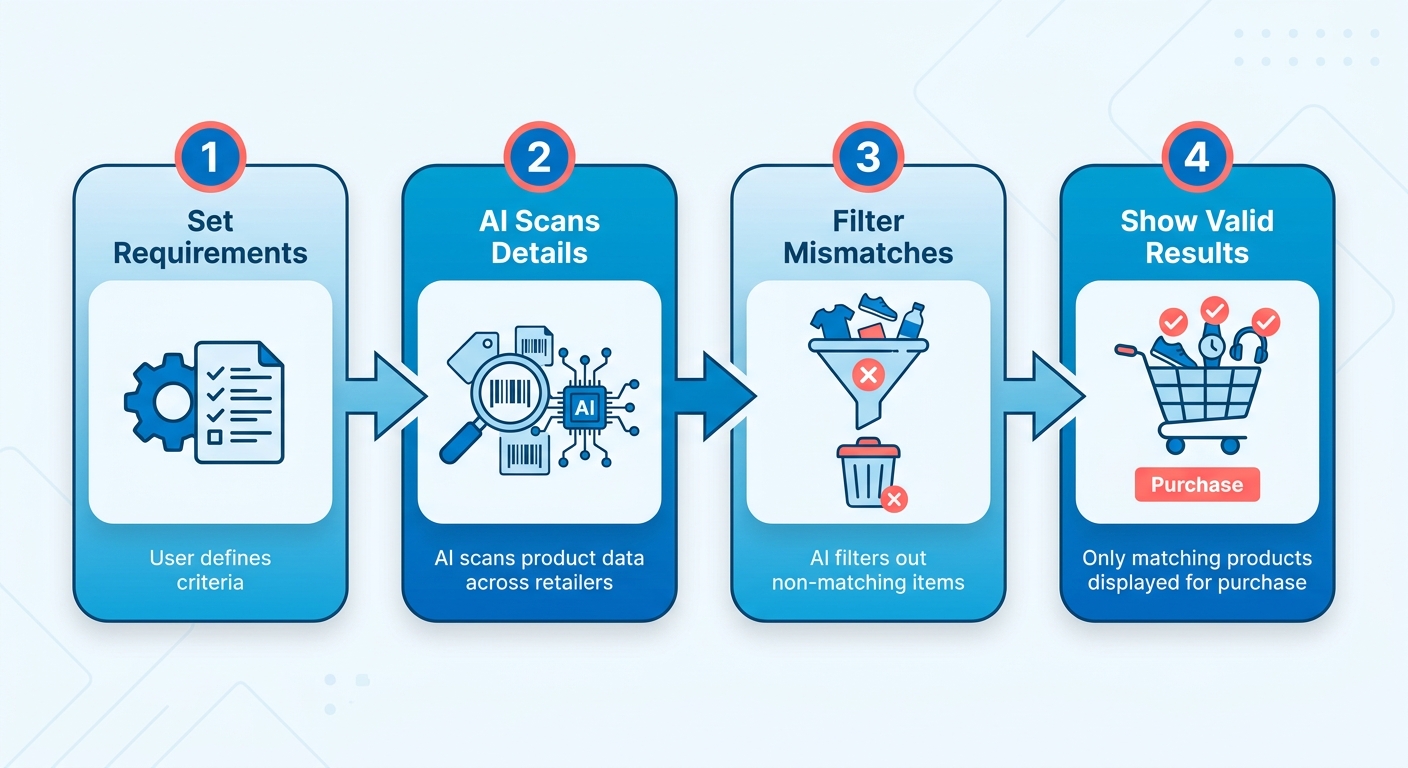
That instant feedback keeps you from overpaying out of pure convenience.
How verification prevents the wrong buy
By reading the specs on each item, the system stops you from grabbing something that doesn't match what you expected. Need a specific volume or formula? The non-compliant options get filtered out before they hit your screen.
Plain price-matching leads to errors, because the lowest-priced option is often a smaller package or a different formulation entirely. Verification makes sure you're comparing the same product.
Adding a quality check on top of price sorting is a second layer of safety — the budget pick doesn't come at the cost of your standards.
Finding a cheaper Dove body wash
Say you're in the personal care aisle holding a bottle of Dove body wash, wondering if there's a better deal online before you hit the register.
A quick search scans multiple retailers for that exact size and formula. Instead of wading through unrelated results, you get a clean list of identical items elsewhere, ranked by true cost.
If another retailer has the same body wash cheaper, you buy it on the spot or use that to negotiate your in-store call — confident it's the exact product you wanted. For more on why per-ounce math beats sticker price, the Popgot blog on unit price shopping breaks it down.
Why this kills buyer's remorse
Instant pricing data removes the hesitation you feel at checkout. Knowing you locked in the best available rate on your terms means you walk away satisfied instead of second-guessing.
That clarity matters most on everyday purchases, where small differences across stores pile up over time.
Some tools only surface generic discounts. Pairing real-time discovery with personalized verification means the deals you see are actually relevant to your household.
Curated guides for the stuff you buy on repeat
Curated guides take the work out of restocking essentials. Instead of running a fresh search for every routine buy, they offer pre-vetted picks for common categories — pantry staples, laundry detergent, daily wellness products.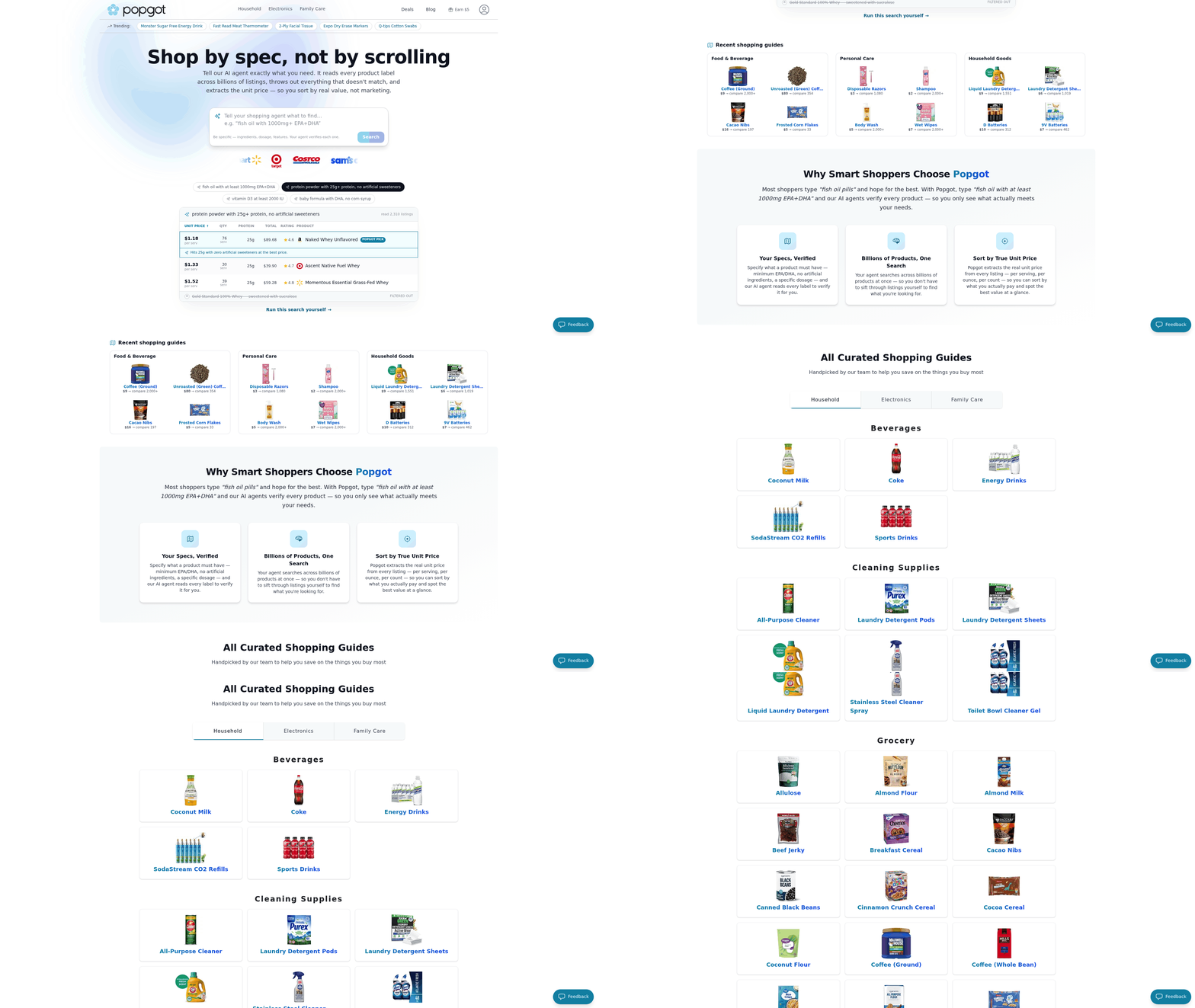
The whole idea is to skip the research phase on items you buy over and over.
How curated guides save money on repeat buys
The guides flag cheaper alternatives to your usual brands. Compare your go-to against equivalents that share the same active ingredients or volume, and the savings jump out. Buy a specific name-brand dish soap regularly? A guide might point you to a store-brand version with the identical concentration and bottle size for less, on every restock.
Over a year, small swaps on routine items add up to real household savings.
Why guides beat searching
The filtering and price-matching are already done, so you decide in seconds. No sorting results, no comparing specs.
That's ideal for utilitarian items where brand loyalty matters less than cost and function. Focusing on recurring expenses is one of the easiest ways to tighten a monthly budget.
It puts the simplicity back in your routine. Use pre-built guides for the regular restocks and save your energy for the one-off purchases that genuinely need research.
Unit pricing: the per-unit number that decides everything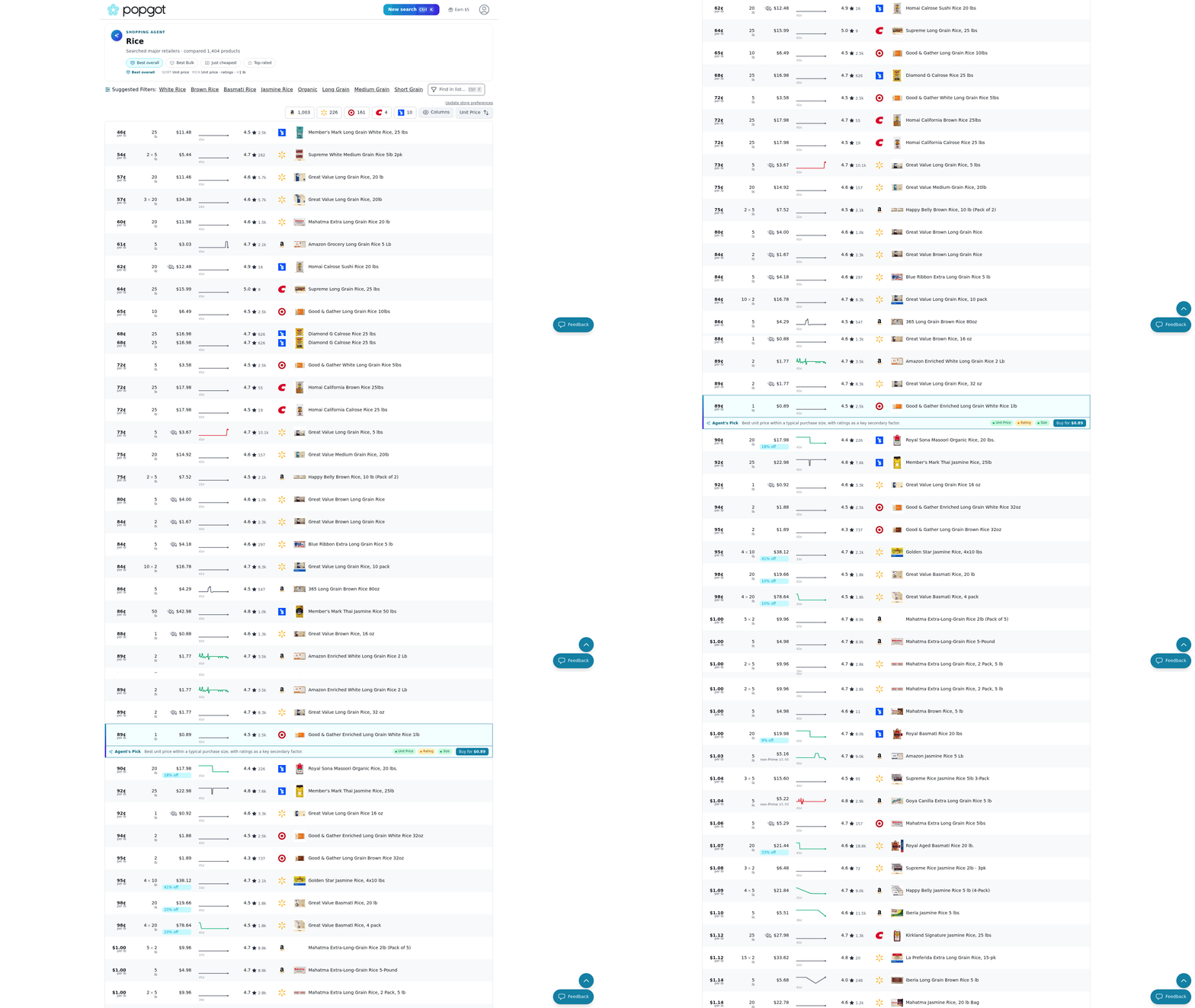
Unit pricing standardizes cost into a universal measure — per ounce, per gram, per count. It cuts through marketing and packaging tricks to show the real value of a product no matter what container it's in.
Trouble is, online merchants make this hard. They display unit prices inconsistently, or leave them off search results entirely. Automated extraction fixes that by calculating the number uniformly across every listing.
How automatic unit-price extraction works
The system parses total cost, package volume, and unit type from the product details and does the math for you. Comparing supplements by serving or household goods by weight, you sort your results and the cheapest-per-unit option floats to the top.
This normalization matters because packaging standards vary wildly between brands. Comparing the raw price of a single large bottle against a multi-pack is rarely accurate. Comparing cost per ounce is.
A cheaper stainless steel cleaner
Say you're restocking a stainless steel cleaner spray. Two listings sit at around $5 each, and you assume they're the same value.
Run the unit price and one bottle turns out to hold significantly more fluid ounces than the other. The cost per ounce on the "identical" one is much higher, which makes it the pricier choice over time.
Sorting by unit cost skips these packaging games instantly and lands you on the option that stretches your budget furthest.
Why accurate unit pricing matters
Standardizing these numbers stops you from buying smaller, less economical packages that are dressed up as discounts. It gives every buying decision an objective basis.
A minor price difference looks negligible on one purchase. Apply unit-level analysis to your regular restocks and the savings compound. Getting a feel for these pricing dynamics is what separates a casual shopper from an efficient one.
References
[1] 12 best price comparison apps in 2025: Compare prices & find the ... - https://www.moonsift.com/guides/best-price-comparison-app
[2] New grocery app allows for real-time price comparison - https://www.grocerydive.com/news/new-grocery-app-launched-real-time-price-comparison-ecommerce-Grocery-Dealz/752296/
[3] Impact of Price Comparison Sites on Offline Price Evaluations - https://www.researchgate.net/publication/269729170_Online_Price_Search_Impact_of_Price_Comparison_Sites_on_Offline_Price_Evaluations]
Frequently Asked Questions
1. Is Popgot free to use, and does it charge extra fees for scanning multiple stores?
There are no added fees for using the platform to compare prices. The service acts as an information aggregator, helping you find and verify products before redirecting you to the chosen merchant's website to complete your transaction directly. You pay the retailer's standard listed price.
2. Which specific retailers does Popgot check when it scans for deals?
The platform aggregates inventory and pricing data from major national merchants, including leading e-commerce sites and big-box department stores. This allows you to view a wide range of options from top retail brands side-by-side without having to visit each website individually.
3. Can I filter for multiple dietary requirements at the same time, like gluten-free and low-sugar?
Yes, the search interface allows you to apply several criteria at once. You can combine dietary preferences, allergen restrictions, and specific nutritional thresholds in a single query, and the system will only display items that satisfy every single condition.
4. What happens if no product across the eight stores matches all my requirements?
If your search criteria are too restrictive to produce a match, the system will show an empty result list rather than suggesting non-compliant items. If this occurs, adjusting or broadening one of your filter parameters will help surface the closest available alternatives.
5. How does unit pricing help when products come in different pack sizes or concentrations?
By converting different packaging volumes into a standardized metric, the system allows you to compare the actual cost of the contents. This makes it easy to see whether a bulk package, a concentrated formula, or a standard retail size offers the most value for your money.
6. Are curated shopping guides different from running a regular search on Popgot?
Yes. While a standard search is ideal for finding specific, one-off items, curated guides are pre-assembled lists designed for routine household restocks. They help you quickly identify budget-friendly alternatives for everyday essentials without needing to build a search from scratch.
7. How does AI product verification differ from a standard keyword search?
A standard search simply matches the words in a product's title, which can lead to irrelevant results. AI verification analyzes the actual technical specifications and nutritional labels of each item, ensuring that the products displayed truly match your specified requirements.