
How to Run a Honey Price Comparison Across 8 Stores With Popgot

Comparison Table: Honey Types at a Glance
| Honey Type | Processing | Flavor / Notes | Compares On |
|---|---|---|---|
| Raw | Unheated, unfiltered | Cloudy, thick, crystallizes fast; pollen and enzymes intact | Per ounce, within "raw" only |
| Filtered | Strained, lightly heated | Clear, pourable, longer shelf life | Per ounce |
| Clover | Usually filtered | Pale, mild, blends without overpowering | Per ounce |
| Wildflower | Varies | Taste shifts by season and region | Per ounce, same floral source |
| Organic | Certified sourcing | Requires pesticide-free forage and certification | Per ounce, certified only |
| Manuka | Graded (UMF/MGO) | Premium, priced by rating tier | Per ounce, within same grade tier |
Key Takeaways
- One search compares honey across all 8 major retailers instead of opening eight tabs and doing eight size conversions by hand.
- The AI confirms each result is actually the honey you asked for before showing a price, so the cheapest jar on the list is also the correct one.
- Honey is one of the most mislabeled grocery aisles. "Raw," "manuka," "organic," and "pure" get stamped on filtered, blended, or syrup-cut bottles.
- Every result shows the honey type and grade, jar size, per-ounce unit price, and a verification mark.
- Unit pricing catches the traps package prices hide. A bigger discount on a small bottle can still lose on cost per ounce.
- Mismatched products get filtered out before they reach your list.
- The workflow: enter requirements, review verified matches, sort by unit price, buy the winner.
The short version
You can compare honey across all 8 major retailers in one search, and the AI confirms each result is actually the honey you asked for before it shows you a price. So the cheapest jar on the list is also the right jar. No bait-and-switch on grade, no mystery blends slipping through.
Why does the verification step matter so much for honey? Because honey is one of the most mislabeled aisles in the store. "Raw," "manuka," "organic," and "pure" get stamped on bottles that are filtered, blended, or cut with syrup. The agent reads the label and the product details for you, so a manuka search returns manuka, not a flavored spread.
What the comparison looks like
Run a honey search and your agent lines up the matches side by side, surfacing the details that actually decide value. For each result you'll see the honey type and grade, the jar size, the extracted unit price (per ounce), and a verification mark confirming it clears the spec you set. A syrup-cut blend masquerading as single-origin gets filtered out before it reaches your list.
That filtering step catches the real traps. A bigger headline discount on a small bottle can look cheaper until you check the unit price and the grade. Package prices hide size differences. Unit prices don't.
The four-step workflow
It's simple. Enter your honey requirements (type, grade, even a size floor). Review the verified matches and ignore anything filtered out. Sort by unit price to see real value. Pick the winner and buy.
Checking 8 retailers by hand means 8 tabs, 8 size conversions, and a lot of squinting at fine print. One search collapses that into a single sorted list in seconds.
By the end of this you'll compare honey without missing size differences, getting fooled by shelf prices, or second-guessing whether "raw" really means raw.
Why honey is harder to price-shop than it looks
Honey is one of the trickiest pantry staples to shop fairly. Grocery prices have climbed steadily the past few years, and honey sits at the high end of the sweetener shelf. A single jar can swing several dollars between stores, so checking all 8 retailers at once is the only way to know you're not overpaying.
The harder problem: "honey" isn't one product. Clover, raw, manuka, and organic honey carry different price tags, and they're not interchangeable. A tea drinker reaching for a mild clover jar has very different needs than someone paying a premium for manuka. Price comparison only works when you're comparing the same type, origin, and processing.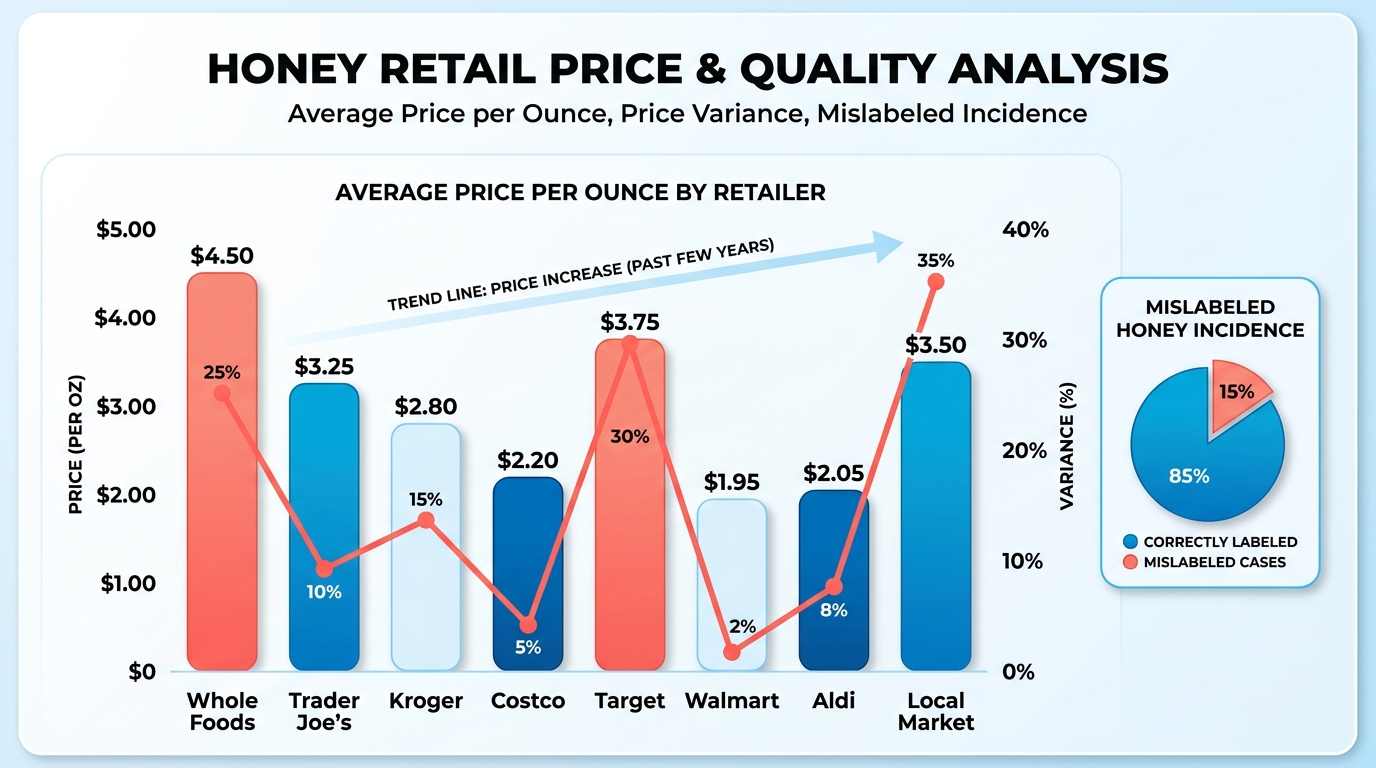
Why the sticker price lies
Honey comes in mismatched sizes and containers. A 12 oz squeeze bottle and a 16 oz glass jar sit side by side, and the smaller one looks cheaper at a glance. Unit price tells the truth. That's why sorting by per-ounce cost beats trusting the tag.
One store lists a 12 oz bottle of raw honey at $6.49, and it looks like the deal of the aisle. But across the other 7 stores, a 16 oz jar of the same raw honey runs $7.99. Do the math: the "cheap" bottle costs about 54 cents per ounce, while the bigger jar costs 50 cents. The bottle that won on the shelf loses on real value.
This matters most to households buying honey weekly or monthly. Parents, meal-preppers, tea drinkers, and wellness shoppers feel every repeat purchase. One Reddit user in r/povertyfinance, asked about grocery-saving tools, put it simply: "I love to use Popgot too."
Reading the label is the other half of the job. "Pure" and "raw" get stretched, so matching the grade you actually want protects both your budget and your expectations.
How to set your honey search requirements
Start every search by telling your agent exactly what you want: the honey type, bottle size, brand (if you care), and packaging format. The more specific your prompt, the fewer irrelevant jars you sift through. A vague "honey" search returns everything from flavored spreads to industrial blends.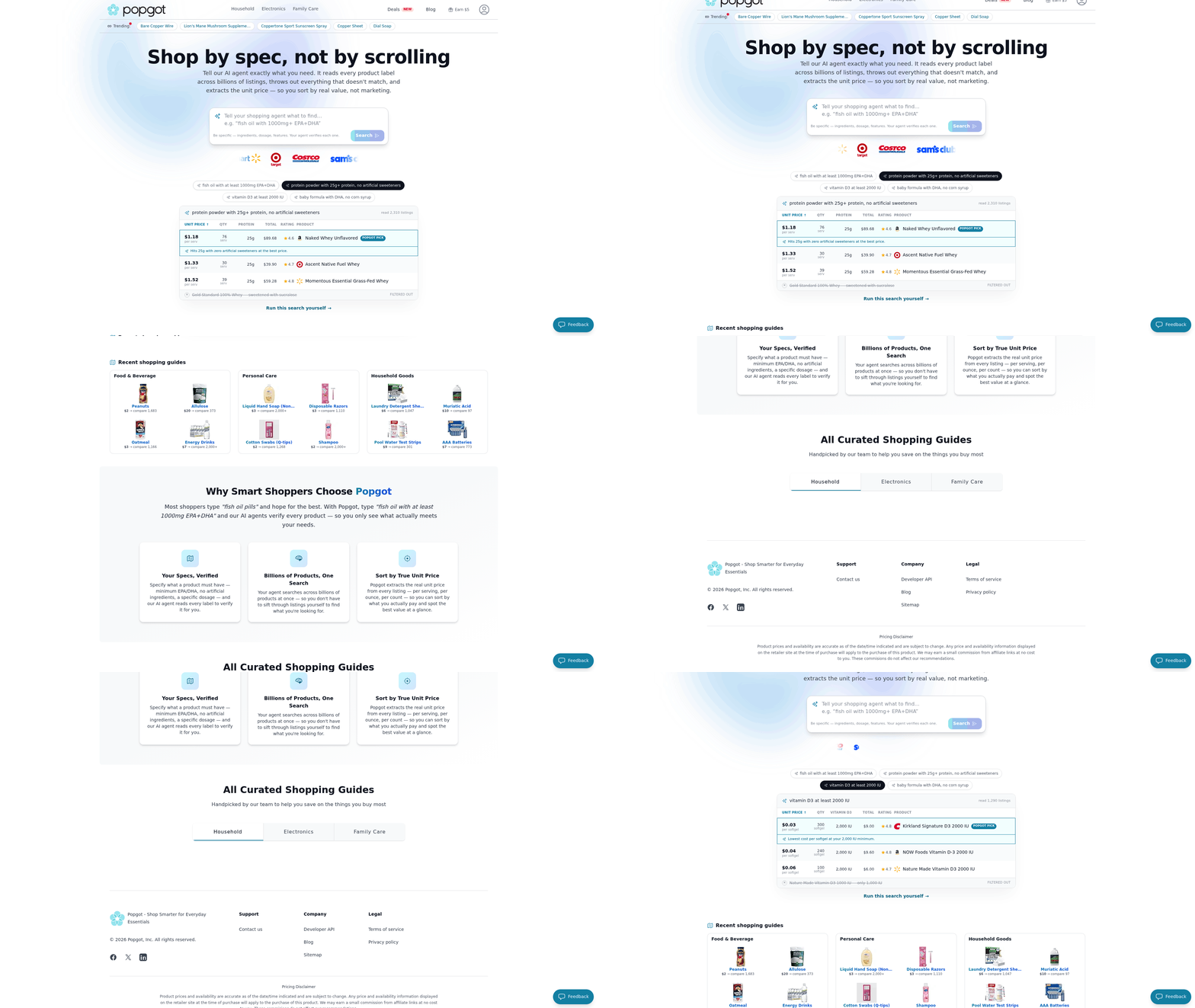
Retail listings aren't standardized, so different stores describe identical products in wildly different ways. One store buries "raw" in the title, another tucks it into a bullet point, a third leaves it off entirely. Setting clear requirements up front gives your agent a fixed target to match against every store's messy format.
What to put in your search prompt
Name the attributes that actually change the product. Type (clover, manuka, wildflower, organic), size (12 oz, 32 oz), processing (raw, unfiltered, pasteurized), and format (glass jar, squeeze bottle, single-serve sticks) are the four that matter most. Spell out the ones you won't compromise on.
Processing terms trip up the most shoppers. "Raw" and "unfiltered" aren't interchangeable, and "pure" often means nothing more than "not a blend." Want unheated honey with the pollen left in? Say both words. Your agent then checks each listing against those terms, so a pasteurized jar labeled "natural" doesn't slip in and undercut the genuinely raw options on price.
How your requirements change by use case
Match your search to why you're buying. Three shoppers, three different prompts:
- For tea: a mild clover honey in an easy-pour squeeze bottle. Flavor stays subtle, dispensing stays clean.
- For baking: a large, budget pure honey jar. You need volume, not a premium grade you'll cook the nuance out of anyway.
- For an allergy-conscious household: local raw wildflower honey, unfiltered, ideally with origin listed.
Build a quick buyer's checklist before you search. If raw, unfiltered, or organic are non-negotiable, put them in the prompt. The product attributes checklist for health-conscious shoppers is a useful starting point for deciding which label terms to lock in.
How one search covers all 8 stores
A single honey search runs across eight major retailers at once, including Amazon, Walmart, and Target. Instead of opening a tab per store, you get every matching jar in one view. Your agent reads the listings, confirms each matches your request, and shows the prices side by side.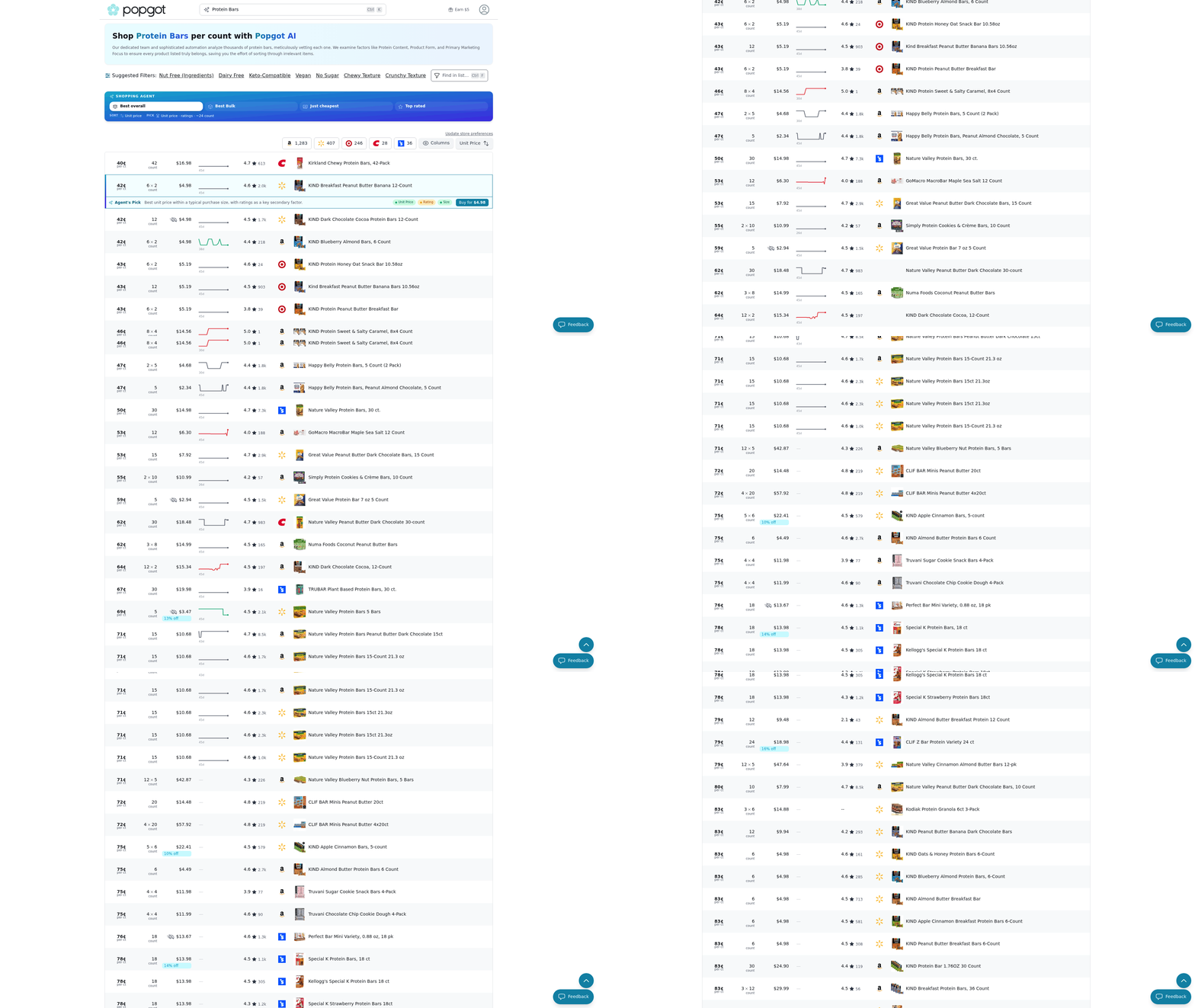
No spreadsheet. No copy-pasting prices from five browser tabs. One search replaces the whole store-hopping routine.
How the listings get normalized
Popgot reads each listing and pulls the same details out of every store's messy format, so jars described in totally different ways still compare cleanly. One retailer titles a product "Raw Wildflower Honey 12oz"; another writes "Pure Honey, Wildflower (340g)." Your agent maps both to the same comparable item.
The big fix is True Unit Price. Popgot extracts the real per-ounce, per-serving, or per-count cost from every listing. A four-pack of single-serve packets and a bulk tub stop being apples and oranges once both are reduced to the same per-ounce figure.
When the cheapest sticker isn't the cheapest honey
Packaging distorts value. A single squeeze bear can carry a low shelf price, but a multi-pack or a larger glass jar often yields a much lower unit cost. The normalization strips away packaging premiums, showing how much you actually pay for the honey inside, whether it's in plastic, glass, or individual packets.
This is exactly what consumer watchdogs push: compare unit cost, not shelf price. The FTC and Consumer Reports both stress unit pricing as the honest way to size up groceries, because shelf tags reward smaller, cheaper-looking packages. Popgot does that comparison automatically, and you can sort by True Unit Price so the real cheapest jar rises to the top.
Want more on stretching a grocery budget this way? The guide to getting the best deals walks through it in practice.
How to read unit prices and size conversions
Unit price is cost per ounce, not cost per jar. A sticker price tells you almost nothing until you divide it by the weight inside. The cheapest bottle on the shelf can easily cost more per ounce than a pricier one next to it. Compare ounce-for-ounce, not jar-for-jar.
Packaging exploits visual bias. A tall, narrow squeeze bottle can look like it holds the same volume as a squat glass jar even when it's several ounces short. Focus strictly on the weight-to-price ratio and you bypass the illusion.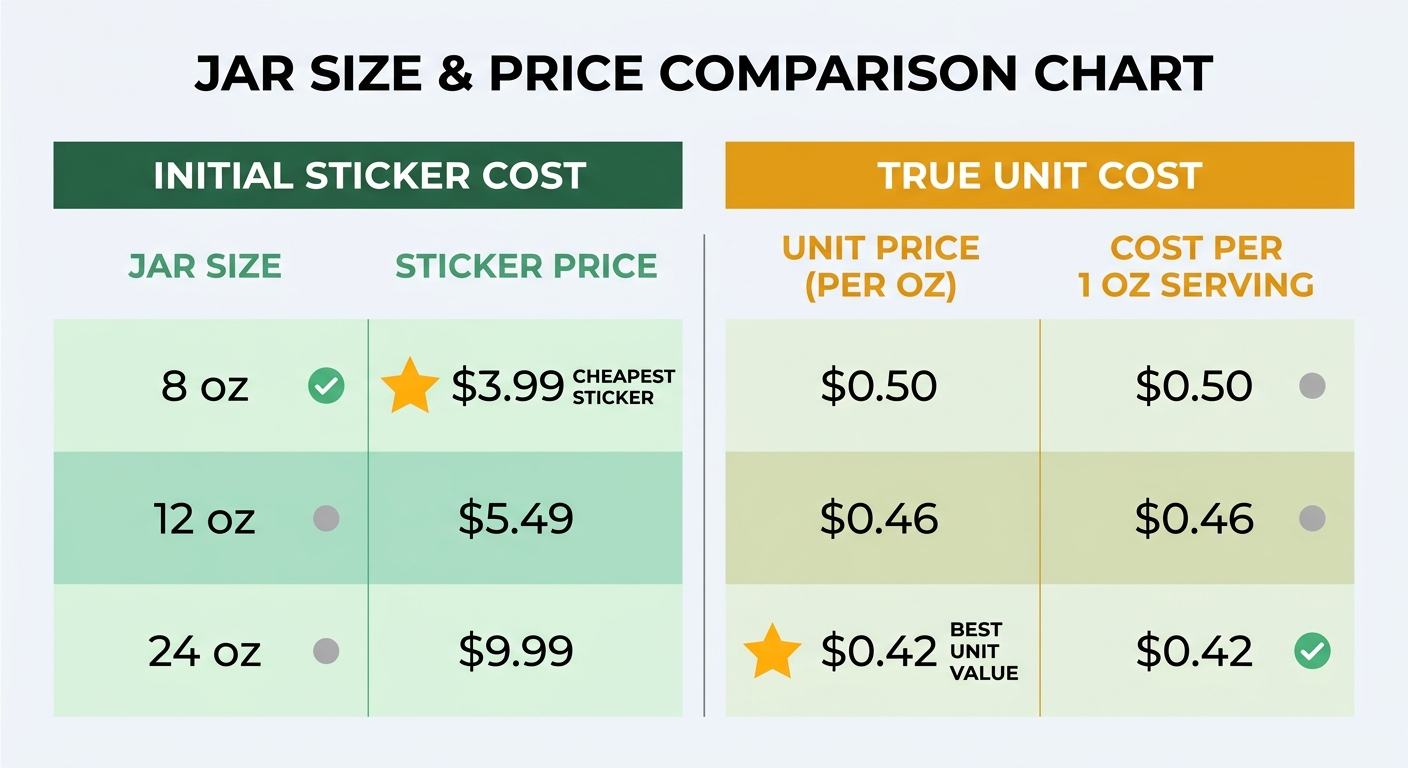
Popgot does that math for you. Your agent extracts the true unit price from every listing, per ounce or per count, so you can sort by what you actually pay instead of guessing from the front label.
Why size conversions trip you up
Honey gets sold in ounces, pounds, and milliliters, and imported jars often list only metric weight. A jar marked 340g is 12 oz. A 500g jar is about 17.6 oz. Without converting to a shared unit, you can't compare an imported manuka jar against a domestic clover squeeze bottle.
Quick reference: 1 pound = 16 ounces, and 1 ounce ≈ 28.35 grams. Multipacks hide the same trap. A "3-pack" might quote one combined price, so you need the total weight across all three bottles for the real per-ounce cost. Squeeze bottles and gift tins pad the price with packaging too.
When a higher unit price is still worth it
Sometimes the expensive jar is the right buy. Manuka and raw honey carry higher unit prices because of certification and sourcing, not markup for its own sake. A certified manuka jar with a verified UMF rating earns its premium in a way a generic "pure" jar never will.
The goal isn't always the lowest number per ounce. It's the lowest number per ounce for the honey you actually want. Once your agent confirms the type, origin, and processing match your request, the unit price tells you which verified jar gives you the most honey for your money.
How to recheck before buying the cheapest jar
Before you click buy, run one final check on the cheapest jar: confirm the brand, the honey type, the size, and the unit price all match what you searched for. The lowest number is only the best deal if it passes that check. A cheap sticker price often hides a smaller jar or a different blend.
Hidden transaction variables move the final cost. The bottom-priced result looks great until you notice the seller is a third-party reseller with a two-week shipping window, or the listing is "subscribe & save" and the price only applies if you commit to recurring deliveries. The number you see isn't always the number you pay. Your agent flags these mismatches before checkout, so a conditional or slow-shipping listing never poses as the winner.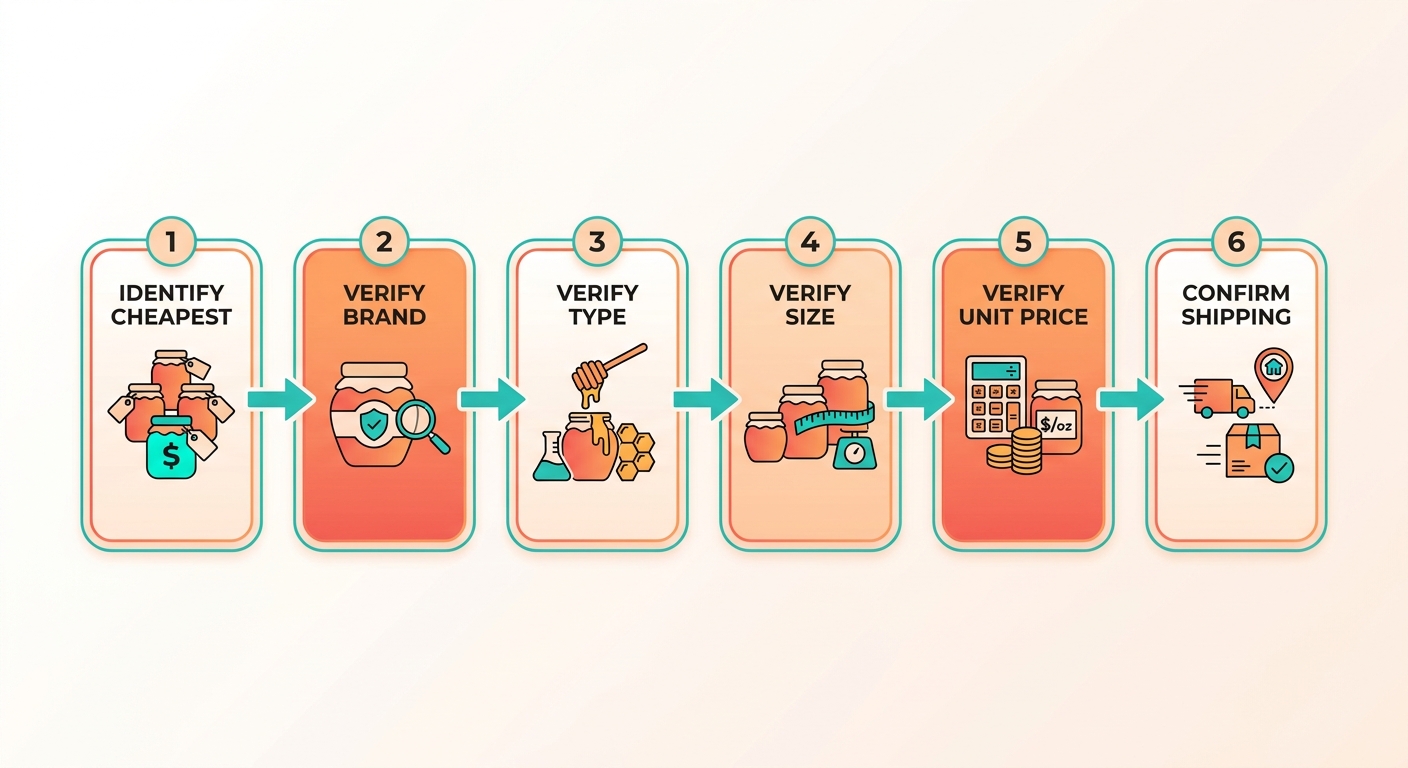
What to check after filtering
Lock down four things before checkout: the verified match, the unit price, the return policy, and the true total cost. Consumer protection guidance from the FTC and Consumer Reports has long pushed shoppers to read return terms and watch for hidden fees, because the advertised price rarely tells the whole story.
The true total cost moves around by store. Shipping charges, minimum-order thresholds, and subscription pricing can flip which retailer actually wins. A jar that's cheapest on the shelf can lose once a delivery fee or a membership requirement gets added.
When comparing the same honey across Amazon, Walmart, and Target, one store might show the lowest unit price but require a larger order to ship free. Another might list a higher per-ounce price but offer free local pickup. Once shipping and size land in the math, the "cheapest" listing changes. The side-by-side comparison surfaces those details so you're not surprised at checkout.
The simple decision rule
Compare verified matches first. Then pick the lowest unit price among the equivalent products.
That order matters. Sort by price before confirming the product and you'll keep landing on the wrong jar. Filter to real matches, then let the per-ounce cost decide. Same honey type, same grade, same size class, lowest cost per ounce wins.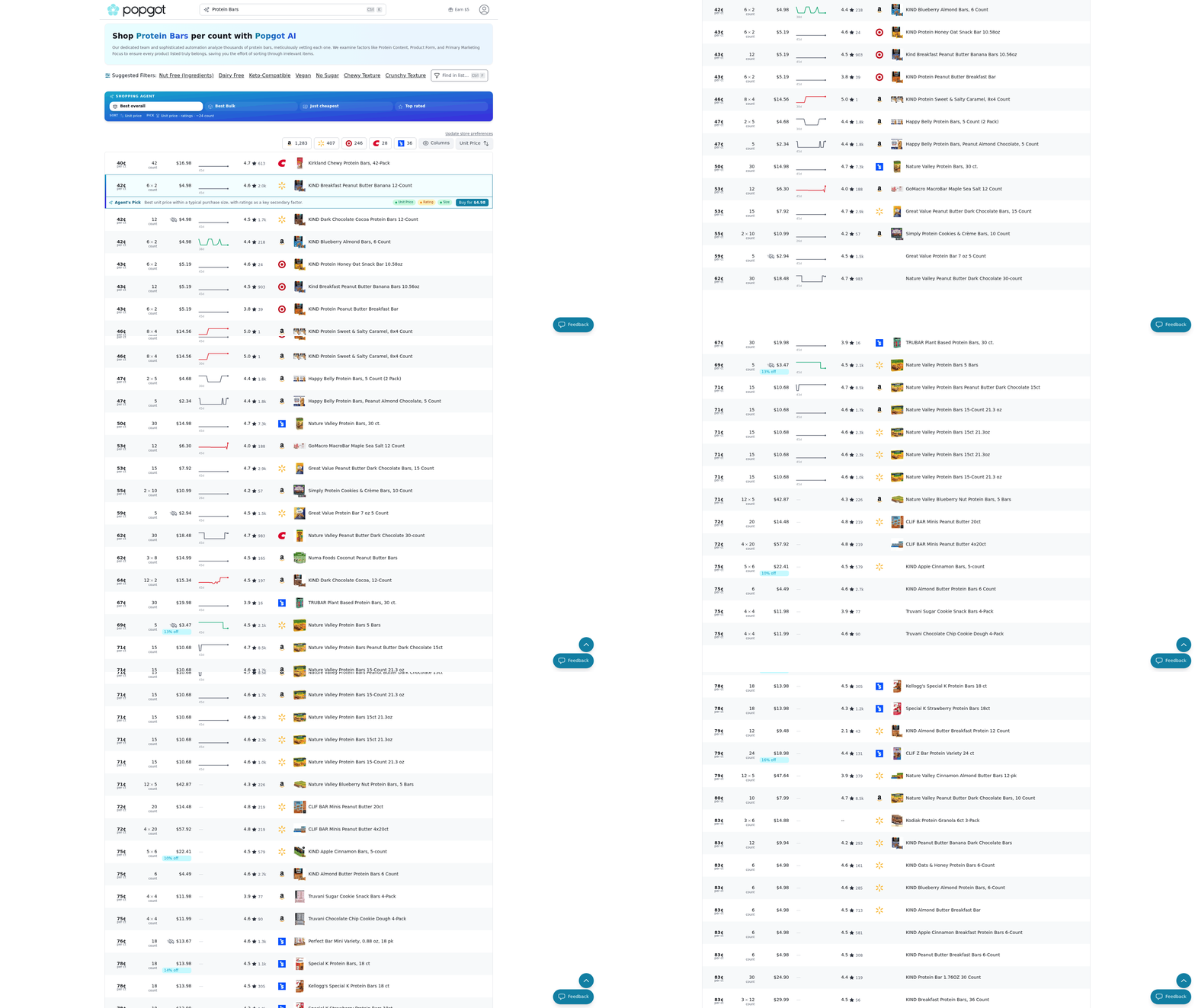
How verification keeps the wrong jar off your list
For honey, the label and the actual product often disagree. AI matching reads each listing in full and confirms the honey type, floral source, size, and claims before a price reaches your screen. That stops the wrong jar from ever showing up as your best deal.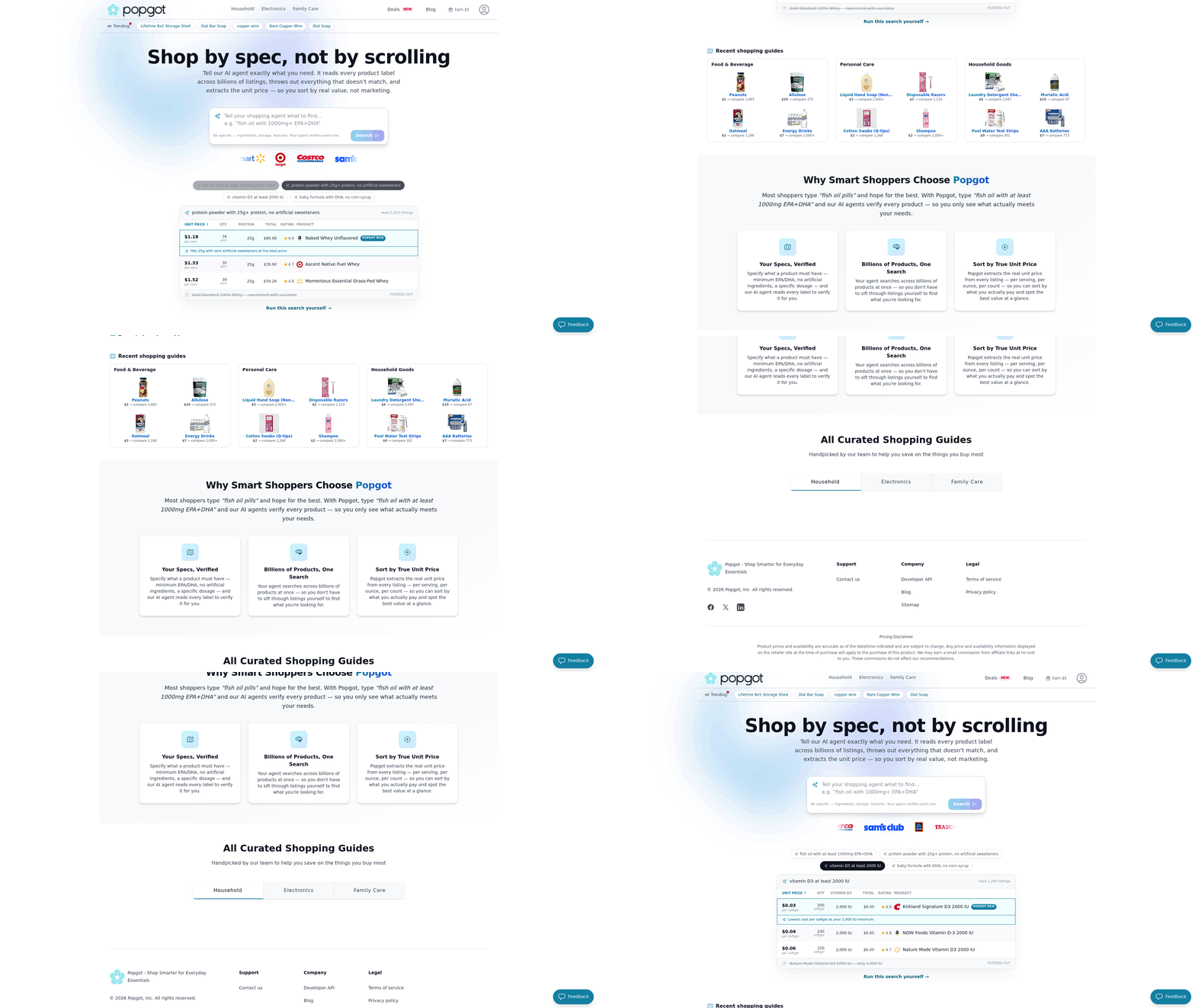
The AI parses unstructured product data, cross-referencing ingredient lists, allergen statements, and manufacturer descriptions. It looks past front-label buzzwords to verify the product's actual composition matches your search, so every price comparison is built on identical standards.
The mismatches that happen most
Three trip up honey shoppers: floral-source switches, processing mislabels, and altered ingredients. The floral source can flip from clover to wildflower between two near-identical listings. A jar marked "raw" may actually be pasteurized and fine-filtered. And a "honey blend" can hide added syrup behind a familiar name.
A common trap: you want raw honey for its enzymes and pollen, but the cheapest result is filtered honey that strips both out. Or you search organic and the bottom price is a conventional jar with no certification behind it. The AI flags these gaps so an off-spec jar never wins on price alone.
This is where labeling rules give the verification teeth. FDA guidance says pure honey can't carry added sweeteners without disclosure, and the USDA organic seal requires certified sourcing. Reading for those claims separates a real organic jar from one just borrowing the word.
Why this matters more for manuka and families
Manuka is the sharpest example, because its value rides on UMF and MGO ratings. Compare two manuka jars and one might list a verified UMF grade while the other just says "manuka" with no rating. Without checking, you'd compare a graded jar against an ungraded one and call the cheaper one a deal. The AI surfaces those ratings so you're comparing authentic value, not just price.
Accurate matching matters most for families and health-conscious shoppers. When you're buying for a kid's cough or a specific wellness routine, the wrong blend isn't just wasted money. Verified matches mean fewer wrong purchases, fewer returns, and more confidence the jar in your cart is the one you meant to buy.
The five honey types worth comparing: raw, organic, clover, wildflower, and manuka
Honey types aren't interchangeable, and knowing the practical difference keeps your comparison honest. The same dollar amount buys you a mild baking sweetener or a wellness-grade single-origin jar. Here's what each label actually means before you compare ounce-for-ounce.
Raw honey: unheated and unfiltered, with its natural pollen, enzymes, and suspended solids intact. Cloudier, thicker, and crystallizes much faster than processed varieties.
Filtered honey: strained and often gently heated for a clear, pourable look and longer shelf life. The smooth, golden jar most shoppers picture.
Clover honey: from clover blossom nectar. Pale straw color, delicate and mildly sweet, blends without overpowering other ingredients.
Wildflower honey: a blend from whatever blossoms bees visit, so taste shifts by season and region. No two batches taste exactly alike.
Organic honey: from hives in pesticide-free forage zones where wild vegetation is managed without synthetic chemicals. Certification also mandates strict hive maintenance, prohibiting synthetic antibiotics and chemical repellents.
How manuka grades change the price
Manuka honey from New Zealand uses grading systems like UMF and MGO, and those numbers drive the price more than jar size does. A higher rating means a higher concentration of the compound buyers want, so two manuka jars of identical weight can sit at wildly different prices.
That breaks standard unit-price comparisons. The scale reflects the concentration of methylglyoxal (MGO), the compound behind the honey's properties. Because a higher grade is a fundamentally different concentration, you have to group listings by their rating tier before comparing per-ounce cost.
Why compare like-for-like
Match the type, floral source, and grade before you compare price. A clover jar for baking and a raw jar for your tea routine solve different problems, so lining them up by sticker price tells you nothing useful.
Pick your category first. Then let the unit price decide between jars that are genuinely the same honey.
References
[1] Popgot | Shop with AI that reads every label - https://popgot.com/
Frequently Asked Questions
1. Does Popgot cost anything to run a honey price comparison?
Popgot runs your honey searches across all 8 retailers through a single agent interface. To check current pricing and available plans, visit the retailers and settings pages on popgot.com. The core value is replacing manual store-hopping with one verified, sorted comparison delivered in seconds.
2. Can I compare honey prices manually without a tool like Popgot?
Yes, though it requires tracking real-time price fluctuations across multiple merchant platforms simultaneously. You must manually account for regional inventory differences, extract the net weight from product descriptions, and perform the mathematical conversions to establish a uniform unit price while verifying that each listing's fine print matches your quality standards.
3. How fresh is honey, and does it expire before I finish a large jar?
Honey essentially never spoils when stored properly, since its low moisture and natural acidity prevent bacterial growth. A large 24 oz tub stays good for years, even if it crystallizes. Crystallized honey is still safe; gently warm the jar to restore its pourable texture without losing quality.
4. What does UMF actually measure in manuka honey?
UMF is an independent quality trademark that verifies the presence of three signature compounds: leptosperin (a marker unique to the manuka flower), dihydroxyacetone (DHA), and methylglyoxal (MGO). The resulting number indicates the purity and potency of these bioactive markers, ensuring the product is authentic New Zealand manuka.
5. Will Popgot show me store-brand or generic honey options too?
Popgot surfaces every matching listing across retailers, including store-brand and generic jars, as long as they meet your specified type, grade, and size requirements. Each result still passes AI verification, so a generic "pure" jar won't slip in if you searched specifically for raw or organic honey.
6. Does the comparison account for shipping costs and subscription pricing?
The agent identifies pricing conditions directly from the merchant's product page. It highlights whether a displayed price depends on a recurring subscription commitment or if it requires a specific order threshold to qualify for free shipping, allowing you to evaluate the final landed cost before making a purchase.
7. Is local honey from farmers' markets better than retail honey?
Local honey offers traceable origin and supports nearby beekeepers, which appeals to allergy-conscious shoppers wanting area-specific pollen. Retail honey provides consistent availability, verified grading, and easier price comparison across the 8 major stores. For raw, unfiltered jars with listed origin, retail options can match local quality at comparable cost.