
Low‑price hand soap for everyday use

Key Takeaways
- Compare cost per ounce, not the sticker price. That's where the real hand soap savings hide.
- Store brands like Amazon Basics and Target's own label often clean as well as pricier bottles for noticeably less.
- Dial Complete topped an 11-brand antibacterial test, which makes it a safe budget standby.
- Method's refillable Vetiver and Amber gel runs $24 per three-pack. You're paying for the scent and reusable packaging, not a better wash.
- Target carries paraben-free and vegan options in both liquid and foaming forms if ingredients are your priority.
- The picks worth buying balance three things at once: cleaning power, skin-friendliness, and cost per ounce.
- Roundups from Consumer Reports, Taste of Home, and New York's Strategist back these low-price picks.
Quick Summary
Finding a hand soap that cleans well without costing a fortune isn't an afternoon project. The cheapest effective options come from store brands and a handful of trusted name brands. The savings show up when you compare unit price instead of the number on the bottle.
Which cheap hand soaps are actually worth buying?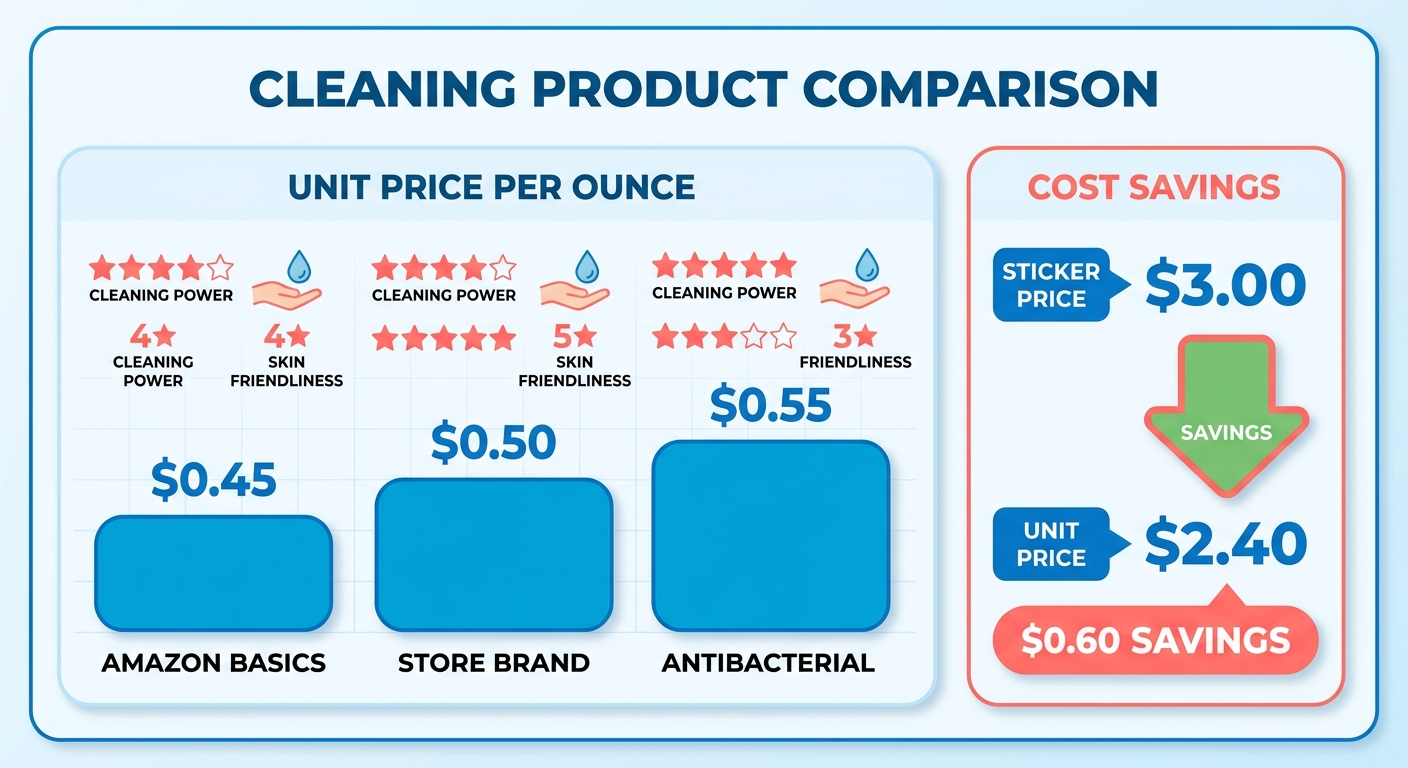
The picks worth your cart balance cleaning power, skin-friendliness, and cost per ounce. Store brands hold their own against pricier bottles, and a couple of antibacterial standbys keep showing up on best-of lists. The table below pairs products with the published roundups and retailer listings that feature them, so you can check the sources yourself.
| Product | Retailer | Type | Notable For | Source |
|---|---|---|---|---|
| Amazon Basics Hand Soap | Amazon | Liquid gel | Low-cost store brand | store-brand roundup |
| Target store brand | Target | Liquid | Highlighted store-brand pick | store-brand roundup |
| Dial Complete | Amazon | Antibacterial | Top antibacterial in a brand test | 11-brand test |
| Method Gel (Vetiver + Amber) | Amazon | Refillable gel | $24 for 3, statusy scent | Strategist roundup |
| Non-toxic options | Target | Liquid/foaming | Paraben-free, vegan picks | non-toxic range |
The roundups keep landing on the same conclusion: store-brand picks clean about as well as premium labels, so the name isn't worth paying up for. If antibacterial is what you want, the Taste of Home test singled out Dial Complete for its lather and clean rinse.
Why is comparing prices such a pain?
The friction comes from shrinkflation. One r/Target thread with over 100 upvotes called out packaging that stays the same size while the contents shrink, which quietly wrecks your price math. When sizes drift like that, sticker price stops meaning anything.
Unit pricing fixes that. Popgot pulls verified per-ounce prices across eight major retailers in one search, so you compare like for like instead of doing the math bottle by bottle.
How hard is cross-retailer comparison?
Low to moderate. A single-store search is easy. Comparing across sites gets messy fast, because each one lists sizes differently. A "value" pack on one site can cost more per ounce than a smaller bottle somewhere else.
For a single bottle of Dial, Amazon is simple enough. For bulk gel hunting, the math gets harder and a unit-price view earns its keep.
What cheap hand soap actually saves you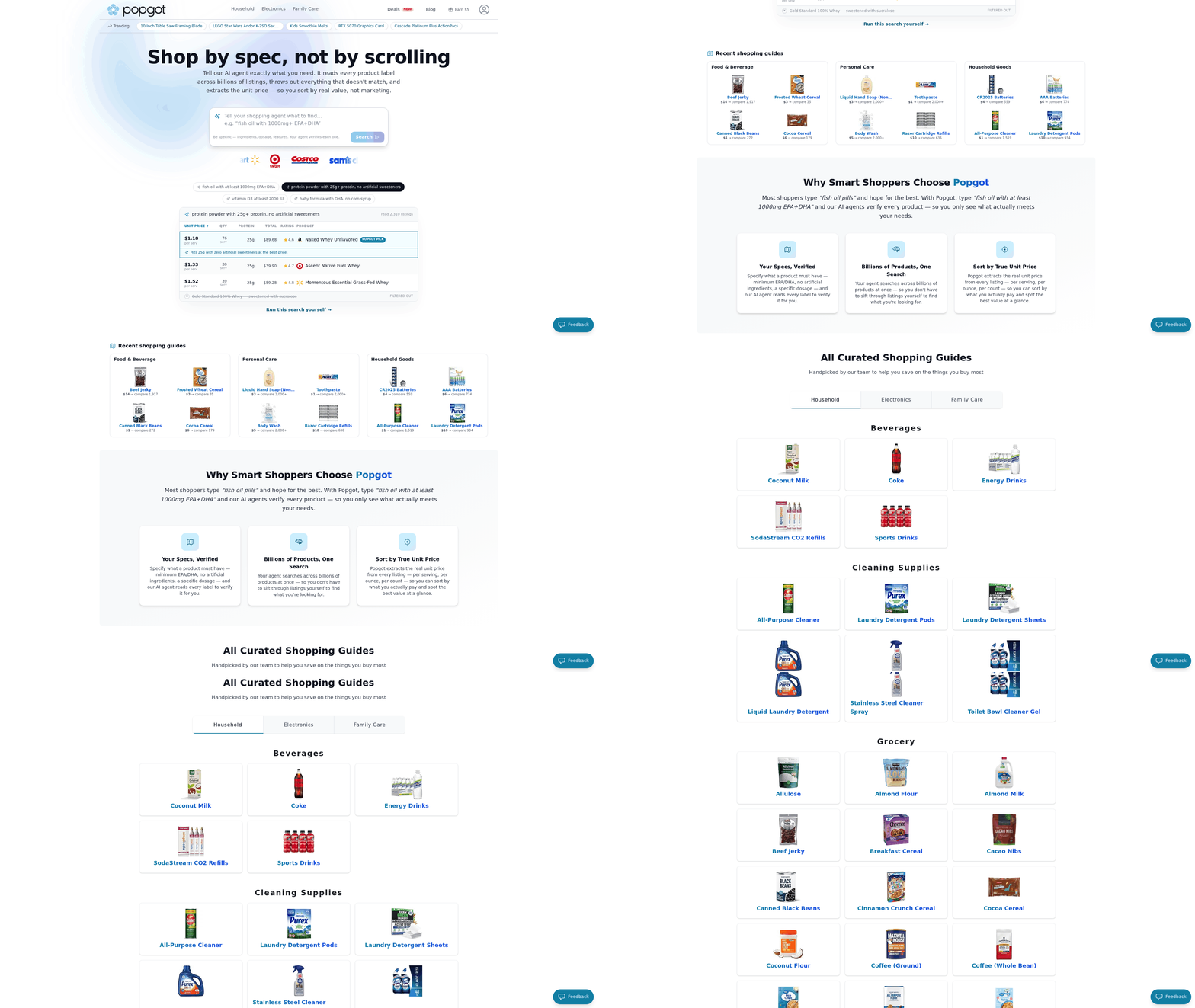
Low-price hand soap saves money without giving up clean hands. The gap between budget and premium shows up most in cost per ounce, not the price on the shelf, and it adds up across a year of refills.
How much do you actually save?
The most savings come from store brands plus a unit-price check. Consumer Reports tested soaps from Aldi, Amazon Basics, Sam's Club, Target, Trader Joe's, and Walmart, and its top store-brand pick removed dirt in seven seconds. That matches what people expect from premium labels.
Watch package sizes, though. A shrinkflation thread on r/Target shows brands keeping packaging identical while shrinking the contents. One commenter flagged a snack box that dropped from 8 bars to 5 while bragging "Now 5 Bars!" The same trick hits soap. A bottle that looks unchanged can hold less, so the real price per ounce creeps up.
This is where unit-price comparison pays off. Tools that track size changes over time, like the shrinkflation tracker Reddit users praised, help you catch when "value" packs stop being good value. To run those comparisons across listings, a side-by-side Amazon tool does the math for you.
Do cheap soaps clean as well as premium ones?
Yes. Cleaning comes from surfactants that lift dirt and oil, and budget formulas use the same basic chemistry as expensive ones. Consumer Reports found store brands holding their own in hands-on testing, which tells you the price premium usually buys scent and packaging, not a better wash.
And cheap doesn't mean harsh. Target's Everspring foaming soap carries a 4.7 rating across more than 4,000 reviews, with paraben-free options sitting right next to it. Affordable and skin-friendly aren't opposites.
Why cheap soap is a quiet public-health win
Cheaper soap means more households keep washing hands consistently, and consistent handwashing is the cheap, reliable defense against spreading illness. When a working bottle costs a couple of dollars instead of ten, families on tight budgets keep one at every sink instead of rationing a single bottle.
Same clean, more cash left for everything else. A soap that performs well and costs little removes a barrier instead of adding one. Pair that with smart deal-finding habits and the savings compound.
Top 8 Low-Price Hand Soap Options
The cheapest soaps that still clean well are a mix of store brands and a few trusted name brands. The trick is comparing cost per ounce and matching the formula to how you actually wash. Eight picks worth your cart space, pulled from expert tests and bestseller lists.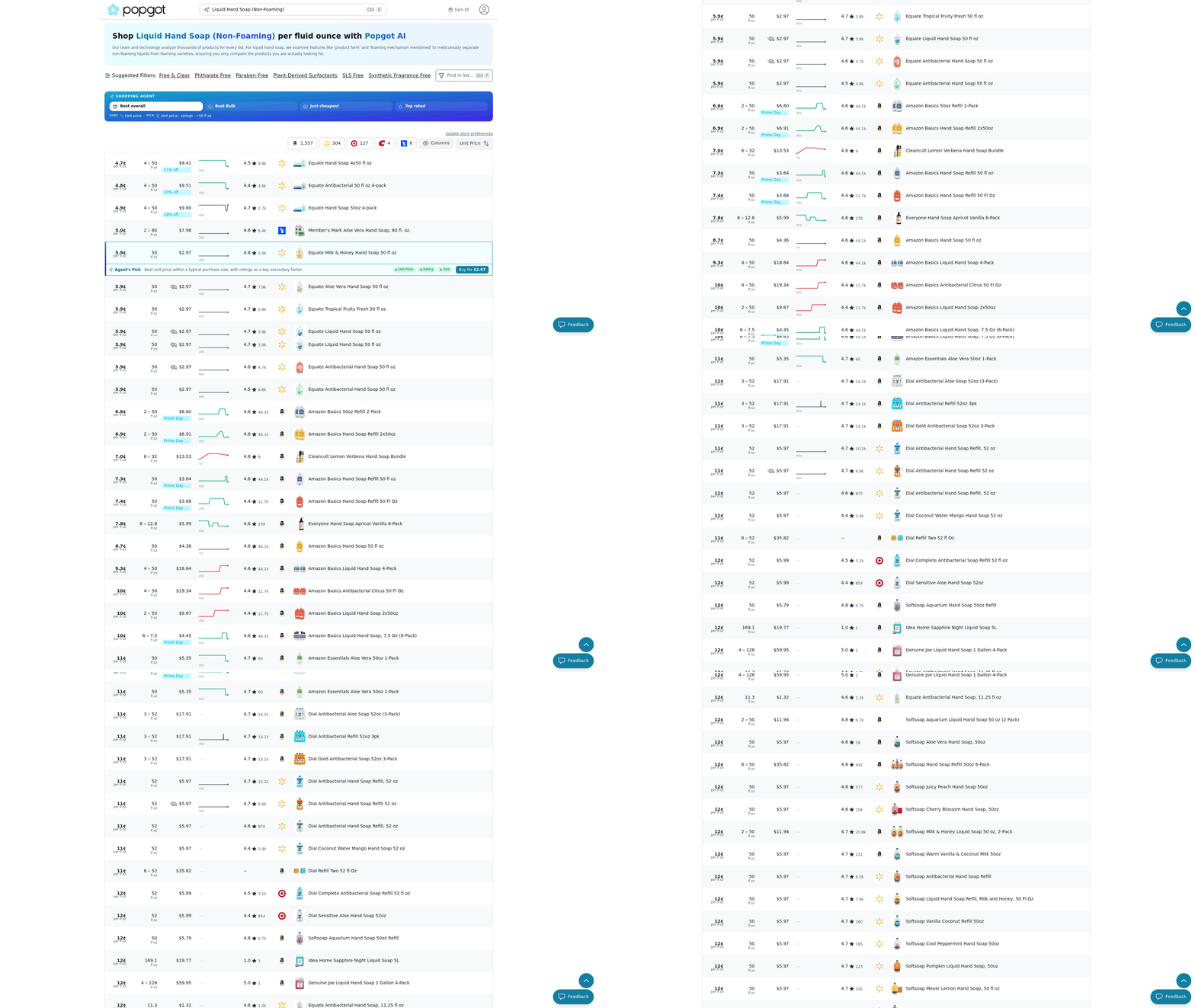
Which budget hand soaps clean best?
For everyday clean hands on a budget, refill-friendly bottles and antibacterial standbys win. They lather fast, rinse clean, and cost a fraction of boutique soaps per use.
-
Amazon Basics Gentle & Mild leads the value pack. The clear liquid refill is triclosan-free, dermatologist-tested, and pH balanced, and it sits on the best-selling hand wash list in a 50-ounce size that drops the per-ounce price hard.
-
Dial Complete is the antibacterial pick. In the Taste of Home 11-brand test it worked into a good lather and rinsed grime away easily, taking the top antibacterial spot.
-
Everspring liquid and foaming soap from Target covers the non-toxic angle. The Lavender & Bergamot 12-ounce bottle is paraben-free, and the foaming version is well reviewed.
-
Aldi, Sam's Club, Trader Joe's, and Walmart store brands round out the budget tier. Consumer Reports tested six store brands and found several cleaning as well as pricier labels. That's where most of your savings hide.
That's eight without overthinking it. Store brands fill four slots because they keep matching name brands on cleaning while undercutting them on price.
Foaming or gel: which should you buy?
Pick gel for a thicker clean and a longer-lasting bottle. Pick foam for less product per pump and a gentler feel. Both clean well, so it comes down to texture and how fast you empty a bottle.
Foaming soaps stretch further since each pump dispenses pre-aerated product. For a busy kitchen sink, that math favors foam. Heavy-duty hands lean gel.
What about scent and splurge picks?
If scent is the priority, low-price seasonal soaps deliver without the boutique markup. Bath & Body Works foaming soaps run $7.95 with a frequent 5 for $28 mix-and-match deal, which lands each bottle near $5.60 when you stock up.
Want a step up that won't wreck the budget? Refill concentrates from brands like Blueland work out to roughly $2 per finished bottle once you reuse the dispenser. Low waste, low cost per wash over time.
My honest take: skip the splurge bottles at high-traffic sinks and save them for the guest bathroom. For daily use, the Amazon Basics refill or a tested store brand gives you the lowest cost per wash. To check whether a "bigger" bottle is really the better deal, compare unit prices before you buy.
What to read on the label
Hand soap comes down to three ingredient categories: moisturizers that protect skin, antibacterial agents that fight germs, and fragrances that affect comfort and allergies. The best budget bottles balance all three. The label tells you whether a cheap soap leaves your hands clean or leaves them cracked and itchy.
Why moisturizers matter for skin health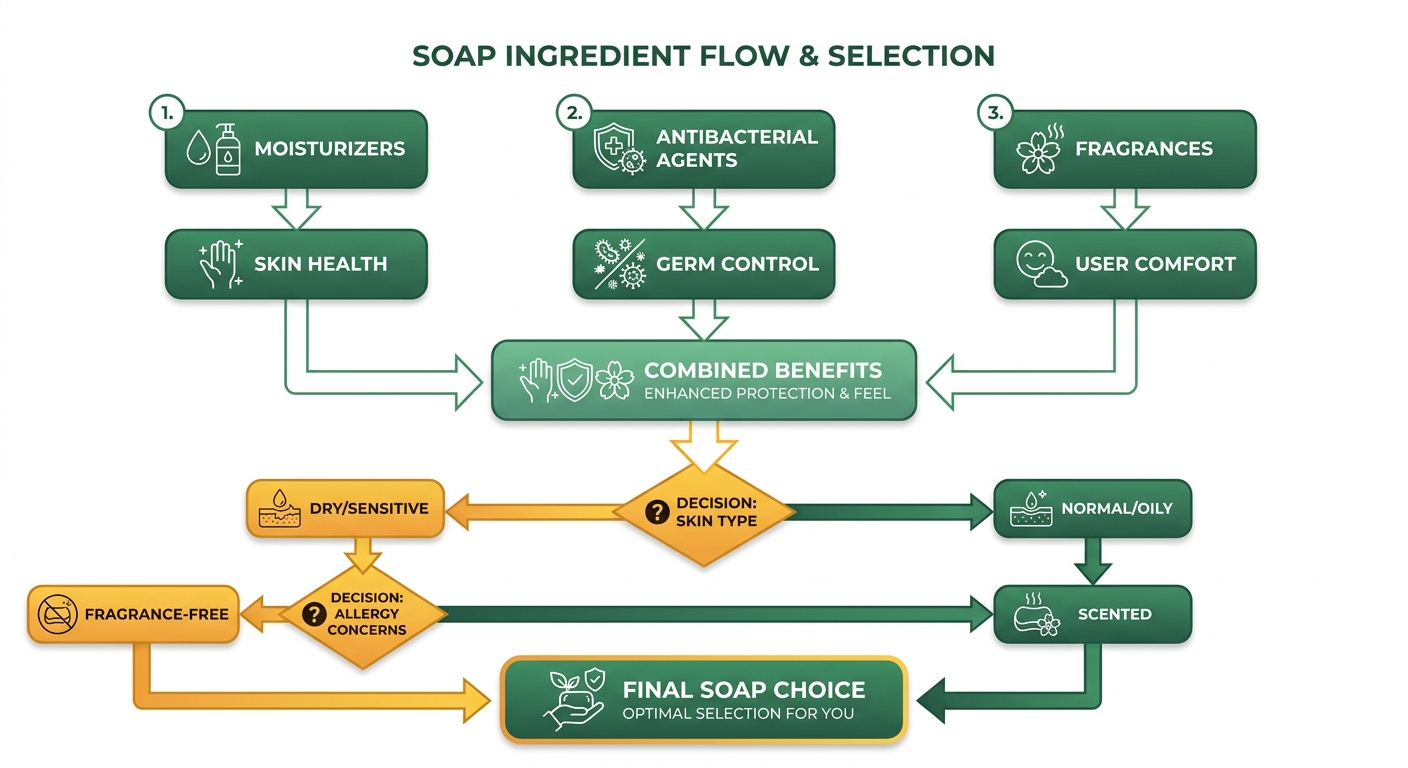
Moisturizers replace the natural oils washing strips away, keeping hands soft instead of dry. Frequent handwashing pulls moisture from skin, so a gentle, pH balanced formula matters more than the price tag.
Look for soaps labeled dermatologist-tested and free of harsh additives. Amazon's best-selling hand wash list is dominated by clear liquid refills built around mild, skin-friendly formulas, which tells you shoppers reward gentleness at a low cost.
Retailers now sort soaps by what they leave behind. Amazon's hand soap category flags options that clean thoroughly while keeping skin's natural moisture, alongside paraben-free and vegan picks. That combination is the sweet spot for daily use.
How effective are antibacterial agents?
Antibacterial soap targets germs directly, and the lather matters more than you'd expect. A soap that foams well nudges you to scrub longer, and longer scrubbing is what actually removes microbes. Cheap antibacterial bottles deliver that without premium pricing.
Skip antibacterial soap if your skin runs dry or sensitive. The active agents can be harsher than plain gentle formulas, and for everyday home use a mild moisturizing soap cleans just as well. Save the antibacterial bottle for the kitchen sink after handling raw meat.
Can fragrances trigger skin sensitivity?
Yes. Added fragrance is one of the most common causes of irritation and allergic reactions in hand soap. If your hands itch or redden after washing, the scent is the first suspect, not the cleaning agents.
You don't have to give up nice-smelling soap to stay safe. Target's non-toxic range includes the Everspring lavender and bergamot liquid soap, which pairs a light scent with a paraben-free formula at an affordable price. Lighter, plant-derived scents tend to bother sensitive skin less than heavy synthetic ones.
For a true unscented option, the Strategist's hand soap roundup points to fragrance-free bottles as the safest pick for reactive skin. Dermatologists generally recommend "fragrance-free" over "unscented," since "unscented" can still hide masking scents that trigger flare-ups.
Comparing what's on the label
When you compare two bottles, scan the same shortlist every time: a moisturizing base, triclosan-free or sensible antibacterial agents, and a fragrance you can tolerate. Match those three to your skin and your sink, and the cheap option usually holds up.
How to pick the soap you'll actually use
Choosing starts with three questions: How does your skin react to frequent washing? Do you have known allergies? And what texture and scent will you actually enjoy? Match the formula to those answers and you'll spend less while keeping your hands comfortable.
What if you have sensitive skin?
If your skin gets tight or itchy after washing, pick a fragrance-free or low-additive formula before you worry about price. Sensitive skin reacts to scent compounds and harsh surfactants, not the dollar amount on the bottle. Start with what your hands tolerate, then optimize for cost.
Shop the non-toxic category to narrow your options fast. Target's paraben-free and vegan soaps filter out many common irritants, and Amazon's cruelty-free and paraben-free options clean thoroughly while keeping skin's natural moisture intact.
For dry or cracked hands, a gentle gel usually beats a stripped-down bargain bar. The goal is a soap you'll reach for every time, not one that punishes you for washing.
How do allergies change your choice?
Allergies move scent and dye from "preference" to "deal-breaker." If a fragrance or additive triggers a reaction, no price is low enough. Read the label and rule out your known triggers first.
Fragrance is the usual culprit. Scented lines like the foaming soaps at Bath & Body Works lean on bold scents such as Piña Colada Swirl, which smell great but can flare sensitive noses and skin. If that's you, skip the scented aisle and stick to unscented picks.
When in doubt, patch test a new soap on one hand for a few days before committing to a bulk bottle. A cheap mistake bought in volume stops being cheap.
Gel or foam: pick what you'll keep using
Texture is personal, and the right pick is the one you enjoy enough to keep using. Gels feel richer and many people swear they clean better. Foams stretch further and feel lighter. Both work.
This is where the bulk-soap crowd lands. Plenty of shoppers hunt specifically for a non-foaming gel with a good value prop, convinced gels clean better than foam. If you share that instinct, prioritize concentrated refills over pre-diluted foam.
Once you've settled on skin type, allergy limits, and texture, compare cost per ounce across the finalists. A price comparison tool like Popgot can surface the cheapest match, so you buy the soap your hands like at the lowest unit price.
Where budget hand soap is headed
Three trends are shaping cheap hand soap: gentler ingredients, refillable packaging, and smarter price tracking that catches shrinking bottles before they catch you. Each one rewards shoppers who read labels and compare sizes.
What's changing in hand soap ingredients?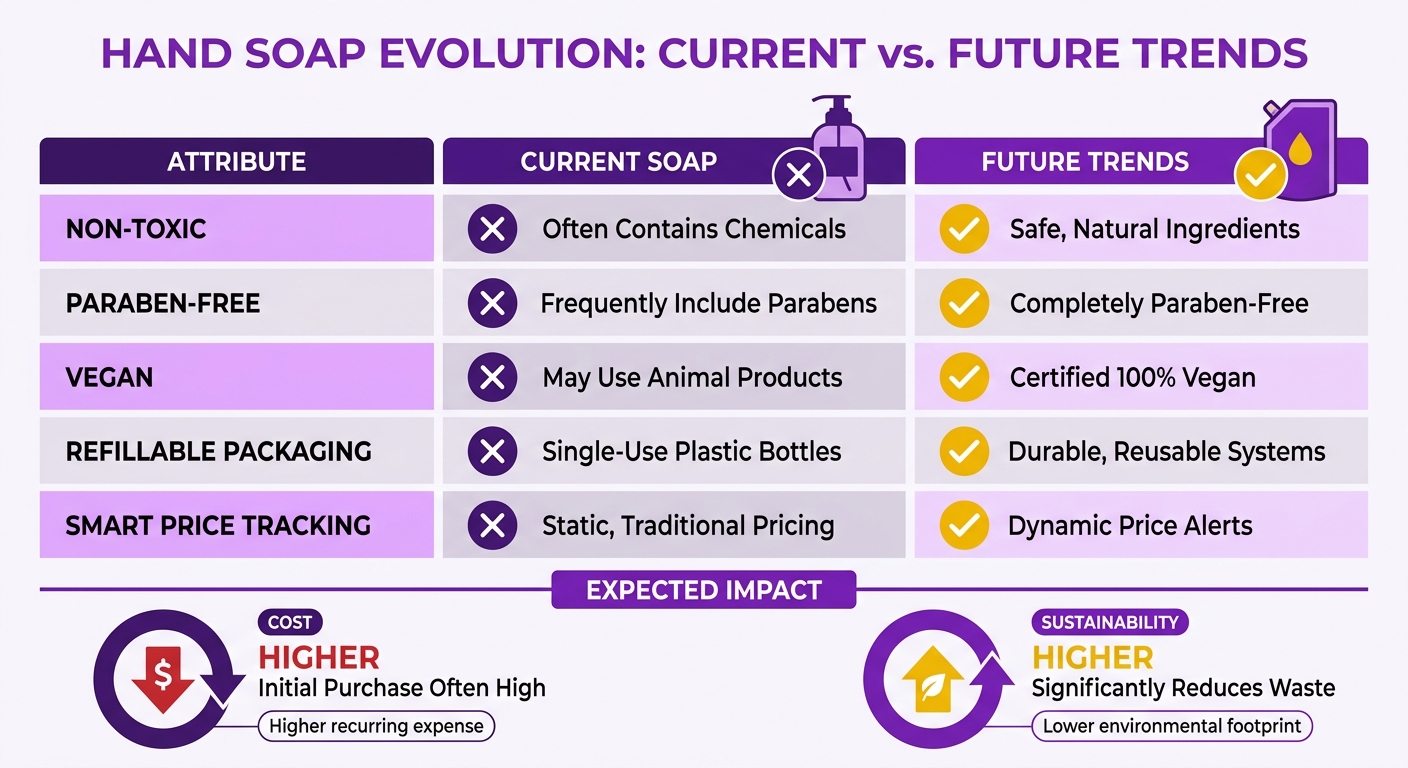
Expect more non-toxic, paraben-free, and vegan formulas at low price points. Skin-friendly chemistry used to carry a premium, but that gap is closing as retailers widen their budget clean lines. Target's non-toxic selection shows how mainstream the shift has become.
For your hands, that matters. Gentler surfactants and fewer harsh additives cut the dryness and tightness frequent washing causes. The next wave of cheap soap aims to clean hard while treating skin soft, so you stop having to choose.
How is sustainable packaging reshaping the aisle?
Sustainable packaging is going from niche to normal, driven by refillable bottles and concentrated refills that cut plastic per wash. Bulk gels fit here too.
But bigger packaging hides a catch. "Mega" and "jumbo" labels promise nothing concrete, and contents quietly shrink while the bottle keeps its old footprint. That's where price-tracking earns its keep. Popgot logs when product sizes change, so a refill that lost an ounce can't slip past you. One Reddit shopper even asked whether such a tracker showed historical data, to see "how much stuff has shrunk over the past 5 years."
The strongest trend pulls all three together: cleaner ingredients, lighter packaging, and honest pricing. Soap that respects your skin, the planet, and your receipt at once.
What I'd actually buy
The best low-price hand soap matches three things: your skin's tolerance, an ingredient list you trust, and a cost per ounce that holds up over a year of refills. Get those right and you stop overpaying for marketing.
What to prioritize when buying cheap hand soap
Fit over flash. A soap your hands tolerate beats a cheaper bottle that leaves them dry, and a gel may outperform foam if you want a deeper clean. Start with skin type, narrow by ingredients, then compare price per ounce.
Quality still wins at low prices. Dial Complete proves a budget standby can clean as hard as it works. And texture preference is real, not trivial. Buy the format you'll actually reach for, then chase value within that lane.
How do you lock in the best price over time?
Track the bottle, not just the price tag. Sticker prices stay flat while contents shrink, so a "deal" can quietly cost more per ounce than it did a few months ago. Comparing unit price catches that before it drains your budget.
Store brands give you the most room to save. Consumer Reports tested options from six retailers and crowned a store-brand pick that cleans fast, so you rarely need a premium label for a quick, thorough wash.
Tools that flag size and price changes do the watching for you, catching a shrinking bottle before it slips into your cart.
Where is budget hand soap headed?
Cheap soap is getting gentler and more transparent, and your buying habits push that forward. Every time you pick a skin-friendly formula over a harsh one, retailers get the signal to widen their low-cost clean lines.
Even premium-leaning roundups now spotlight affordable picks. The Strategist's long-running list mixes high-end gels with value options, a sign that "budget" and "good" stopped being opposites.
So here's the shortlist: pick a format you like, scan for moisturizers and antibacterial agents that suit you, skip fragrances if your skin reacts, and let unit price break any tie. That's how you land an everyday soap that's cheap, effective, and worth restocking.
References
[1] Hand Soap - Amazon.com - https://www.amazon.com/hand-soap/s?k=hand+soap
[2] 30 Best Hand Soaps | The Strategist - New York Magazine - https://nymag.com/strategist/article/best-hand-soap.html
[3] 4 Best Store-Brand Hand Soaps, Tested by Experts - https://www.consumerreports.org/health/personal-care/best-store-brand-hand-soaps-a9867779686/
[5] Amazon Best Sellers: Best Hand Wash - https://www.amazon.com/Best-Sellers-Hand-Wash/zgbs/beauty/11062271
[6] We Tested 11 Brands: These Are the Best Hand Soap Options - https://www.tasteofhome.com/article/best-hand-soap/
[7] Non-Toxic Hand Soaps | Best Brands & Scents - Target - https://www.target.com/s/non+toxic+hand+soap
Frequently Asked Questions
1. Does antibacterial hand soap protect against viruses like the flu or COVID?
Antibacterial agents target bacteria, not viruses. Plain soap works just as well against viruses because its surfactants physically break apart the lipid membranes surrounding viral particles. For everyday illness prevention, a mild moisturizing soap and 20 seconds of scrubbing protects you as effectively as any antibacterial bottle.
2. Can I dilute gel hand soap to make a bottle last longer?
Diluting concentrated gel with water stretches a bottle further and lowers cost per wash, but over-thinning weakens lather and cleaning power. Mix no more than one part water to three parts soap, and refill smaller amounts often since diluted soap can grow bacteria faster without preservatives.
3. How long does liquid hand soap last before it expires?
Most liquid hand soaps stay effective for two to three years unopened, and roughly one year after opening. Check for separation, off smells, or color changes, which signal the preservatives have broken down. Buying bulk only saves money if you use it before quality drops, so match pack size to your household.
4. Is bar soap cheaper than liquid soap for everyday handwashing?
Bar soap usually costs less per wash than liquid because it contains no added water and lasts longer per ounce. Liquid and foaming soaps win on convenience and shared-sink hygiene, since bars can harbor surface residue. For tight budgets, a bar at private sinks trims cost without sacrificing cleaning power.
5. What ingredients should I avoid if I have eczema or very dry hands?
Skip sulfates like sodium lauryl sulfate, added fragrances, and triclosan, since these strip oils and trigger flare-ups. Look instead for glycerin, pH-balanced, and dermatologist-tested labels. A gel formula with moisturizers beats a stripped-down bargain soap for eczema-prone hands, keeping skin from cracking between frequent washes.
6. How do I compare unit prices when retailers list soap in different sizes?
Convert every option to cost per fluid ounce by dividing the total price by the bottle's volume. A 50-ounce refill at $8 costs 16 cents per ounce, often beating a "value" pack. Tools like Popgot automatically calculate per-ounce prices across eight major retailers, so you compare like for like instantly.